An unexpected lesson in working in series
Last week, I wrote about creating a series of encaustic collage covers for a collaborative artist book project. Each cover began with botanical imagery, layered with translucent wax, fragments of text, subtle marks, and touches of gold. The idea was to create covers that belonged together visually but were not identical — variations on a theme.
To finish the covers, I wanted one small element that would tie them together, something tactile and dimensional that would give each book its own identity while reinforcing its connection to the others. I decided on a small distinctive clay tile for each cover. That sounded simple enough.
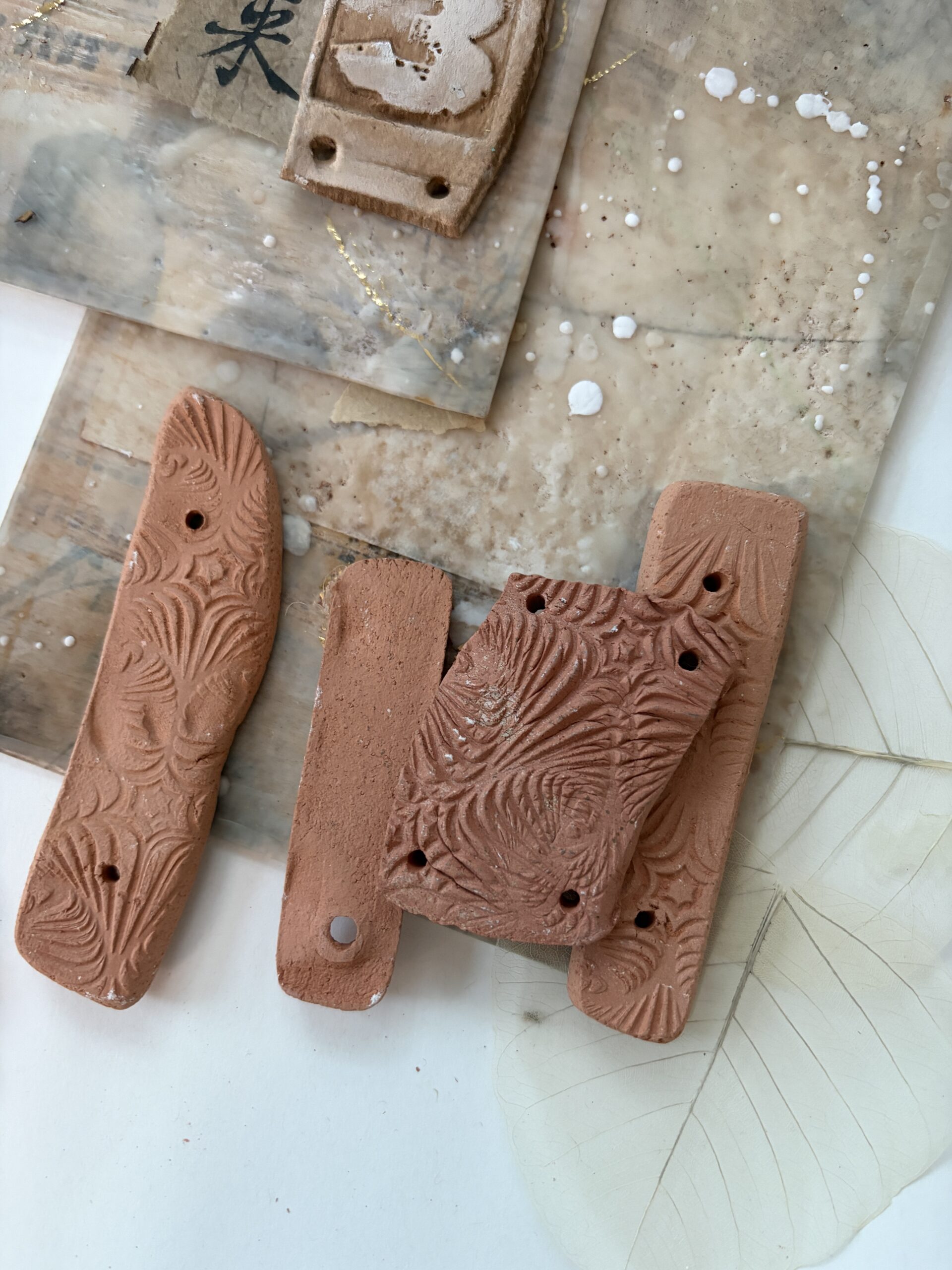
My first attempts were made with traditional fired clay. I liked the earthy texture and the sense of permanence, but the finished tiles were heavier than I wanted for these delicate book covers. They seemed to dominate rather than complement the encaustic surfaces.
So I turned to paper clay. Paper clay is wonderfully adaptable, lightweight, and easy to work with. But it has a personality of its own, especially when you’re trying to make a series of small pieces that look alike.
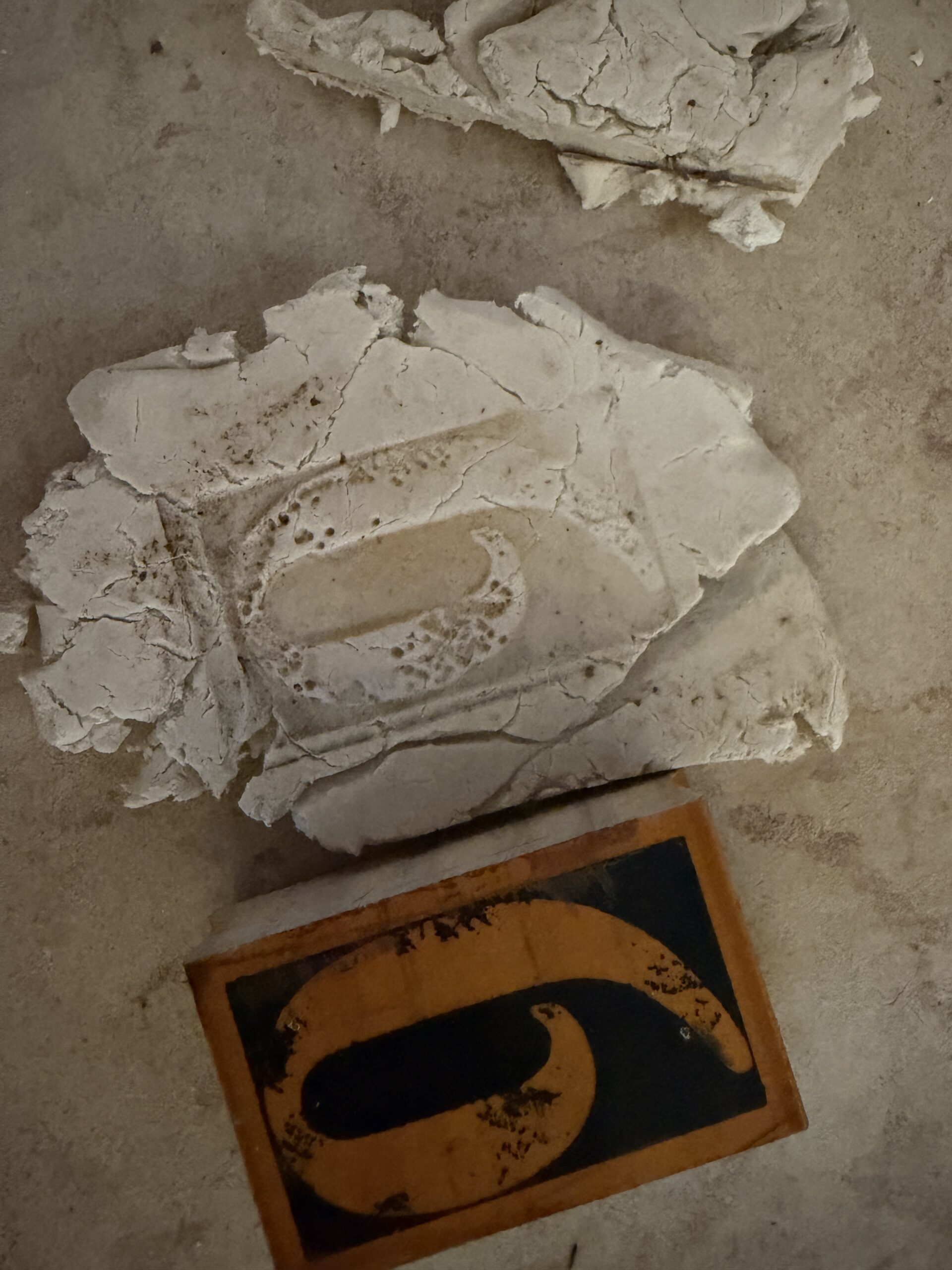
I rolled, cut, impressed, and numbered the tiles. I wanted them to be consistent in size and shape, with the numbers clearly visible. But as they dried, each one behaved a little differently. Edges curled or cracked. Surfaces developed unexpected textures. Some numbers emerged crisp and clear; others looked worn and weathered.
The more I tried to make them match, the more obvious their differences became. And then I realized something. The problem wasn’t the clay. The problem was my expectation of perfection.
When we set out to make a series of identical objects, every tiny variation announces itself as a mistake. One edge is crooked. One number is slightly off-center. One surface is rougher than the others.
But what happens if we change the rules? What if, instead of trying to eliminate those differences, we invite them in?
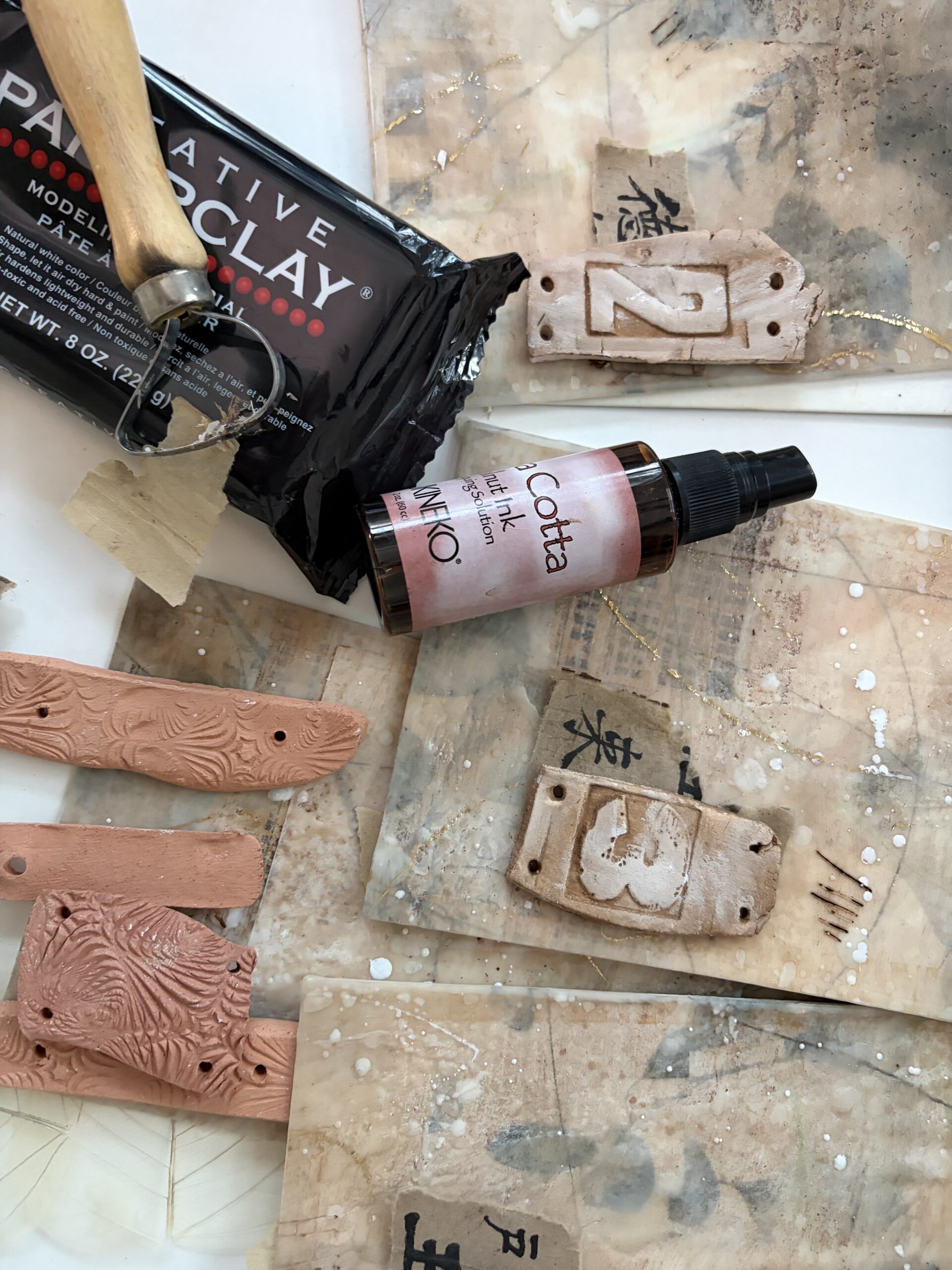
I began deliberately roughening the edges, allowing cracks and irregularities to remain, and emphasizing the worn, imperfect surfaces. I stopped trying to make the tiles identical and started thinking of them as members of the same family. Walnut ink and white pan pastel added surface variation.
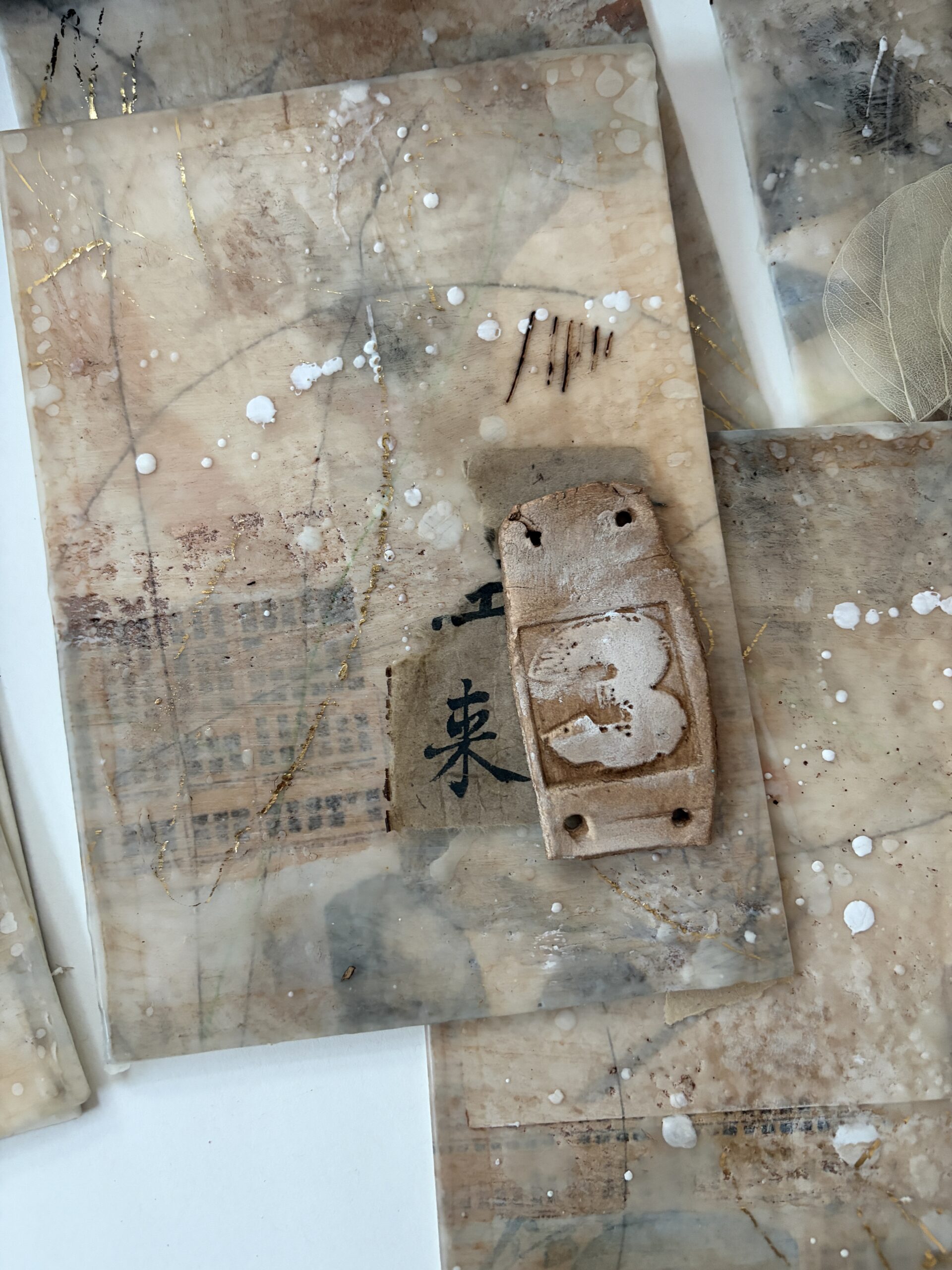
And suddenly, they worked. Each tile had its own character. Some looked like fragments from an ancient wall. Others resembled weathered markers or archaeological finds. Their shared materials, shapes, and numbers gave them continuity, but their differences made them interesting.
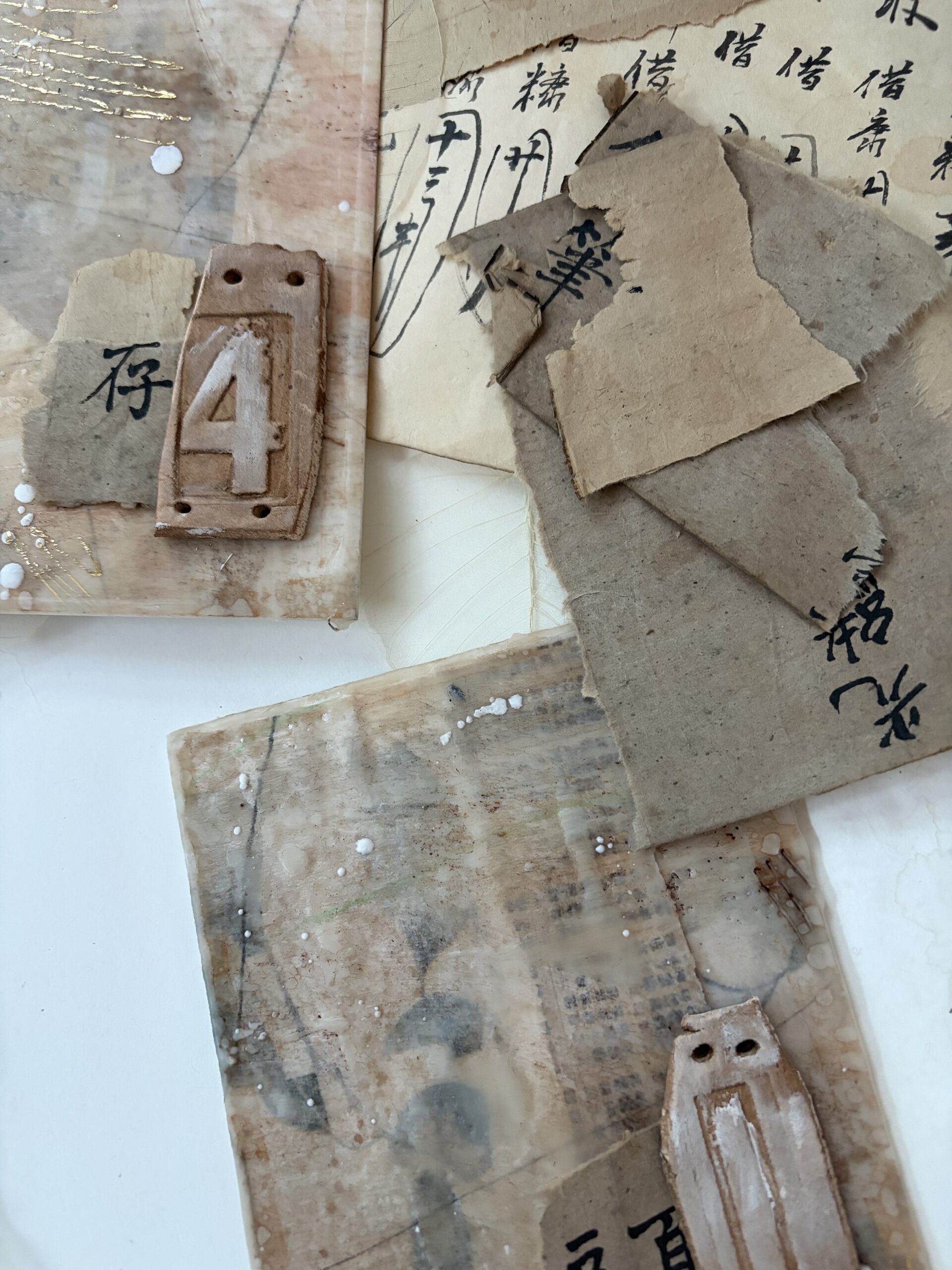
They belonged together without having to match.
That realization seems especially important when we’re working in a series.
A series doesn’t have to be a collection of duplicates. It can be a conversation among related objects. There needs to be a common language, of course. Something that connects the pieces — a material, a palette, a repeated form, a gesture, a theme. But within that shared language, there can be enormous freedom.
We recognize them as belonging together, not because they are identical, but because they share an underlying intention.
I think this is one of the most liberating lessons we can learn as artists: Consistency is not the same as uniformity.
When we stop measuring each piece against an imaginary perfect version, we begin to notice what each piece has to offer. The crooked edge becomes expressive. The unexpected crack becomes part of the history of the object. The irregular surface catches the light in a way a perfectly smooth one never could. And perhaps most importantly, the hand of the maker becomes visible.
As I start to figure out how to attach the finished numbered tiles to the encaustic covers, I realize that they were doing exactly what I had hoped. They brought the individual books together as a series, but they also gave each cover a distinct identity. The delicate wax surfaces and the rough clay fragments seemed to speak to each other. One suggested layers of memory; the other, something recovered and preserved.
I love that this small experiment reminded me of something I already knew but occasionally forget: sometimes the best thing we can do for our work is to stop trying to control every outcome. Give the process some room to surprise us. And give ourselves permission to make things that are beautifully, unmistakably, imperfectly human.
I’ll send pictures of these perfectly imperfect books when they are finished! Just remember: When we try to make things identical, differences become flaws. When we allow them to be individual, differences become character. That’s my story and I’m sticking to it!
That is a great life lesson. We are all different kinds of fish but we swim in the same river.
Been there!
Beautiful and encouraging! It reminds me of identical twin humans. I had “identical” twin cousins, but one had a facial mole which the other did not. This allowed us to tell them apart! From the same family and each unique. I’ve been trying, too, to make the perfect rectangle or square on an encaustic piece…but the looked out of place with the organic background. So, I let them change their edges as I fused. And, voila! The whole was improved! Thanks for the reminder to allow the differences to differ but relate!
Love it Lyn! A great lesson and imitation of life. Embracing the imperfection. This makes me think of the concept of “Wabi Sabi” which I love working with in room decor and art.
Always love your reflections and process you share
Blessings and Cheers,
Wendy