Book Report

The Art of Working Together: Three artists, one little book, and the joy of making something none of us could have made alone.
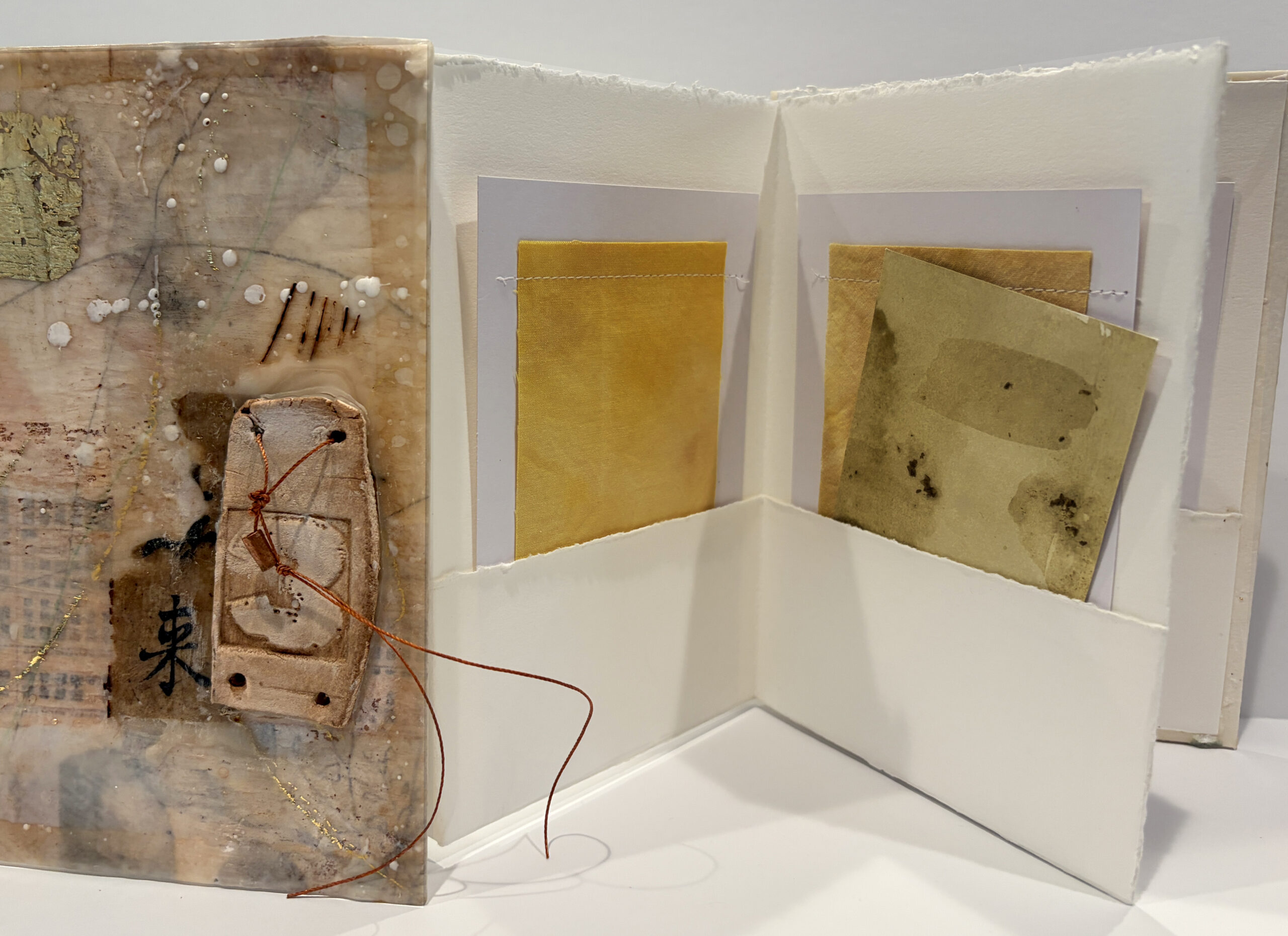
Sometimes the most satisfying art projects begin without a grand plan, an exhibition deadline, or even a particular destination. They begin with a conversation: What if we tried this together? That’s how our collaborative accordion books came into being.

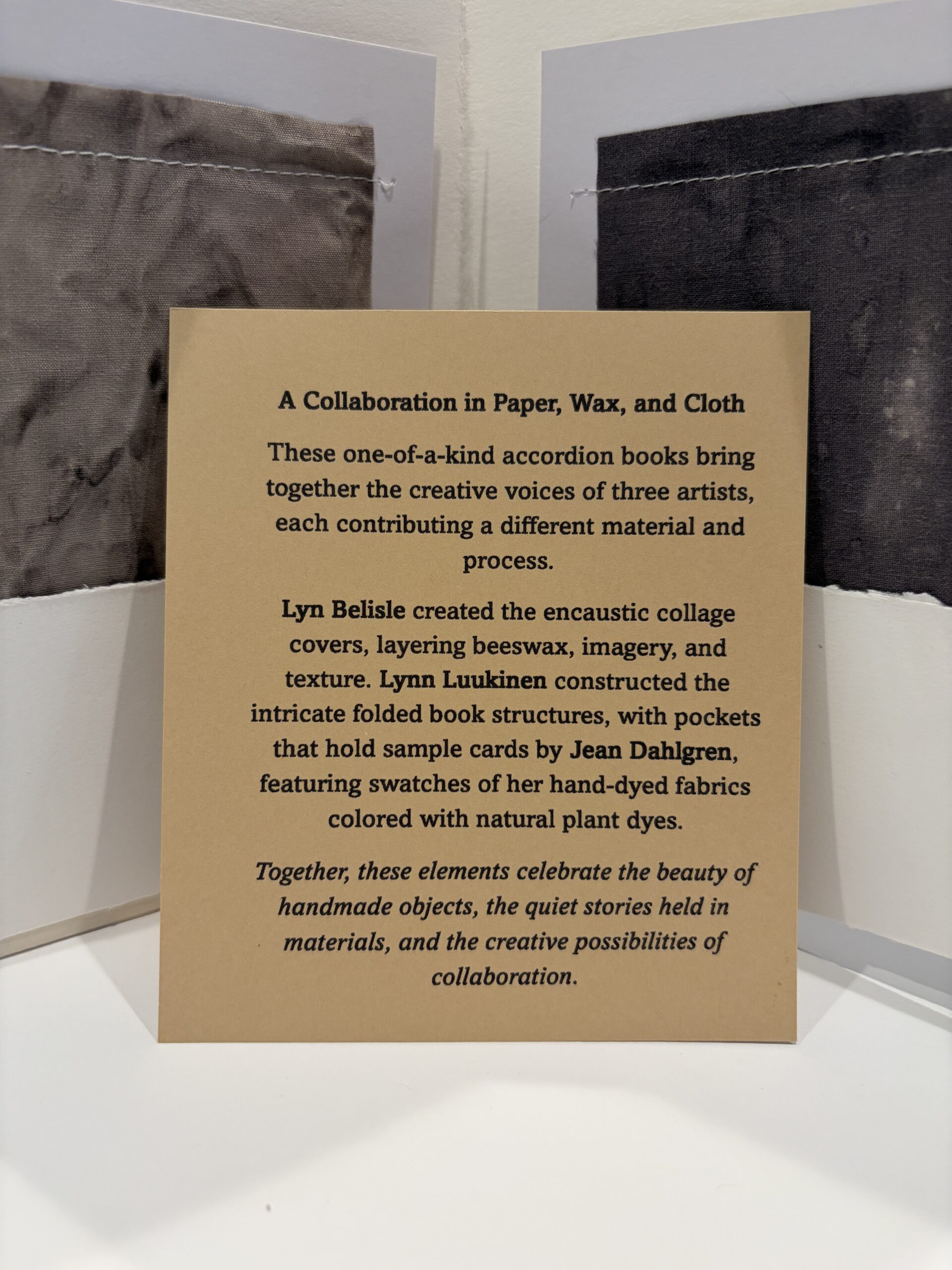
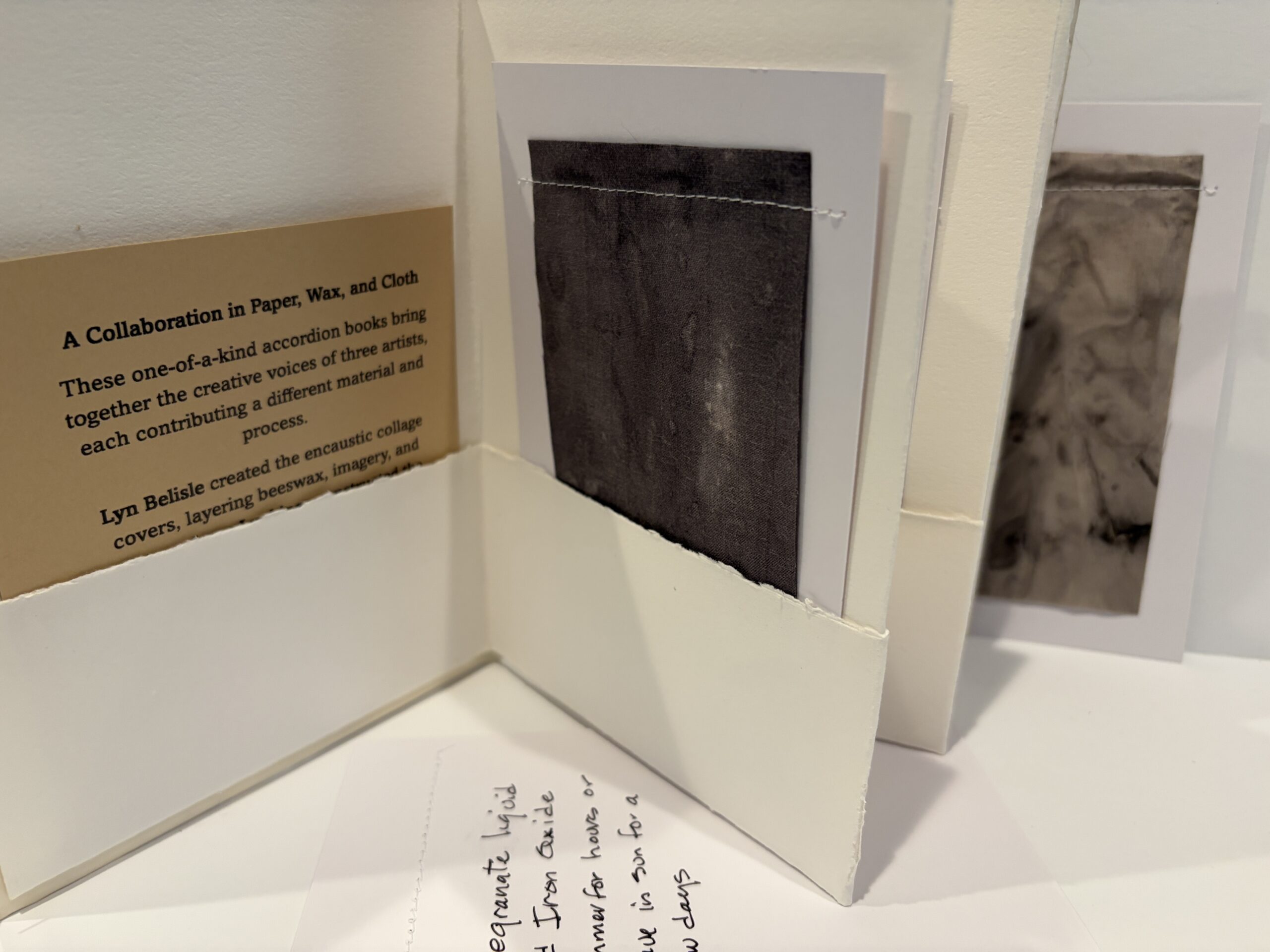
Three artists — Jean Dahlgen, Lynn Luukinen, and I — brought our very different interests and skills to a small book project. What emerged was a collection of intimate, tactile objects that hold more than paper, fabric, wax, and thread. They hold the pleasure of working together.
Three artists, three ways of seeing

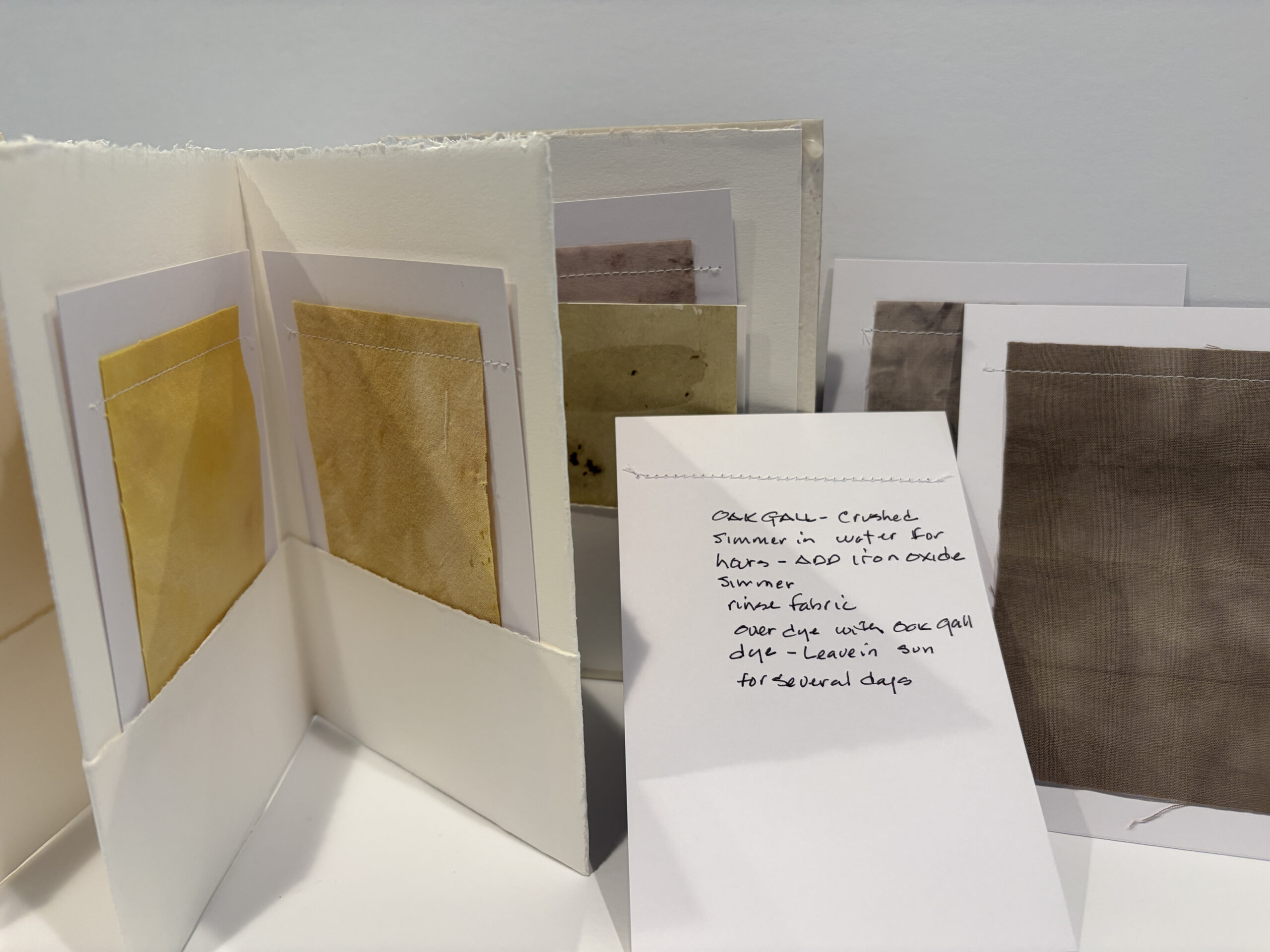
Jean Dahlgen is a fiber artist with a particular interest in natural dyes. For this project, she set herself a wonderfully specific challenge: use plants gathered from her own backyard.

Beautyberry, oak, and pomegranate became sources of color. Through Jean’s experiments, ordinary neighborhood plants left their traces on small pieces of fabric. Each sample became a record of place, process, and discovery.
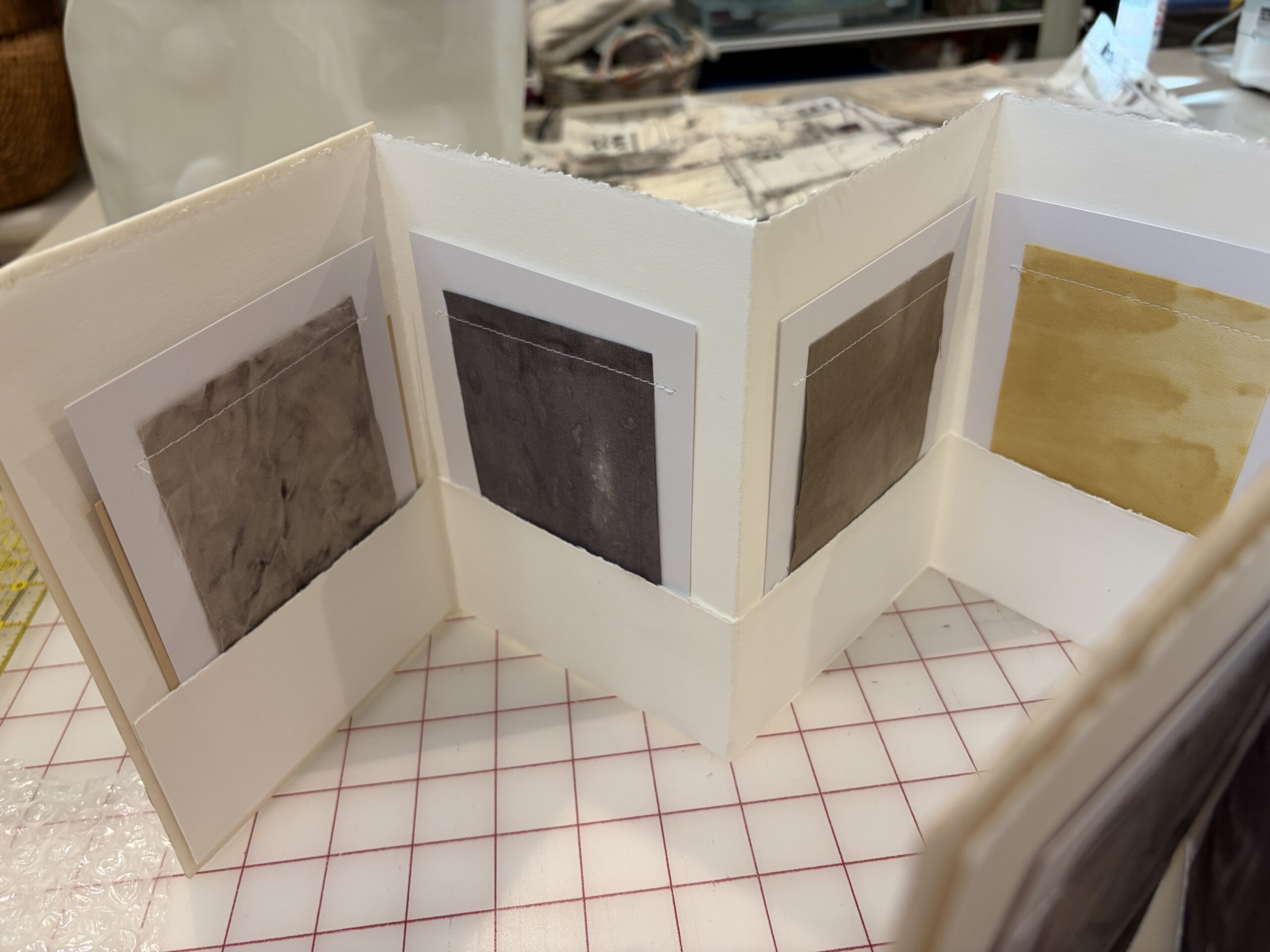
I love the idea that the colors in these books came from plants growing just outside someone’s door. They are, quite literally, rooted in our community.
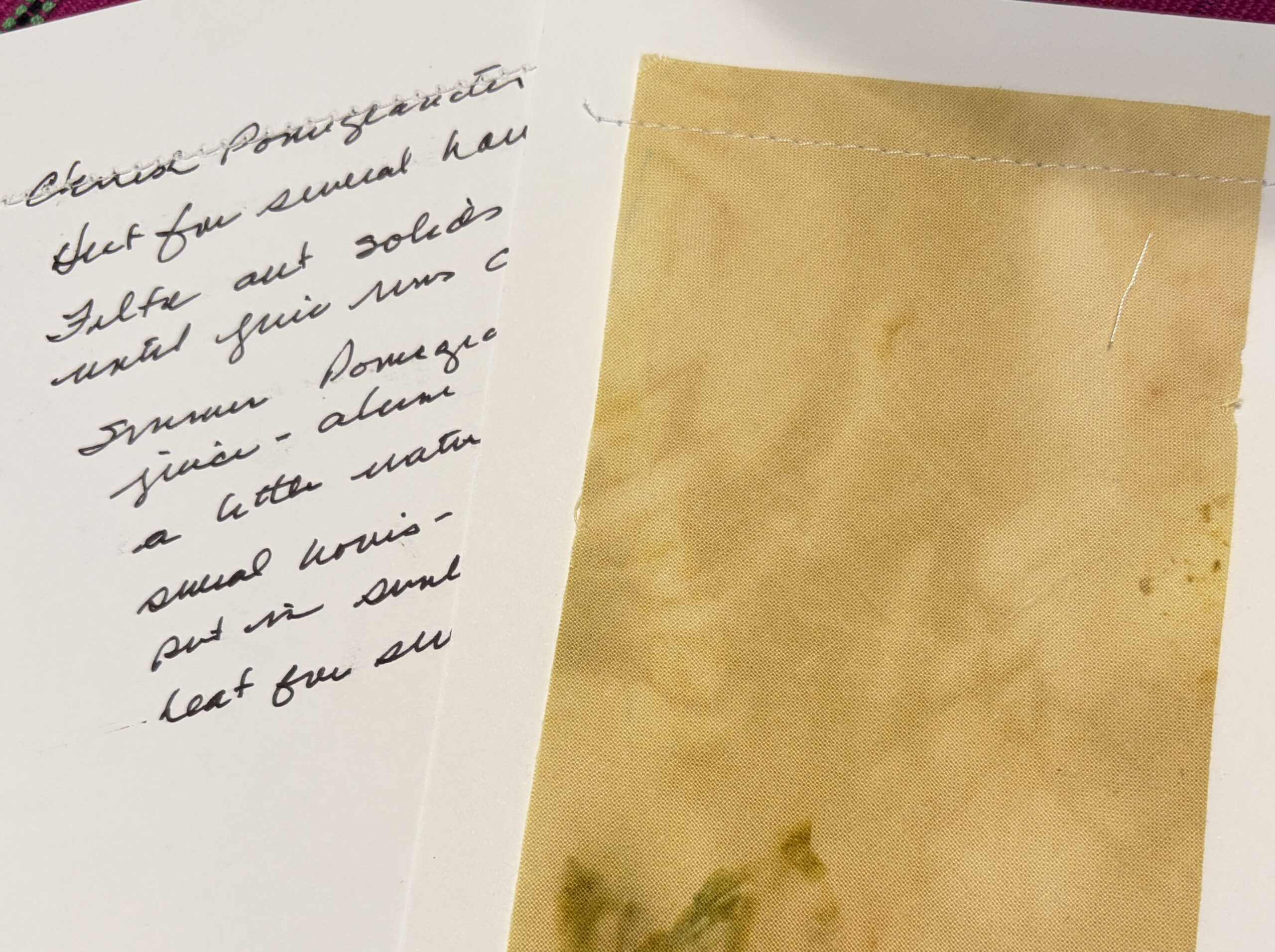
Lynn Luukinen, an artist and printmaker with a deep understanding of paper, brought the structural expertise. She knew which papers would fold beautifully, which would hold their shape, and how to construct the precisely folded accordion books that would become the foundation for everything else.

Her contribution was both technical and artistic. The elegant folds, pockets, and proportions made room for the rest of us to play.
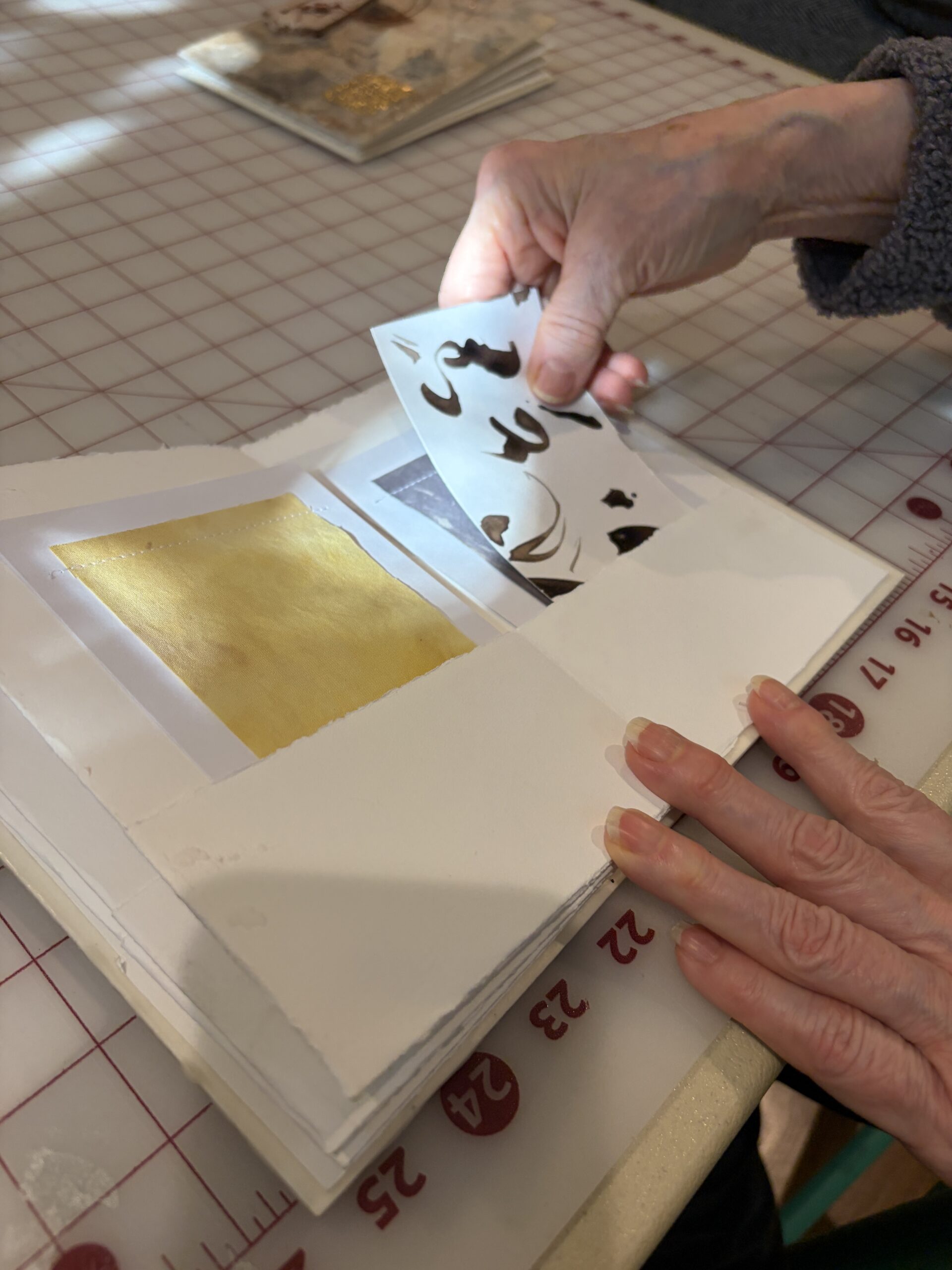
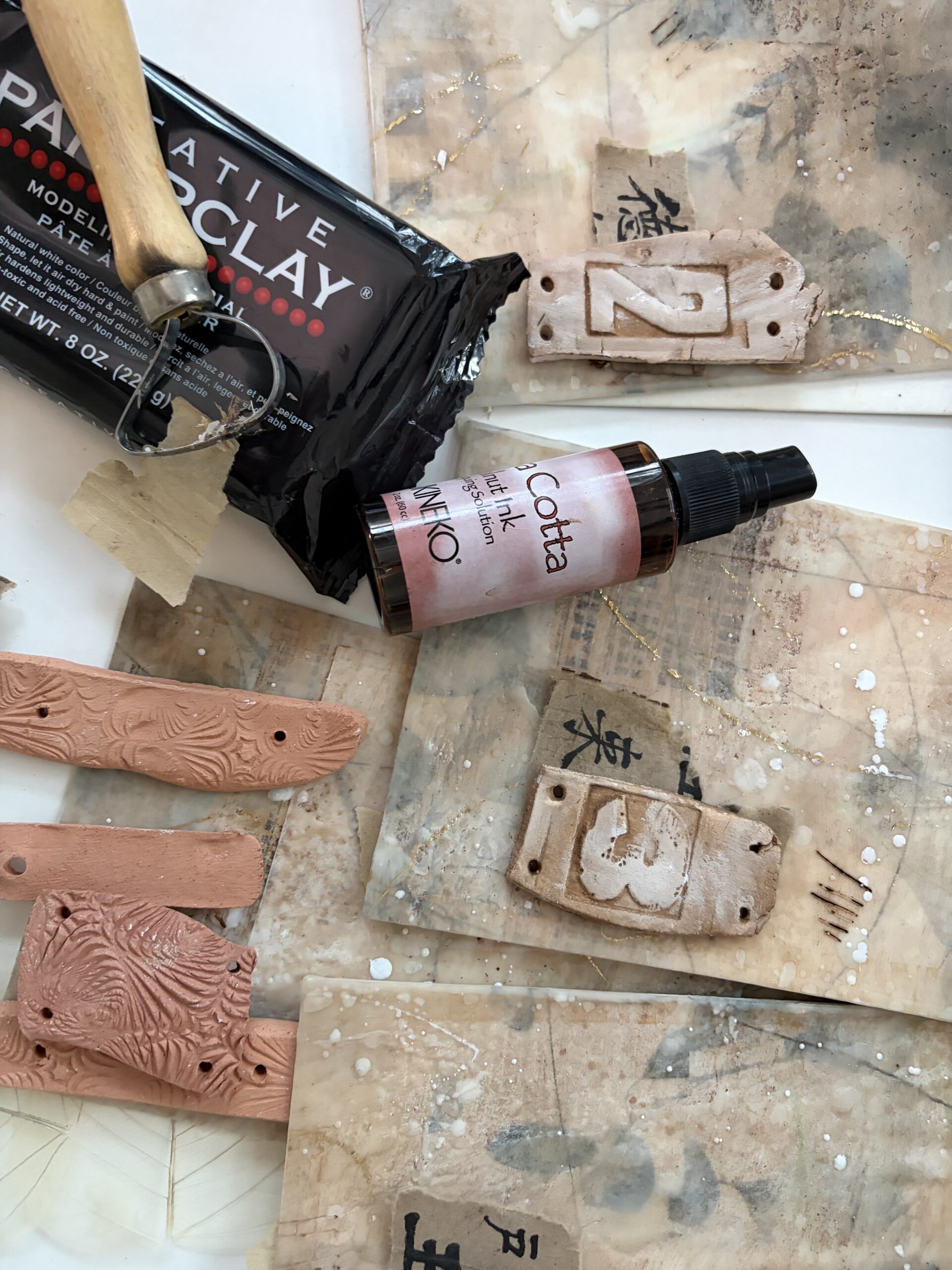
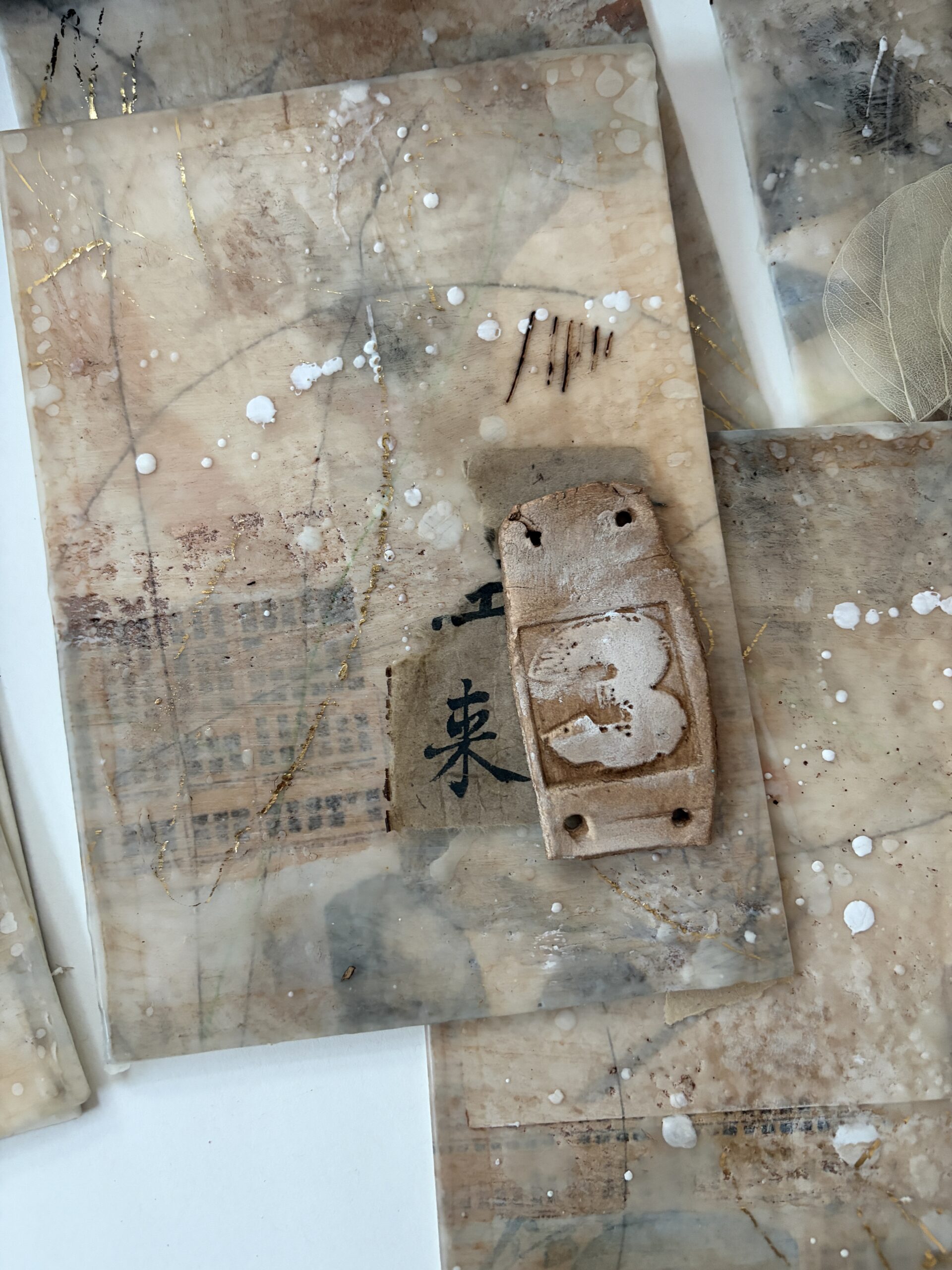
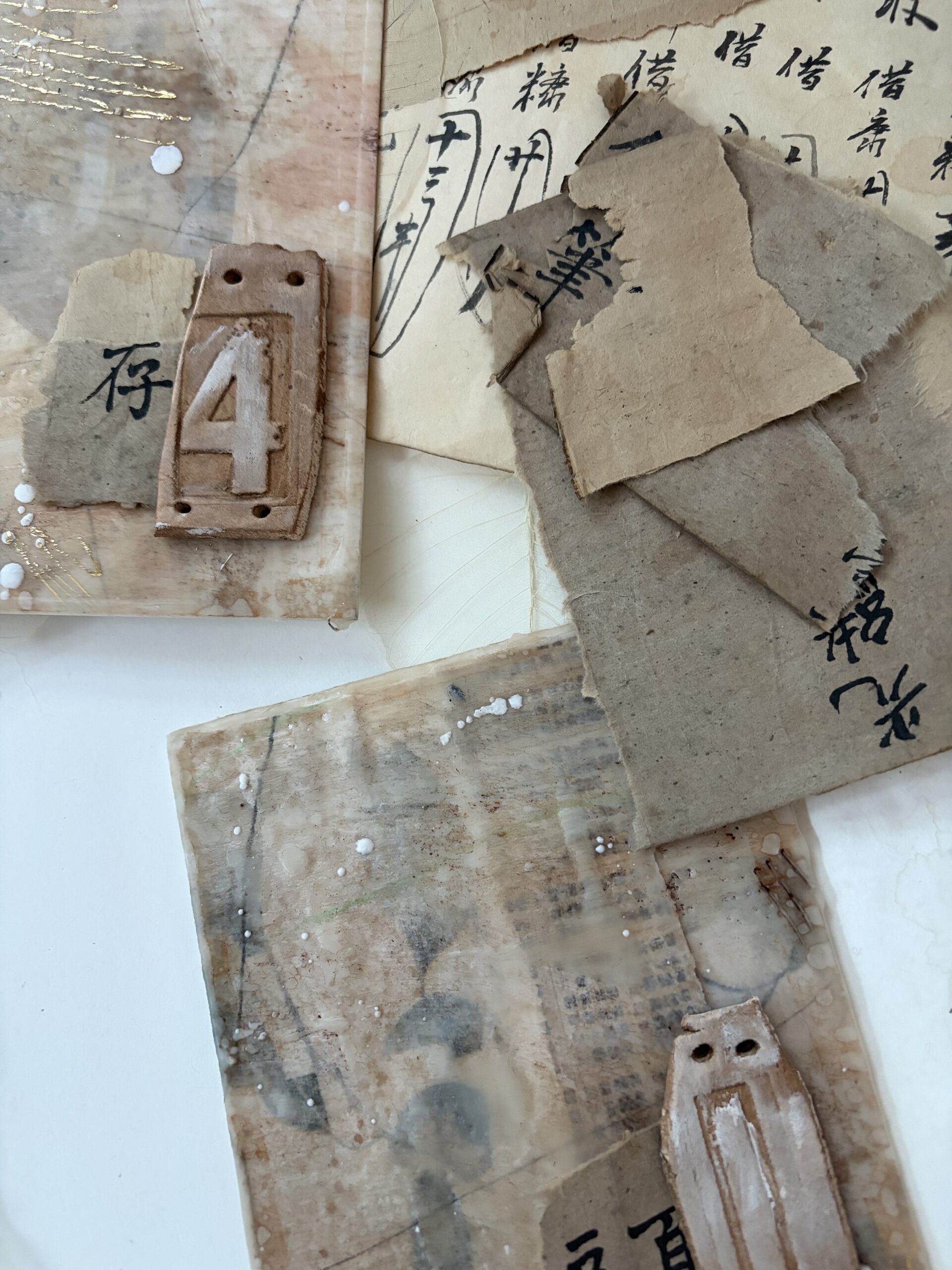
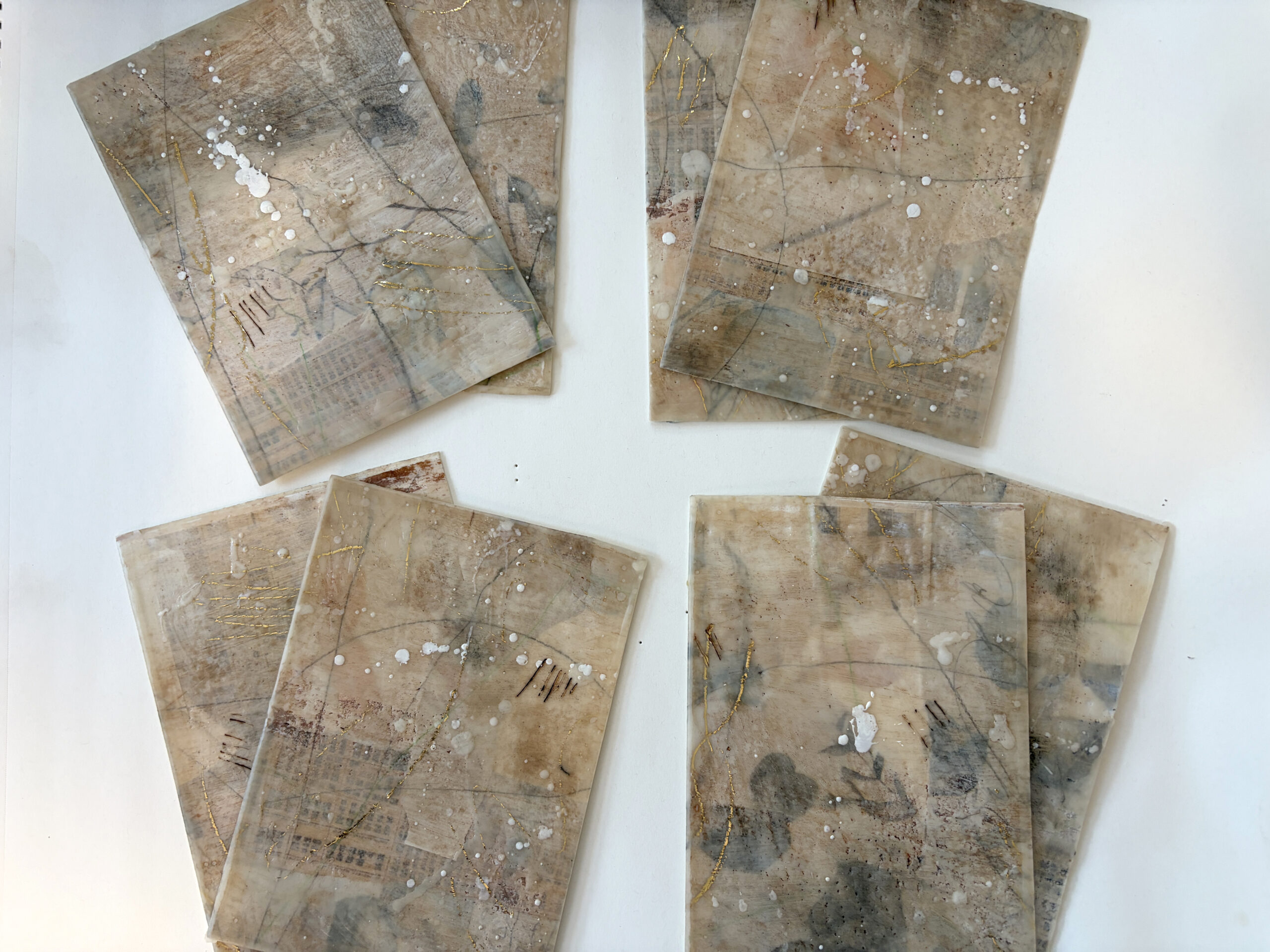
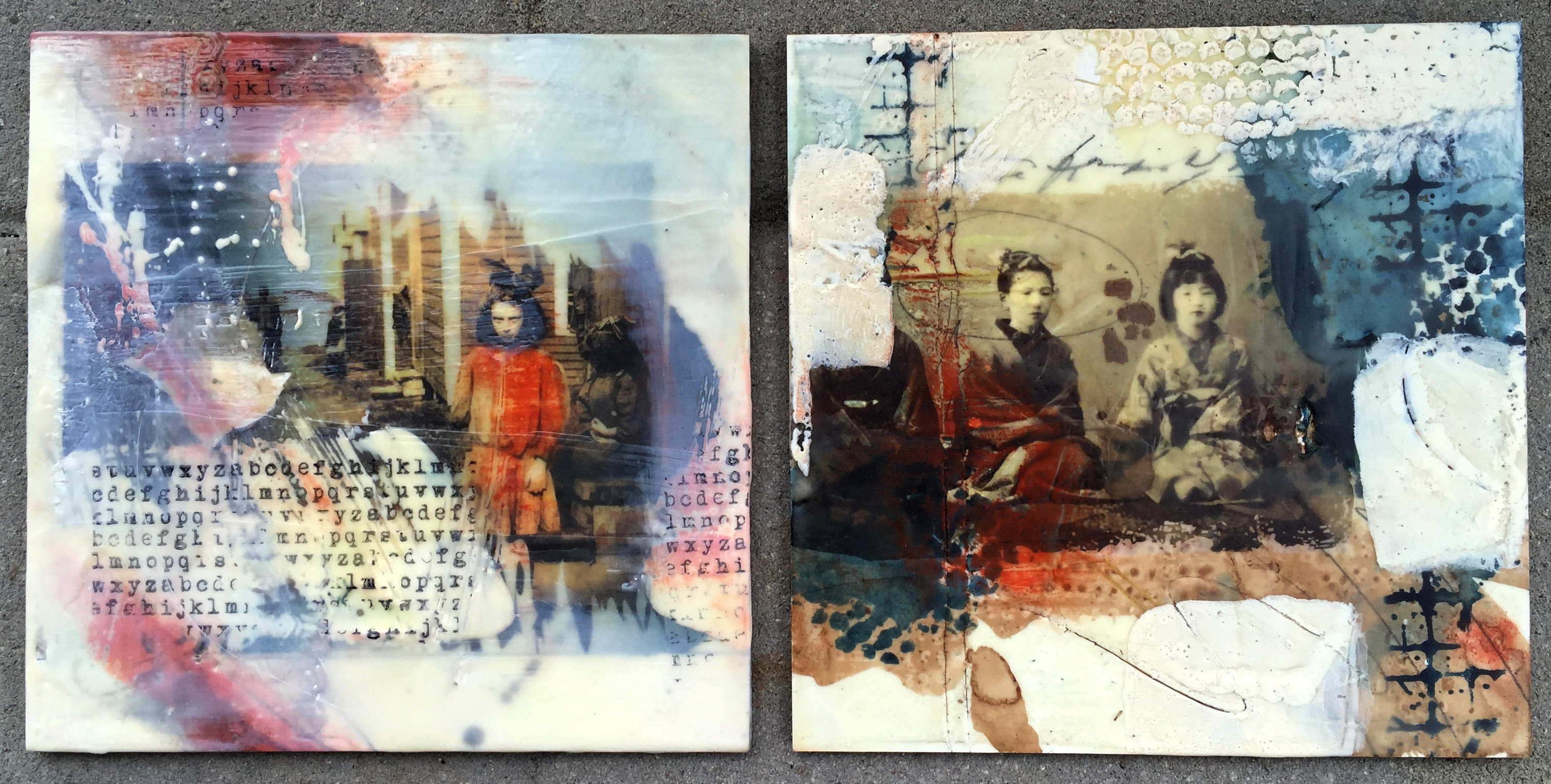
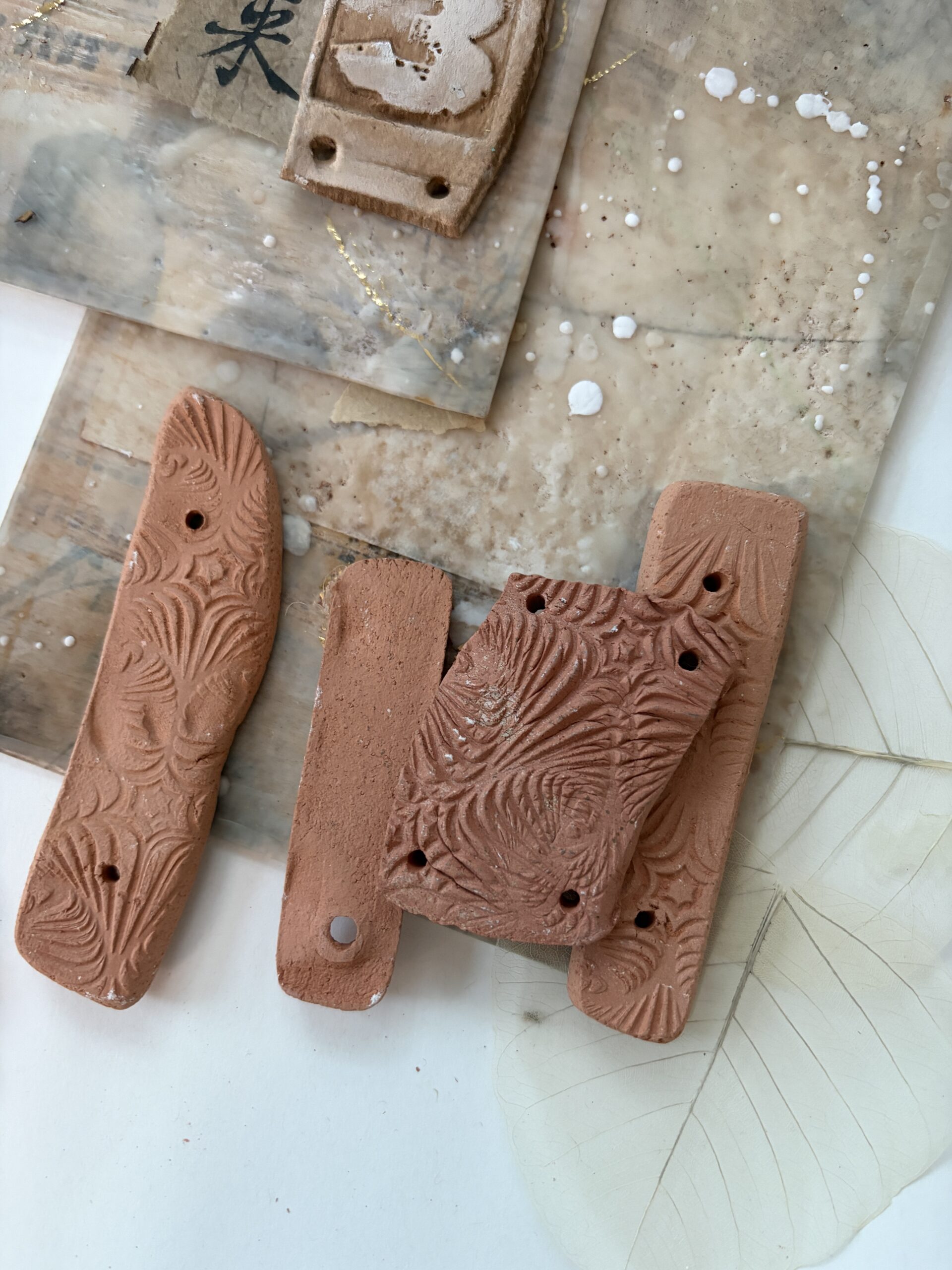
My part was to create the covers, bringing my familiar interests in encaustic, texture, memory, and fragments. I worked with layered surfaces, bits of thread, and small numbered paper-clay tiles that I deliberately allowed to remain imperfect.

The numbers suggest an archive or collection, as though each book might contain a small piece of remembered history. The threads hint at connections, some visible and some almost lost.
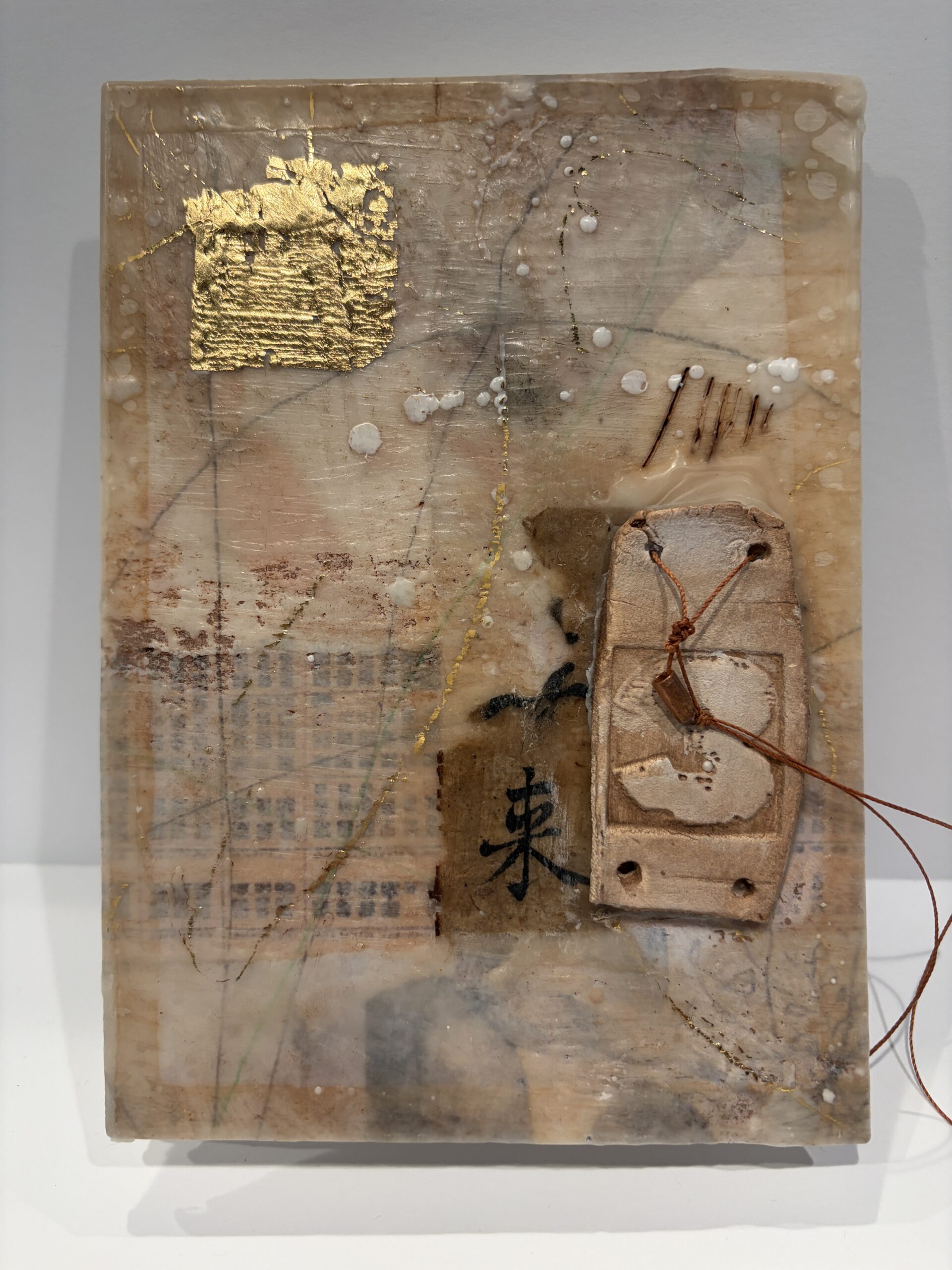
None of us could have made these particular books alone. And that’s precisely what makes them interesting.

The pleasure of making without competing

Artists spend a surprising amount of time working alone. Even when we belong to art organizations, attend openings, or share studio space, the actual work is often solitary. We develop our own techniques, protect our studio time, and sometimes become understandably concerned about originality, recognition, or whether our work measures up. But something changes when we agree to make something together simply for the pleasure of doing it.

There is no competition when everyone brings something different to the table. Jean didn’t need to become a bookbinder. Lynn didn’t need to learn encaustic (although she knows it well). I didn’t need to master natural dyes. We trusted one another’s strengths.

Collaboration doesn’t have to dilute our individual voices. Sometimes it makes those voices clearer.
What could happen in your own community?

This experience has made me think about how many opportunities for collaboration might be waiting right around us.

Perhaps there’s a ceramic artist in your neighborhood whose work you’ve always admired. Or a photographer, a poet, a gardener, a weaver, a printmaker, or someone who makes beautiful handmade paper.

What would happen if you invited that person to make something small with you? Not to sell. Not necessarily to exhibit. Not to build a business or launch a new product line. Just to see what happens when your skills meet.

These projects don’t require grants, committees, or elaborate planning. They require curiosity, a little trust, and the willingness to let go of complete control.
The backyard is bigger than we think

I keep coming back to Jean’s backyard plants.

Beautyberry. Oak. Pomegranate.

Such ordinary things, growing close to home, transformed through attention and experimentation into something worth preserving. Our artistic communities are rather like that.

We don’t necessarily need to travel to a major workshop, find a famous mentor, or search far beyond our own circles to discover new possibilities. There may be someone just down the street whose knowledge, imagination, or way of seeing could change our work in unexpected ways. All it takes is an invitation.

Our little accordion books remind me that making art together can be an act of generosity. We offer what we know, receive what others know, and create something that belongs to the space between us. And in the end, we have not only made an object. We’ve made a connection.

I’d love to hear about collaborations you’ve tried — especially the small, spontaneous ones that began with a simple conversation. And if you’ve never tried one, perhaps this is your invitation. Who in your community would you like to make something with?
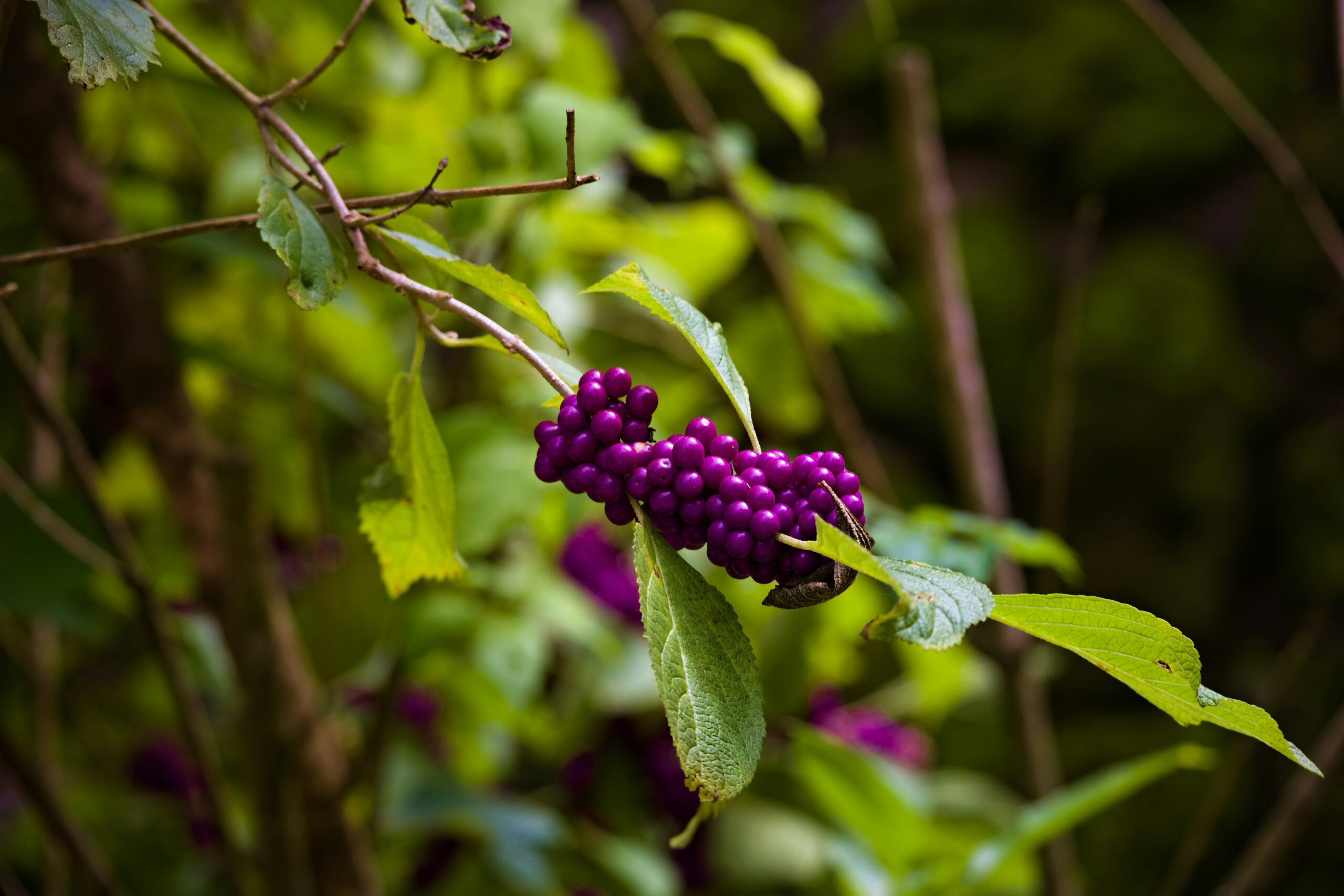
Beautyberry
 

The Power of Imperfection

An unexpected lesson in working in series

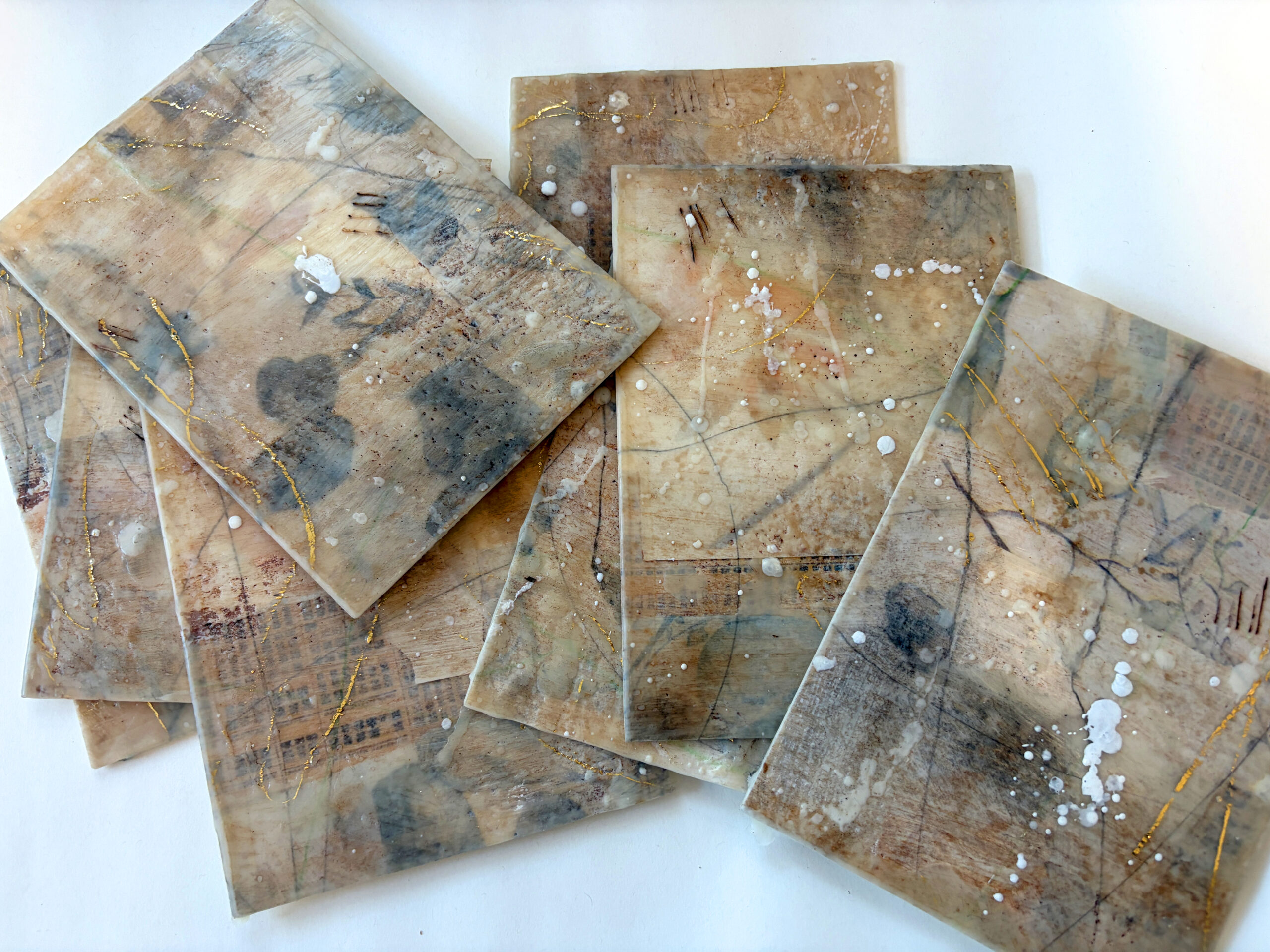
Last week, I wrote about creating a series of encaustic collage covers for a collaborative artist book project. Each cover began with botanical imagery, layered with translucent wax, fragments of text, subtle marks, and touches of gold. The idea was to create covers that belonged together visually but were not identical — variations on a theme.

To finish the covers, I wanted one small element that would tie them together, something tactile and dimensional that would give each book its own identity while reinforcing its connection to the others. I decided on a small distinctive clay tile for each cover. That sounded simple enough.

My first attempts were made with traditional fired clay. I liked the earthy texture and the sense of permanence, but the finished tiles were heavier than I wanted for these delicate book covers. They seemed to dominate rather than complement the encaustic surfaces.

So I turned to paper clay. Paper clay is wonderfully adaptable, lightweight, and easy to work with. But it has a personality of its own, especially when you’re trying to make a series of small pieces that look alike.

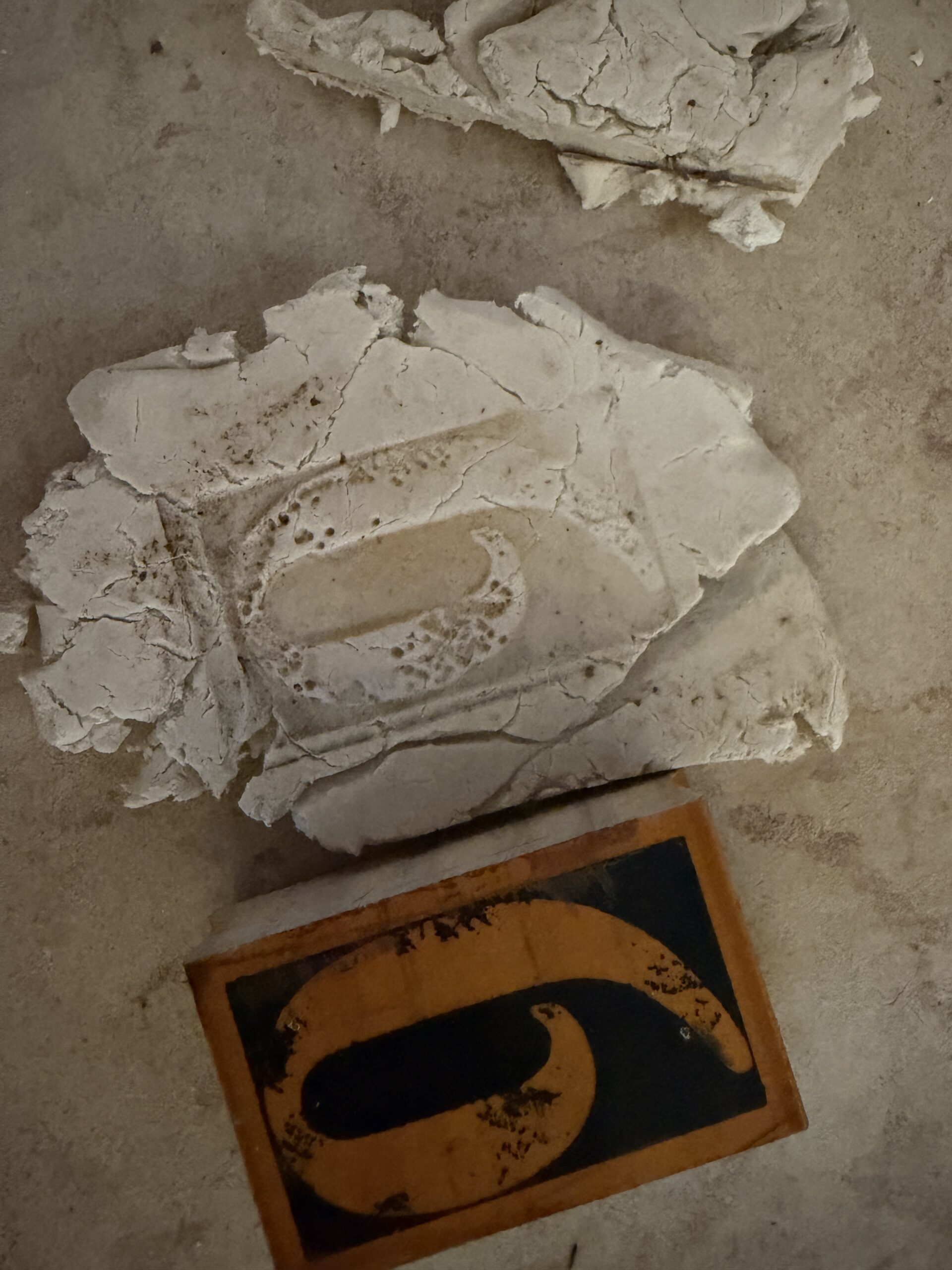
I rolled, cut, impressed, and numbered the tiles. I wanted them to be consistent in size and shape, with the numbers clearly visible. But as they dried, each one behaved a little differently. Edges curled or cracked. Surfaces developed unexpected textures. Some numbers emerged crisp and clear; others looked worn and weathered.

The more I tried to make them match, the more obvious their differences became. And then I realized something. The problem wasn’t the clay. The problem was my expectation of perfection.

When we set out to make a series of identical objects, every tiny variation announces itself as a mistake. One edge is crooked. One number is slightly off-center. One surface is rougher than the others.
But what happens if we change the rules? What if, instead of trying to eliminate those differences, we invite them in?

I began deliberately roughening the edges, allowing cracks and irregularities to remain, and emphasizing the worn, imperfect surfaces. I stopped trying to make the tiles identical and started thinking of them as members of the same family. Walnut ink and white pan pastel added surface variation.

And suddenly, they worked. Each tile had its own character. Some looked like fragments from an ancient wall. Others resembled weathered markers or archaeological finds. Their shared materials, shapes, and numbers gave them continuity, but their differences made them interesting.

They belonged together without having to match.

That realization seems especially important when we’re working in a series.

A series doesn’t have to be a collection of duplicates. It can be a conversation among related objects. There needs to be a common language, of course. Something that connects the pieces — a material, a palette, a repeated form, a gesture, a theme. But within that shared language, there can be enormous freedom.

We recognize them as belonging together, not because they are identical, but because they share an underlying intention.

I think this is one of the most liberating lessons we can learn as artists: Consistency is not the same as uniformity.

When we stop measuring each piece against an imaginary perfect version, we begin to notice what each piece has to offer. The crooked edge becomes expressive. The unexpected crack becomes part of the history of the object. The irregular surface catches the light in a way a perfectly smooth one never could. And perhaps most importantly, the hand of the maker becomes visible.

As I start to figure out how to attach the finished numbered tiles to the encaustic covers, I realize that they were doing exactly what I had hoped. They brought the individual books together as a series, but they also gave each cover a distinct identity. The delicate wax surfaces and the rough clay fragments seemed to speak to each other. One suggested layers of memory; the other, something recovered and preserved.

I love that this small experiment reminded me of something I already knew but occasionally forget: sometimes the best thing we can do for our work is to stop trying to control every outcome. Give the process some room to surprise us. And give ourselves permission to make things that are beautifully, unmistakably, imperfectly human.

I’ll send pictures of these perfectly imperfect books when they are finished! Just remember: When we try to make things identical, differences become flaws. When we allow them to be individual, differences become character. That’s my story and I’m sticking to it!

Hidden in the Layers: Covers for a Collaboration.

Sometimes the best collaborations begin with a simple idea and three artists who each bring something different to the table.

I’m working with two artist friends on a limited-edition series of three handmade accordion books featuring eight samples of plant-dyed fabric. One artist is creating the botanical textiles and mounting them on individual 5 × 7-inch cards. Another is constructing the accordion books from heavyweight ivory printmaking paper, complete with pockets to hold the samples.

My contribution is the covers—three sets of them, all different, but all related.

I wanted the covers to suggest the natural world without being too literal. Because the books will contain actual plant-dyed textiles, it seemed appropriate to create surfaces that held traces of leaves and stems, almost like botanical memories. I wanted images and messages to appear and disappear beneath layers, inviting a closer look.

Beginning with the whole

Rather than make eight separate collages, I started with a single large sheet of 22 × 30-inch, 300-pound watercolor paper.

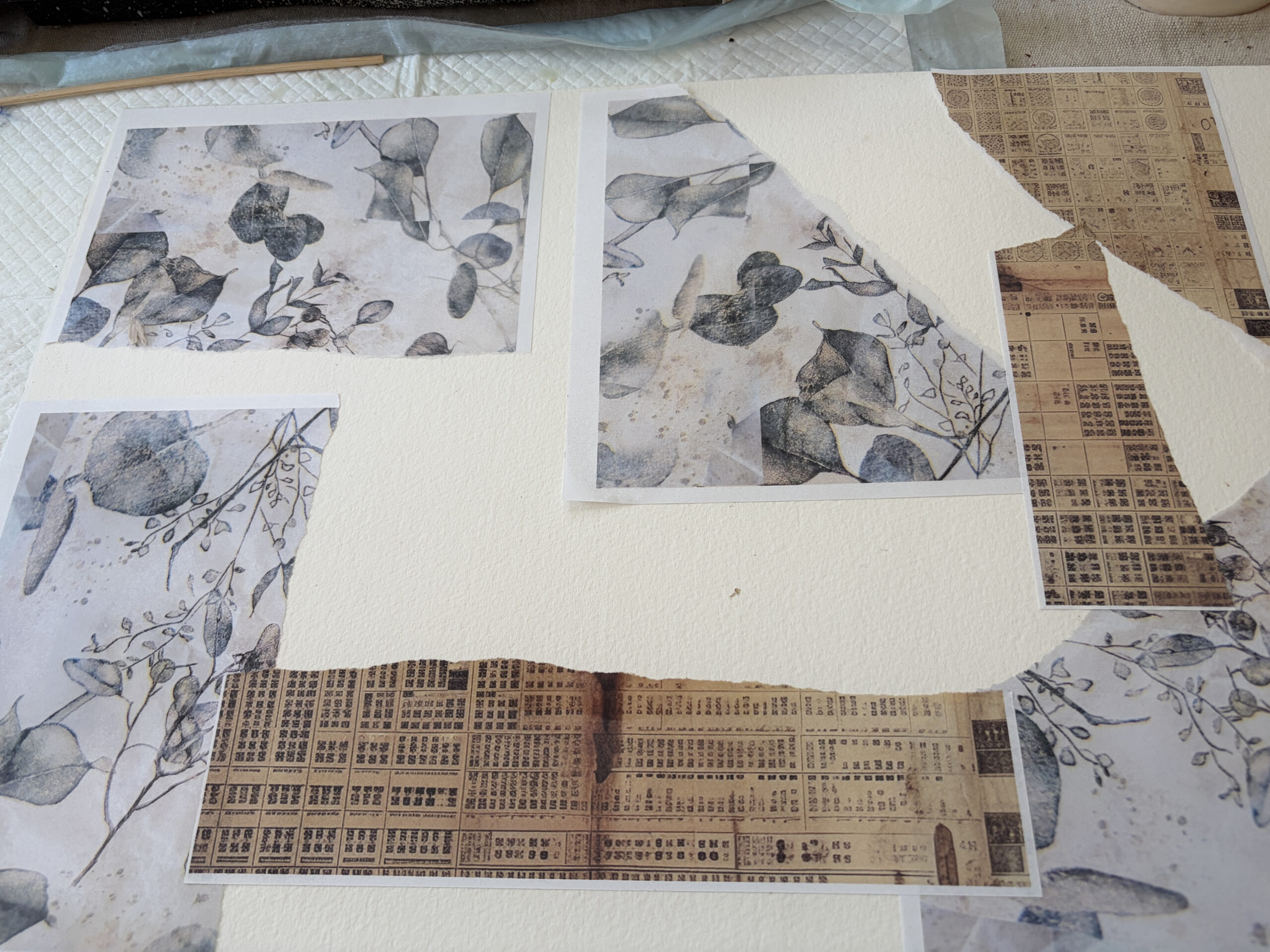
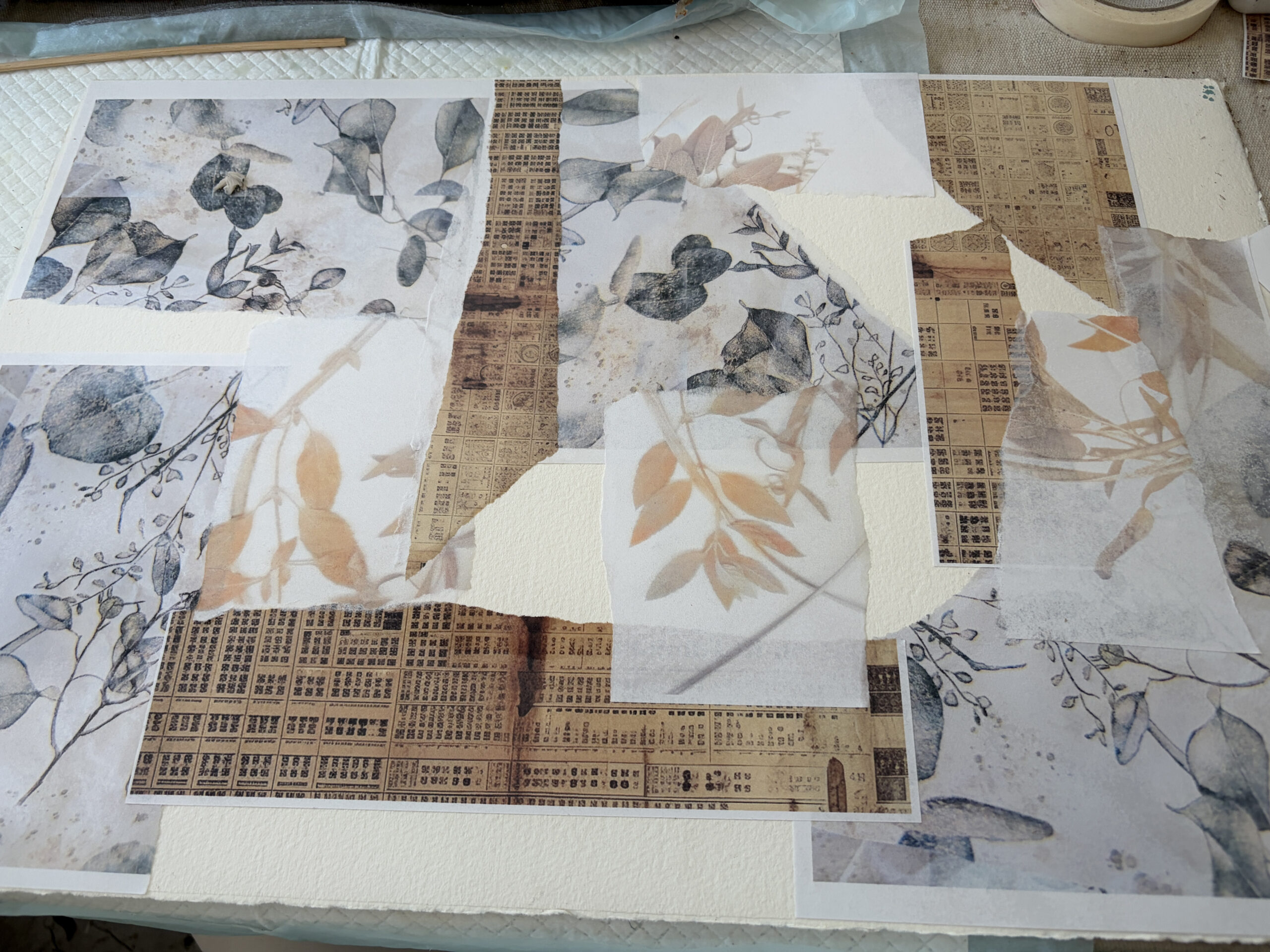
I arranged torn pieces of botanical imagery across the surface, along with fragments of aged-looking printed papers. At this stage, the leaves were quite recognizable, and the composition was fairly open.

collage with papers

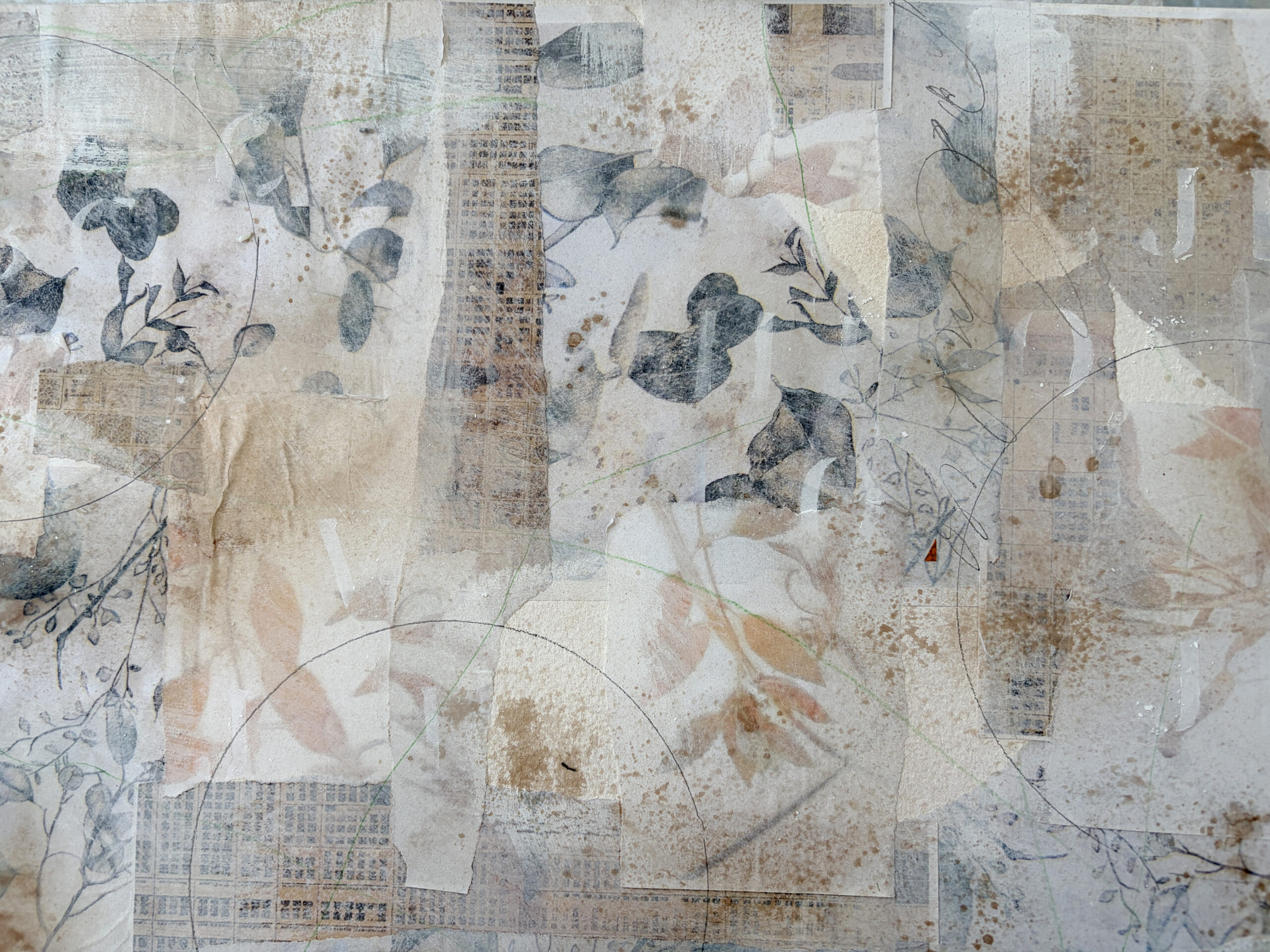
As I continued, I added softer, more translucent botanical images. I created these by laying fresh herb leaves on my scanner and then scanning them and printing them out. These began to interrupt and partially conceal the original leaves. The old printed text provided a different kind of pattern—something that suggested records, histories, or messages whose meanings were no longer entirely clear.

I wasn’t interested in preserving any particular image. In fact, I wanted much of the original imagery to disappear. I added a layer of white tempera paint, which veils the pattern and provides a wax-friendly surface for the upcoming wax layers.

collage with white paint layer

Letting things disappear

This is one of my favorite things about layered collage and encaustic. You can begin with something quite specific and gradually transform it into something more mysterious.

As I worked over the collage with wax, the botanical forms became less distinct. Some leaves remained visible, while others faded into the background. I added marks, subtle color, and areas of texture, allowing the surface to become increasingly complex.

Collage with wax surface

I wanted the viewer to have the sense that there was something beneath the surface worth discovering—a stem, a fragment of writing, perhaps a shape that might or might not be a leaf.

The imagery was still there, but it was no longer telling the whole story.

A little light on the surface

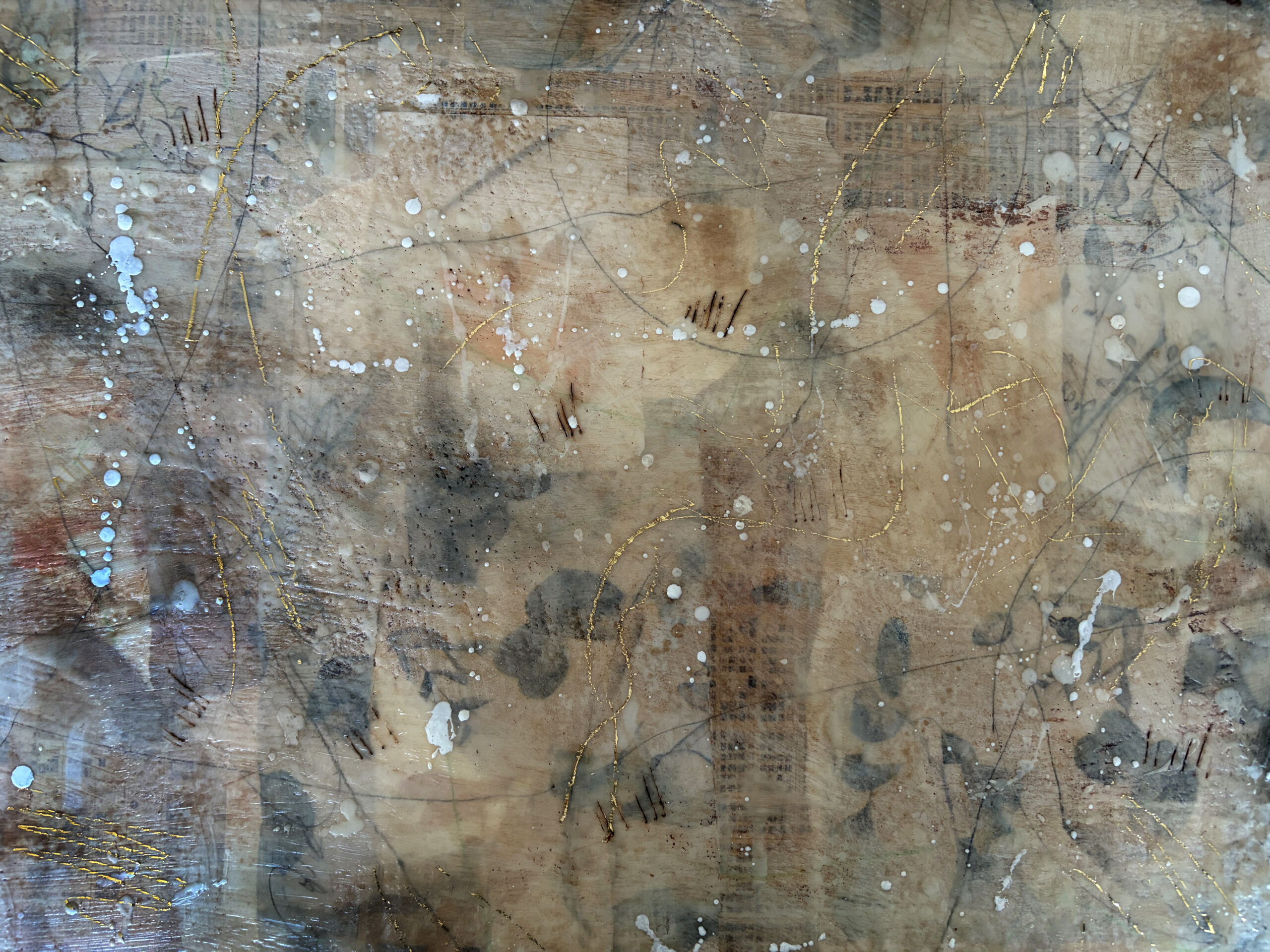
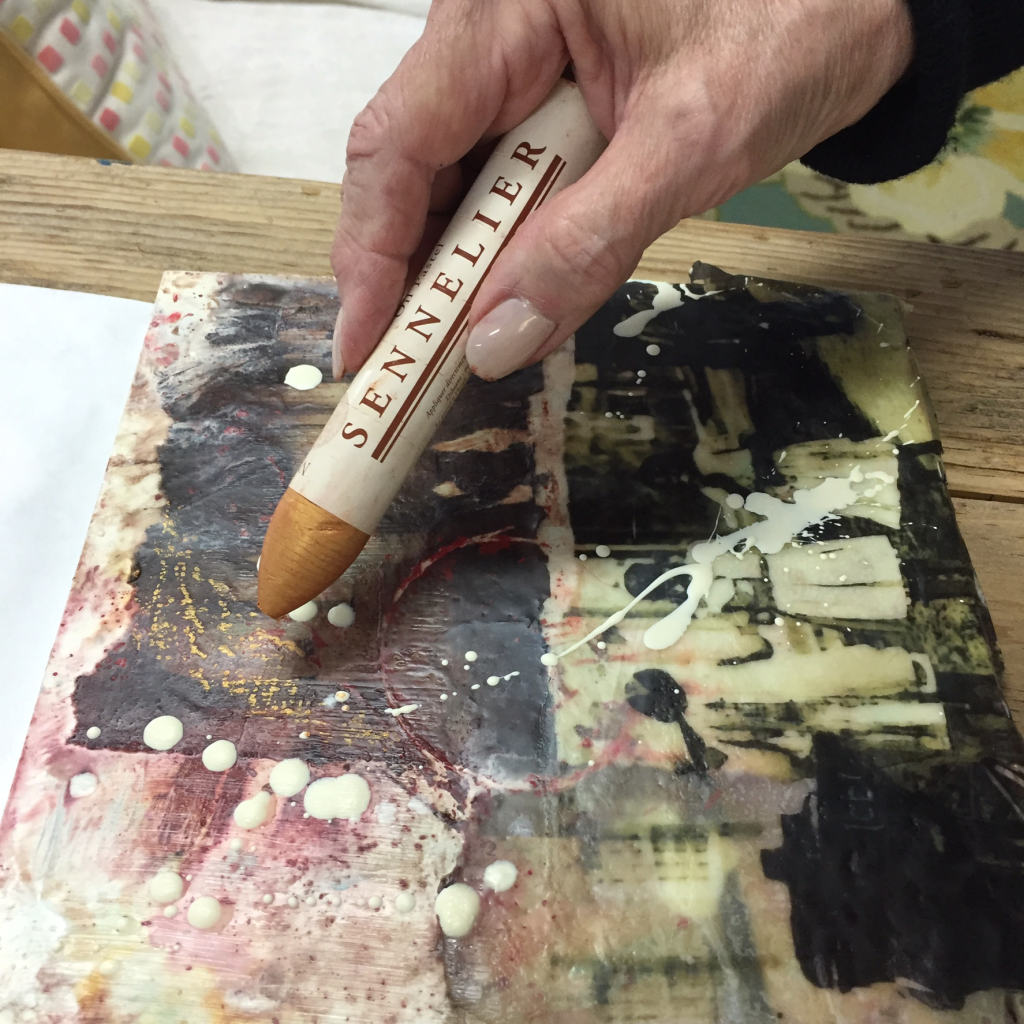
As the piece developed, I added fine gold marks and scattered white accents. These brought a different kind of energy to the muted surface.

The gold catches the light and creates little pathways across the composition, while the white marks interrupt the softer colors. There are also darker scratches and wandering lines that give the surface a sense of movement.

encaustic collage with gold lines

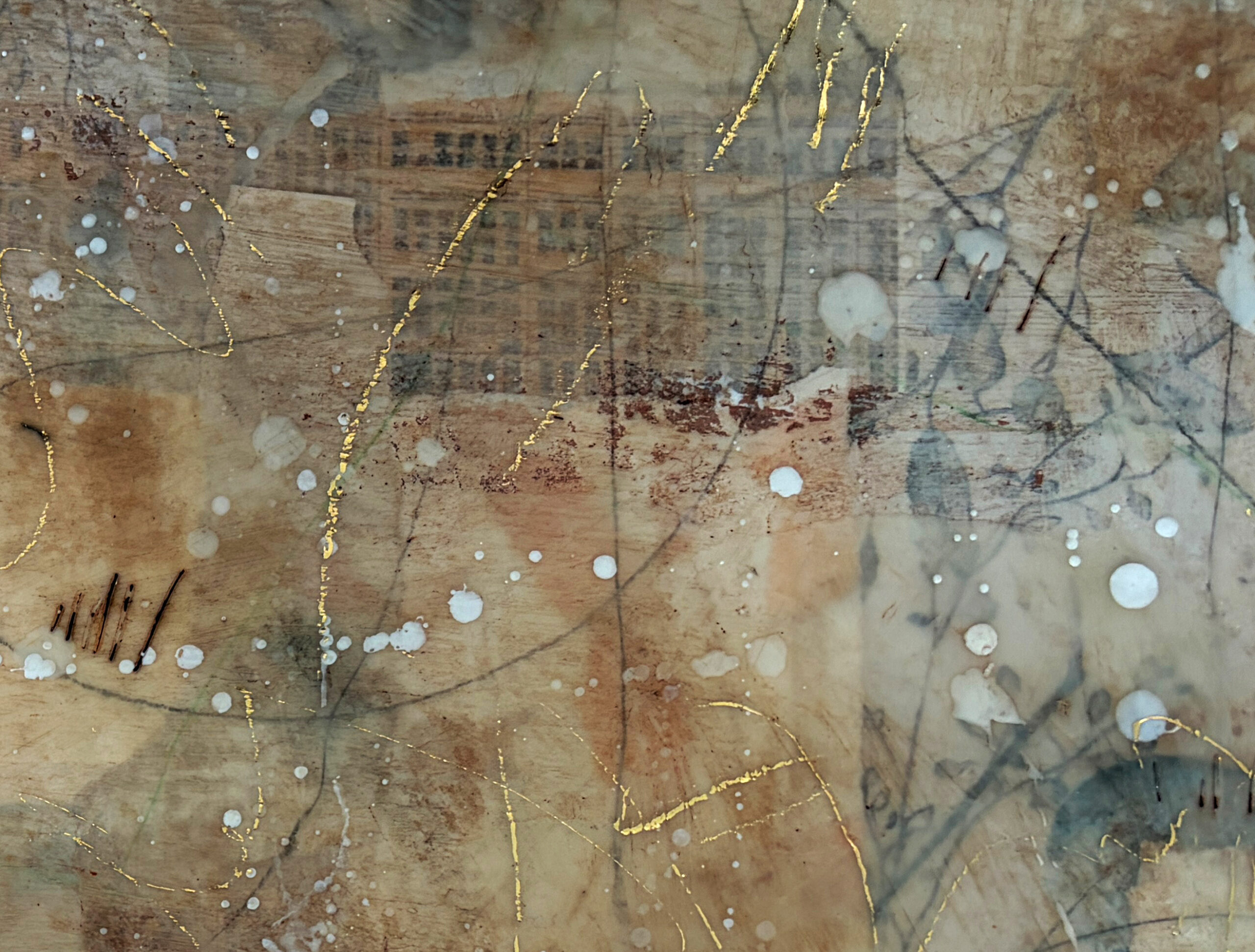
Detail

At this point, the original botanical images had become almost ghostlike. They were still part of the work, but now they seemed embedded in its history rather than sitting on top of it.

That was exactly what I had hoped for.

Eight from one

Then came the interesting part.

I cut the large composition into eight individual covers, each measuring 5.25 × 7.25 inches. Even though there are just three books in the series with a total of six covers, I cut eight covers to have two extras — just in case 🙂

The cutting apart is always a moment of discovery. When you work on one continuous surface, you aren’t necessarily thinking about how each small section will look on its own. Once the pieces are separated, unexpected compositions emerge.

A line that once traveled across the larger sheet becomes a gesture within a single cover. A faint leaf suddenly takes on importance. A tiny fragment of text becomes a focal point.

As a final step, I dipped the cut edges into the clear beeswax to seal and soften them.

eight book covers

What pleases me most is that the covers are clearly related, but none is quite like another. They share a palette, a history of materials, and a visual language. Each is an individual piece, but each also carries something of the whole.

For now, my covers are finished and almost ready to become part of something larger. I may add a few other touches, but I’ve learned to wait and think a bit. The plant-dyed samples and folded accordion structures will bring their own textures, rhythms, and surprises to the project.

In a future post, I’ll share the completed books and reflect a little more on what happens when three artists bring their individual practices together to create one shared work.

Stay tuned . . . .happy days are here again.

The Story of The Enso Circle

Creative work is rarely done by a lone genius. Artists, writers, scientists and other professionals often do their most creative work when collaborating within a circle of like-minded friends. Experimenting together and challenging one another, they develop the courage to rebel against the established traditions in their field. Working alone or in pairs, then meeting as a group to discuss their emerging ideas, they forge a new, shared vision that guides their work. When circles work well, the unusual interactions that occur in them draw out creativity in each of the members.

Michael Farrell, Collaborative Circles: Friendship Dynamics and Creative Work (2001)

After six years of hatching, percolating, and polishing this concept, Michelle Belto and I are (at last) introducing you to The Enso Circle, our Invitational Online Artists’ Residency program. When we previewed the new website to several artist friends, here were their reactions:

  • “I just read your note on the class/residency that you and Michelle will be teaching and just wanted to let you know that this sounds truly amazing. Love both of your artwork and this sounds perfect! I have been creating art for over 50 years so I think it’s time I joined your tribe.” Bosha S.
  • “Brilliant idea. Brava!” Jean D.
  • “What a fabulous idea!!! Love this! This is a BRILLIANT venture!” Christine S.

When we began talking about what has ultimately become The Enso Circle, we wanted to create a structured, collaborative community that we ourselves would want to belong to.

This community would offer a supportive space in which to both expand and focus our present art practice, and to offer us a safe place for sharing ideas with like-minded creatives. It would have a starting time and an ending time, and be long enough to be meaningful but short enough to keep the energy going.

We knew from experience that we both need certain guidelines to make this work for us. Among those are:

  • A time-defined goal to motivate us (an art show submission, an article deadline, a workshop design, a group exhibit)
  • Private time to generate or refine a creative concept
  • A concrete plan to reach our goal with focus but flexibility
  • Group time to get feedback on where we are, where we were, and where we are going with our project
  • A collection of resources, always available, that can give us both technical and aesthetic advice and answers
  • Input from mentors outside the community who have expertise and objectivity
  • Small-group opportunities to brainstorm and problem solve the small steps in the process that sometimes get us stuck

Why did we name our community The Enso Circle? Because the Enso is a manifestation of the artist at the moment of creation and the acceptance of our innermost self. It symbolizes strength, elegance, and one-mindedness.

The very imperfections and hand-created contours are exactly what makes the Enso beautiful.

If you want to cut to the chase and learn more right this moment, just click here.

(And here’s what I know that you’re wondering up front . . .the program costs $325, it’s 12-weeks long, only 12 people can be accepted, and yes, it’s absolutely worth it)

But there’s more, and it’s important – and unusual – read on:

The Enso Circle is based on the idea of an Artist’s Residency – a twelve-week commitment that results in a personal body of work, large or small, conceived and completed through goals that you set with the support of the community throughout the process. You do need to apply and have a goal in mind, although that can change over the course of the term.

The Enso Circle is a unique experience for several reasons.

  • It has all the advantages of an in-depth workshop: resources, technique videos, handouts and printables.
  • Like an academic residency, it allows you to select your individual goal and work toward it with peer and mentor support.
  • It has the power of a critique group through frequent informal Zoom meetings and discussions in our private Slack space.
  • It is led by nationally known teacher/artists Michelle Belto and Lyn Belisle, who will model the process by working toward their own goals right along with you during the three-month program.
  • And it culminates in an online exhibition.
  • Lyn and Michelle plan to offer three twelve-week Residency terms throughout the year. The first one will start on March 2nd, 2021.

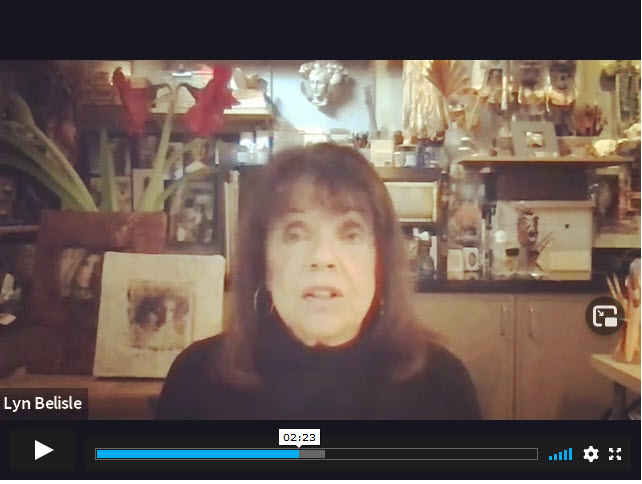
Here’s an up-close and personal invitation from both of us, via our Zoom recording. Just click on the video image.

VIMEO LINK

We hope you choose to apply to be one of the first twelve residents of The Enso Circle!

HERE’S THE LINK TO THE ENSO CIRCLE CLASSROOM./RESIDENCY WEBSITE WITH ALL THE INFORMATION AND THE APPLICATION FORM FOR YOUR CONSIDERATION

Thanks for reading – you’ll know if it’s right for you, and if it’s not, thanks for learning about our Enso Circle story!

Take good care,

Lyn

The pie is out of the oven

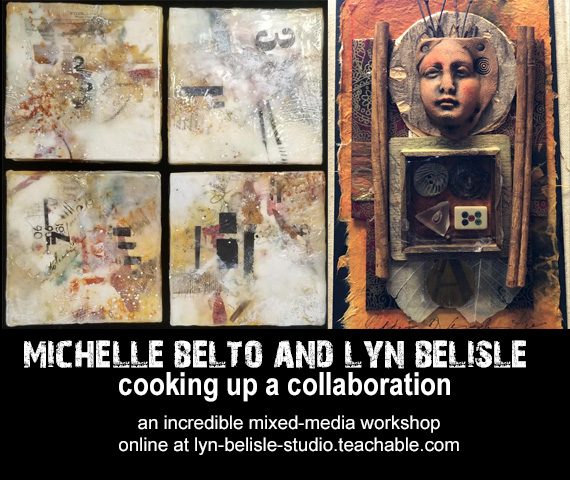
Just this afternoon, Michelle Belto and I finished our first collaborative workshop on Teachable. I say “collaborative,” but it has been the weirdest collaboration I ever was a part of!

Apparently, we were both insane from quarantine, because we agreed to do an experiment in which each of us made a serious artwork based on the theme of “Apple Pie.” The catch was that neither of us would share what we were doing until the bitter end. We would never see each each other in person, and we would film the whole thing in lesson format for a workshop.

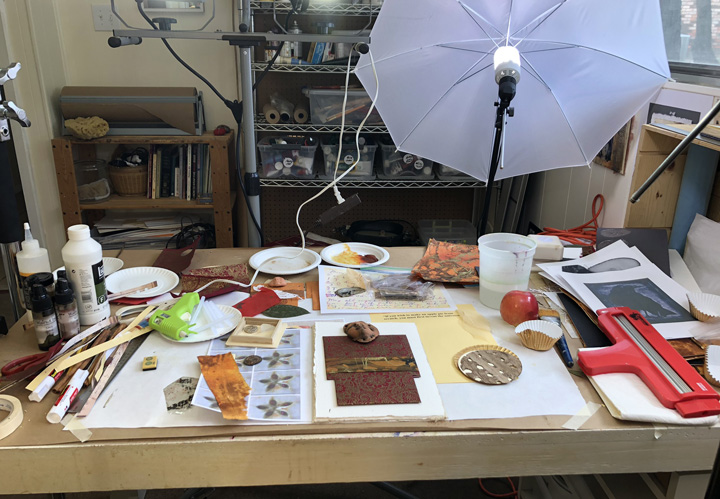
Here’s my studio where I filmed the Apple Pie collaboration – notice the real apple for inspiration . . .

It was an amazing experience. We had our final Zoom call this afternoon, and both of us commented that it felt like we were working blind, filming alone in our studios, trying to figure out our next moves and having to talk about it to our invisible audience. There are many funny, teachable moments.

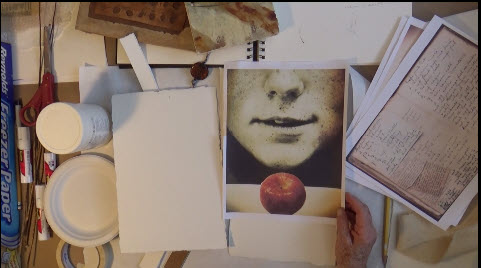
Here’s part of a lesson that I did, not having any idea how this apple print would turn out. It was, indeed, “less than thrilling,” but it gave me a great new idea that you’ll see in the next lesson if you take the workshop.

We ended up with a total of six hours of video lessons between us – not just the “technique” kinds of lessons, but lessons in what it’s like to truly “trust the process” and hope the right decision comes along fast.

I invite you to look at the free lessons on the Cooking Up a Collaboration workshop page. While I’d love for you to sign up, you’ll get to see the final results in the lessons called “The Goddess of Apple Pie” and “Family Recipe” from the free previews. Here’s the link.

I’ll be sending out a newsletter in the next day or so with more workshop and studio news, and a give-away, but in the meantime, I’m gonna go have a piece of apple pie.

Take good care,

Lyn

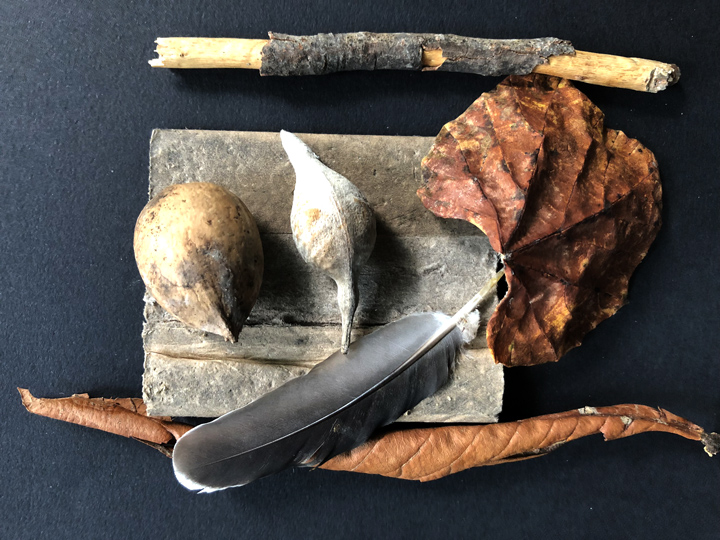
TRY IT! 7-Day Found Object Challenge for Composition Competence

Say THAT three times fast – anyway, this is fun! And it takes practically no time at all each day. It will sharpen your observation skills and boost your composition fluency.

HOW THIS STARTED (you probably do the same sort of thing):

So, I take walks every morning and most afternoons and often find a small object along the way  – like a rock or dried leaf –  that intrigues me. Sometime I put it in my pocket, sometimes I just look at it and leave it.

Last week, I challenged myself to choose one found object a day, bring it home, and see how the daily objects might fit together at the end of the week.

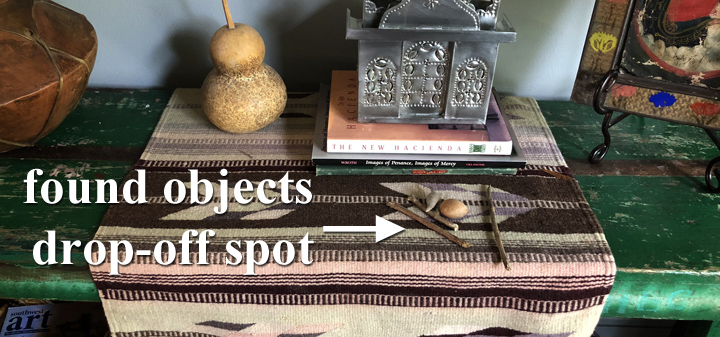
There’s a table inside my front door where I often drop stuff, and here was where I put the first object. (You’ll need a designated spot, too, for your daily objects.)

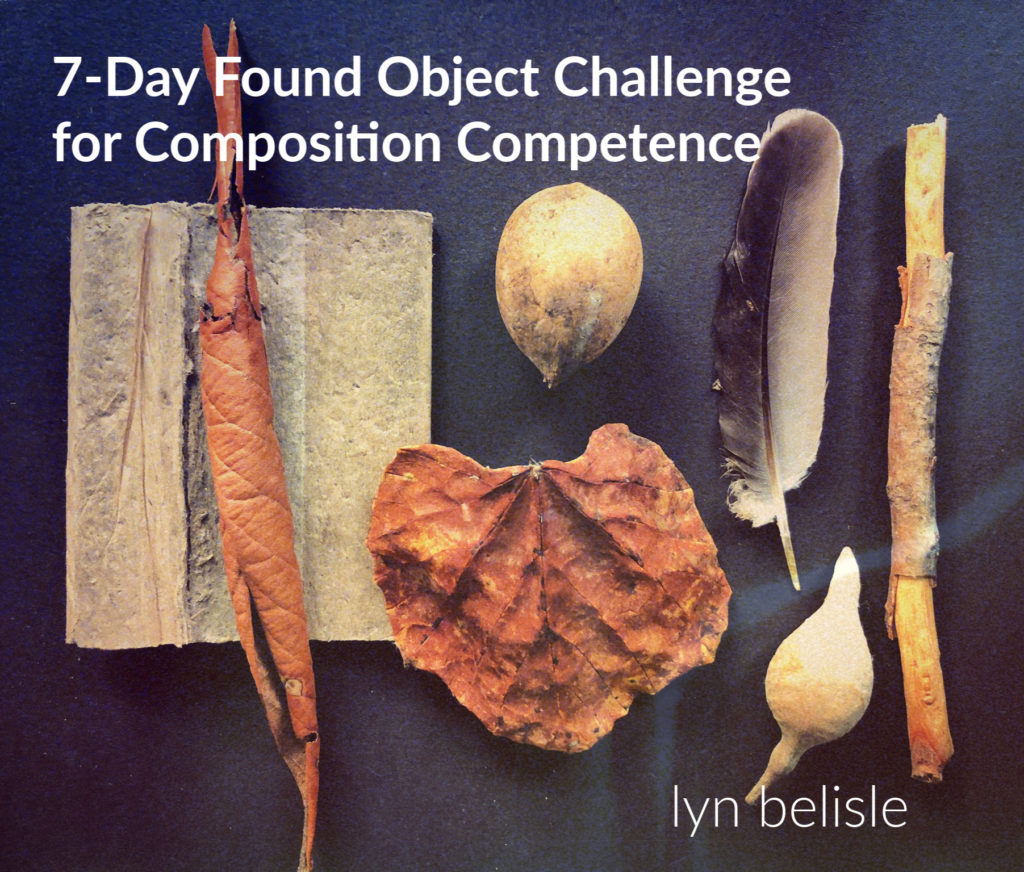
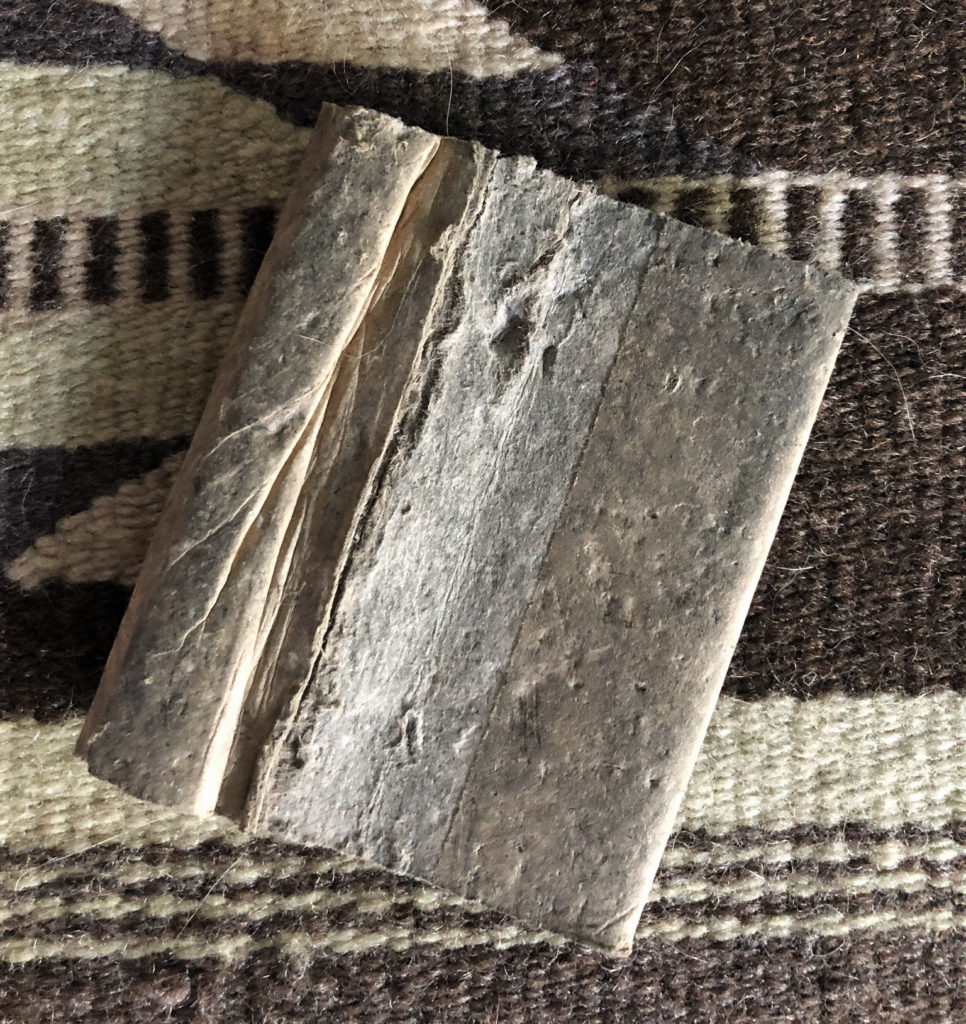
Monday’s object was a piece of thick layered cardboard, which I first thought was a little book. I found it in the street by my sidewalk and it had been run over a few times and flattened nicely.

Monday – flattened cardboard fragment

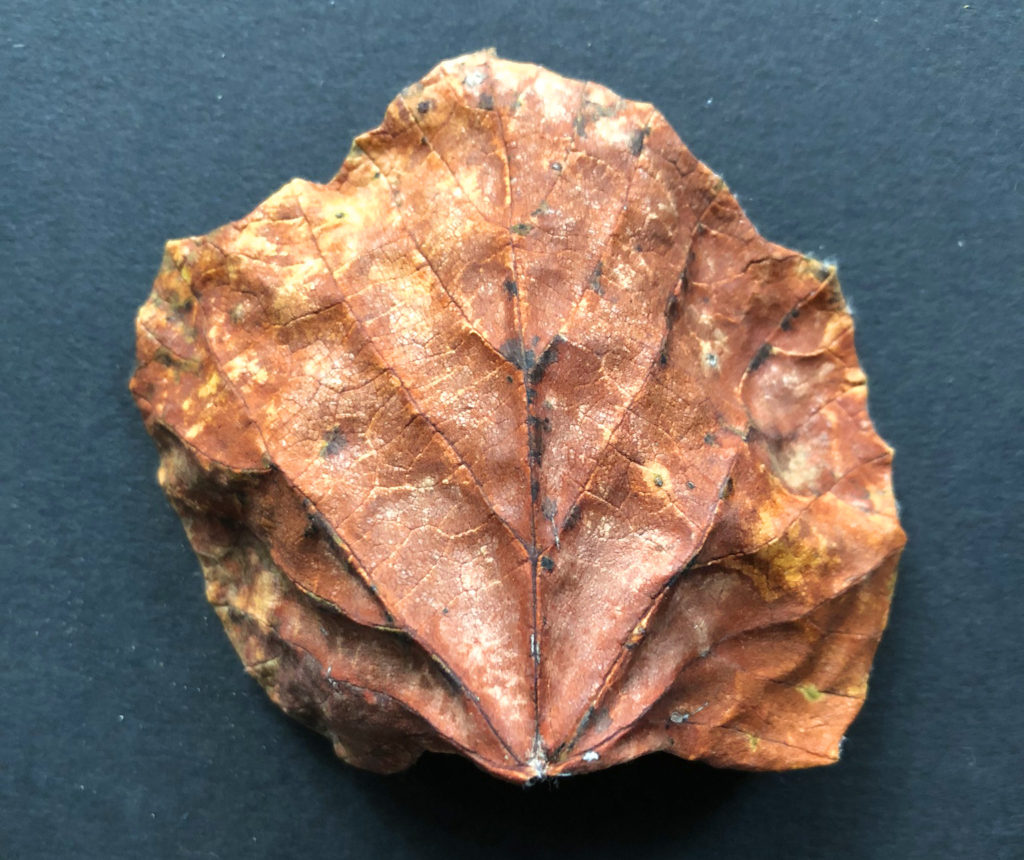
Tuesday’s object was a dried leaf that had the most gorgeous rust-patina colors and was curved like an umbrella.

Tuesday – interesting dried leaf

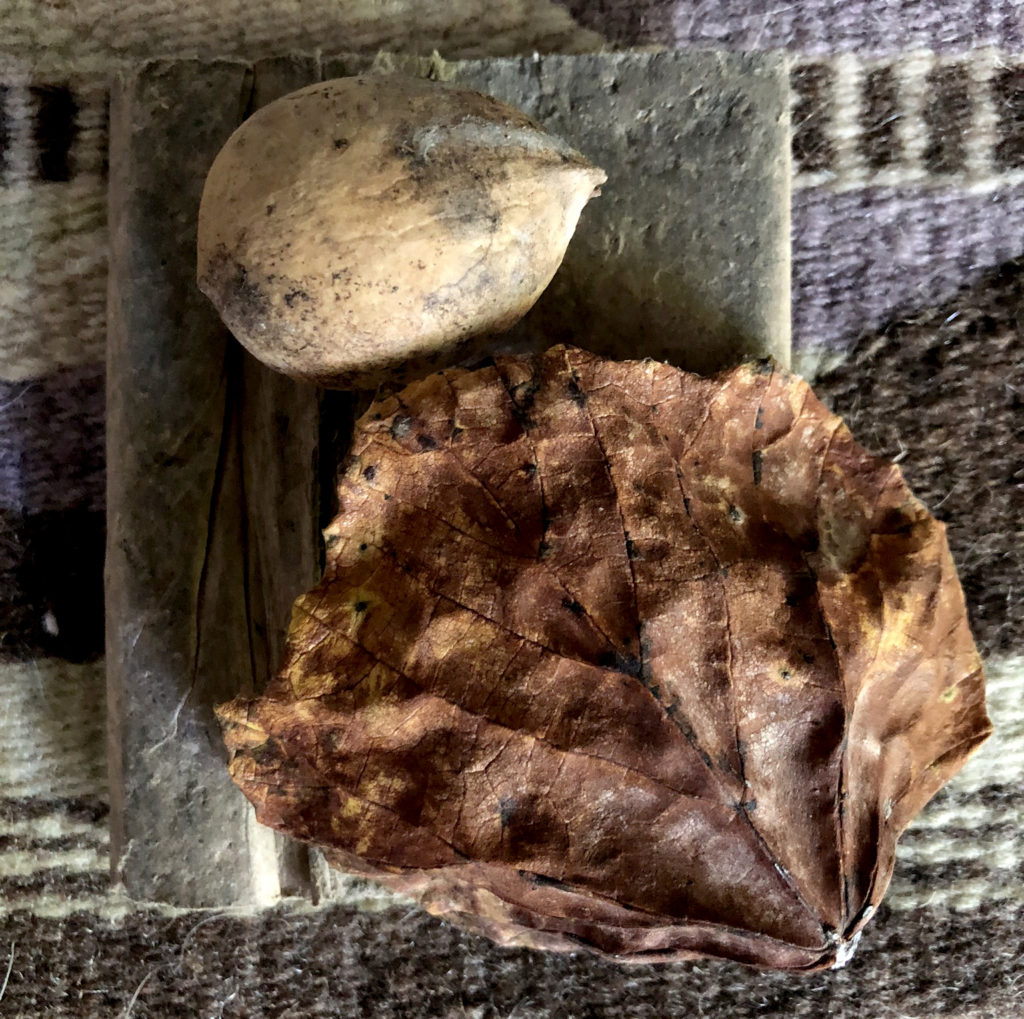
On Wednesday, I thought I had found a bird’s egg by the driveway of a neighbor’s house, but it turned out to be a seed pod of some kind. I brought it home to add to the collection.

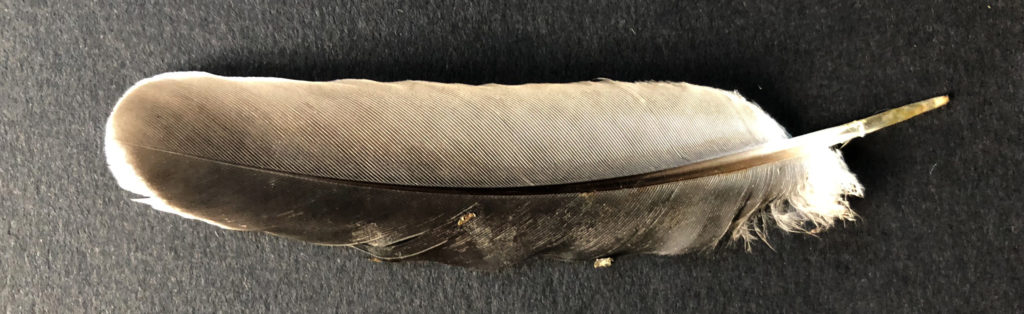
Thursday’s find was a slightly grubby bird feather, which is always a nice touch.

Thursday – bird feather, probably a dove?

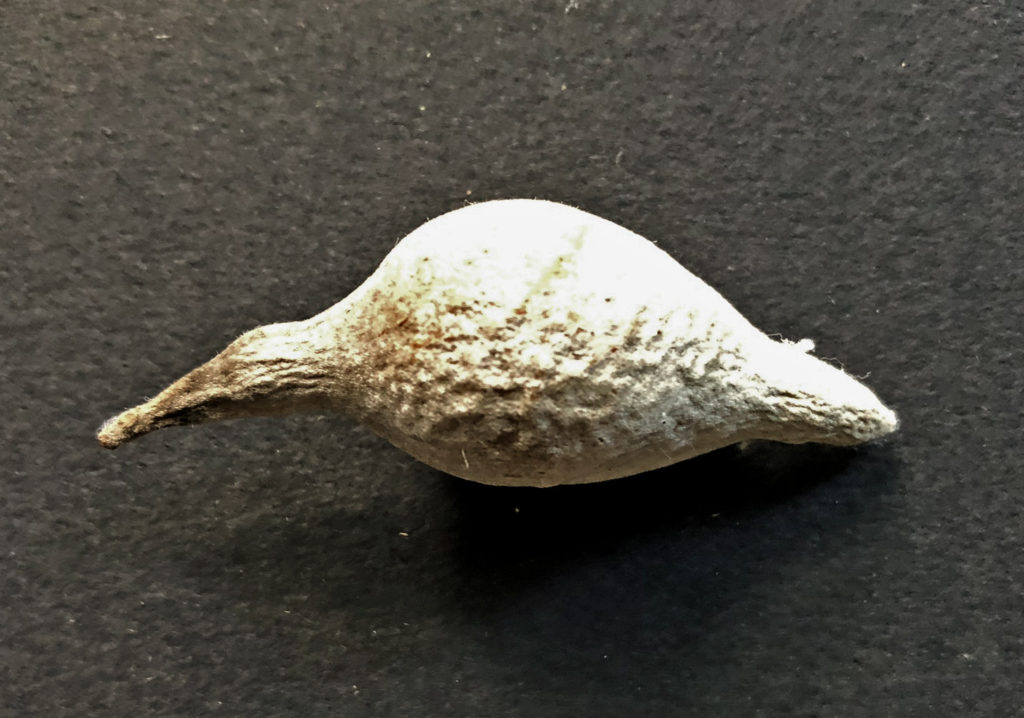
On Friday, I brought home another seed pod thingy – this one look kind of like a bird.

Seed pod, probably Magnolia

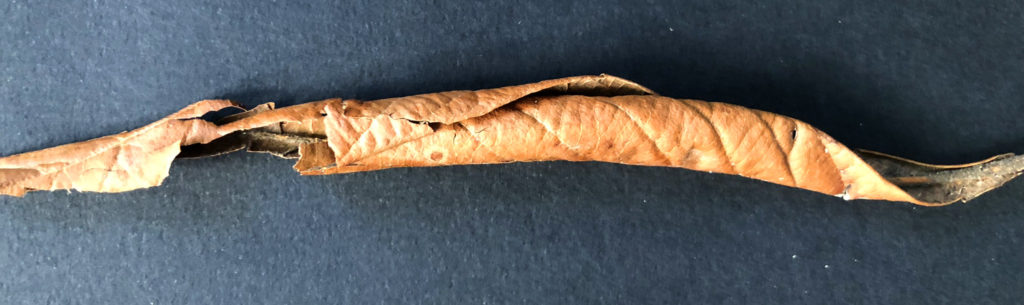
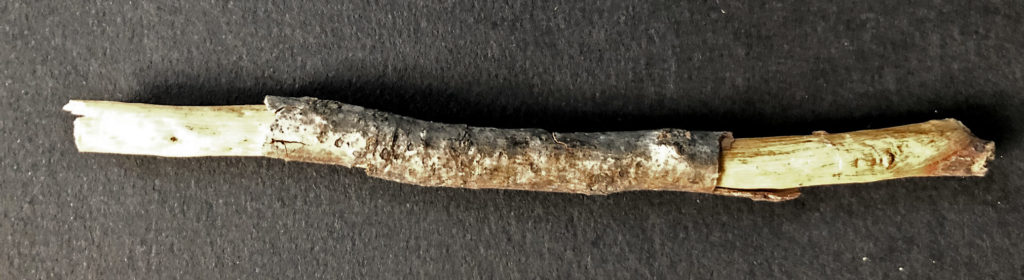
Saturday’s and Sunday’s finds were rather similar for no particular reason – a rolled leaf, and a stick with no bark on either end.

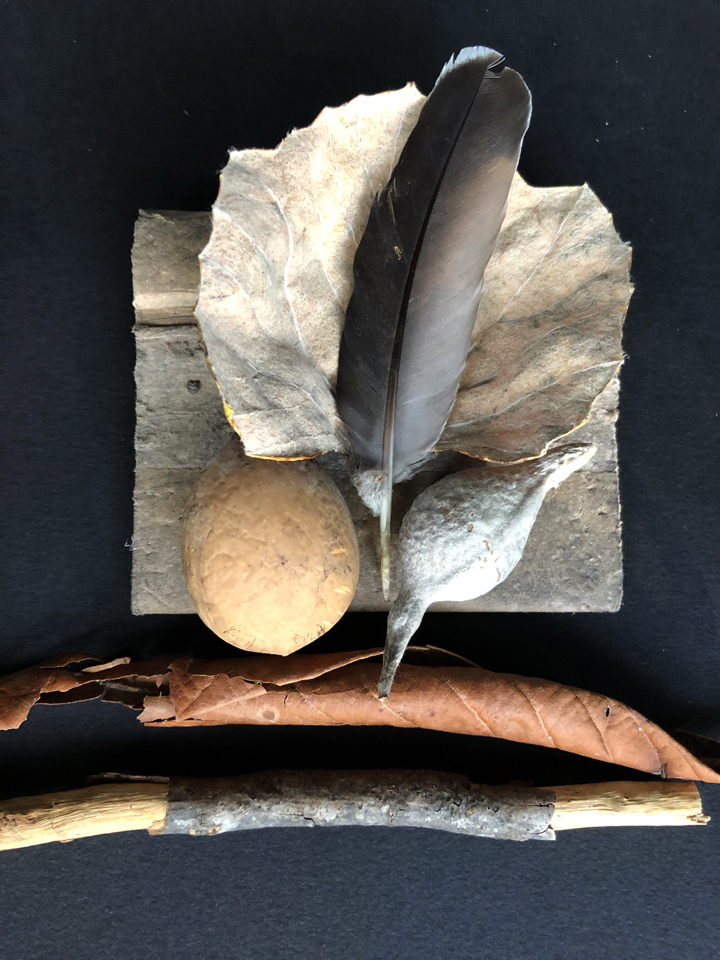
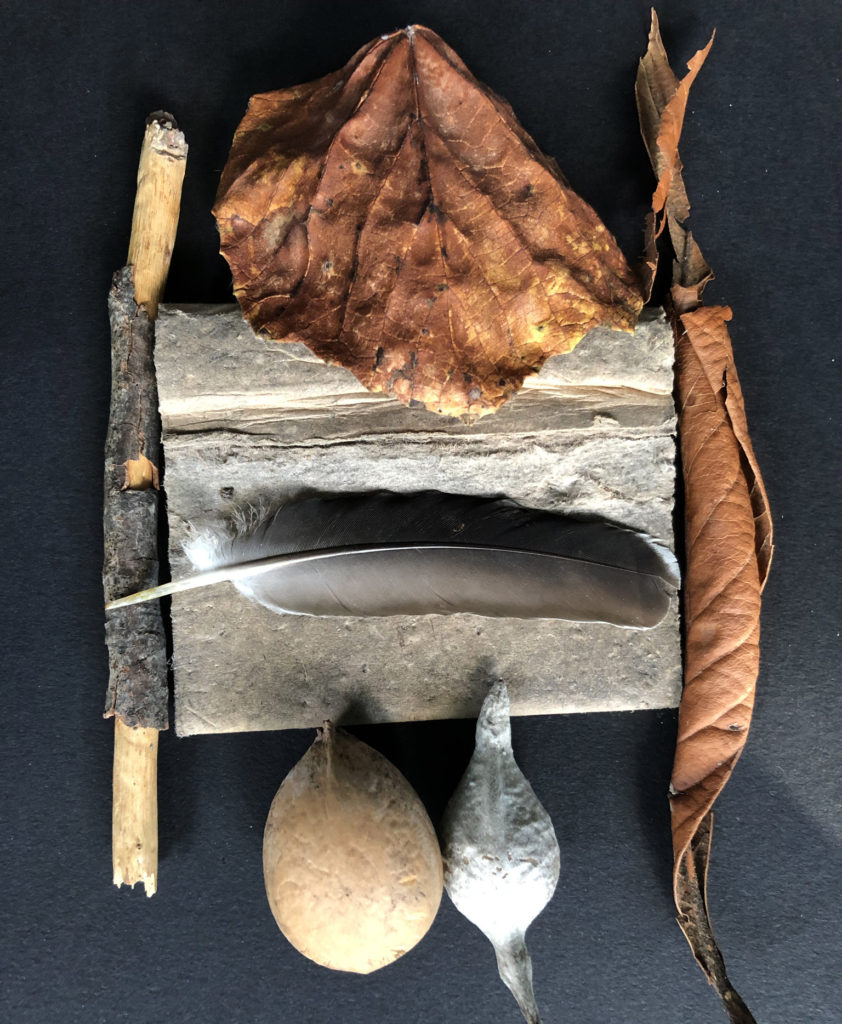
Then came Sunday, which was Composition Practice Day – I  started arranging the seven objects in different configurations on a black piece of paper, then photographing the experimental arrangements with my phone camera.

Important point – there is more than one right answer! This is the great fun of solving art problems versus math problems!

This one may have been my favorite, but that could change depending on how the composition was going to be used:

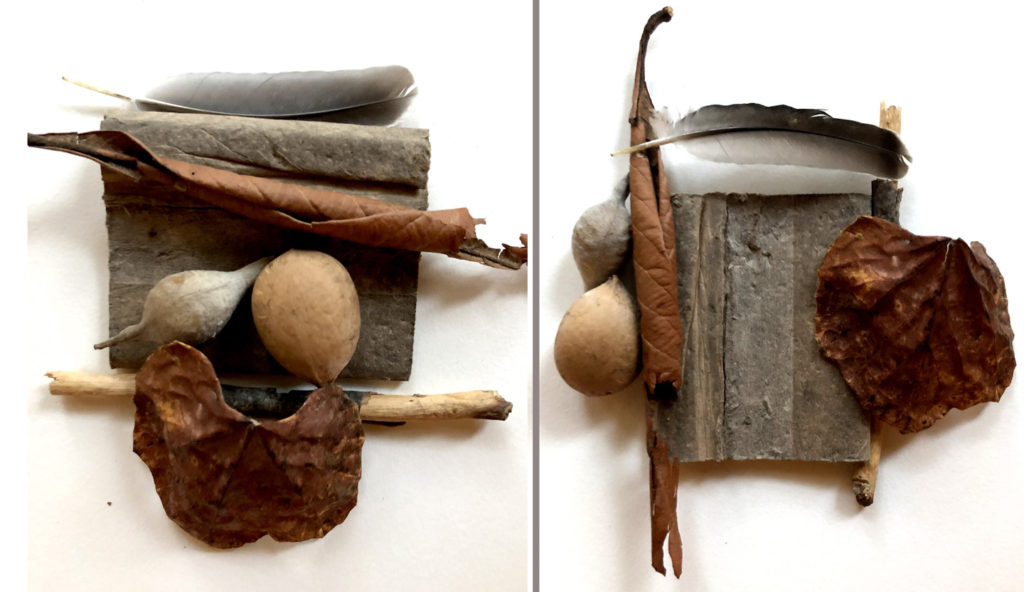
I also tried the objects on a white background.

It’s instructive to note what works for you – balance? Scale? Horizontal versus vertical? symmetrical versus asymmetrical? Stacked versus separate?

You can save your favorite photographs and use them as inspiration for paintings (you already know that the composition works!) or as backgrounds for digital art – here’s one example that I did from the photo on the right, above.

I would love to see examples from all of you who want to play with this idea.

You don’t have to wait until a Monday to start! You just need to choose one object a day without thinking about how it will go with anything else. Choose it just because you like it. When you start your arrangements, document them with photos, and send your favorites to me.

Go to my website (CLICK BELOW) to submit photos of your own 7-Day Found Object Challenge for Composition Competence. I’ll put together an online gallery on September 1st.

FOUND OBJECTS CHALLENGE LINK

I can’t wait to see what you find!


Creative collaborations

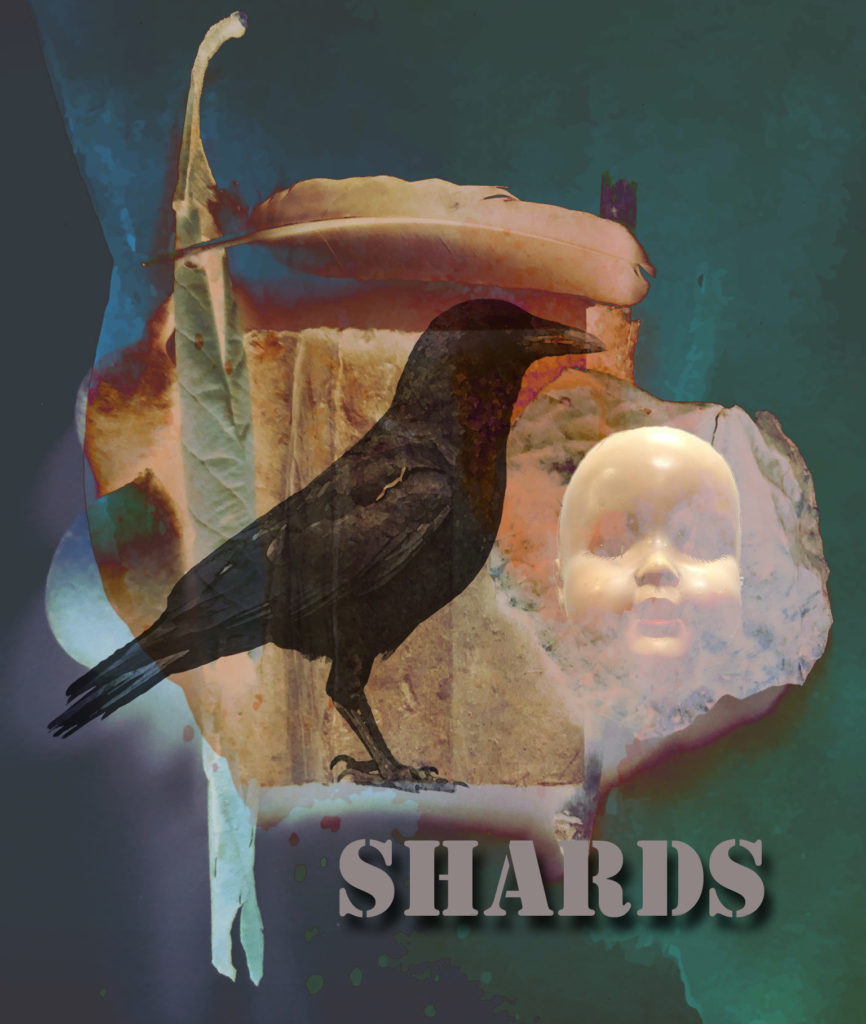
Earlier this month I got several emails from mixed-medial artist and tarot maker Dawn Zichko, whose work I’ve known and liked for quite some time. I wrote another SHARDS post about her about five years ago.

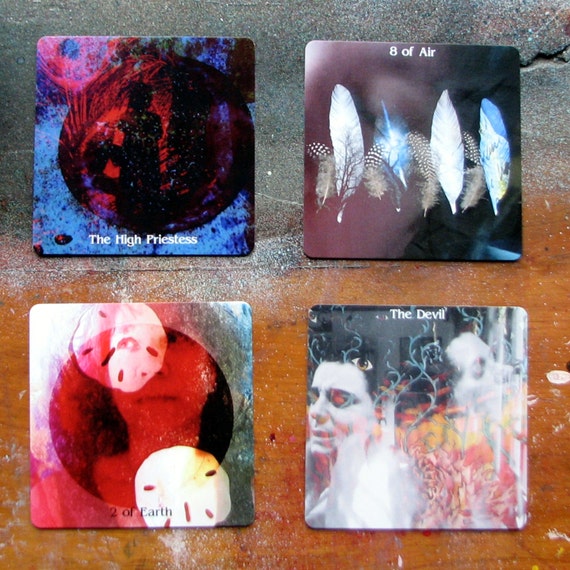
Dawn has a great blog called Mental Mohair which often features a daily card from her Everyday Tarot deck, which you can find in her Etsy Shop.

Four cards from Dawn Zichko’s Everyday Tarot deck

In her first email, Dawn sent a photo with a short note that said,

“Lyn, I thought you might enjoy seeing progress on a collaborative piece.”

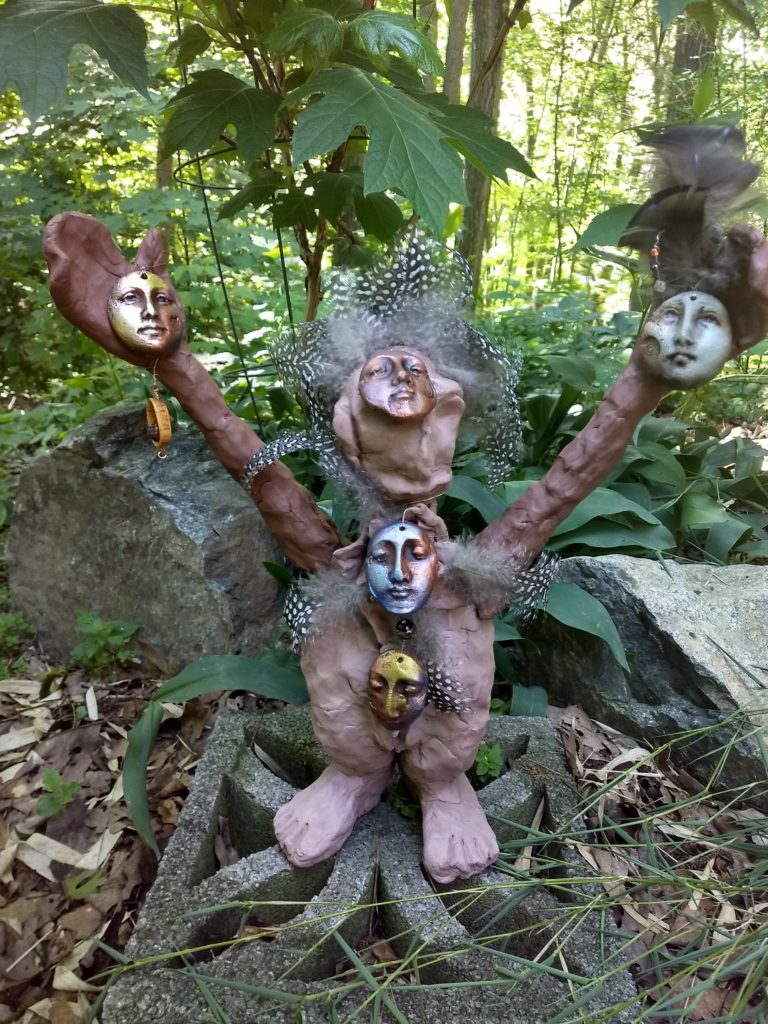
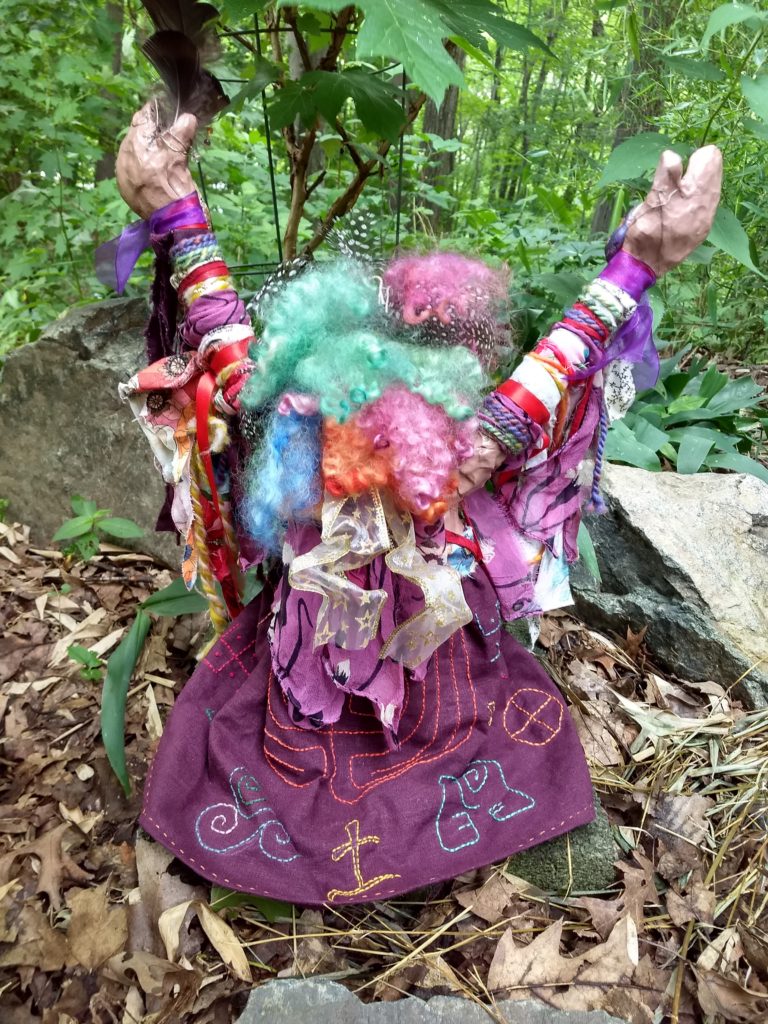
Here was the photo (below) – very intriguing – and some of my faces were part of the collaborative design. I asked her if I could share the photo, and she requested that I wait until they had worked a bit more on it.

I’m including that unfinished version so you can see the structure of the body.

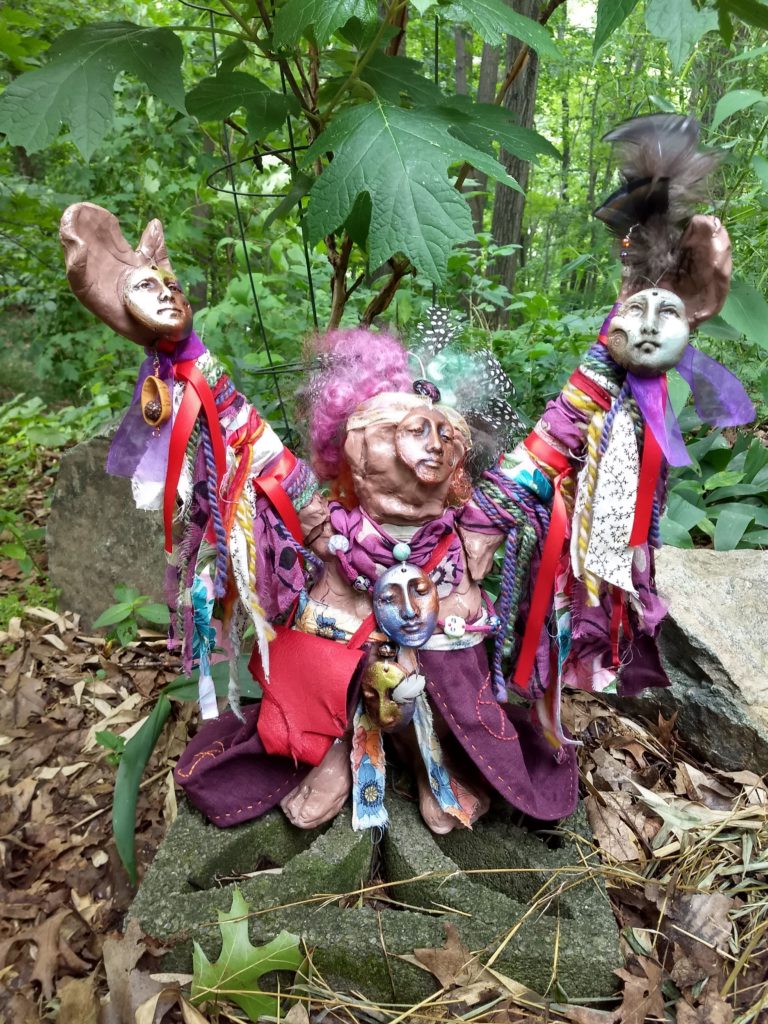
The following week she sent photos of the completed collaborative piece along with this description of the process:

“Lyn, we created the Earth Protectress in ritual space. In brainstorming at earlier gatherings, the creation of a goddess was included in the list. So we all thought of creating her. In the sacred space we chose the parts we wanted to work on by chakra.

Essie (not her real name as she would like to remain anonymous) created the head/Third Eye/Crown, Patricia created the torso/Heart/Solar Plexus, and I created the base/Root and neck/Throat (this is the part that needed reconstruction — oh, the analogies!).”

“The other women let me take her home and run with the additions. The clay faces, hair, pouch, and skirt were all done by me, but the additions were discussed with Essie and Patricia before working on them. I am blessed they trusted my creative ramblings. It was truly a touching experience to create this being in togetherness and sacred space.”

I think it’s just glorious – the whole is greater than the sum of the parts, and yet each part is amazing.

Artist collaborations can be tricky – sometimes it’s obvious which person did what part, but in this case, there is a seamless sense of sacred purpose. Thanks, Dawn, for sharing this work!
_________________________________________________________________________

Have you ever gotten involved with a collaborative project? How’d it work for you?

I have to admit, it’s something I’ve rarely tried, certainly not recently. But a lot of my artist friends, particularly fiber artists, love the collaborative process.

Surprisingly, there’s not a whole lot written about collaborative visual artwork, but I did find this thoughtful post called Cloth, Creativity & Collaborating with fiber artists Cas Holmes and Anne Kelly.

And I also found an engaging article about a mother’s painting with her five-year-old daughter called Making a Masterpiece Together.  Here were their guidelines:

1. We would each add one color to the canvas everyday.

2. We would do our painting while the other one was out of the room, so they would be surprised.

3. We would try not to paint completely over the other persons art work.

Those are great rules! They would work for any kind of collaboration, whether the artwork is done for a sacred and serious purpose like Dawn’s was with her friends, or with an informal group and just for fun.

The trick is always going to be keeping an open mind. No fair thinking “You messed up the part I did!”  Instead, you gotta think “Look how you enhanced my work.” Right??

Photo by Ella Jardim on Unsplash