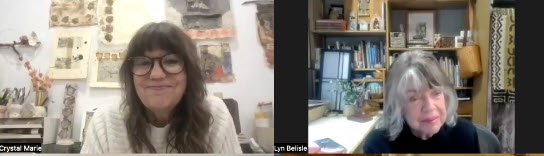
Last week, the remarkable artist and teacher Crystal Marie Neubauer invited me to speak with her online community about my work — an honor, and also an unexpected challenge. How do you describe an art practice that moves fluidly through so many materials? Encaustic, collage, clay, fiber, found objects… it’s never been about one medium.
What I realized is that my work is held together not by technique but by form and intention. Three recurring paths kept surfacing:
Santos & Shards — guardians, icons, and the stories held in fragments
Vessels — boats, bowls, pods, and the metaphor of holding
Layered Images — collage, wax, and the quiet revelations inside transparency
These forms thread through everything I make and shape how I think about narrative, memory, devotion, and protection. This three-part series grew from that conversation with Crystal’s group — an invitation to look more closely at how these paths emerge and how others might recognize echoes of their own practice along the way.

Part 2: Vessels of Holding — Forms That Carry Memory
A three-part series on Fragments, Vessels & Layers
In PART ONE, we talked about shards and stories and fragments.
If fragments are the invitations, vessels are the responses — the forms we create when we need to hold something gently, carry something forward, or protect something fragile. In my work, vessels have always been metaphors for care: what we shelter, what we offer, what we carry alone, and what we carry together.
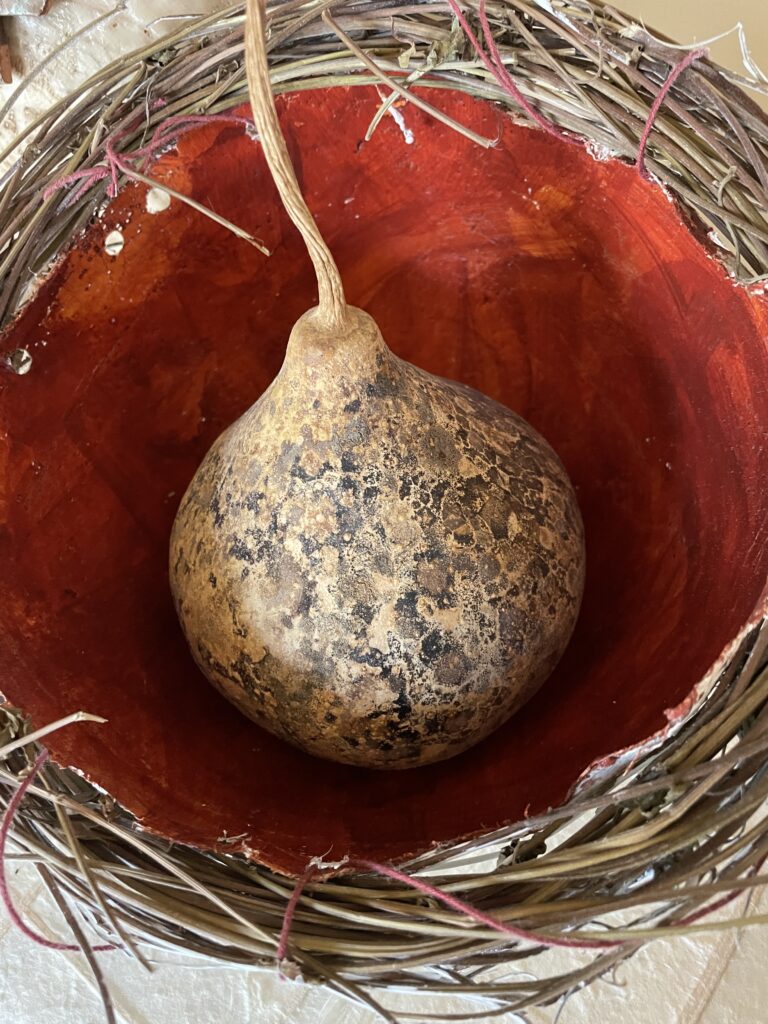
This part of the series turns to the second creative path in my practice, one shaped deeply by my time teaching Spirit Vessels & Boats in Ireland. That workshop showed me how universally we understand the language of vessels — not just as objects, but as personal metaphors.
NOTE: If you read to the bottom of the post, there is some information about a new in-person Vessels workshop coming up in February.
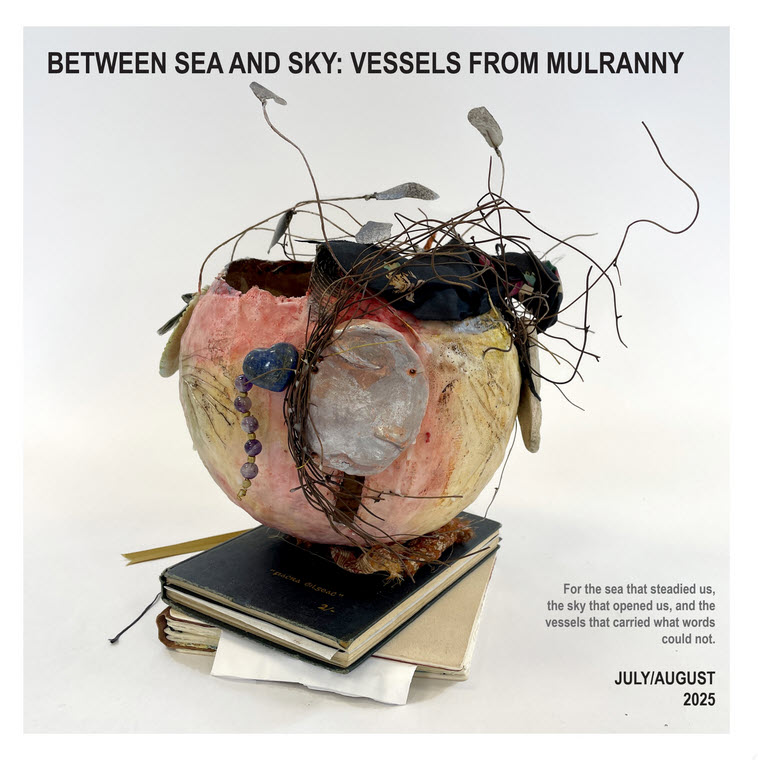
Vessels as Small Architectures for Memory
A vessel is more than a container. It’s a small architecture — a structure built from tenderness and intention.
In my own studio, I return again and again to:
-
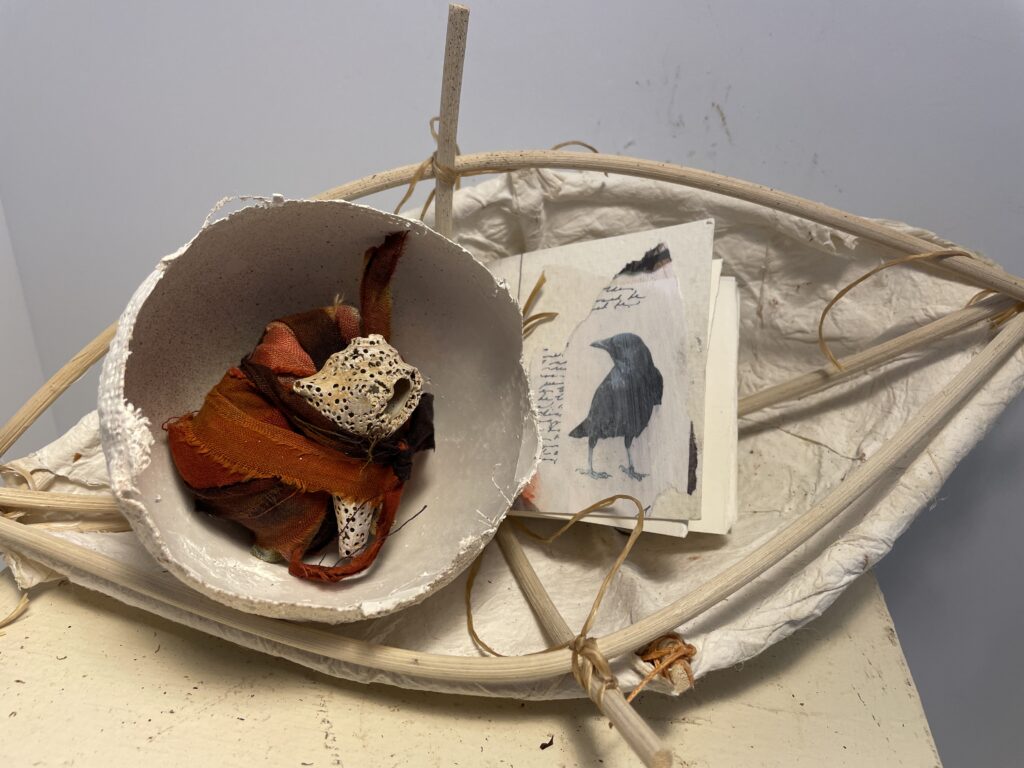
cane lashed into curved frames,
-
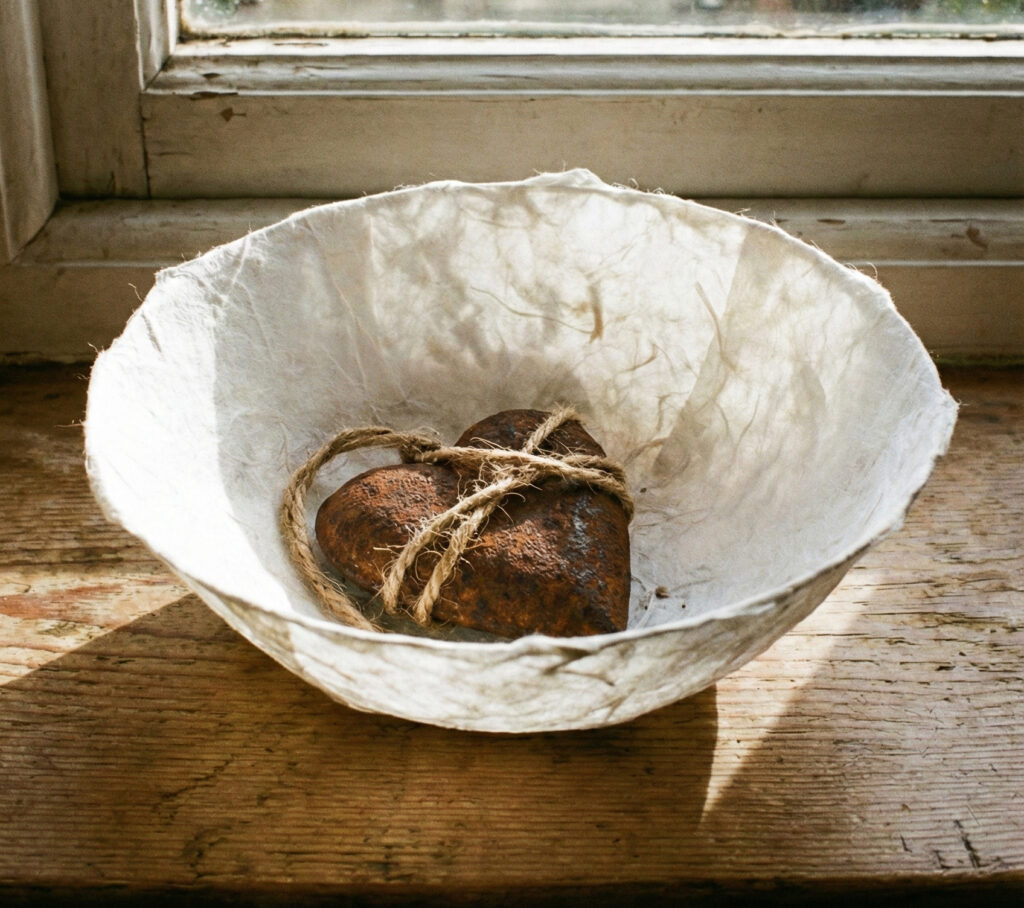
mulberry paper toughened with wax,
-
bits of rusted metal becoming anchors,
-
fiber and thread creating protection or boundary.
Each material changes the meaning of what the vessel carries. Wax, especially, offers a luminous kind of shelter — the sense that something is being preserved inside layers of translucence.
Teaching in Ireland: A Workshop of Passage and Light
When I taught this work in Mulranny, surrounded by sea light, tidal flats, and the slow breathing of the bay, my students immediately understood that they were making more than objects. They were making carriers — of memory, metaphor, hope, grief, gratitude.
Their vessels took on astonishing variety:
-
Some resembled wind-bent boats, as if carrying stories across an invisible tide.
-
Some were seed-like pods holding untold wishes.
-
Some were protective containers woven from cane, stitched paper, and beeswax, glowing like small lanterns.
There was a shared sense that these forms — however small — were honoring something beyond themselves.
Interior Space / Exterior Form

One of the most compelling conversations in the workshop was about the relationship between:
-
the space inside the vessel,
-
the form surrounding it,
-
and the meaning created by the tension between the two.
In a vessel, the interior always matters. It holds the intention. The exterior only reveals part of the story — the rest is protected within. This interplay mirrors how we move through the world: showing some things, guarding others, and trusting the container to hold what words cannot.
_________________________________________
Speaking of words, I am teaching a new two-day in-person Vessel workshop next year on Valentines Day weekend at UTSA/SW. It’s called Vessel Alchemy: Tactile
Poems in Fiber , Paper , Word, Light. Here’s a partial description from the catalog:
“In this immersive workshop, we’ll explore how simple
materials (sticks, cheesecloth, mulberry paper, fiber scraps,
ink) can be transformed into vessels that speak to memory,
meaning, and the ephemeral. Each day invites an unfolding
of form and story as we sculpt, wrap, write, embed, and
embellish.”
We’ll be doing some writing – words and poems and asemic mark making – here is a beautiful example from my friend Jean Dahlgren, who will be my TA for this class.
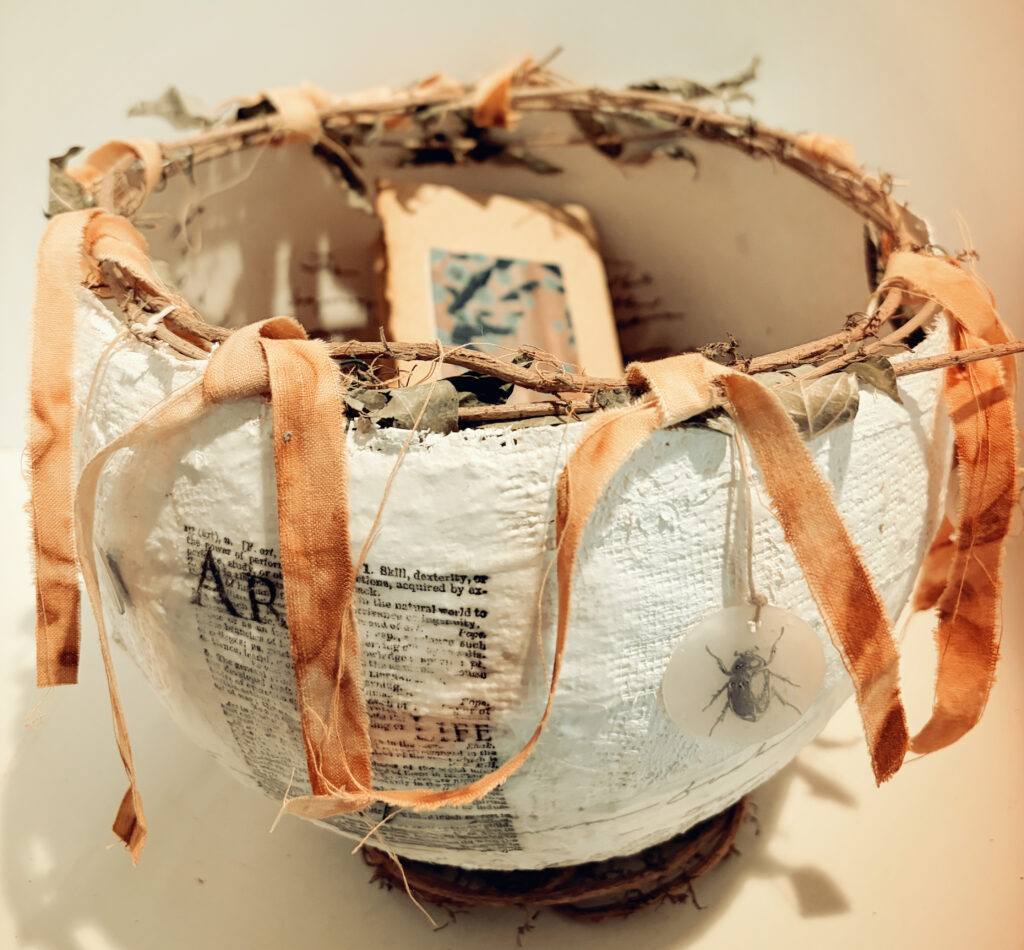
I love Jean’s asemic writing – she’s promised to write some lines on tissue paper for us to use in the workshop!
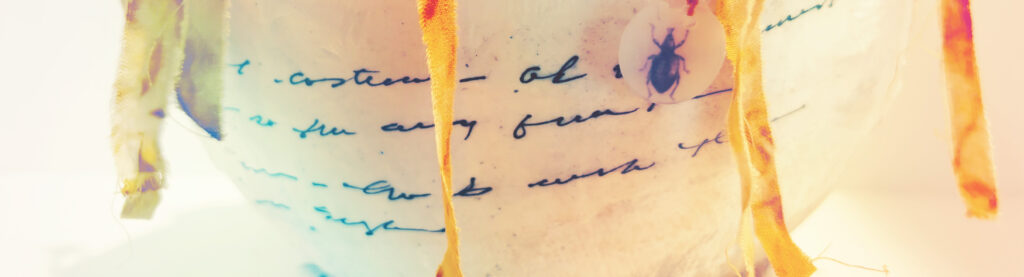
Workshop Registration for Friends of the School opens today, and it opens to the public on December 9th. I’d love to see you there!
If you can’t make it to the in-person workshop in February, you are welcome to checkout my online workshop called Spirit & Form: Creating Vessels of Passage and Purpose.
Here is a link to a sample lesson and the registration information. It’s self-paced and only $59 for lifetime access.
Inviting You Into the Studio: What Are You Carrying?
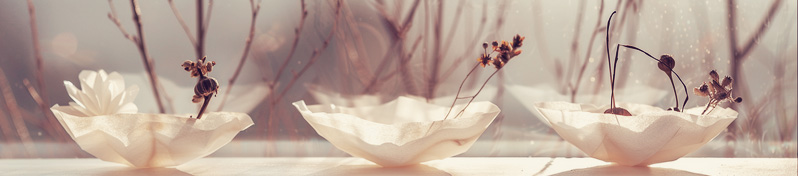
Even if you’ve never lashed cane or dipped mulberry paper into wax, you’ve likely made vessels in your own way — forms that hold meaning.
So here are some studio invitations for your own practice:
- Could a boat, bowl, pod, or wrapped bundle be a metaphor waiting to be explored?
-
What would a “protective container” look like in your materials?
-
What happens when you build a structure around an emotion, a memory, or a small sacred object?
-
What materials in your studio feel inherently protective — wax, fiber, metal, clay?
A vessel doesn’t need to be functional to be truthful. It can simply be a place where meaning rests.
Looking Ahead
Next week, in Part Three, I’ll explore the last of the three intertwined paths: Layered Images — how veiled surfaces, hidden elements, and translucent strata reveal what is usually unseen.
You’ve touched on the difference between just making–and infusing any work with embedded meaning.
POWERFUL!
Thanks…
Tracy, this means so much to me! Yes!! Thanks for that insight!
These are all so incredible and inviting. Just wish I could be there in person.
Marian, sometimes it feels as if you are!! xoxoxo
I love these vessels and your perspective of what they carry inside. So beautiful. Thank you for giving such heartfelt meaning to these creations. It is making me rethink and explore new possibilities of my process of creating whether multi dimensional or not. Thank you
Cindy, it’s always an adventure – and you bring yourself to any creation, no matter what form. Let me know what direction you try!
Every time I read or watch video of your work, I become so enthused!! You are a marvelous source of information and inspiration!
Debora, thanks beyond words! I am so glad we are in touch!