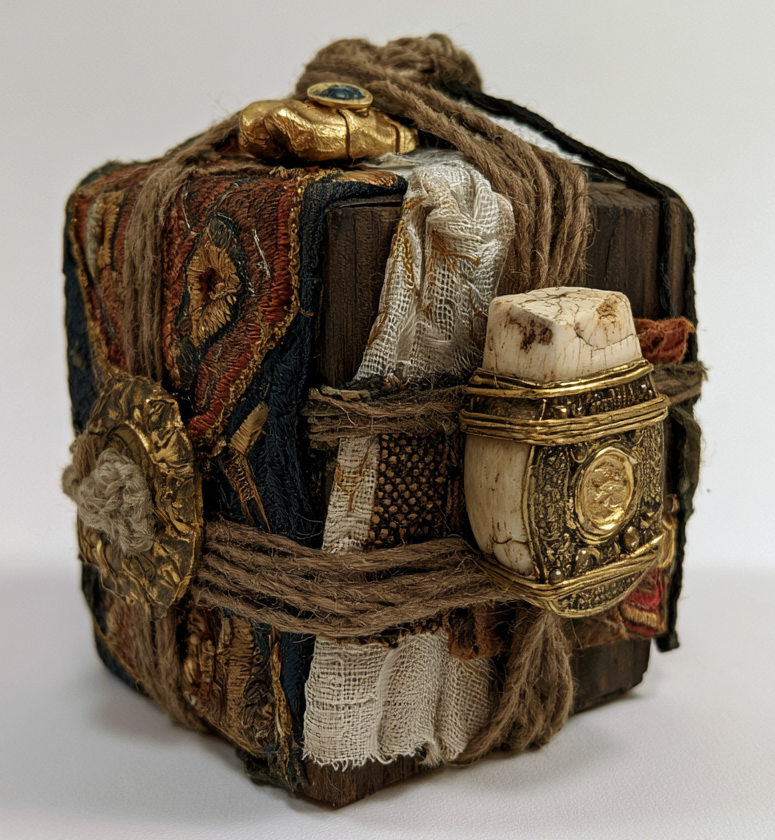
I’ve been both surprised and touched by the response to my new workshop, Objects of Devotion: Creating Contemporary Reliquaries and Icons. Of course, I’m delighted that people have enrolled, but there seems to be something more behind the response—almost a sense of recognition.
As a teacher, there is nothing more satisfying than realizing that something you have created has given people permission to explore an idea they were already carrying within them.
This whole series of workshops has made me wonder whether we may be living through a renewed need for personal objects of devotion. I don’t necessarily mean religious objects, although they certainly can be. I’m thinking of handmade pieces where memory, gratitude, grief, nature, and hope can be given a physical form.
My friend Matt Toomey has expressed this idea beautifully with his wonderful contemporary reliquaries:
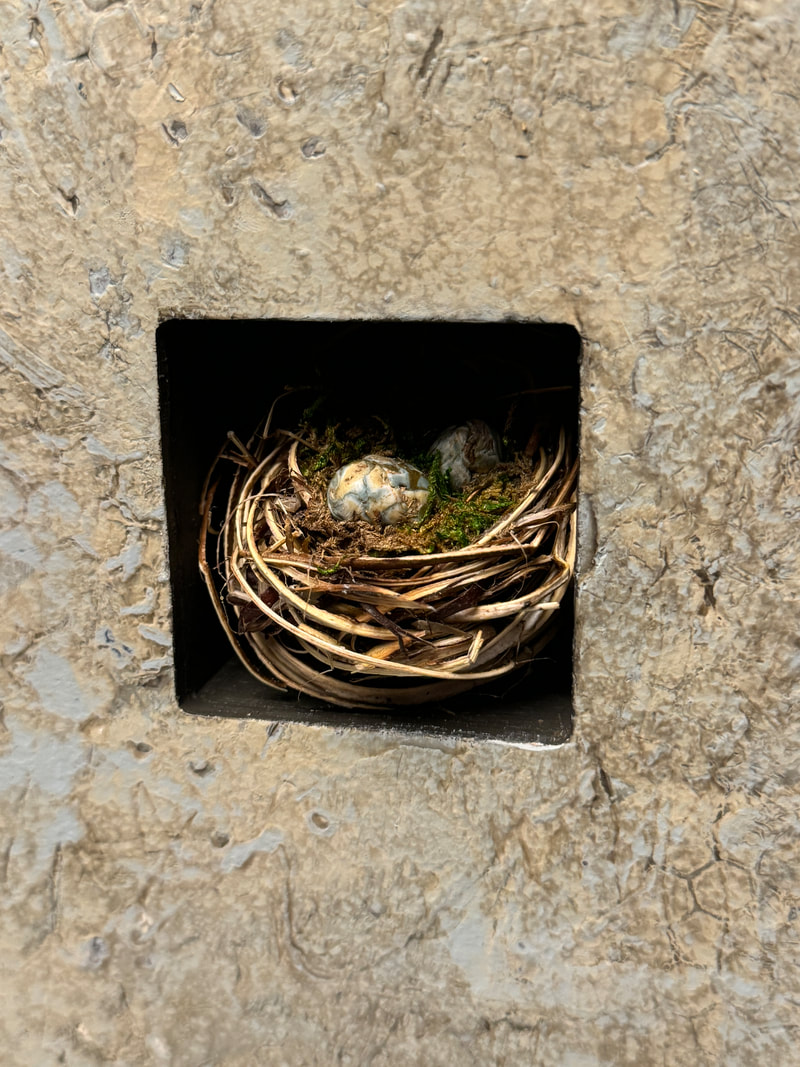
“These pieces are more than just decorative objects; they are personal invitations to experience a moment of stillness and meditation in the middle of life’s chaos. The boxes themselves are treated as cold wax and oil paintings, with rich, textured surfaces that evoke the beauty and complexity of the natural world. My goal with these reliquaries is to celebrate the sacred in simplicity, creating a visual and tactile experience that encourages reflection, rest, and reverence for the natural world.”
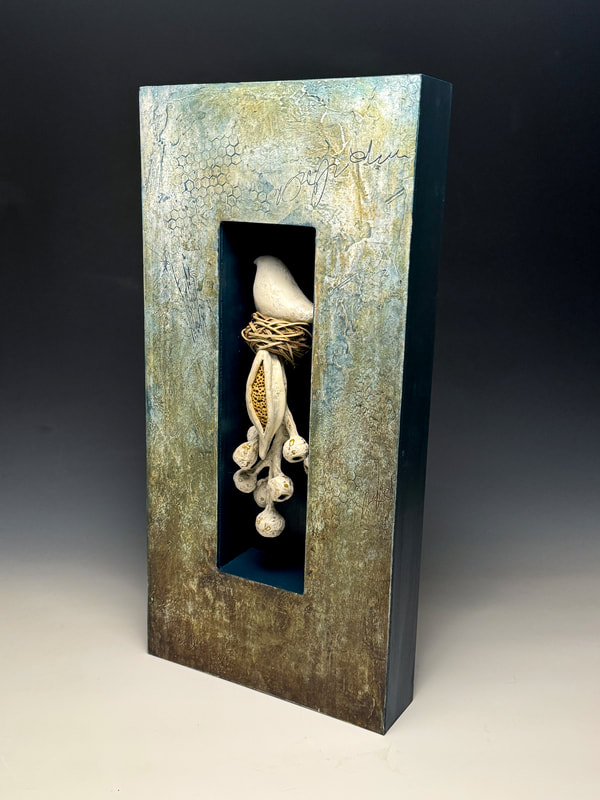
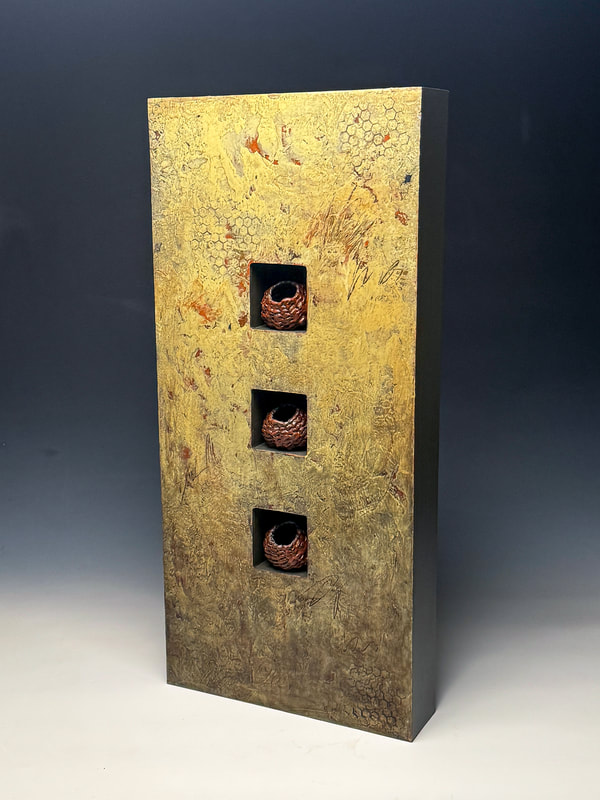
I encourage you to read his thoughts about reliquaries and nature.
“Each element within the reliquary is carefully chosen and crafted to evoke a sense of stillness and connection. The birds, for example, often symbolize freedom and the soul, while the nests evoke ideas of home, protection, and nurturing. The pods and weavings speak to the interconnectedness of life and the way nature weaves its elements together into a unified whole. These objects, while simple in form, carry layers of meaning that invite the viewer to look deeper and contemplate their own relationship with the natural world.”
You can see more of Matt’s reliquaries and read the entire essay here.
So much of what we see every day is fleeting. Images scroll past. News arrives, worries us, and is quickly replaced by more news. Things are purchased, used, and discarded. Even our artwork can get caught up in a cycle of producing, exhibiting, promoting, and selling.
A reliquary asks us to do something different. It asks us to slow down and think about what we want to keep.
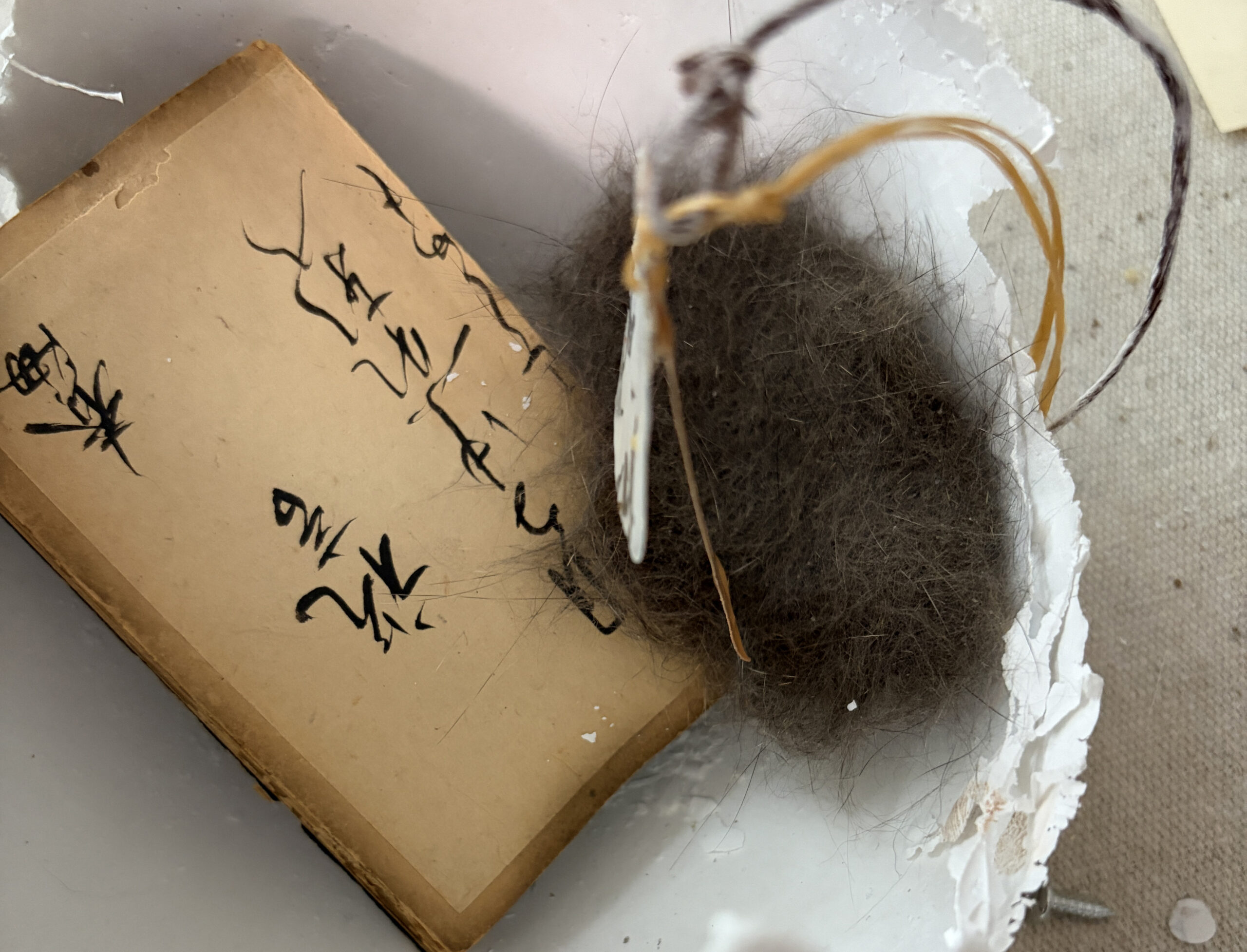
A photograph, a handwritten note, a clay shard, a feather, a tiny book, or a fragment of an earlier artwork can become part of a very personal visual language. When we choose one of these things and give it a special place, we are saying, “This matters to me. I don’t want it to be lost.”
Making Art That Doesn’t Need to Be Sold
Artists are often encouraged to think about audience, exhibitions, marketability, and price. Those things are part of an artist’s life, but they aren’t the only reasons we make art.
Some objects have a different job.
There is a wonderful kind of freedom in making something that doesn’t have to explain itself to a gallery, a juror, or a potential buyer. It doesn’t have to fit into a familiar category. It can stay with its maker, hanging in a quiet corner or sitting on a shelf among other meaningful things.
The Private Function of Art
A work can be visually strong and still be deeply personal. It may include a photograph of someone we love, part of an earlier piece, or a small found object that would mean very little to anyone else.
We don’t have to translate every symbol for an audience. We don’t have to explain every choice. The object can simply hold what we have placed inside it.
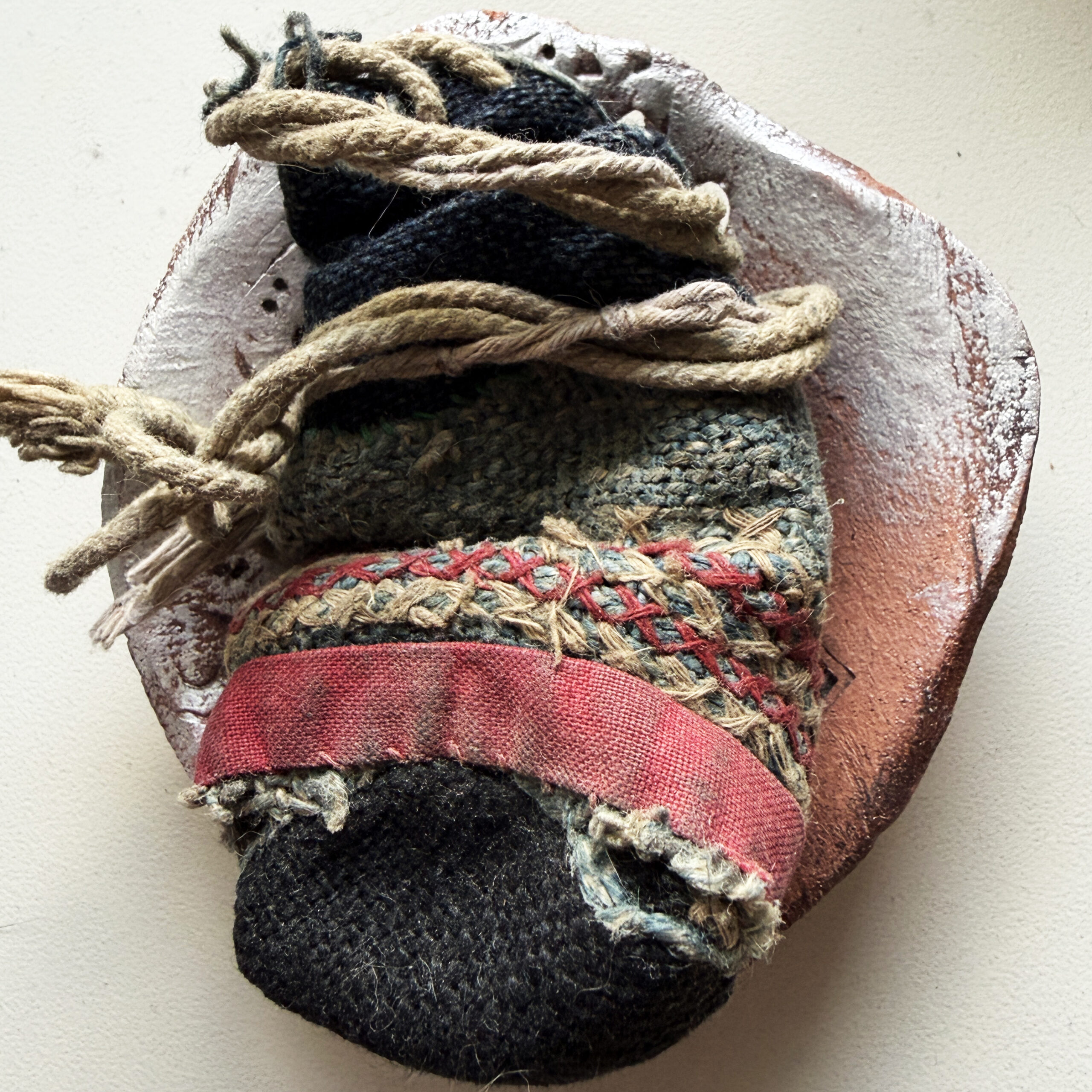
Maybe that is part of the reason reliquaries have existed in so many forms across cultures and across centuries. They give us a place for the things whose value can’t be measured in ordinary ways.
Why This Work May Be Resonating
The response to these workshops has made me think that people may be looking for permission to make something intimate, symbolic, and not easily categorized. Here’s a personal talisman piece by Dottie Eberhart from the Tokens and Talismans workshop:
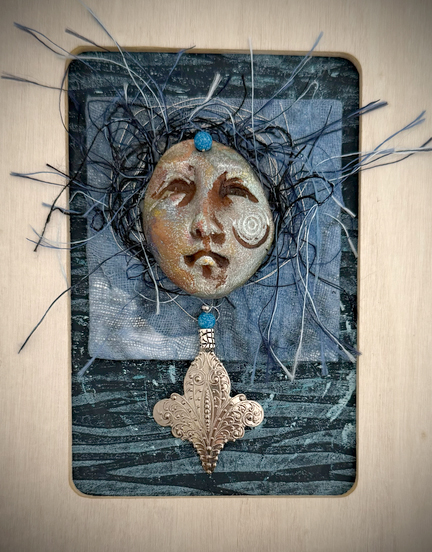
This talisman was created from a memory of sitting on a rock in a mountain stream journaling many years ago. The thought that came to me was stop trying to swim upstream and allow the water to carry you. It knows your destination.
We may also be looking for ways to make art that feels more contemplative and less commercial. Art can help us pay attention. It can help us discover meaning in things that might otherwise be overlooked or thrown away. It can give a physical home to something we have carried inside us for a long time.
The reception to these workshops has reminded me of something that is easy to forget: art does not always have to enter the marketplace to justify its existence. It does not always have to become inventory, content, or a product.
We might make something simply because a memory needs a safe place. We might make it out of gratitude. Or we might make an object simply because we need to have it near us.
Not everything we make is merchandise.
Some things are simply keepers of what matters.
Thanks for reading!
Lyn
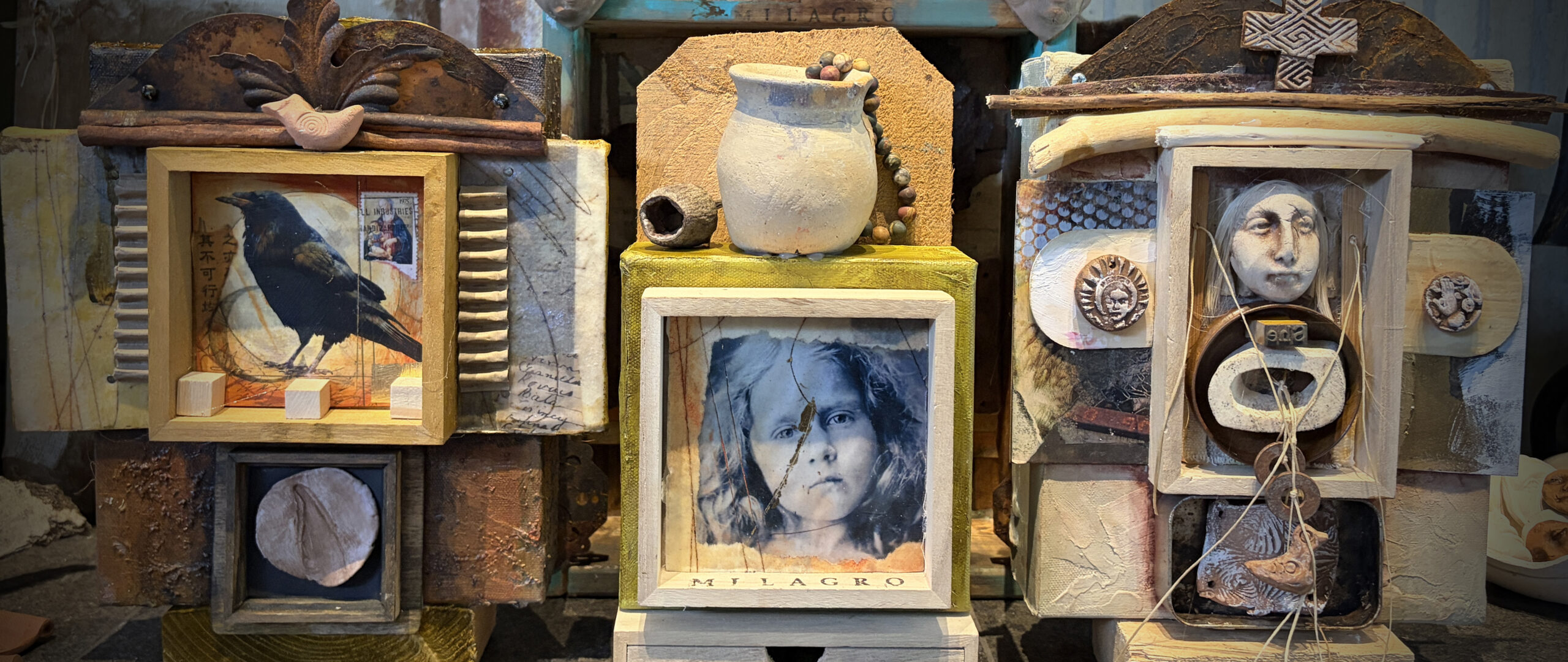
- The Objects of Devotion Workshops – so far . . . .
- The Keeper of Fragments
- The Listening Vessel
- Tokens and Talismans
- Contemporary Reliquaries and Icons
Oh Lyn, I feel and understand these explorations. The expressions here are so beautiful. I tried to do the same with my cabinet of memories in the altar show. The older I get, the more precious my memories of childhood and old friends are to me!
Marilyn, I could not agree more – and I love your altar!!!
“There is a wonderful kind of freedom in making something that doesn’t have to explain itself to a gallery, a juror, or a potential buyer. It doesn’t have to fit into a familiar category. It can stay with its maker, hanging in a quiet corner or sitting on a shelf among other meaningful things”.
I love your thoughtful statement that puts into words how I currently feel…it’s as if you gave me permission to bring into view a few of my small favorite pieces which I tucked among other collectables..they make me happy.
Life is too short to live without these precious pieces right where we can see them and be both inspired and grateful! Thanks, Tanya. ♥