 How often have you heard someone say, “I’d love to be an artist, but I can’t draw”? Perhaps you have said it yourself.
Somehow, many of us acquired the idea that the art world is divided into two groups: those who can draw realistically—the talented—and those who cannot—the untalented.
Drawing becomes a massive gate standing at the entrance to creative permission. If we cannot reproduce a face, a flower, or a bowl so that it looks “right,” we decide that we do not belong on the other side.
This question came up recently in a Zoom meeting with people who had questions about The Enso Circle residency that Michelle Belto and I offer. Someone asked if knowing how to draw was a requirement to join. Basically, the answers is absolutely not.
The ability to create a realistic representation is only one artistic skill. It is not the same thing as imagination, curiosity, sensitivity, originality, or creative force. Sometimes those qualities overlap with traditional drawing ability. Sometimes they do not.
Why Are We So Afraid to Draw?
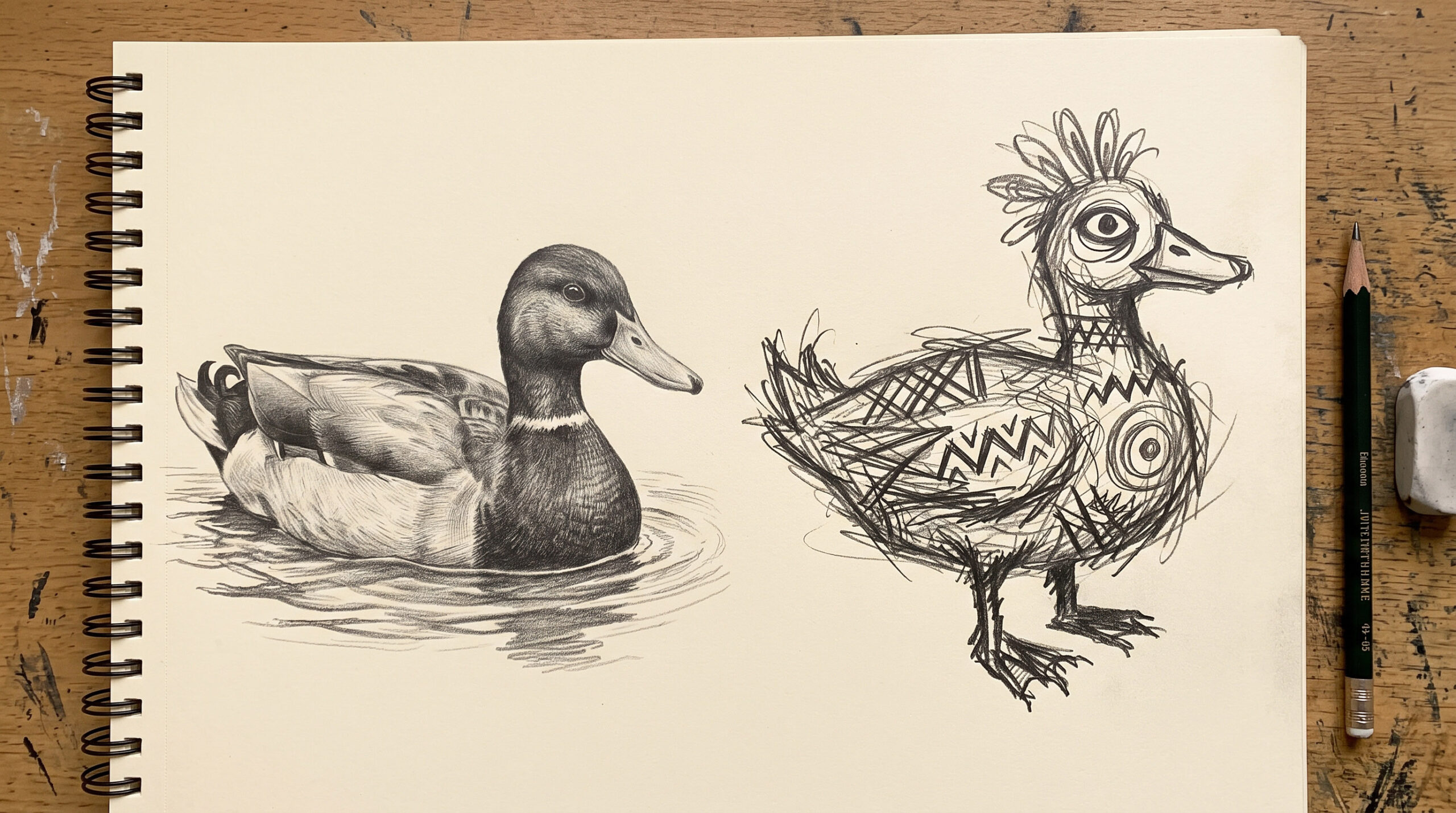
Drawing can feel unusually revealing. A painting may be layered, scraped, collaged, or altered, but a drawn line seems to announce exactly what our hand did. We worry that the proportions will be wrong, the perspective will wobble, or someone will immediately recognize that we “don’t know how to draw.”
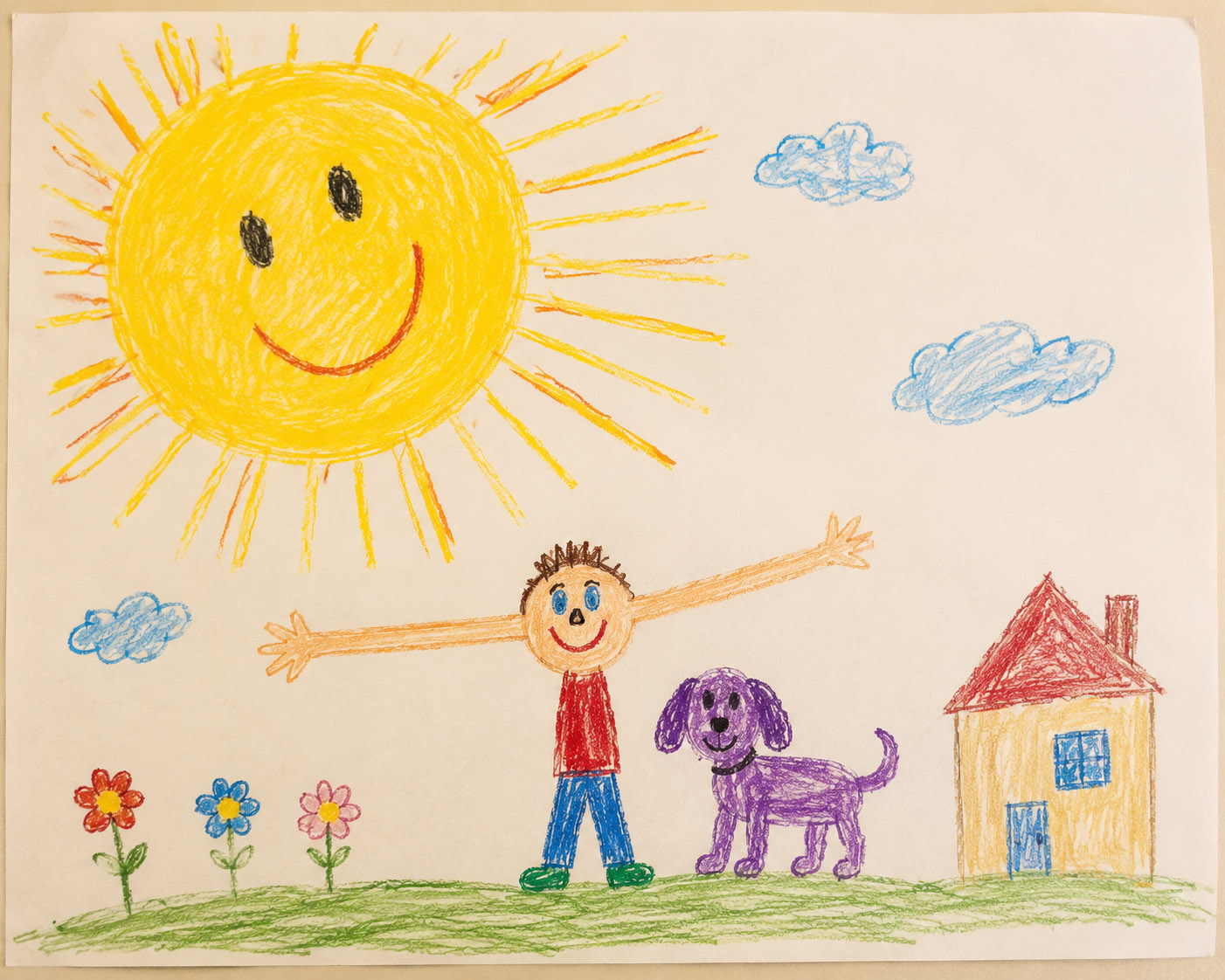
Children rarely begin with this fear. They draw because drawing is a way to tell a story. The sun can be enormous, a person’s arms can grow directly from the head, and a beloved dog can be purple. None of this troubles them. The drawing has done its job: it has expressed something.
At some point, however, many of us begin comparing what appears on the paper with what we believe the subject is supposed to look like. Drawing changes from an act of discovery into a test—and tests can be failed.
Perhaps we are not actually afraid of drawing. Perhaps we are afraid of being judged.
Is Drawing Important?
Yes—but perhaps not for the reason we think.
Drawing teaches us to look. It helps us notice the angle of a shoulder, the space between two objects, the way a branch divides, or the surprising shape made by a shadow. It can improve coordination between the eye, mind, and hand.
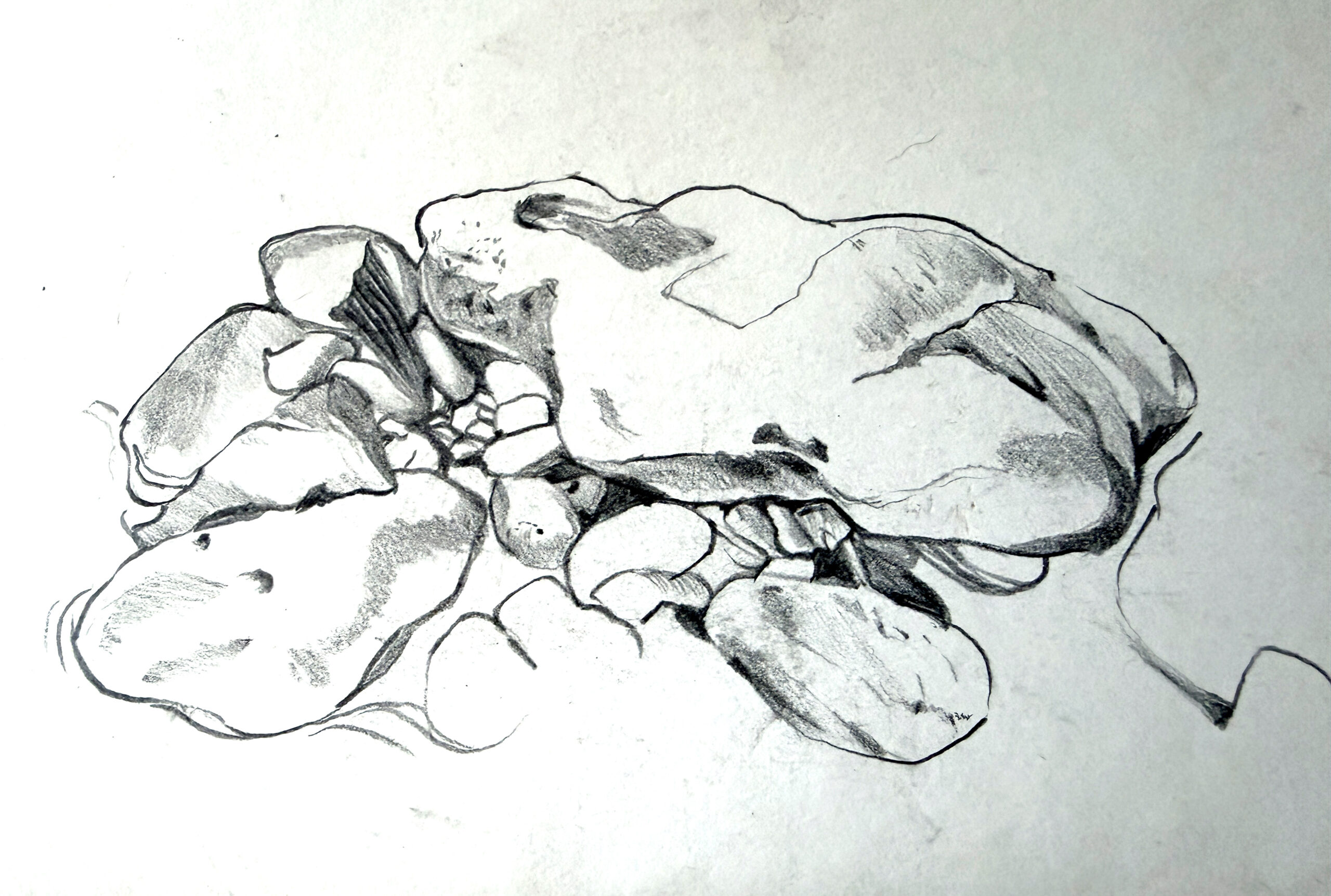
The drawing above is one I made seven or eight years ago while sitting on the banks of the Frio River. I spent about two hours observing a small gathering of stones in the shallows as the water trickled around, over, and beneath them. In that time, I learned more about each individual rock and pebble—and about the movement of the water—than I ever thought possible. It was an exercise in observation, but also in patience and presence.
The longer I looked, the less ordinary those stones became. Each developed its own shape, weight, shadow, and relationship to the current. The drawing became more than a record of what I saw; it became a record of the time I spent truly seeing.
And how did that help me? The act of drawing required a kind of attention that simply looking would not have demanded. Each mark asked me to slow down, compare one shape with another, follow the water’s path, and notice where an edge disappeared into shadow or current. Drawing became a way of thinking through my hand—a record not only of what I saw, but of how deeply I had learned to see it. That lesson followed me back into the studio, sharpening my awareness of texture, form, movement, and relationship.
Would I do it again? Probably not—not in quite the same way. The drawing served its purpose. Through making it, I learned what sustained observation could reveal, and I carried that knowledge forward into other ways of working. Some exercises are not meant to become habits or rituals. They are thresholds: we cross them, absorb what they have to teach us, and move on.
And fortunately, making a drawing does not have to result in a realistic picture to be valuable.
A drawing can be a map, a notation, a memory, a gesture, or a record of movement. It can help us investigate the structure of an object or capture the feeling of a place. It can be made with charcoal, ink, thread, wire, scissors, or the edge of a piece of cardboard.
Drawing is not always about making a picture of something. Sometimes it is simply thinking with a line.
And one more thing: saying “I can’t draw” should never be a reason not to call yourself an artist. Drawing is only one tool among many, not a test you must pass to earn the name.
If drawing is something you truly want to learn, you can teach yourself to draw what you see with accuracy. I say this as an art teacher with thirty-five years of experience. Be prepared to practice, but remember that drawing is a skill, much like playing the guitar or learning to work at a potter’s wheel. It is not a mysterious gift reserved for a talented few.
In my next post, I’ll share several books that can help you develop that skill—including the very same book I used as an undergraduate art major in the 1960s!
And I’ll pose this question – Why Do So Many Famous Artists Learn Realism and Then Turn to Abstraction?
Lyn, Such important reflections on drawing—I think I’ll share it with a granddaughter who, unluckily, had an art teacher who gave her a “D” because ? (She didn’t draw “right”?). I quote John Berger on drawing in my new book, Working-Class Girls Don’t Become Artists: Looking at Art and Class (Univ. of Illinois Press). I wonder if you have had a chance to see it. Janet Zandy
Yes – the book is wonderful. I loved the life connections. This is a favorite Berger quote – “A drawing of a tree shows, not a tree, but a tree being-looked-at.”
Abstraction feels deeper. Representational art only looks at the surface.
Well-said – and that is an interesting distinction, although I’m not sure abstraction and representation are opposites in that way. Representational drawing may begin with the surface, but the process asks us to look beyond it—to examine structure, relationships, movement, memory, and meaning. Anyway, what a great discussion!!
When I started thinking about applying for The Enso Circle, my first thought was I had to teach myself how to draw before I could apply. I started making abstract line drawings then drawing faces. Once in the Enso Circle, I totally forgot about drawing, It was a rule I had put on myself, one of those I’m not good enough rules that limits who I am and what I do.
Well said Lyn…thank you!
For me, my Inner Critic can hijack my creative process if I allow her. I have even named my Inner Critic and created an AI generated cartoon image of her that hangs on my wall. When she starts picking away at my drawing, I look at the image and tell my Inner Critic to be quiet and go sit in the corner!
“…slow down…and notice…Drawing became a way of thinking through my hand… Drawing is not always about making a picture of something. Sometimes it is simply thinking with a line…” YES!!! Thank you, Lyn!
What a great read! It actually reminded me of several drawings I have done as an adult, two in the 1980s and two in the 90s. I did/do like them but I struggled with them. I didn’t really enjoy the process and I probably don’t have the patience to pursue it. All that said, I love what you’ve said and how you always encourage others to create, whether or not they draw. ❤️