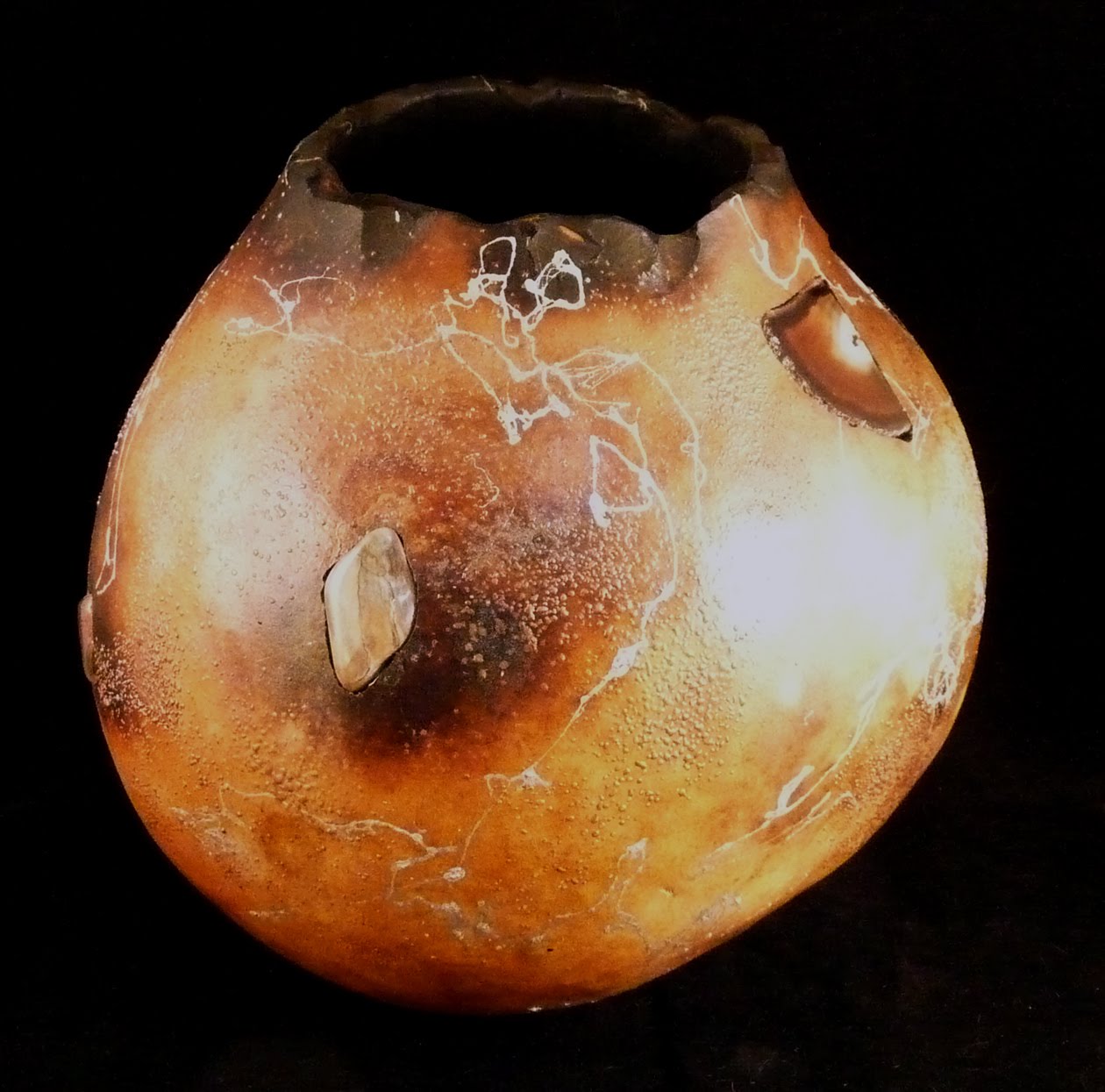
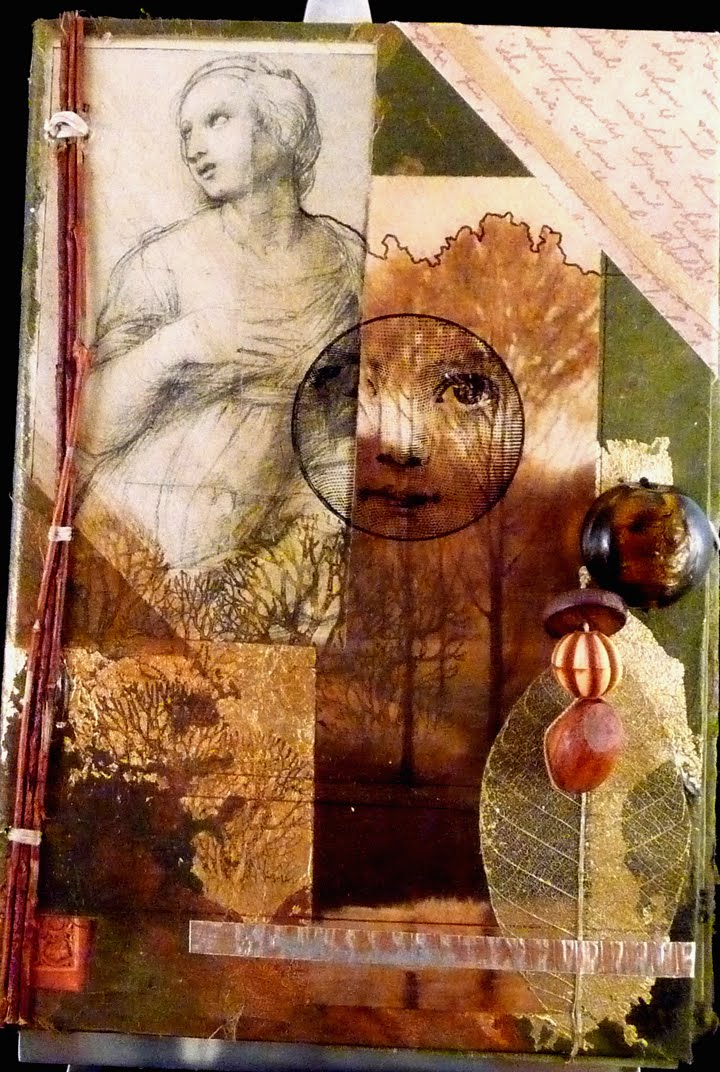
I have been having a hard time finding exactly the right bead/button closures for my ereader covers. This morning when I woke up early, the good ol’ muse voice in my head said, “Make you own.” I had everything I needed – old leftover polymer clay from my art teacher days that was still good, complete with roller, some gold leaf from collages, and assorted other stuff including some long-ago clay-building ideas remembered from my studies with potter Tracy Dotson. I am very excited with the results! Take a look at the first batch, all done between 6 and noon today! From now on, all of my handmade collage covers will sport handmade closures.


‘Nique o’ the Day – Joss paper undercover
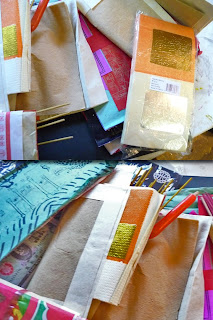
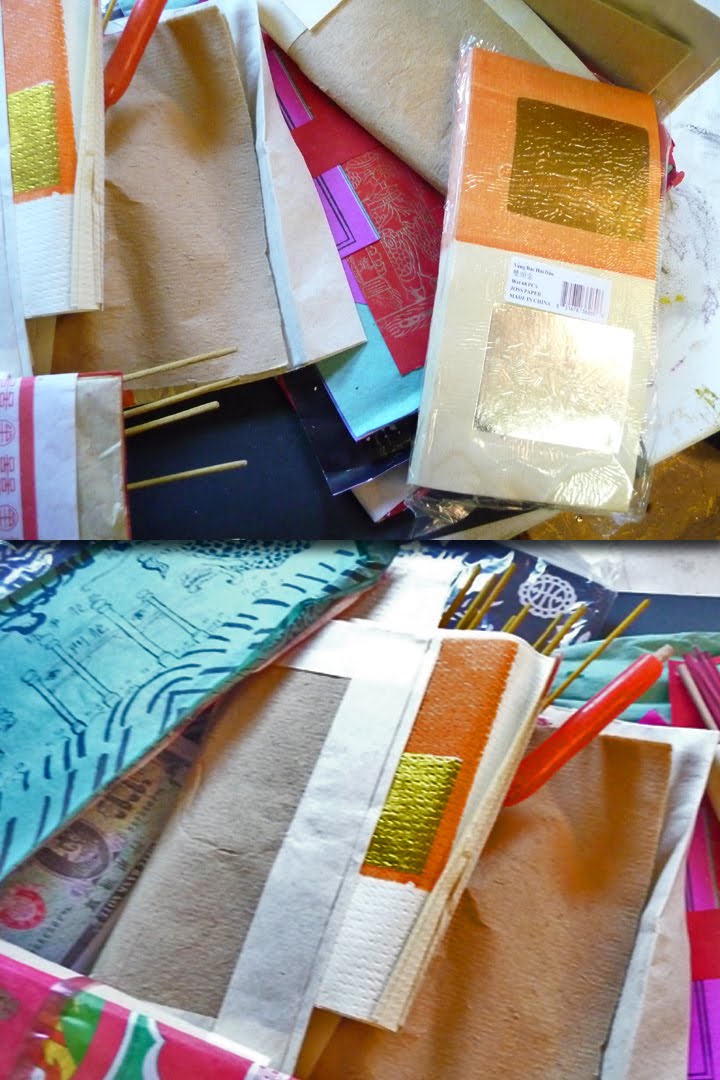
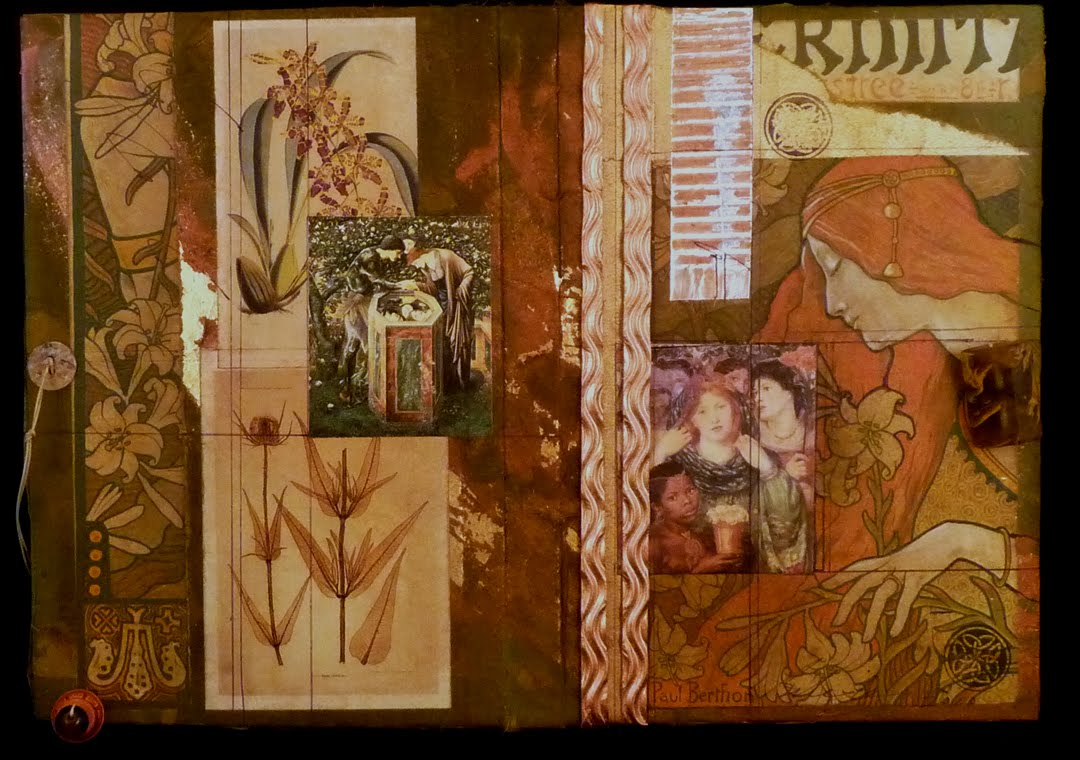
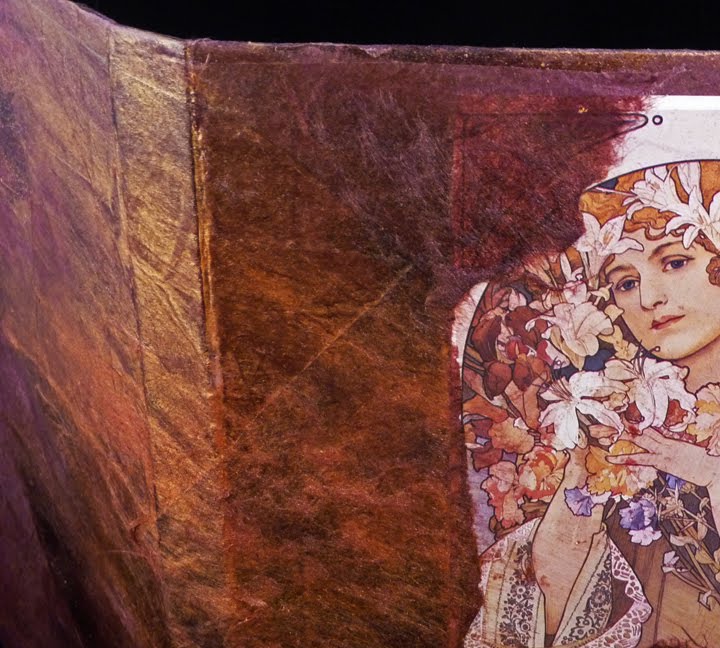
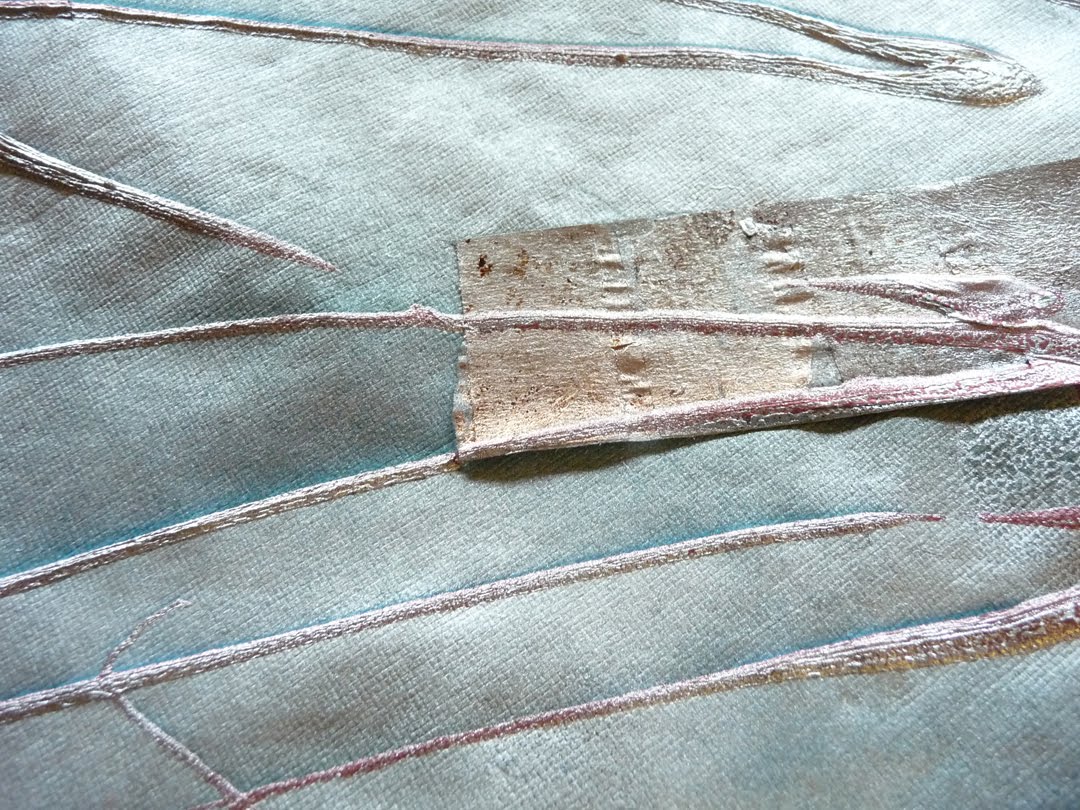
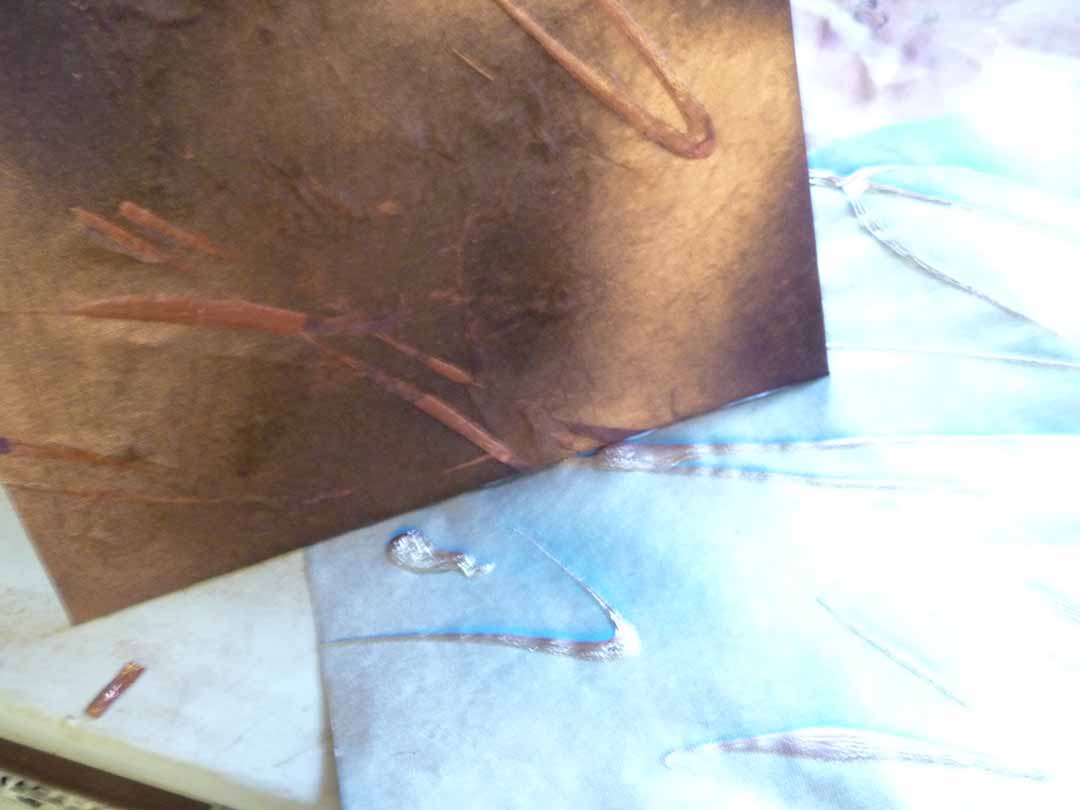
This is less of a technique and more of a lucky find. When we were visiting my friend Victoria, she gave me some joss paper – also known as ghost money, they are sheets of paper that are burned in traditional Chinese deity or ancestor worship ceremonies during special holidays. They also happen to be a very nice fit for the first layer of the Kindle covers that I design and construct. You can see from the photos that they wrap well around the base construction. The paper is not very heavy and will need to be reinforced by other stronger paper layers, but the gilt finish takes on glazes and inks very well. The last photo is of work in progress, some with joss paper background layers.
Flying Home
Here’s a video I took out of the airplane window as we were flying from Baltimore to Houston Wednesday night on the way home from our art weekend in Rehoboth. There’s no story line or plot to this video, but it was so serene watching the clouds go by at almost-sunset.
Nickel Creek’s Seven Wonders is the background music, added from my iPod.
Collage and Poetry on the Porch
Rehoboth Beach Arts and Crafts
Outdoor Fine Art and Fine Craft Show with my friend, Pat Semmes, and our hosts, old friends Peter and Victoria Jennings. As the printed program said, on exhibit were “the work of over 100 artists in every medium imaginable.” I got so many ideas and really had a chance to think about evaluating art, what I liked, and how that compared to what seemed to be popular – still thinking about all of that. The setting under the pines was beautiful and the Eastern Shore weather in Rehoboth Beach couldn’t have been more perfect. I saw some new oil paint techniques that were really impressive. Lots to take back home to try in the studio.
Serendipity and Studio Sharing
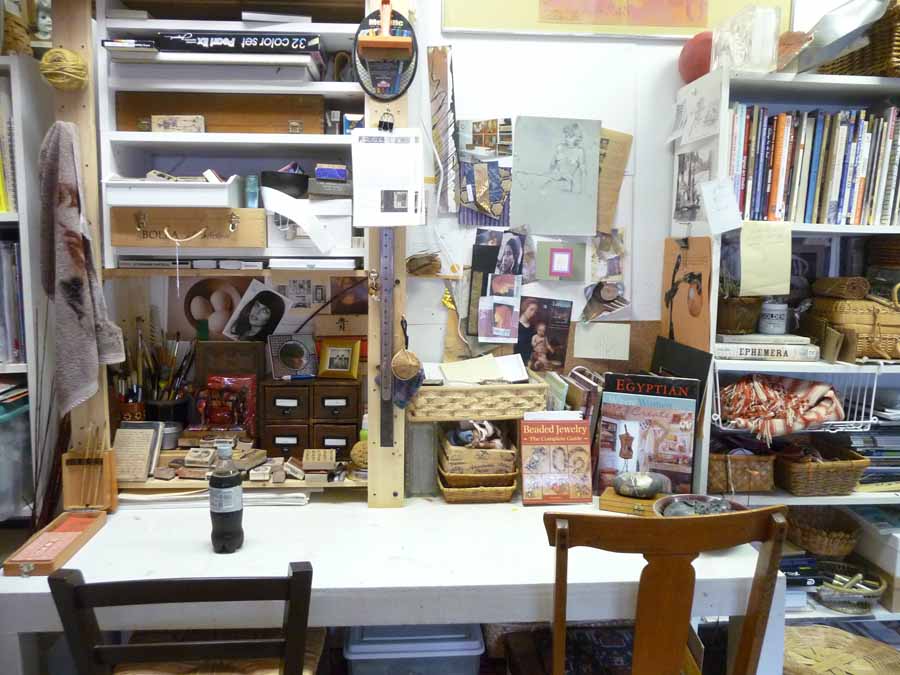
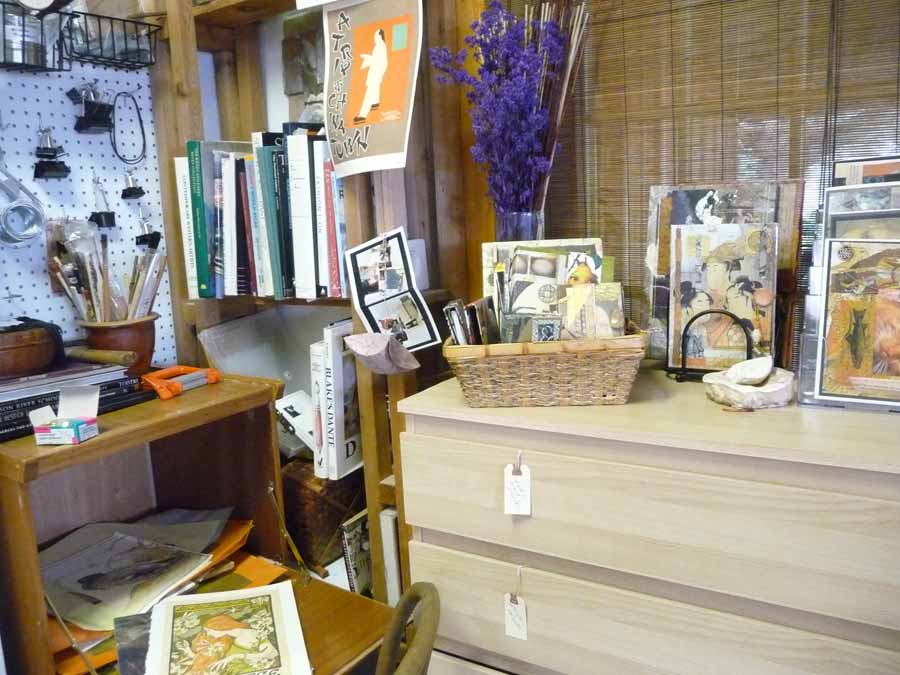
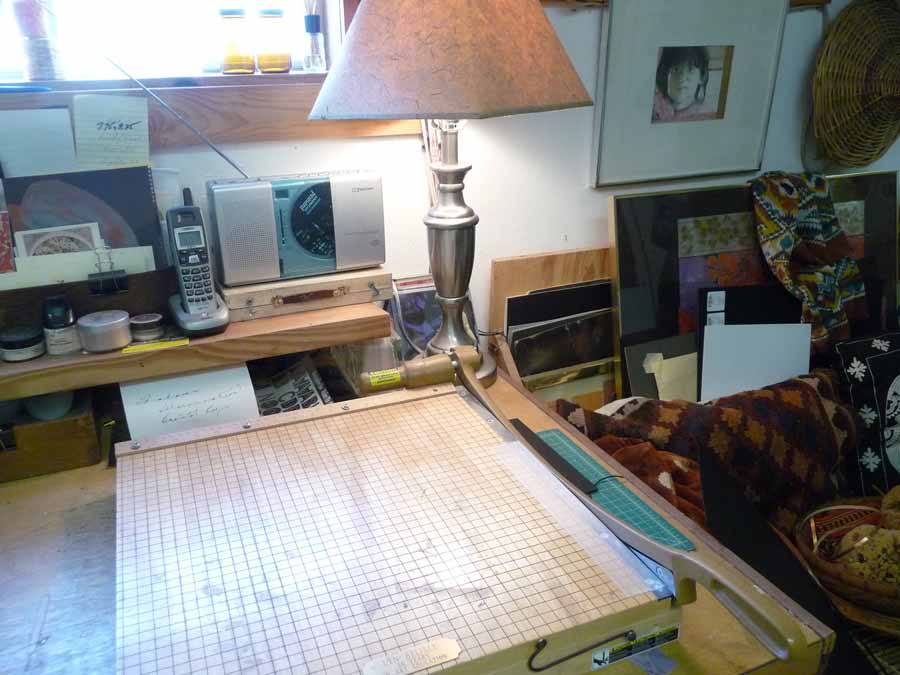
In an earlier post, I described the collage and journaling workshop that my friend Pat and I attended at the Mind Science Foundation. The facilitator was Jennifer Martin, a wonderful artist, photographer, writer and designer. We made plans to visit each others’ studios and share ideas – we did that very thing today! Our houses and studios were so much alike that it was almost eerie, but somehow each of us expected that. Here are some photos from Jennifer’s home and studio. I loved everything about her work – she “gifted” me with a lovely photo card of one of her spiral motif textiles. I learned a lot about foil screening, a technique I’ve not used before but definitely want to try. In the book Art and Fear, artists are encouraged to seek out other like-minded artistic people, and I can see why – visiting with Jennifer affirmed the value of creativity and collaboration.
Cartoon Speaks Volumes – eVolumes, that is
Making a collage cover for e-readers or notebooks
It’s easy to make your own e-reader or journal cover – here are the basics for construction.
1. Cut three pieces of mat board or corrugated cardboard or any other sturdy fiberboard. The front and back covers match, each measuring 8.5” by 5.75” (these measurements are for the Kindle 1&2 or a 5×8” notebook). Cut another skinny piece for the spine measuring 8.5” x .75”.
2. Arrange them together in a straight line horizontally, leaving a small space between the covers and the center spine piece. Tape them together carefully. I love using transparent duct tape. It’s strong, flexible and non-toxic.
3. Cut a piece of decorative paper at least an inch wider all around than your book base and glue the cardboard to the paper, centering it.
4. Cut the corners at a 45 degree angle to the edges of the board. Cut vertical slits at the spine from the outside to the edge of the board. Fold everything in neatly and glue it.
5. Turn the covered board over and fold the cover in a out a few times to make sure they open and close well. Now comes the fun – lay the cover flat and collect your collage materials. You can use tissue paper, magazines, or your own photos that you have printed out on plain paper on your computer. Think about coordinating colors and themes.
6. When you are satisfied with your cover design, cover the inside with a piece of decorative paper slightly smaller than the outside of the cover. Cover a separate piece of board, 8.25×5.5” with more paper, and tie elastic cord at the top and bottom, wrapping it around and fastening it at the back. Glue this piece which will hold you e-reader or notebook to the right inside cover.
7. There are a lot of ways to fasten your book – simple ribbon works, as do buttons. I use gold and silver elastic cord that attaches to the back and stretches over the clasp at the front cover edge.
8. When you are finished, it’s a good idea to spray your collaged cover with a clear acrylic finish made especially for paper and available at craft stores.
You are welcome to look at my covers on my Etsy Gallery to get ideas. If you make a special one that you’d like to share, email a photo to me and I’ll post it on my blog.
‘Nique o’ the Day – Cheap Strips of Silver
Art & Fear
Examples:
“Your desire to make art – beautiful or meaningful or emotive art – is integral to your sense of who you are. Life and Art, once intertwined, can quickly become inseparable; at age ninety Frank Lloyd Wright was still designing, Imogen Cunningham still photographing, Stravinsky still composing, Picasso still painting. But if making art gives substance to your sense of self, the corresponding fear is that you’re not up to the task. . .making art precipitates self-doubt, stirring deep waters that lay between what you know you should be and what you fear you might be.”
And:
“Operating manual for not quitting: Make friends with others who make art, and share your in-progress work with each other and frequently.”
Finally:
To paraphrase a story from the book, a young pianist began studies with a Master. After a few months’ practice, he lamented to his teacher, “But I can hear the music so much better in my head than I can get it out of my fingers.” To which the Master replied, “What makes you think that ever changes.” The lesson – vision is always ahead of execution – and should be.