On the value of a Circle

There’s a moment in creative life when nothing looks complete, but something feels undeniably alive. The work on the table may feel uncertain or oddly formless—but underneath that, there’s a hum.

In my last post, I wrote about the imaginal disc stage—that mysterious phase when a future form already exists within us, long before it’s visible. I’ve been thinking about how often artists arrive here not because something has failed, but because something has completed. A body of work ends. A show closes. A direction resolves. And suddenly there’s space—an in-between space that eventually became the foundation for The Enso Circle.

Over time, I’ve noticed that artists often reach out during this phase—not asking what should I make next? so much as how do I stay with what’s forming? There’s a desire for thoughtful conversation, for a few steady points of reflection, for reassurance that “not knowing” is not a failure of practice, but an essential stage of it.

This is where the idea of a circle becomes important. This is why the Enso Circle exists.

Applications open Feb. 1

The Enso Circle began taking shape in conversations that Michelle Belto and I started having back in 2015—ongoing conversations about creative practice, community, and what artists actually need. From the beginning, it wasn’t about acceleration or productivity, but about honoring a particular path of becoming.

It’s now in its 11th term. Since 2021, artists from five countries and 20 states have participated in The Enso Circle, forming a supportive creative community grounded in shared inquiry, reflection, and growth.

Each Enso Circle term unfolds over twelve weeks, allowing time for ideas to surface, shift, and deepen without being rushed.

  • It’s long enough for real momentum to build, and gentle enough to accommodate the realities of life and studio rhythms.
  • The residency fee is intentionally modest—comparatively less than many single weekend workshops—because sustained support should feel accessible and humane.
  • Throughout the term, artists stay connected—to one another, and to Michelle and me—through ongoing conversation on Zoom and Slack with shared reflection, and consistent support as the work takes shape.

In the Enso Circle, twelve artists artists come together with work that is unfinished, unresolved, or perhaps changing direction. Some are beginning something new; others are letting go of what no longer fits. What they share is not a style or medium, but a willingness to stay present with the process and let the work reveal itself over time.

The clearest expression of what happens in the Enso Circle has come not through description, but through the residents’ work itself. The Enso Circle residency catalogs—created at the end of each term—speak quietly through the residents’ artwork. They reflect many individual paths, shaped by time, reflection, and community. You can explore those catalogs here.

If you find yourself here now—between what was and what’s coming—know that you’re not alone. This stage isn’t something to fix or solve. It’s something to tend. I’ve just put together a little video on Advice for Enso Circle Residents – if you become one of the twelve new residents, this will be for you!

Applications for the next Enso Circle open on February 1. If this reflection resonates, you’ll know. There’s no push—just an invitation to notice where you are, and what kind of support might help you stay with what’s becoming.

JOIN THE WAITLIST FOR INFORMATION ON APPLYING

Stay warm, stay brave. Thank you for reading. Ours is important work, and courage grows in company.  ~~ Lyn
LEARN MORE ABOUT REQUIREMENTS AND COST
 

The Imaginal Disc Stage of Creative Metamorphosis

What a long title for a post! Read on . . . .
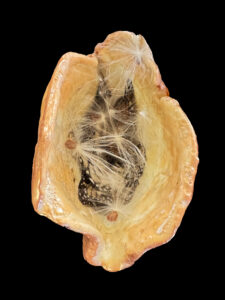
I first heard the phrase “imaginal disc” yesterday in a post from Donna Towers, one of our Enso Circle residents. She wrote that she was in the “Imaginal Disc Stage” with her pod structure exploration.

Donna Towers: Pod Two, Gift of Acceptnce

That phrase, “imaginal disc,” stopped me cold. I didn’t know exactly what it meant yet, but it felt instantly familiar—like something I already understood in my body. So I looked it up.

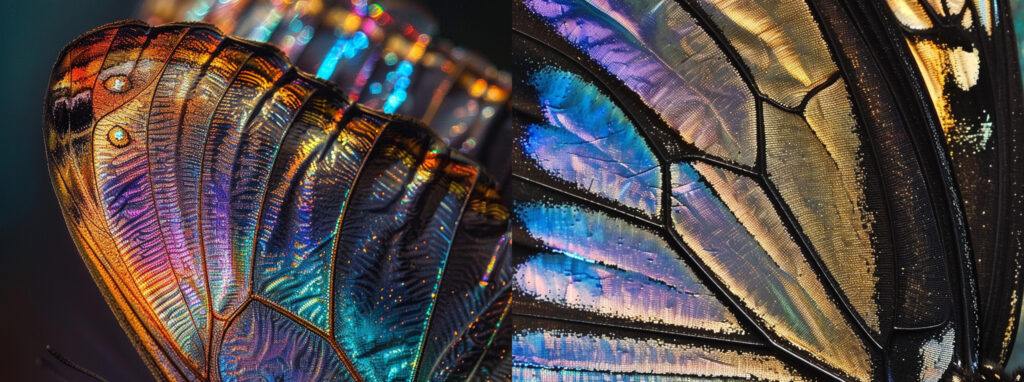
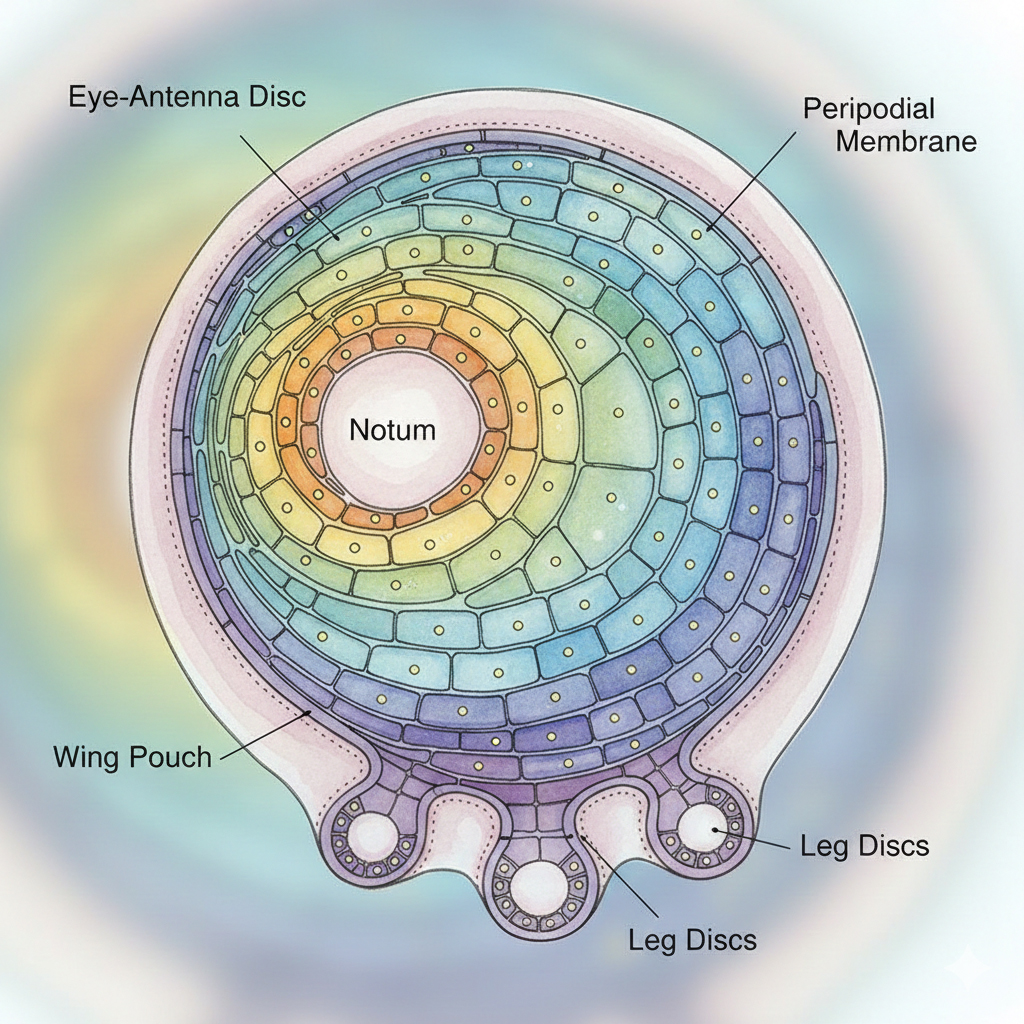
An imaginal disc is that strange, silent thing inside a caterpillar that already knows it will become a wing (see the wing pouch i the diagram below). It doesn’t look like a wing. It isn’t useful yet. And at first, the caterpillar’s immune system even tries to destroy it. But eventually, that tiny cluster of cells becomes the organizing force of the entire transformation.

When I read that, it landed like a small flash of déjà vu.

Because I know that stage.
I’ve lived in that stage.  – in fact, am living in it now.
I just didn’t have a name for it.

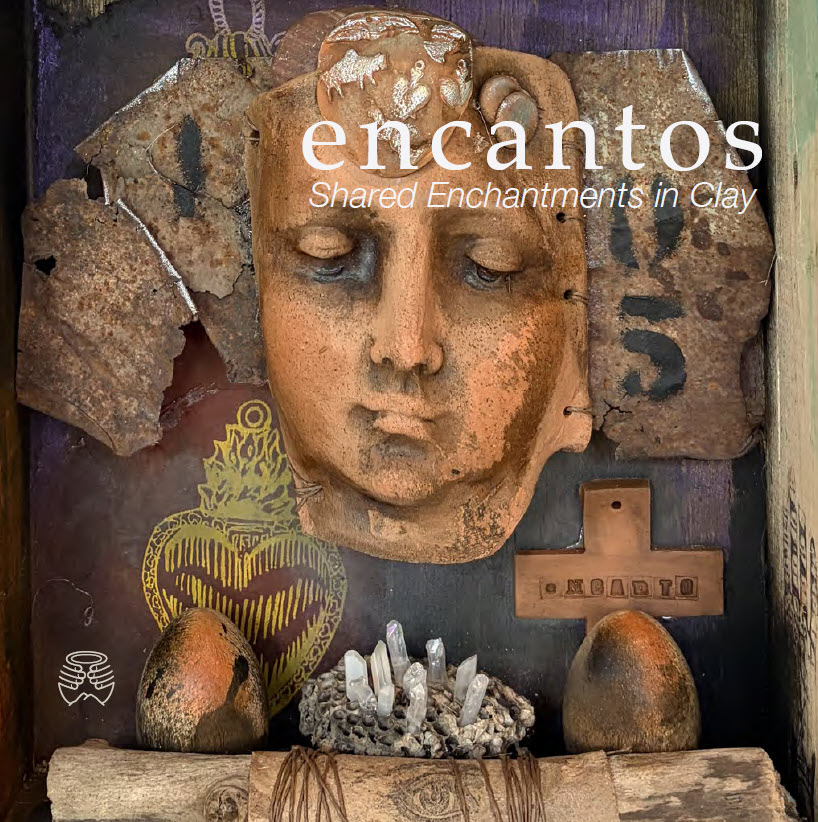
It’s the phase where any new work doesn’t make sense yet. Where it feels scattered, awkward, or unfinished. It’s the stage where the work doesn’t look like what it will become—and sometimes doesn’t even look like it belongs to me. And I realized how often I’m in that stage right after the work for a  exhibition like Encantos is finished, packed, and sent off.

There’s a strange quiet after the work is gone. The adrenaline drains out of my body, and I’m left with this little hollow feeling I never quite expect, even though it happens every time.

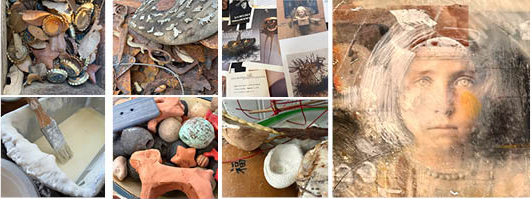
For a long while, everything in me has been shaped around one body of work. It had a rhythm. A vocabulary. A gravity. Its own universe! And then it’s finished. Sent out into the world. No longer needing me in the same way.

And that can feel scary. But now I realize that it is often the beginning of the imaginal disc stage. I love that metaphor!

The old form has done its work. Something in me has loosened. But the new thing isn’t visible yet. This is the moment when I’m most tempted to rush. To make something just to make something. To repeat what worked. To grab onto any shape that will make the uncertainly go away.

But transformation doesn’t work like that.

This part asks for trust. It asks me to sit with what I don’t understand yet. To pay attention to the scraps that won’t leave me alone.

A color.
A word.
A shape.
A feeling I can’t explain – like the phrase imaginal disc that suddenly felt like serendipity.

These collected separate shards and notions don’t look like wings. They don’t even look useful. But they carry something inside them. There are possibilities here . . . . .

I think my job in this stage isn’t to decide what comes next. It’s to protect what feels alive, even when it doesn’t make sense yet. And if my caterpillar self can’t see it, maybe it’s because something new is just beginning to grow there—patiently learning how to become wings.Or legs! Or antennae …or maybe a hundred tiny things I don’t have names for yet. Yay for the Imaginal Disc Stage of Creative Metamorphosis!

The Rules of an Invented World

As I am packing the work for the Taos Ceramics Center Exhibition, Encantos, I realize I am packing up an entire intuitive universe. And every invented universe has its own logic — not the kind you can diagram neatly—but a felt logic. A rhythm. A set of silent agreements between the maker and the materials.

Over time, you start to notice what belongs in that universe and what doesn’t. Certain colors feel native – terra cotta and Prussian blue. Certain shapes return like familiar faces – arcs and circles. Certain gestures carry more weight than others – crossed hands.

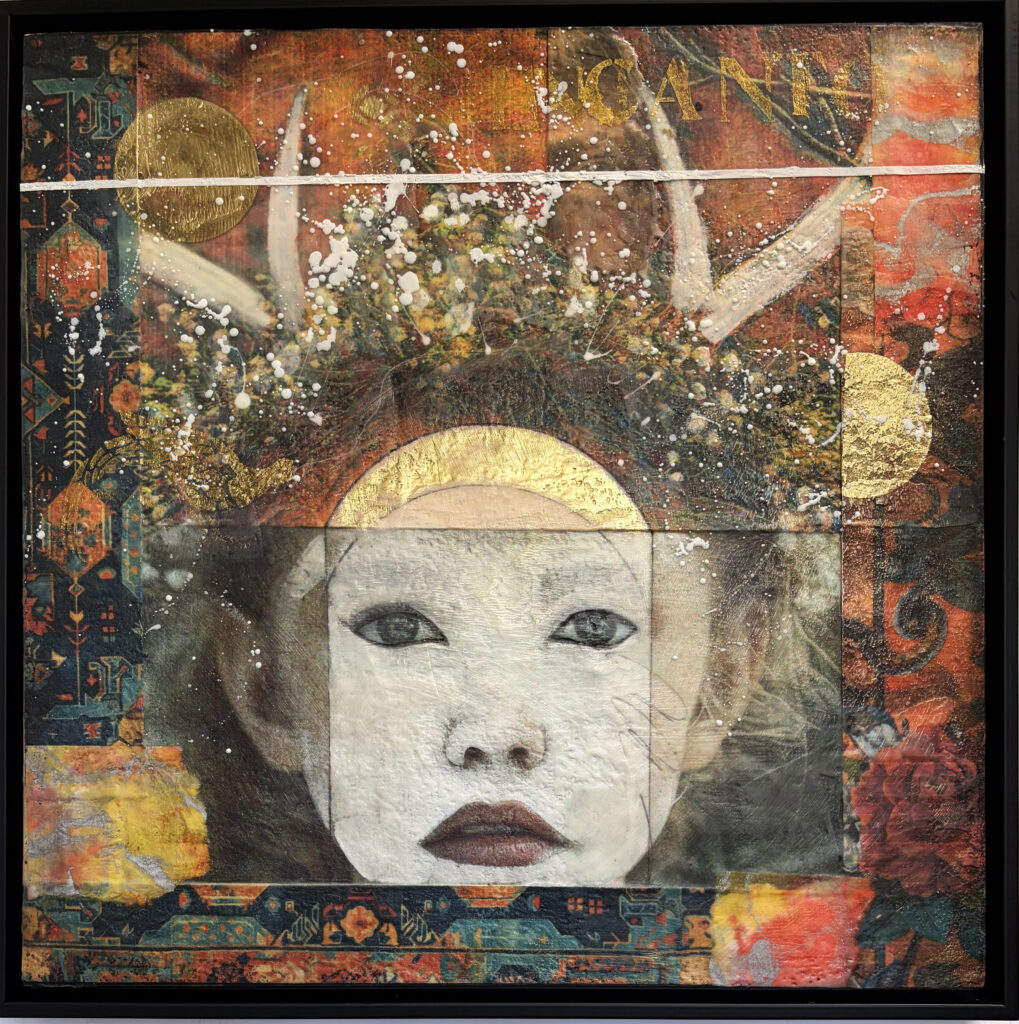
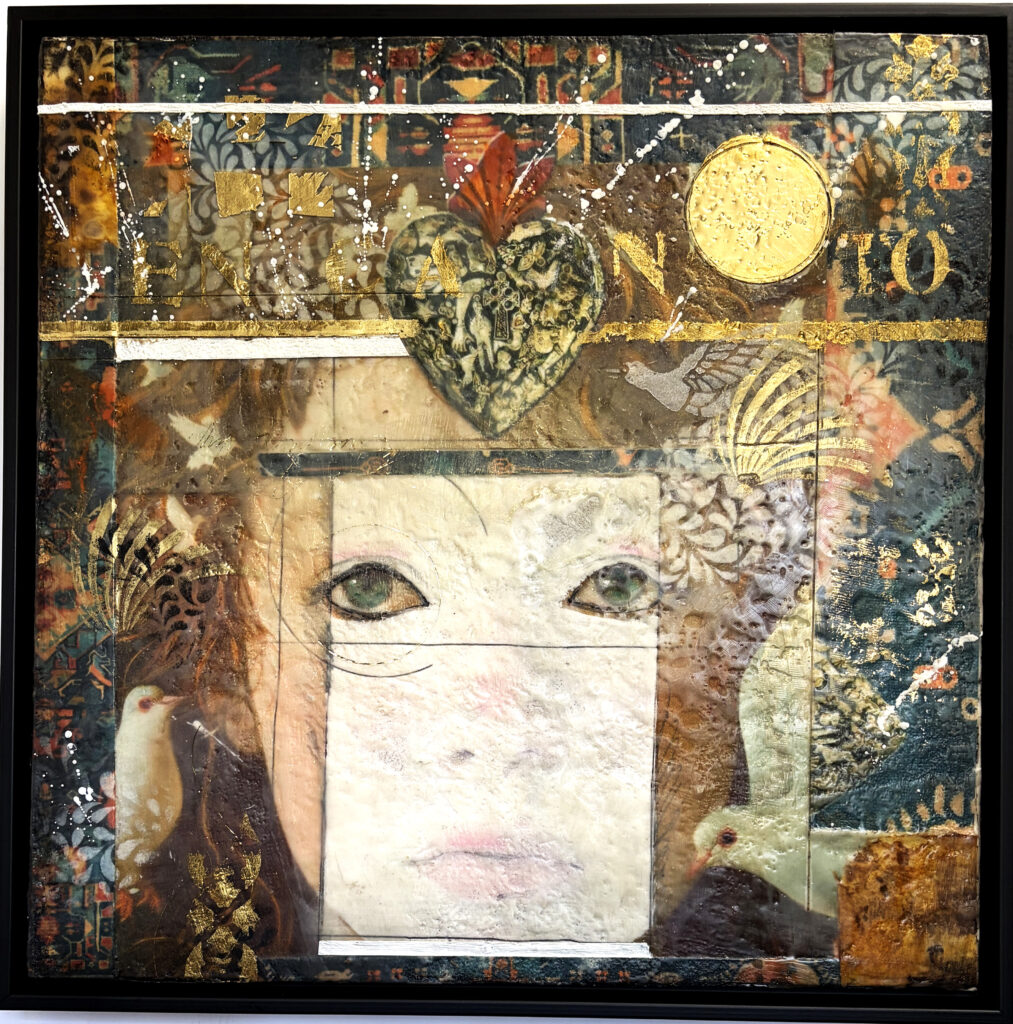
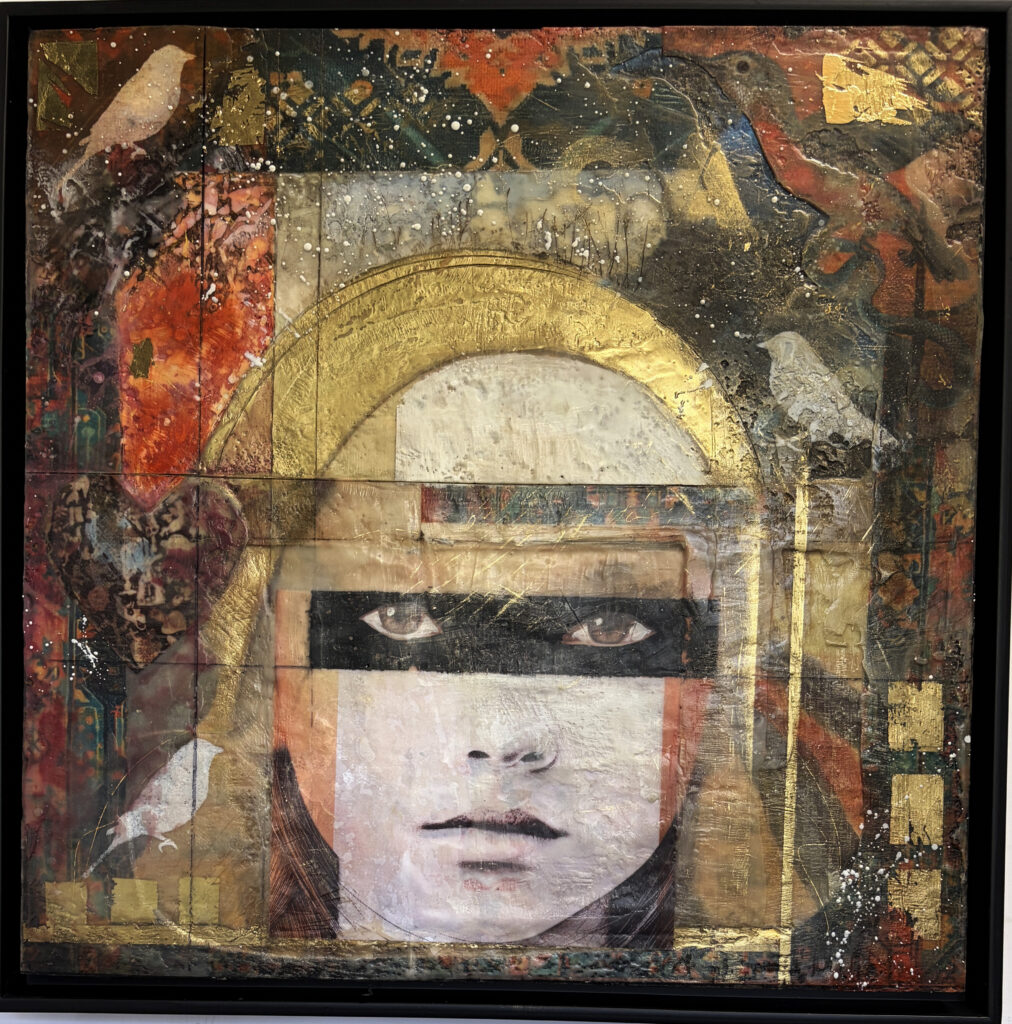
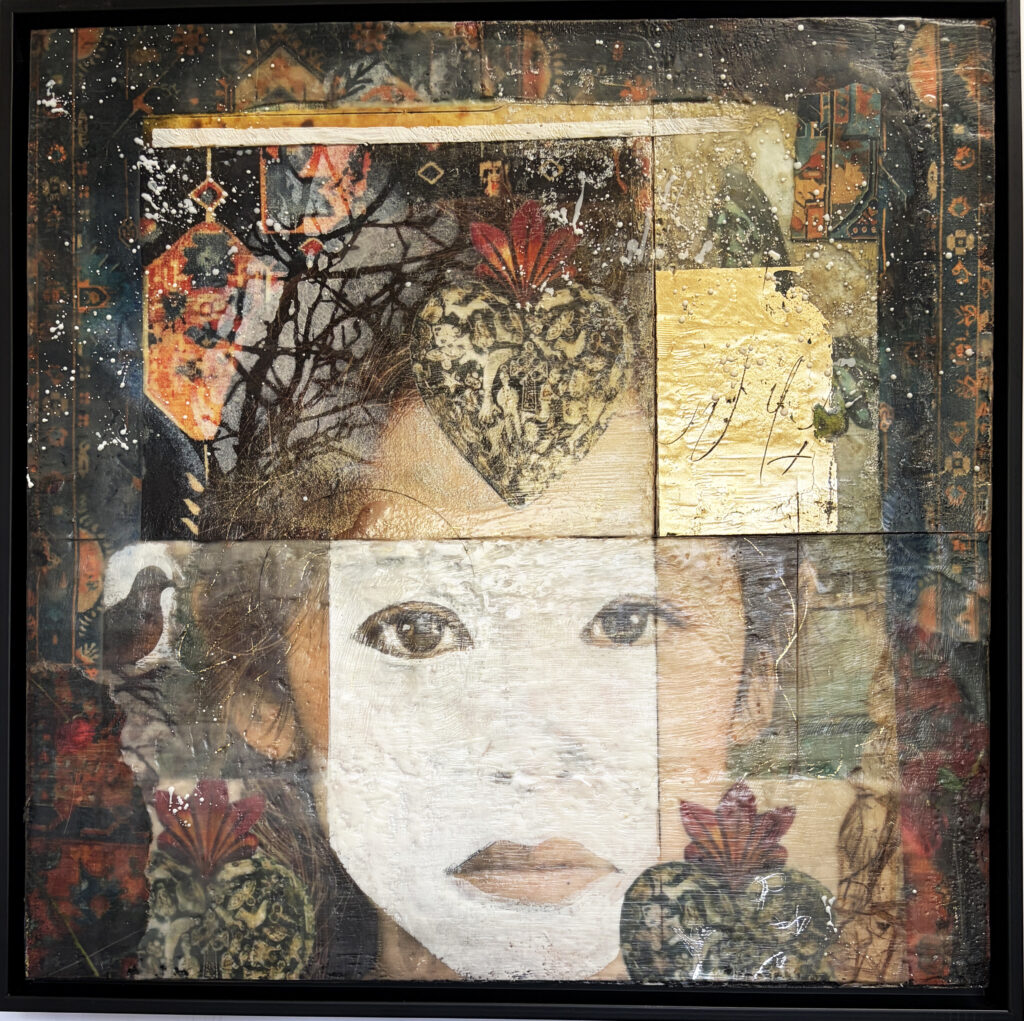
In the Encantos universe, the rules for the four Santa Niñas encaustic collages are simple and a bit strange:

  • Wax protects.
    Paper remembers.
    Gold listens.
    Heat transforms.
    Layers hold time.

I didn’t write these rules down at the beginning. They revealed themselves by repeatedly showing up. Every time I worked, the materials taught me what they wanted to mean. That’s one of the pleasures of personal myth-making—you don’t invent everything at once. You discover it as you go, the way a traveler learns a landscape by walking through it.

Lyn Belisle Santa Niña de la Luz Silenciosa (Silent Light) (2026)

This is why cosmologies in art don’t have to be planned. They can be grown, like the Encantos universe, with its Santa Niña collages, its Encanto Altars, and its Mendicant Messengers (which I’ll tell you more about next time).

Characters Who Carry Feelings

So once a universe exists, it asks for inhabitants, at least this one did.

The four Santa Niñas are not portraits of people. They are portraits of states of being. Each one holds a feeling that kept showing up in my studio: tenderness, protection, not-knowing, rootedness, inner light. Giving those feelings faces—and names—made them easier to sit with.

  • This is another gift of storytelling in art:
    We can give shape to what has no shape.

Instead of saying “I’m working with vulnerability,” I can say, “This is Santa Niña del Corazón Guardado.” (Guarded Heart)

Instead of “I don’t know what comes next,” I can say, “This is Santa Niña de los Ojos Velados.”(Veiled Eyes)

A character can hold what a sentence cannot.

And once a character exists, you can talk to her. Work with her. Ask what she wants to protect, carry, or reveal. Suddenly, the studio becomes a place of conversation, not just production.

Santa Niña del Corazón Raíz
(Santa Nina of the Rooted Heart)

Materials as Myth

In personal cosmologies, materials are never neutral, they become actors in the story.

  • Wax isn’t just wax—it is shelter, skin, veil, cocoon.
    Mulberry paper isn’t just paper—it is memory, breath, fragility.
    Gold leaf isn’t just decoration—it is listening, blessing, attention.

Every time I melt wax over paper, I am repeating a ritual of care: cover, warm, seal, open again. That repetition is how meaning settles into matter. You don’t have to declare symbolism. If something keeps showing up, it is already symbolic.

Play Is Not Frivolous

One of the common misconceptions artists absorb is that “seriousness” equals “legitimacy”.

But myth is not built through seriousness alone. It is built through play: naming things, trying on stories, letting images talk back, changing your mind, making something just to see what happens.

Play is how children understand the world. It is also how artists do.To make a cosmology for your work is not to pretend you know more than you do. It is to admit that you don’t—and to answer that not-knowing with imagination instead of fear.

  • You are allowed to say:
    “In my world, this means something.”
    Even if no one else agrees.
    Even if you change it later.

Myth-making is not a contract. It is a conversation.

An Invitation

You don’t need saints, or vessels, or wings, or gold.

Your cosmology might be built from kitchens, streets, trees, broken cups, dogs, storms, old photographs, or scraps of handwriting. It might be loud or quiet, humorous or solemn, tidy or chaotic. What matters is not what it looks like—but that it belongs to you.

Ask yourself:

  • What images keep returning?
    What materials feel like home?
    What stories are trying to form without words?
    If your work lived in a world, what kind of world would it be?

You don’t have to explain it to anyone.
You don’t even have to understand it fully yourself.

You just have to keep building it—one symbol, one layer, one small act of making at a time. Keep notes. Pay attention. Show us.

That’s how personal myth is born.

If you want to learn more about the world of the Santa Niñas, your can follow this link.

Being Sick, Making Less, and the Shape of Happiness

I’m just coming out of a truly miserable bout of cold/flu—one of those that flattens you completely and makes even small decisions feel like effort.

I even missed delivering work to a happiness-themed show at Mockingbird Handprints because I was sick. And while a part of me felt that familiar tug—I should push through, I should rally—the truth was simpler: it just had to be. There was no bargaining with the body this time.

That irony didn’t escape me. Missing a happiness show because of illness feels almost comic, until you sit with it a little longer.

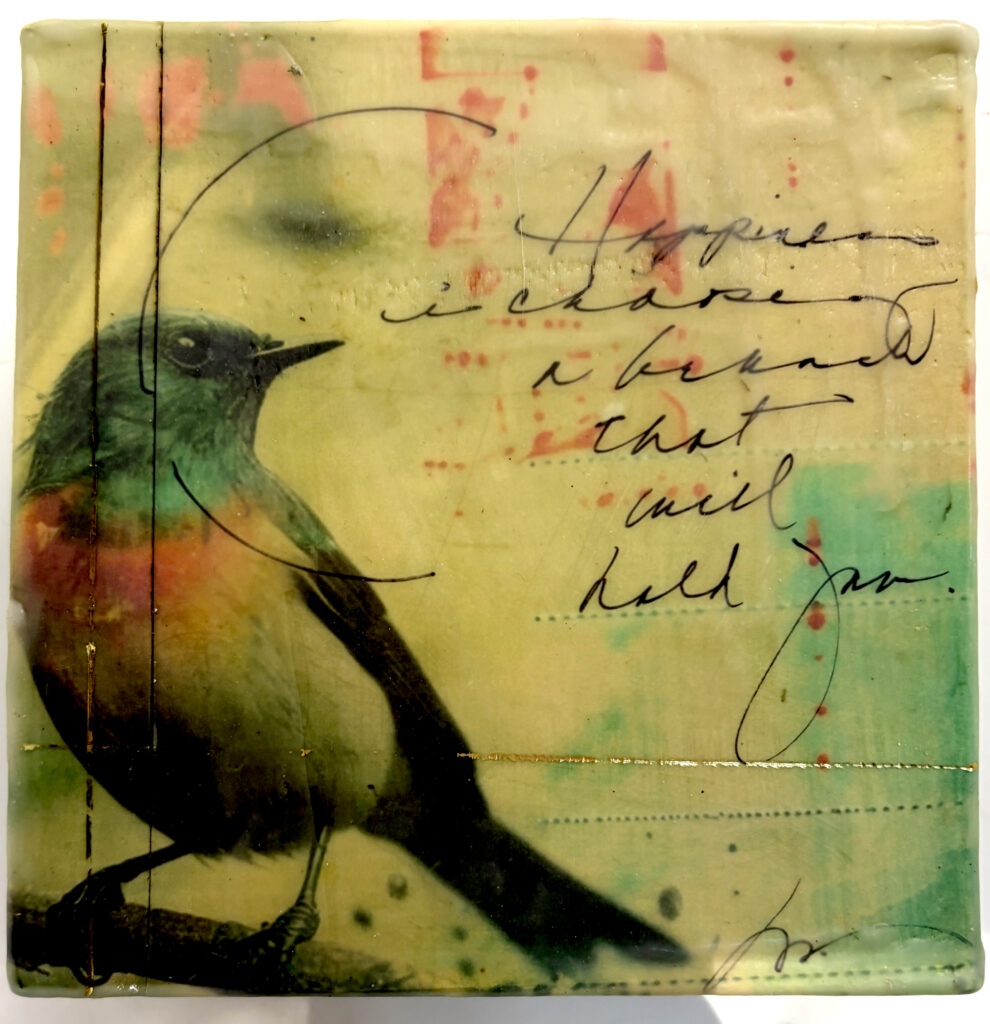
Here’s one of the little the unfinished encaustic collage that may eventually get there – it says, “Happiness is choosing a branch that will hold you.” I was hanging onto the branch!

bird collage

You probably know that being sick has a way of rearranging things. Time slows. Attention shrinks. The body insists on being heard, and the mind—used to running ahead with plans and ideas—has to follow along more humbly.

When my brothers were here for a holiday visit last week, we spent more time sitting, visiting, and reading than going out. It wasn’t the version of the visit any of us might have imagined, but it was the one that fit. Companionship replaced activity. Presence replaced plans. And unexpectedly, that felt like its own kind of happiness.

Illness has a way of stripping happiness of its performance. There’s no energy for cheerfulness or achievement. What’s left is something simpler: comfort, ease, being together without needing to do much at all. (I did whine a bit . . .)

I noticed this shift in my relationship to art, too. When energy is limited, making becomes smaller and more tentative. Thinking replaces doing. Looking replaces producing. And while that can feel frustrating at first, it often opens a deeper attentiveness.

During those sick days, I try not to expect “real work” of myself. Reading counts. Sorting images counts. Making notes, jotting words, imagining future pieces—those count too. Even napping feels connected to the work, as if something is magically aligning beneath the surface – hooray for naps.

Mostly, being sick reminds me that happiness—like art—is embodied. It doesn’t live only in accomplishment or output. It lives in breathing, stamina, attention, and recovery. Sometimes happiness looks like showing up. Sometimes it looks like staying home. Sometimes it looks like reading quietly with people you love while the rest of the world carries on without you.

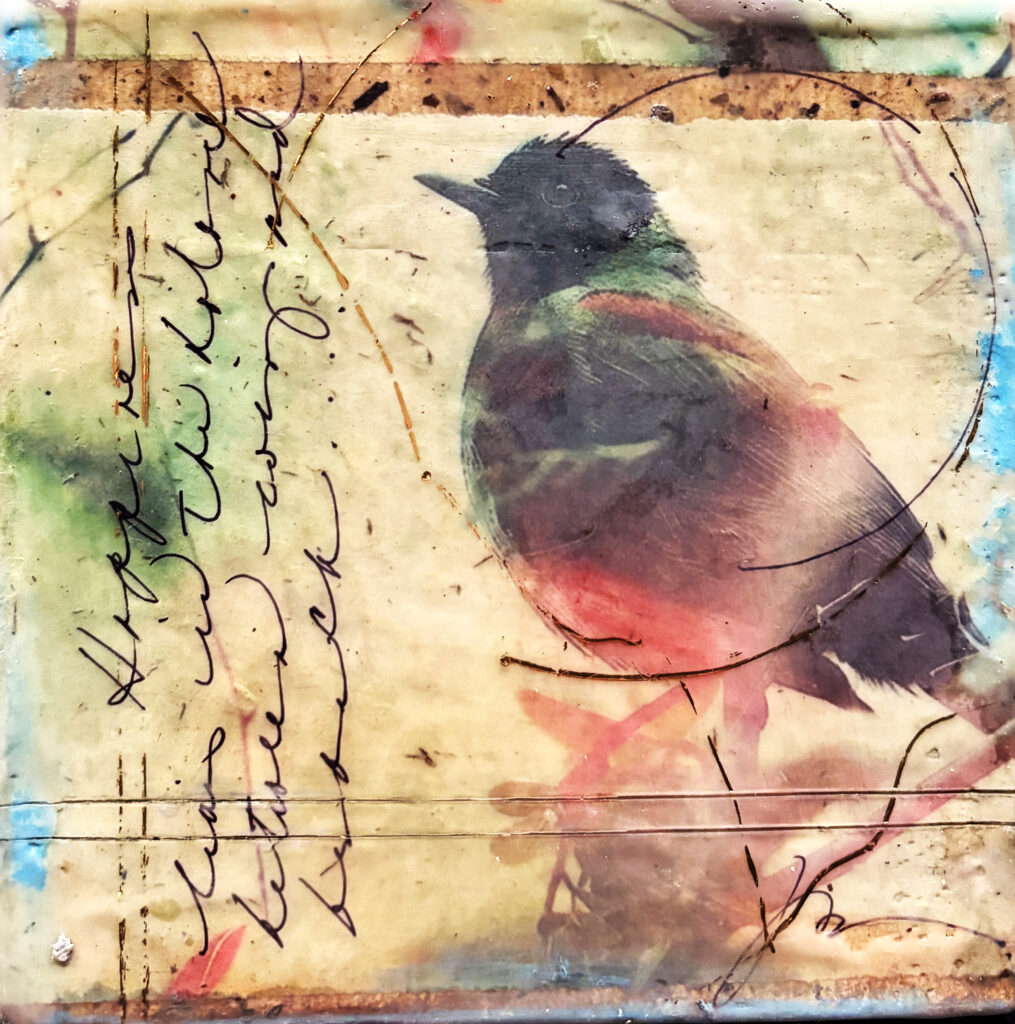
Here’s another little unfinished encaustic collage – this one says, “Happiness lies in the balance between wing and branch.” Flying and resting, flying and resting

Appropriately, the book I was reading when I got sick was Meditations for Mortals by Oliver Burkeman. In it, he reflects on our finite capacities—on the simple, often uncomfortable truth that we cannot do everything, seize every opportunity, or live at full speed all the time.

What he offers instead is a kind of relief: the idea that a meaningful life isn’t built by overcoming our limits, but by choosing what matters within them, and letting the rest go without resentment. Reading that while sick felt less like instruction and more like permission.

I’m feeling better, and I’m carrying that permission with me, the permission to make less when less is what’s possible. To miss a show without turning it into a story of failure. To recognize that happiness, like art, isn’t always expansive or visible. Sometimes it’s the privilege to live honestly within the shape of the days we’re given. Help me remember that!!