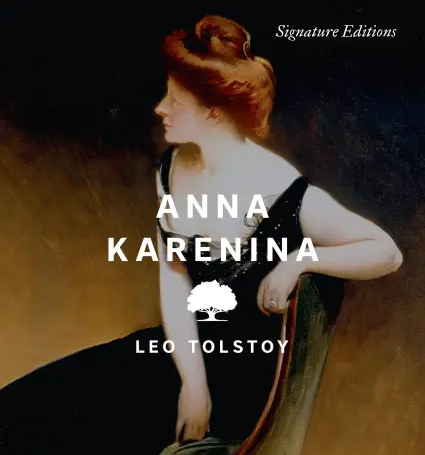
I remember being assigned Anna Karenina in college. Before I had even begun the novel, I read an introduction that described the story as unfolding from the moment Anna meets Count Vronsky until she throws herself under a freight train.
I was appalled.
Why would anyone tell me that before I had read the first page? I knew Anna Karenina was a great novel, and it was. But the knowledge of Anna’s fate accompanied me through the entire book. Every decision seemed shadowed by the railway tracks waiting at the end. Every moment of happiness felt temporary. I wasn’t simply reading about a woman’s life and choices; I was watching her move toward an ending I already knew.
It made me wonder: Do you want to know the end of a story before you begin?
Some people do. I know readers who turn to the last few pages of a novel before committing themselves to the rest. They don’t necessarily want every detail, but they want reassurance. Does the beloved character survive? Are the mysteries resolved? Will this story break my heart?
Knowing the ending can make the journey feel safer. It removes some of the anxiety of uncertainty. But it also changes the way we experience everything that leads us there.
And perhaps this is true of making art as well.
What if, just as you picked up the brush, threaded the needle, rolled out the clay, or selected the first fragment for a collage, you could magically see exactly what the finished artwork would look like?
Would that vision give you confidence? Would you work more freely because you knew the piece would turn out well? Would you avoid the false starts, awkward stages, and moments when you are certain you have ruined everything?
I can imagine the appeal. If I could see the finished work before I began, I might be less afraid of failure—but I might also lose the pleasure of discovery.
Once the ending was known, making the artwork might become a matter of following instructions. Put this color here. Attach that object there. Remove this shape. Add that line. Instead of entering into a conversation with the materials, I would simply be carrying out a plan.
Of course, artists plan all the time. We sketch, make samples, audition materials, choose palettes, and think about composition. We often begin with an image in mind. Planning gives us a place to start, and sometimes it prevents expensive or discouraging mistakes.
But the imagined artwork is not the same as the artwork that eventually appears.
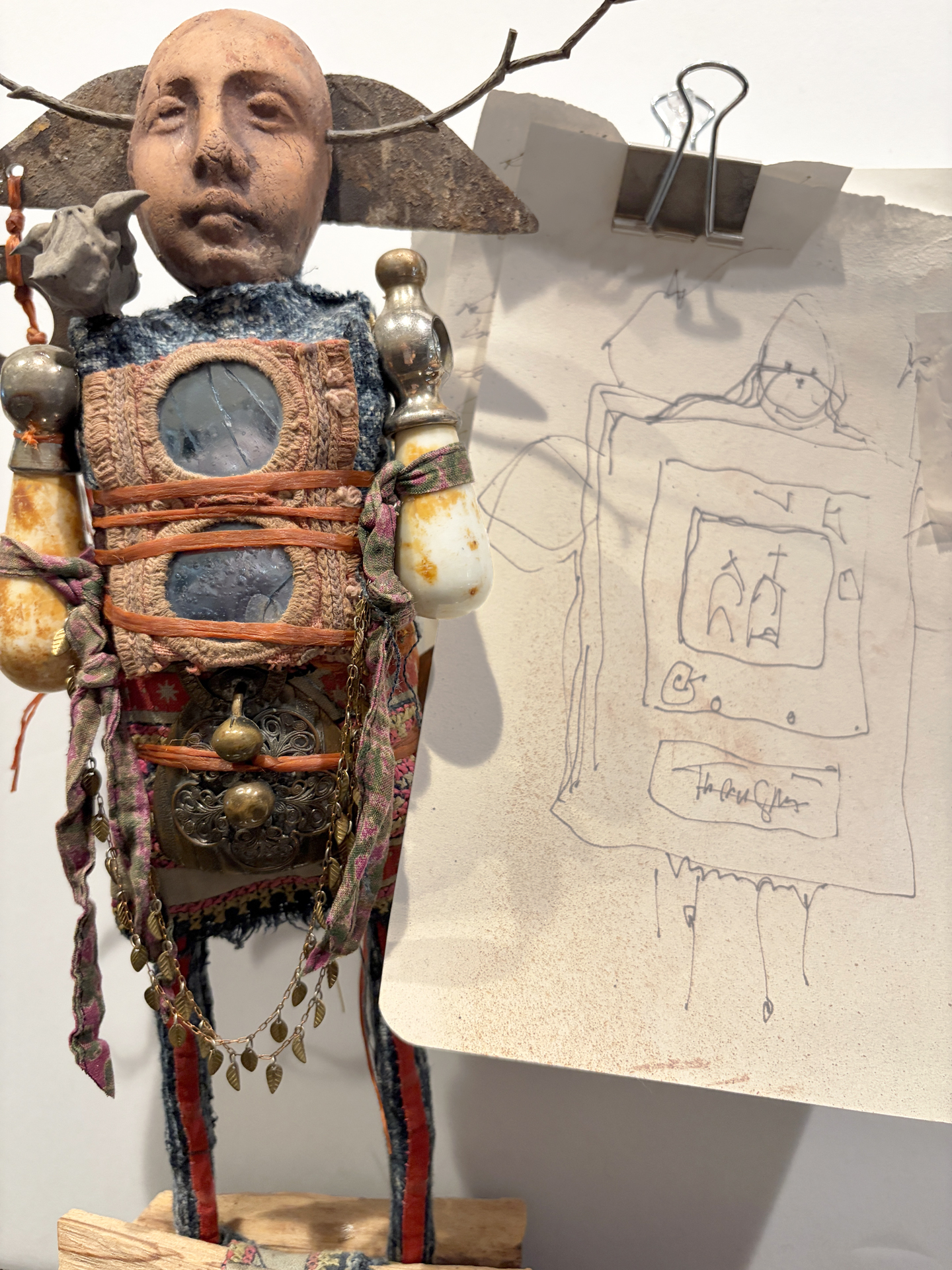
The work changes as we make it, and if we are paying attention, it changes us as well. We begin with one question and discover that we have been asking another. We think the piece is about memory and realize it is about forgiveness. We set out to make something beautiful and find ourselves making something honest instead.
When I think back to Anna Karenina, I realize that knowing Anna’s fate did not tell me everything. It told me what happened, but not what the story meant. Meaning emerged through the journey—through all the complications, contradictions, and human choices that could not be reduced to a single sentence in a preface.
Maybe art works in much the same way. Even if we could see the final image before beginning, we would not yet know what it meant to make it. Still, I think I would rather not see it. I would rather begin with an intention, a handful of materials, and enough uncertainty to leave the door open.
Perhaps we do not need to know the ending. Perhaps we need only enough of a glimpse to take the first step—and enough curiosity to let the work surprise us.
(And apologies if you always wanted to read Anna Karenina and didn’t want to know in advance that she gets run over by a train). Sigh.
Great inquiry….
I used to be a fan of sy-fy and horror genre and would often skip to the end as a safety net. With all the twists and turns it was reassuring to know the main character would either make it or not!
Now, as in life, I look forward to surprise endings especially as I create. I’ve learned to surrender and trust the process as a co creator
(My taste in genres has changed as my nervous system no longer responds well to the shadowy side of life )
Interesting how our tastes change – me too! And i love your “safety net” definition – it’s perfect.
I don’t want to know the ending. For me, its about the process – the discoveries that are made along the way.
Me too,Sue!
I have effectively avoided Russian novels for my entire literary life! I am constantly reminded of how generous you are with your thoughts, techniques, wisdom. Today is no exception. I have done very little art in recent months and years, but there is a nagging at the back of my head that keeps saying “pick up a pencil or a brush”…my hands say “Please don’t!” Thank you for this thought provoking conversation.️
Get yourself busy, Pam! Write a poem and illustrate it with just one line.
Absolutely love his way of being- I try hard to incorporate this into how I am in the world. It makes me feel alive.
This way of being- not proof reading is interesting too
I love this Lyn. It reminds me of Alan Watts’ commentary on “Yugen”. When I first encountered it years ago the image that expressed it best for me was of entering a hilly and forested landscape on a wandering path. You can’t see what’s around the bend or over the hill, and the experience of actually wandering the path is the only way to get there. As in art and life. Thank you for all of your thoughtful wanderings!
Nita, Alan Watts is one of my heroes. His book, “The Book” changed my life! Great note.
I only read the end if I’m reading a new author. I don’t trust that it won’t be a “cliffhanger” which I don’t like. If an old author kills off a loved character (after the loved character has been in several books) I never read another book by them. (Jim Butcher for ex).
That’s really interesting! We kind of trust authors we know and love but new ones are an unknown quantity – nice!
I watched 50 First Dates. I’d never seen Sixth Sense so that got ruined for me. I was going to watch it…eventually. And Anna Karenina was ruined a long time ago. Sigh. I feel you, my friend, I feel you.
Yes, but you can always use your incredible Tarot skills to get a sneak preview!! ♥♥
One time I read the ending first and then decided not to read the novel! I was very young at the time.
I did that once, too! Now I have to remember which book it was, but I remember doing that very clearly. I think if was a book about a horse.
FROM WEYWORD by Emelia Hart
“I am trying to think of where the beginning is. Who decides where things begin and end? I do not know if time moves in a straight line, or a circle. Here, the years do not pass so much as loop back on themselves: winter becomes spring becomes summer becomes autumn becomes winter again. Sometimes I think that all of time is happening at once….” Think Slaughterhouse 5 by Kurt Vonnegut
Also:
“I think there are two types of writers, the architects and the gardeners. The architects plan everything ahead of time, like an architect building a house. They know how many rooms are going to be in the house, what kind of roof they’re going to have, where the wires are going to run, what kind of plumbing there’s going to be. They have the whole thing designed and blueprinted out before they even nail the first board up. The gardeners dig a hole, drop in a seed and water it. They kind of know what seed it is, they know if they planted a fantasy seed or mystery seed or whatever. But as the plant comes up and they water it, they don’t know how many branches it’s going to have, they find out as it grows. And I’m much more a gardener than an architect.” Love this…. With the perspective that “We write to inform ourselves”, I guess I’m a gardener. I also believe there are architects and gardeners in the ART world!
What an amazing post – so much wisdom, so much great metaphor! I just wrote something about Compass and Stars – compass guides you with an instrument and stars guide you by mystery and interpretation.
A great post Lyn! I love it. It reminded me of starting college and my advisor wanted me to write out my goals. I was astonished! I’ve never worked with goals as I felt that I would miss all the other stuff that happens along the way that might take me in a new direction. I thought that college was about opening yourself up to more freedom and independence and new ways of being and thinking. When I told my advisor this he looked at me like I was a mad woman. “you have to write out your goals.” So I made up goals and he seemed happy. With art, I feel the same way which is so beautifully explored and explained. We miss so much along the way if we only see straight ahead. Your art takes on the aspects of the journey you took to your completed art object. In the end iIt shouldn’t be how you initially imagined it. You’re so much wiser than when you began and your art is so much more meaningful as you stated. Thank you so much for this incredible journey Lyn. I’m learning so much, and it is all meaningful!
Jeanne, this is so thoughtful – and I’m stealing this line – ” We miss so much along the way if we only see straight ahead.” Brilliant.
I have tried to work with an image in mind, but I always either get frustrated or very bored. I am only successful if I work intuitively. The finished piece is a surprise for me, and if I am in a class, I often get completely lost in the process and may not follow any of the directions given. Classes prime my creativity.
Dear Lyn.
I enjoyed reading this article very much because it gave me a lot to ponder. I would say that to know the end is sometimes good & helpful especially in matters of health & wellness, because I recently had a bout with health issues & knowing that I was going to get better was certainly a big help to my recovery. Though I’m on the fence when it comes to the time of death, it could be advantageous to plan for the most peaceful event at that time, to make sure that all that I desire & everyone I love is taken care of so that it can be a peaceful event. However in my creative practice I prefer to have a loose plan in mind, led by my heart & hands, then see what happens with the materials & process.
Thanks again for your beautiful way of looking at things,
xOx – Mindy
Lyn, thank you for this whisper of a reminder of the true gift of creation. You continue to be a firefly in the dark for all of us.