In my last post, I wrote about the question artists are often asked:
“Is it archival?”
Since then, I’ve been thinking about a Japanese phrase that offers another way of looking at value and permanence.
The phrase is mono no aware (moh-noh noh ah-WAH-reh).
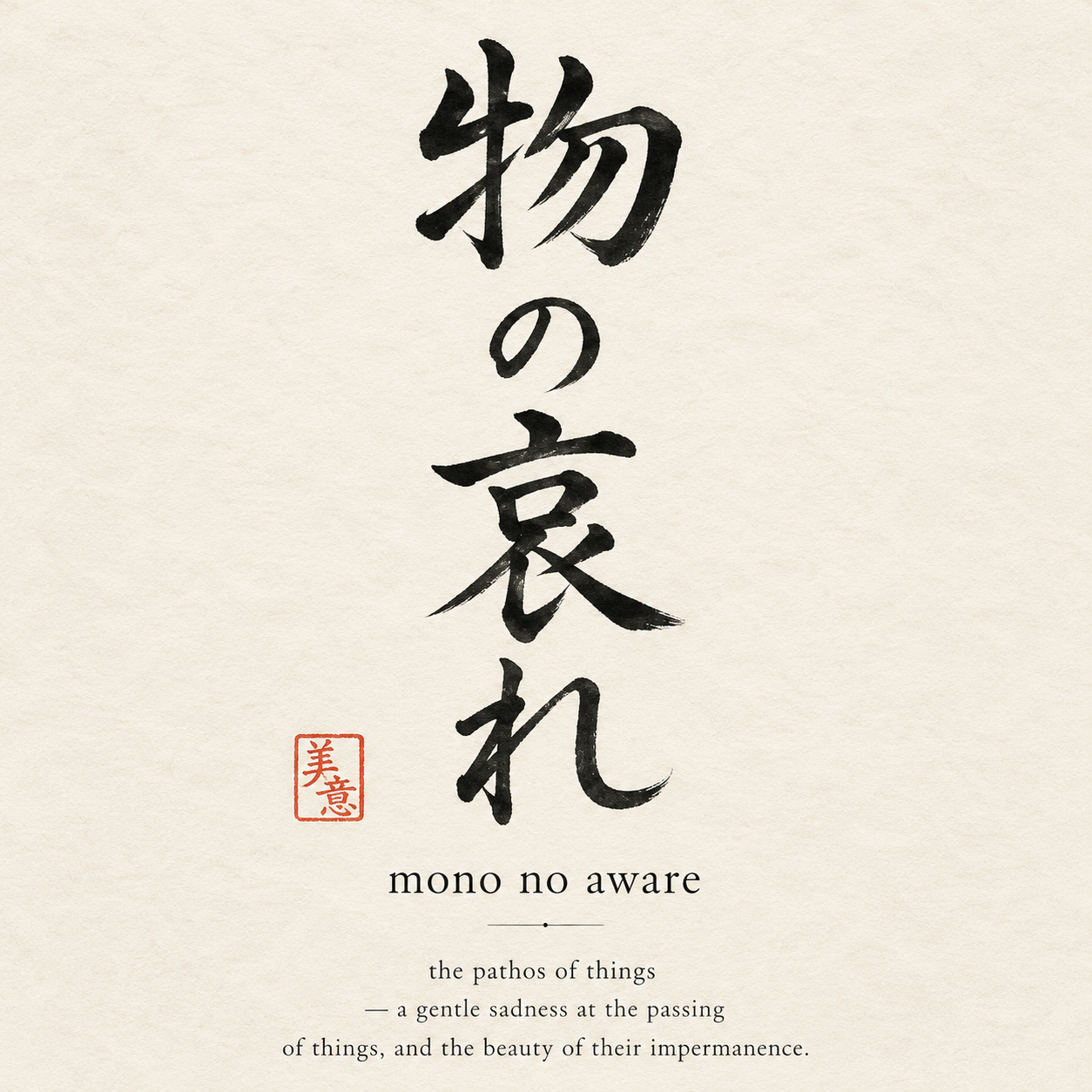
It is often translated as “the pathos of things,” but that translation feels a little formal to me. I prefer to think of it as an awareness that everything changes—and a tenderness toward that fact.
At first, I thought mono no aware was simply about fleeting moments: a cherry blossom that blooms for only a few days, a sunset that fades before we are ready, or a song that ends too soon.
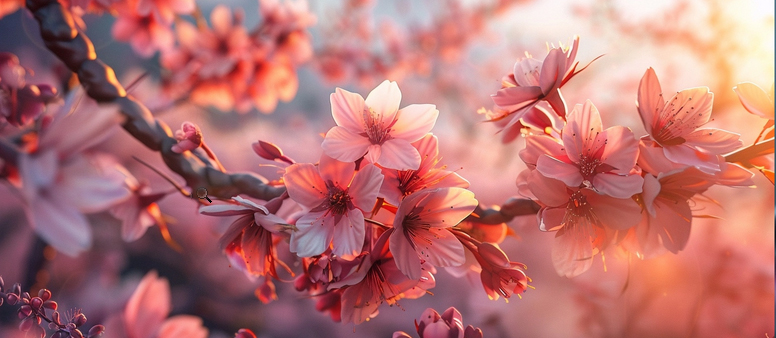
Those examples certainly fit. But the more I thought about it, the more I realized that mono no aware isn’t only about being present for a fleeting moment. It’s also about honoring the fleeting moments that have already passed.
A faded photograph. A handwritten recipe card. A child’s drawing. A worn quilt. A shard of pottery. An old letter tucked inside a book.
None of these things are fleeting in themselves. In fact, they may have survived for decades. Yet they move us because they carry the memory of something that was fleeting—a conversation, a childhood, a relationship, a season of life that can never be repeated.
The object becomes a vessel for memory. And perhaps that is where art enters the conversation.
Many of the things I create are assembled from fragments: old papers, bits of cloth, found objects, rusted treasures, broken pieces that have already lived another life. I’ve often wondered why I am so drawn to these materials. Perhaps it is because they already carry evidence of time.
A shard is not simply a broken object; it is a reminder that something once existed in another form. A worn piece of cloth speaks of the hands that touched it. A rusted object quietly marks the passage of years. Even a simple vessel suggests stories that were held, shared, and carried forward.
These objects become meaningful not because they have escaped change, but because they reveal it.
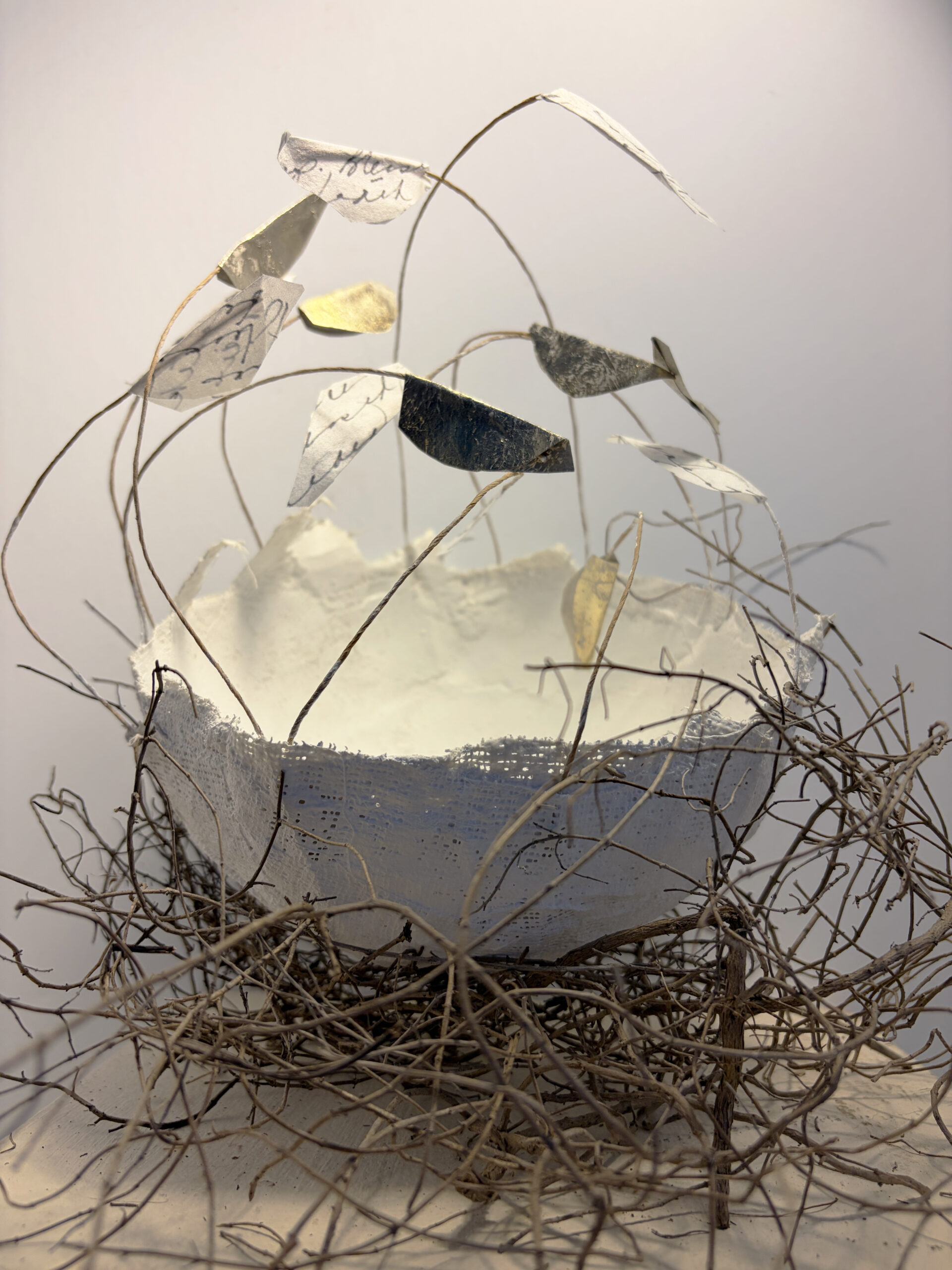
As I’ve been developing my Objects of Devotion series, I’ve realized that many of these pieces function in exactly this way. They are not meant to preserve a particular moment forever. Rather, they honor the traces left behind by moments that mattered.
A Listening Vessel may hold memories of conversations spoken and unspoken. A Guardian may embody someone who protected us, guided us, or encouraged us along the way. A shard may become a reminder of resilience, transformation, or healing.
Lyn Belisle, 2026
The object itself becomes less important than the human experience it carries.
That realization helped me understand something important about the question of whether art is archival.
The archival question asks, “How long will the object survive?”
Mono no aware asks, “What human experience does the object carry?”
Both questions have value.
As artists, we want our work to be well made. We want it to endure as long as reasonably possible. There is honor in craftsmanship and care. But permanence is not the only measure of worth.
A conversation may last only a few minutes. A song only a few moments. A friendship a season. A life a handful of decades. Yet their influence can remain with us forever.
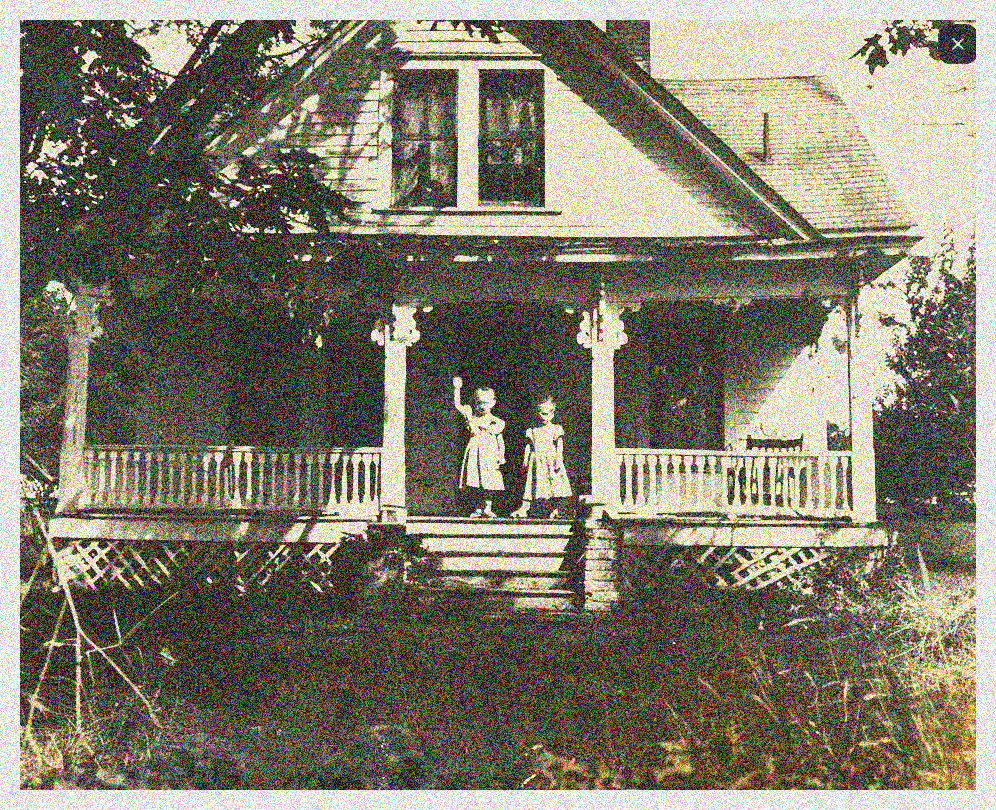
Perhaps the deepest purpose of art is not to defeat time but to bear witness to it. Art holds memory. It honors connection. It reminds us that what is fragile is often precious.
The Japanese seem to understand something that many of us spend years learning: the awareness that things do not last forever does not diminish their beauty. It deepens it.
The photograph matters because the moment is gone.The shard matters because it remains.The artwork matters because it helps us remember.
And maybe the feeling at the heart of mono no aware is not sadness at all. Maybe it is gratitude—the silent gratitude that comes from recognizing that something beautiful passed through our lives and left a trace behind.
Thanks for reading
— Lyn
More on Mono No Aware:
https://www.toki.tokyo/blogt/mono-no-aware-aesthetics-of-a-fleeting-word
https://www.huffpost.com/entry/untranslatable-words-mono_b_9292490
Another powerful post and one that do resonates with me. You always seem to nature my thoughts and feelings – then say them so eloquently.
Sue, thank you – it’s that whole idea of morphic resonance – we think the same thing at the same time! ♥
Years ago I knew a woman who made ceremonial fans that used feathers. I once asked her whether it ever bothered her that she was using something that had once been alive and no longer was. She smiled and very tenderly caressed the feathers and said with a smile, “Oh, no. These are the last footprints on the trail.” I was always struck by that way of thinking. And I’m reminded of it today as I read these words in SHARDS. I think my word for that feeling is “bittersweet” and I noticed that word creeping into my daily lexicon more and more as I get older. Thank you for your words, Lyn. Always.
I love what you write, dear Ann – life is bittersweet, for sure, and we are so lucky when we have most of the sweet and less of the bitter! xoxoxo
Thank you for this beautiful reflection, Lyn! Your exploration of mono no aware offers such a meaningful counterpoint to our culture’s preoccupation with permanence & preservation. I was particularly moved by the distinction between asking whether an object will endure & asking what human experience it carries.
The idea that objects become vessels for memory—that a shard, a photograph, or a worn piece of cloth can hold the trace of a fleeting moment— feels profoundly true. Your essay reminds us that value is not found solely in longevity, but in the capacity to bear witness to what mattered. The awareness that beauty is transient does not diminish its significance; it deepens our gratitude for having encountered it at all.
A thoughtful, moving, and deeply human meditation on art, memory & the traces we leave behind.
I couldn’t agree more with all the comments above…I love what Sue has to say – and that you always say so eloquently what I think and feel too…thank you!