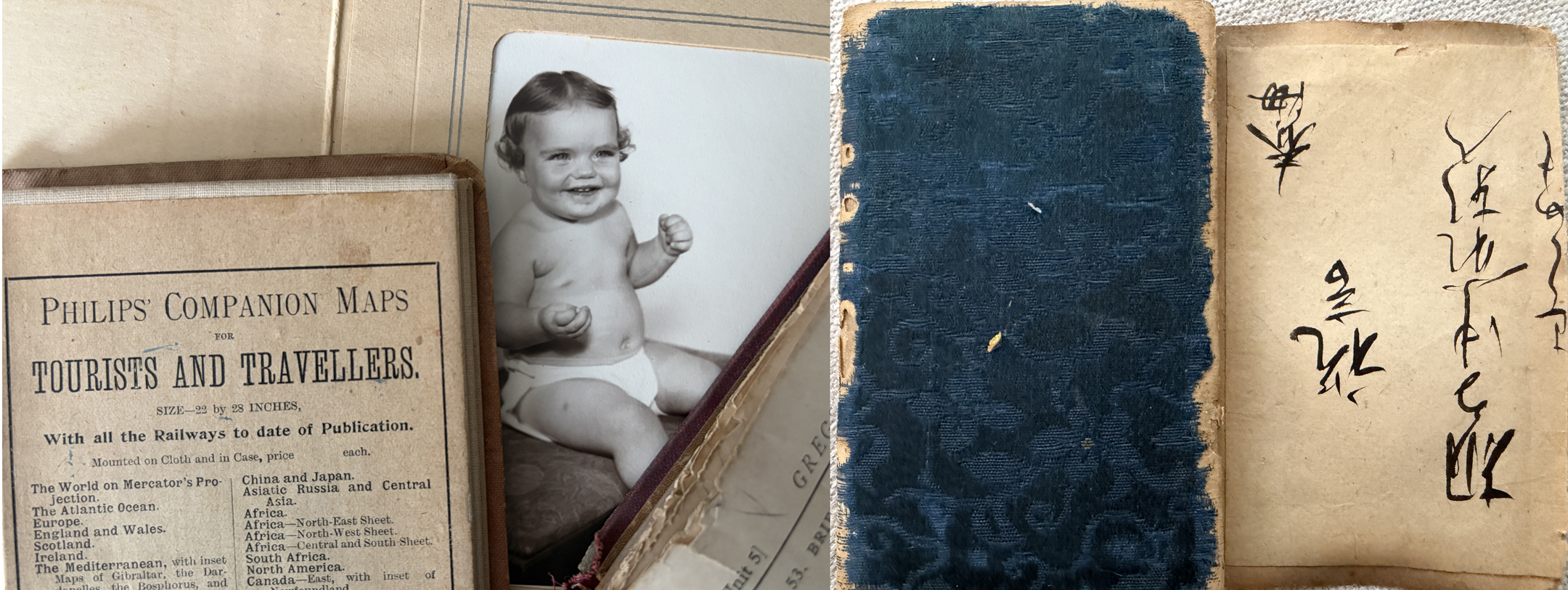
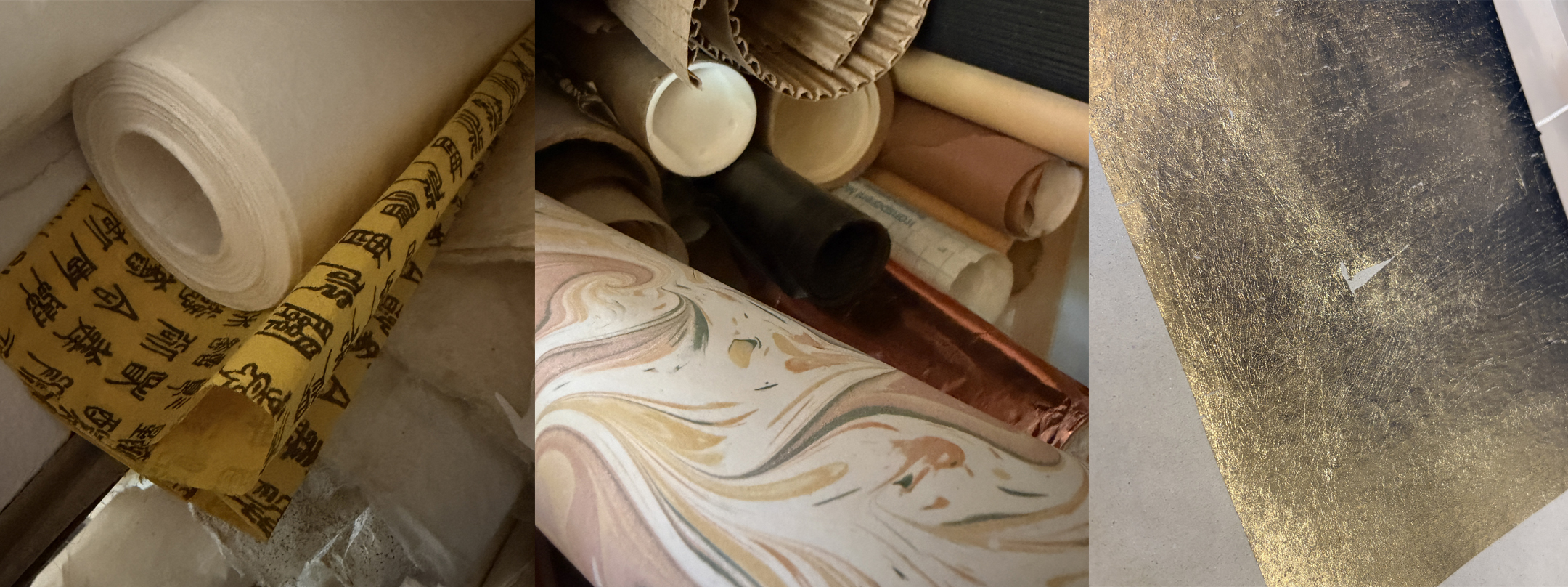
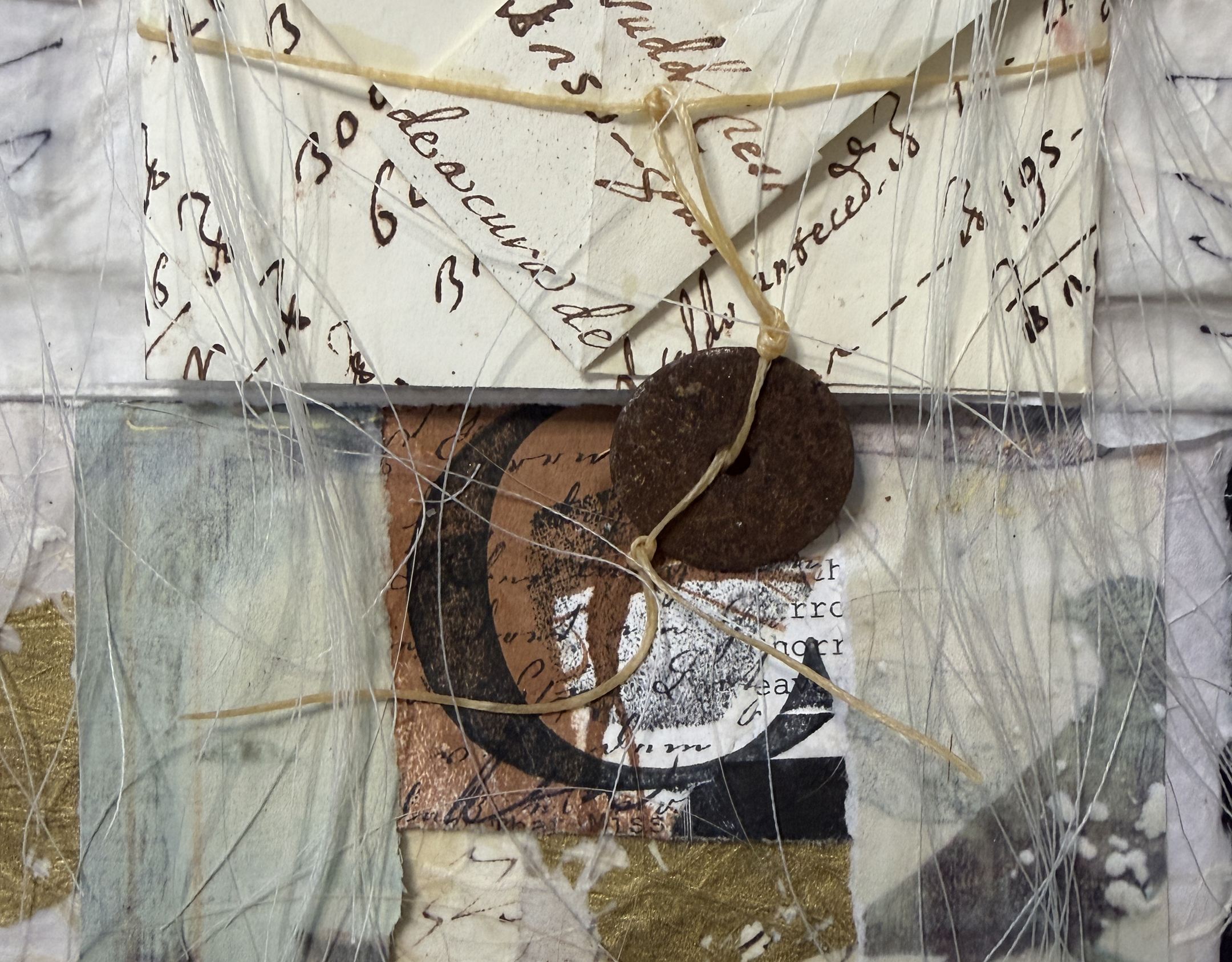
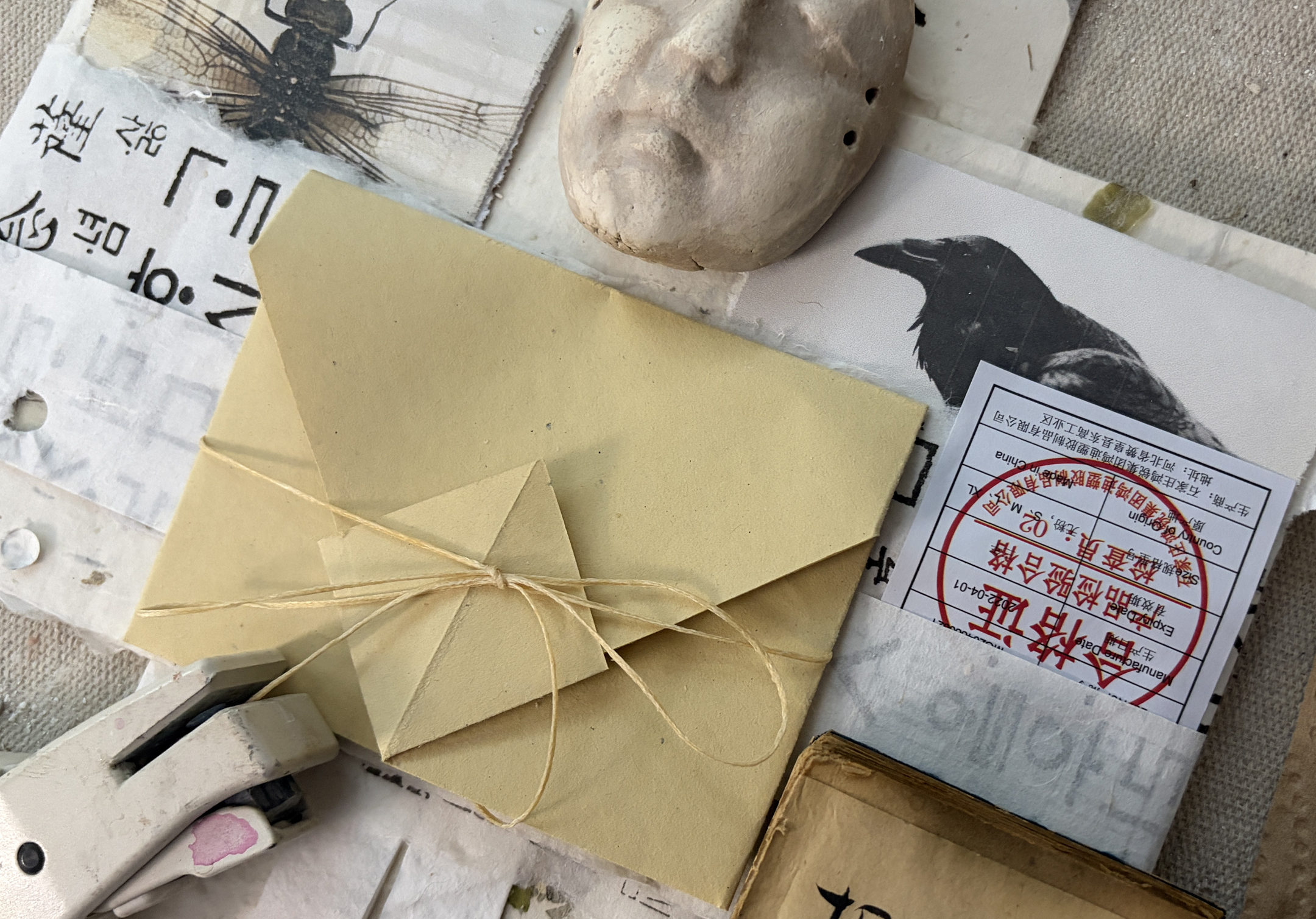
Gratitude for the Creative Life

I’ve been thinking lately about how extraordinary it is that so many of us continue to make art at all.

Life does not exactly clear a path for creativity. Most artists I know are balancing family, caregiving, work, financial worries, aging parents, endless errands, world events, uncertainty, exhaustion — all the ordinary and extraordinary weights of being human. And yet somehow, in the middle of all that, we still feel the pull to make things.

  • We still stop to notice light falling across a table.
  • We still save interesting scraps of paper.
  • We still arrange objects on a shelf without quite knowing why.
  • We still feel that quiet inner nudge that says, “Look at this. Pay attention. This matters.”

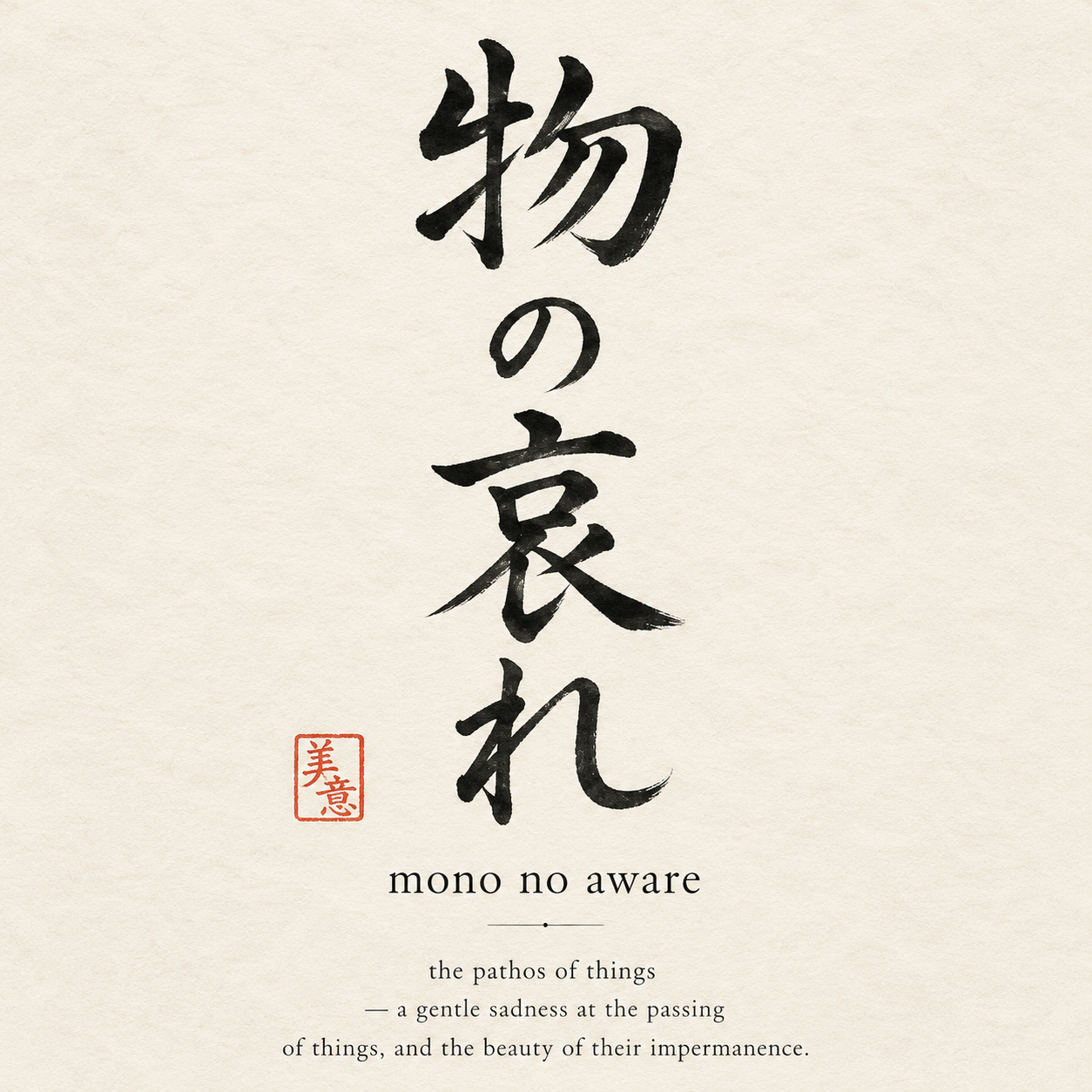
Lately, that has begun to feel less like ambition and more like gratitude.

Not gratitude in the greeting-card sense, but something deeper than that. It’s more like a recognition that the creative impulse itself is a kind of companionship we carry through life. It stays with us during difficult seasons. It waits for us when we are distracted or discouraged. And sometimes it rescues us by reminding us that beauty and meaning still exist, even in small forms.

I suspect many artists understand this feeling without needing to explain it to one another.

Even when I’m not actively working in the studio, I realize I’m still moving through the world with an artist’s eye. I’m noticing patterns in shadows, strange color combinations in peeling paint, bits of conversation, fragments of memory, little visual coincidences that feel oddly significant. The world continues to offer things up, and some part of me continues to gather them.

Maybe that’s one of the real gifts of a creative life — not just the art we make, but the way art teaches us to remain awake to the world and to one another.

And honestly, these days, that feels like something worth being deeply grateful for.

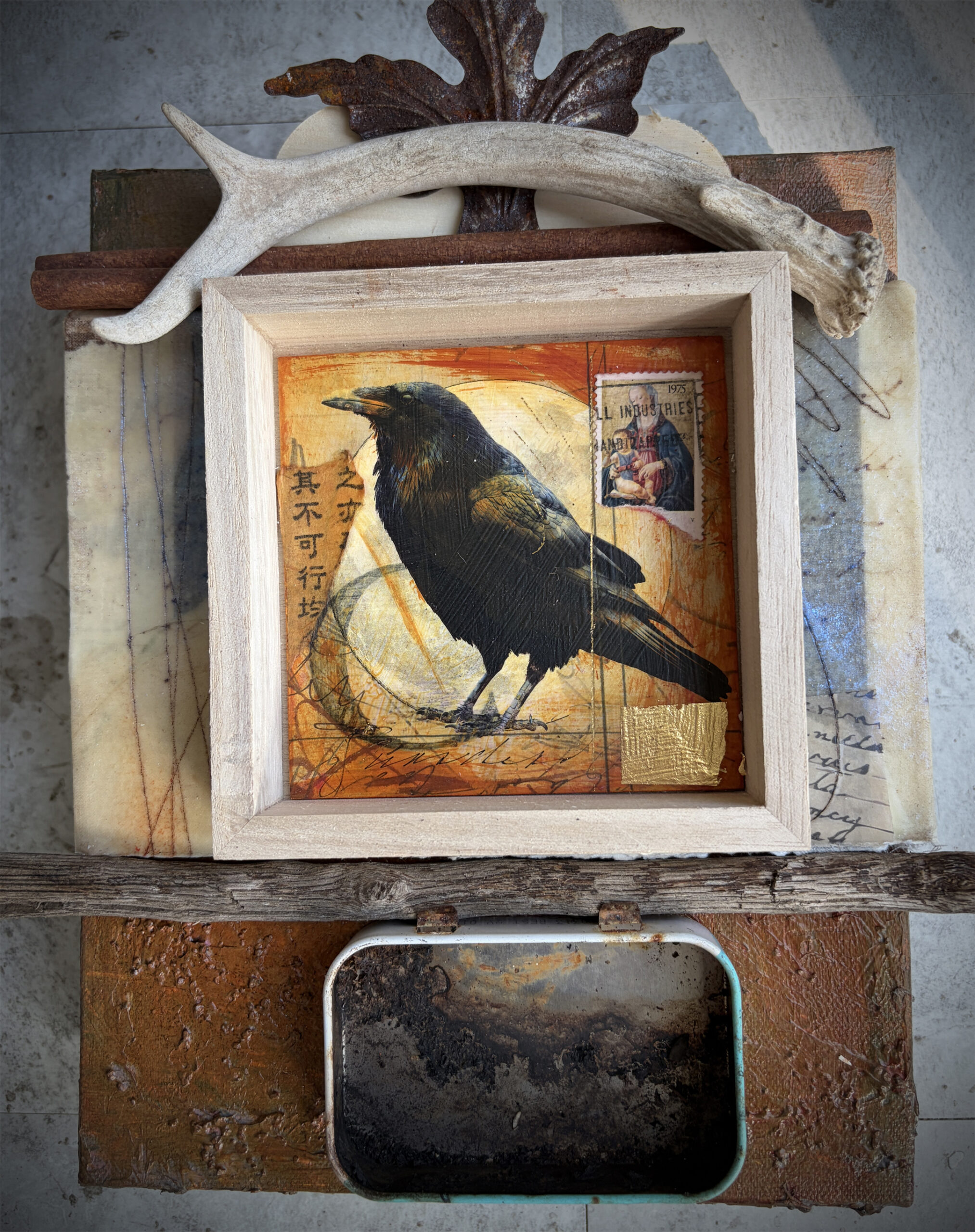
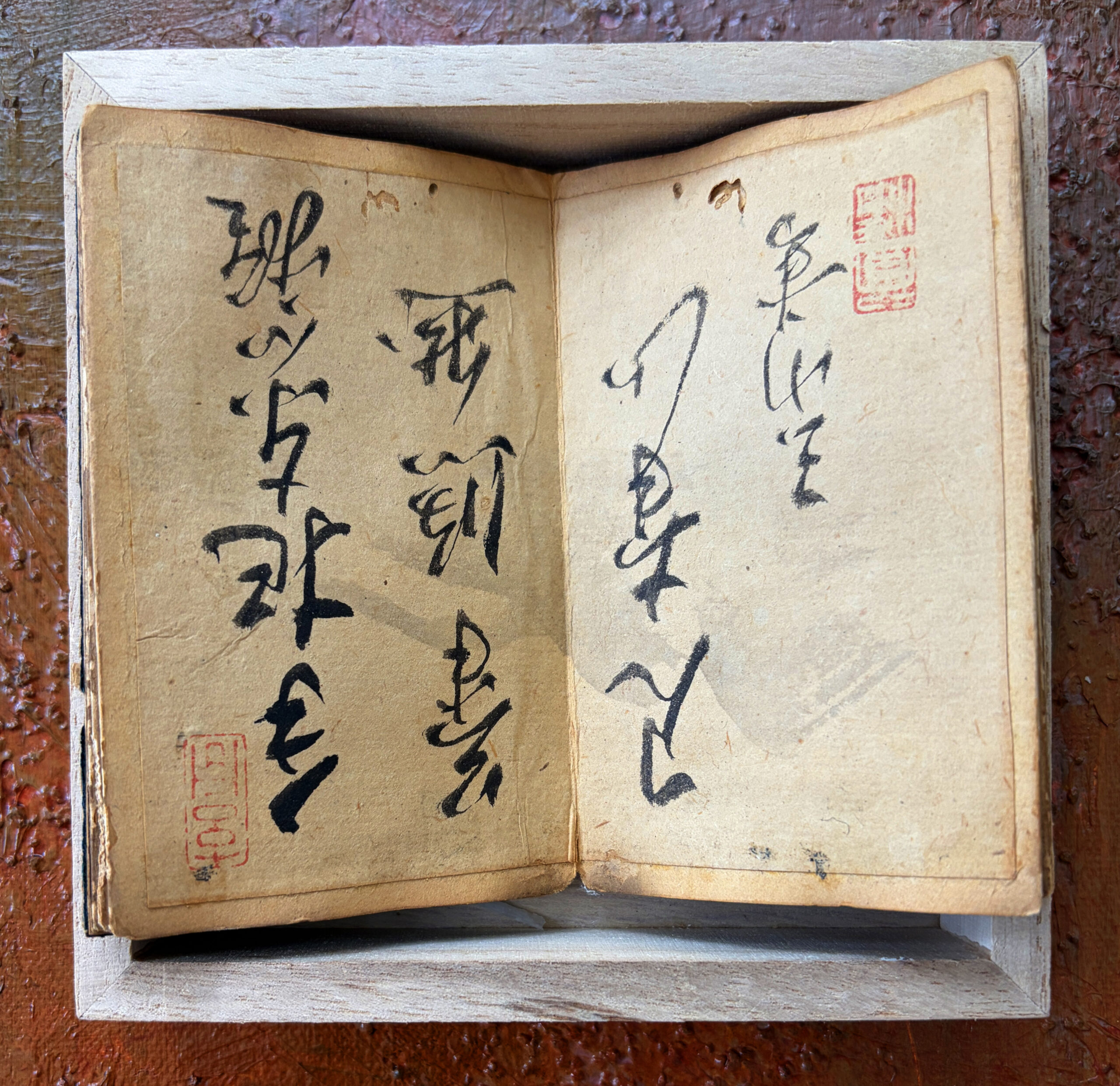
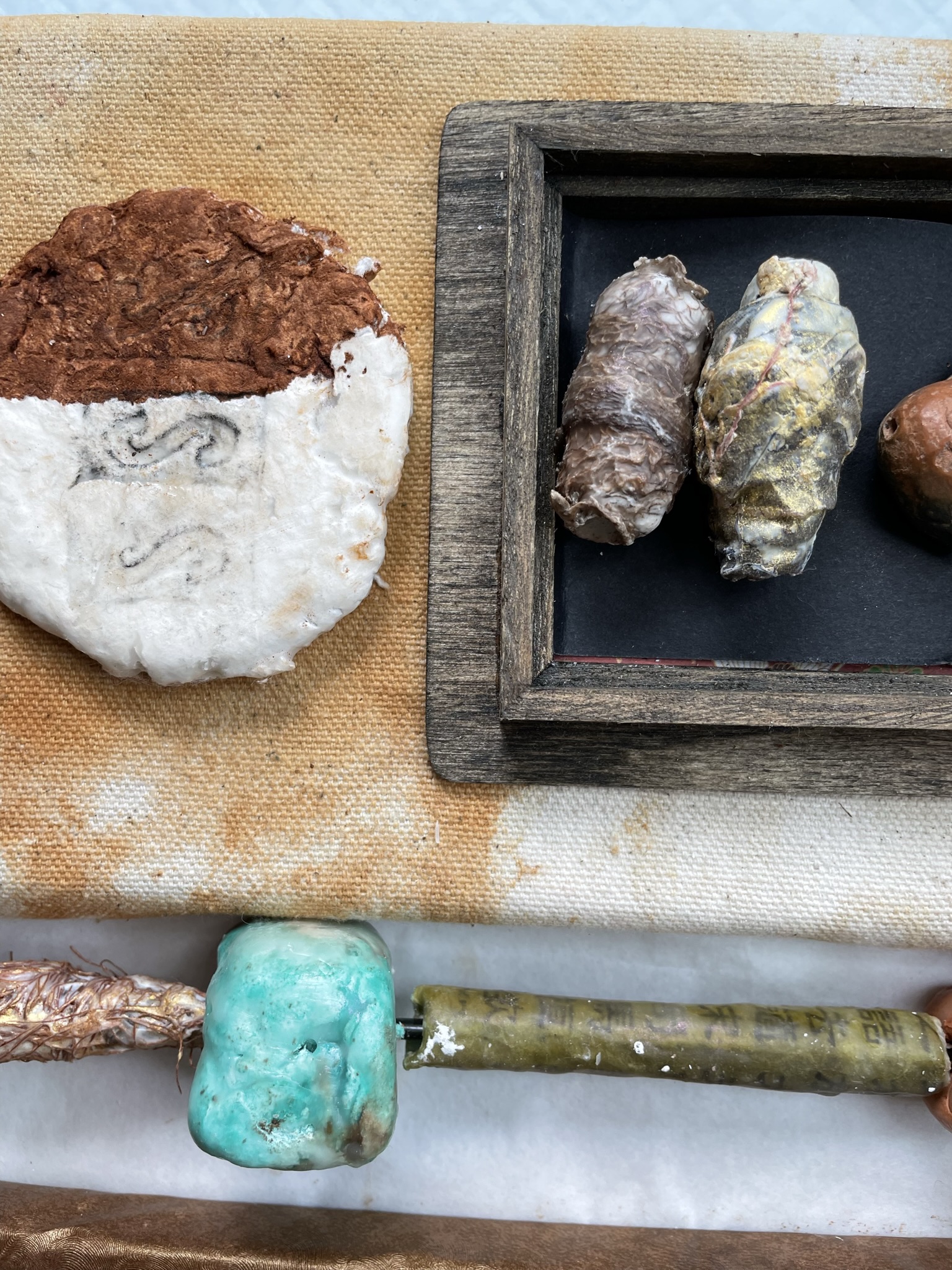
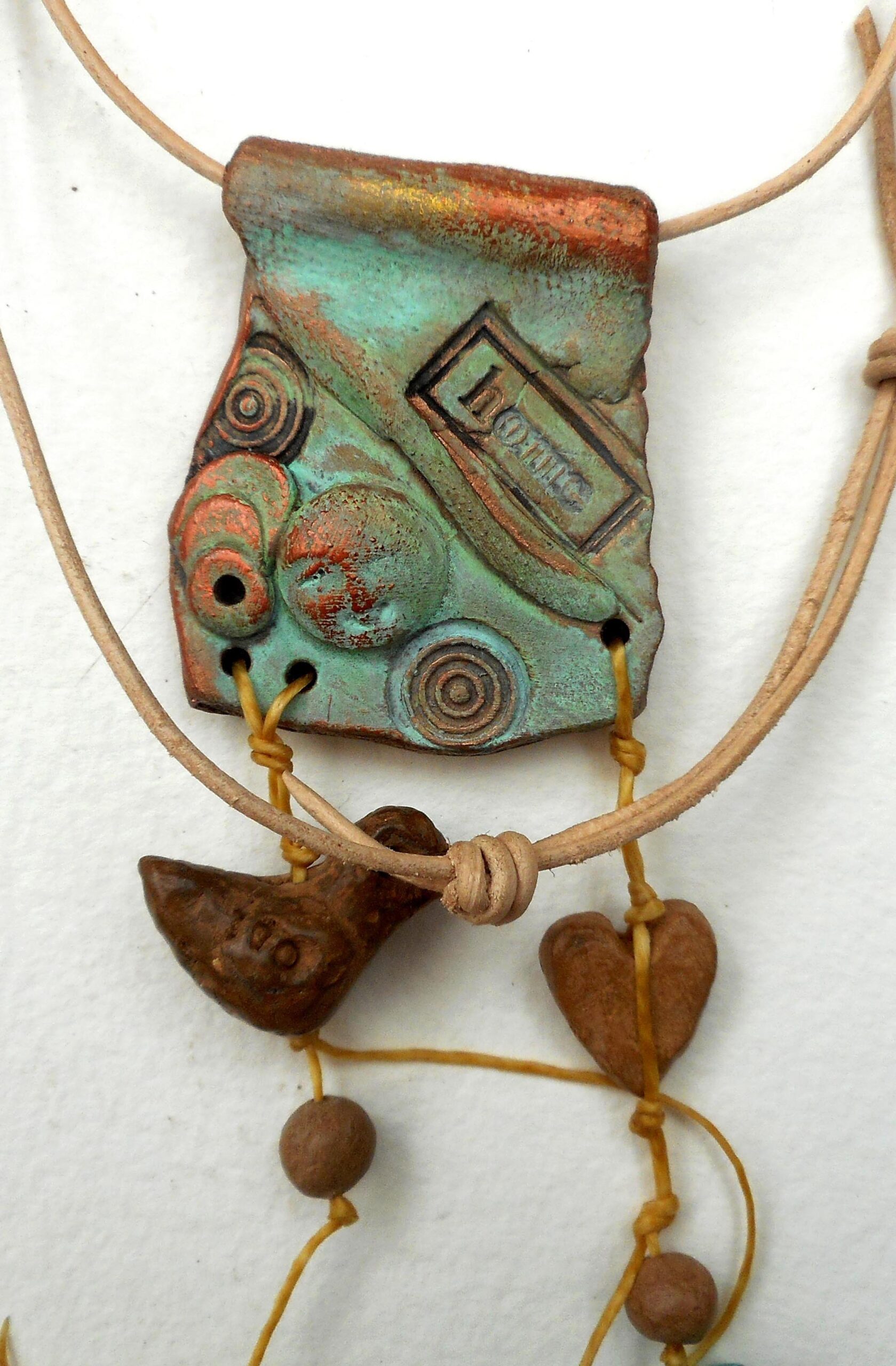
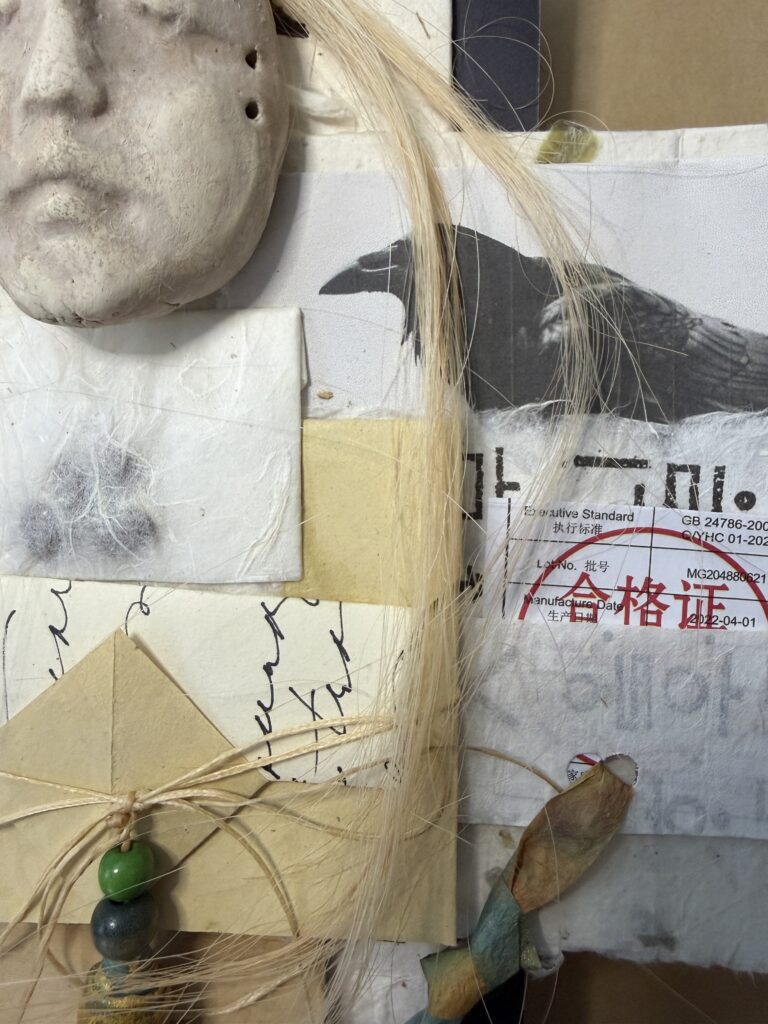
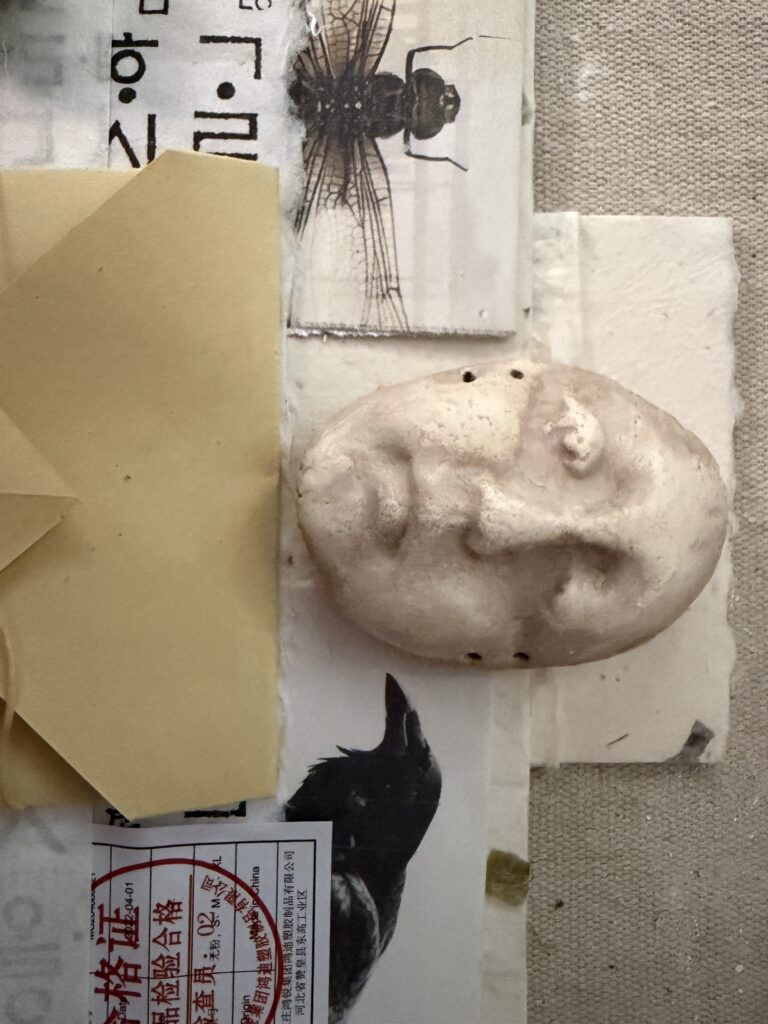
I’ve also been wondering if gratitude needs expression — not in a grand public way, but in small personal rituals. Perhaps gratitude for a creative life can take the form of making something that doesn’t need to be sold, exhibited, or even explained. A tiny offering. A stitched fragment. A small clay token. A paper bundle holding kitty fur tied with thread. Something made simply to acknowledge the mysterious fact that our creative spirit is still here with us.

Not a masterpiece. Not content. Not productivity.

Just a silent, heartfelt gesture of thanks.

I love the thought that artists throughout history may have done this in one way or another — making small meaningful objects not for an audience, but for themselves. Little reminders of wonder. Proof of attention. Tokens of survival and delight.

Maybe gratitude itself can become part of the creative practice: not only making art about life, but making something in thanks for being able to see life through the eyes of an artist at all.

Grateful for you

♥Lyn

What Kind of Vessel Would You Be?

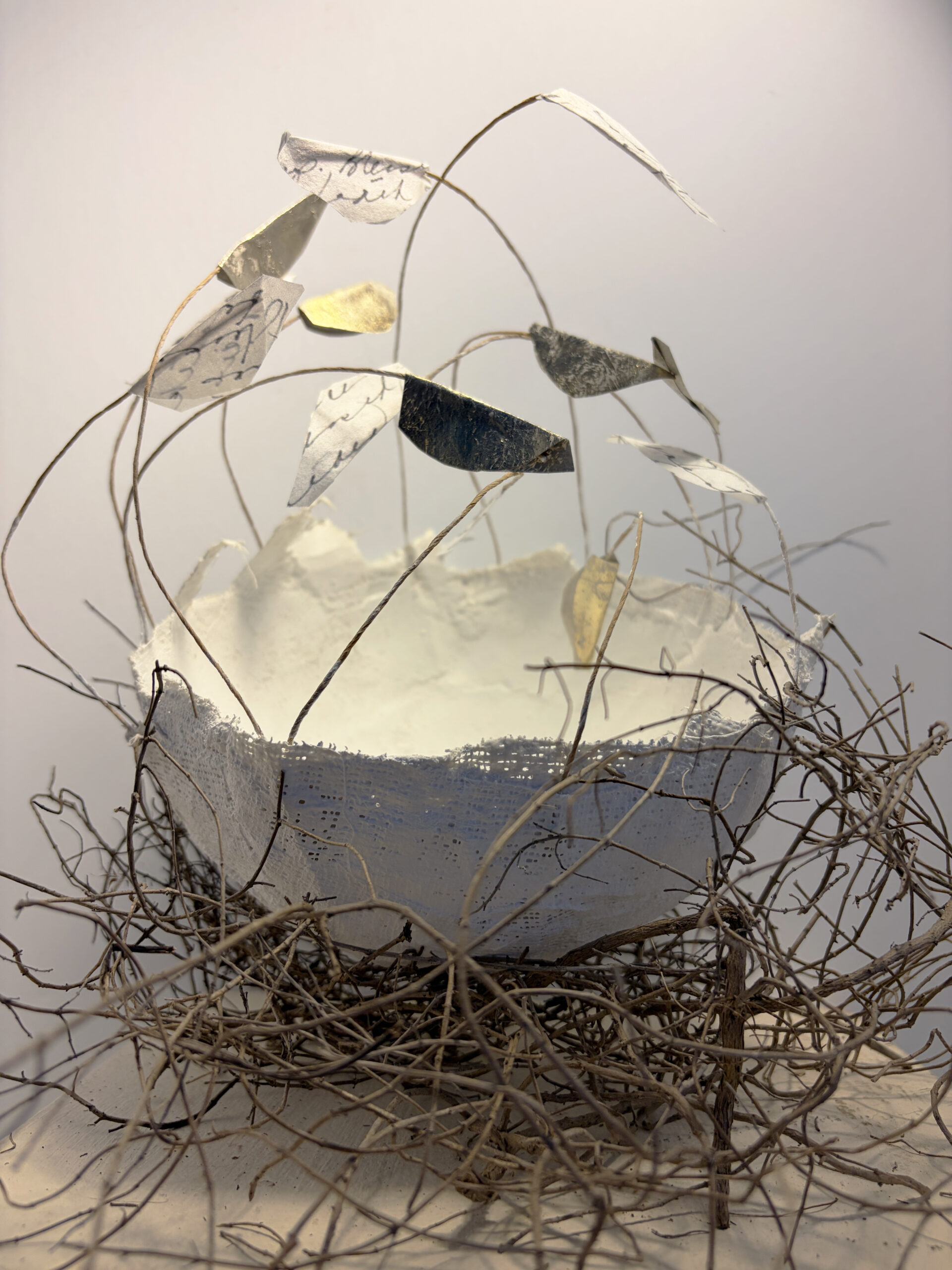
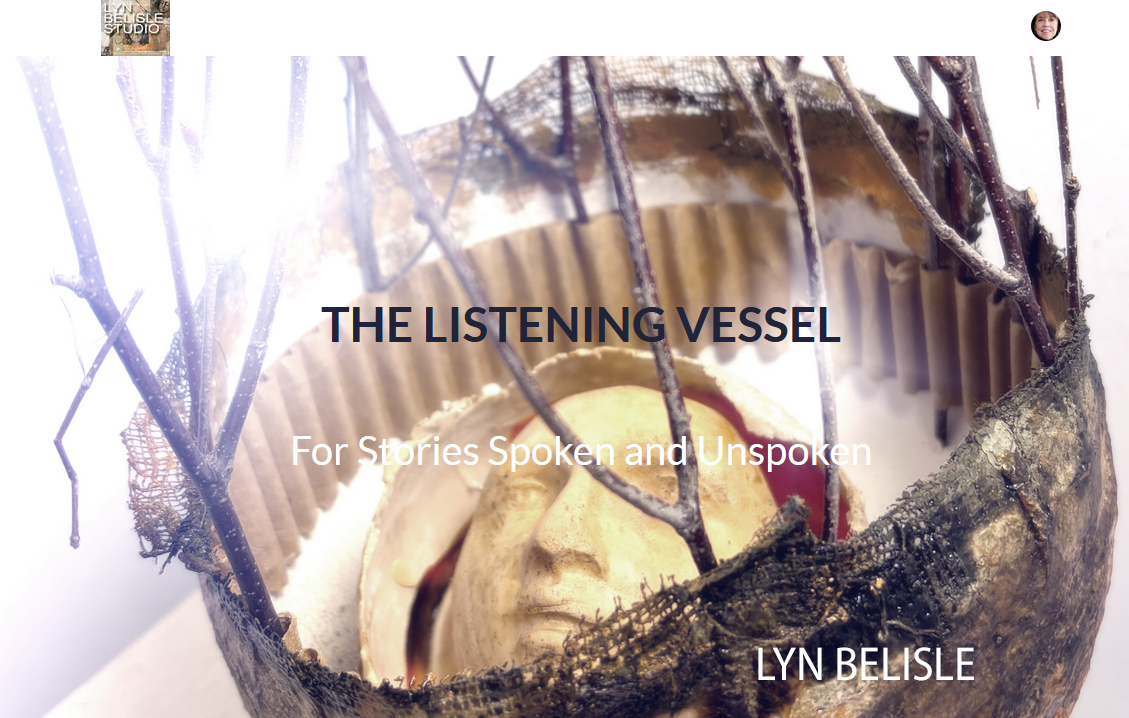
Lately, I’ve been thinking about vessels not as objects that speak, but as objects that listen.

That idea is the basis of my upcoming workshop, The Listening Vessel, which will be released later this month as part of the Objects of Devotion series. I’m right in the middle of filming it. And as usual, there are lots of surprises and revelations.

So with all that on my mind, I asked our recent Enso Circle Continuing Residents a question that seemed simple at first:

If you were a vessel, what kind of vessel would you be?

The answers were thoughtful, surprising, and deeply personal. Here, for example, is one from Ann in California:

  • My vessel is a curragh, filled with many burdens, old and new, and lately at risk of sinking entirely.  I have slowly begun to toss things  overboard but then started to realize that some are not burdens at all but, rather, helpers I had been missing. Discernment is key but there is also a sense of urgency. So I turn with hope to the words of John O’Donohue from his longer blessing, Beannacht:
  • “When the canvas fraysin the currach of thoughtand a stain of oceanblackens beneath you,may there come across the watersa path of yellow moonlightto bring you safely home.”

This one is from Marian in New Zealand – it is incredibly metaphoric, complex and touching:

  • I would be my old basketball, given to me as a birthday gift when I was about ten or eleven I think! As new it was shiny brown leather, with a bladder inside that you blew up and then laced up the top with a leather lace. I can still smell the newness of the basketball when I reimagine it now. I polished it with a beeswax polish and carried it with pride, spending many many hours throwing it against our old wooden house and pretending to be the top team player in a tournament. I didn’t care about joining into games at school with this ball as I played cricket and tennis and hockey and some basketball but my games alone with my ball and the fact my mothers sewing room was on the other side of that wall and only once do I remember her coming and saying would I mind stopping for just a little while as she had a headache and had to finish a tricky bit of sewing. Remembering that now I can’t imagine the thump thump thump that she endured countless times without ever complaining.I feel overwhelmed by memories of absolute love and care and pride and acceptance within my family and nothing nor no one else mattered to me.
    I guess I pour out stories of a loving cash strapped family, one which cared unconditionally for us and were ever present, and we had a lot of humor and fun and gentle moments together and I always felt it all centered around my fathers absolute love of bees and nature and my mothers love of animals and nurturing of her children even though they lost their first born and struggled to accept the fact in those days that you were not allowed to ever mention that loss again but go home and have more children! They did and ended up with six out of eight children loosing one more later on. . . . The ball now is deflated old but still holding many memories of flying and soaring, bouncing and being carried, still bringing joy seventy plus years later, a sense of achievement, self awareness, at one with the player. A fantasy life as a bird soaring in my own thoughts, content able to roost if it rains in the treetops of nature, coming out to play in the Enso circle and finding the same kind of love and happiness here.

Here’s another from Tracy in Vermont:

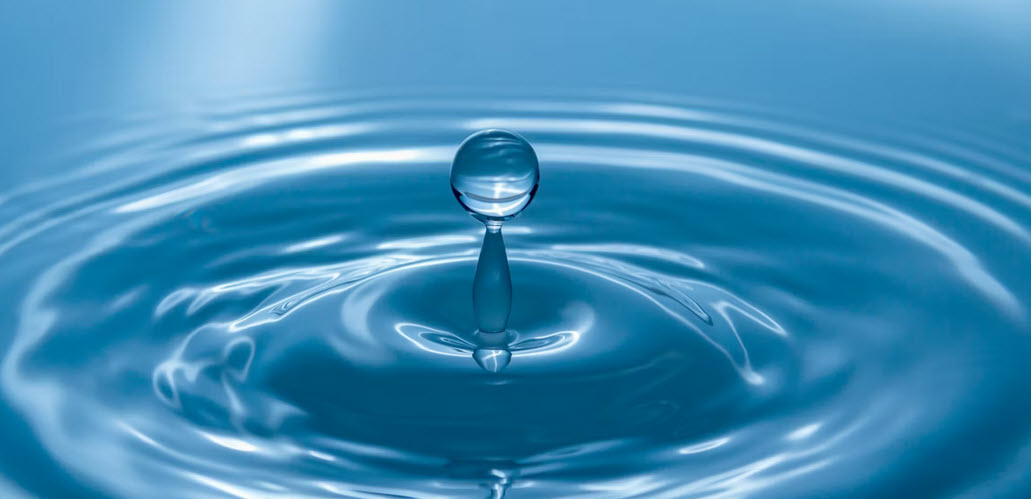
  • If I were a vessel, I would be a drop of water.  I’d have surface tension to keep things together, yet also infinite elasticity to move where I needed to be, or where I wanted to go. I would nurture others with my life-giving element, yet contain what I need for my own survival. I could join vast expanses of water without losing myself.

Some residents imagined themselves as weathered bowls repaired with care. Others described small boats meant for passage crossings.What moved me most was how naturally everyone understood the metaphor.

A vessel is never just a container. It is something that holds. Something that protects. Something that carries. Something shaped by pressure, heat, use, time, and intention.

We live in a time of tremendous noise, acceleration, uncertainty, and overflow. So many of us are carrying too much information, too many worries, too many unfinished thoughts. In moments like these, the idea of a vessel becomes more than symbolic—it becomes comforting. We long for places of containment. Spaces that allow reflection instead of reaction. Objects that suggest care, listening, shelter, and presence.

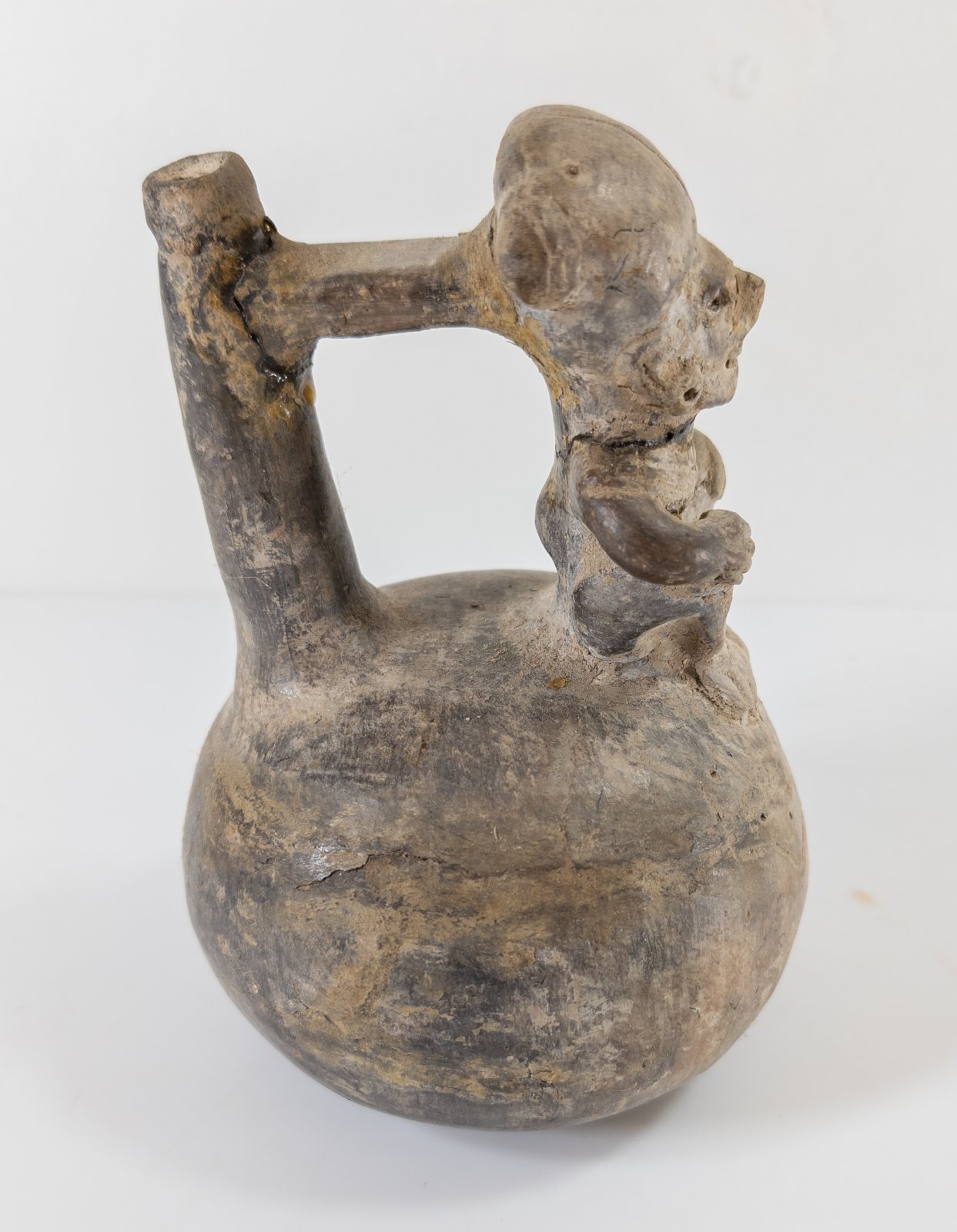
For artists, vessels have always carried layered meaning. Ancient jars held grain, water, oil, ashes, offerings, medicines, and sacred texts. Reliquaries held memory and devotion. Small handmade containers protected precious things that could not simply be left exposed to the world

By sharing some of the Enso Residents’ beautiful responses in this post, I invite you to consider the question for yourself:

If you were a vessel, what kind would you be?

A bowl?
A reliquary?
A canoe?
A teacup?
A cracked earthen jar repaired with gold?
A basket woven from many strands?
A tiny pocket vessel for carrying one sacred thing?

The answer may reveal more than you expect!

Stay tuned for The Listening Vessel Workshop – opening next week!

Does Everything Feels Too Precious to Use?

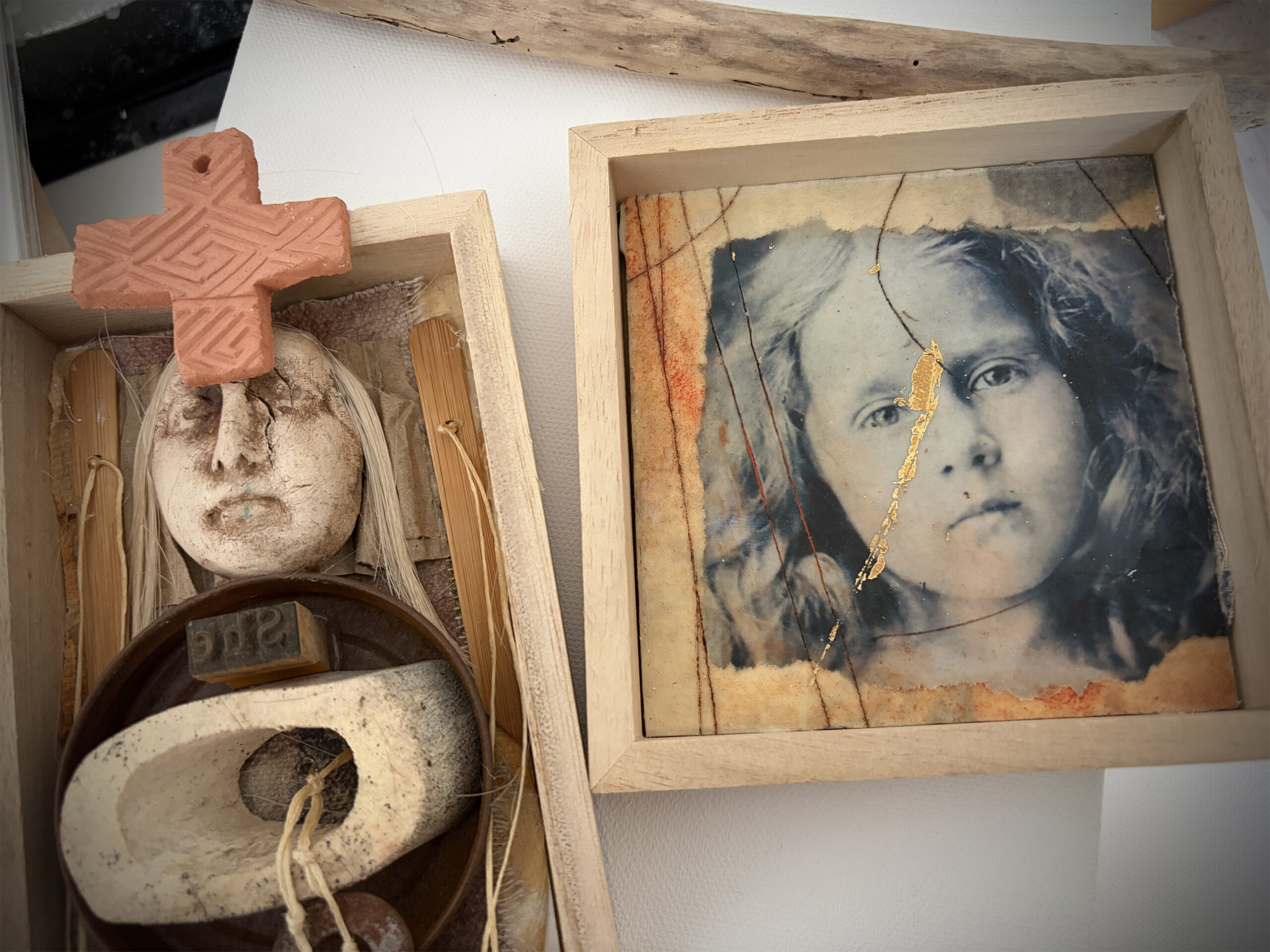
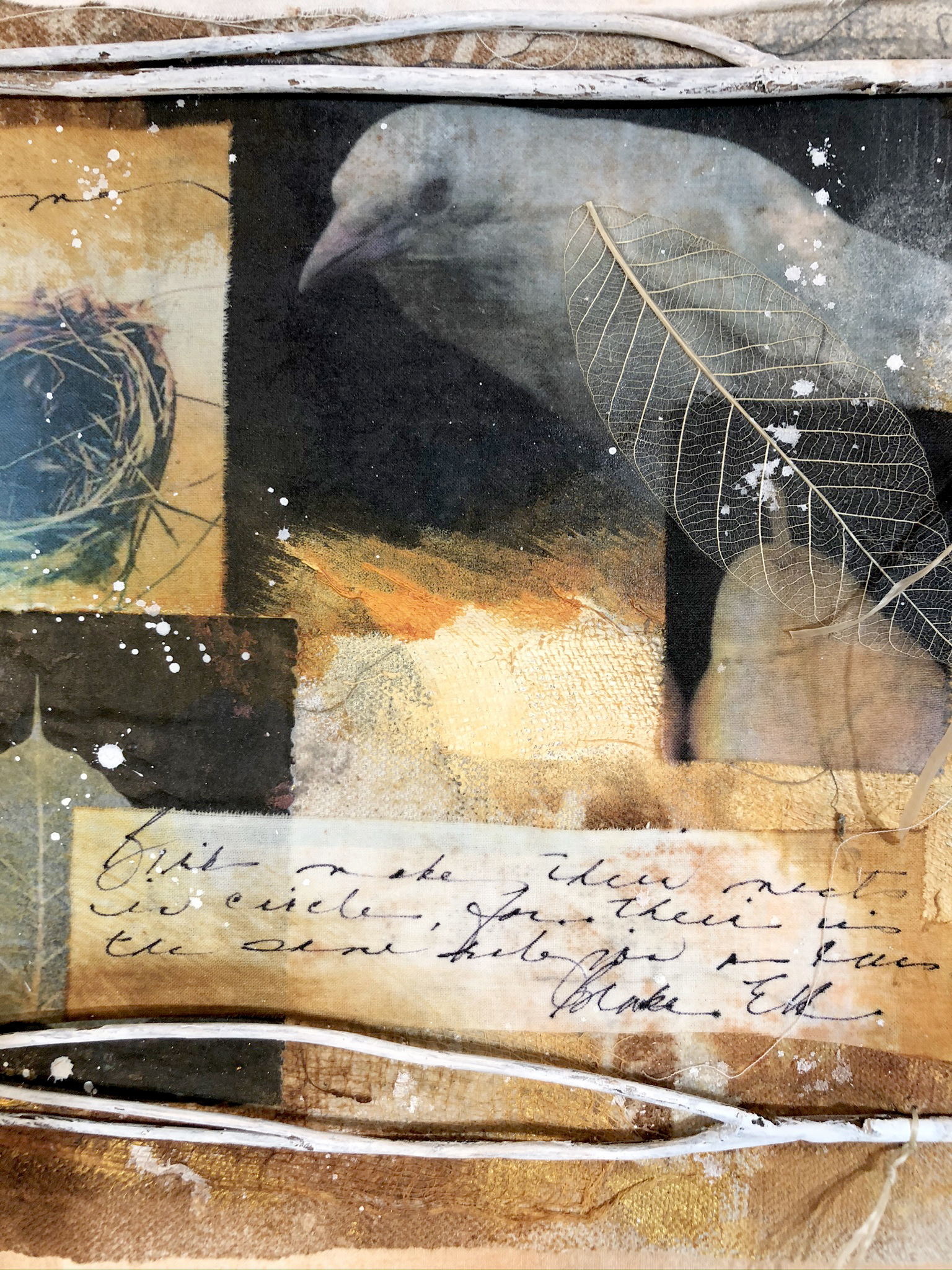
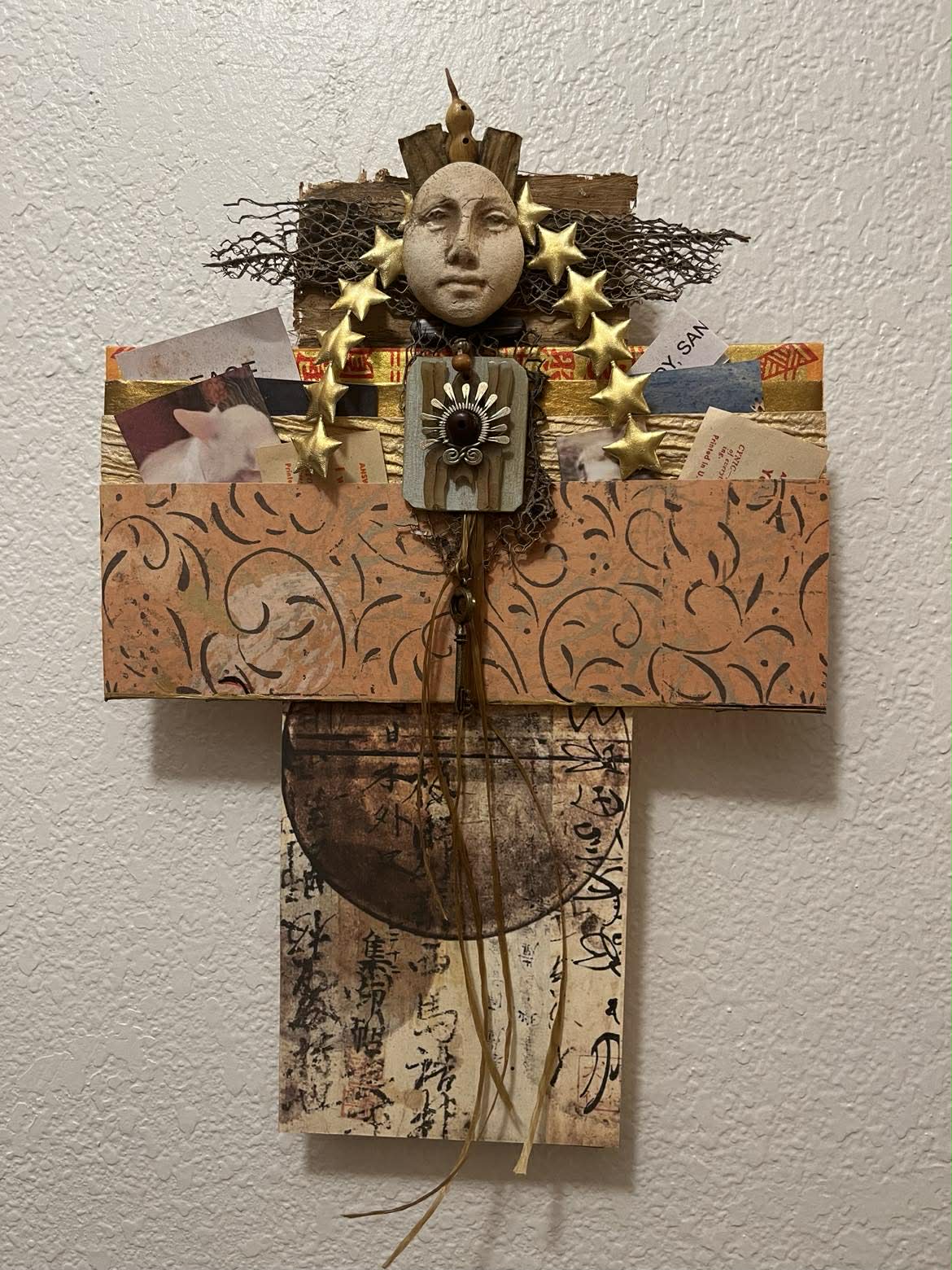
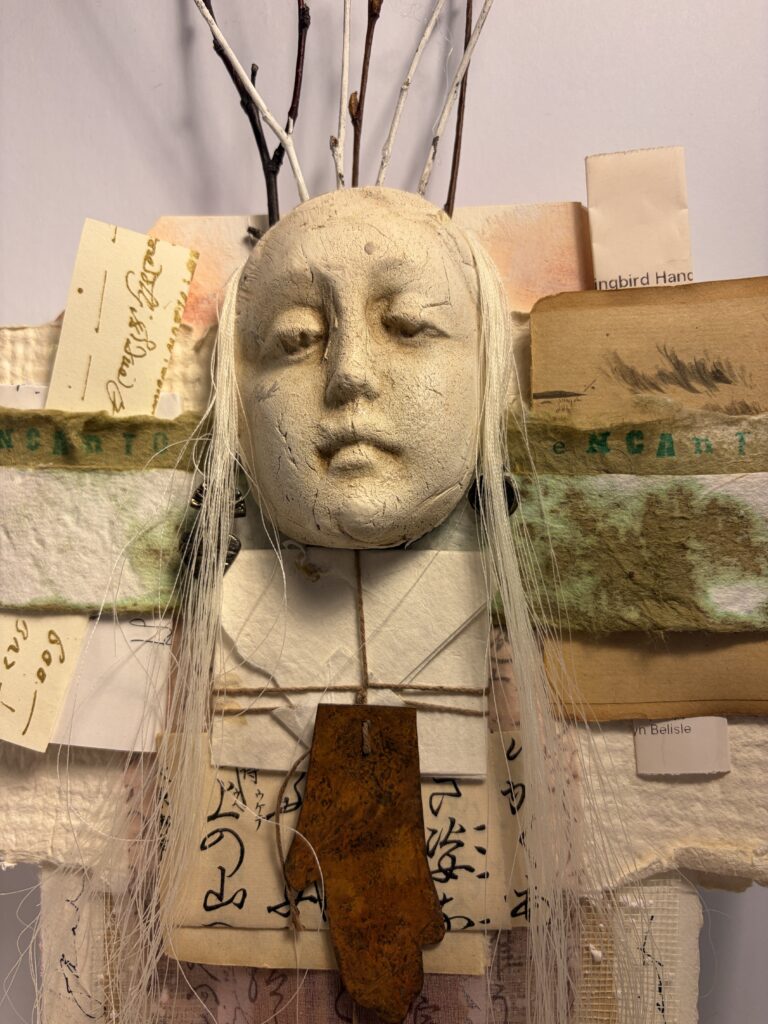
The Keeper of Fragments by Chaska Peacock. She wrote, “Oh, and I wanted to tell you about the stars.  15 or so years ago I met with a shaman while in Peru. He named me “Chaska” which means “star” in the Quetchan language.which is still spoken in Peru by the elders.  I felt intimidated, but gradually rose to the name.”

Conversations about The Keeper of Fragments, the first workshop in the Objects of Devotion series, continue to intrigue and inspire me. Here’s a wonderful one:

“I love how you just use your papers, etc. without feeling it is too precious to use and possibly hide or be in a layer that doesn’t necessarily show it fully. I have the worst time doing this. I seem to see every piece of paper or ephemera as needing it to be seen, so I hesitate to use it for fear of it getting lost. Any tips for how to overcome this?”

This question got my complete attention—not because I don’t understand it, but because I understand it completely. What we feel is not hesitation.
It’s care.

We are recognizing the beauty and value in the materials themselves. And that’s a wonderful place to begin.

But here’s the turning point: When everything feels precious, nothing can move.

If every scrap of paper must remain whole, visible, and intact, it can’t enter into transformation. It can’t become part of something larger. It stays fixed—safe, yes—but also silent.

Over time, I’ve come to think of my materials differently—not as objects to preserve…
but as participants in a conversation.

  • Their purpose isn’t to be fully seen.
    Their purpose is to contribute.

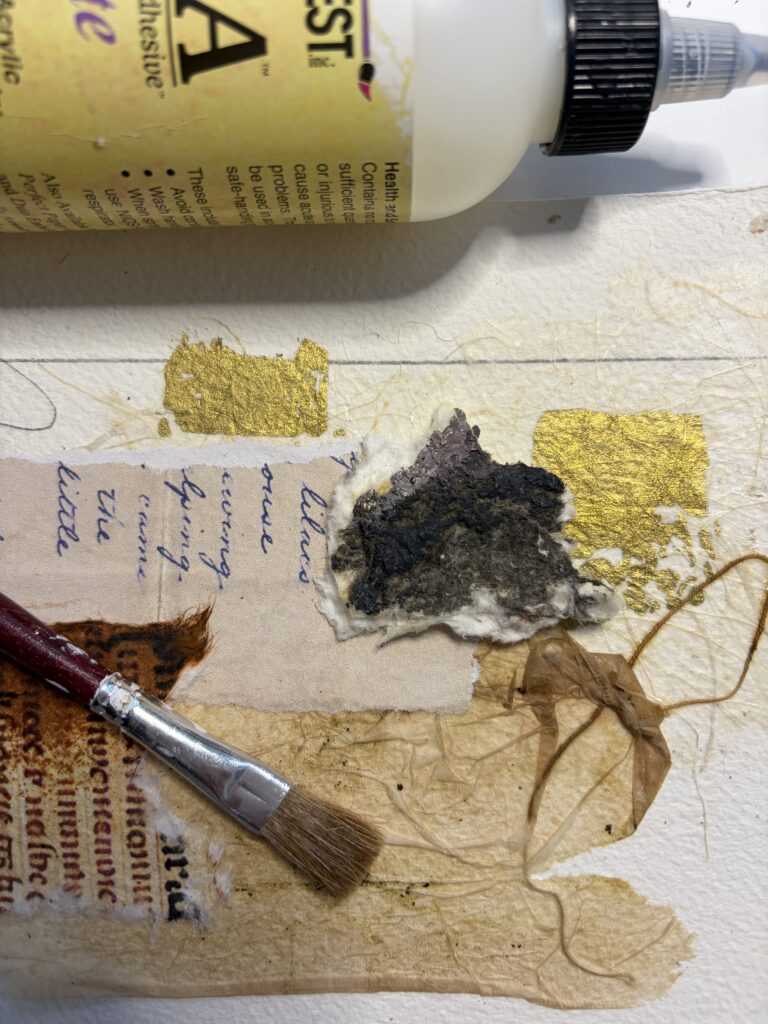
A fragment of text tucked under wax may never be read—but it shifts the tone of the surface. A torn edge that disappears into a layer still affects the rhythm of the composition. Even hidden elements carry presence.

If this feels difficult—and it often does—here are a few ways to begin:

  • Start with papers you like, but don’t love.
    Give yourself a place to practice without the pressure of loss.
  • Use fragments instead of whole pieces.
    You’re not sacrificing the material—you’re allowing it to change form.
  • Take a photograph before you use something meaningful.
    This small act can release the fear of losing it. (I do this all the time)
  • And perhaps most importantly, shift your thinking from preservation to movement.

Materials are not meant to live forever in a drawer. (Say that again.)
They are meant to pass through your hands, into your work, into meaning.

There’s also something deeper happening here. When we hesitate to cover something, we’re often saying: This deserves to be seen.

But what if being transformed is another way of being honored? What if a piece of paper becomes more itself—not less—when it joins something larger?

In my own work, especially in these Objects of Devotion, I’ve come to trust that nothing is truly hidden. Every layer, visible or not, becomes part of the whole. The history remains, even when it’s not immediately apparent.

So here’s a small invitation:

Choose one piece that feels “too precious.”
Tear a fragment from it.
Let it enter the work.

And then notice—not just what happens on the surface, but what shifts inside you.

Because in the end, this isn’t just about paper. It’s about trusting that what we love can change…and still belong.

In something like a spirit doll, or a Keeper of Fragments, that material doesn’t disappear—it becomes part of the story the piece holds, whether anyone else can see it or not.

Thanks for reading, and for questioning!

Lyn

“Hidden layers in a work of art are not meant to be seen all at once—they are meant to be felt over time. What disappears beneath the surface doesn’t vanish; it deepens the story, holding the memory of every choice the artist was brave enough to cover.” ~~ LB

The Keeper of Fragments

The First OBJECTS OF DEVOTION Workshop Is Now Available

I’m so pleased to share that the first workshop in my new online series, Objects of Devotion, is now available on my Teachable studio classroom site. 

It’s called The Keeper of Fragments—and in many ways, it feels like a beginning that has been silently forming for years. Here is the link.

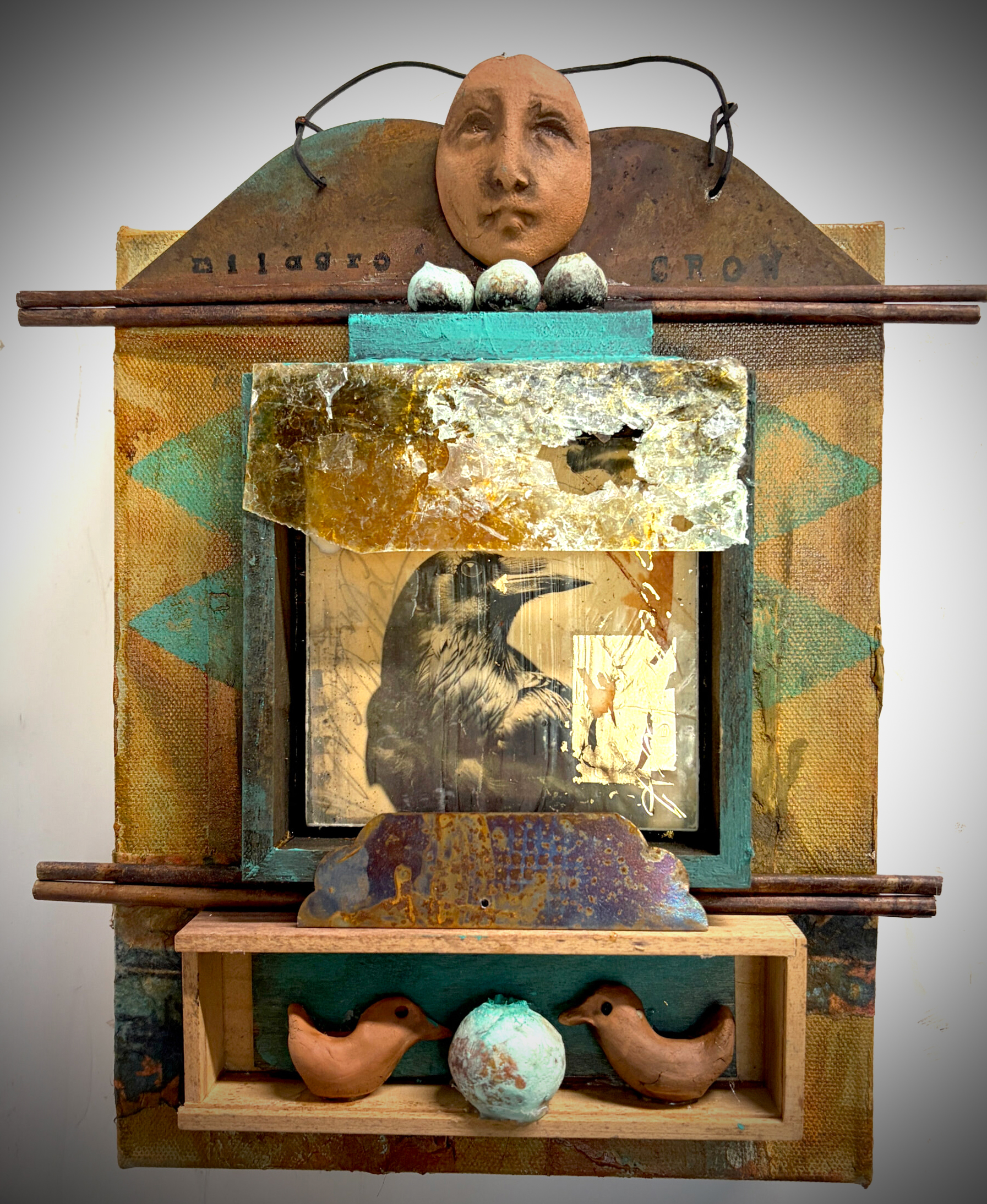
If you’ve followed my work over time, you may recognize the thread. The spirit figures, the small altars, the reliquaries, the layered collages—each one, in its own way, has been an object of devotion. Not in a strictly religious sense, but in a deeply human one: a devotion to memory, to meaning, and to the act of making itself.

This workshop is an invitation to explore that idea in your own way.


What Is The Keeper of Fragments?

At its heart, this workshop is about starting simply.

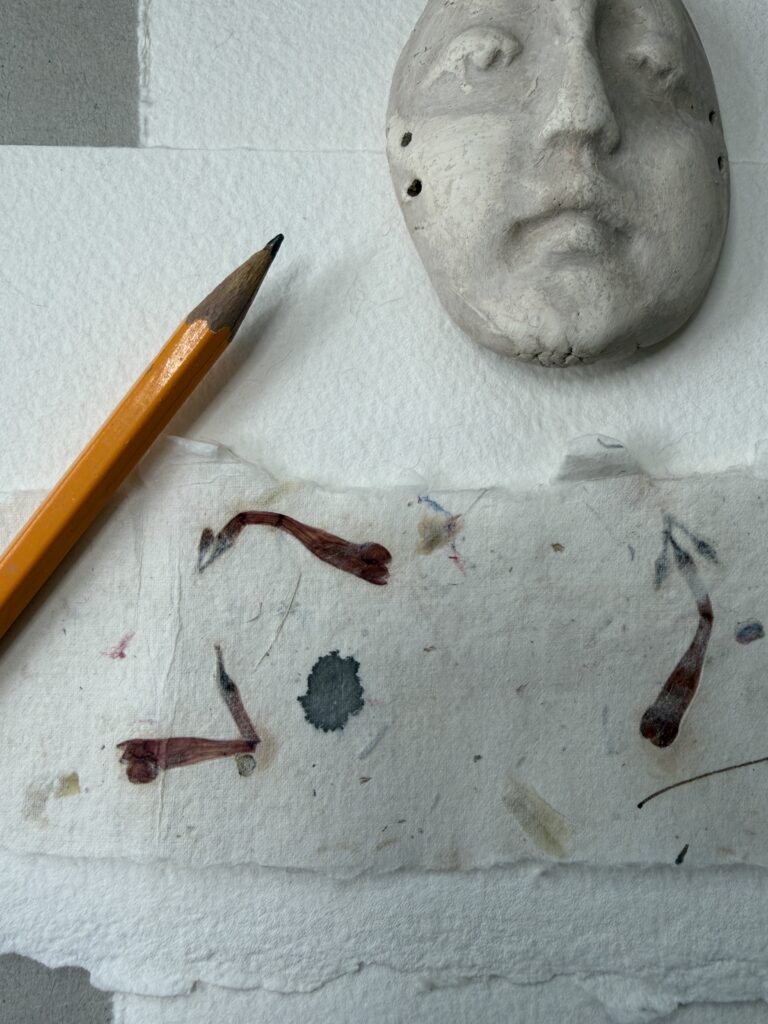
We begin with humble materials—leftover papers, saved scraps, images you couldn’t throw away—and through layering, wrapping, and assembling, something begins to emerge.

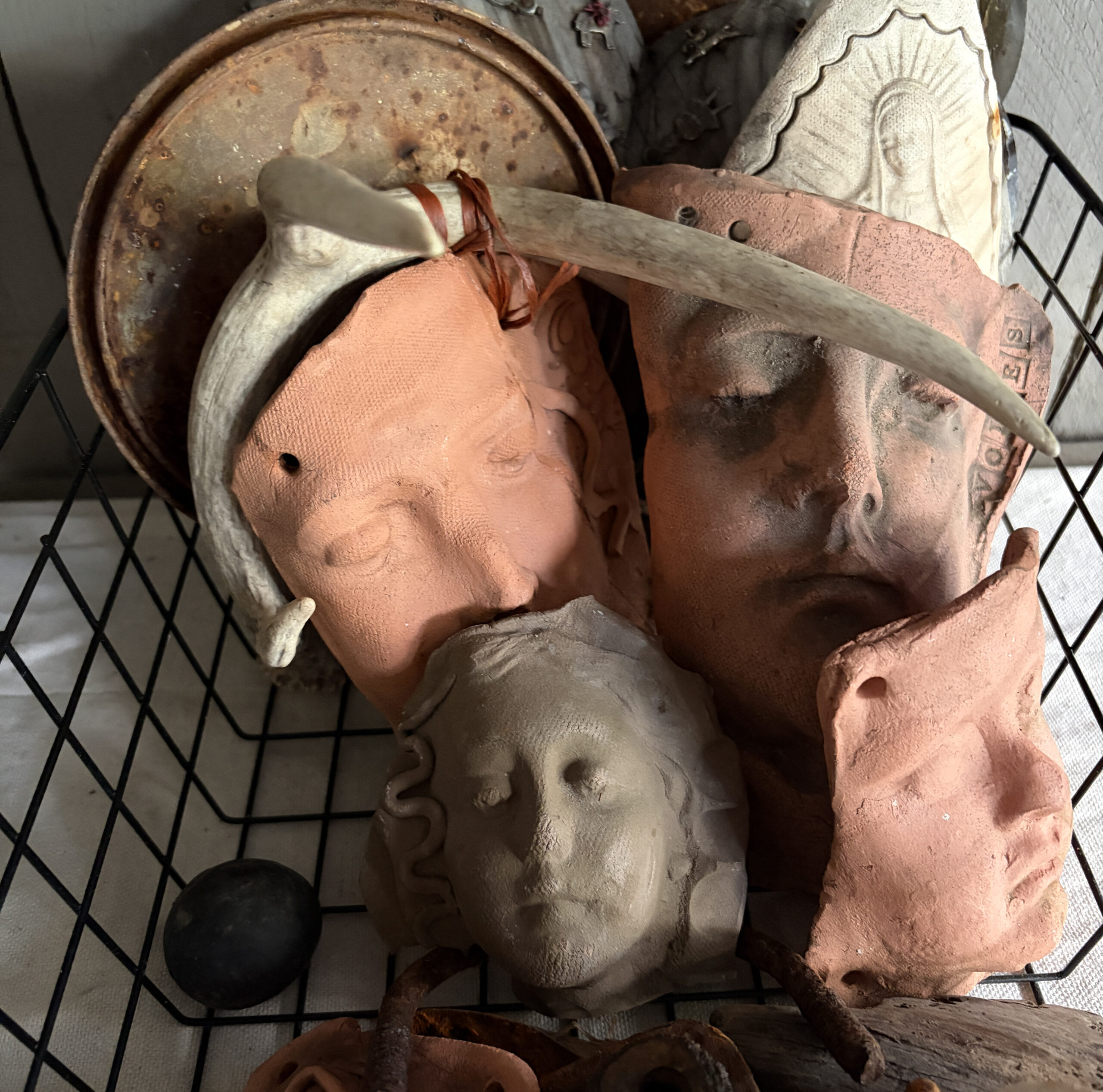
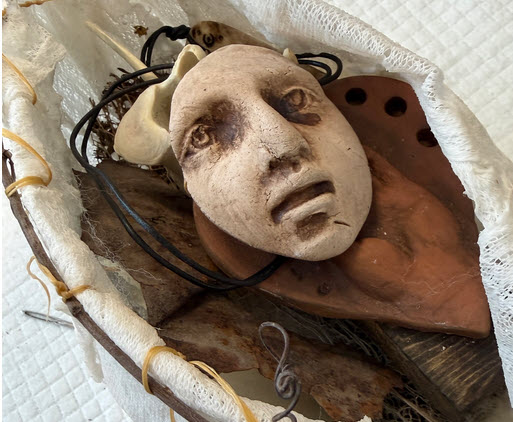
We learn to create small faces in clay that carry a sense of shared humanity.

A figure. A presence. A collage archive of where you’ve been.

The Keeper becomes a kind of companion—part spirit figure, part story, part guardian of the fragments that have stayed with you.


How the Workshop Works

This is a self-paced online workshop, designed so you can move through it in your own time, at your own rhythm.

  • All videos are fully downloadable
  • You can keep them forever as part of your studio practice
  • The workshop is $27, and all future Objects of Devotion workshops will be offered at this same accessible price

My hope is that this becomes something you return to—not just a class, but a resource.


A Personal Note

One of the most meaningful parts of developing this series has been hearing from so many of you on the “interest” list.

I’ve been reading your descriptions of your own work, and I’m genuinely inspired by what you’re bringing to this idea. There is such depth, curiosity, and honesty in your responses—it tells me that this series is finding the right people.

If you choose to join The Keeper of Fragments, I would truly value your feedback. Your thoughts will help shape the workshops to come and guide this series as it grows over the coming year.


What’s Next

The second workshop in the series, The Listening Vessel, will be released in late May.

And yes—there will definitely be workshops exploring Altars and Books, along with other forms that continue this idea of devotion through making


An Invitation

You don’t need special materials.
You don’t need a perfect plan.You just need a few fragments—and the willingness to begin. If this speaks to you, I would love to have you join me.

The Keeper of Fragments is now available in my Teachable studio.


Thank you for being here, and for the work you are already doing. Making is how we practice devotion. 

Lyn


Objects of Devotion

. . . a new series of monthly workshops inspired by Encantos and the quiet, meaningful objects that shape a creative life
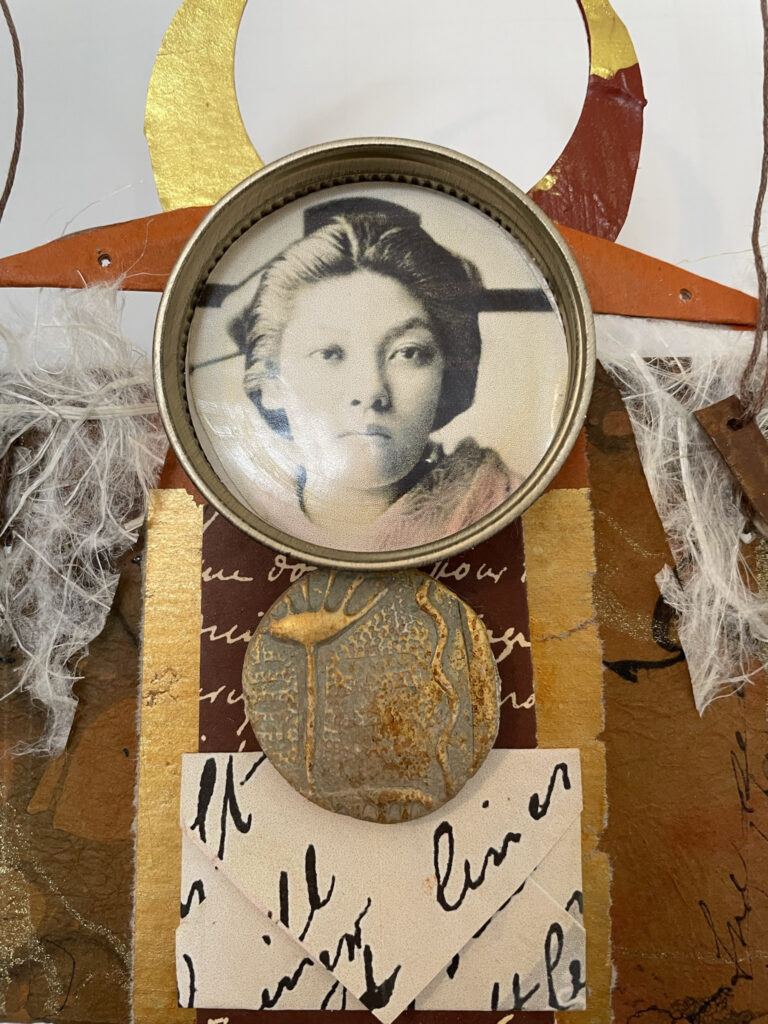
After writing about stepping back from Painting with Fire, I found myself reflecting on the arc of my own work—what has remained constant over the years, even as materials and methods have shifted.

But it was during my recent exhibition, Encantos, that something became especially clear to me.
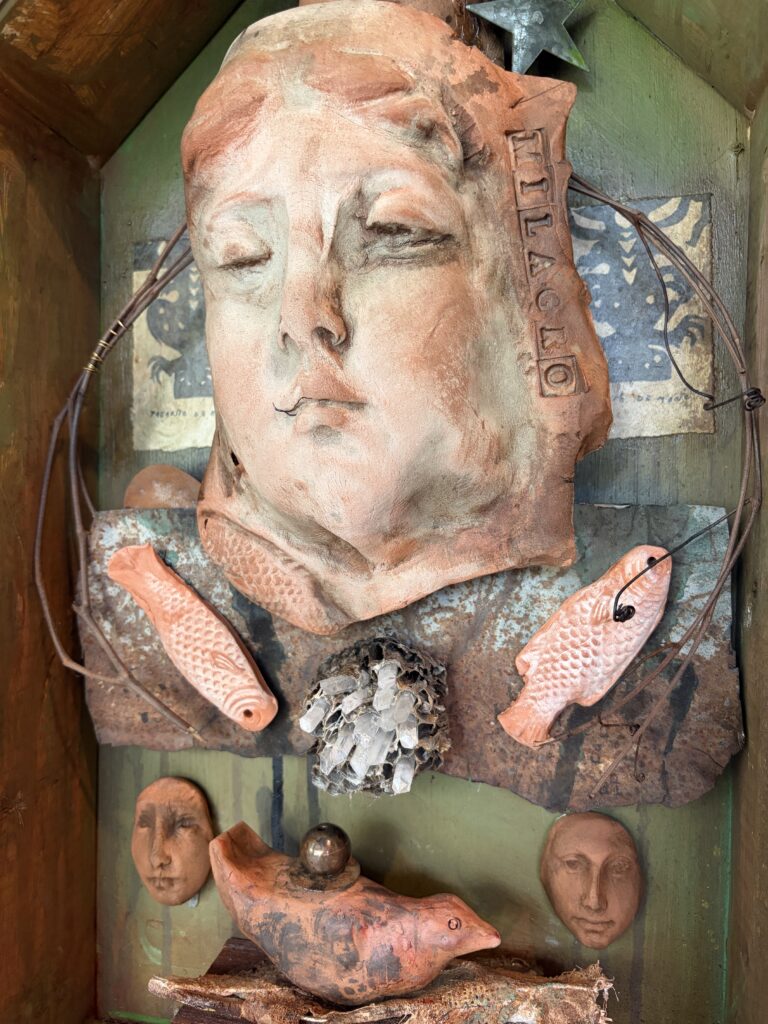
As I worked on that body of clay, collage, and assemblage pieces—objects that felt both ancient and immediate—I began to recognize a deeper thread running through everything I make. There was a sense of connection to the past, to shared human symbols, to small, sacred objects that carry meaning across time and culture.

In that moment, I understood something I hadn’t fully named before.

Much of what I’ve created as a collagist and assemblage artist are, in essence, objects of devotion.

Not in a strictly religious sense, but in a deeply human one—a devotion to process, to memory, to meaning, and to the quiet relationship between the artist and the work.

That realization has led me to a new series of upcoming workshops.
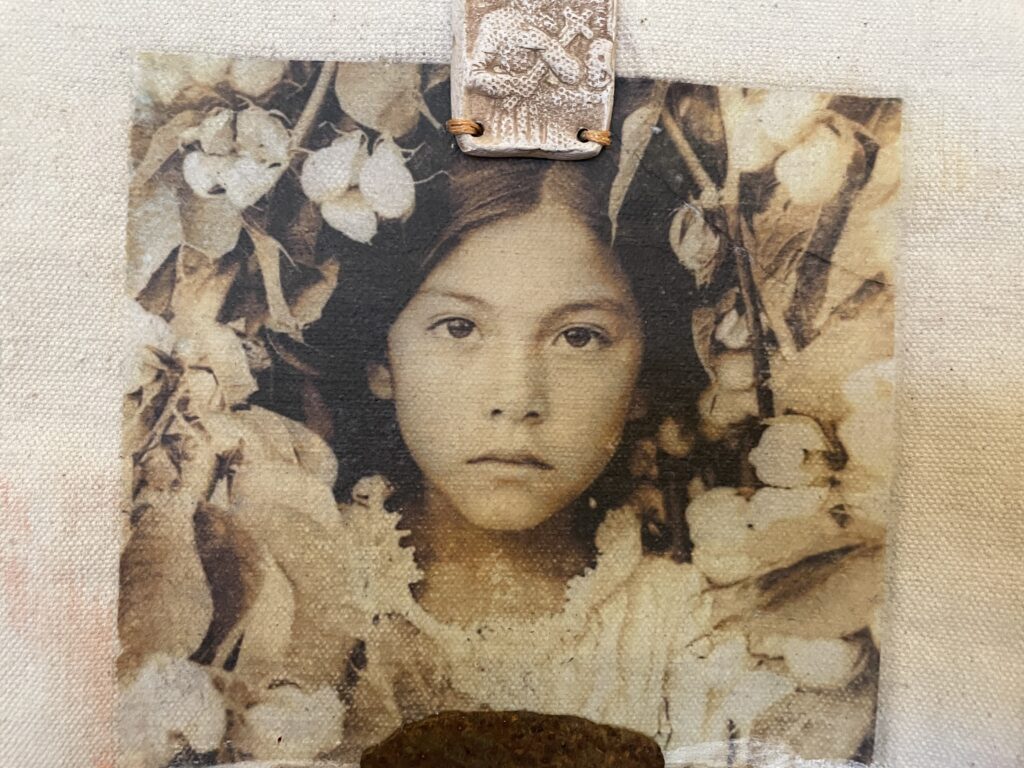

I am designing a collection of twelve self-paced, three-hour workshops to be released approximately once a month on my Teachable site. The series is called, simply, OBJECTS OF DEVOTION.

We begin with: The Keeper of Fragments: A Devotional Archive Figure
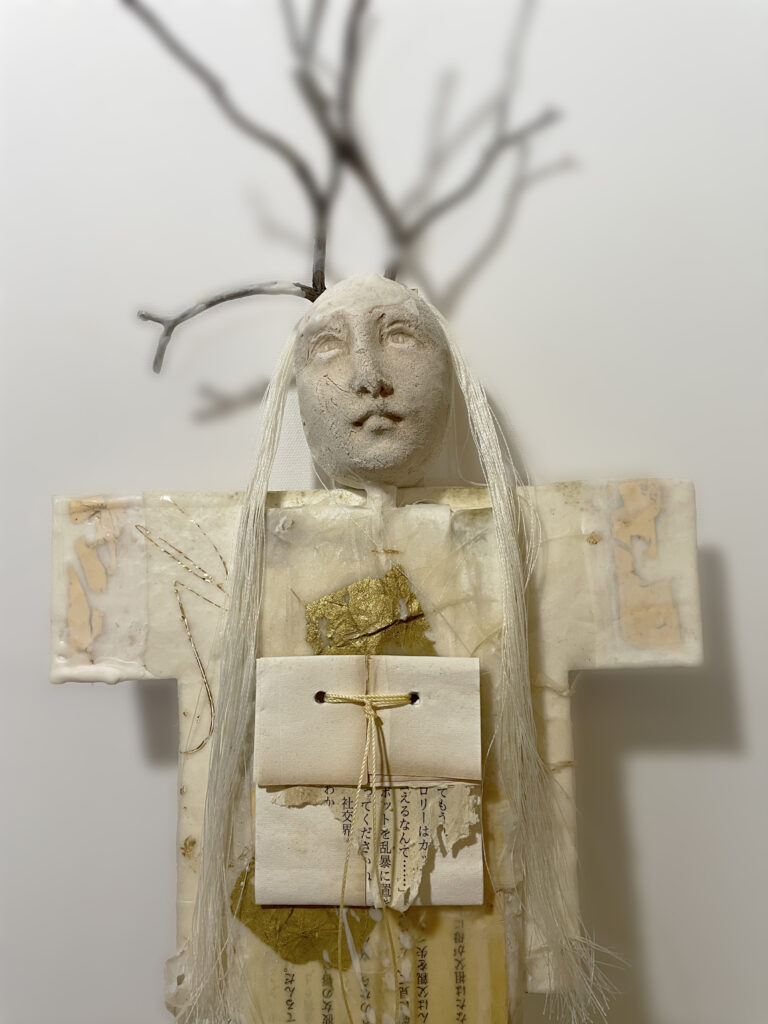
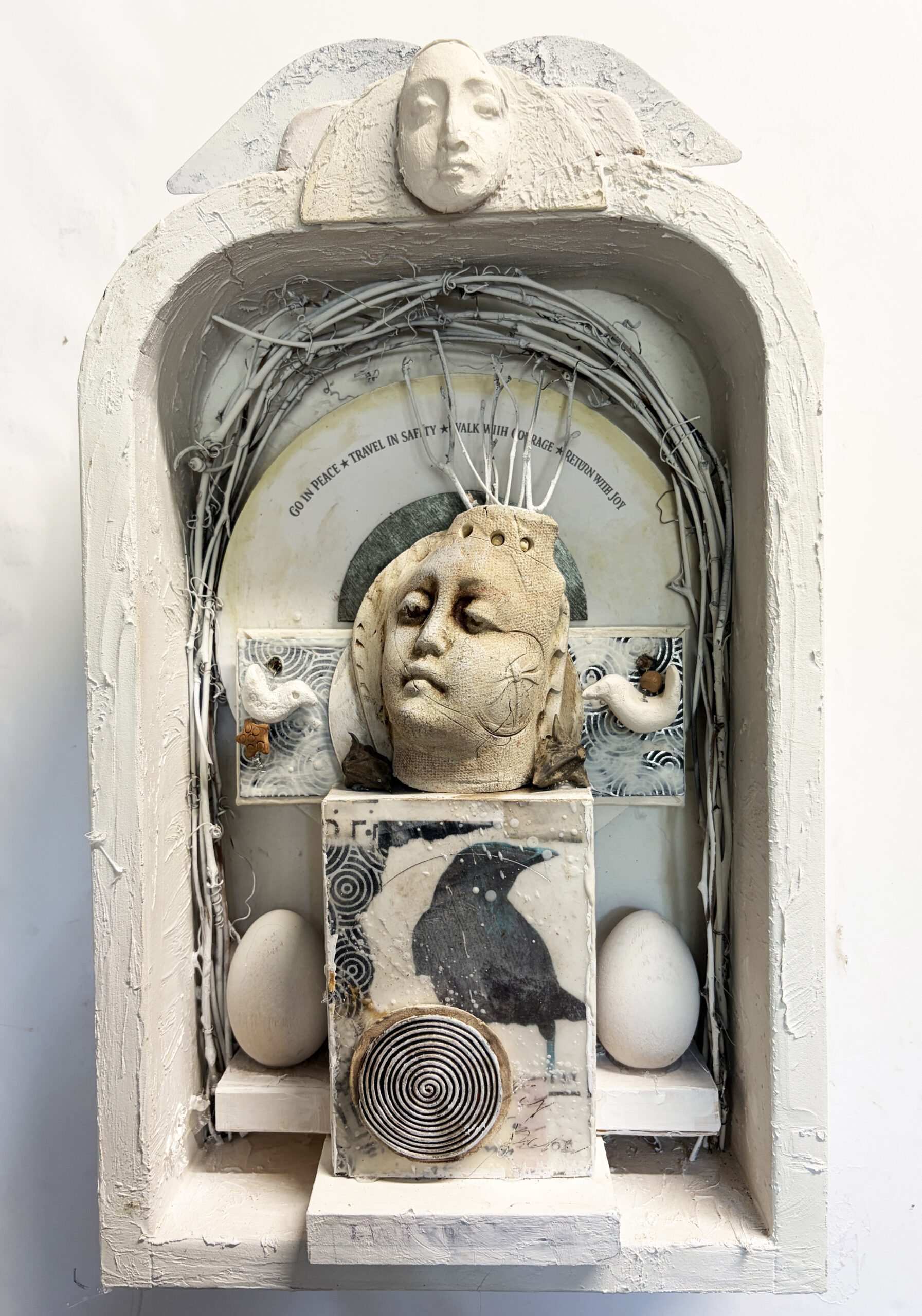
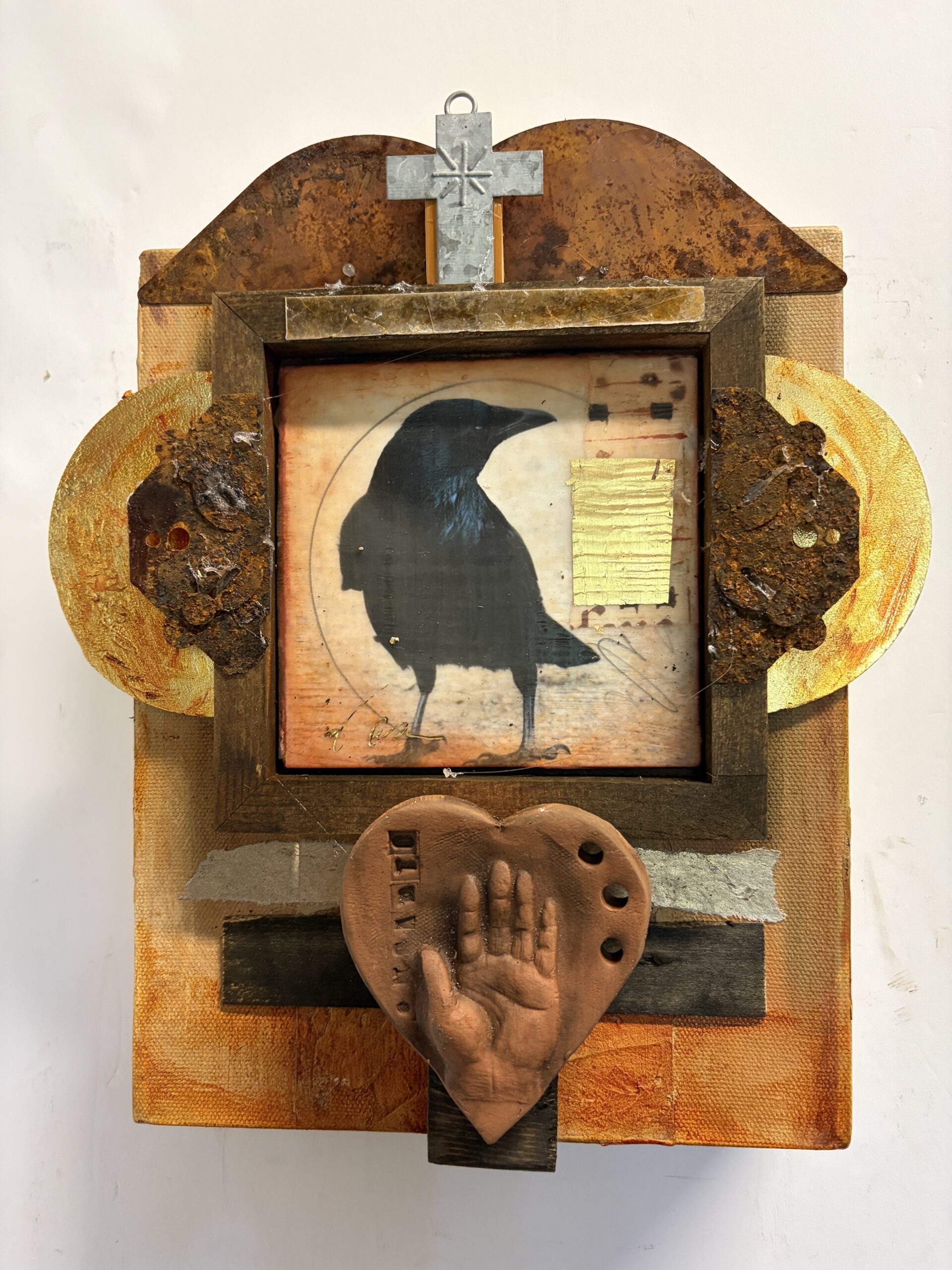
These wall-mounted studio guardians combine elements of spirit dolls and boxes, layered collage, clay sculpture, and assemblage—brought together in a simplified, accessible way.

It is designed to help you focus on what you are truly devoted to in your art practice: your colors, your words, your meaningful fragments—the pieces that mark your journey.

This is a figure that not only watches over your space, but holds what you cannot throw away.
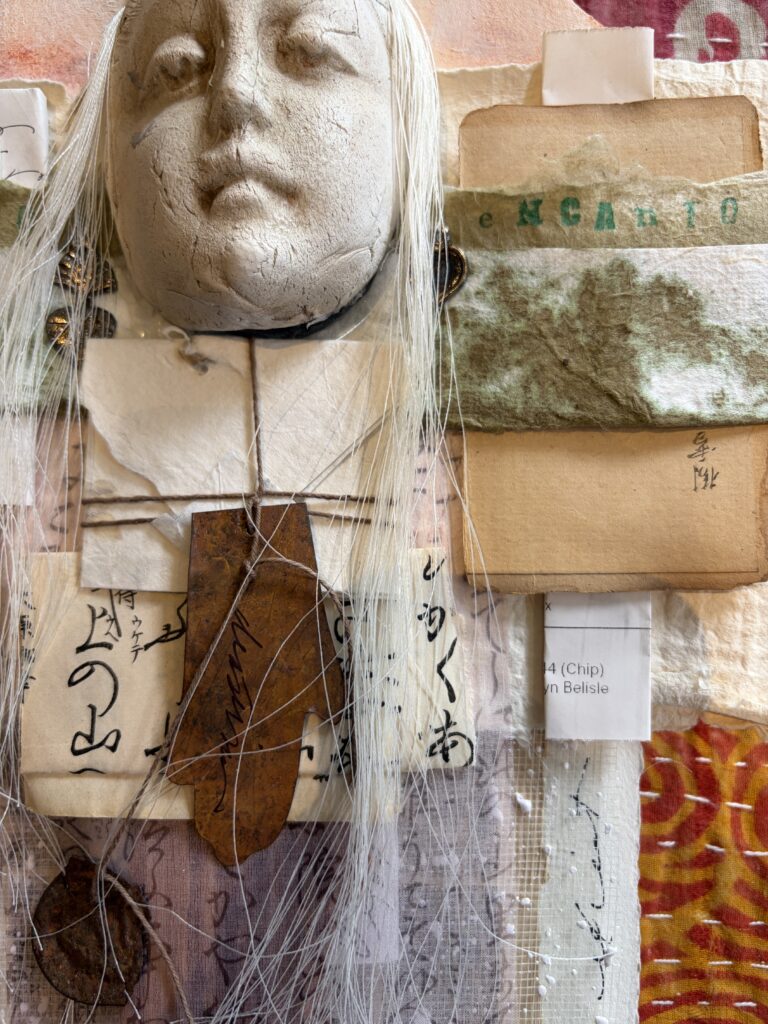
I’ve had a wonderful time creating the prototype and filming its emergence. It’s almost ready for prime time. It takes a little from the spirit dolls, the boxes, the Wanderers, the Neo-Santos, and adds the meaningful fragments from your personal creative practice.
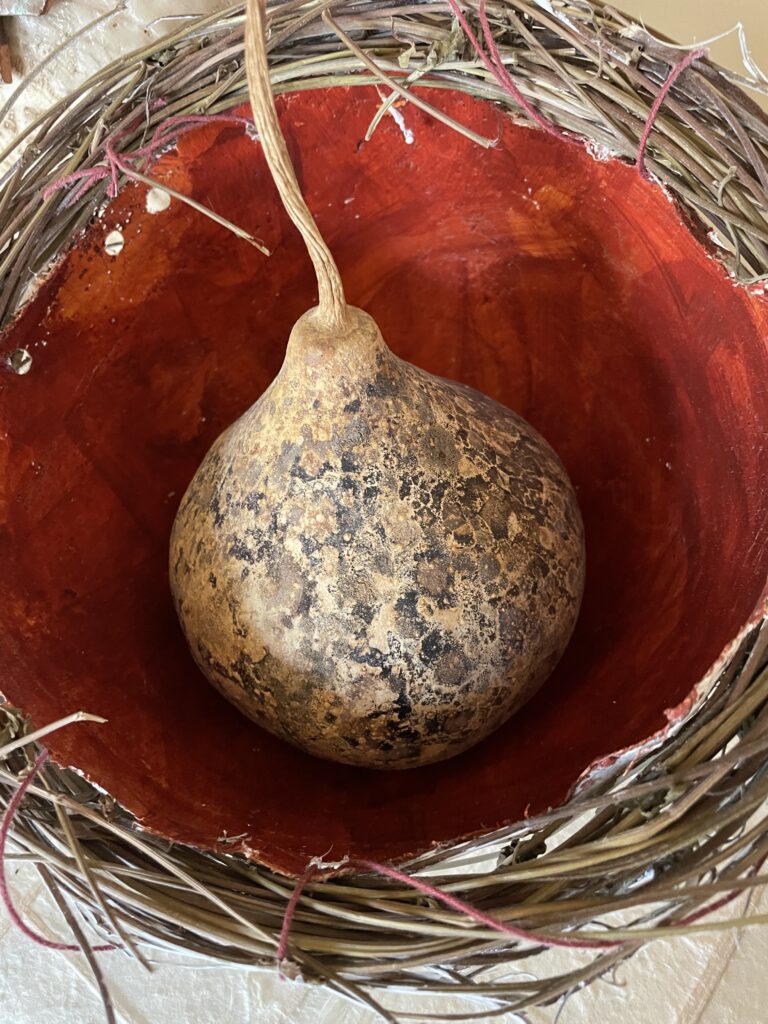

The next workshop in the series will be: The Listening Vessel: Holding What Emerges in Stillness

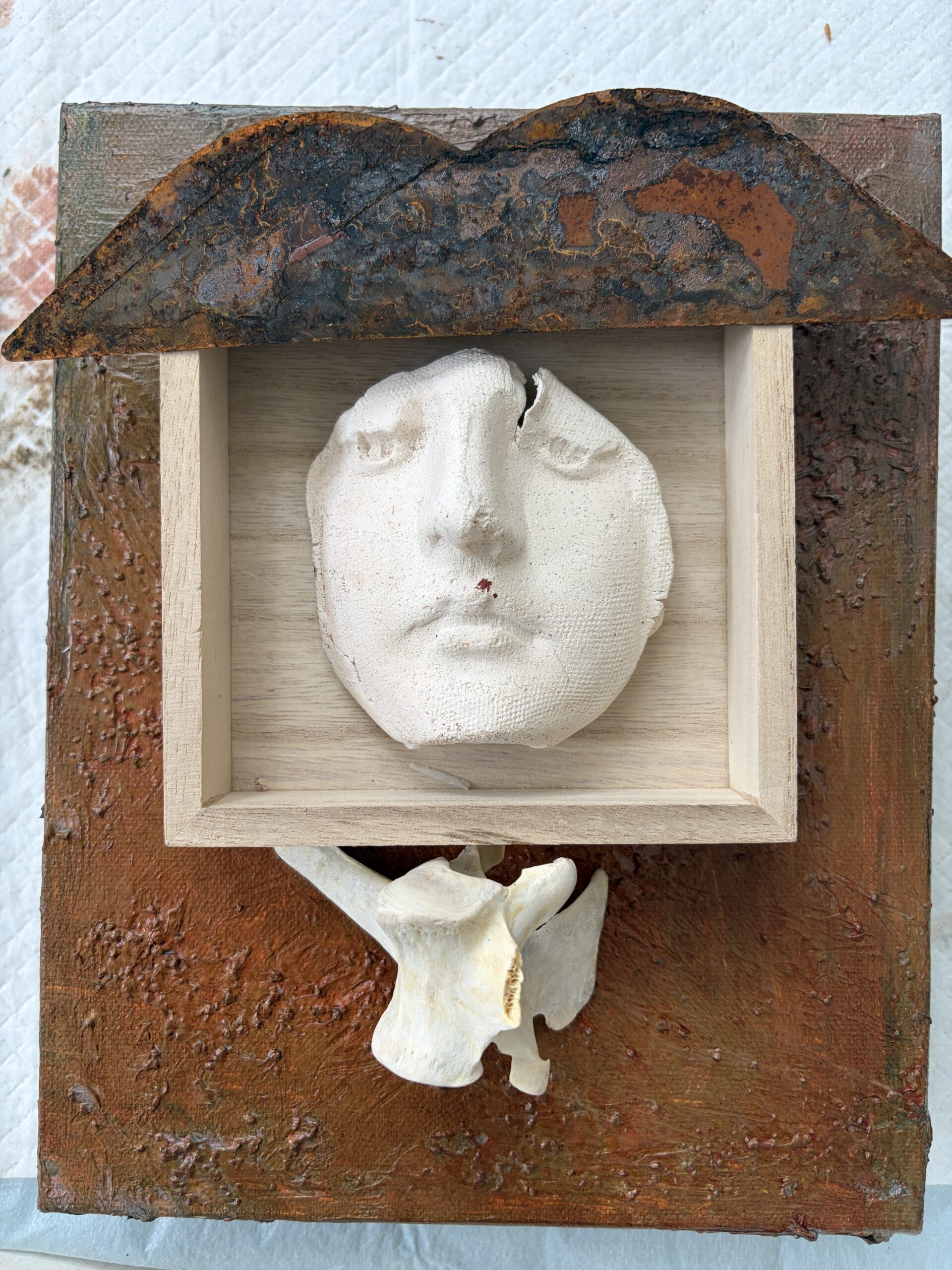
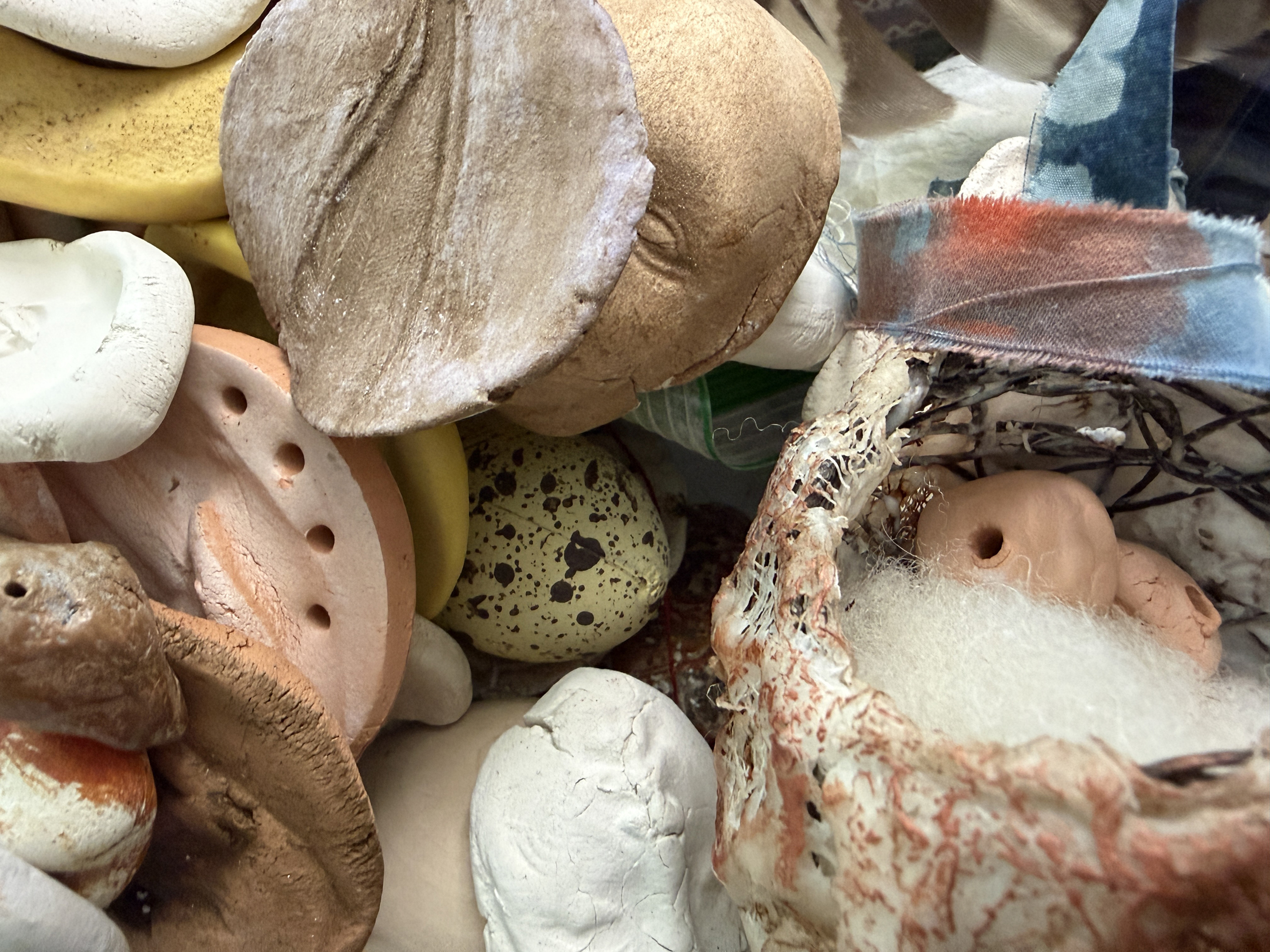
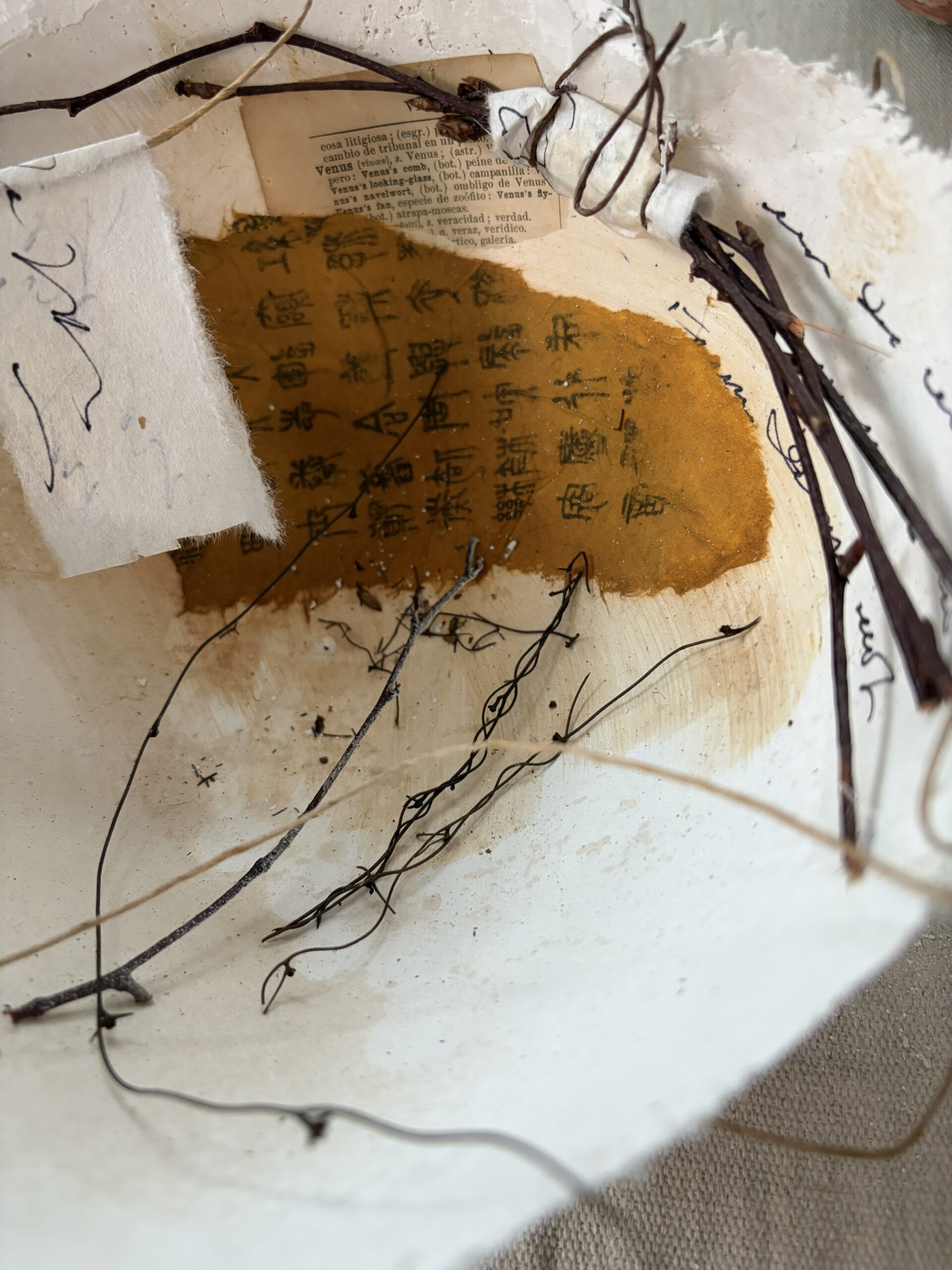
Available in late May, this workshop invites you to create a small hand-formed vessel using plaster, paper, and natural materials—an object shaped as much by listening as by making.

Through simple, intuitive processes, you’ll build a form that gathers texture, memory, and meaning, allowing the materials to guide you as much as your hands do.

This vessel becomes a place of pause—a way of holding what is subtle, unspoken, and still emerging.

As with all Objects of Devotion, the focus is on simplicity, presence, and personal meaning. Each piece will be uniquely yours—a quiet companion in your creative space.


Other upcoming workshops will reflect my devotion to shrines and altars, talismans, Santos, pods and vessels, and narrative Ex-Votos.  I look forward to announcing the entire series.
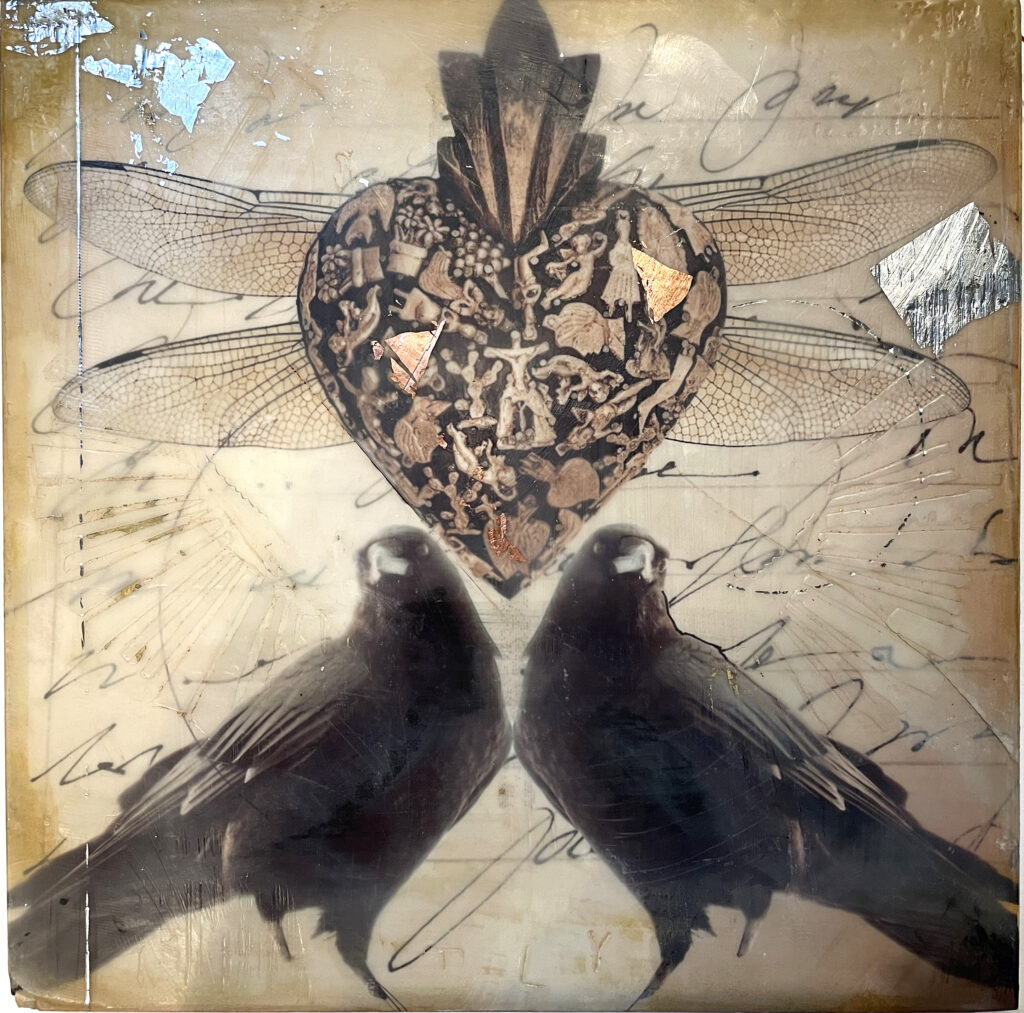
Ultimately, this series called Objects of Devotion is about recognizing and building what resonates most deeply with your unique self—your own devotion to art-making which calls you back, again and again, to your creative practice.

Each workshop is both process-based and object-centered. We will create something tangible—something we can hold, share, revisit, and reinterpret over time.

These objects become metaphors of meaning, reflecting both your past and your present.

The workshops emphasize:

  • Simple forms explored through mixed-media techniques
  • Materials that are accessible and chosen with respect for the natural world
  • Processes that can be adapted and expanded into your own artistic language

Each workshop is affordably priced at $27 and is downloadable for you to keep.

You don’t need to commit to the entire series—simply choose the ones that resonate with you.


The first workshop, The Keeper of Fragments: A Devotional Archive Figure, will be available next week.

If you would like to be on the list to be the first to know about new workshops, just click here. 

I’m so looking forward to sharing this with you!!!