
Sometimes the best collaborations begin with a simple idea and three artists who each bring something different to the table.
I’m working with two artist friends on a limited-edition series of three handmade accordion books featuring eight samples of plant-dyed fabric. One artist is creating the botanical textiles and mounting them on individual 5 × 7-inch cards. Another is constructing the accordion books from heavyweight ivory printmaking paper, complete with pockets to hold the samples.
My contribution is the covers—three sets of them, all different, but all related.
I wanted the covers to suggest the natural world without being too literal. Because the books will contain actual plant-dyed textiles, it seemed appropriate to create surfaces that held traces of leaves and stems, almost like botanical memories. I wanted images and messages to appear and disappear beneath layers, inviting a closer look.
Beginning with the whole
Rather than make eight separate collages, I started with a single large sheet of 22 × 30-inch, 300-pound watercolor paper.
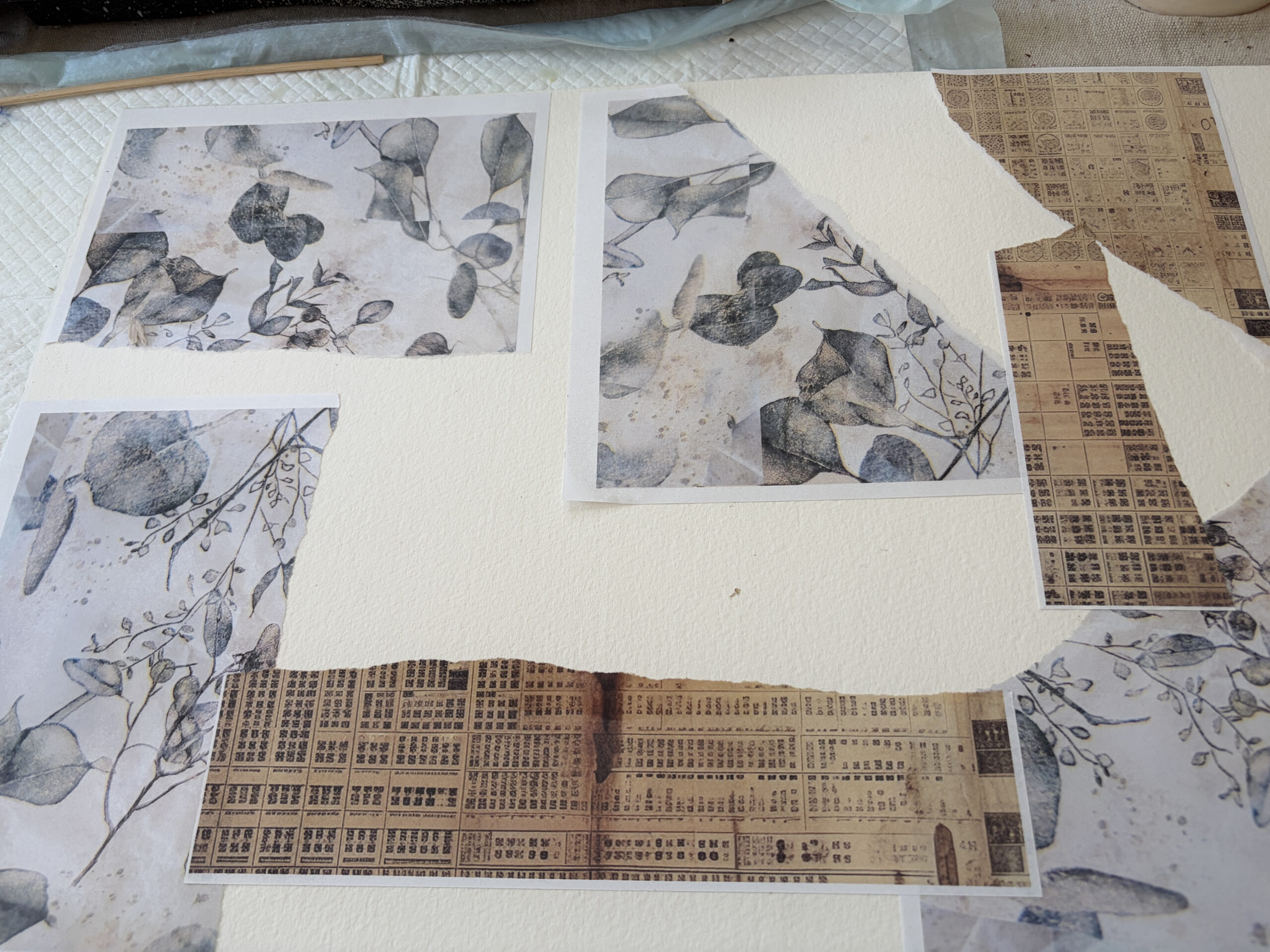
I arranged torn pieces of botanical imagery across the surface, along with fragments of aged-looking printed papers. At this stage, the leaves were quite recognizable, and the composition was fairly open.
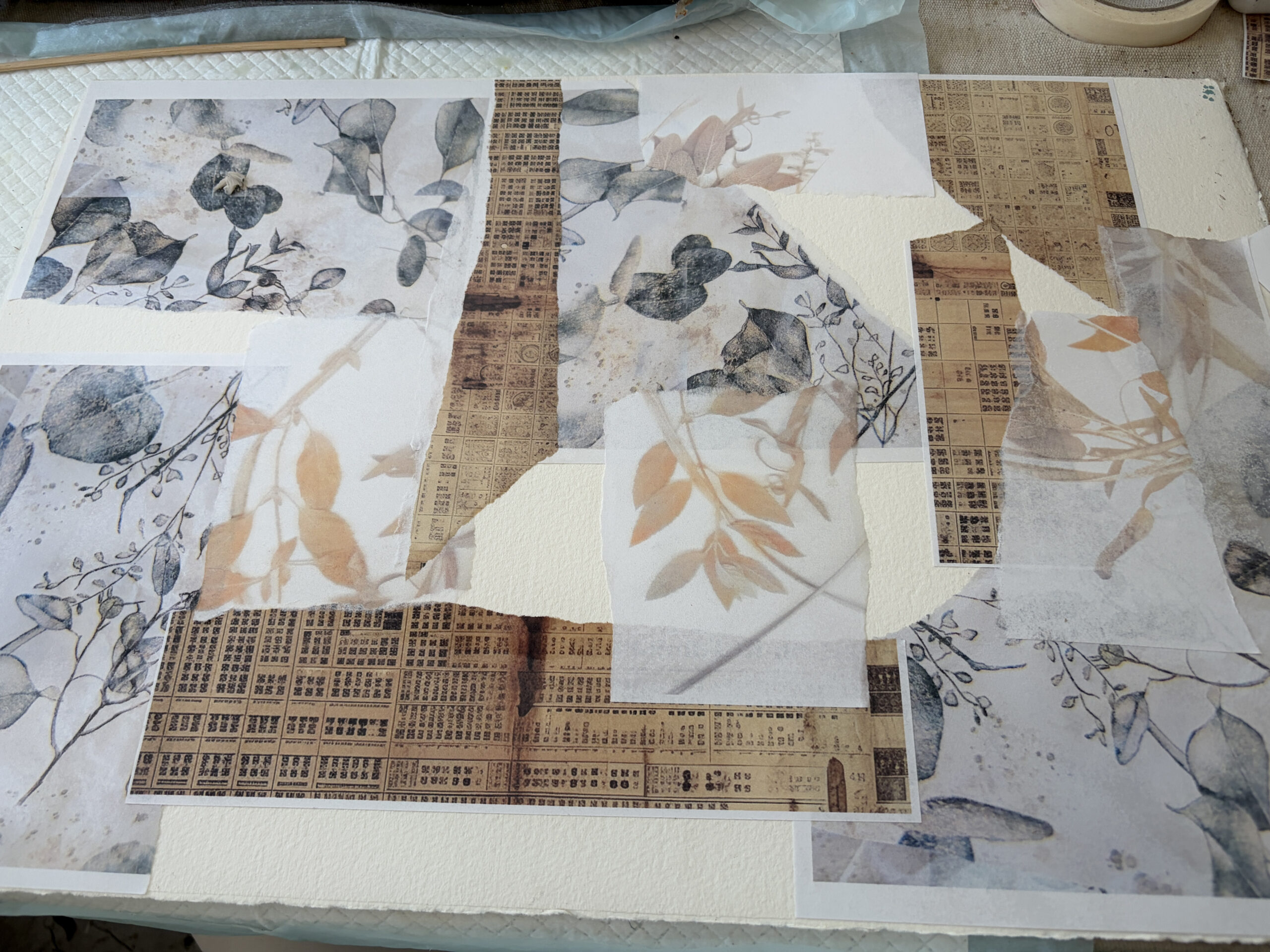
As I continued, I added softer, more translucent botanical images. I created these by laying fresh herb leaves on my scanner and then scanning them and printing them out. These began to interrupt and partially conceal the original leaves. The old printed text provided a different kind of pattern—something that suggested records, histories, or messages whose meanings were no longer entirely clear.
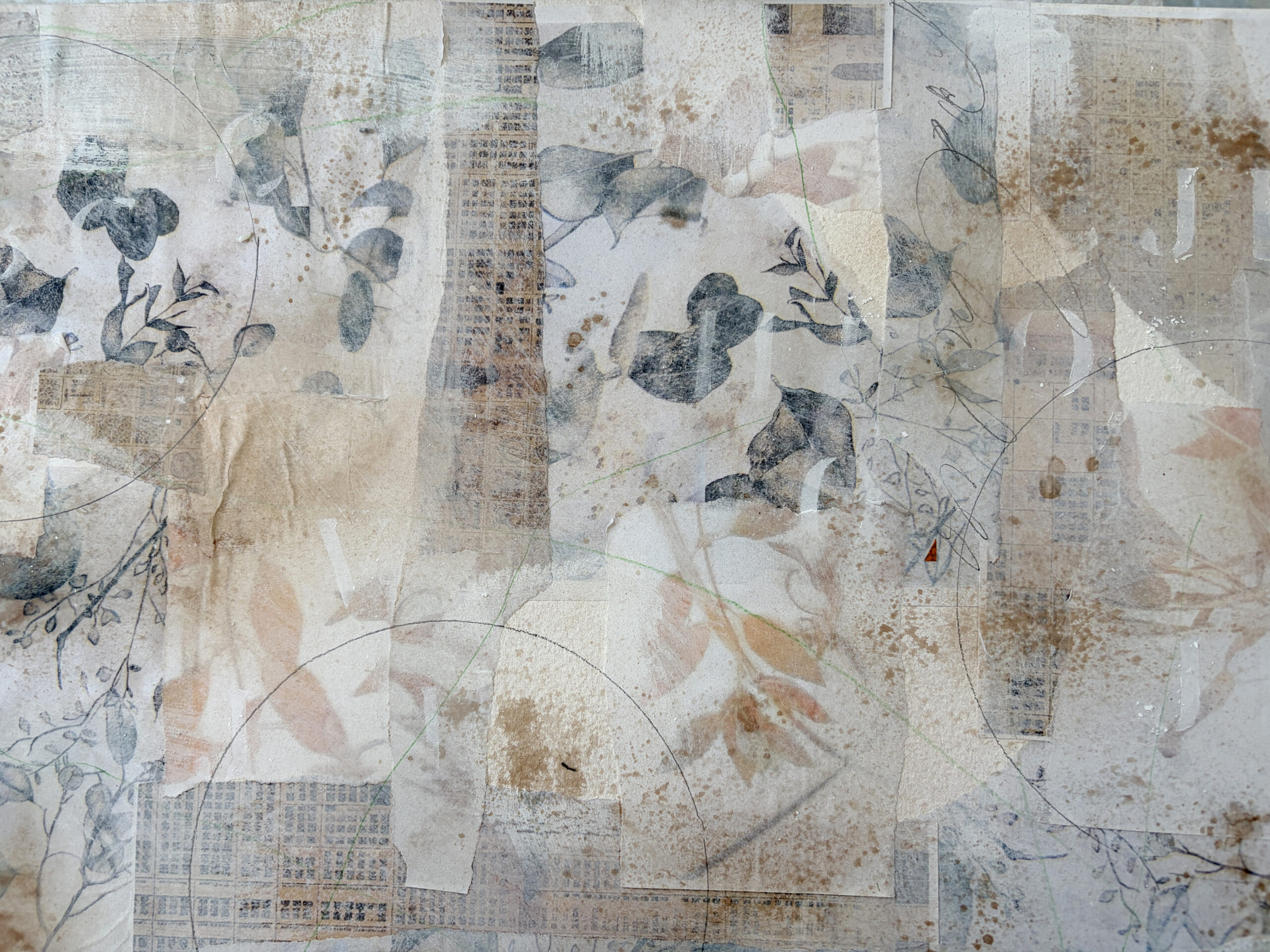
I wasn’t interested in preserving any particular image. In fact, I wanted much of the original imagery to disappear. I added a layer of white tempera paint, which veils the pattern and provides a wax-friendly surface for the upcoming wax layers.
Letting things disappear
This is one of my favorite things about layered collage and encaustic. You can begin with something quite specific and gradually transform it into something more mysterious.
As I worked over the collage with wax, the botanical forms became less distinct. Some leaves remained visible, while others faded into the background. I added marks, subtle color, and areas of texture, allowing the surface to become increasingly complex.
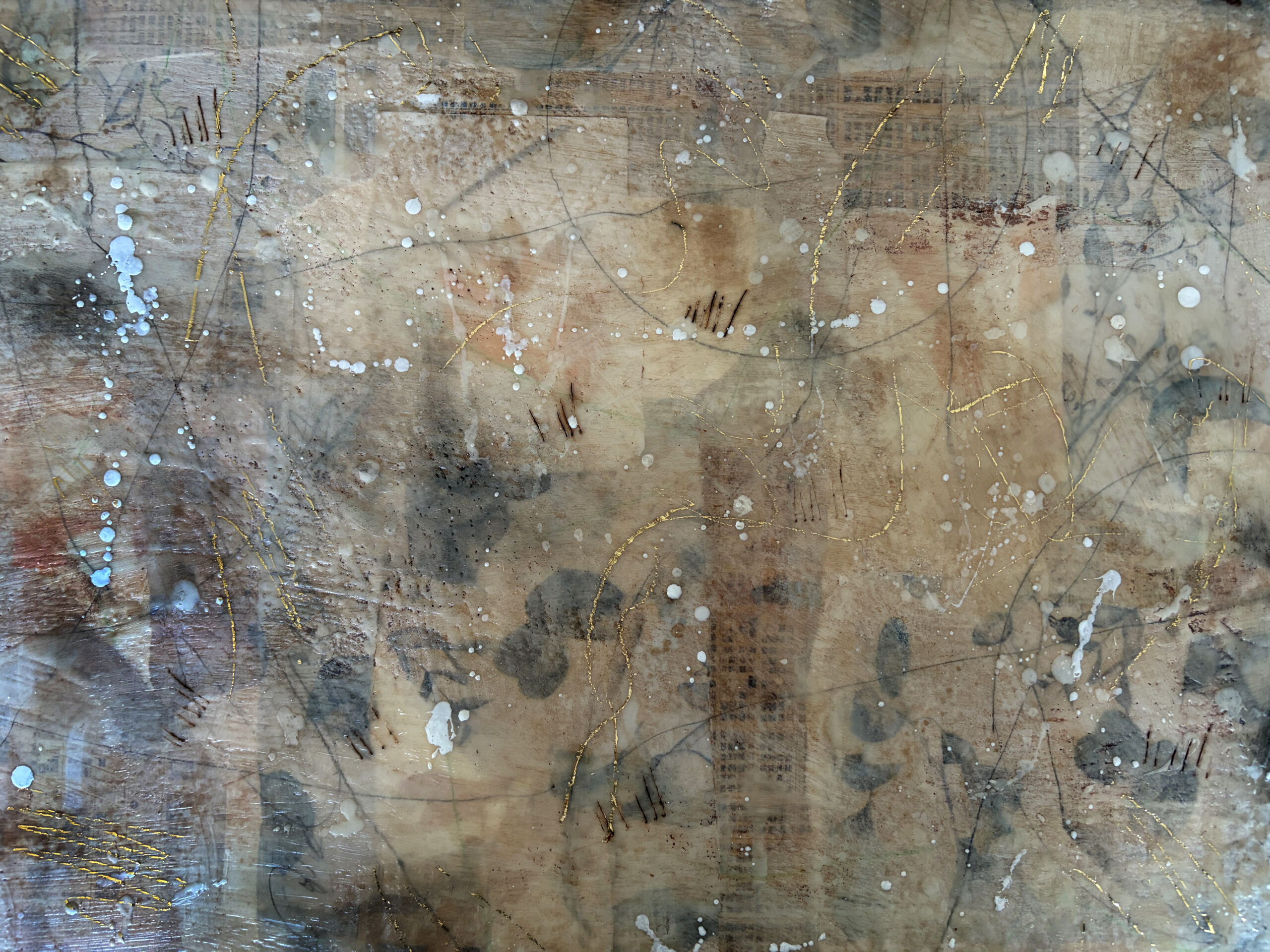
I wanted the viewer to have the sense that there was something beneath the surface worth discovering—a stem, a fragment of writing, perhaps a shape that might or might not be a leaf.
The imagery was still there, but it was no longer telling the whole story.
A little light on the surface
As the piece developed, I added fine gold marks and scattered white accents. These brought a different kind of energy to the muted surface.
The gold catches the light and creates little pathways across the composition, while the white marks interrupt the softer colors. There are also darker scratches and wandering lines that give the surface a sense of movement.
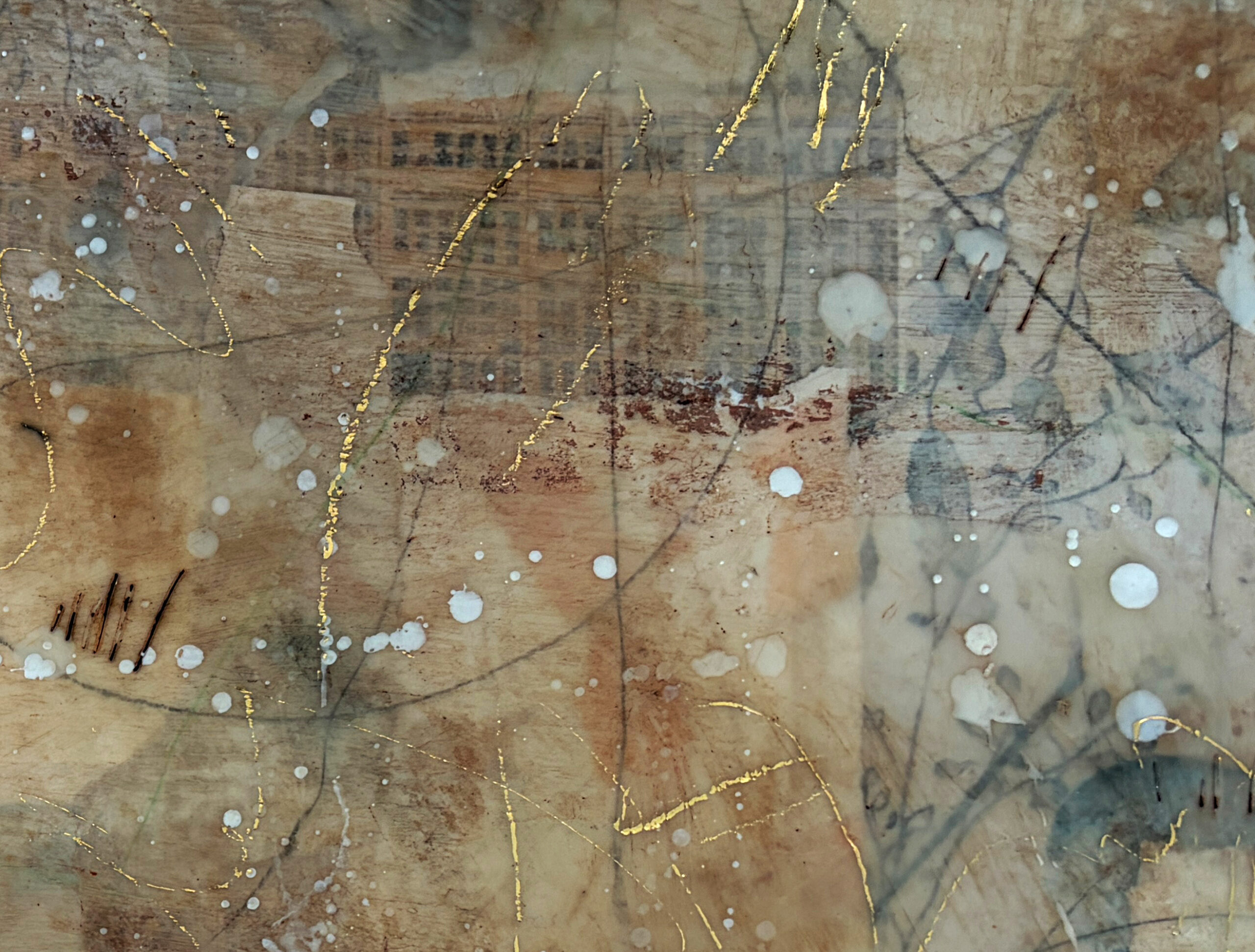
Detail
At this point, the original botanical images had become almost ghostlike. They were still part of the work, but now they seemed embedded in its history rather than sitting on top of it.
That was exactly what I had hoped for.
Eight from one
Then came the interesting part.
I cut the large composition into eight individual covers, each measuring 5.25 × 7.25 inches. Even though there are just three books in the series with a total of six covers, I cut eight covers to have two extras — just in case 🙂
The cutting apart is always a moment of discovery. When you work on one continuous surface, you aren’t necessarily thinking about how each small section will look on its own. Once the pieces are separated, unexpected compositions emerge.
A line that once traveled across the larger sheet becomes a gesture within a single cover. A faint leaf suddenly takes on importance. A tiny fragment of text becomes a focal point.
As a final step, I dipped the cut edges into the clear beeswax to seal and soften them.
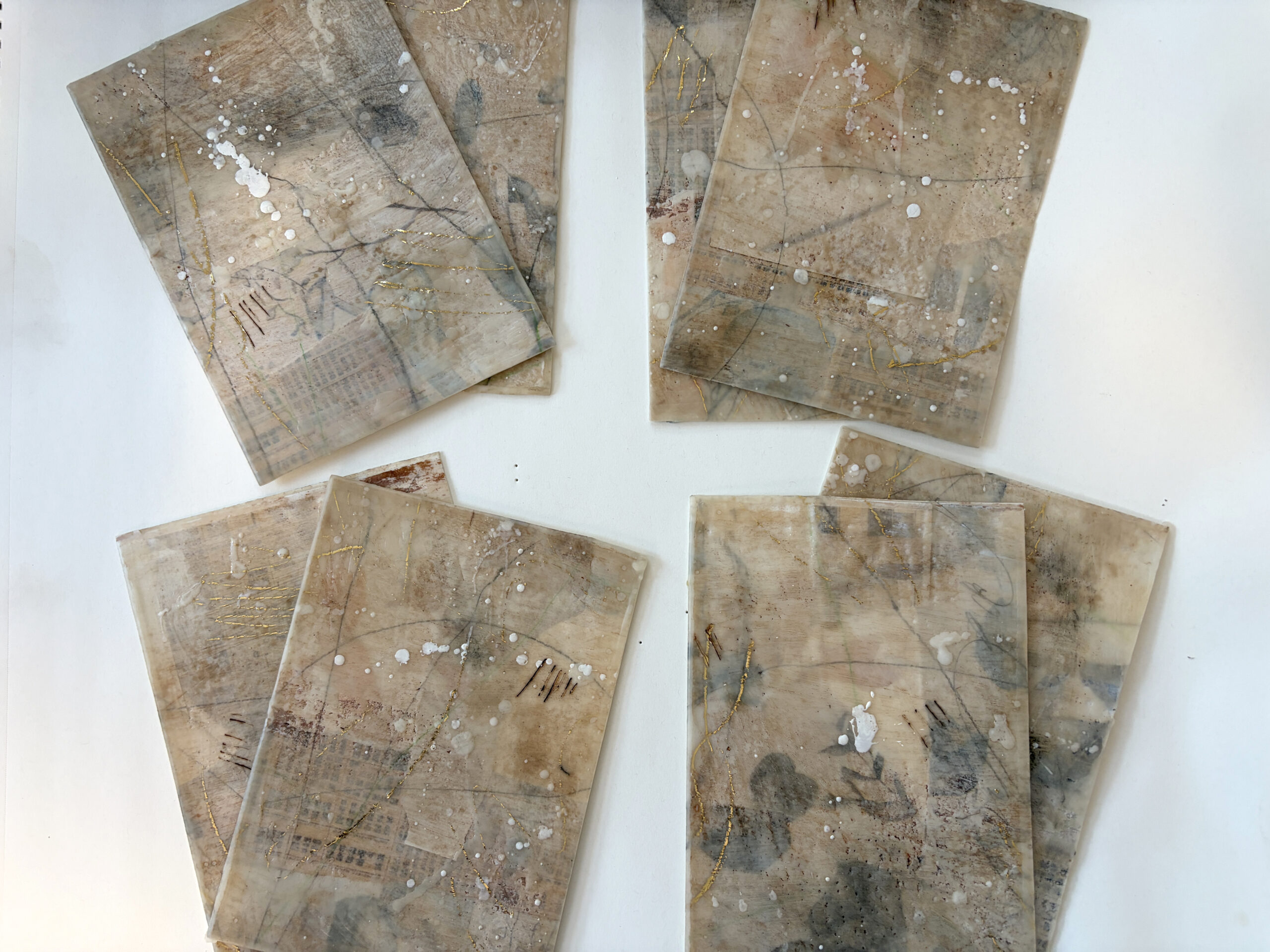
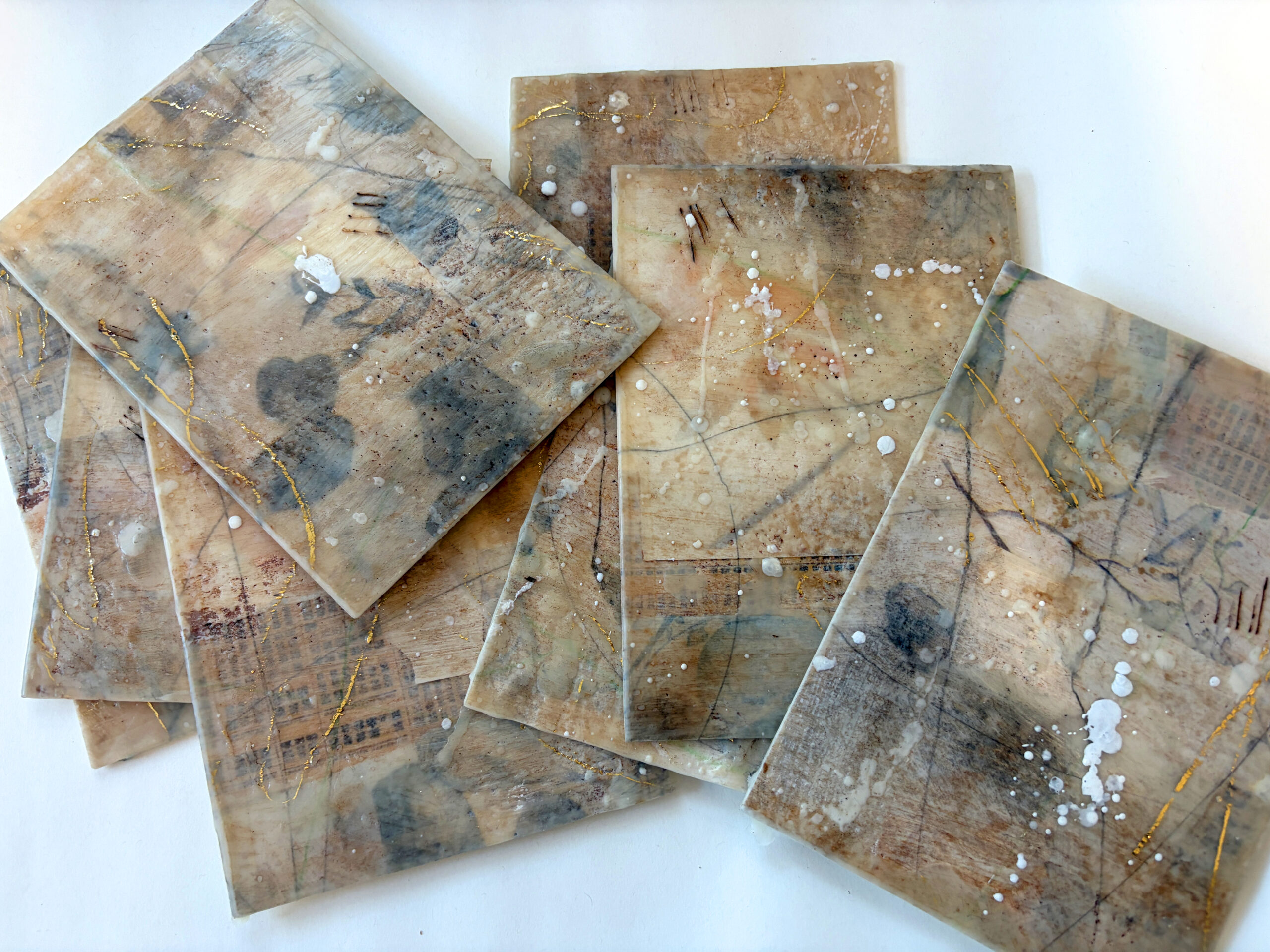
What pleases me most is that the covers are clearly related, but none is quite like another. They share a palette, a history of materials, and a visual language. Each is an individual piece, but each also carries something of the whole.
For now, my covers are finished and almost ready to become part of something larger. I may add a few other touches, but I’ve learned to wait and think a bit. The plant-dyed samples and folded accordion structures will bring their own textures, rhythms, and surprises to the project.
In a future post, I’ll share the completed books and reflect a little more on what happens when three artists bring their individual practices together to create one shared work.
Stay tuned . . . .happy days are here again.