The Art of Working Together: Three artists, one little book, and the joy of making something none of us could have made alone.
Sometimes the most satisfying art projects begin without a grand plan, an exhibition deadline, or even a particular destination. They begin with a conversation: What if we tried this together? That’s how our collaborative accordion books came into being.
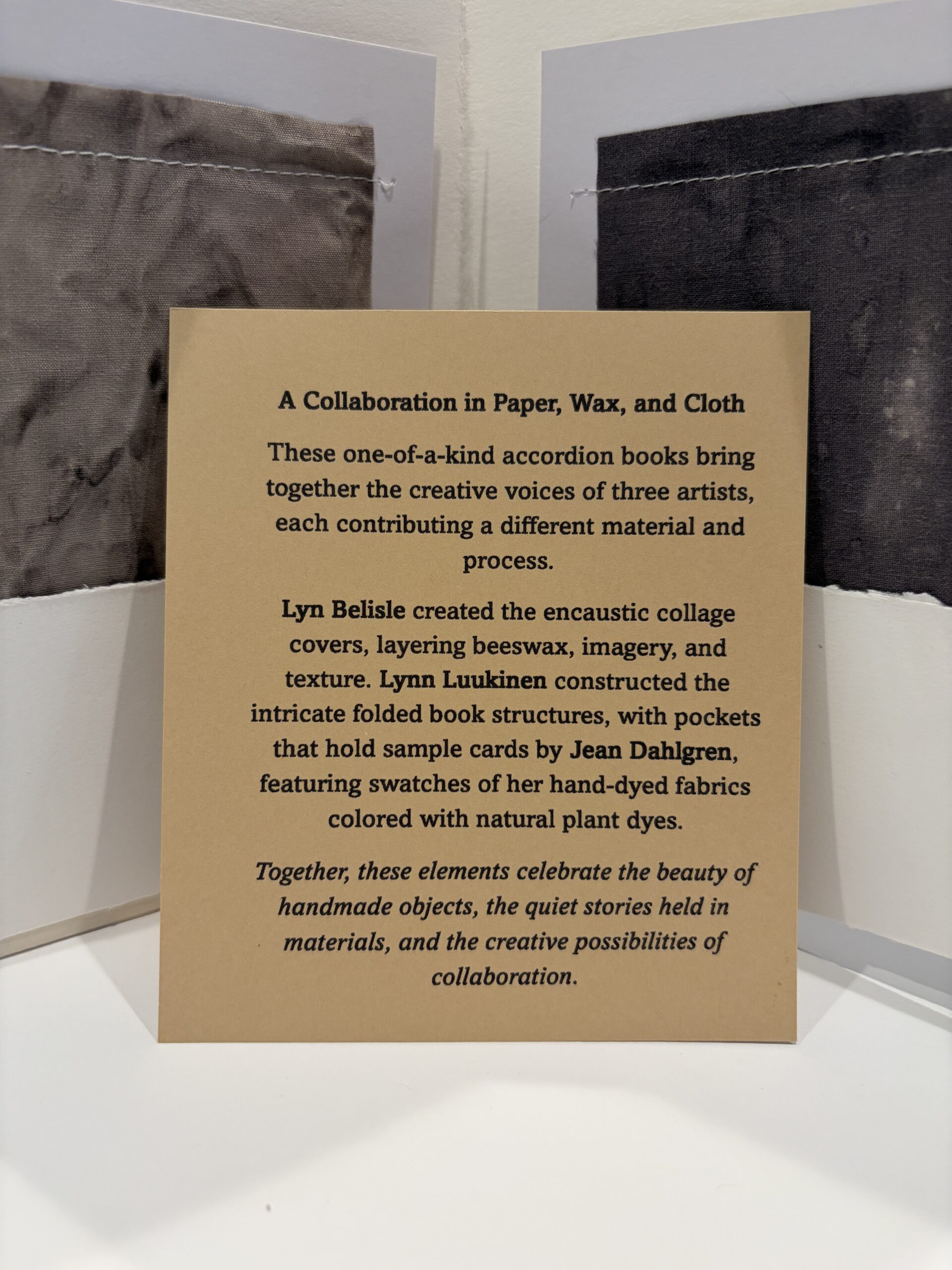
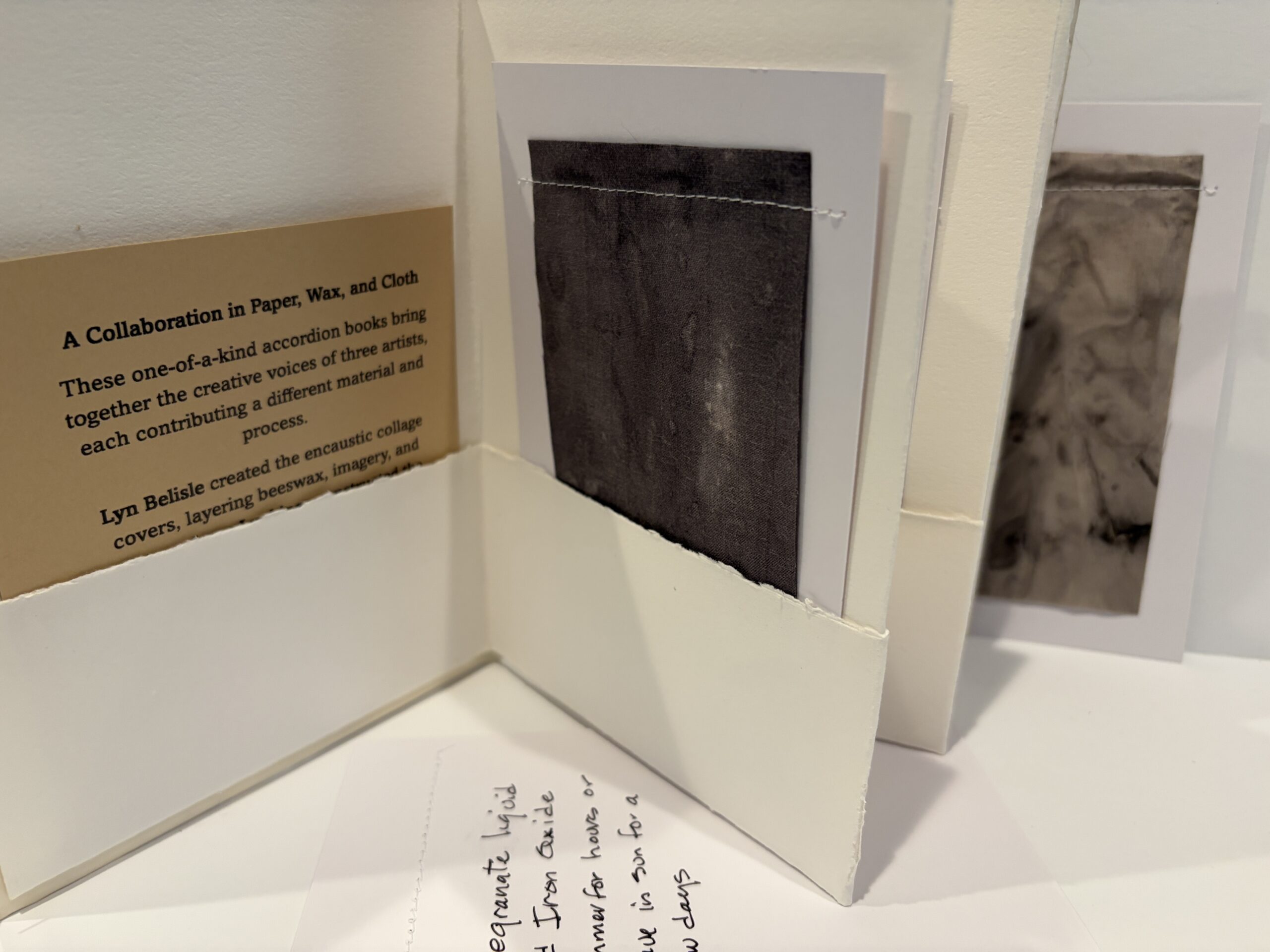
Three artists — Jean Dahlgen, Lynn Luukinen, and I — brought our very different interests and skills to a small book project. What emerged was a collection of intimate, tactile objects that hold more than paper, fabric, wax, and thread. They hold the pleasure of working together.
Three artists, three ways of seeing
Jean Dahlgen is a fiber artist with a particular interest in natural dyes. For this project, she set herself a wonderfully specific challenge: use plants gathered from her own backyard.
Beautyberry, oak, and pomegranate became sources of color. Through Jean’s experiments, ordinary neighborhood plants left their traces on small pieces of fabric. Each sample became a record of place, process, and discovery.
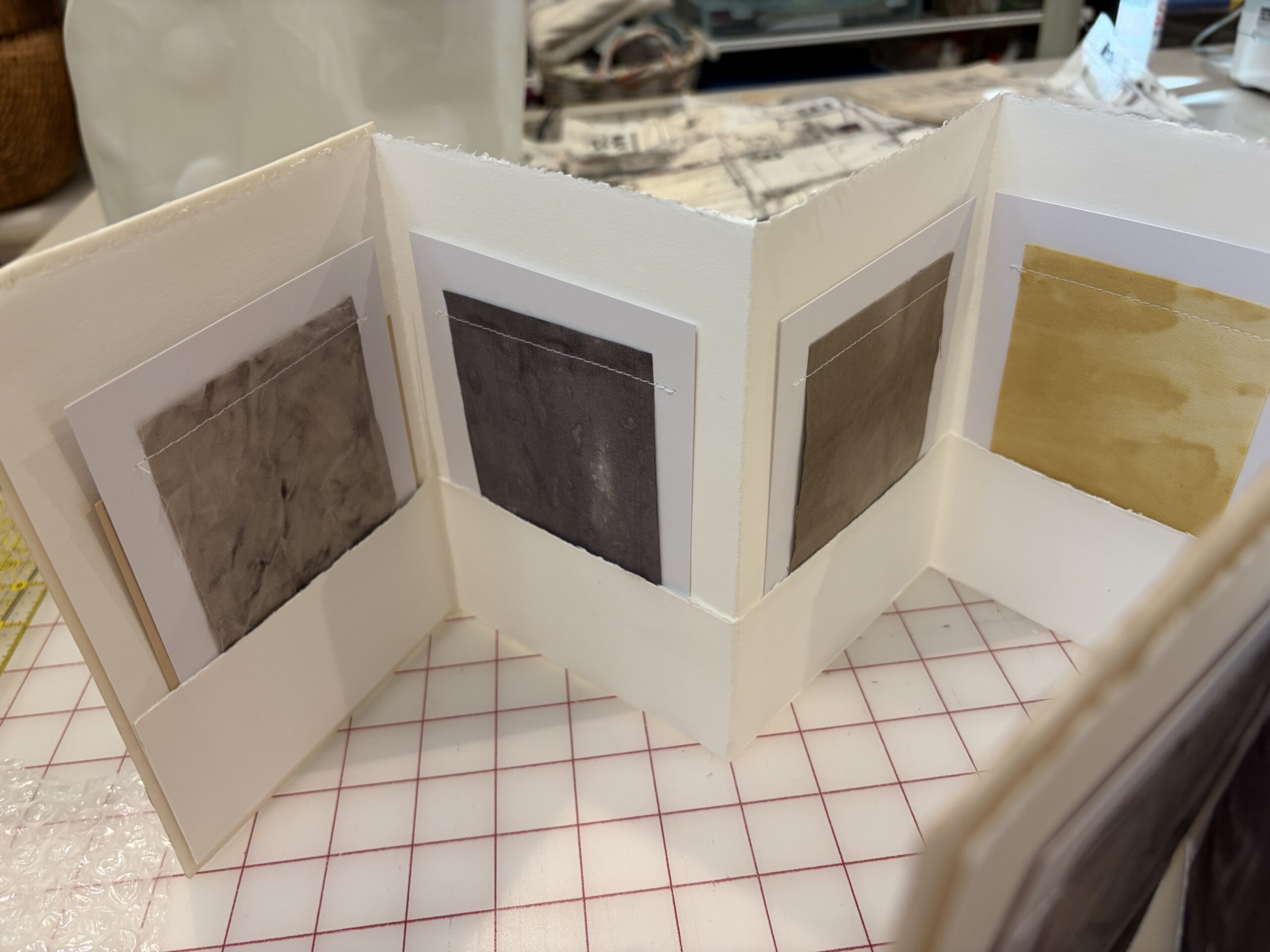
I love the idea that the colors in these books came from plants growing just outside someone’s door. They are, quite literally, rooted in our community.
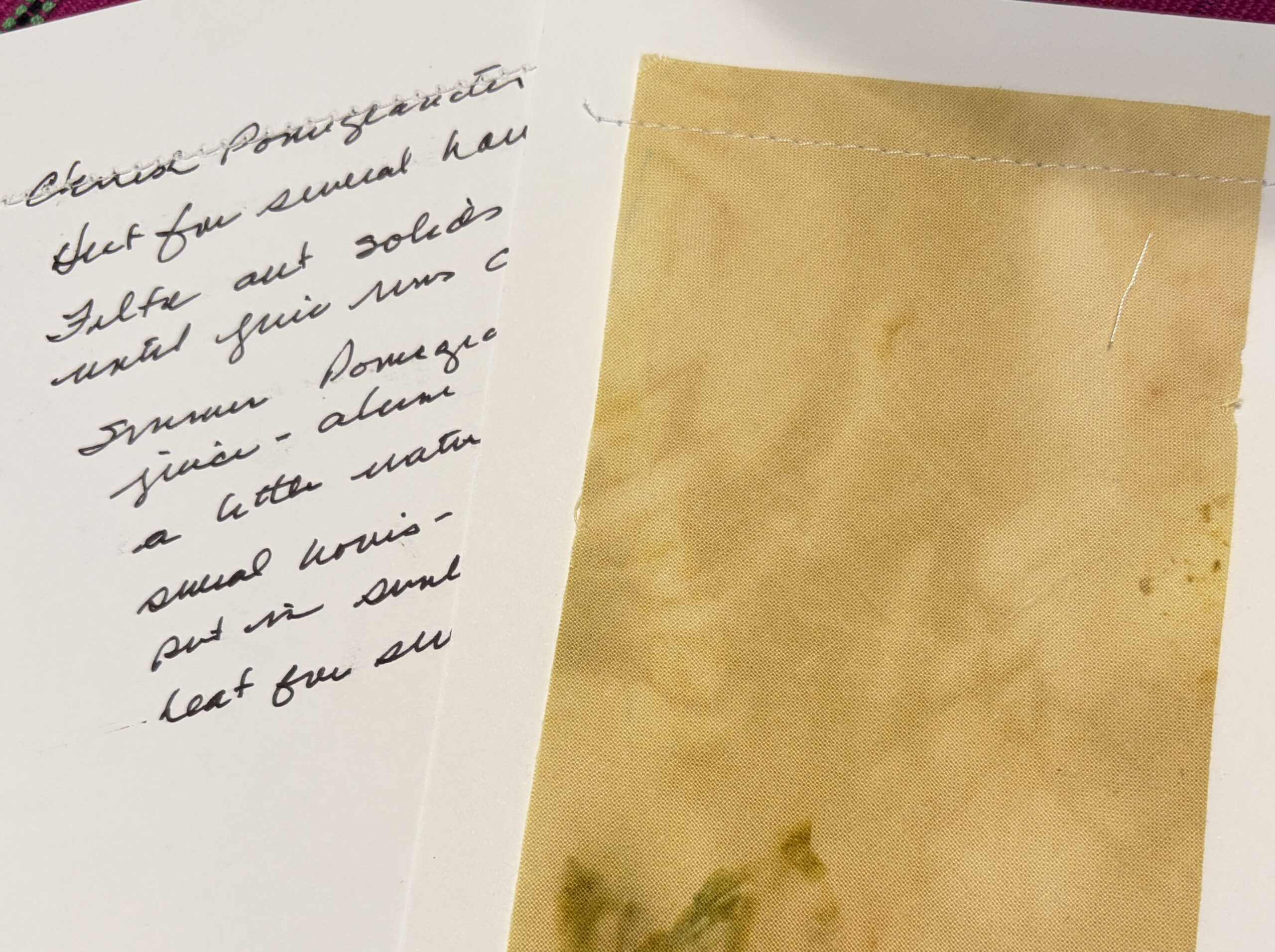
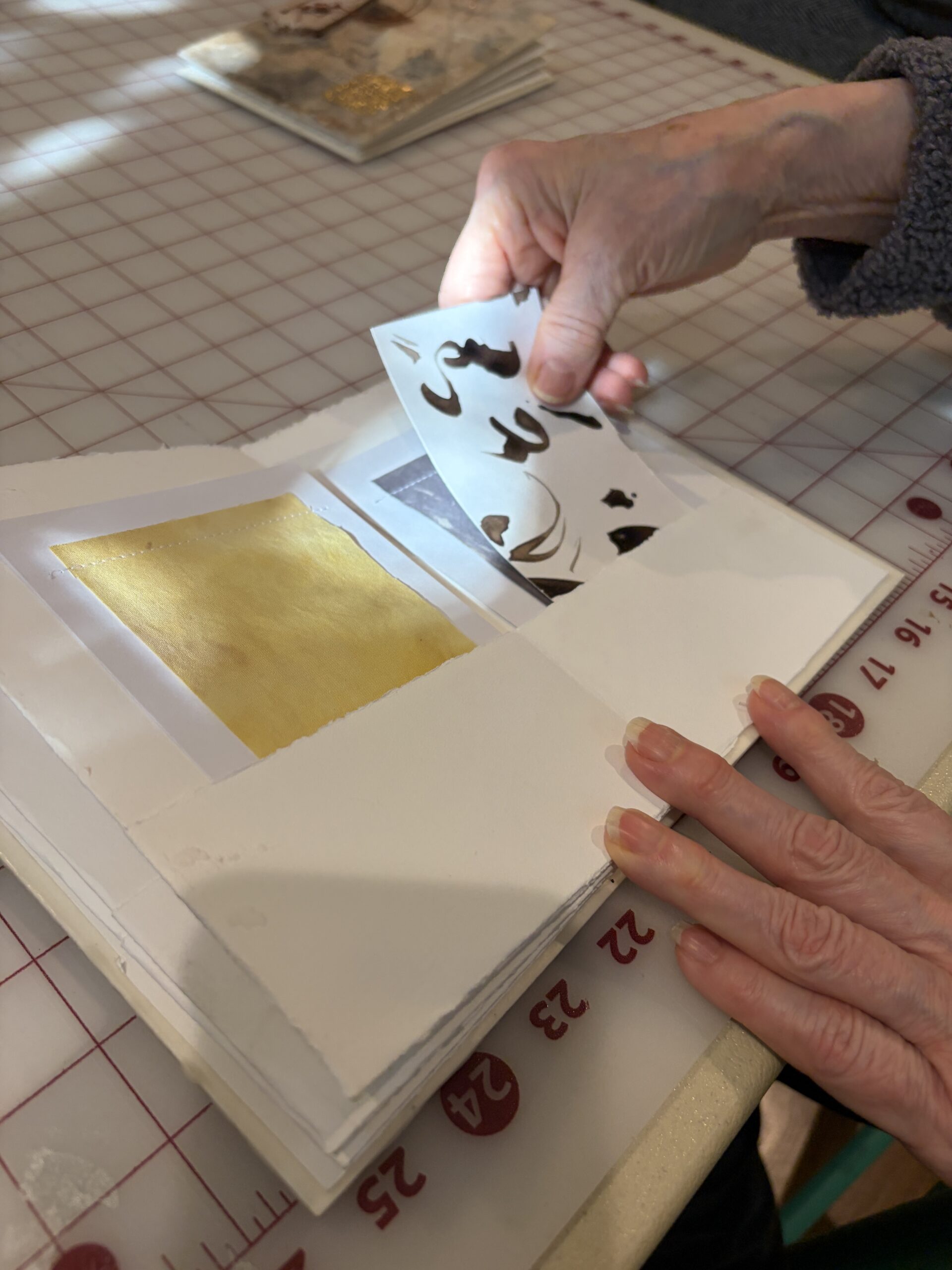
Lynn Luukinen, an artist and printmaker with a deep understanding of paper, brought the structural expertise. She knew which papers would fold beautifully, which would hold their shape, and how to construct the precisely folded accordion books that would become the foundation for everything else.
Her contribution was both technical and artistic. The elegant folds, pockets, and proportions made room for the rest of us to play.
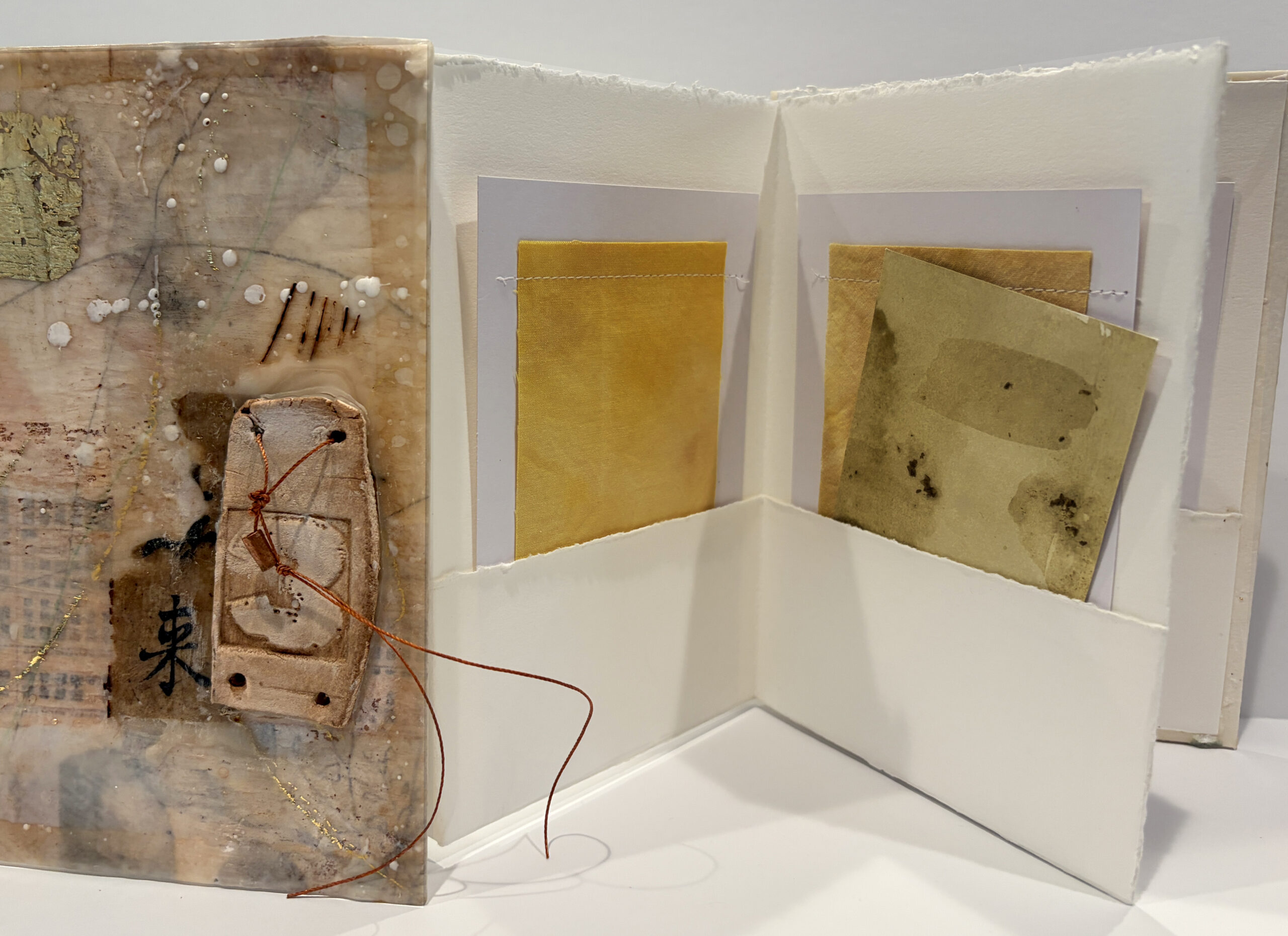
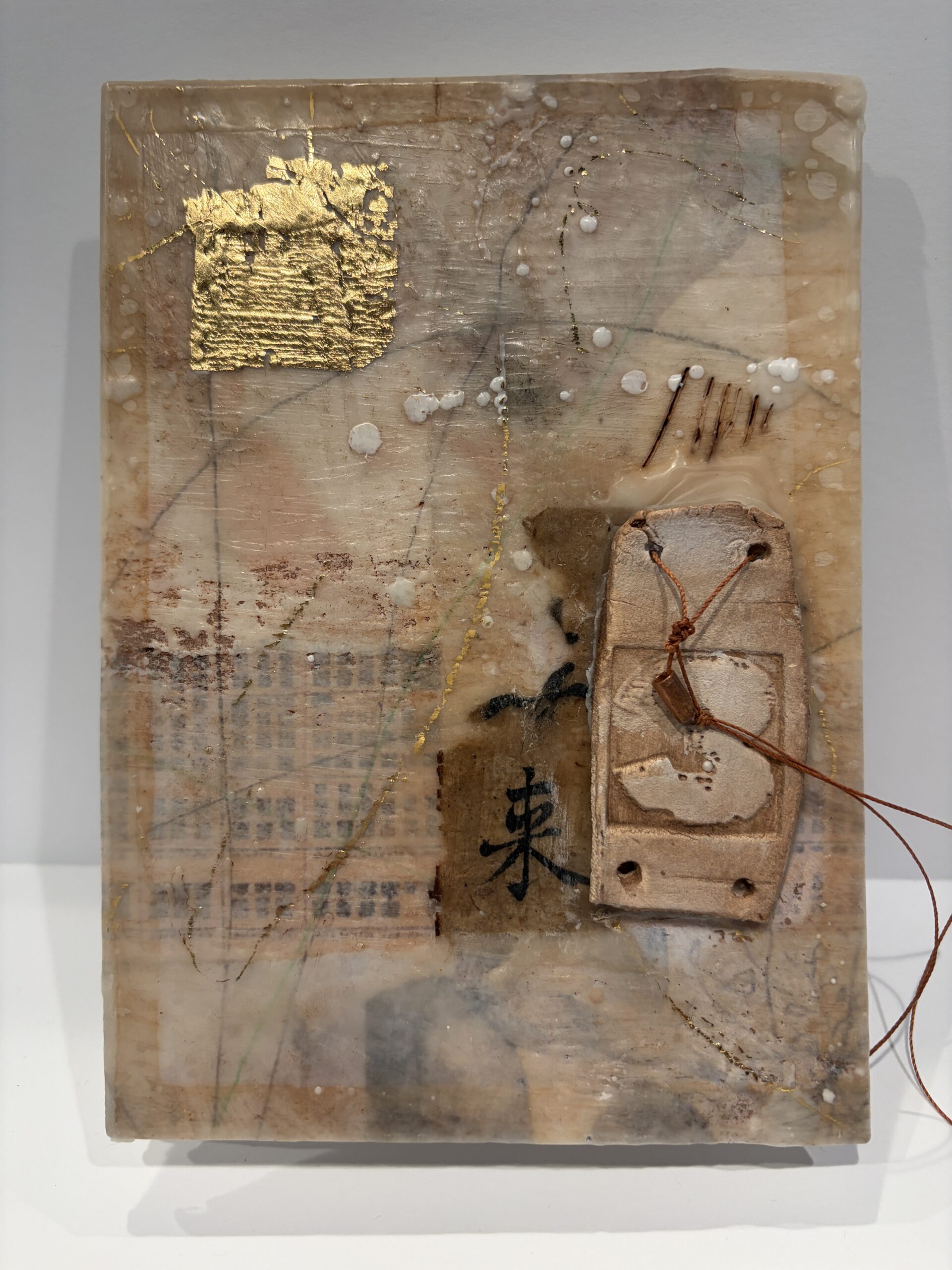
My part was to create the covers, bringing my familiar interests in encaustic, texture, memory, and fragments. I worked with layered surfaces, bits of thread, and small numbered paper-clay tiles that I deliberately allowed to remain imperfect.
The numbers suggest an archive or collection, as though each book might contain a small piece of remembered history. The threads hint at connections, some visible and some almost lost.
None of us could have made these particular books alone. And that’s precisely what makes them interesting.
The pleasure of making without competing
Artists spend a surprising amount of time working alone. Even when we belong to art organizations, attend openings, or share studio space, the actual work is often solitary. We develop our own techniques, protect our studio time, and sometimes become understandably concerned about originality, recognition, or whether our work measures up. But something changes when we agree to make something together simply for the pleasure of doing it.
There is no competition when everyone brings something different to the table. Jean didn’t need to become a bookbinder. Lynn didn’t need to learn encaustic (although she knows it well). I didn’t need to master natural dyes. We trusted one another’s strengths.
Collaboration doesn’t have to dilute our individual voices. Sometimes it makes those voices clearer.
What could happen in your own community?
This experience has made me think about how many opportunities for collaboration might be waiting right around us.
Perhaps there’s a ceramic artist in your neighborhood whose work you’ve always admired. Or a photographer, a poet, a gardener, a weaver, a printmaker, or someone who makes beautiful handmade paper.
What would happen if you invited that person to make something small with you? Not to sell. Not necessarily to exhibit. Not to build a business or launch a new product line. Just to see what happens when your skills meet.
These projects don’t require grants, committees, or elaborate planning. They require curiosity, a little trust, and the willingness to let go of complete control.
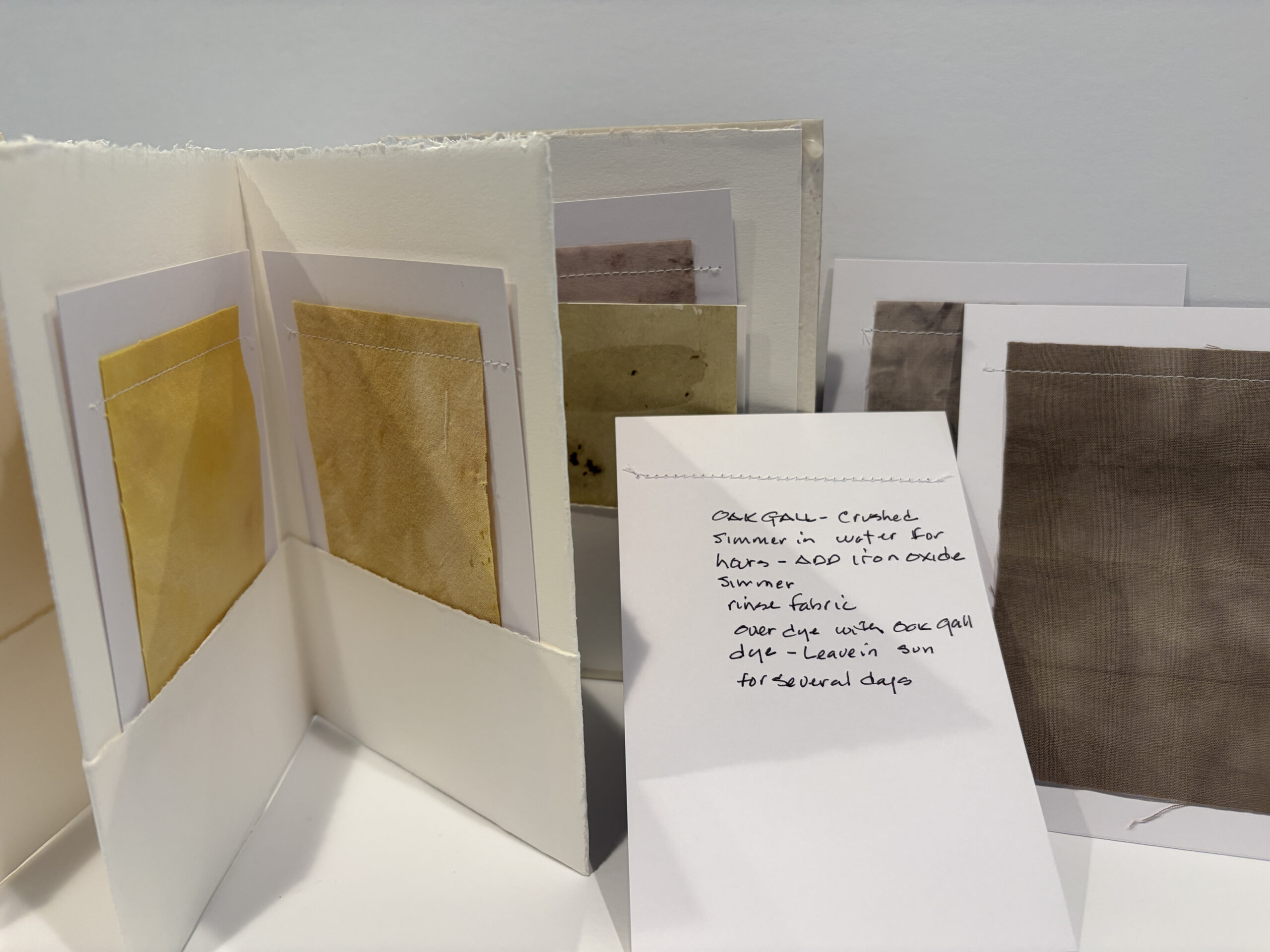
The backyard is bigger than we think
I keep coming back to Jean’s backyard plants.
Beautyberry. Oak. Pomegranate.
Such ordinary things, growing close to home, transformed through attention and experimentation into something worth preserving. Our artistic communities are rather like that.
We don’t necessarily need to travel to a major workshop, find a famous mentor, or search far beyond our own circles to discover new possibilities. There may be someone just down the street whose knowledge, imagination, or way of seeing could change our work in unexpected ways. All it takes is an invitation.
Our little accordion books remind me that making art together can be an act of generosity. We offer what we know, receive what others know, and create something that belongs to the space between us. And in the end, we have not only made an object. We’ve made a connection.
I’d love to hear about collaborations you’ve tried — especially the small, spontaneous ones that began with a simple conversation. And if you’ve never tried one, perhaps this is your invitation. Who in your community would you like to make something with?
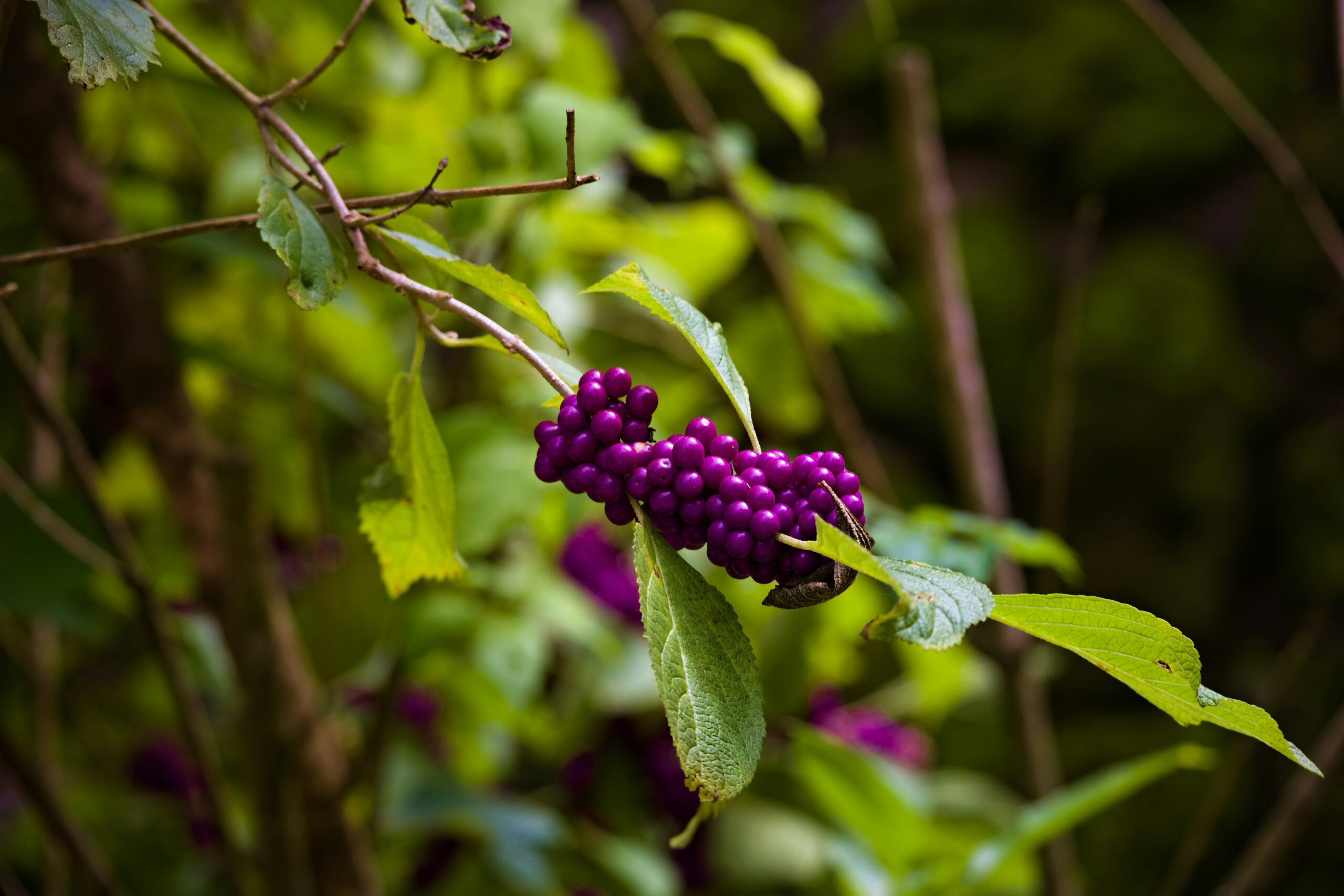
Beautyberry
Now I know it’s beautyberry I’ve been admiring. Thank you for sharing your collaboration. Beautiful!!