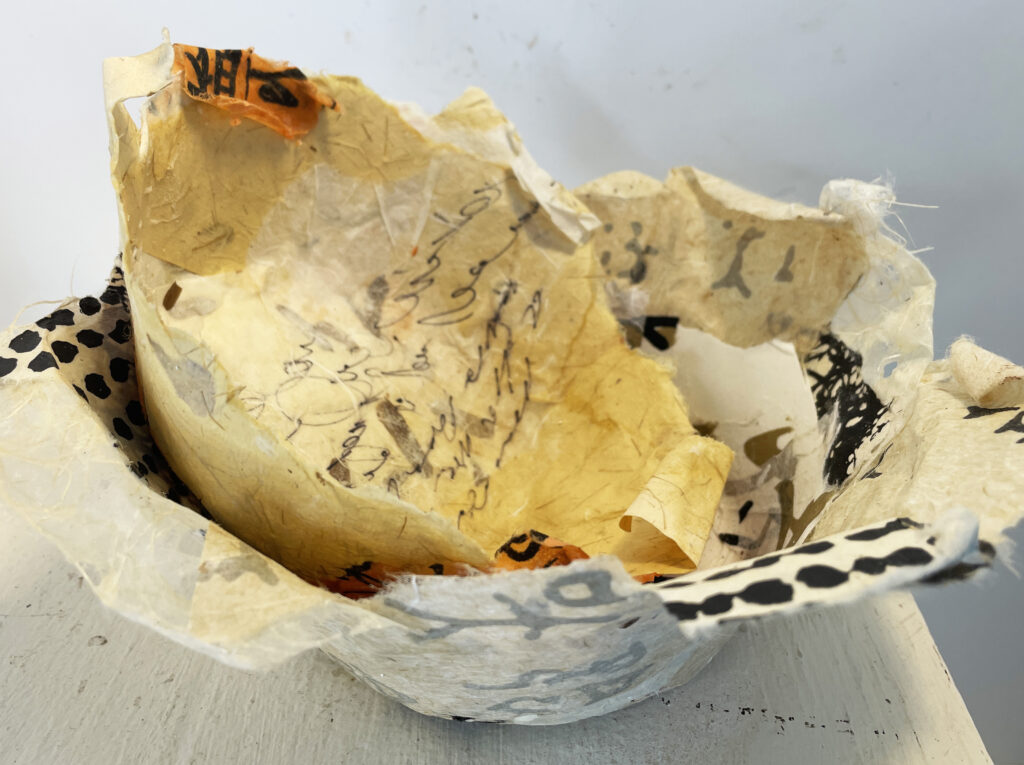
Valentine weekend will be fun for me – I’m teaching a new Vessels workshop at UTSA/SA.
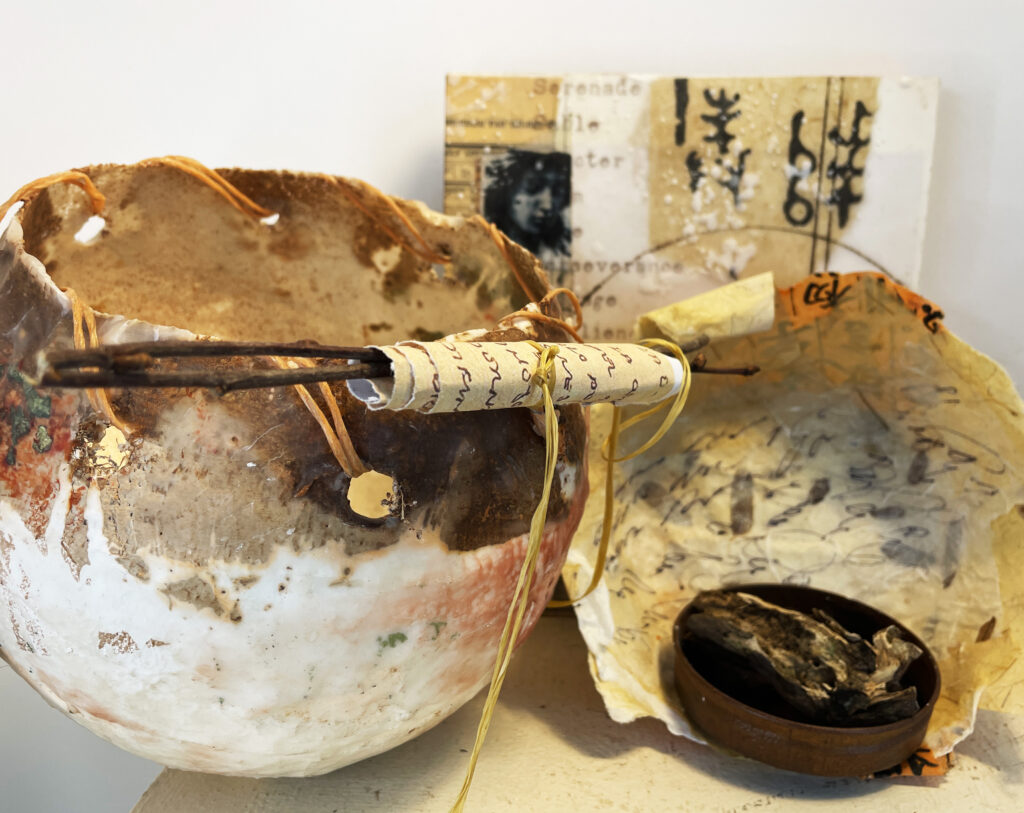
“Vessel Alchemy: Tactile Poems in Fiber, Paper, Word, and Light” — In this immersive workshop, we’ll explore how simple materials—sticks, cheesecloth, mulberry paper, fiber scraps, ink — can be transformed into poetic vessels that speak to memory, meaning, and the ephemeral.”
As I’ve been preparing for this workshop, I’ve found myself thinking less about techniques and materials and more about what, exactly, we are making room for. I’ve been gathering sticks, paper, fiber, cheesecloth, ink—simple things—but alongside them, I’ve been gathering words. Not lists or instructions, but the kind of words that hover quietly in the background: hold, carry, contain, remember.
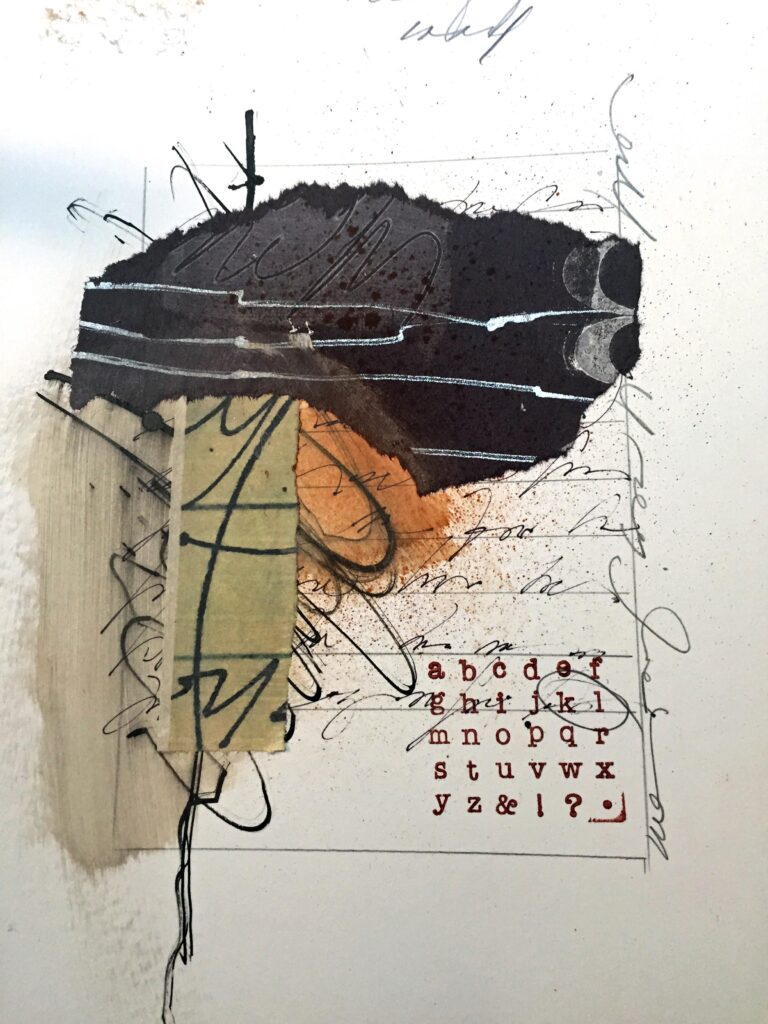
Planning the workshop has reminded me that vessels are never only about form. They are about intention. They exist because there is something we want to keep safe, transport, offer, or remember. And somewhere in that realization, it became clear why words so often find their way into my vessel work.
Words and vessels share the same essential function: they are containers.
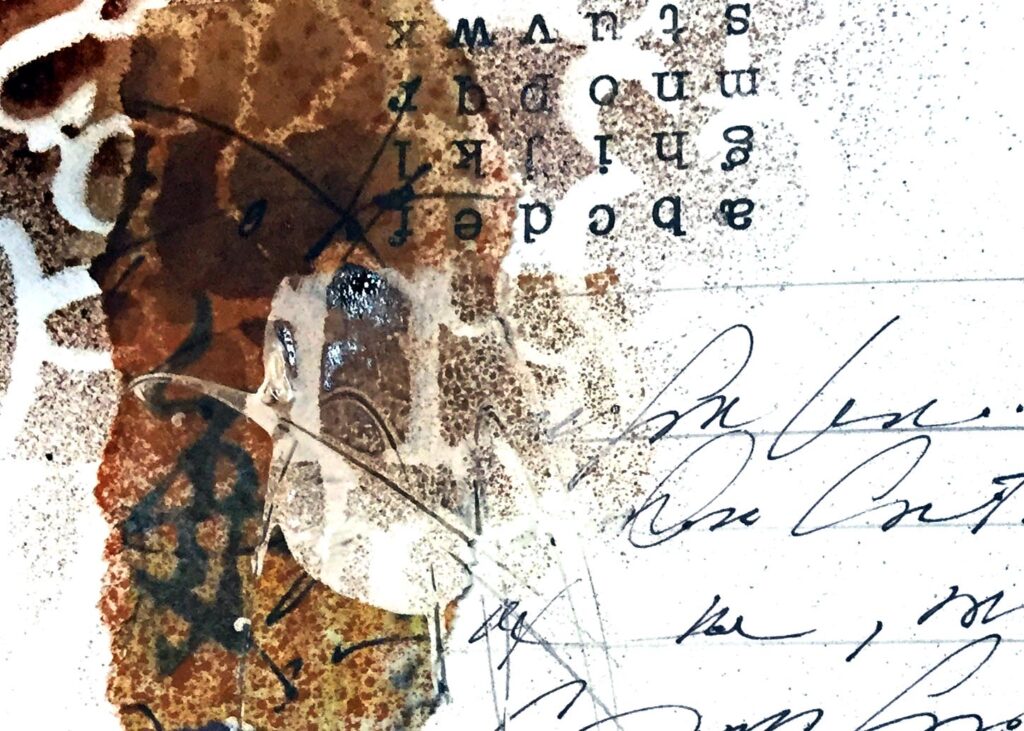
A single word can carry astonishing weight. Think of words like home, empty, threshold, tenacity. These are not tidy definitions. They are dense with lived experience, layered with personal and collective history. Over time, they gather residue—who spoke them, who heard them, who needed them. A word becomes a place we return to, again and again, to see what has changed. Echo. Imprint. Signature.
Vessels work in much the same way. A bowl is never just a bowl. It holds what we place inside it, but also what it has held before—food, offerings, tools, fragments, ashes. Its shape remembers use. Its surface records touch. Even when empty, a vessel is never truly vacant.
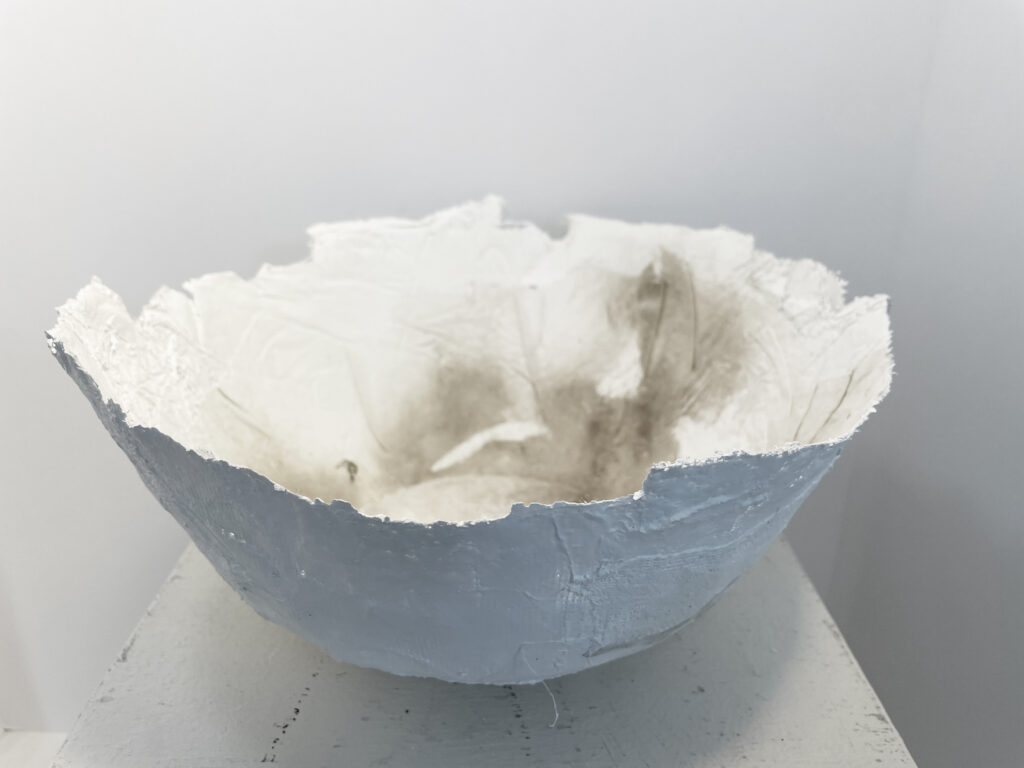
When I place words inside a vessel—stitched, written, rolled up, partially obscured—I’m not asking them to explain anything. I’m giving them a physical body, a structure that can hold their weight.
This is why I’m drawn to fragments rather than sentences. A single word doesn’t close a story—it opens one. It invites the viewer to bring their own associations, their own memory, their own interior language. The vessel doesn’t dictate; it listens.
What’s the saddest word you can think of? What’s the most beautiful word?
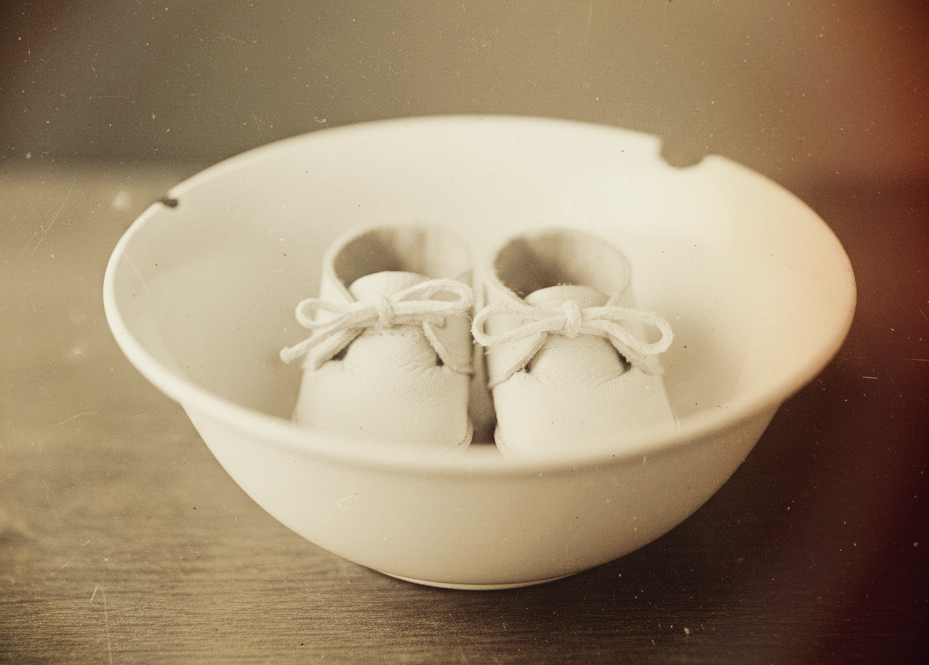
Sometimes they are the same word, depending on when you return to them. Ernest Hemingway wrote an entire short story with just six words: “For sale: baby shoes, never worn.” A handful of words conjure an entire life we can never step into.
I’m planning lessons about making vessels with words and verses, but I’m aware that what we’re really doing is learning how to listen—to materials, to memory, to language itself. We don’t pour meaning into words so much as discover what they already hold.
This is where the alchemy happens. A word becomes a container. A vessel becomes a sentence.
Choose one word –
It might be the saddest word you know.
Or the funniest.
Or the most beautiful.
. . .it will pop into the front of your mind.
Write it down.
Now sit with it for a moment—not to define it, but to enter it.
Ask yourself:
-
When did this word first matter to me?
-
Why has it appeared again, unexpectedly?
-
What does it hold now that it didn’t before?
Notice how the word has changed—not on the page, but in you.
How it carries memory, feeling, and time, all at once.
You don’t need to explain it.
You don’t need to share it.
Just notice how a single word can become a place you return to—
and how each return leaves it slightly altered,
packed with that particular weight we call meaning.
♥
Lyn, the vessels are incredible and I love your thoughts about them. The word I’ve been sitting with is the Spanish “querencia.” The idea of art combining messages of home, longing for belonging to or being at home, containment, and containers themselves is very compelling for me now. In fine, vessels as a symbol of sanctuary just sings to me. Once again, thanks for wonderful inspo to dream over and journal about. Happiest of Valentine’s Day to you and all the students. ♥️
Adeliese, this word is a gift! A perfect example of complexity, beauty, and mystery.
Thank you!!
“Querencia is a Spanish noun referring to a place where one feels safe, secure, and truly at home—a, sanctuary where a person draws strength, inspiration, and feels most authentic. Derived from the verb querer (to want/love), it often signifies a deep, emotional connection to a specific location, land, or, in bullfighting, the spot in the ring where a bull feels safest.”
Wow! You have done it again. You allow me to think outside the box. I so look forward to your emails. So many messages in then. Thank you!
Lyn, Happy Valentine’s Day. Some days you are my teacher. Today also my therapist.
Maitri.