How do you journey?

“If you don’t know where you are going, any road will get you there.” — Lewis Carroll

I’m getting ready to leave for Taos, New Mexico, to teach a class called Shards and Santos at the Taos Ceramics Center. We’re driving from San Antonio, and my husband (and beloved traveling companion) has already checked the road for both traffic construction and upcoming weather conditions. He knows where we will stop and how long it will take to get there.

This is hugely reassuring! I’d probably just hop in and head northwest. And this topic a perfect lead-in to reflecting about how differently we chart our artist’s journey. I actually created two Oracle Cards to express this.

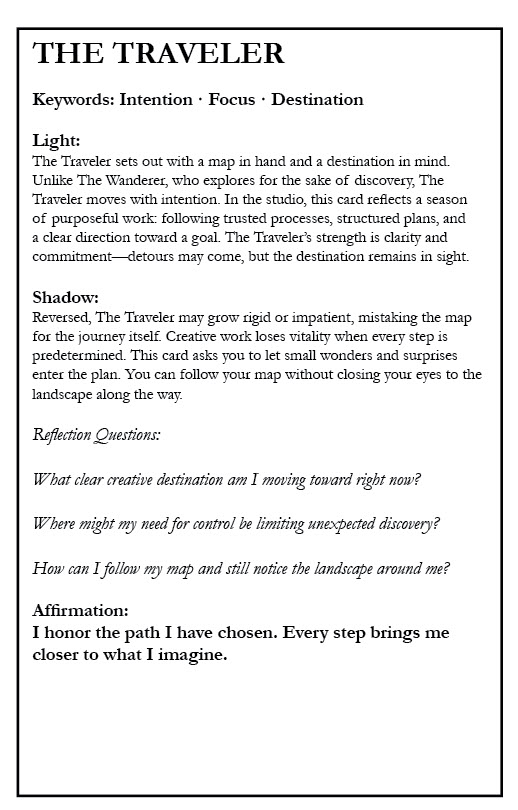
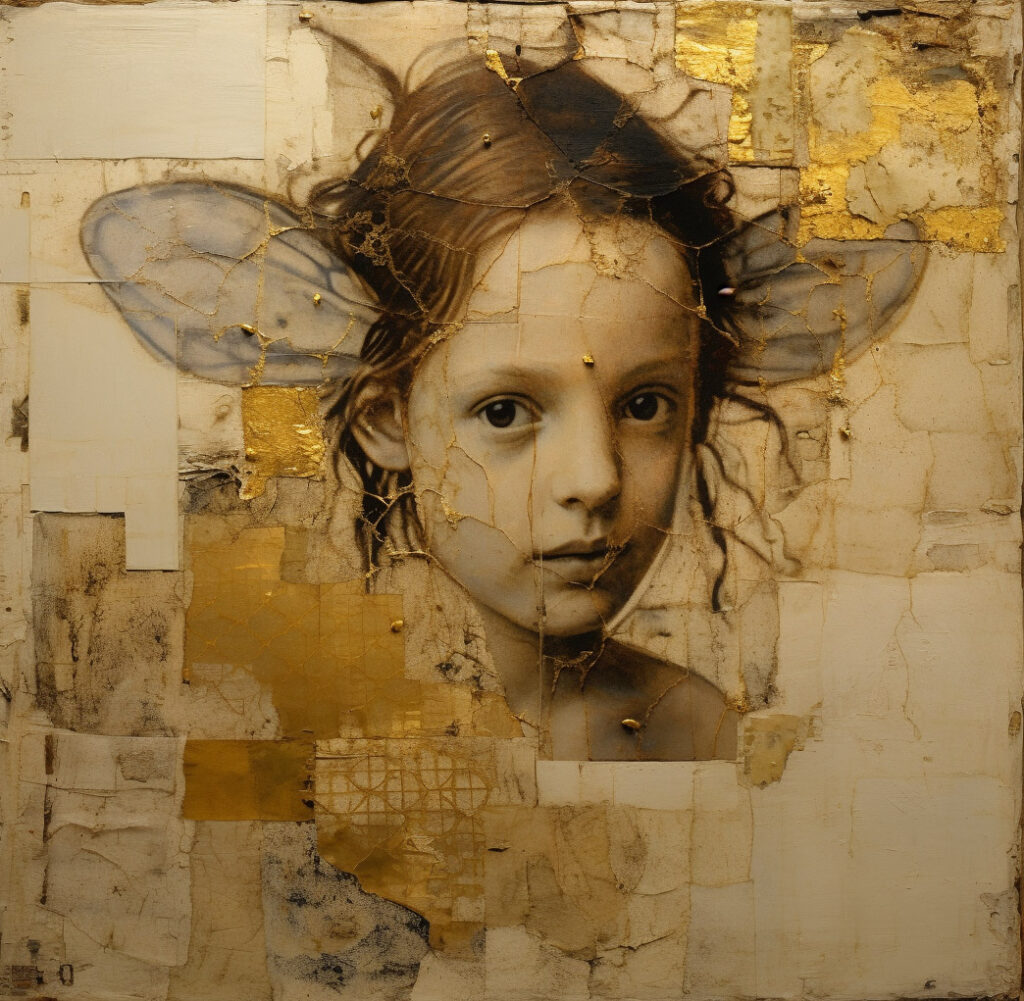
A section in the in-progress Enso Oracle book called Subtleties and Pairings: When Meanings Overlap says, “Some cards in The Enso Oracle may appear to speak the same language, yet their tones differ quietly, like two instruments playing in harmony. The Wanderer and The Traveler, for example, both move through the world, but their motives are distinct: The Traveler walks with purpose, guided by curiosity and direction, while The Wanderer drifts in openness, allowing intuition rather than intention to lead. One seeks, the other listens.”

Take a minute to think about this, and then see which card below fits your creative “journey style” the best.
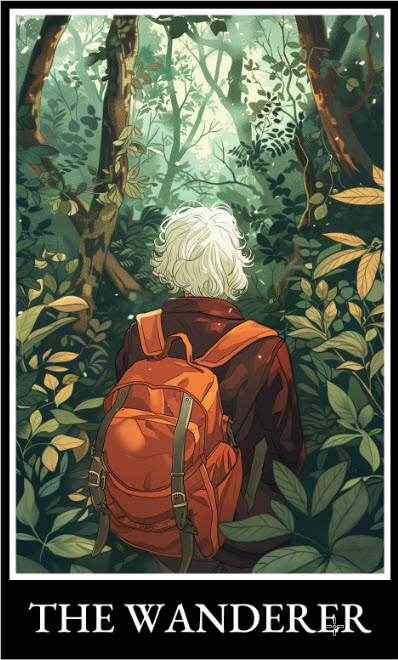
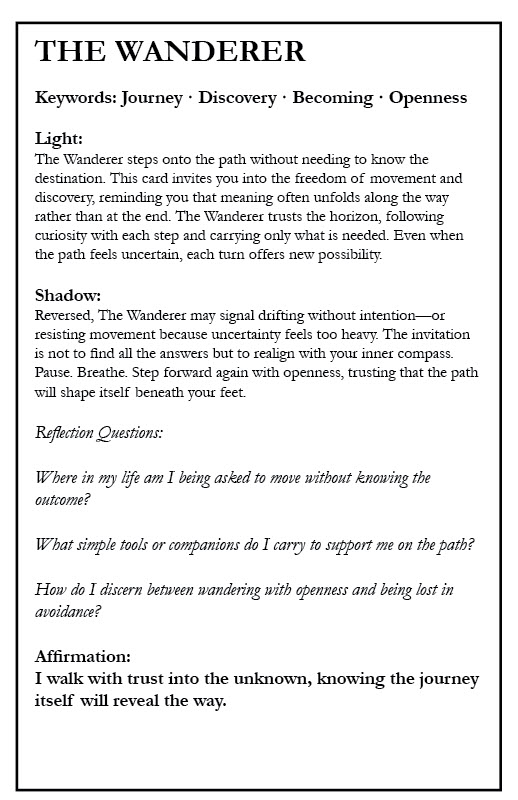
Were you able to choose your “wayfinder archetype”?

As you were reading the two cards above, which one tugs at you today?– (it may change tomorrow)

If you’re The Traveler (purposeful path):

  • Name a destination for this week’s studio time in one sentence.

  • Pick one tool or constraint that will help you get there.

  • Five-minute map: sketch the sequence—Step 1 → Step 2 → Step 3.

If you’re The Wanderer (intuitive drift):

  • Begin without a plan: choose three materials by feel, not reason.

  • Follow the most interesting accident for 10 minutes—no fixing, only noticing.

  • Three lines in your notebook: What surprised you? What changed? What’s next?

Tell Me & Tell Each Other

In the comments, share which card chose you today that describes your approach, and
I’ll feature a few responses in the next post (with your permission).


I’ll be on the road to Taos soon—channeling a bit of Traveler (routes and rest stops – thank you, Beloved Traveling Companion) and a whole lot of Wanderer (open skies, new textures). Which one will guide you this week?

Hopefully, I’ll be able to post while I’m there – I’ll send pics!! Thanks for reading!
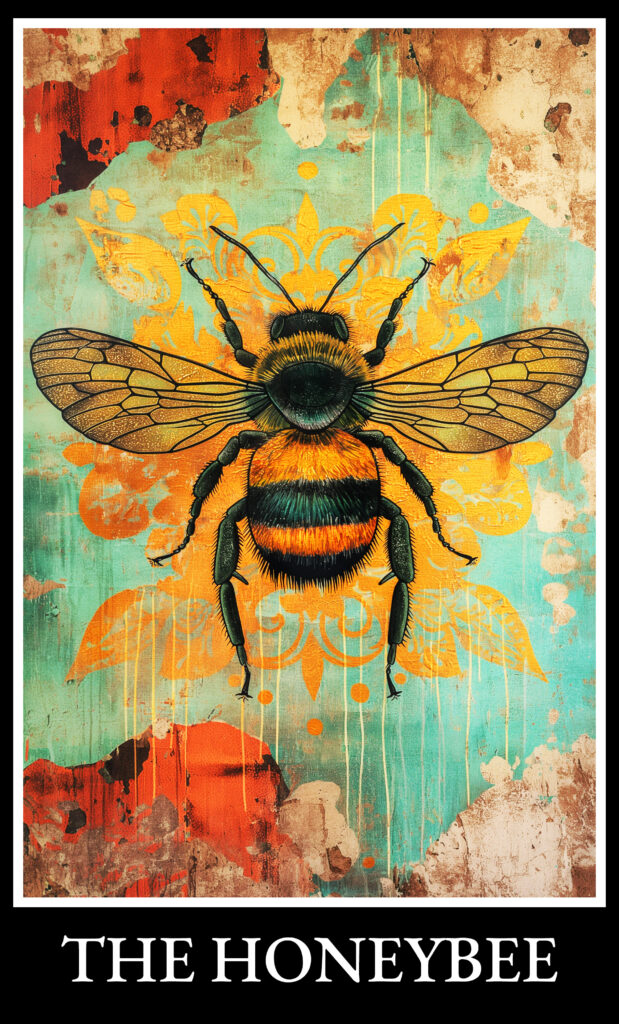
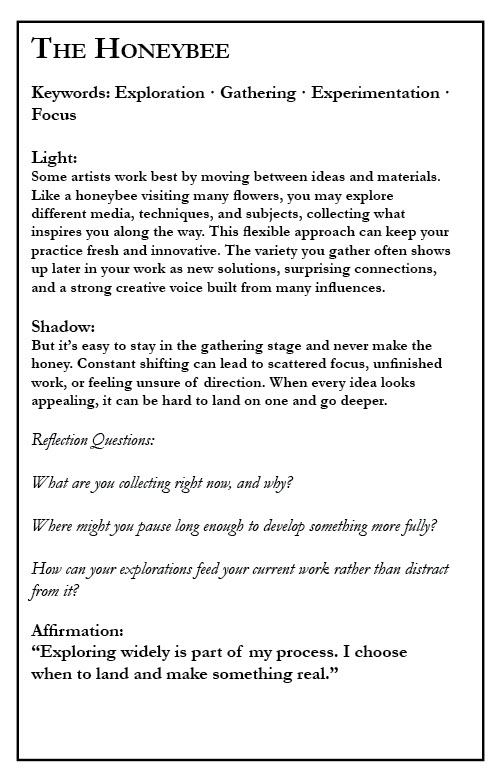
The Honeybee: A Late Addition

I was so close to calling the Enso Oracle finished. The paths were set, the 44 cards were balanced, and the framework felt solid. And then, almost out of nowhere, a single image and idea rose to the surface — The Honeybee.

I kept thinking about the kind of artist who thrives on exploration. Someone who moves from one material to another, from idea to idea, gathering inspiration like pollen. Their work is enriched by variety — not scattered, but woven together from what they collect. Many of us know this way of working. Many of us are that artist.

The Honeybee acknowledges the beauty of that temperament: the flexibility, the curiosity, the openness to what’s new. But it also recognizes its challenge — the risk of never landing long enough to make something fully realized. In my own practice, I’ve seen both sides of this. I’ve been down many rabbit-holes and stayed down there too long. That’s why this card felt essential, even at the very end of the process.

Some of the things that I have learned and worked with, sometimes even taught, and wished I could stay with longer –

  • Eco-dyeing with plants
  • Saori weaving
  • Silkscreen / screen printing
  • Handmade artist books and zines
  • Monotype printing

I’ve kept little shards of technique from all of these but there just isn’t time to do justice to everything I want to do! Do you ever feel that way?

This card wasn’t part of the original plan. It arrived late, quietly, but with a kind of certainty. And sometimes, that’s how the truest symbols find their way in — not with a grand entrance, but with a simple nudge that says, don’t leave this out.

The Honeybee reminds us that exploring widely can be a strength, but at some point, we choose when to stay still long enough to make something real. For all the artists who gather widely before they go deep: The Honeybee is for you.

Which of these have you sampled?

  • Gouache
  • Oil painting
  • Ink drawing and brushwork
  • Botanical illustration
  • Needle felting
  • Natural dyeing
  • Surface design on fabric (e.g., block printing)
  • Knitting and crochet
  • Rug hooking or punch needle
  • Hand-built ceramics
  • Wheel throwing
  • Cyanotype and sun printing
  • Metal clay or simple metalsmithing
  • Resin casting
  • Found object jewelry
  • Fiber + bead hybrid pieces
  • Calligraphy and brush lettering
  • Papermaking
  • Origami or paper sculpture
  • Polymer clay sculpting
  • Paper clay or air-dry clay
  • Rust printing and patina experiments
  • Ephemeral land art
  • Digital collage
  • Synthographic image generation
  • Digital drawing or painting tablets

If you’re like me, you’ve tried at least ten of these. A “Honeybee” creator often:

  • Mixes two or more of these media in one piece.
  • Returns to favorites but rarely stays still for long.
  • Values process and discovery as much as polished results.

This is such an appealing oracle card to me – it describes both the frustration and the satisfaction of being a mixed-media explorer. 


I’m almost at the end of creating the Enso Oracle, and this unexpected addition reminded me that creative work is rarely linear. Even when we think we’ve reached the finish line, something new can emerge that feels absolutely right. The Honeybee will join the other cards as part of the Path of Discovery, honoring those whose practices are built on curiosity and connection.

Sometimes, the last piece isn’t an afterthought — it’s the one that makes the whole feel complete. Stay tuned!

The Hump, The Clock, and Creative Risk

Jo Etta Jupe

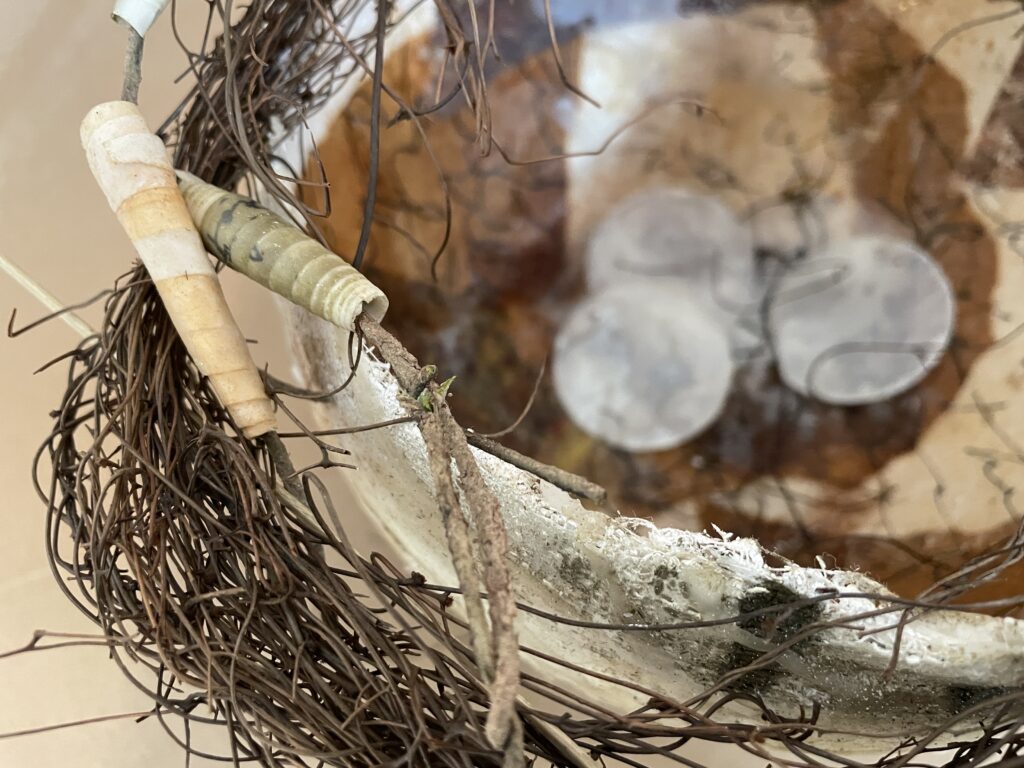
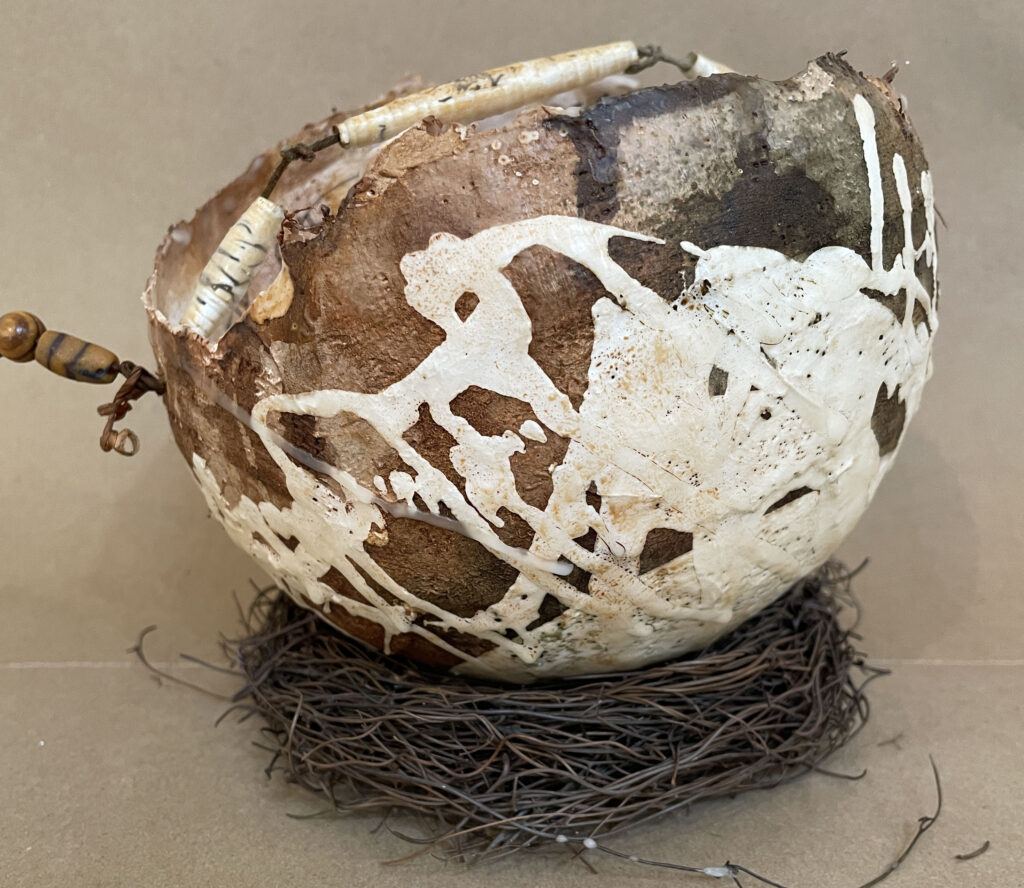
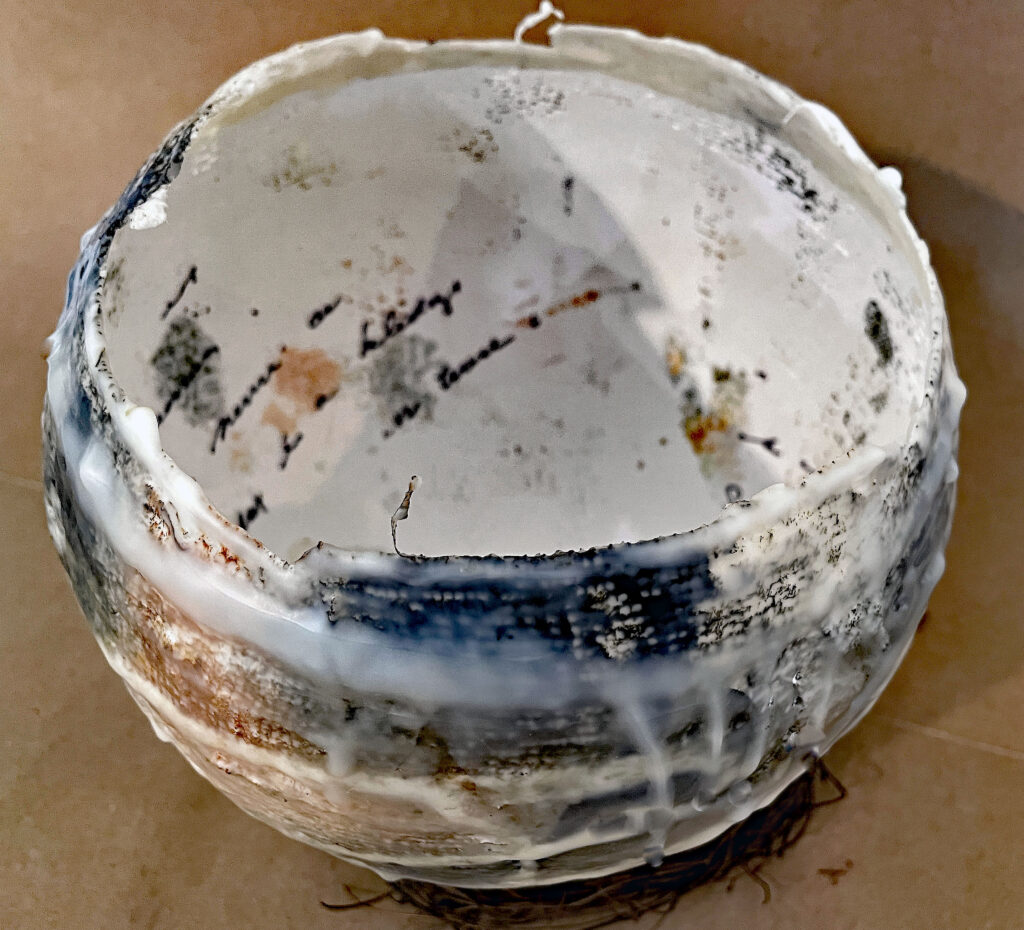
Last Friday, three friends and I gathered for an informal studio session to test out a couple of techniques I am going to use this spring at a workshop I’m teaching at UTSA/SW. It’s called Vessel Alchemy: Tactile Poems in Fiber, Paper, Word, and Light

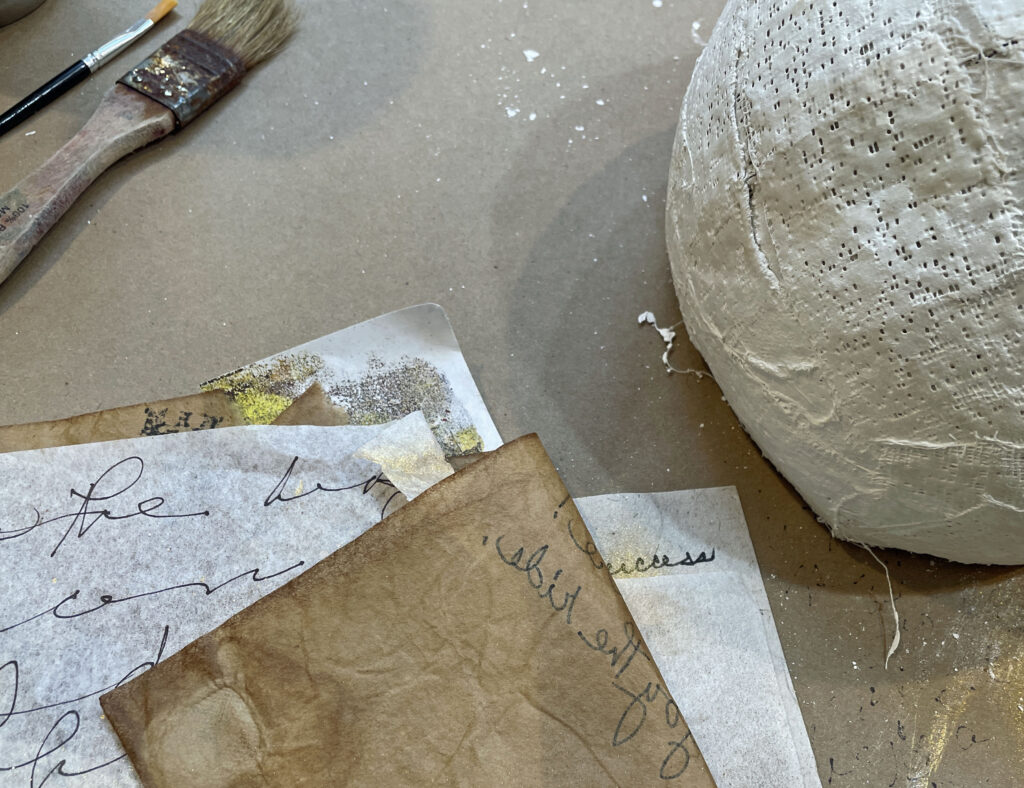
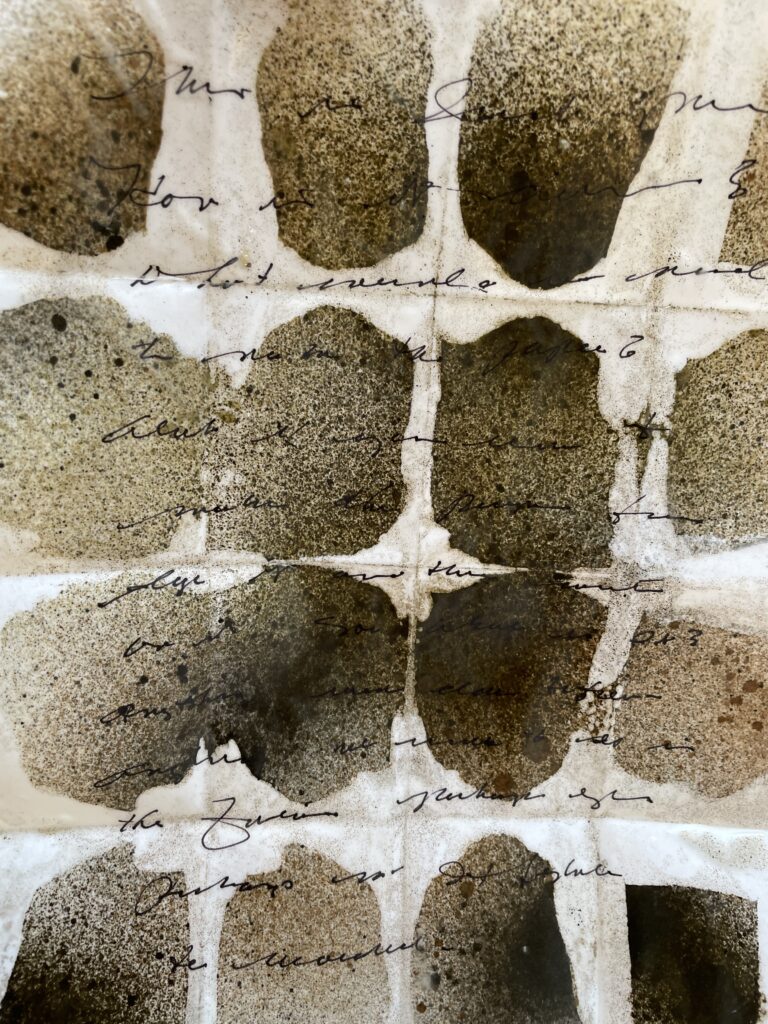
We had just four hours to experiment — I had “borrowed” the Semmes Studio at the Art League for our playtime .Normally, this vessel-making process unfolds over two leisurely days. So the plaster didn’t dry as fast as we expected, and while our asemic writing on tissue was ready, we still needed to try the beeswax on the vessel surface.

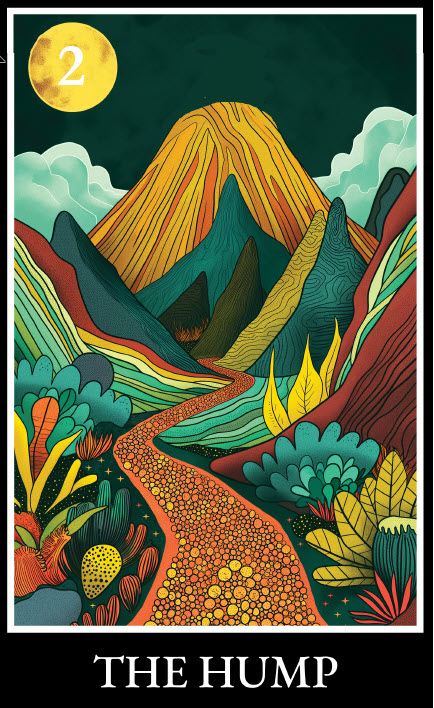
Remember the Oracle card called The Hump? That obstacle in the road? We were looking right at it, and the clock was ticking.

There was no time to second-guess. No time to over-plan. We just tweaked the process, took a few creative risks with the wax, and pushed right up against the edges of what felt possible. We used hot beeswax on cold plaster and fiber.

We had already put beeswax over damp “Irish paper” with good results (the hot wax dried the paper) . . .

. . . .so we rushed the process a bit. And here’s the surprising part: the results were beautiful.

Mary Zinda

I’ll admit, I worried we might have compromised good studio practices for speed. But the work told a different story. The pieces had clarity and energy — not the brittle look of something rushed, but the alive look of something made with intention and momentum. And the wax was stable.

Jean Dahlgren

That kind of creative compression can be exhilarating. It really is same energy that inspired the Enso Oracle card, The Hump  — the moment of tension before a breakthrough. When the usual pace isn’t an option, you find new ways to move forward.

You trust instinct over perfectionism. And often, that’s where the real results happen. This is one of the statements on the back of The Hump card:

“Sometimes the best work happens when you don’t give yourself time to talk yourself out of it.”

I’m reminded how much of artmaking is about risk — not the wild, reckless kind, but the kind that asks you to trust the materials, your hands, and the moment. This little four-hour experiment turned out to be a master class in exactly that.

But here’s the thing: there’s a big difference between taking a creative risk and just blowing past good sense because you’re in a hurry. If you don’t have time to do something safely or properly, that’s a sign to pause, not push. The Hump, bless its heart, will still be there tomorrow, patiently waiting. You can experiment, improvise, and trust the process without ignoring the basics that keep you and your work in one piece.

Creative bravery isn’t about being fearless — it’s about being smart enough to take the right kind of risks. And as I’m always telling you (and myself): trust the process. Or in this case, “tweak the process.”

Have you ever had a creative project come together better because of a time constraint or unexpected pressure? Some people swear they do their best work at the last minute. I’d love to hear your stories.

The Art of Magical Thinking

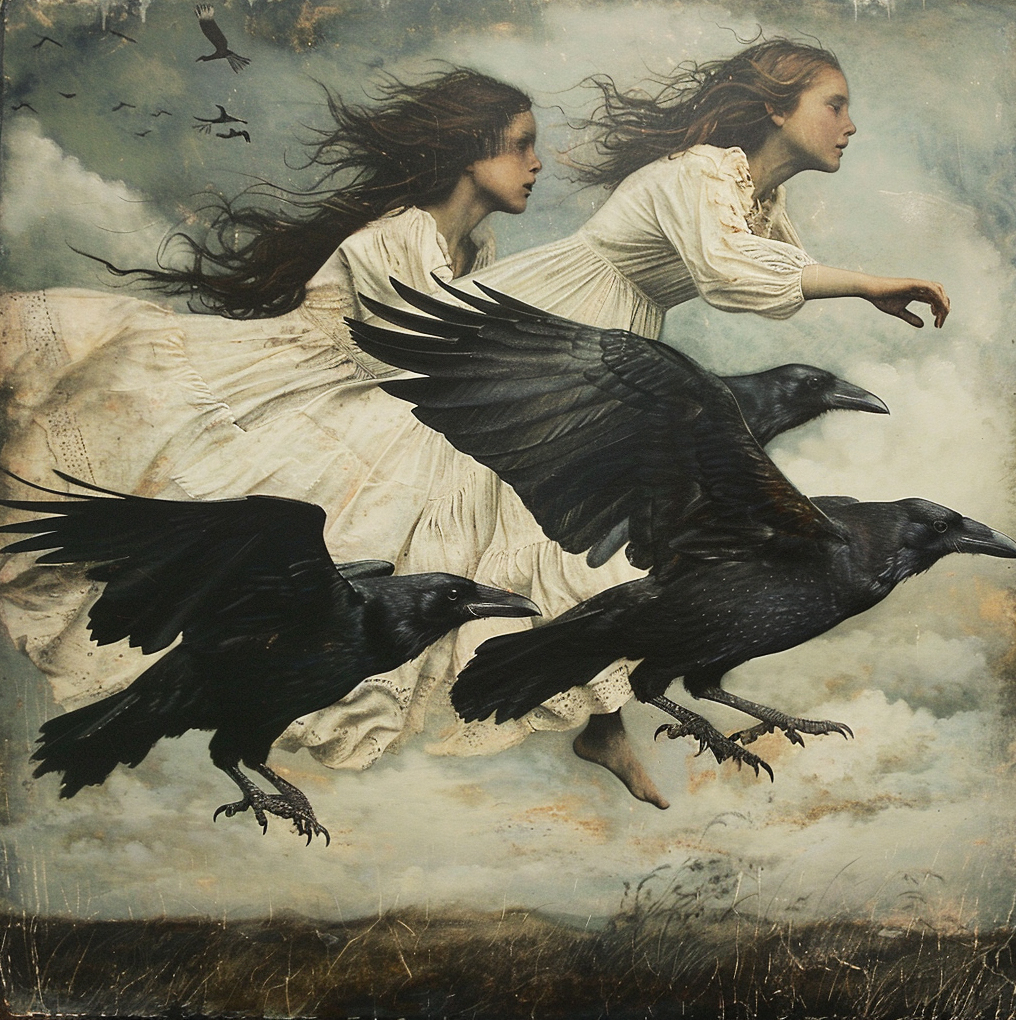
“If we see three black crows, we will gain the power to fly . .”

A long time ago, I did a practicum in an inpatient psychiatric hospital for children as part of my post-grad Special Ed certification. That’s where I first heard the clinical definition of Magical Thinking. Psychologists define it as the belief that thoughts or actions can influence events in ways that defy logic.

We usually think of magical thinking as something we’re meant to outgrow. As children, we believed our thoughts could make things happen — if we wished hard enough, if we didn’t step on cracks, if we crossed our fingers just right. I have to say that I still hang on to that, because in the studio, it can be an interesting source of insight.

A bit of “magical thinking” allows us to trust the invisible steps of the process: that one step will lead to another, that an image will unfold as it’s meant to, that meaning will appear when we stay open to it. We let imagination do the work that logic can’t always reach.

And honestly, I still do it outside the studio too. I’ll catch myself thinking, “If that stoplight doesn’t turn red before I get to it, that means I’ll get into the juried show.” Or “If the cat jumps on the table before I finish this email, it’s a sign I should change the title.”
It’s funny, but I suspect I’m not the only one.

This isn’t superstition. It’s pattern recognition — an intuitive attunement to the subtle cues that guide creative flow. Artists notice coincidences, accidents, and repetitions, and interpret them as meaningful rather than random. That interpretive act — seeing meaning where others see chance — is our version of magic.

When practiced consciously, this kind of thinking deepens our connection to both process and perception. It reminds us that artmaking is not only about control but about collaboration — with materials, with time, with uncertainty itself. We may not believe that the brush has a will of its own, but we do believe that if we listen closely enough, it will show us something we didn’t expect. Did you ever try mark-making with your non-dominant hand or with your eyes closed? Do you ever choose an Oracle card?

Even neuroscience nods to this kind of enchantment. Studies show that creativity lights up the brain’s default mode network — the same system that activates when we daydream, imagine, or find patterns in randomness. So when we follow an intuitive hunch in the studio, it’s not superstition. It’s the mind’s natural way of finding meaning in chaos.

In that sense, magical thinking isn’t about bending reality. It’s about perceiving more of it — noticing the signals, patterns, and echoes that point the way forward when reason alone runs out of language.

Magical, 2021

Maybe the real magic is that moment when everything suddenly feels connected — when a found object, a stray mark, or a line of color speaks back to you and says, yes, this belongs, when an answer magically appears. Remember the original Pendulum Post from Ireland? Real-life example!

For fun, checkout my Substack post – there’s an “artist-brained” guide to magical thinking – and thanks for reading!