Encantos: When the Work Speaks Back

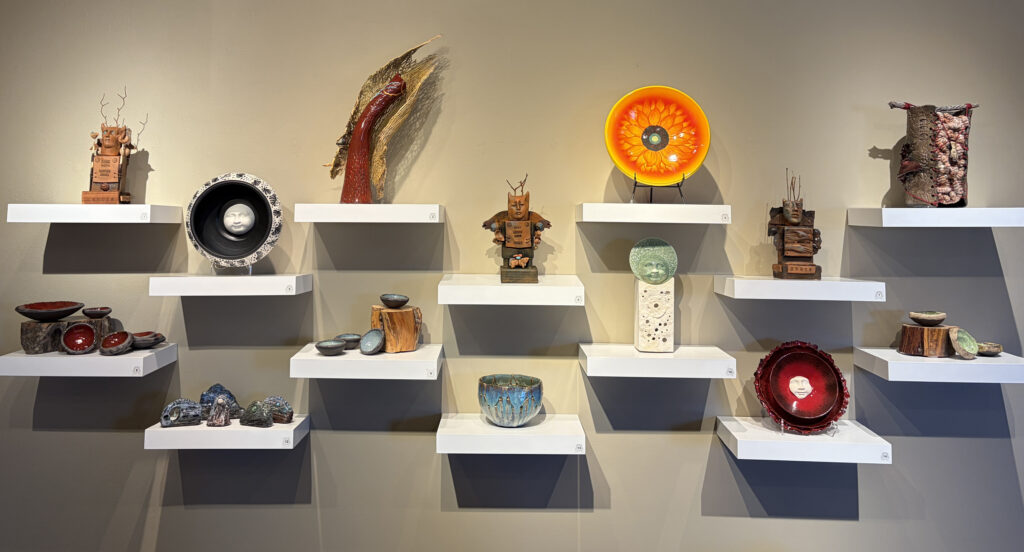
I just returned home from Taos and the opening of our Encantos Exhibition at the Taos Ceramics Center with fellow artists Linda Manning and Virginia and Andy Bally.
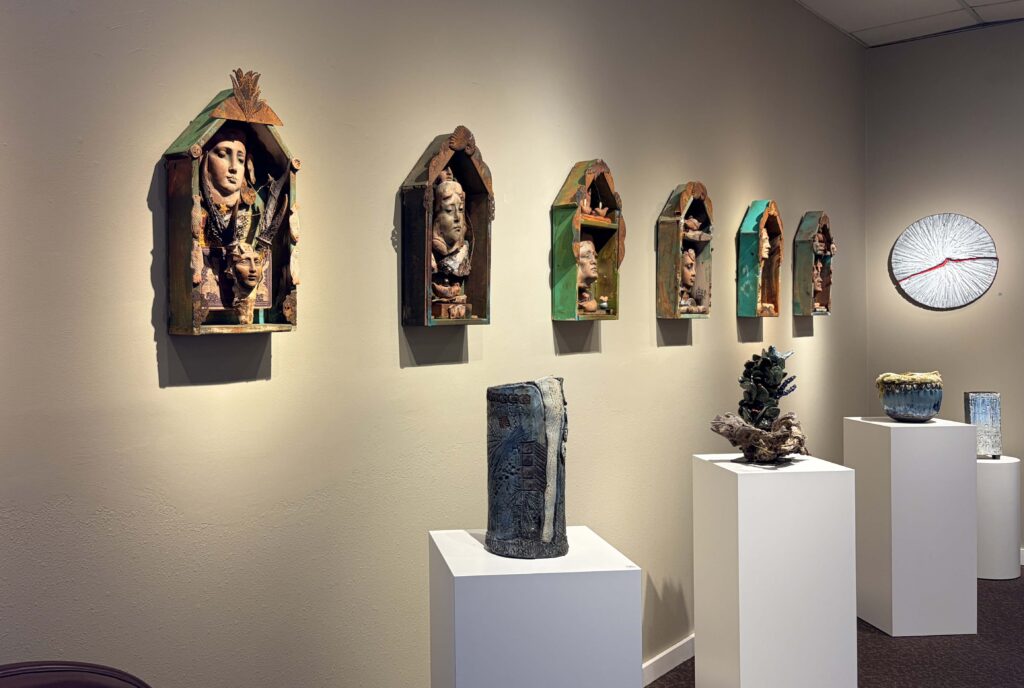
I’m still processing the experience. There’s a particular kind of moment at an exhibition opening that feels both exhilarating and disorienting—the moment when the work leaves your hands and begins its own conversations.

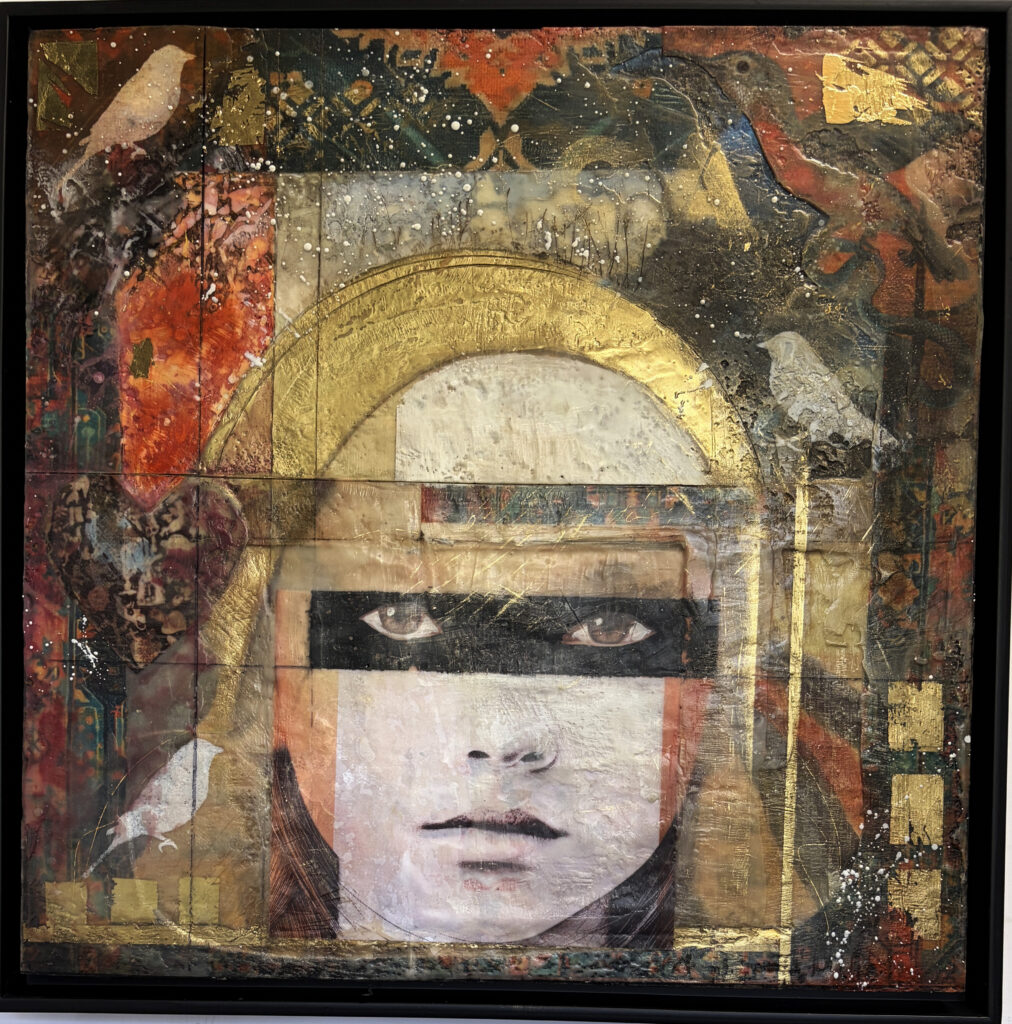
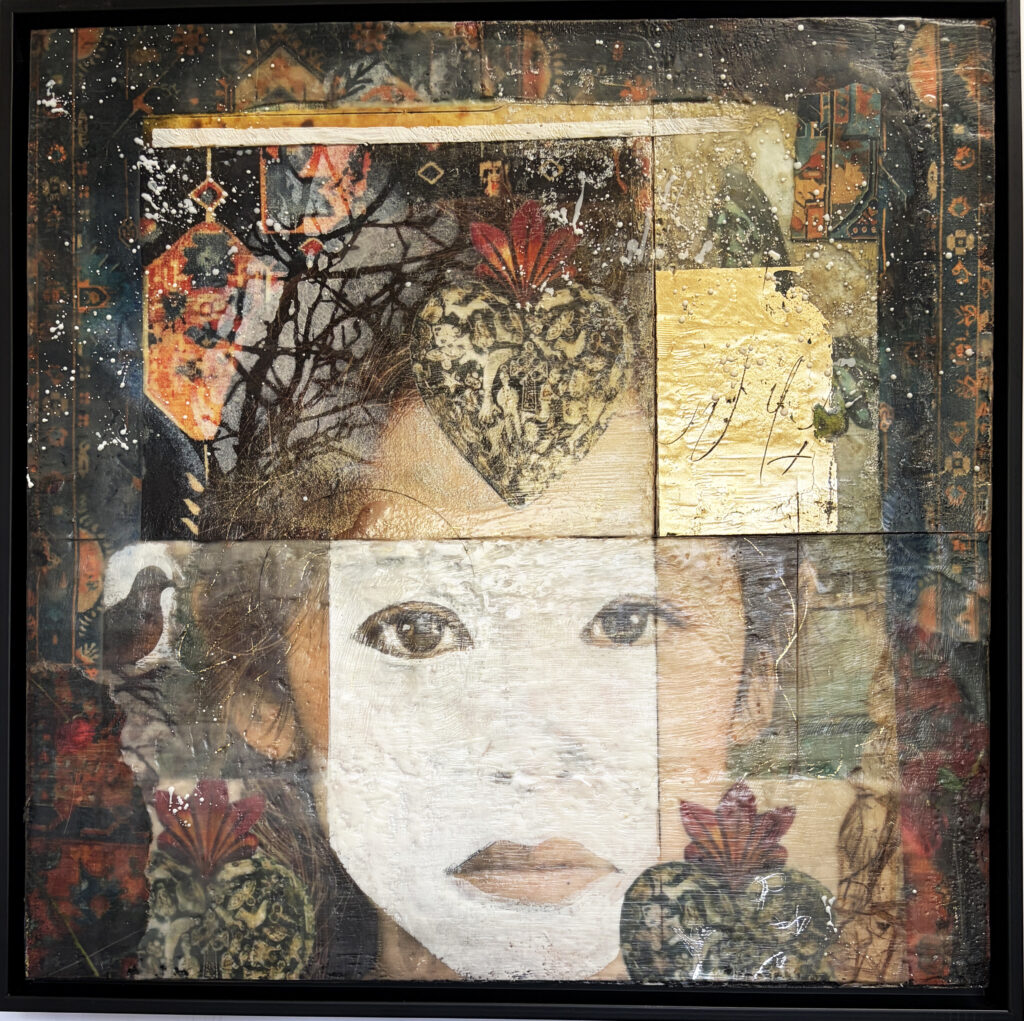
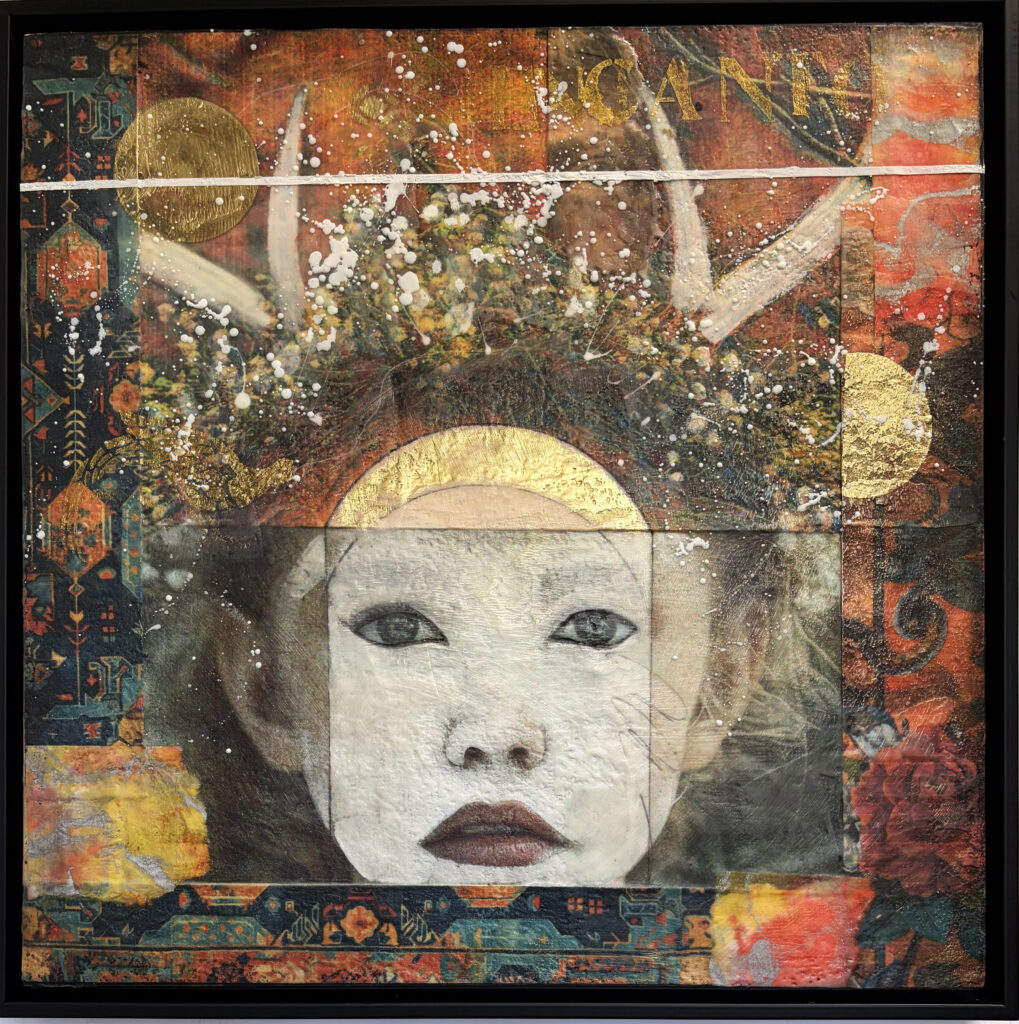
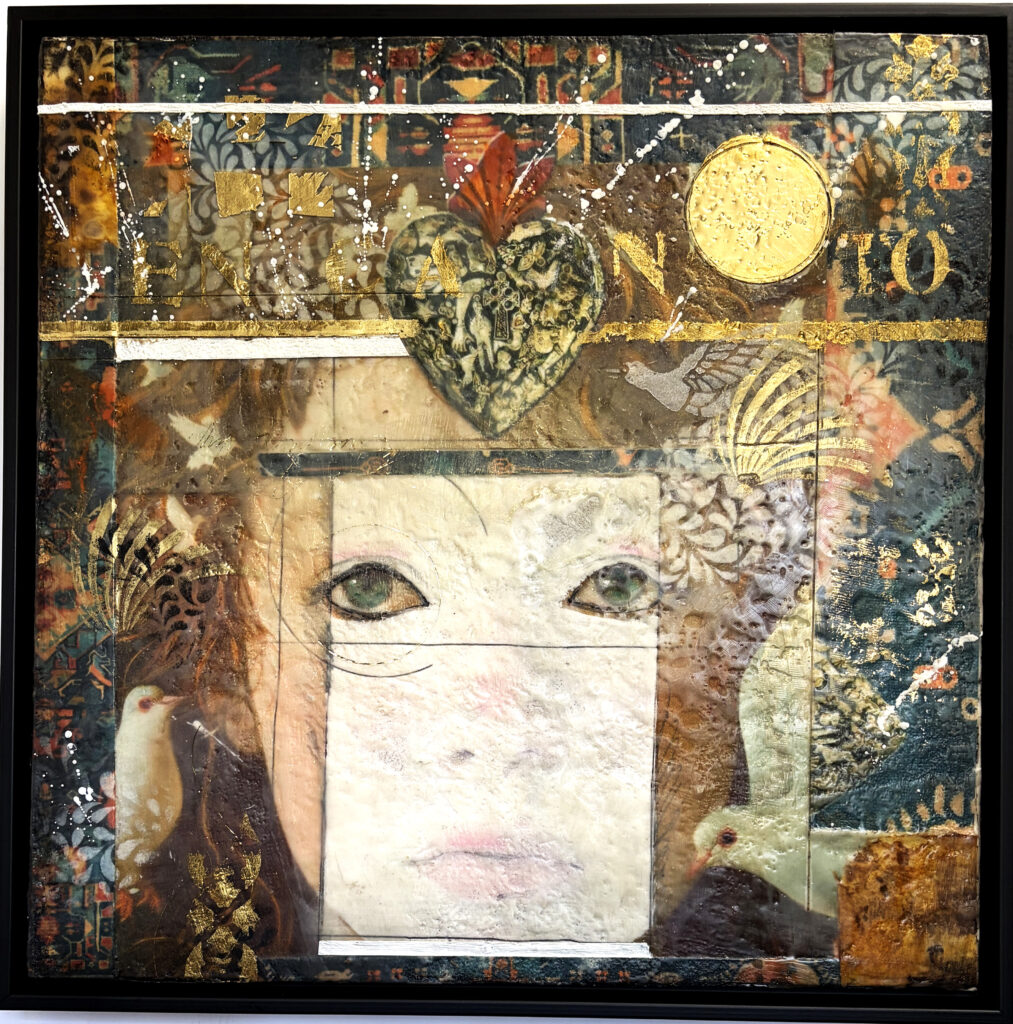
At the opening, that moment arrived quickly and unexpectedly. Within a short time, all four of the Santa Niña collages (below) had sold.
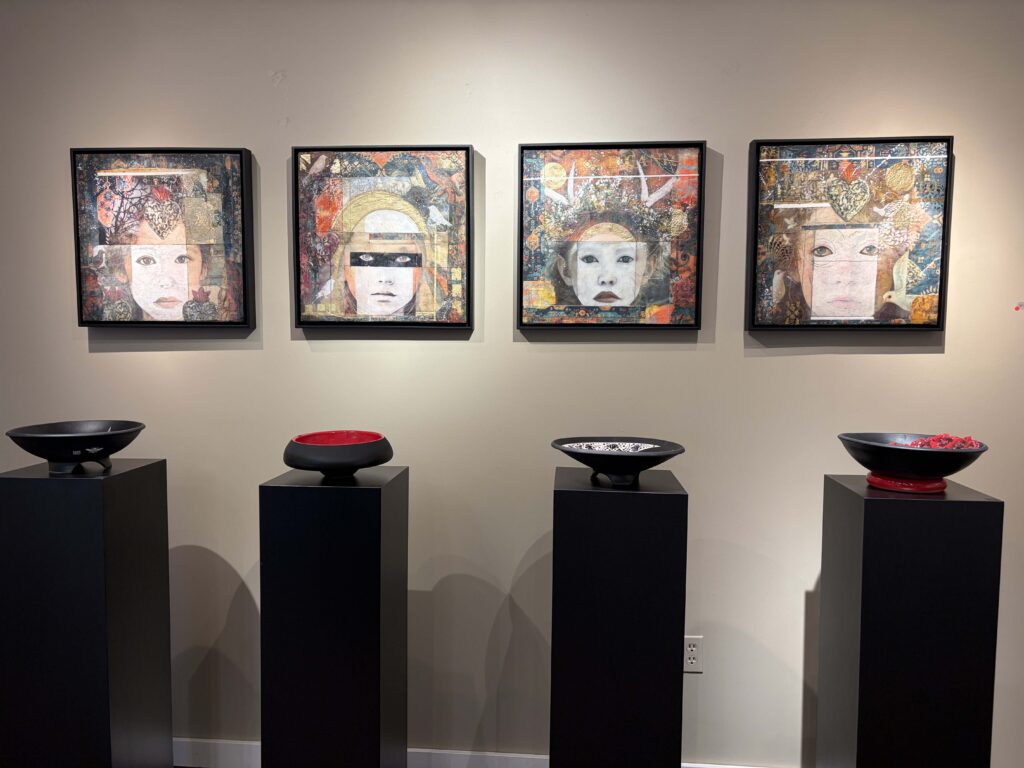
These were not the pieces I assumed would lead the way. I loved them, of course—but I hadn’t predicted they would be the first to be claimed. It felt less like a market response and more like recognition, as if those works had been waiting for the right room, the right eyes, the right moment to step forward.

That surprise relaxed me. It loosened and changed my expectations and opened me to the evening in a different way.

What followed was not just an opening, but a long, layered exchange—one conversation flowing into another. People asked thoughtful questions about symbolism, materials, saints and fragments, memory and devotion. I spoke about the work more than I usually do, and perhaps more openly. But just as important, I listened. I asked others about their work—their processes, their obsessions, the stories that quietly fuel what they make. And I learned so much.
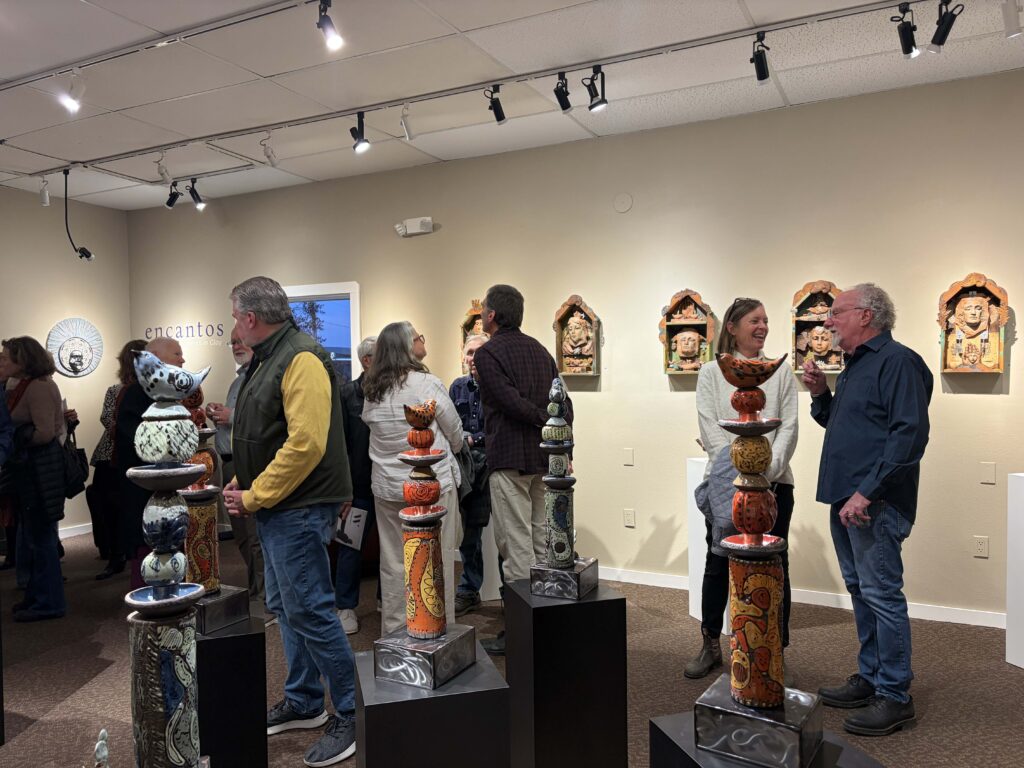
There’s a misconception that openings are about standing beside your work and explaining it, as if clarity were the goal. But what struck me that night was how much richer the experience became when explanation turned into dialogue.

When I asked, “What are you working on?” or “What draws you to this?” the room shifted.

  • Artists spoke about uncertainty, about being mid-question, about following symbols they didn’t yet fully understand.
  • Two of my workshops students talked about the excitement of their new directions since we all worked together.
  • Collectors shared what they live with, what they notice over time, what stays with them years after a piece comes home.
  • An actor who “moved to Taos 55 years ago in the great hippie migration” shared with me his work on Samuel Beckett’s plays.
  • And my new friend, Japanese/American architect and master woodworker, Sam Takeuchi came up from Santa Fe to talk about portraits.
It reminded me that exhibitions aren’t endpoints—they’re crossings.

Still, I won’t pretend that speaking about one’s work comes easily. There is something inherently vulnerable about explaining art that is born from intuition, memory, and personal myth. Much of my work emerges before I have language for it. The words come later—sometimes much later. Standing in front of people and trying to translate that interior process can feel awkward, even frightening. There’s always the fear of saying too much, or not enough. Or sounding pretentious or too woo-woo.

But then something extraordinary happens. Someone listens closely. Someone nods. Someone offers a reflection that mirrors back what you were reaching for—sometimes in language clearer than your own. And in that moment, the work feels understood not because it’s been decoded, but because it’s been met.
What Encantos offered me was a renewed trust in that exchange. Trust that the work carries more than I consciously put into it. Trust that certain pieces know where they belong Trust that conversation—real conversation—is part of the creative process, not a distraction from it.

I left the opening feeling deeply grateful: for the collectors who welcomed the Santa Niñas into their homes; for the artists whose generosity and curiosity enriched the evening; for the reminder that meaning doesn’t arrive fully formed in the studio.It completes itself in relationship—through artists like Andre and Virginia Bally and Linda Manning, whose thoughtful, generous work completed the Encantos cosmology and transformed the exhibition into a shared experience.
Encantos, after all, is about enchantment—not as spectacle, but as recognition. The moment when something familiar suddenly reveals depth. The feeling that a fragment holds a story larger than itself—and that night, I understood that Encantos was not an ending, but a threshold toward a new direction.

Thanks for reading! 
The Rules of an Invented World

As I am packing the work for the Taos Ceramics Center Exhibition, Encantos, I realize I am packing up an entire intuitive universe. And every invented universe has its own logic — not the kind you can diagram neatly—but a felt logic. A rhythm. A set of silent agreements between the maker and the materials.

Over time, you start to notice what belongs in that universe and what doesn’t. Certain colors feel native – terra cotta and Prussian blue. Certain shapes return like familiar faces – arcs and circles. Certain gestures carry more weight than others – crossed hands.

In the Encantos universe, the rules for the four Santa Niñas encaustic collages are simple and a bit strange:

  • Wax protects.
    Paper remembers.
    Gold listens.
    Heat transforms.
    Layers hold time.

I didn’t write these rules down at the beginning. They revealed themselves by repeatedly showing up. Every time I worked, the materials taught me what they wanted to mean. That’s one of the pleasures of personal myth-making—you don’t invent everything at once. You discover it as you go, the way a traveler learns a landscape by walking through it.

Lyn Belisle Santa Niña de la Luz Silenciosa (Silent Light) (2026)

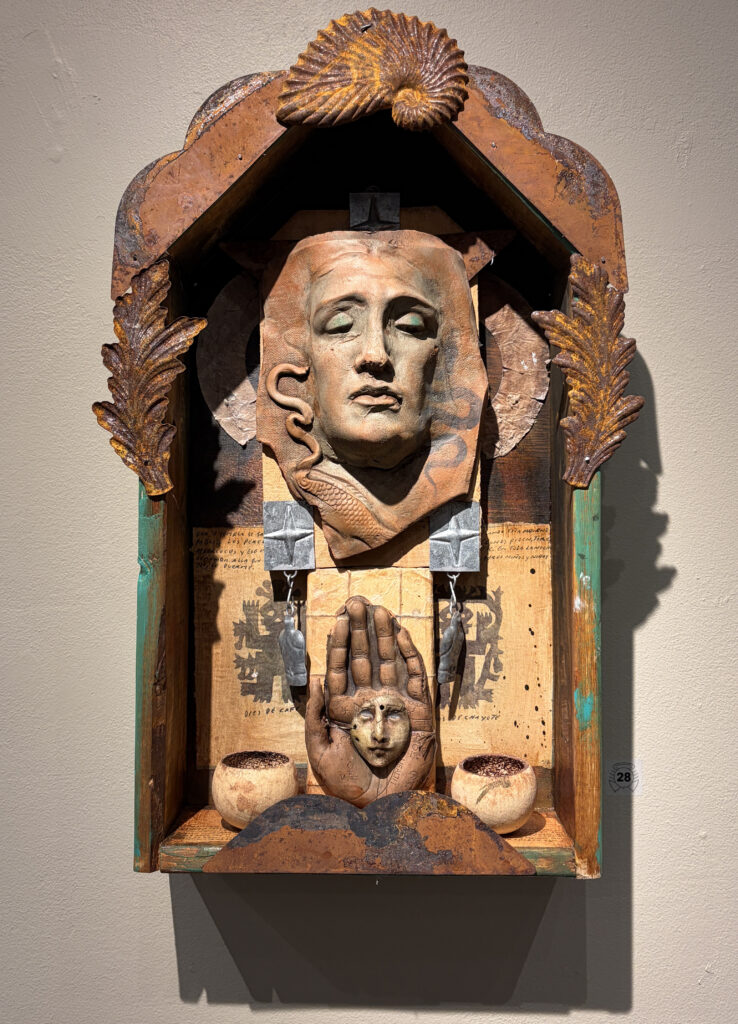
This is why cosmologies in art don’t have to be planned. They can be grown, like the Encantos universe, with its Santa Niña collages, its Encanto Altars, and its Mendicant Messengers (which I’ll tell you more about next time).

Characters Who Carry Feelings

So once a universe exists, it asks for inhabitants, at least this one did.

The four Santa Niñas are not portraits of people. They are portraits of states of being. Each one holds a feeling that kept showing up in my studio: tenderness, protection, not-knowing, rootedness, inner light. Giving those feelings faces—and names—made them easier to sit with.

  • This is another gift of storytelling in art:
    We can give shape to what has no shape.

Instead of saying “I’m working with vulnerability,” I can say, “This is Santa Niña del Corazón Guardado.” (Guarded Heart)

Instead of “I don’t know what comes next,” I can say, “This is Santa Niña de los Ojos Velados.”(Veiled Eyes)

A character can hold what a sentence cannot.

And once a character exists, you can talk to her. Work with her. Ask what she wants to protect, carry, or reveal. Suddenly, the studio becomes a place of conversation, not just production.

Santa Niña del Corazón Raíz
(Santa Nina of the Rooted Heart)

Materials as Myth

In personal cosmologies, materials are never neutral, they become actors in the story.

  • Wax isn’t just wax—it is shelter, skin, veil, cocoon.
    Mulberry paper isn’t just paper—it is memory, breath, fragility.
    Gold leaf isn’t just decoration—it is listening, blessing, attention.

Every time I melt wax over paper, I am repeating a ritual of care: cover, warm, seal, open again. That repetition is how meaning settles into matter. You don’t have to declare symbolism. If something keeps showing up, it is already symbolic.

Play Is Not Frivolous

One of the common misconceptions artists absorb is that “seriousness” equals “legitimacy”.

But myth is not built through seriousness alone. It is built through play: naming things, trying on stories, letting images talk back, changing your mind, making something just to see what happens.

Play is how children understand the world. It is also how artists do.To make a cosmology for your work is not to pretend you know more than you do. It is to admit that you don’t—and to answer that not-knowing with imagination instead of fear.

  • You are allowed to say:
    “In my world, this means something.”
    Even if no one else agrees.
    Even if you change it later.

Myth-making is not a contract. It is a conversation.

An Invitation

You don’t need saints, or vessels, or wings, or gold.

Your cosmology might be built from kitchens, streets, trees, broken cups, dogs, storms, old photographs, or scraps of handwriting. It might be loud or quiet, humorous or solemn, tidy or chaotic. What matters is not what it looks like—but that it belongs to you.

Ask yourself:

  • What images keep returning?
    What materials feel like home?
    What stories are trying to form without words?
    If your work lived in a world, what kind of world would it be?

You don’t have to explain it to anyone.
You don’t even have to understand it fully yourself.

You just have to keep building it—one symbol, one layer, one small act of making at a time. Keep notes. Pay attention. Show us.

That’s how personal myth is born.

If you want to learn more about the world of the Santa Niñas, your can follow this link.

How do you journey?

“If you don’t know where you are going, any road will get you there.” — Lewis Carroll

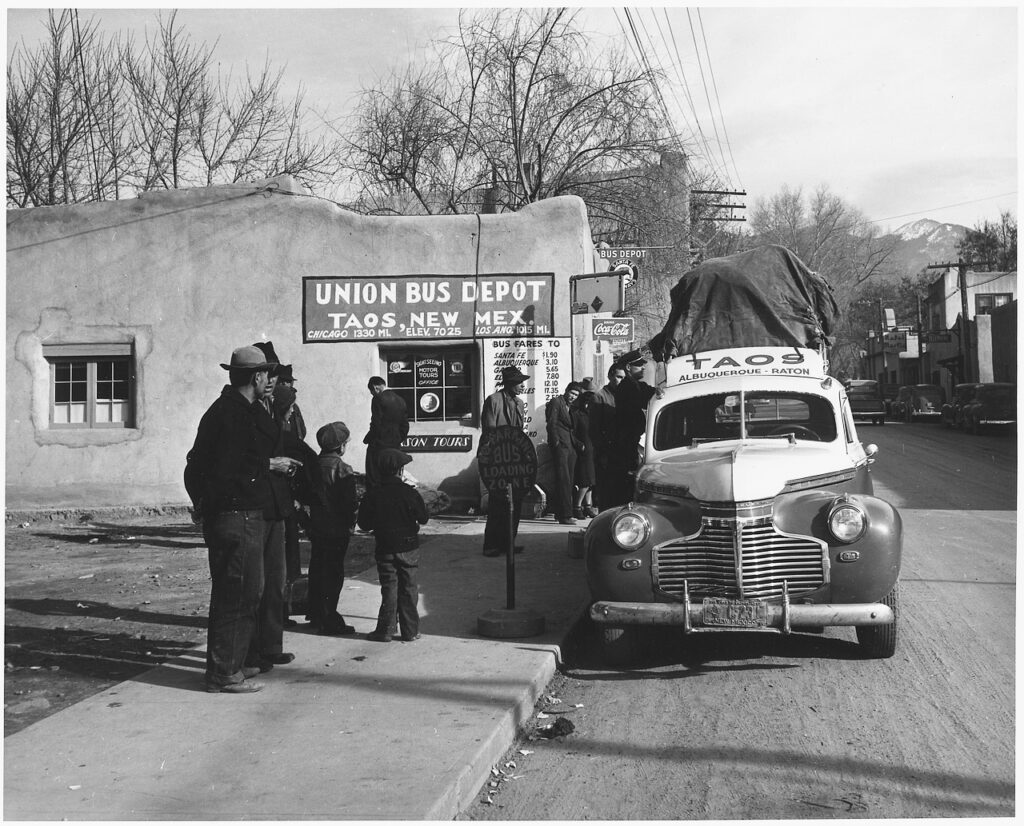
I’m getting ready to leave for Taos, New Mexico, to teach a class called Shards and Santos at the Taos Ceramics Center. We’re driving from San Antonio, and my husband (and beloved traveling companion) has already checked the road for both traffic construction and upcoming weather conditions. He knows where we will stop and how long it will take to get there.

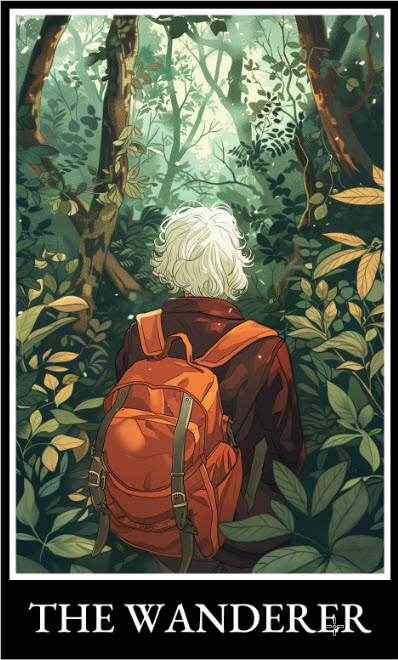
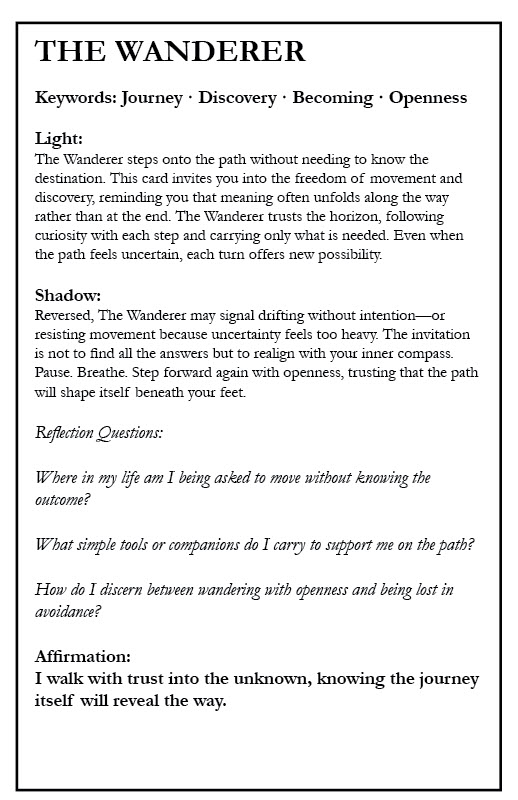
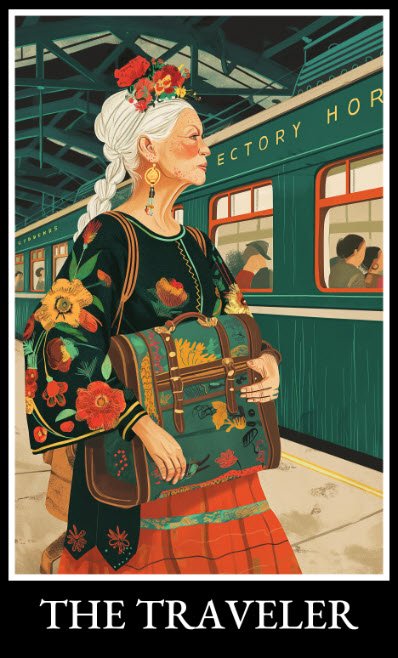
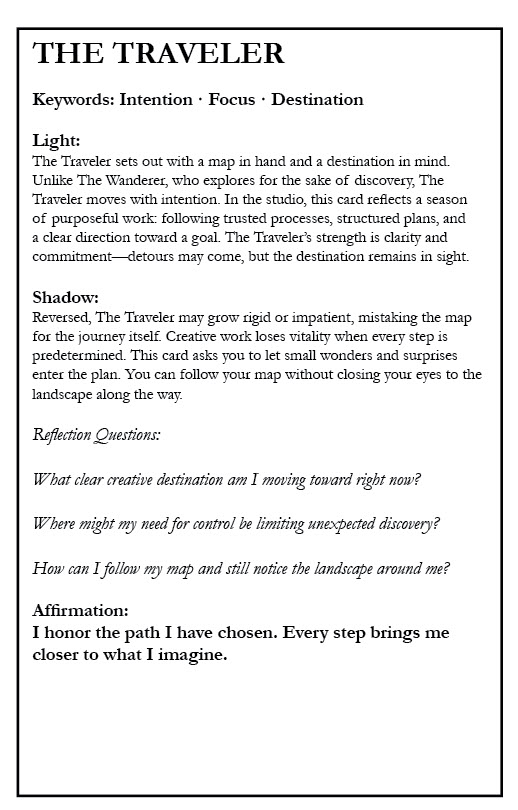
This is hugely reassuring! I’d probably just hop in and head northwest. And this topic a perfect lead-in to reflecting about how differently we chart our artist’s journey. I actually created two Oracle Cards to express this.

A section in the in-progress Enso Oracle book called Subtleties and Pairings: When Meanings Overlap says, “Some cards in The Enso Oracle may appear to speak the same language, yet their tones differ quietly, like two instruments playing in harmony. The Wanderer and The Traveler, for example, both move through the world, but their motives are distinct: The Traveler walks with purpose, guided by curiosity and direction, while The Wanderer drifts in openness, allowing intuition rather than intention to lead. One seeks, the other listens.”

Take a minute to think about this, and then see which card below fits your creative “journey style” the best.

Were you able to choose your “wayfinder archetype”?

As you were reading the two cards above, which one tugs at you today?– (it may change tomorrow)

If you’re The Traveler (purposeful path):

  • Name a destination for this week’s studio time in one sentence.

  • Pick one tool or constraint that will help you get there.

  • Five-minute map: sketch the sequence—Step 1 → Step 2 → Step 3.

If you’re The Wanderer (intuitive drift):

  • Begin without a plan: choose three materials by feel, not reason.

  • Follow the most interesting accident for 10 minutes—no fixing, only noticing.

  • Three lines in your notebook: What surprised you? What changed? What’s next?

Tell Me & Tell Each Other

In the comments, share which card chose you today that describes your approach, and
I’ll feature a few responses in the next post (with your permission).


I’ll be on the road to Taos soon—channeling a bit of Traveler (routes and rest stops – thank you, Beloved Traveling Companion) and a whole lot of Wanderer (open skies, new textures). Which one will guide you this week?

Hopefully, I’ll be able to post while I’m there – I’ll send pics!! Thanks for reading!

A visit with Gwen Fox in Taos

Gwen Fox is an extraordinary woman whose abstract paintings glow with inner light and compelling composition. I first fell in love with her work about ten years ago in a gallery in Colorado Springs and knew I had to meet her. So I signed up several years later for Gwen’s week-long painting workshop in Taos and loved every moment. Here’s a post from that 2012 workshop.

Gwen and I and have kept in touch since then, sharing ideas and conversations online. Yesterday, while I was in Taos, NM for the day, I got to visit her in person again.

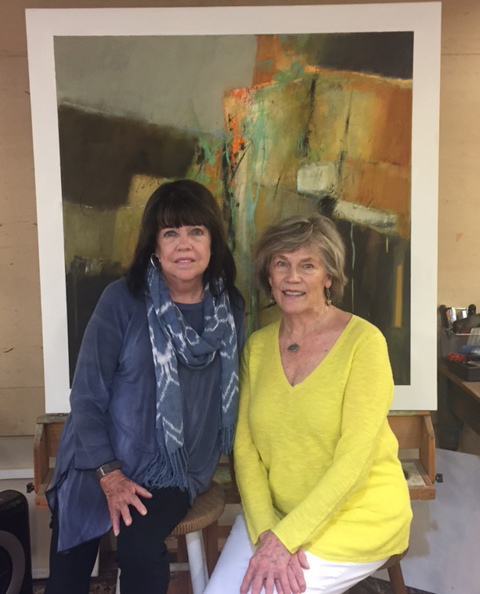
Lyn and Gwen Fox in her Taos studio in front of a current painting that Gwen has done in oils on canvas.

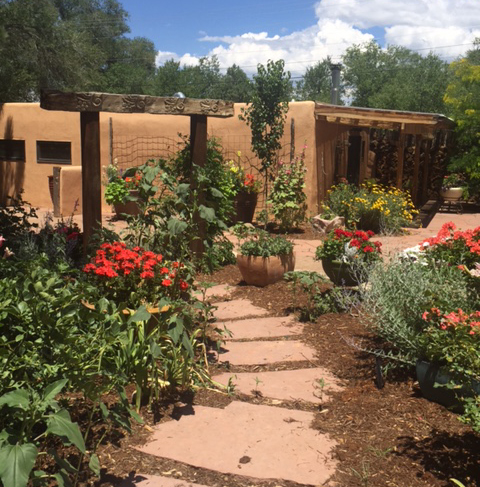
I was so excited to see the new studio that she built herself – it’s completely inspiring and spiritually satisfying – a perfect space in a perfect place. It’s adjacent to her adobe house.

Everything on the inside and the outside has its place.

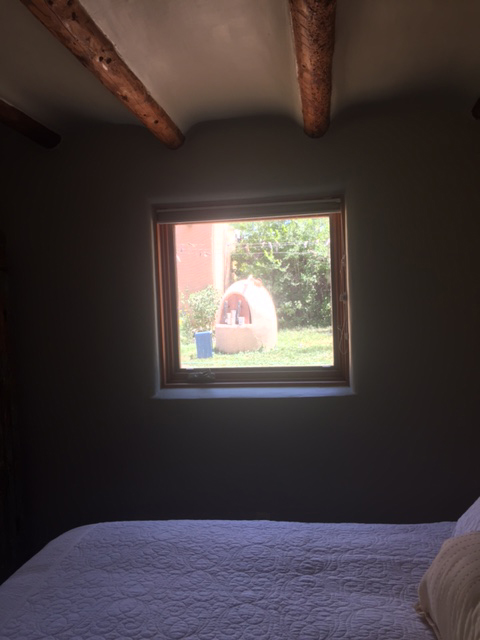
The view from her serene bedroom window is as layered as her paintings.

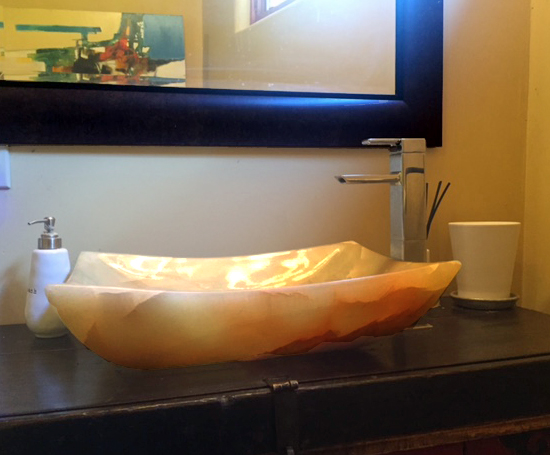
The bathroom sink in the studio is made from a rectangular piece of agate that glows with a translucent abstract landscape when you’re there and, er, sitting down.

And against the walls, Gwen’s painting glow with a resonant energy —

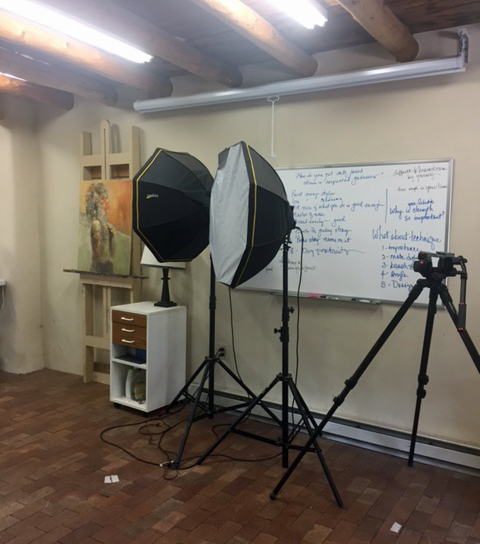
She has a video setup in her studio that I covet.

And here is the most exciting news that I learned from Gwen – she is filming and producing an extensive online class about painting and creativity that sounds amazing.It should be ready this fall and it is the first time her techniques and teaching/coaching expertise will be available online.

Be sure and get on her mailing list to hear more about it and gt updates – I honestly can’t wait for it.

I could go on and on about how much Gwen has influenced my work and my outlook, but I’ll let the video of her home and studio, below, reflect her amazing spirit.

Look for all the little touches she pulls together like grace notes in this home and studio space – like an antique Chinese chest in the pantry because she wants to look at something beautiful when she’s in the kitchen.

Lyn Belisle visits Gwen Fox in her Taos home and studio from Lyn Belisle on Vimeo.

I’m headed back to Texas tomorrow but I always feel inspired when I spend time with Gwen. Do subscribe to her list and follow her wise advice for every artist.

There’s something else that inspired me while I was here – fly fishing! I‘ll tell you about that in an upcoming post. It was a total surprise.

Copying Gwen Fox with unpredictable results

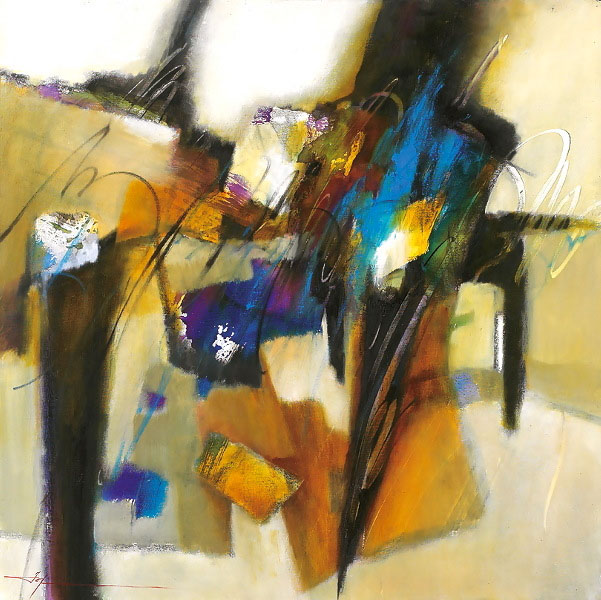
Gloria Hill and I have been painting together on Wednesdays at the Studio for a year and a half, and we always like to find inspiration from interesting sources. Today I said, “Let’s try to paint like Gwen and see what happens.” Gwen Fox is our beloved Taos-based painting teacher – she’s awesome. So I picked out one of her abstracts for us to copy, and off we went. Here’s the painting that we were attempting to forge (all in the spirit of artful emulation, of course). Scroll down for our results.

gwen

We got as far as the layout and background before we realized that copying wasn’t working for us. So Gloria went her way and I went mine – how can two artists who start with exactly the same idea and example end up with such different results?? Take a look (and rest easy, dear Gwen – you are an original, and while we have learned so much from you, we won’t be competition for your glowing abstract style!) Here’s Gloria’s:

glogwen2
And here’s mine – not only do they look like they came from two different artists, they look like they came from two different planets! Go figure –  but it was fun and very insight-full.

lyngwen_edited-1