Fiber Art Reconsidered

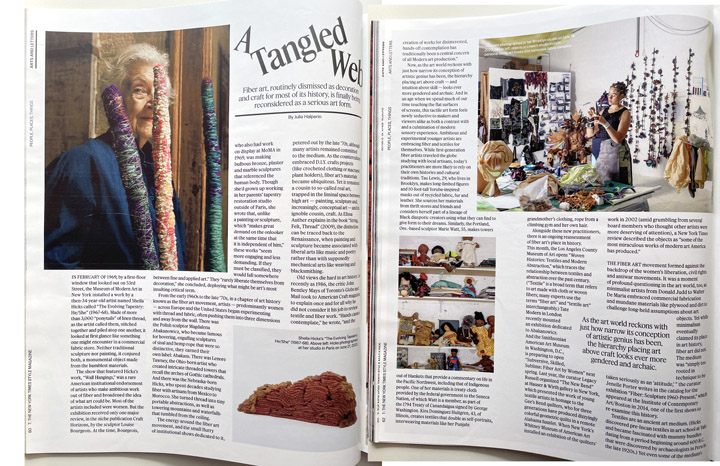
At least half a dozen friends have sent me the eye-opening article from the New York Times called “ A Tangled Web“ and its premise that Fiber Art is finally, again, being reconsidered as a true art form.Julia Halperin, the author, writes, “. . . . in an age when we spend much of our time touching the flat surfaces of screens, this tactile art form feels newly seductive to makers and viewers alike as both a contrast with and a culmination of modern sensory experience.”

I hope you will read the article and discover the same reverence that I did for artists like Sheila Hicks and Lenore Tawney, innovators in fiber art.
For a look a an eclectic survey of contemporary fiber art closer to home (for San Antonians), visit TEXtiles: A Celebration of Texas Fiber Art, the annual juried Fiber Artists of San Antonio Art Exhibition will be held September 10 through October 20, 2023, at the Kelso Art Center, University of Incarnate Word, San Antonio, TX.
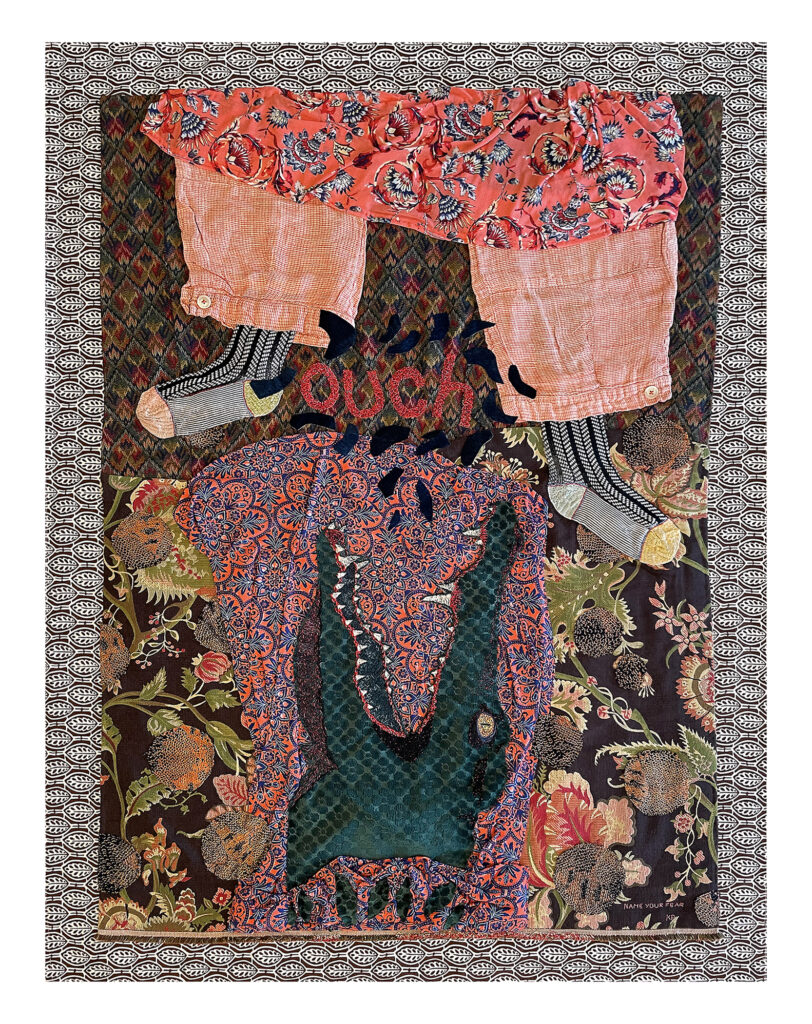
Kim Paxon, Name Your Fear, 1st Place, FASA TEXtiles exhibit


The theme of the exhibition showcases the innovation and diversity of Texas artists who create and communicate with fiber. Through art quilts, framed fiber art, sculptural pieces, vessels/basketry, paper art forms, art-to-wear garments or accessories, art dolls, woven textiles, mixed media work, jewelry and adornment, and conceptual work that defies categorization, Texas fiber artists are bringing textiles and fibers of every definition into new contexts and exploring social and conceptual implications of their usage.

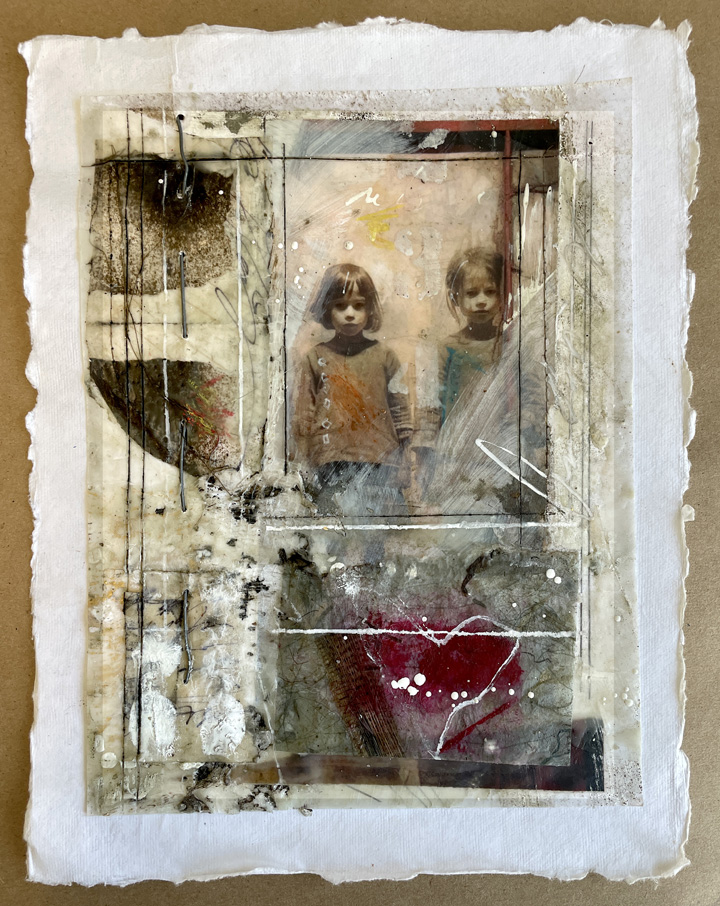
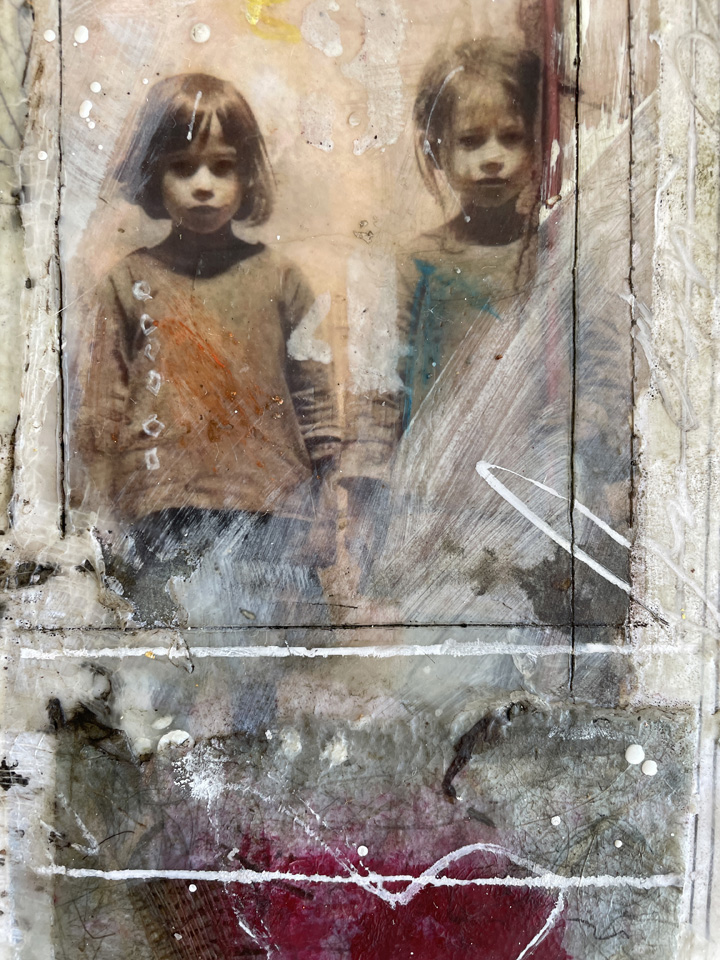
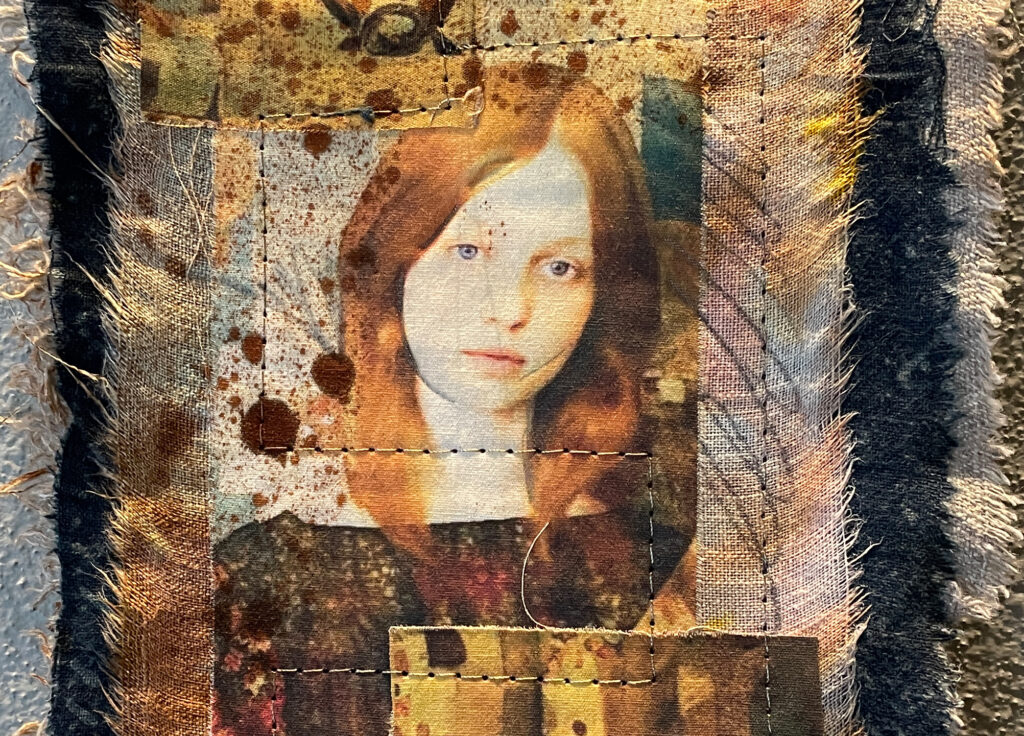
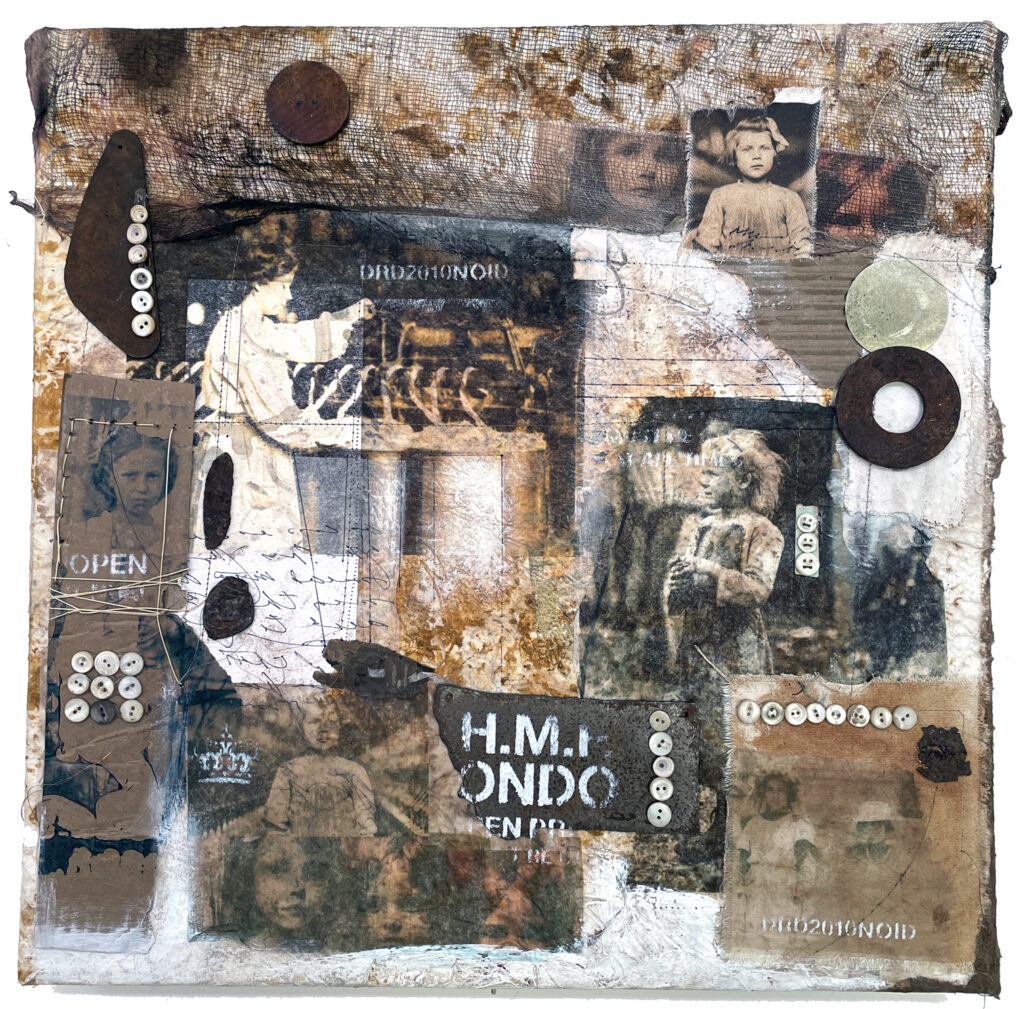
My piece called Ghost Factory, won the Third Place award, which surprised me because I don’t consider myself in same category of fiber excellence as many of the others in the show, but I worked the fiber like a collage, which is my natural approach to almost any medium. This piece is based on photos taken by Lewis Hine in the 1920’s of child laborers in the textile industry.
You can see a video of the works in the exhibit by visiting the FASA Website.

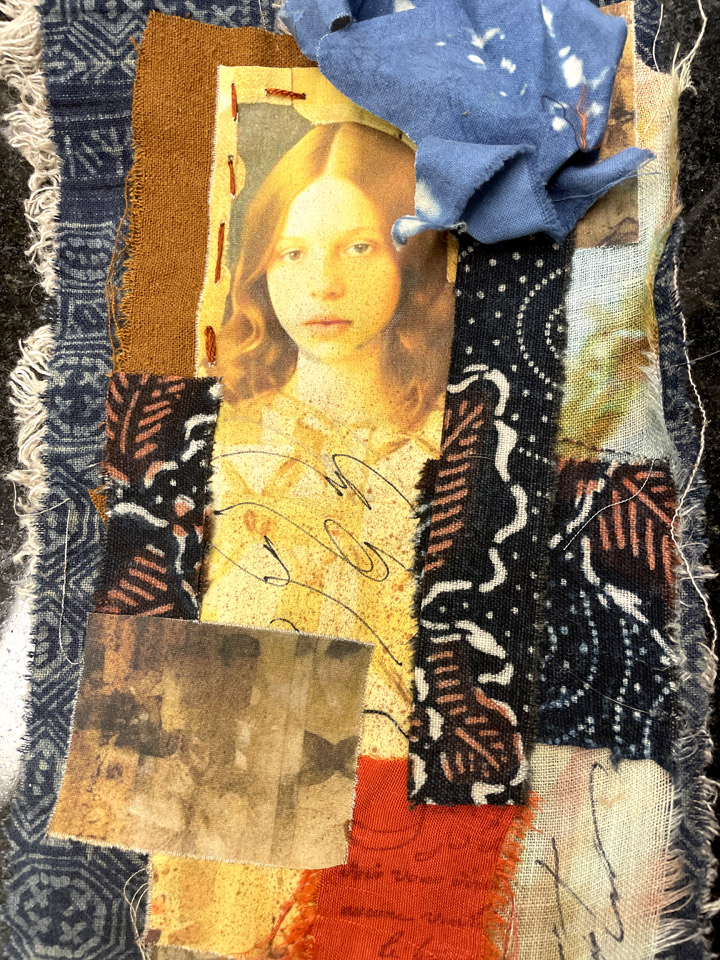
If you have not used fiber and fabric as a collage medium, it may surprise you! Just collect fabric and ribbon scraps and tear, cur, and arrange them as you might with paper. If you use a glue stick, you can iron over your finished piece to fuse the whole thing together (put some parchment paper over the top first). then add stitching!!

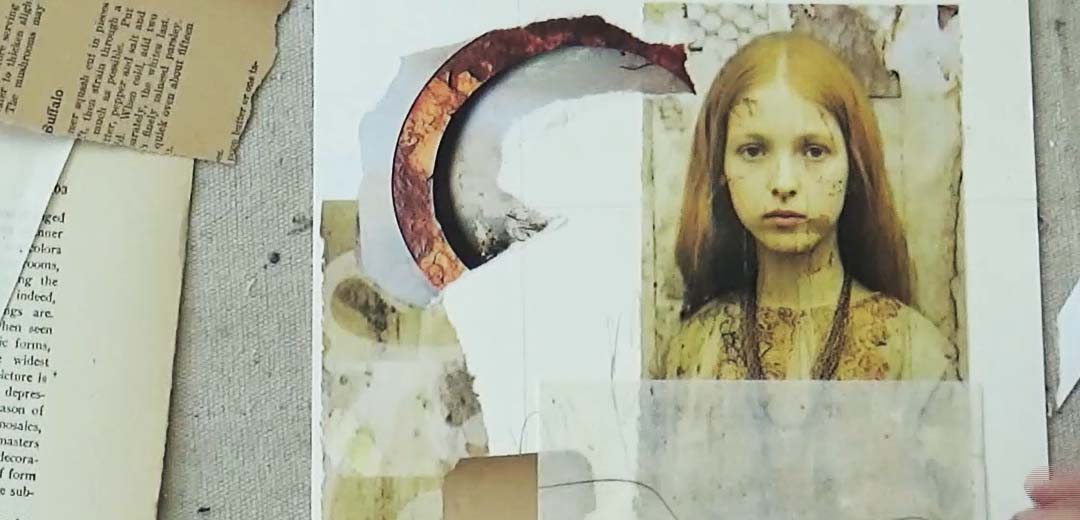
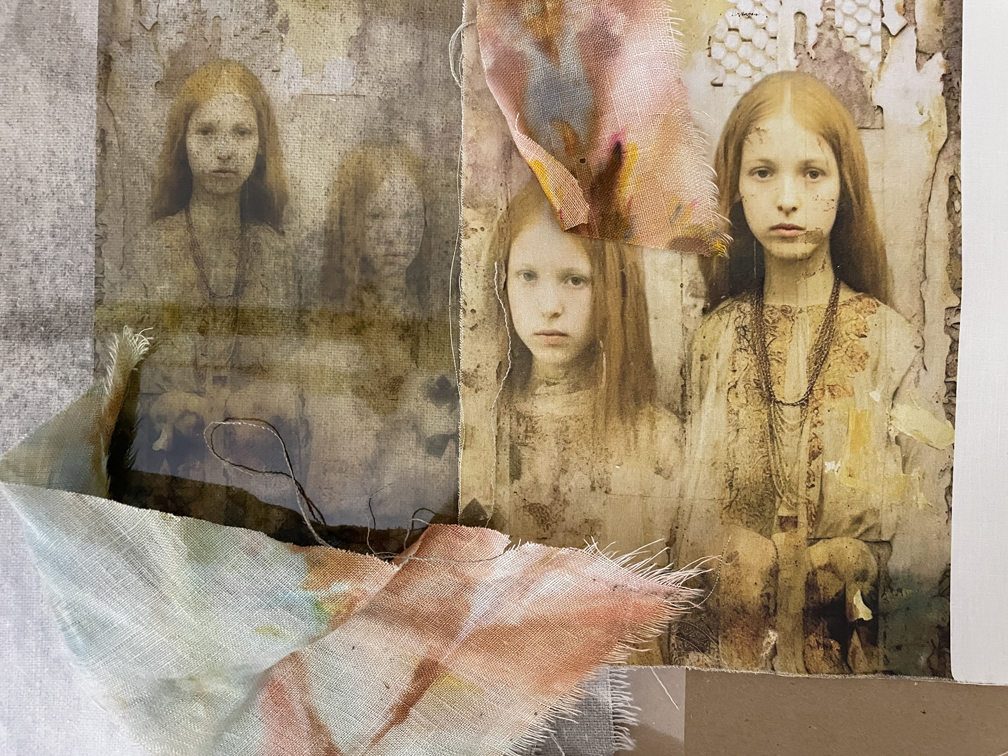
My new workshop called The Composed Collage: Sisters shows and example of that technique, but you don’t need to get the workshop to give it a try.

Have fun with it – fiber is good for you!
“Gold—what can it not do, and undo?” – William Shakespeare

Need a little glitz in your art practice?

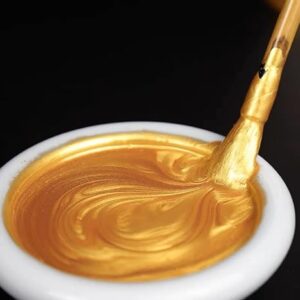
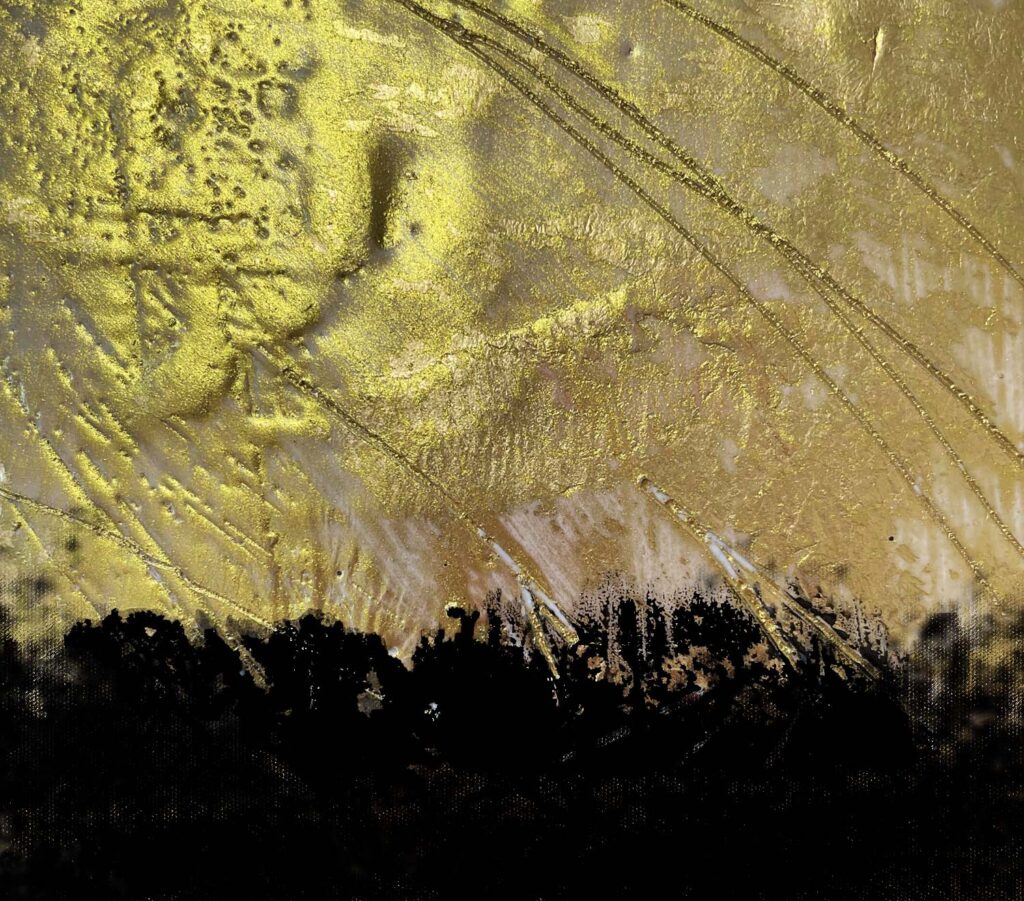
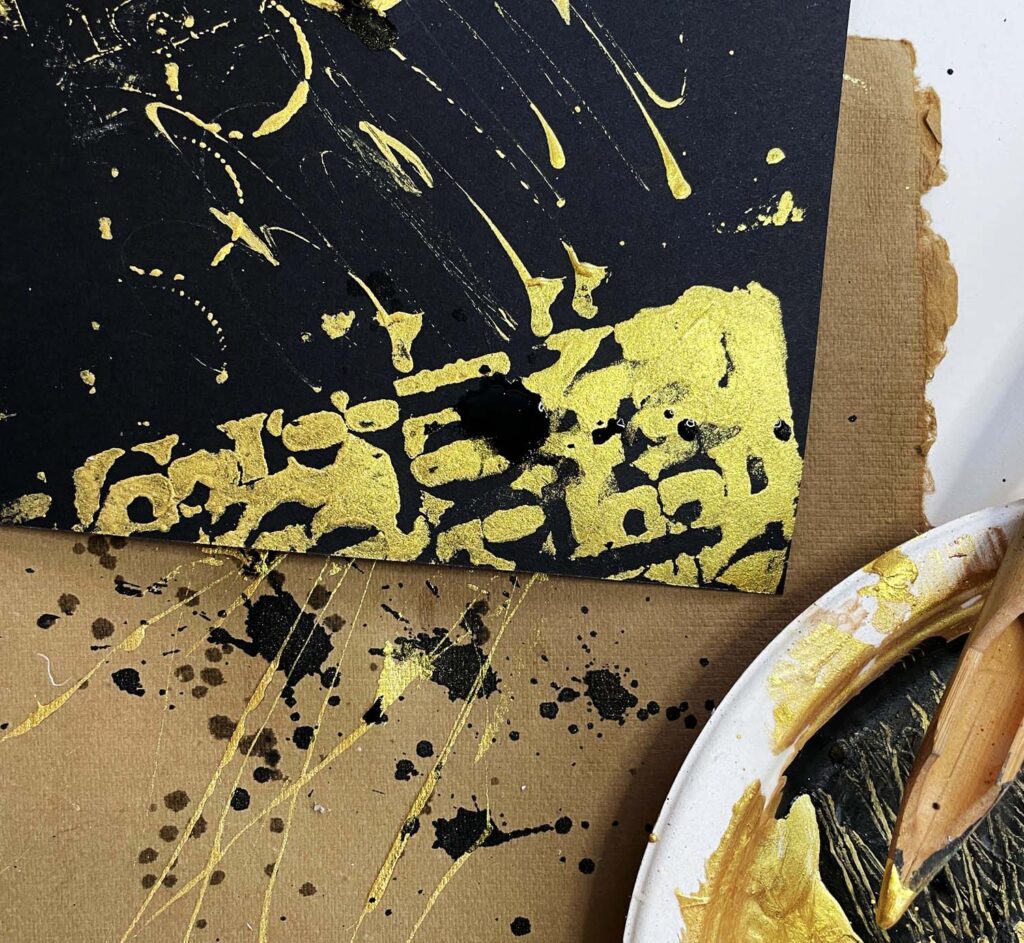
I’ve been experimenting with Gold Sumi Ink since the first of this year and still have a lot to learn about its properties and how to use it in my own work.

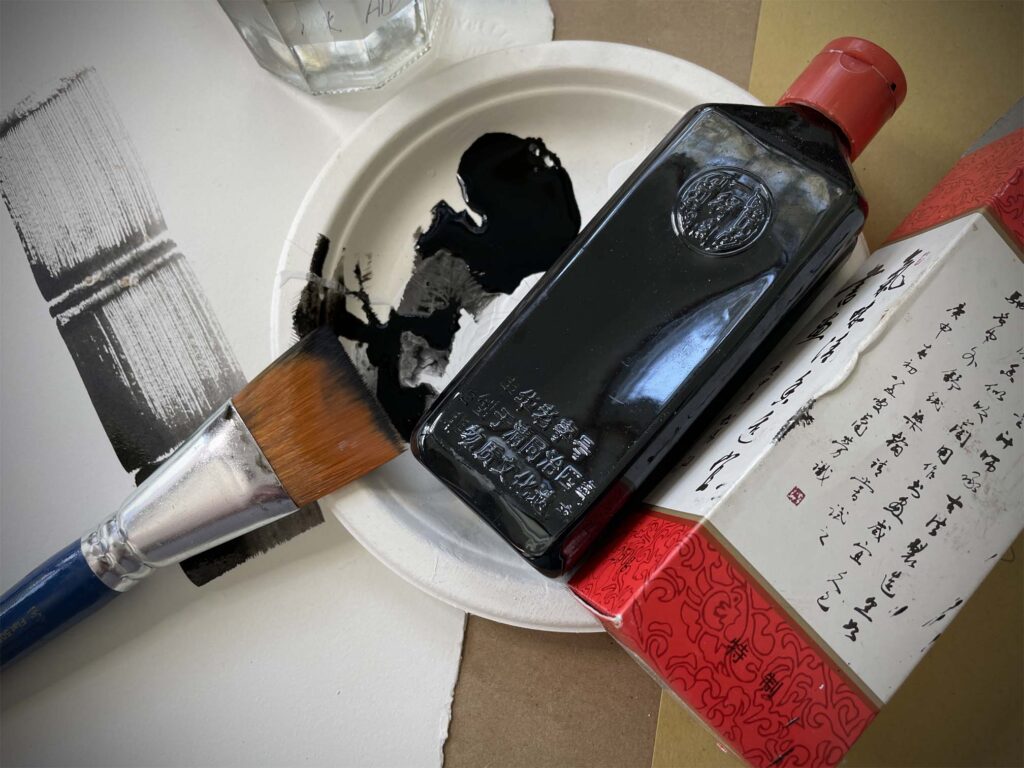
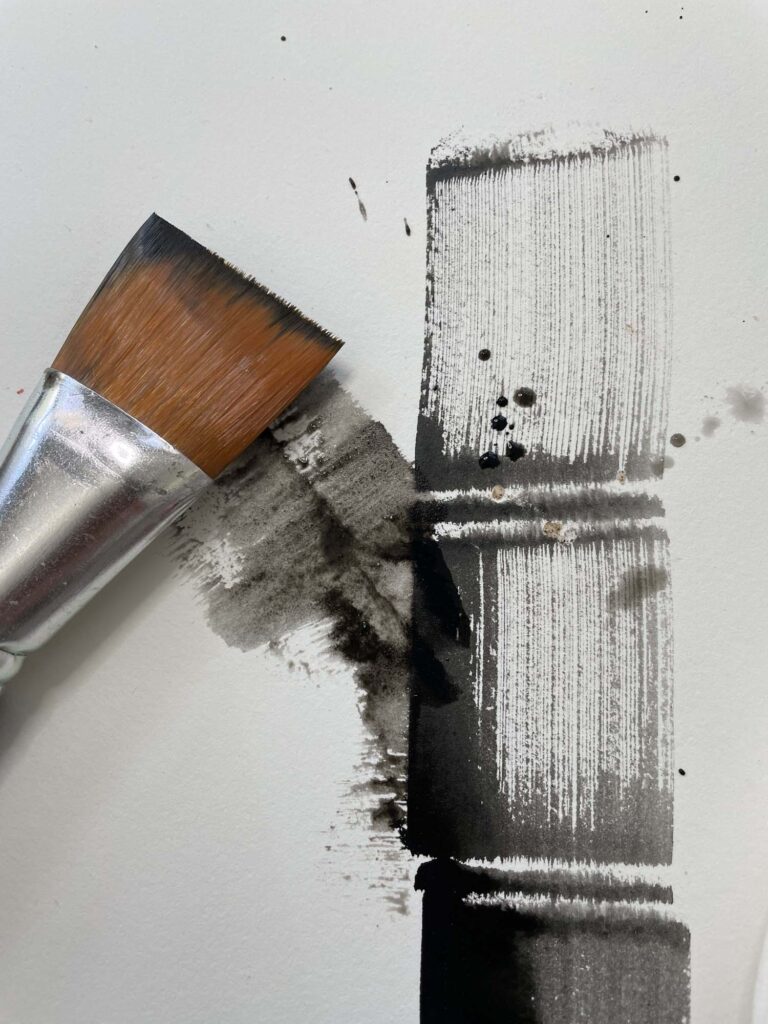
I’ve used the more common Black Sumi Ink for decades – it’s a delightful medium.

But the Gold Sumi Ink is a curious creature.

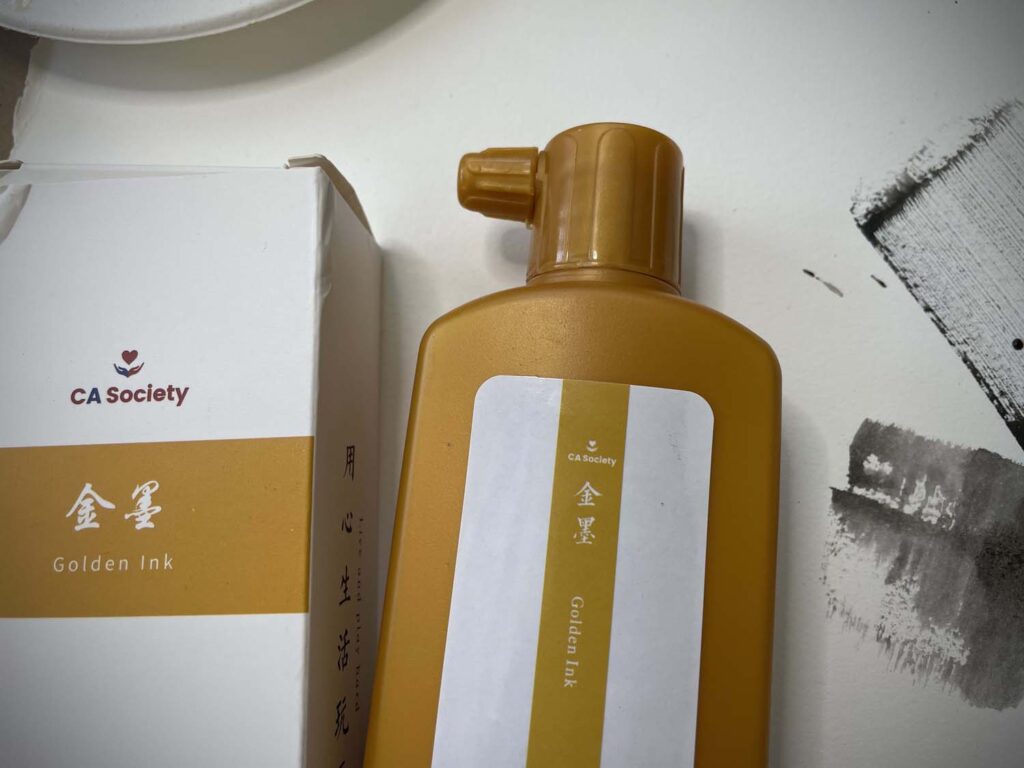
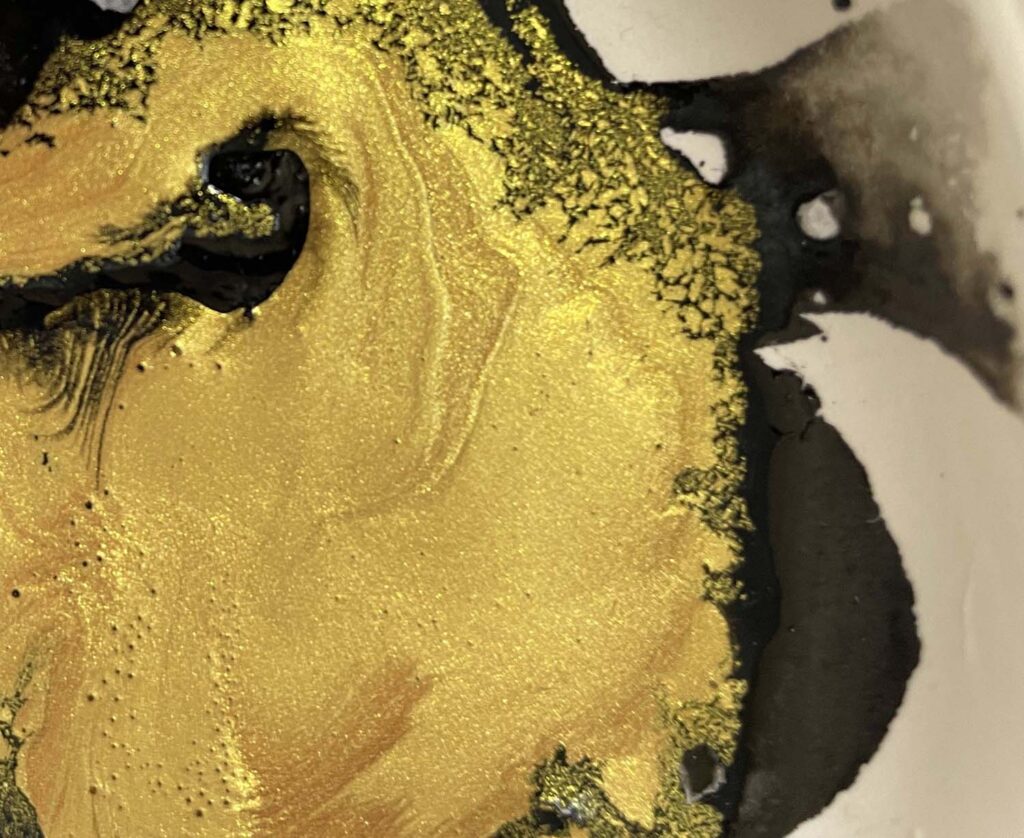
It’s apparently made of a binder with gold particles suspended in it, and it is both water soluble and also water resistant once it has dried.The description from the  purchase link is not much help, although I like the fact that is has “Chinese herbal medicine and precious ingredients” in it.

Gold Sumi Ink

  • Golden calligraphy ink is made from all-natural ingredients. Its high quality and concentration ensure a smooth dense texture.
  • While golden liquid ink is made specifically for traditional Chinese and Japanese brush calligraphy and painting it can still be used for any art form. The ink’s bright luster results in a deep earthy tone when used on Xuan paper.
  • Made with all-natural materials, including a variety of Chinese herbal medicine ingredients and precious minerals.

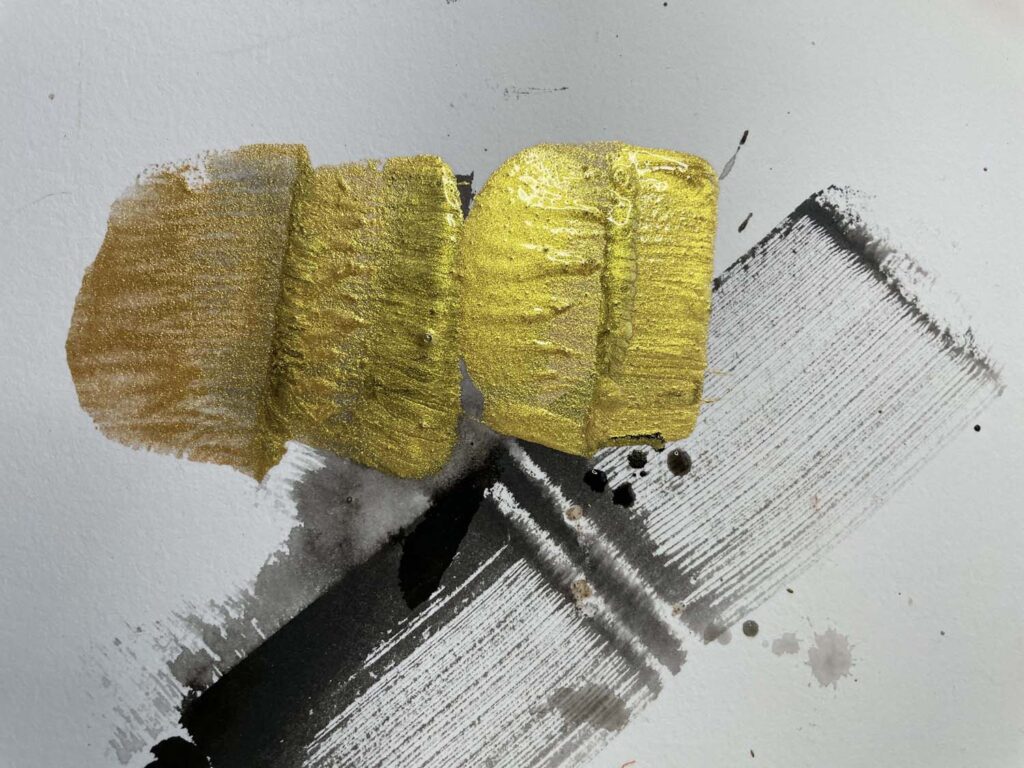
When you brush it on paper, it has an amazing metallic quality. It can be thinned with water to make a glaze.

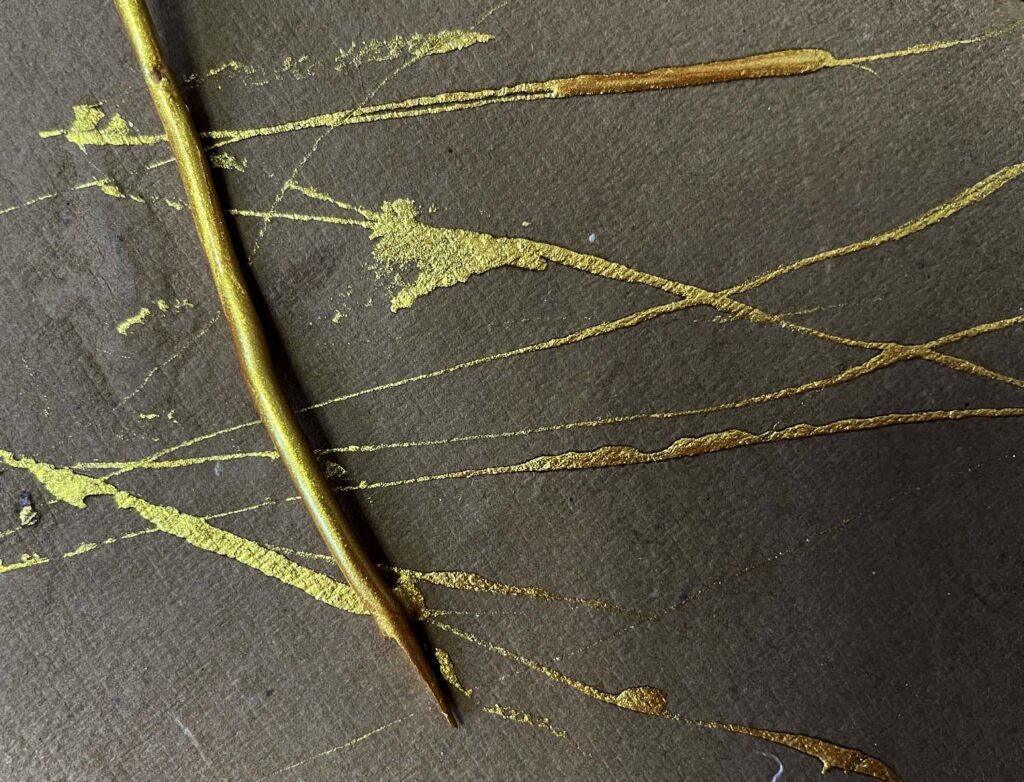
You can dip a stick into the bottle and make cool marks.

Gold Sumi Ink behaves differently on different surfaces. On an encaustic waxed panel, it sits on the top like India ink but when it’s fused, you can’t rub it off.

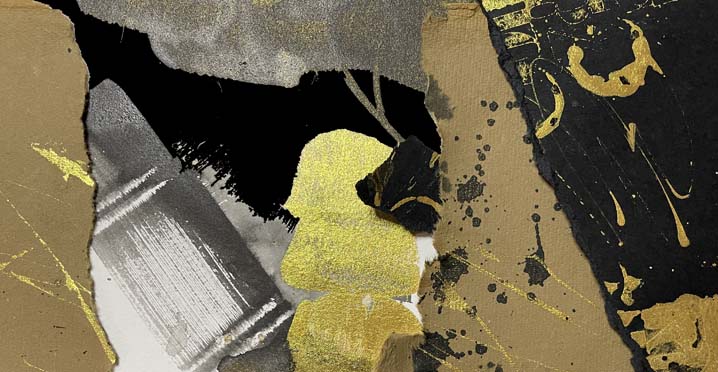
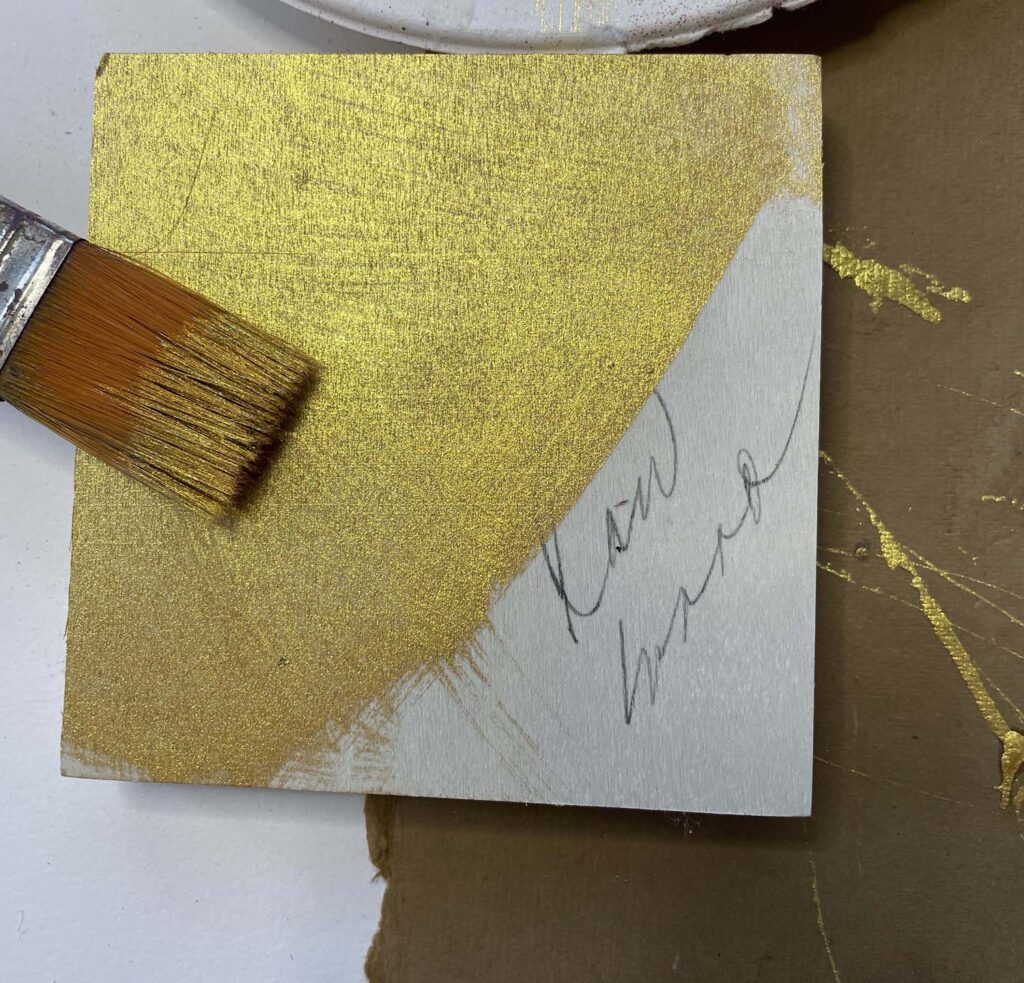
On of my best discoveries recently was using this gold ink on bare wood panels and on the sides of those panels. It creates a lovely “gold leaf” finish and bonds well with the raw wood.

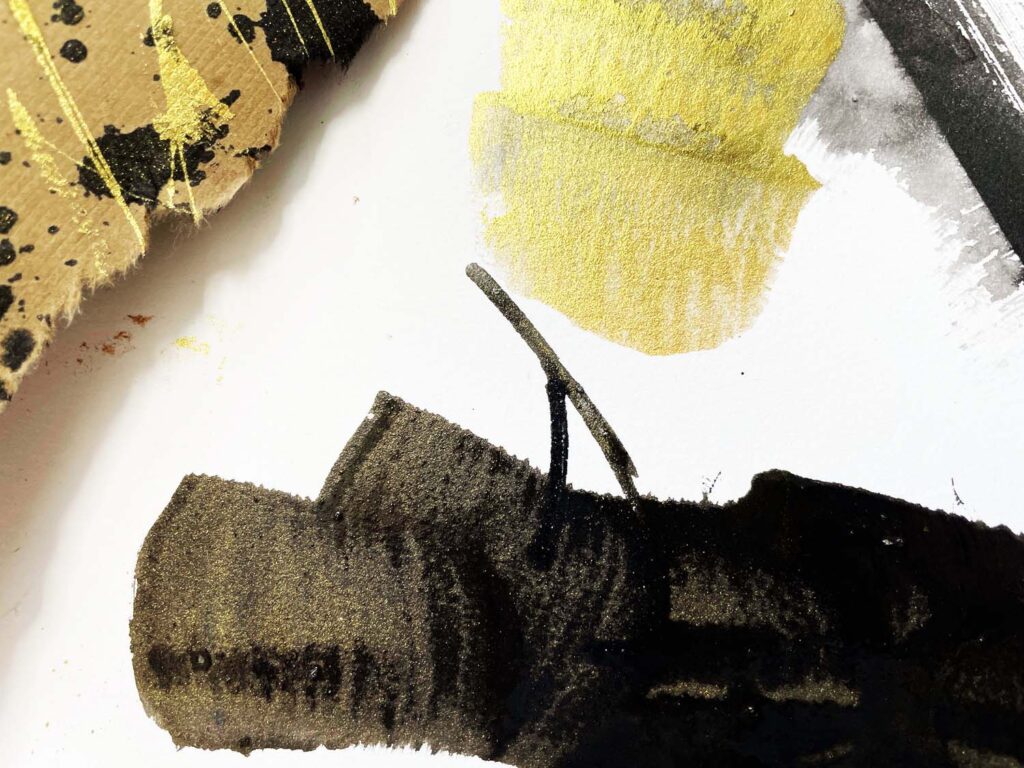
You can mix it with Black Sumi Ink and get a very dark bronze color.

But if the Gold Ink dries, the Black Ink just sits on top and won’t dissolve into the bottom layer. That must be the Gum Arabic in the binder?

There are several brands available. They cost between $15-$20 a bottle and a bottle last a very long time. I’ve used two different brands and they both seem identical in pigmentation and viscosity. My current brand is CA Society Gold Calligraphy Ink and I did get it through Amazon, but it’s made by a small Chinese Calligraphy art business called CA Society.

I gave some of the gold ink to my friend Barbara who is going to play with it, and if you decide to get some, let me know what you discover. Even if I just used it to paint the sides of my wood cradle board, I’d still like the stuff . . .maybe not as much as I like Walnut Ink, but it’s a most interesting addition to your studio materials.

By the way, if you want to learn more about the relaxing practice of Sumi-e Painting, sign up for my FREE workshop, right here.

Lyn


Ephemera/Ephemeral

I am thrilled to have had three works accepted for this exhibition — Ephemeral/Ephemera: A special exhibition of small encaustic and cold wax works on paper at Mulranny Arts in Mulranny, Ireland. October 10- November 15, 2023

Mulranny is where I taught this summer and it is such a special place. This is how the Call for Entries described the theme:

Ephemerality is a state that is deeply integral to the human experience. Moments, objects, and beings; all exist for a brief time and then disappear or transition to another state. We consider that which is ephemeral to be particularly fleeting, and a poignancy resides there. Closely related, ephemera are the bits and pieces of our lives (typically paper items) that were not intended to be preserved yet become the memorabilia that we keep to memorialize those meaningful but passing moments.

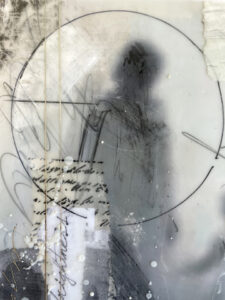
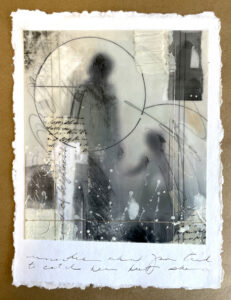
This is my first piece (above) and its description:

“This small work comes from a lifelong ephemeral dream of seeing my mother walking ahead of me in the fog when we lived in London when I was a child trying to catch up with her. I’m not sure where this dream came from because my mother was kind and caring and would never have walked away from me, but the dream persists.”

More about the Ephemeral Exhibition: Ephemeral/Ephemera will showcase works on paper that illuminate the concept of the ephemeral from an artist’s perspective, using wax as a primary medium. We invite national and international artists to consider how we experience ephemerality. Dreams, memories, chance encounters, nature, time, seasons, and even the nature of wax and paper itself are potential areas of exploration. What do we wish to hold on to, and what do we wish to let go of?

Here is my second piece, called “Wednesday’s Child” which is based on the photographs that Lewis Hine took of child labors in the US in the 1920’s. His photos ultimately changed the laws about allowing young children to work in fields and factories. I have been fascinated with these images for over a decade and return to them again and again.

More about Ephemeral Art: It is a transient form of artistic expression that exists briefly, often changing or disappearing over time. It encompasses various mediums, including street art, sand sculptures, and performance art. Ephemeral artists embrace impermanence, challenging traditional notions of art’s durability, and provoking viewers to appreciate the beauty and significance of the fleeting moment.

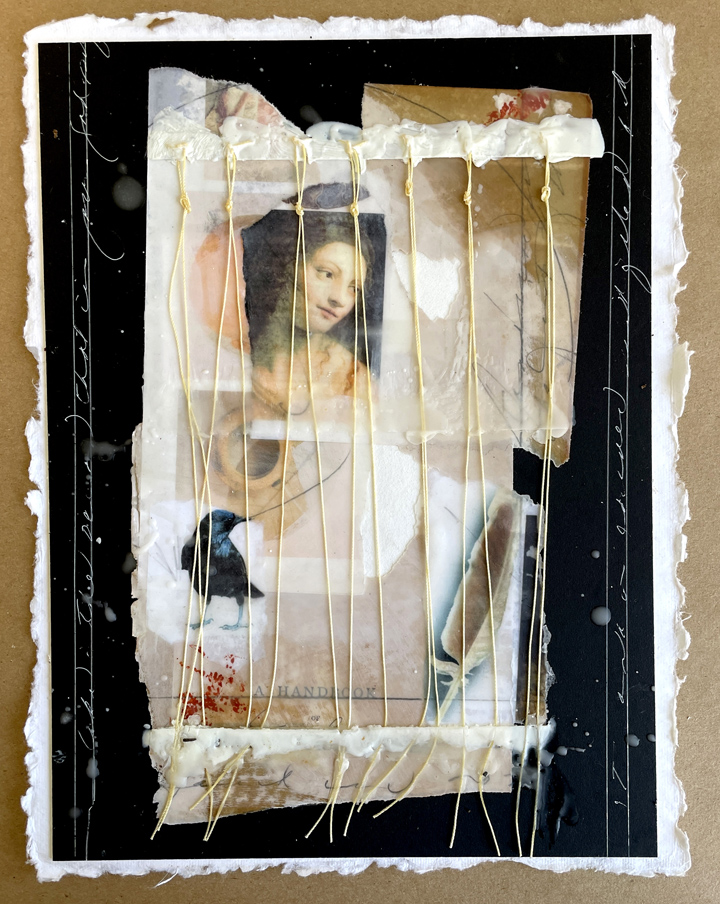
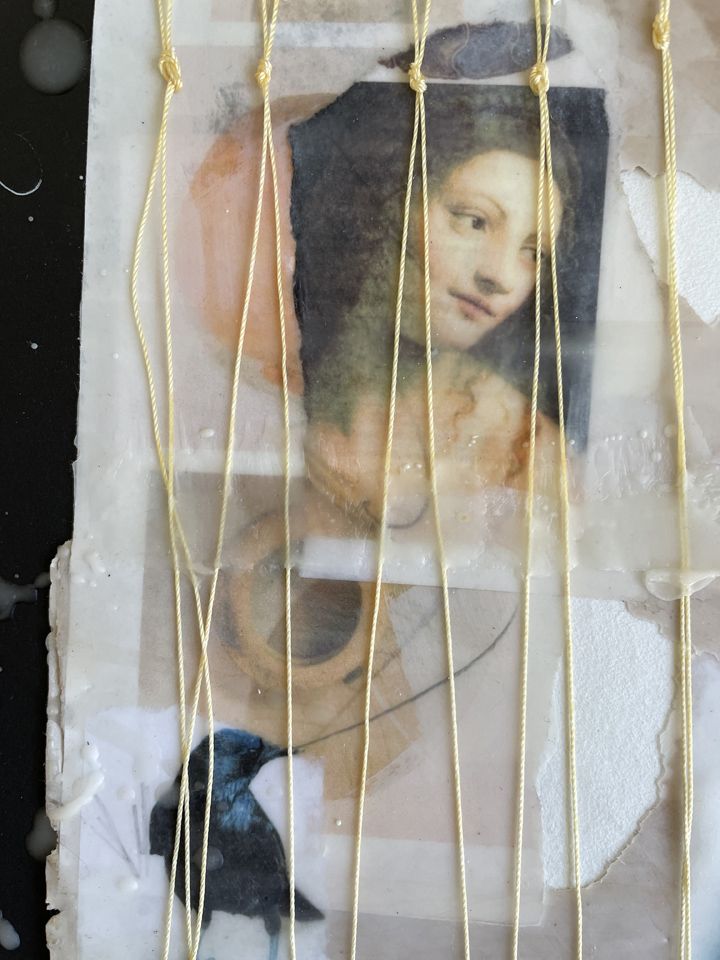
This third piece is called “Caged Memories,” and it expresses how difficult it is to hold onto the ephemeral beauty of lost moments, even if we try to bind them to our hearts.

All of this has me thinking about the whole idea of ephemeral impermanence and its influence on me and so many other artists. It is a first cousin to the idea of Wabi Sabi, which as you know is the Japanese aesthetic emphasizing beauty in imperfection, transience, and simplicity, finding elegance in natural flaws and the passage of time.

I suspect as we get older we both identify with and grapple with the idea of impermanence. Seeing the beauty in it is one way to come to terms and be a peace with it, to “find elegance in the passage of time.”

Here’s a good quote related to the complex idea of ephemerality and impermanence:

“If we don’t insist on defining impermanence as unsatisfactory, then it’s natural to celebrate. Just a moment’s pause to consider the passing of the seasons is enough to convince anyone that not only is impermanence the source of all possible joy in this life but it’s the movement of life itself.” ― Lin Jensen, Bad Dog!: A Memoir of Love, Beauty, and Redemption in Dark Places

It’s is a good topic for this Monday – a day of loss and memories. And this week will be gone before we know it! Quick, make some ephemeral art – it won’t last forever but it will shine in its moment!

Thanks, as always, for reading SHARDS.

The Composed Collage – and more!

Last night I sent out a notice to all the people who have signed up for workshop updates on my website telling them about this new class. Perhaps you got it – if so, thanks for being on the list.

As a teacher, when I put something out there as an art lesson, I want it to be perfect. But Perfect is the enemy of Done, so here it is, a new finished workshop, warts and all. It’s kind of like what most of us do in our studio practice – start with an idea of perfection, then listen to our intuition as we work and realize that perfect would actually be kind of boring. At least that’s what I tell myself!

Actually there are two new workshops, one is a mini-free-one. Both use images from a series of illustrations I’m developing for mixed-media artists called The Composed Collage Collection. It’s amazing to me how illustration has changed since I worked as an illustrator in the 80’s for our newspaper. More fun, less drudgery, thanks to technology! I thank my lucky stars that fate took me to the Computer Science Department at Trinity University in 2004 where I got to teach and learn all about this newfangled stuff.

Anyway, these ramblings are just for SHARDS readers who know me, warts and all. Onward!

New Workshop: The Composed Collage – SISTERS

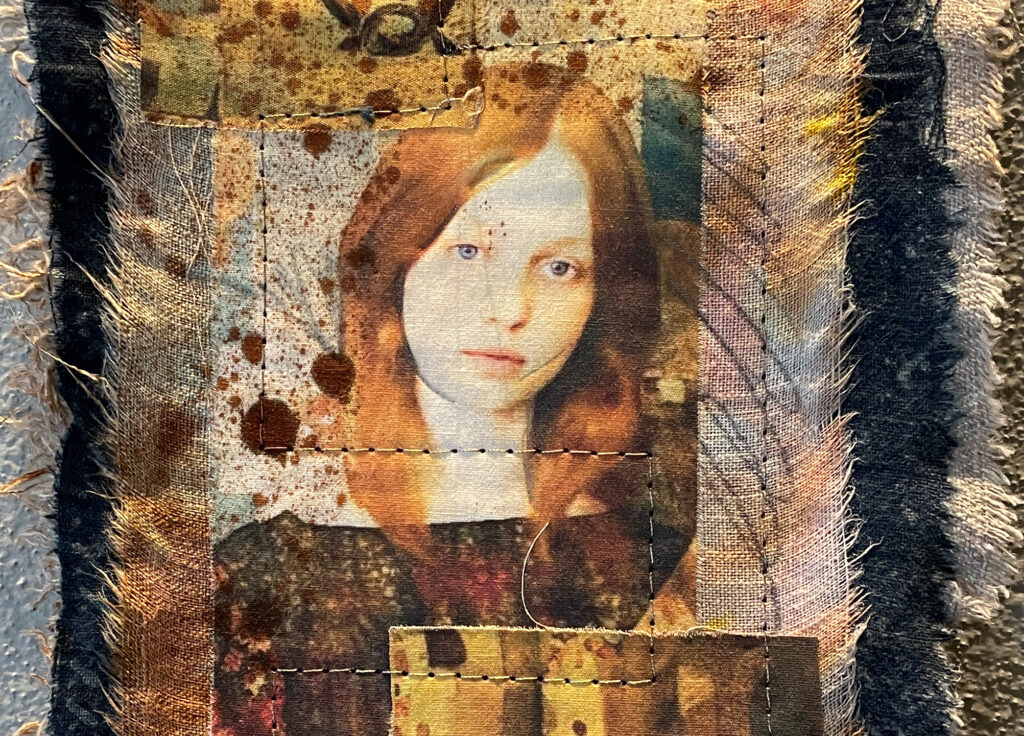
This workshop teaches composition through collage with curated content. You’ll create collages in two ways – one, starting from scratch building great bones for your work, and the other, more random way, by making a “content map” and finding the best compositions on that map. As a bonus, you’ll also learn now to create a fabric banner collage.

New Free Mini-Workshop: Connected Collage – An Art Journal Page

This little freebie takes you through a 30-minute collage on a journal page – it’s a great way to start your day in the studio.

New Image Collection for composed Collages:

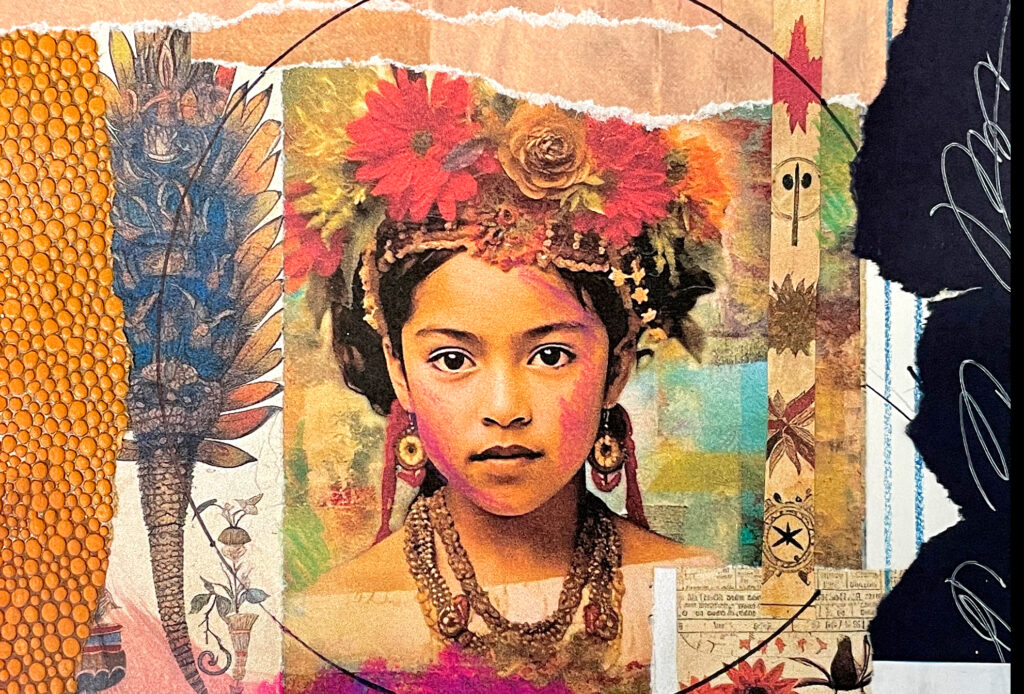
SISTERS

SAVANNAH

CHILD FRIDA

CHEYENNE

These are truly gorgeous collections, if I do say so myself. They are designed to be components that you tear, glue, rearrange, combine and otherwise claim for your own. Each set is just $14 and you can print them out on almost any surface that will go through your printer – Lutrador, tissue, transfer film, or my favorite, plain old printer paper. The sets come with a free composition how-to booklet.

Here is a video that tells you about all three of these new adventures and how they are interrelated:

This video shows each of the collections for the Composed Collages – all are available on my website for just $14 a set and each collection includes a booklet on the AB3sof composition.


That’s it for today – I hope you have a safe end-of-summer holiday!

Thanks for reading SHARDS!

♥Lyn