Fragments, Forms & Layers, Part One

Series Introduction 

This week, the remarkable artist and teacher Crystal Marie Neubauer invited me to talk with her online group about my work. It was an honor — Crystal’s influence on my creative life goes back years — but it also presented a surprising challenge. How do you describe an art practice that moves through so many materials and forms? Encaustic, collage, fiber, clay, found objects… I’ve never been a one-medium artist, and trying to explain everything at once felt impossible.
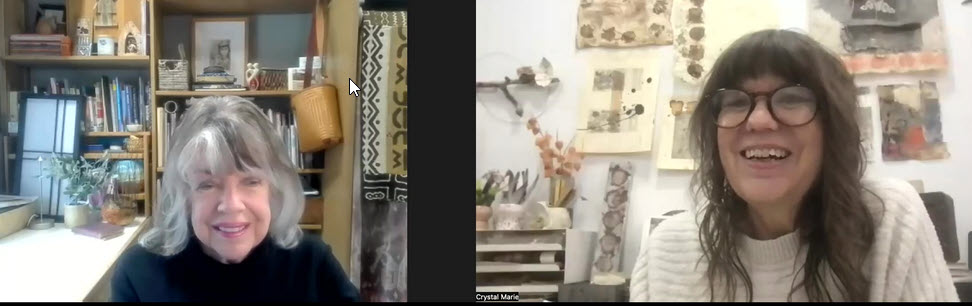
Then I realized that my work isn’t united by medium at all. It’s united by object and intention — by the forms that keep reappearing no matter what materials I’m using. And when I stepped back, three clear paths emerged:

  • Santos & Shards — guardians, icons, and the stories held in fragments

  • Vessels — boats, bowls, pods, and the metaphor of holding

  • Layered Images — collage, wax, and the quiet revelations inside transparency

These three paths intertwine across everything I make. They shape how I think about narrative, memory, devotion, protection, and the unseen layers beneath the surface.

This three-part blog series grows out of that conversation with Crystal and her community — an invitation to look more closely at where my work comes from, how it evolves, and how other artists might find echoes of their own practice in these structures.
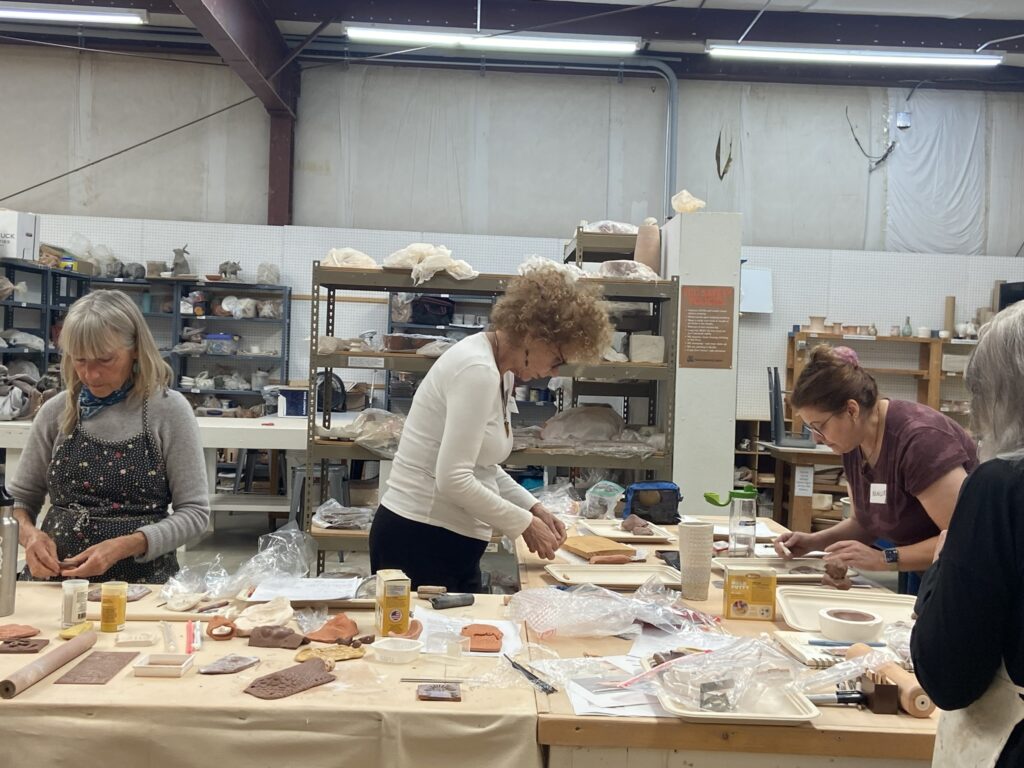
Taos Ceramic Center Workshop – Shards and Santos

Part 1: Shards & Santos — Stories from the Broken and Blessed

A three-part series on Fragments, Vessels & Layers

We rarely begin with a whole story. More often, meaning appears in pieces — a scrap of paper, a chipped relic, a bit of fabric softened by time. Over the years, I’ve learned that these fragments are not the leftovers; they’re the invitations.

This first post in my three-part series returns to the roots of an idea that has shaped much of my work — and shaped the work of many artists I’ve taught, especially during my Shards & Santos workshop in Taos. That circle of students helped me see just how universal the language of fragments can be.
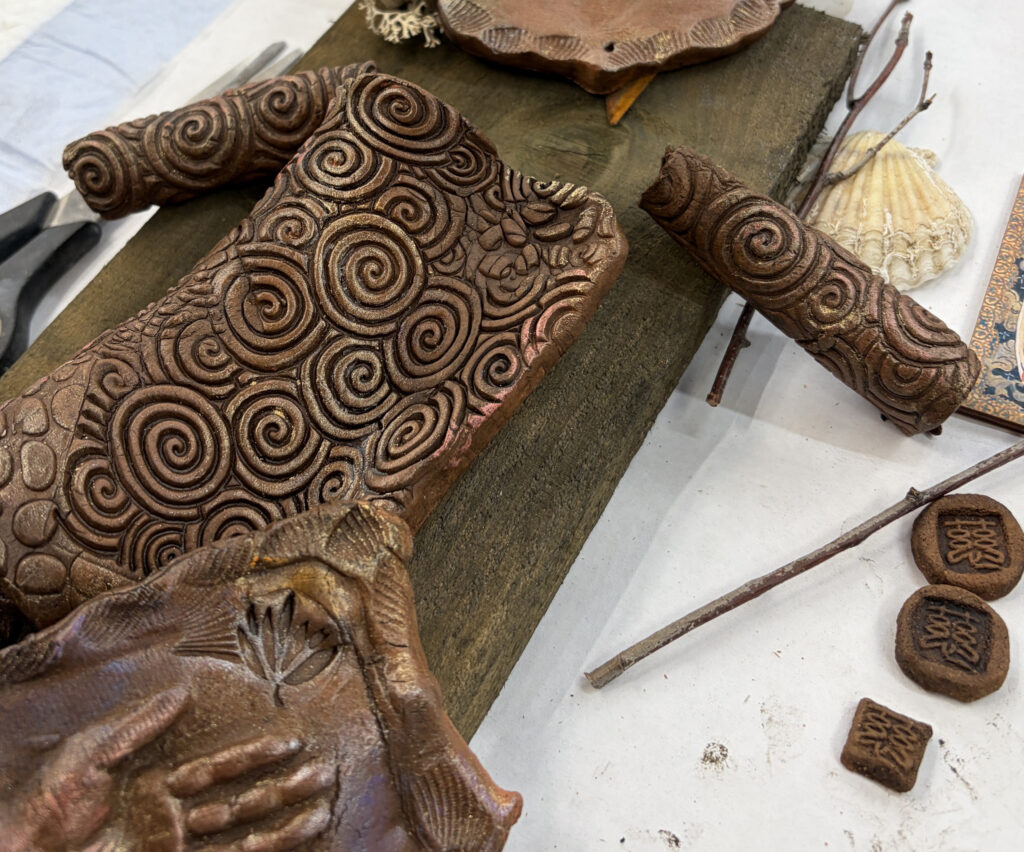
How Shards Become Stories

In my own practice, fragments arrive like clues: a small clay face, a scrap of rusted tin, a wooden bit that once held something together. But in Taos, I watched my students discover that same moment of recognition — the instant a found object becomes a story seed.
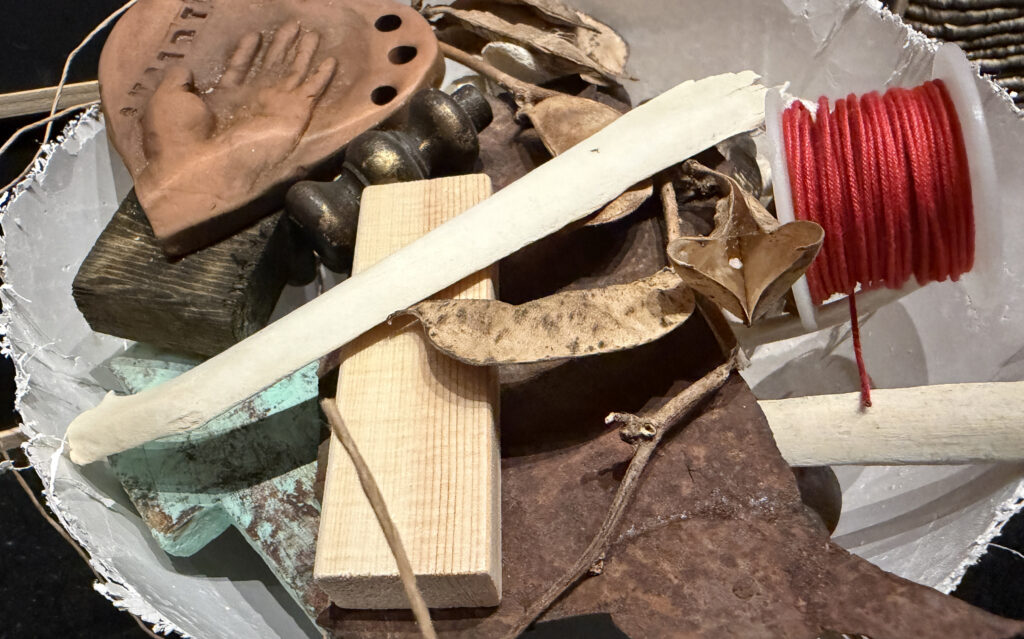
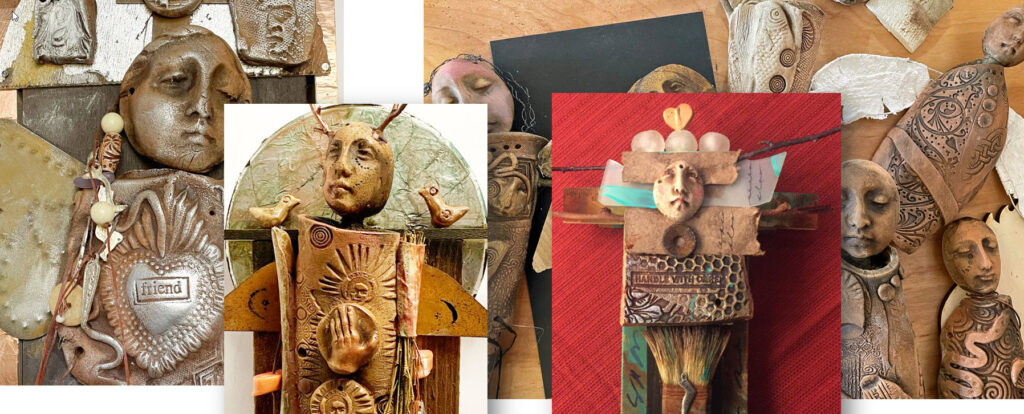
One student picked up a cracked porcelain doll arm and immediately said, “She’s reaching for something… I don’t know what yet.” Another wound red thread around a bundle of broken twigs, transforming it into a line of healing. Someone else combined milagros and fabric scraps into a small guardian who looked both ancient and brand new.
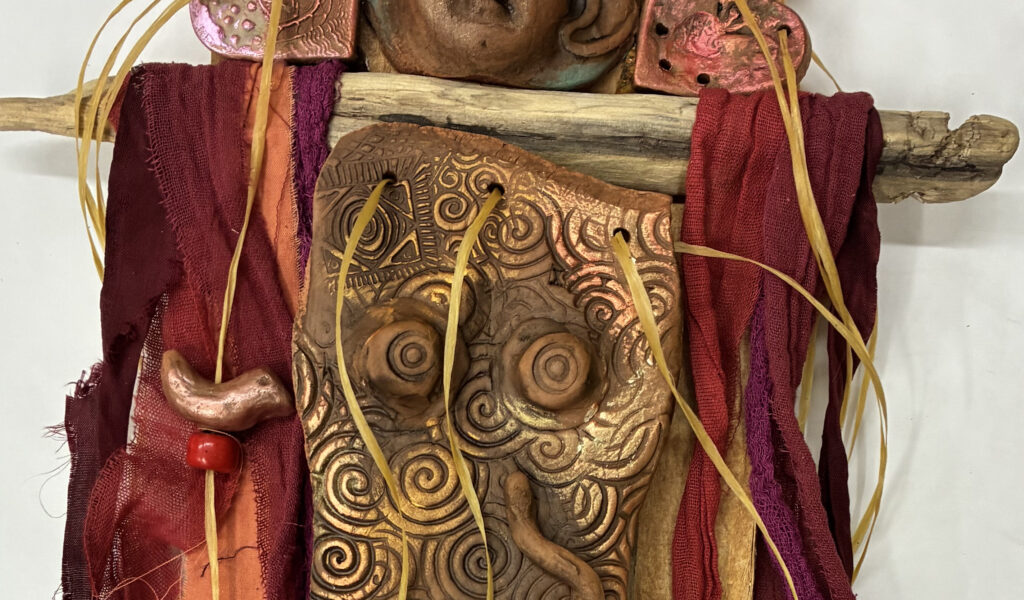
Their work reminded me that the power of fragments isn’t personal to me — it’s common to all of us who rely on intuition, accident, and memory to guide the creative process.

Santos, Spirit Figures & the Art of Devotion

My own santos and spirit figures grew from this love of broken, found, and humble materials. They echo the devotional folk traditions of the Southwest and northern New Mexico, where handmade imperfection is embraced as a sign of humanity.
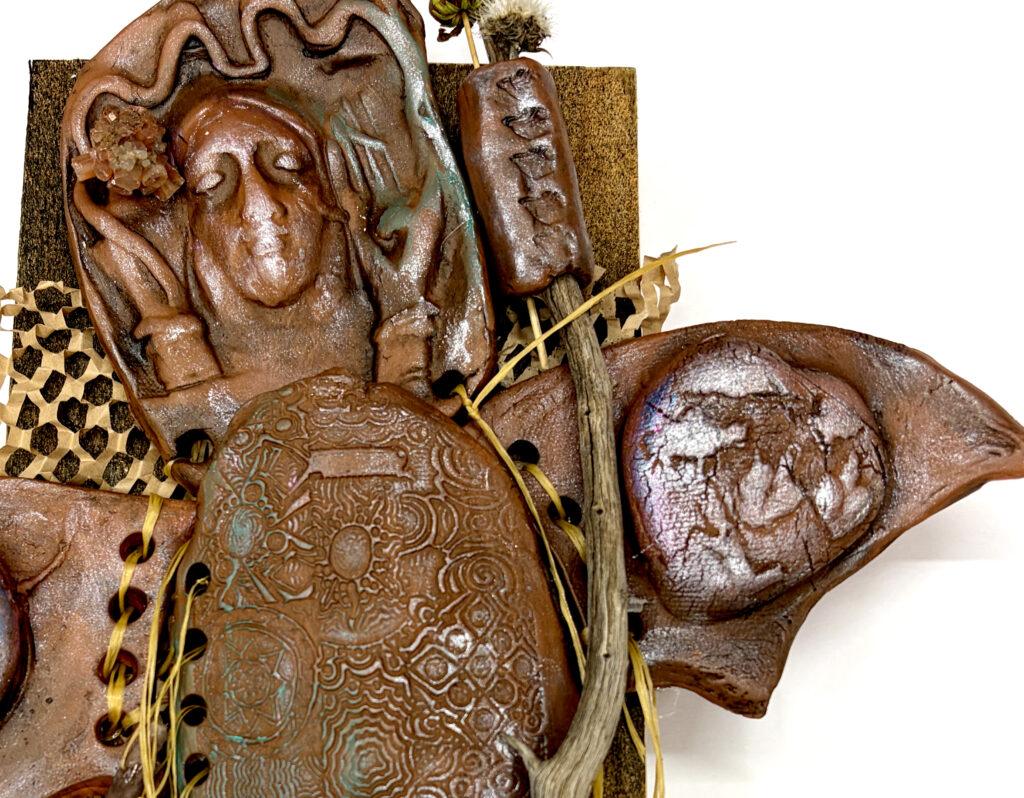
In Taos, my students instinctively reached for the same archetypes — watchers, keepers, protectors. Their figures weren’t copies of mine; they were something deeper: their own histories embodied in small forms. Some appeared fierce. Some gentle. Some humorous and unexpected. But each one performed an act of trust and devotion: taking what is overlooked and turning it into things that matters.
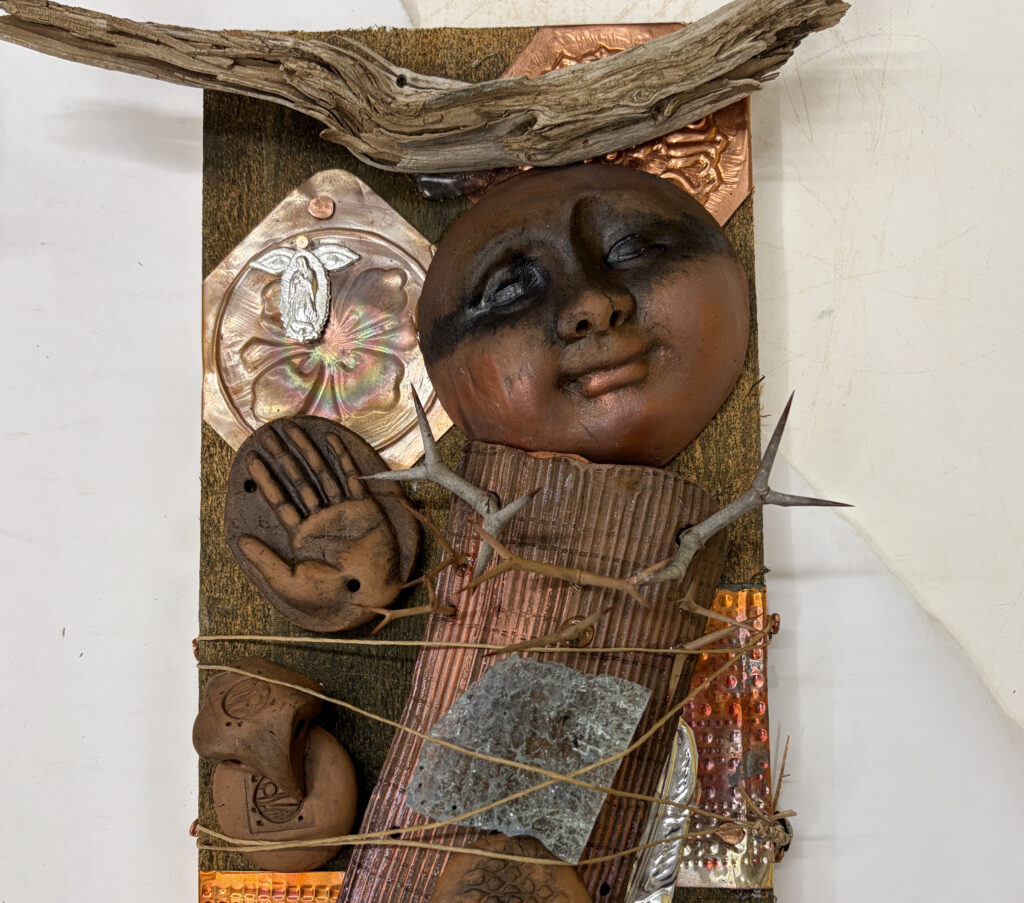
Teaching in Taos: A Circle of Making and Mending

The workshop gave me a front-row seat to the creative courage required to work with fragments. No one started with a clear plan. Everyone started with pieces.

And I saw how quickly the shards guided them:

  • An animal bone became the spine of a tiny santo.

  • A found seed pod became a symbol of protection.

  • A scrap of handwritten ledger paper held the echo of an unknown voice.

These transformations reminded me that assemblage is not just a technique — it’s a way of mending meaning.

Inviting You Into the Studio Conversation

Even if you weren’t in that room in Taos, these ideas belong to you too. Artists everywhere — no matter the medium — work with fragments. Sometimes they are literal (material scraps, failed starts, bits of old work). Sometimes they are emotional or intuitive (memories, glimpses, unfinished thoughts).
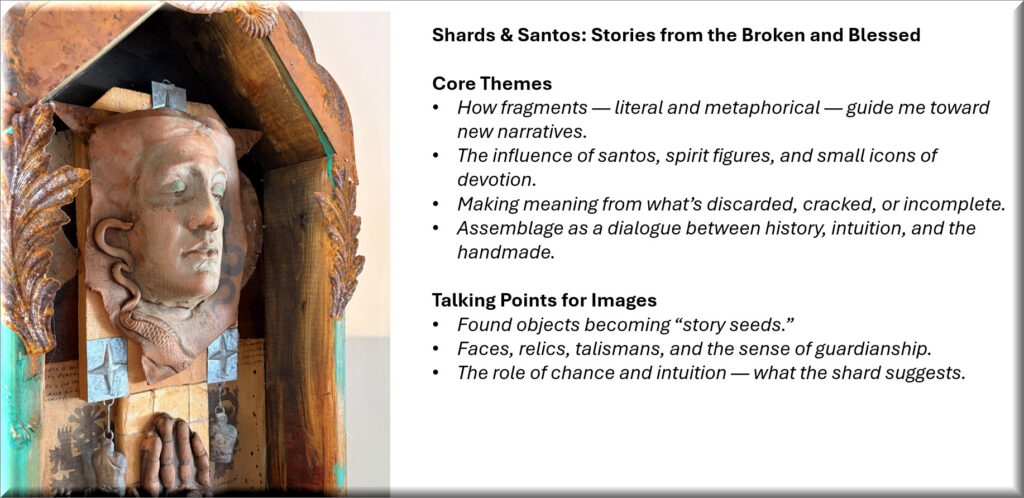
From the presentation to Crystal’s Group

So here are some invitations for your own practice:

  • What three fragments are asking for your attention right now? Do they go together or are they separate stories – a series, perhaps?

  • What part of something incomplete could become the beginning of something new?

  • How might you create your own guardian figure — a studio santo — from the materials around you?

The beauty of working with shards and fragments is that nothing has to be whole to be meaningful. The “broken” thing is already full of story. Your job — our job — is simply to listen and find its true companions.
Looking Ahead

Next week, in Part Two, I’ll share the second path in this creative trio: Vessels — how boats, bowls, pods, and containers have shaped my work and helped me think about what we hold, carry, and protect.
Cultivating “Enoughness”

Every once in a while, a word drops into my lap and refuses to let go. This week it was enoughness. I first used it when talking with our Enso Circle Continuing Residents about wabi-sabi and the endless challenge of cleaning and organizing a studio.

Here were those observations about the difference between “normal” intent and “wabi-sabi” mindset:

Conventional Studio Clean-Up
  • Striving for order: Every tool in its perfect drawer, every scrap of paper sorted or discarded.
  • All-or-nothing mindset: Belief that the studio must be fully “finished” before any new work can happen.
  • Stress and guilt: Overwhelm at the clutter, shame for letting it get “out of control.”
  • Time sink: Hours (or days) spent chasing an idealized, showroom-ready workspace.
Wabi-Sabi State of Mind
  • Enoughness: Accepting that some piles, stains, or chaos are part of a living, creative space.
  • Incremental rhythm: Tidying in small, mindful gestures that create breathing room without demanding perfection.
  • Compassion for self: Seeing clutter not as failure, but as evidence of energy, exploration, and process.
  • Organic order: Letting the studio evolve toward usefulness and comfort, rather than an imposed ideal of spotless control.

Enoughness. Funny word. But the more I sat with it, the more it started to echo through my own art practice.

Enoughness is not about settling. It’s not shrugging and saying, “Well, that’s good enough, I’ll just stop here.” Instead, it’s a sense of completion that comes when a work, a studio, or even a moment feels whole—alive—without needing to be flawless. It’s the place where beauty and imperfection meet.

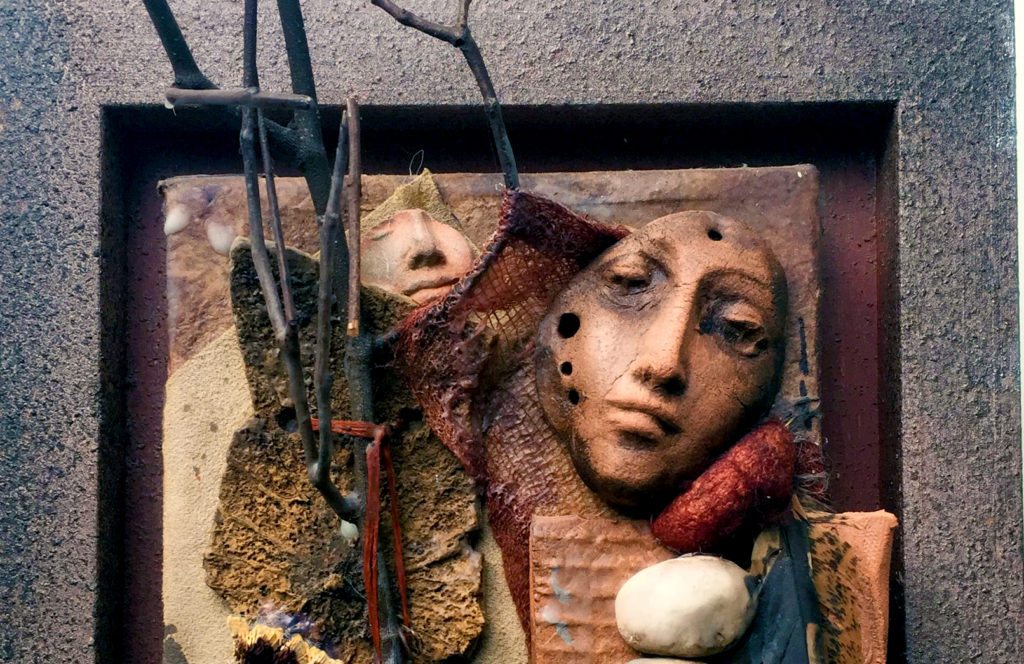
As I’ve been creating the shard-based assemblages for our upcoming Taos exhibition, I’ve been struck by how the broken pieces seem to carry this truth. A shard of clay, a fragment of a vessel—these are not discarded failures. They are clues. They invite me to listen and to assemble them into a new wholeness that doesn’t erase the breakage but celebrates it.

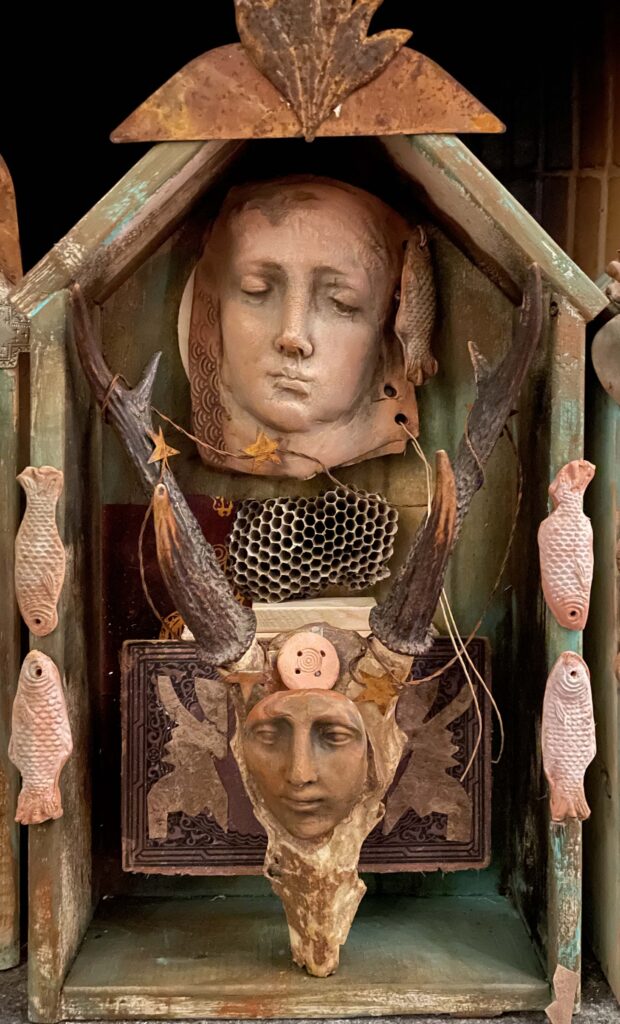
This assemblage is a conversation in fragments: a face, a hive, antlers, fish, stars. None of these pieces were “whole” when I found them, yet together they created a balance that felt complete. I remember pausing as I worked, holding another small object in my hand, and realizing that if I added more, the story would start to unravel. That moment was enoughness—when the piece declared itself “finished”, not because it was perfect, but because it had found its voice.

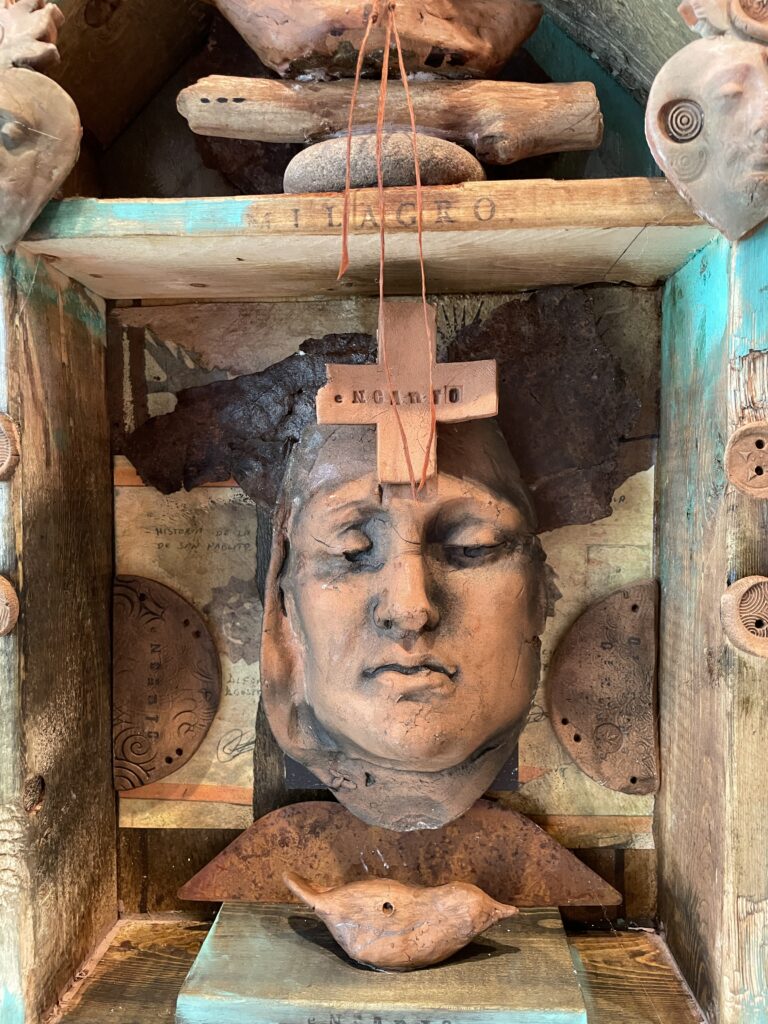
Here, the clay face rests beneath the word encanto and a small bird. The cracks and weight in the features carry their own gravity, so when I tried to “fix” the balance with additional adornments, the power of the piece diminished. The bird and the word were all that was needed. Enoughness is sometimes choosing silence over noise.

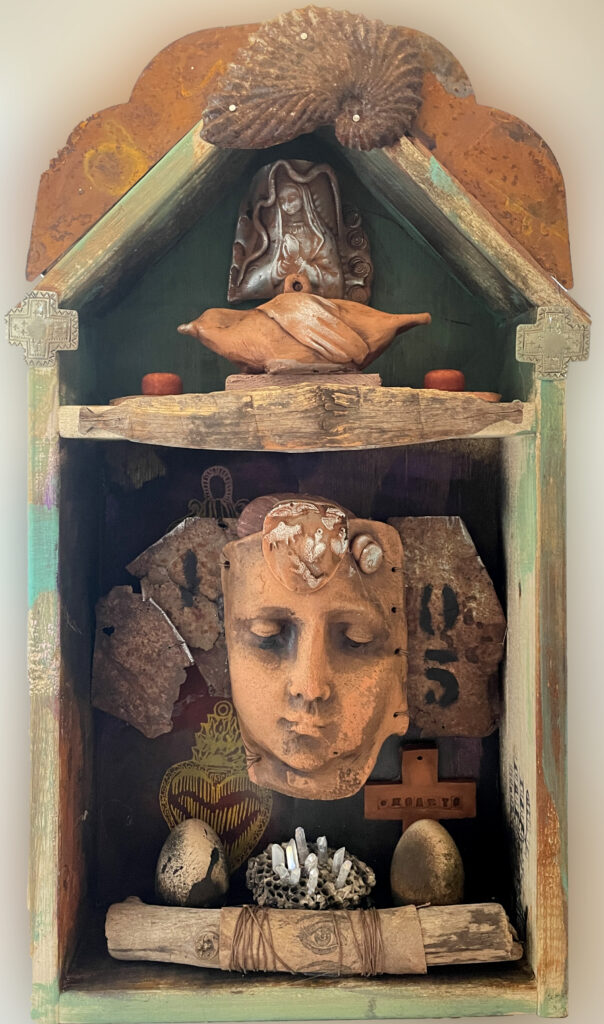
This assemblage reminds me how enoughness is about honoring the fragments for what they are. Rusted tin, clay shards, a hive filled with crystals—each is incomplete on its own. Together, they form a shrine that feels both fragile and eternal. Enoughness comes when the materials themselves breathe, and I don’t need to push them further.

When I’m working, there’s always the temptation to keep adding more: another layer, another fragment, another mark. But the piece itself tells me when it’s had enough. That moment of recognition—that quiet knowing—is enoughness. To go further would risk dulling the spark. To stop short would leave it unresolved. Enoughness is the balance point, the breath between too much and not enough.

This is where wabi-sabi sneaks in. The Japanese aesthetic of imperfection and impermanence reminds us that cracks and scars are not flaws to hide, but part of the story. Enoughness is wabi-sabi in motion, the living edge where a work becomes whole not despite its fragments, but because of them.

As I gather shards and build these new assemblages, I’m reminded that enoughness is not only about art—it’s about life. A studio doesn’t need to be pristine to be ready. A piece doesn’t need to be perfect to be powerful. And perhaps we don’t need to be flawless to be whole.

So here’s a reflection for you, SHARD readers:
How do you know when your work—your art, your home, your life—has reached enoughness? Not perfect. Not abandoned. But complete in its storytelling.

An Artist of Influence: Alejandra Almuelle

Alejandra Almuelle

You likely have favorite artists who have influenced your work over the years, or perhaps their work differs from yours in significant ways but you are drawn to it nevertheless. Alejandra Almuelle is one of those for me in both respects.

I met Alejandra at least 15 years ago at the annual Texas Clay Festival in Gruene and bought this little bowl from her. It has a design of a flying fish – so simple, small, and elegant.

We talked for quite a while and there was a compelling quality to her work that stayed with me. I visited her website recently and was just transported with the sculptures she has created over the last decade.

Alejandra Almuelle: From Her Website

Alejandra Almuelle was born in Arequipa, Peru. She spent few years in Pizac in the Sacred Valley of Cuzco, a center for ceramic making. Peru is a country in which the abundance of clay has made this medium a language of artistic expression. Clay is its own idiom, and being there, she began to speak it. After she moved to Austin, she started working with clay. Addressing the functionality of the medium as well as its
sculptural expression has been equally important for her. She has participated in art fairs, galleries and museums with both pottery and sculpture.’

Alejandra Almuelle

Alejandra is a brilliant, incredibly prolific clay sculptor and has exhibited in numerous galleries – read this comment from the review of her show called “Silent Narrative of Things” at Dimension Gallery in Austin in 2017:

“…Because what Almuelle has done is turned Dimension Gallery into what we can’t help but perceive as a sacred space. Not some typical “sacred space” festooned with the gimcrackery of more common religions, though. Rather, a hidden alcove redolent of ancient pagan mysteries, of deep Jungian undercurrents, with sculptures of the artist’s interpretation of the Three Fates all texturally complex against the entrance wall; with a series of hollow and pristinely white figures atop a field of salt on a far table; with sculpted hands set among piled patterns of spice – cinnamon, turmeric, pepper, and more – on a closer surface; with a diverse array of rough porcelain needles literally stitching yarn-as-bloodlines into the very concrete of the gallery’s cemented verticals.”

Wow.

Here is a series of pieces from that exhibit, and you can see all of her work here on her website.

Alejandra Almuelle

About the seven works above, she says, “When I began this series, I was affected by the significance and probable implications of the political situation. Many questions started to come as the work emerged. Questions created more questions in my attempt to answer them. “Seven”, which is the first of the series expresses that state of mind. . .Each of these human-shaped figures are pierced, revealing the interior space through orifices and openings as manifesting the permeable nature of the self. A self that is not solid, fixed or contained.”

Alejandra Almuelle

Her depth and dedication to her craft and her art are awe-inspiring.

Alejandra Almuelle

Recently, I acquired another one of Alejandra’s artworks from a series that she calls “Ayas.” Here it is sitting on the desk at my kitchen door where I see it every morning:

This is how she describes the Ayas: “Aya is not only a personal reference but a tribute as well to Pre-Columbian Mayan ceramic dolls. In Japanese, “aya” means colorful and beautiful. In Arabic, it means miracle, sign, and verse. In Hebrew, it refers to flight or birds, and in Turkish, “aya” means a source of abundance and creativity. There is also an African Adinkra symbol called “aya” represented by a fern which symbolizes endurance and resourcefulness.”

I hope you enjoy being inspired by Alejandra’s work as much as I do. She will be at the 2024 Texas Clay Festival in GrueneI always look forward to that event!

When we discover artists whose breathtaking work makes us shiver with exhilaration, it’s worth sharing.

Thanks for reading!

Alejandra Almuelle


The Spirits of Austin

Sometimes the timing and the place are exactly right for creating together. The two-day Spirit Doll workshop in Austin was one of those times, shadowed by the Uvalde tragedy, inspired by the wish for immersion in making art as spiritual healing.

There were ten of us in the workshop and by the time it was over, we were a bonded community. Some came from Austin, some from Dallas, Houston and other places, but the Austin School of Fiber Arts was our heart-home for the weekend.

Lynne Brotman, director of the ASFA, has a wonderful space available for workshops in the newly-arty southeast section of Austin.

The first day, we worked with the basic spirit doll armature construction.

Everyone talked about how the word “doll” connotates a toy, but figures like these are ancient and profound. No one had a better word, however – it’s always problematic describing this art/craft genre of figure-making.

We all completed our figures, all started the same way, all finished in different ways reflecting the intentions of the makers.

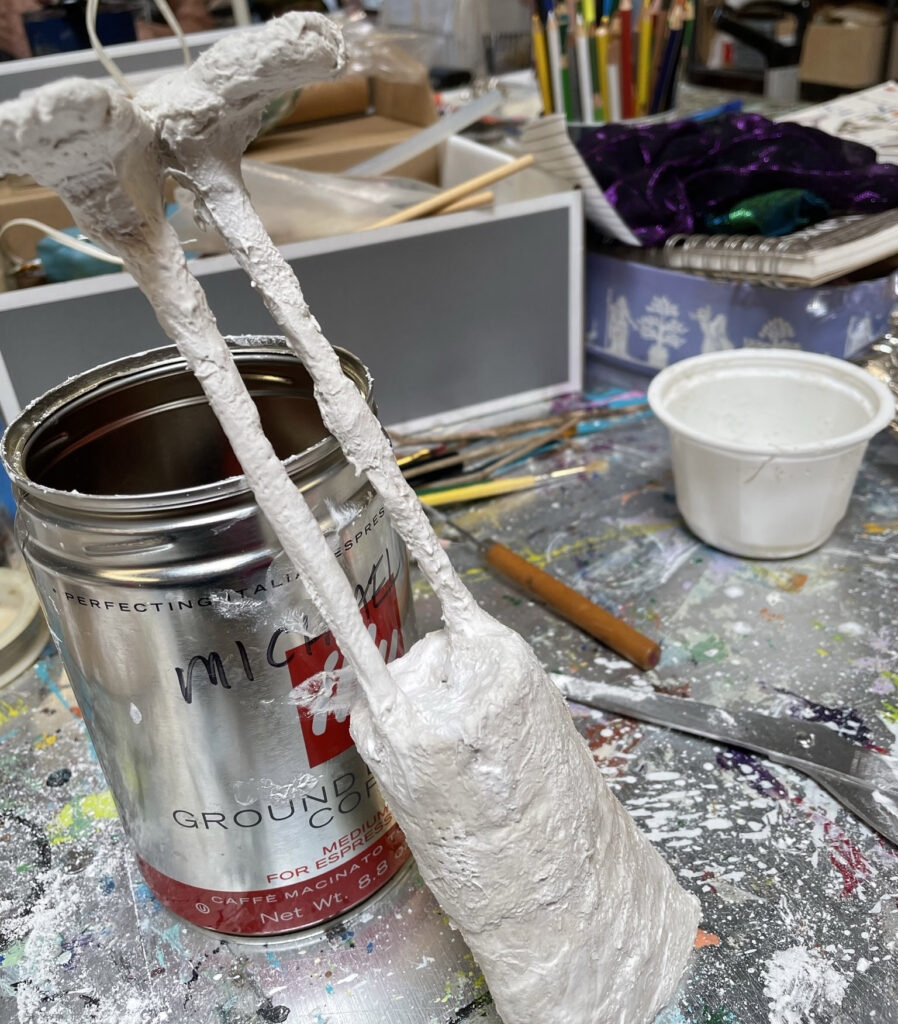
On Day Two, we broke out the plaster and the air-dry clay and built armatures using a different method still with sticks and very basic, natural materials – like our toilet paper rolls!

Patrice put feet on hers!


At the end of the second day, we looked at all the spirits we had created. They mirrored the community that we had made over the weekend – a group of like-minded people coming together for a purpose that revealed itself most clearly at the end of the process. I am so grateful to each of the artists in the workshop for teaching me lessons about ingenuity and generosity.

I’m inviting you to share in the workshop experience by watching this video of how we started, what we did, and how we finished.

Link

I’m planning another Spirit Doll workshop in San Antonio in July. Let me know if you might be interested and I”ll put you on the email list. In times like these, we need all of the good spirits we can get!

Thanks for reading SHARDS – take good care, and stay cool.

Shards and Santos, Clay and Collage

Happiness is teaching in Taos!

A week from tomorrow, I’ll be at the Taos Ceramics Center working with students in my Shards and Santos Workshop. The class takes place on two consecutive Saturdays – here’s a description.

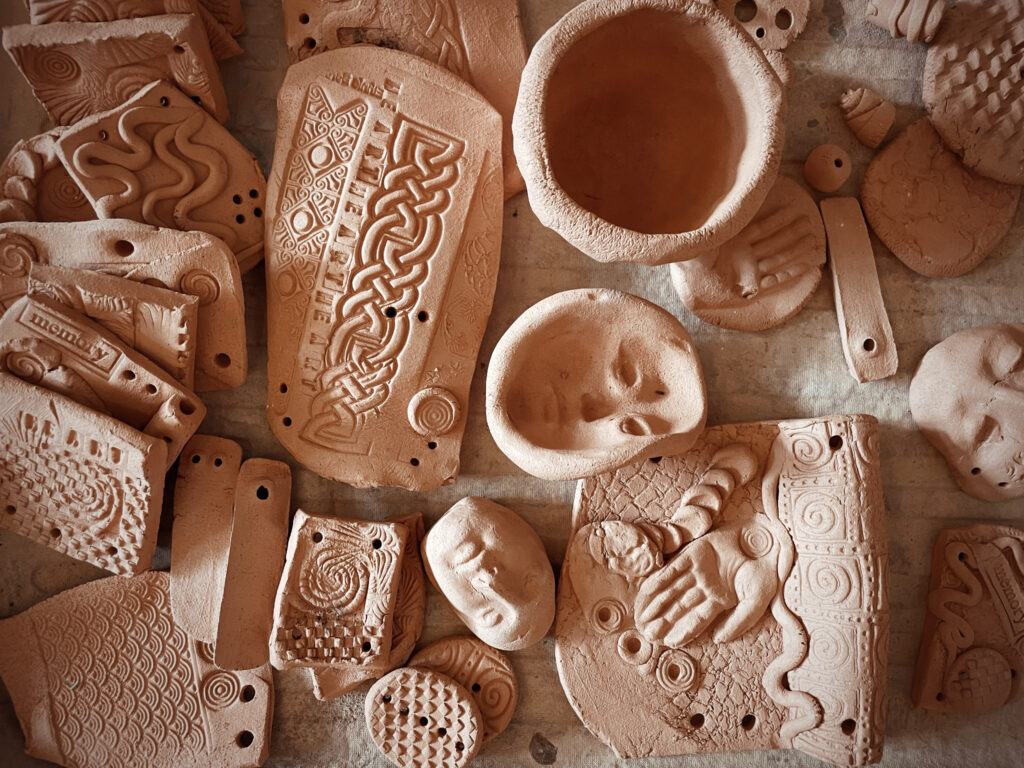
In this workshop, we will create personal assemblages inspired by these iconic figures of Santos. In the first class, we will construct handmade textured slab-based clay components such as heads, bodies, and enhancements. We will also learn to make hand-crafted clay press molds. These components will be fired once.

Here are some examples of assorted assemblage components that I’m taking with me – honestly, working in assemblage is just like working in collage, only a bit more dimensional:

Continuing the workshop description —

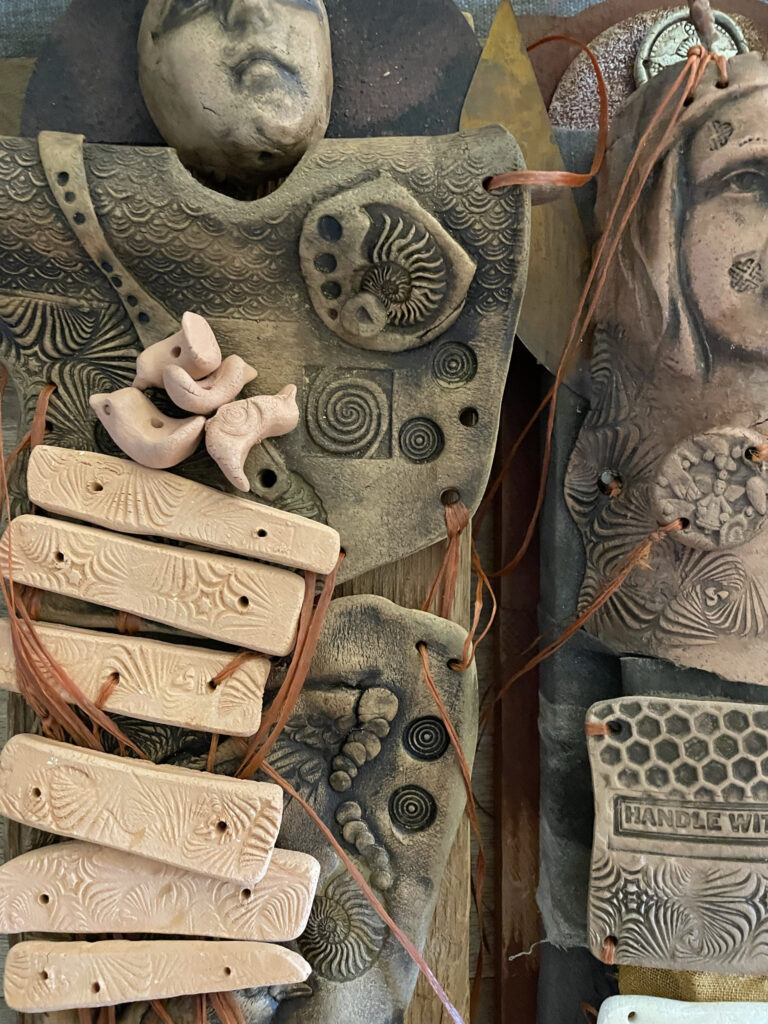
The next week, we will build our figure, incorporating found objects such as bones and shells and bleached twigs into the final assemblage and perhaps include cherished objects and hidden words. We will explore the limitless possibilities of cold finishes, such as metallics and beeswax, to enhance the surfaces of the unglazed earthenware.

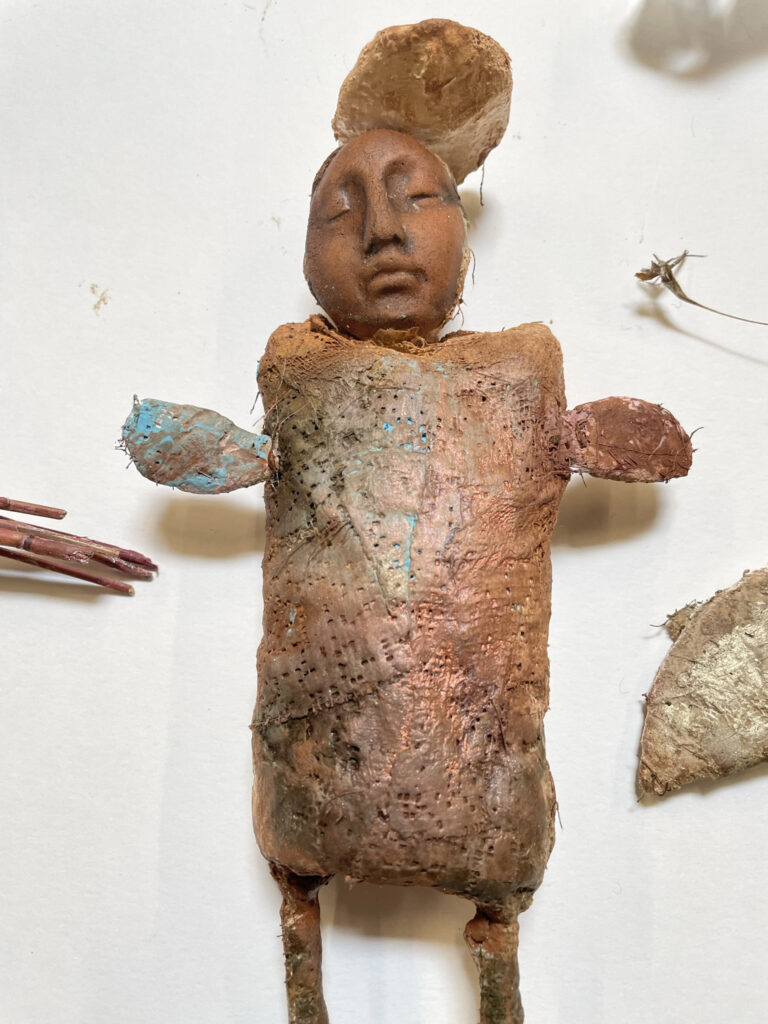
These santos, below, are in progress, and I’ll use them to show how the components are put together.

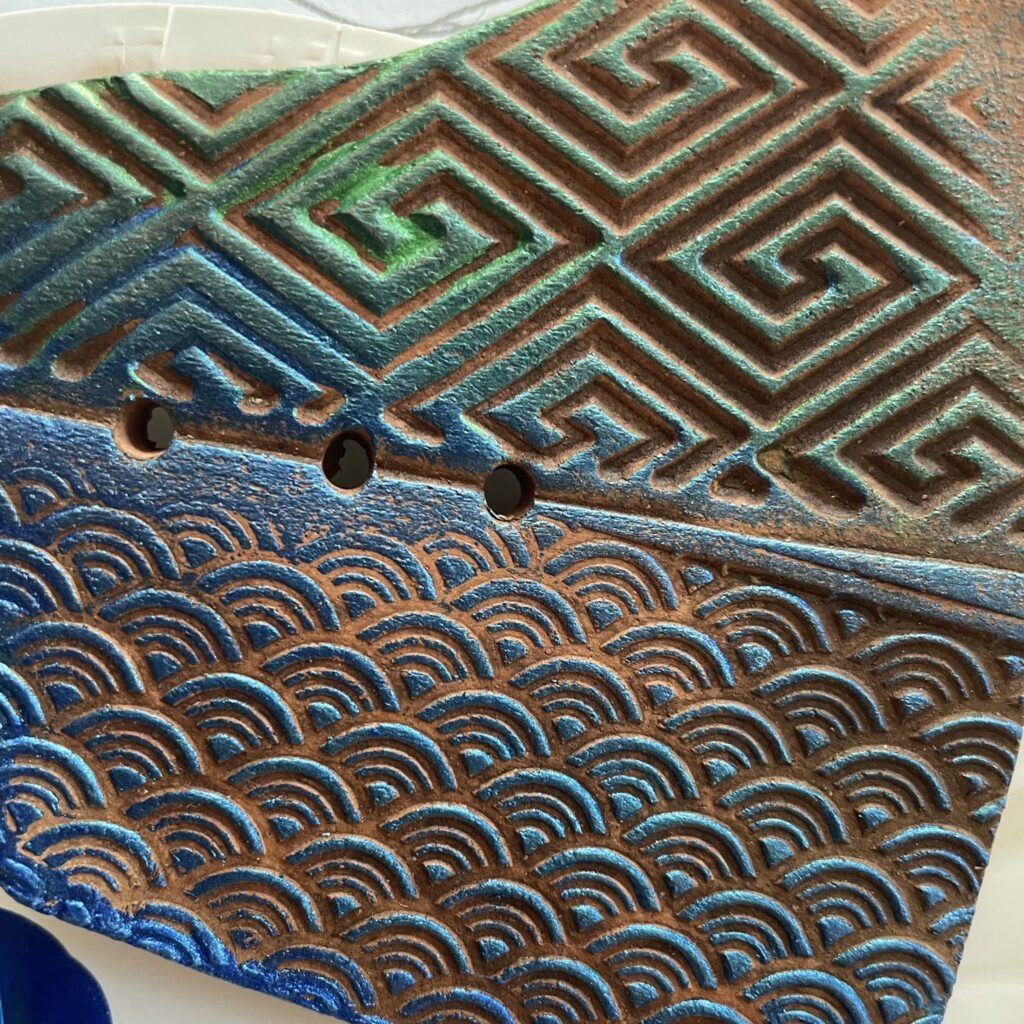
Since we will not be glazing and re-firing the shard components, I’ve been experimenting with cold finishes for fired clay for the last couple of weeks.

One of the most successful combinations I’ve discovered is Pearl Ex powder by Jacquard mixed with Gamblin Cold Wax Medium.  You can control the translucency and the color saturation, then buff the wax finish. It’s exciting to see how well it works on bisqueware.


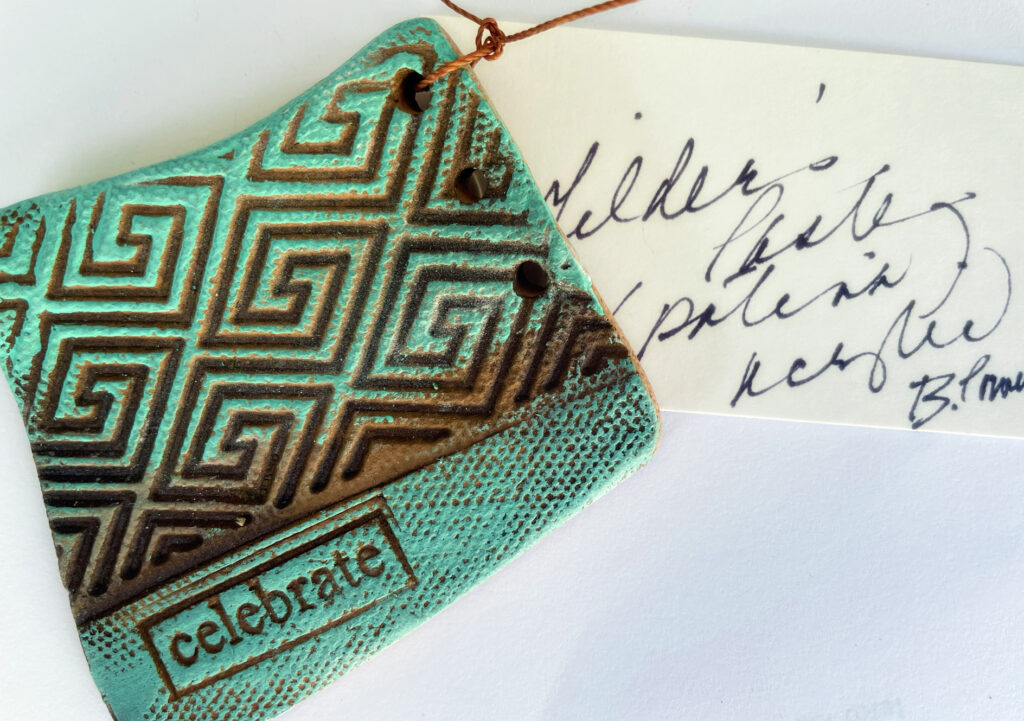
Another technique I’m playing with is tube acrylic paint mixed with a bit of cornstarch to dull the finish.

In the sample below, the acrylic mixture mimics the look of Gilder’s Paste at about half the cost and with less potential toxicity.

This kind of experimentation is part of the fun of planning a workshop. And then I get to share with new people!

I’m grateful to the Taos Ceramics Center for inviting me – and at this writing, there’s just one spot left, so if you need a quick get-away, come on up to the mountains of New Mexico!


Wendy’s Nature Spirits

A weather note : I started this post on Monday morning. The post (and normal life) has been interrupted by two days of power outages and snow here in South Texas, and there may be more to come! Yikes!

So, before the power goes out again, I want to warm your heart (and mine) by telling you about Wendy Larsen of Nevada.

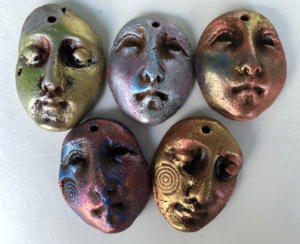
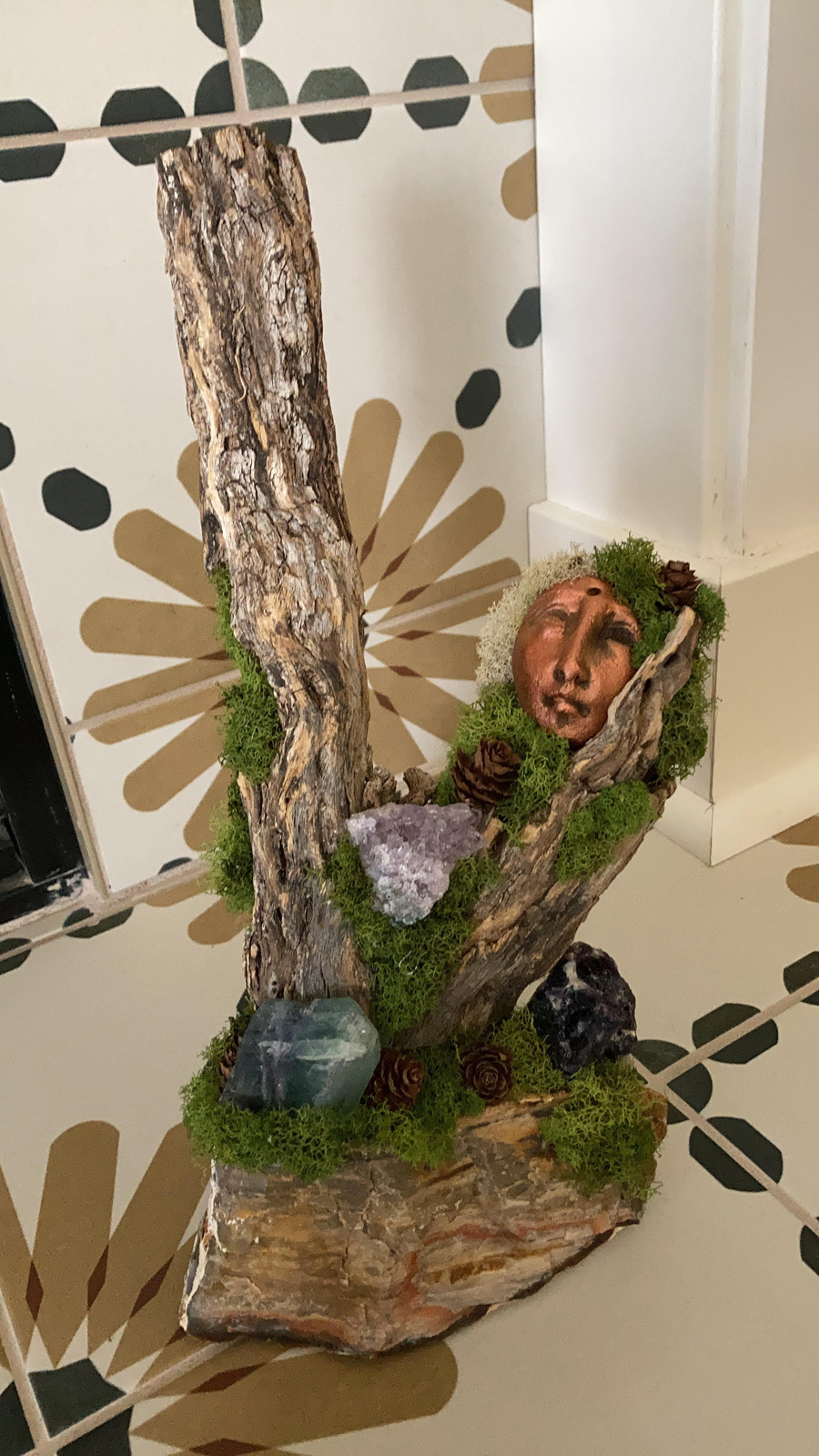
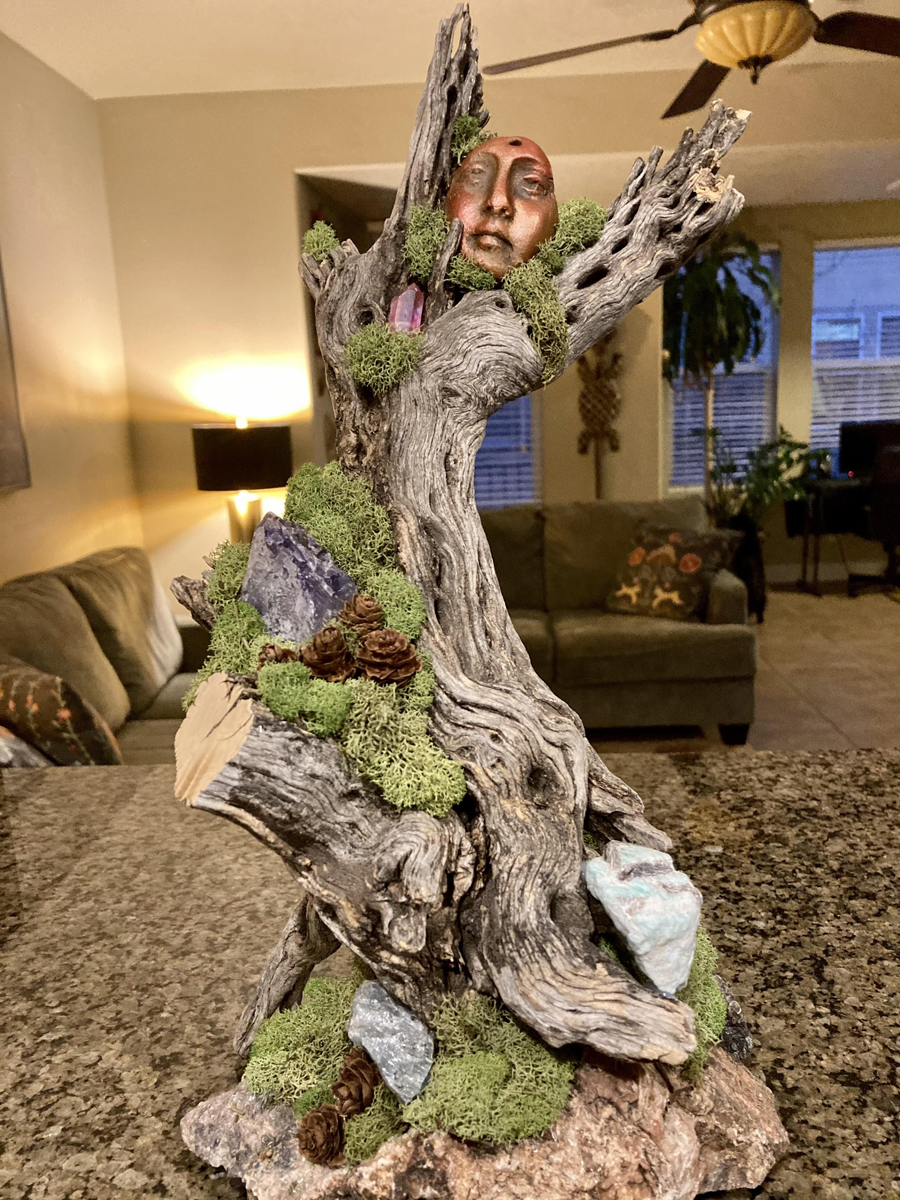
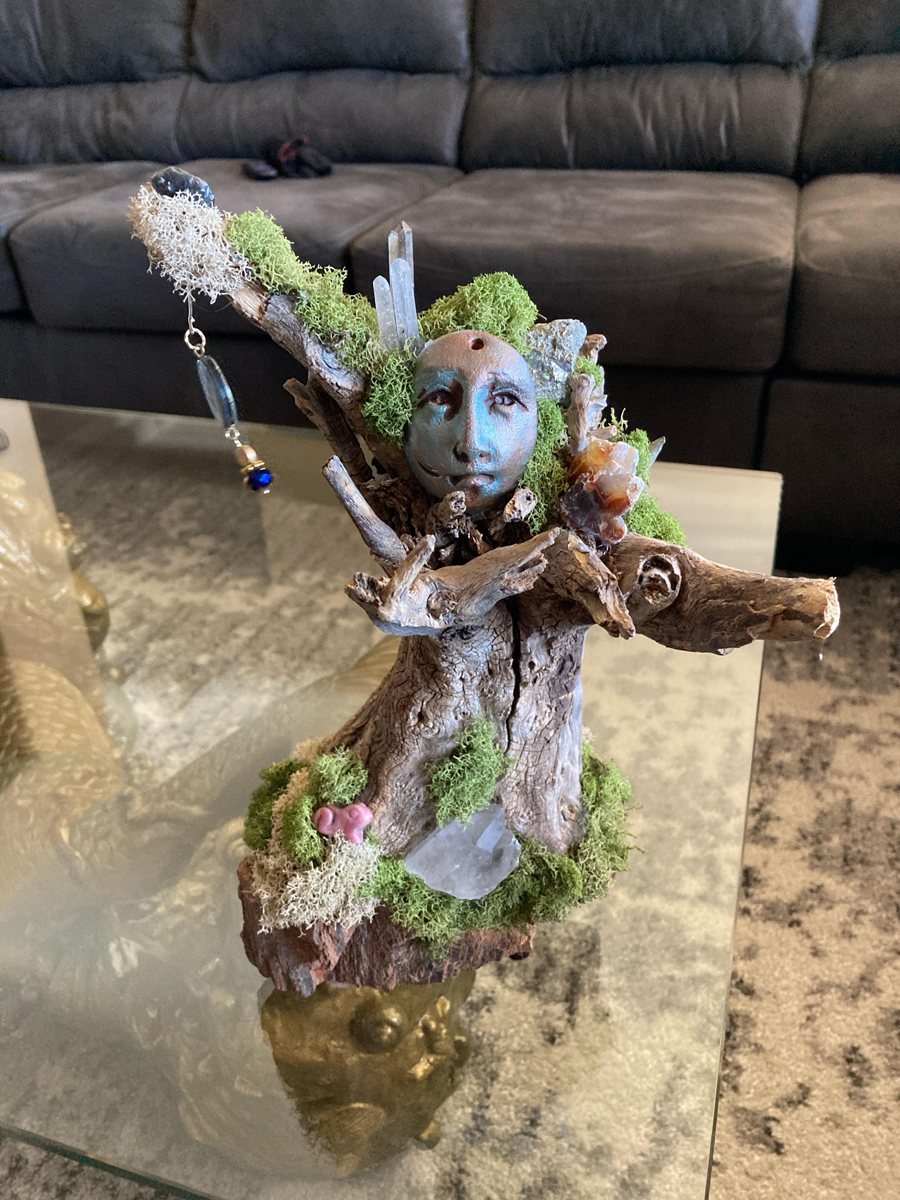
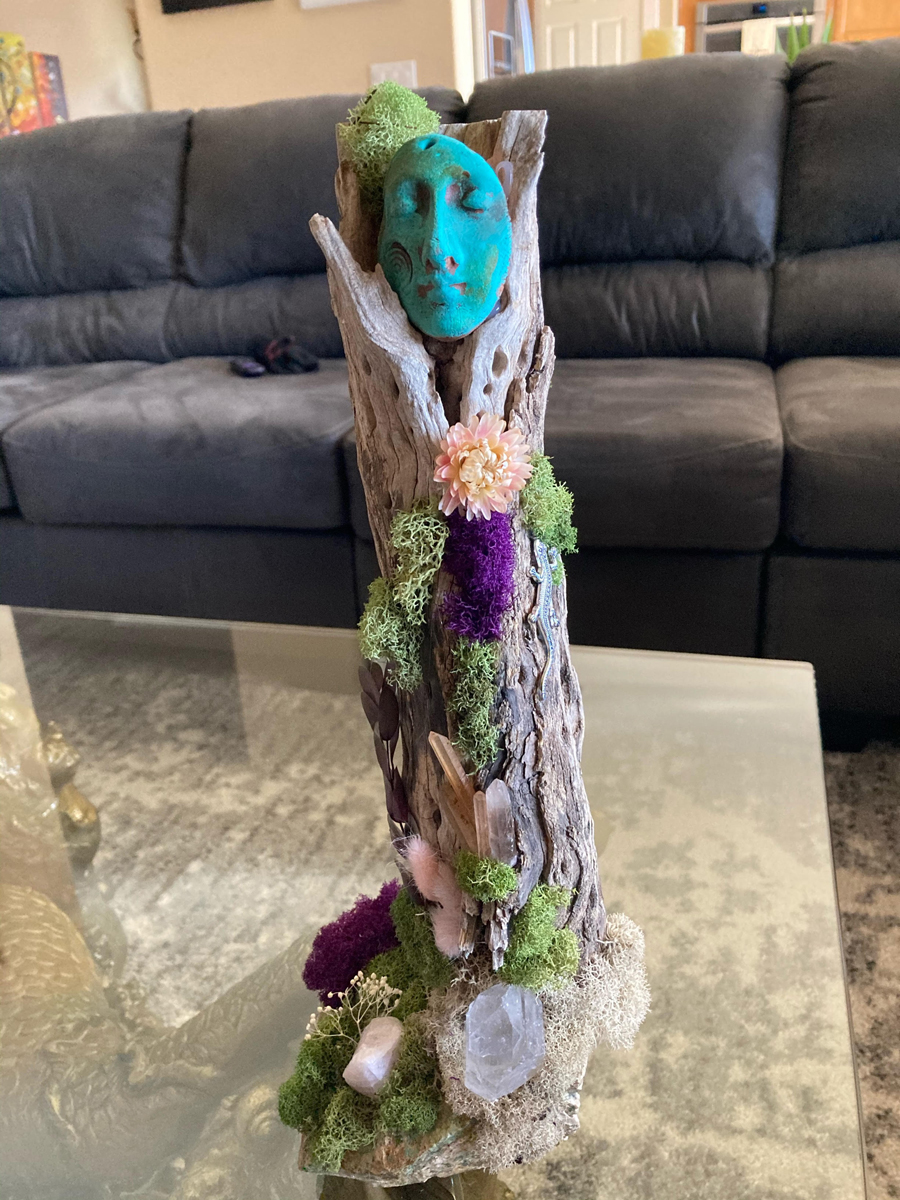
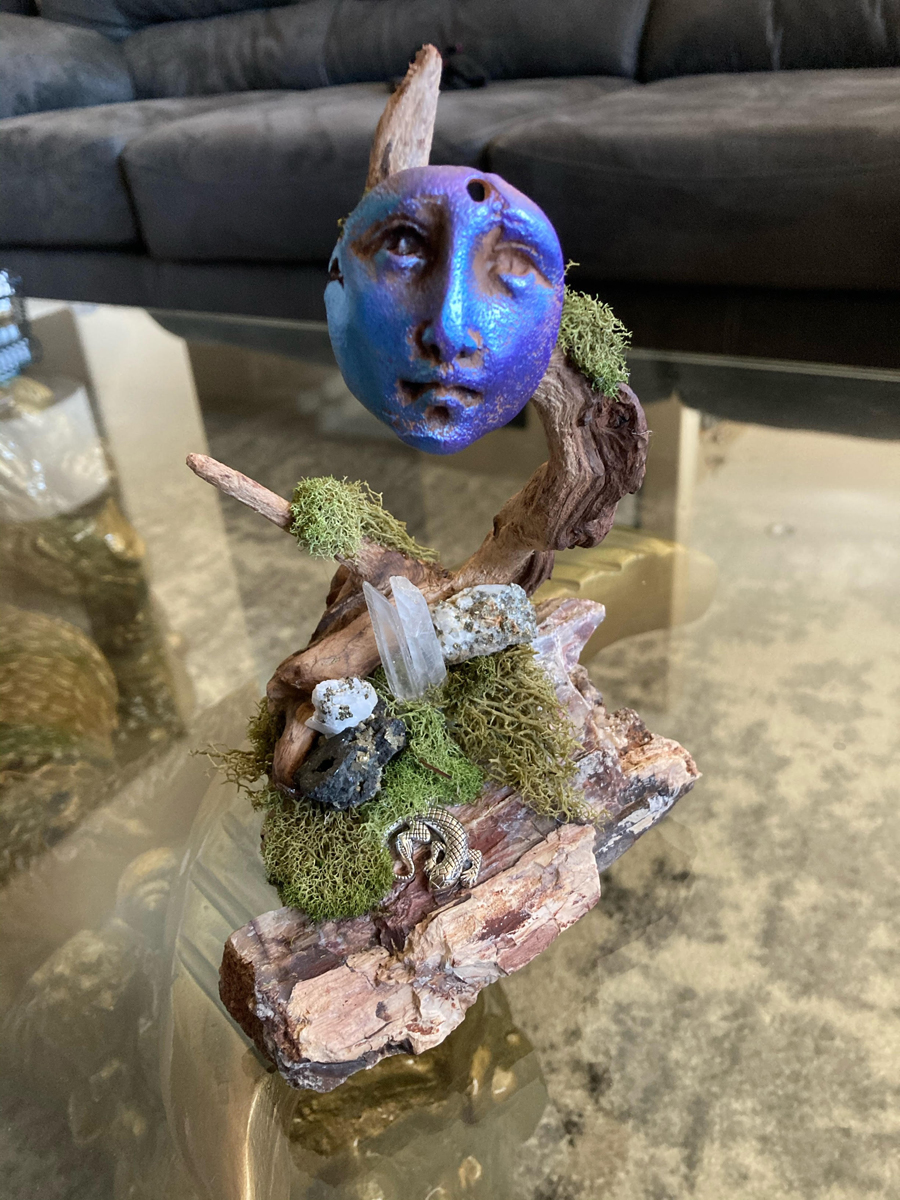
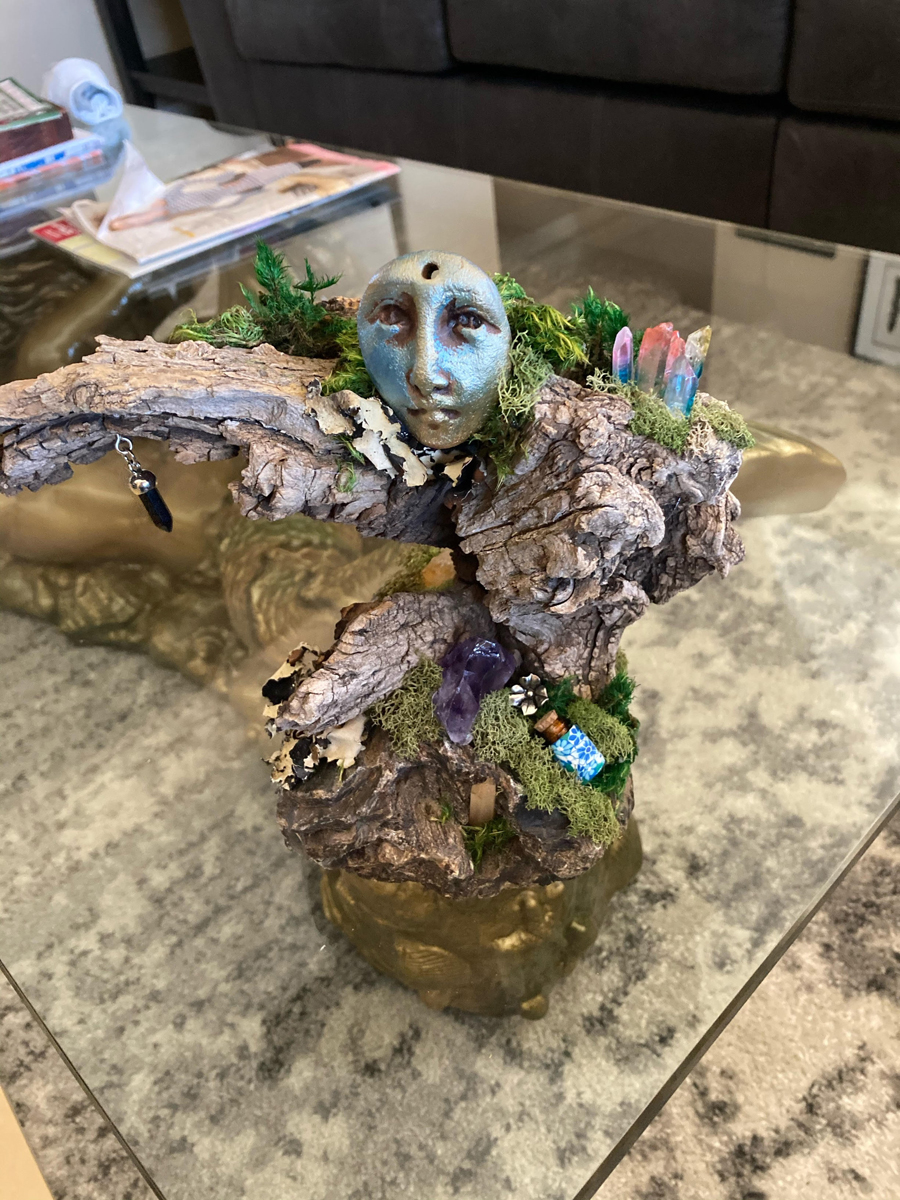
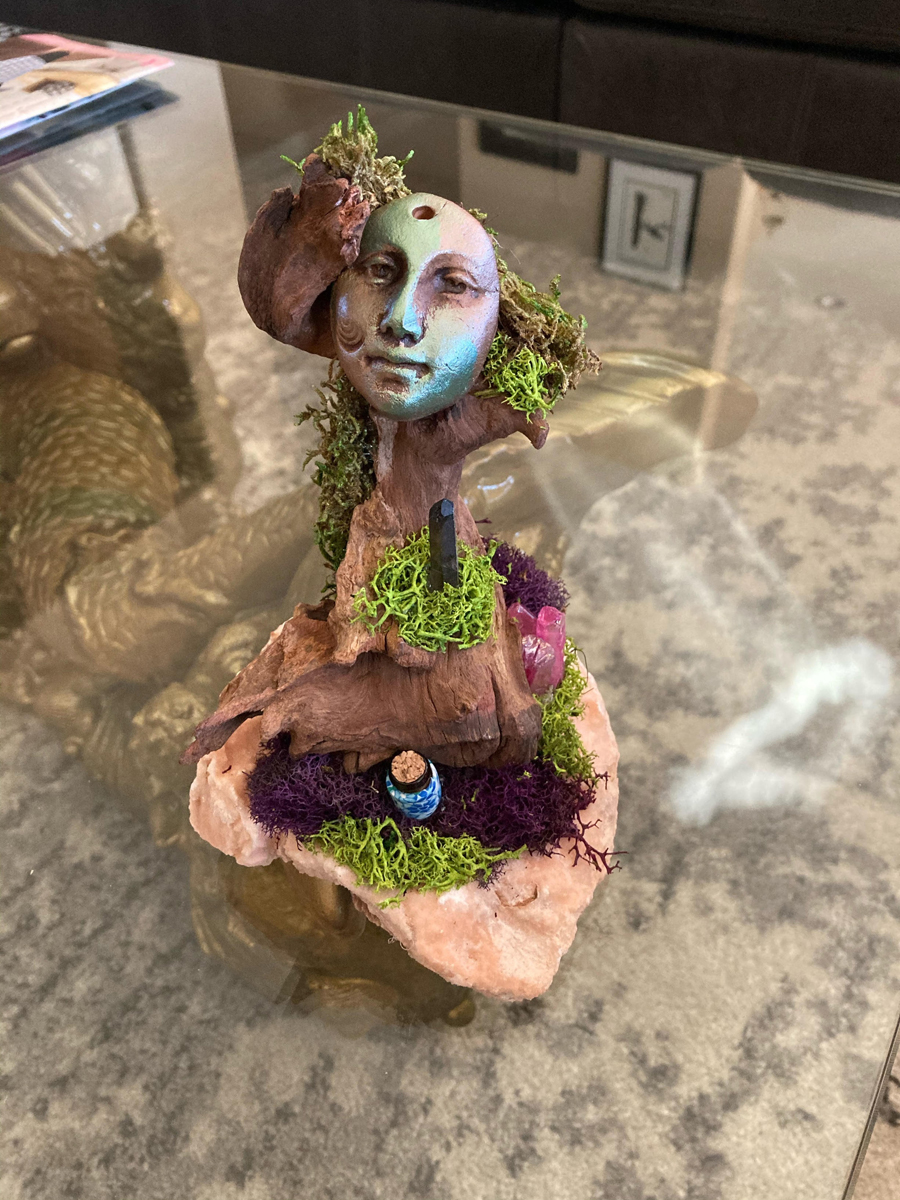
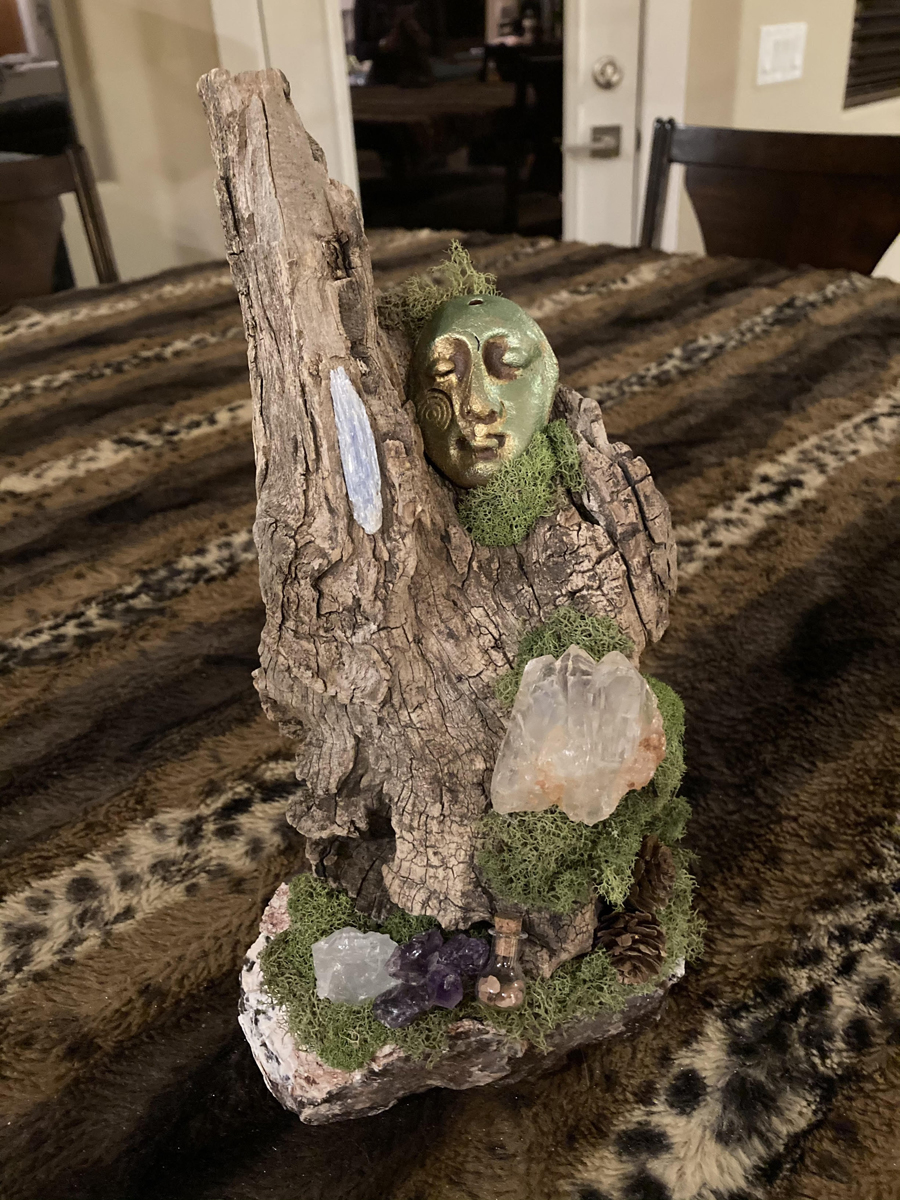
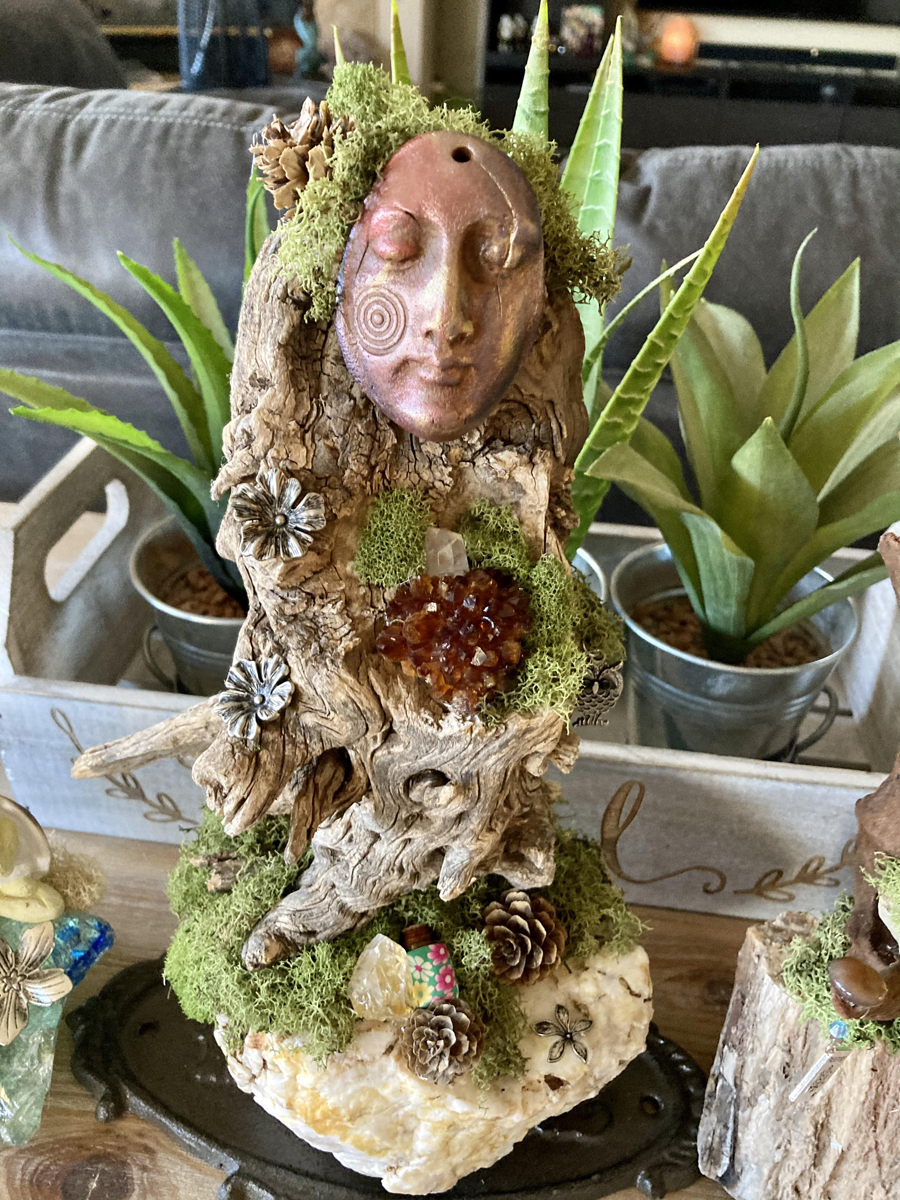
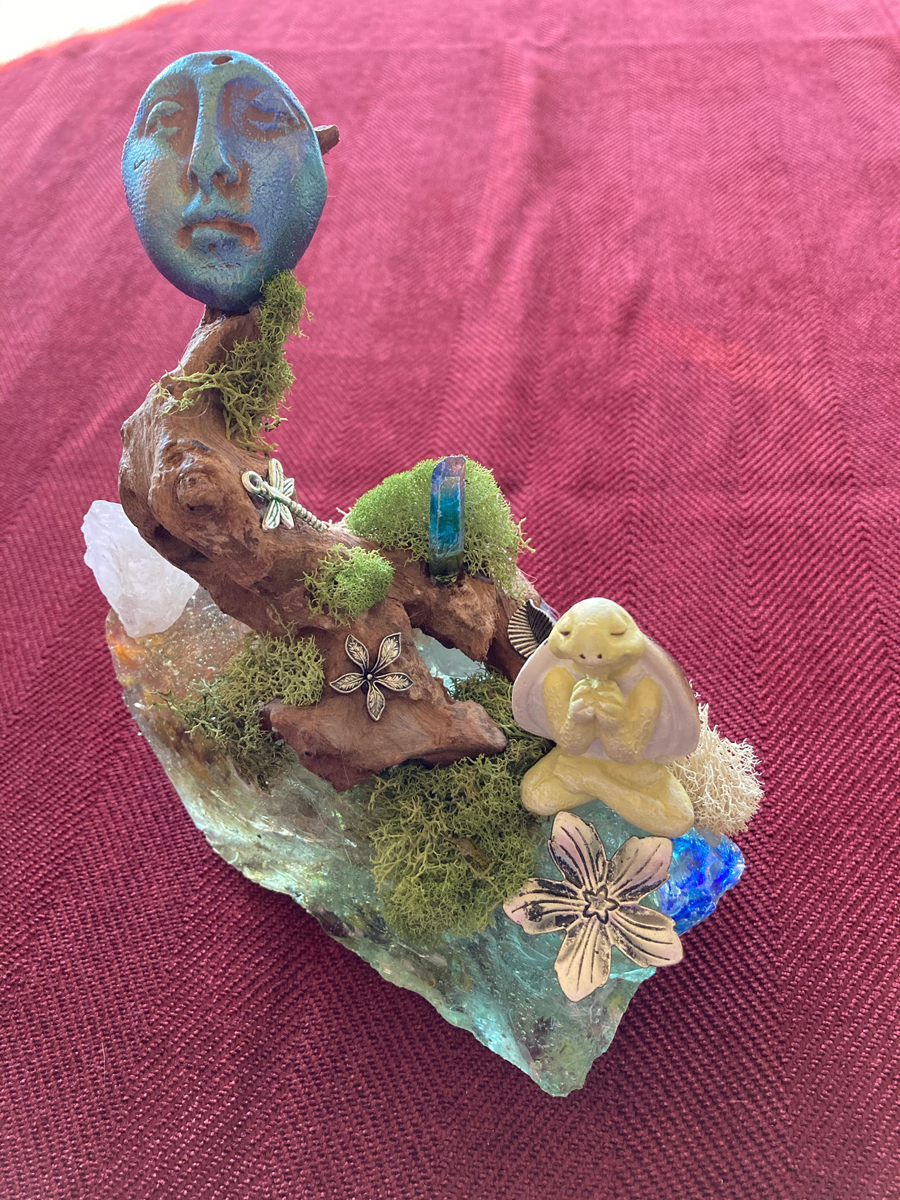
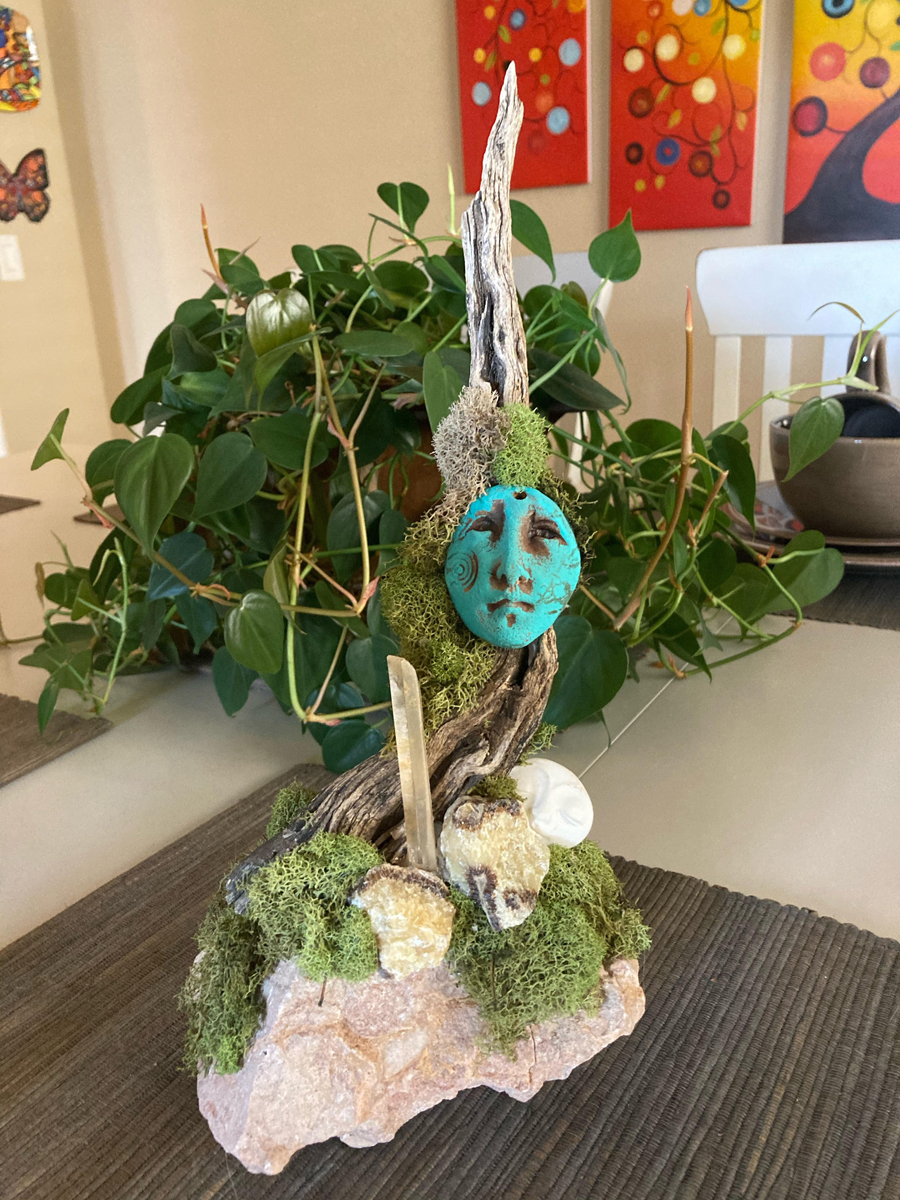
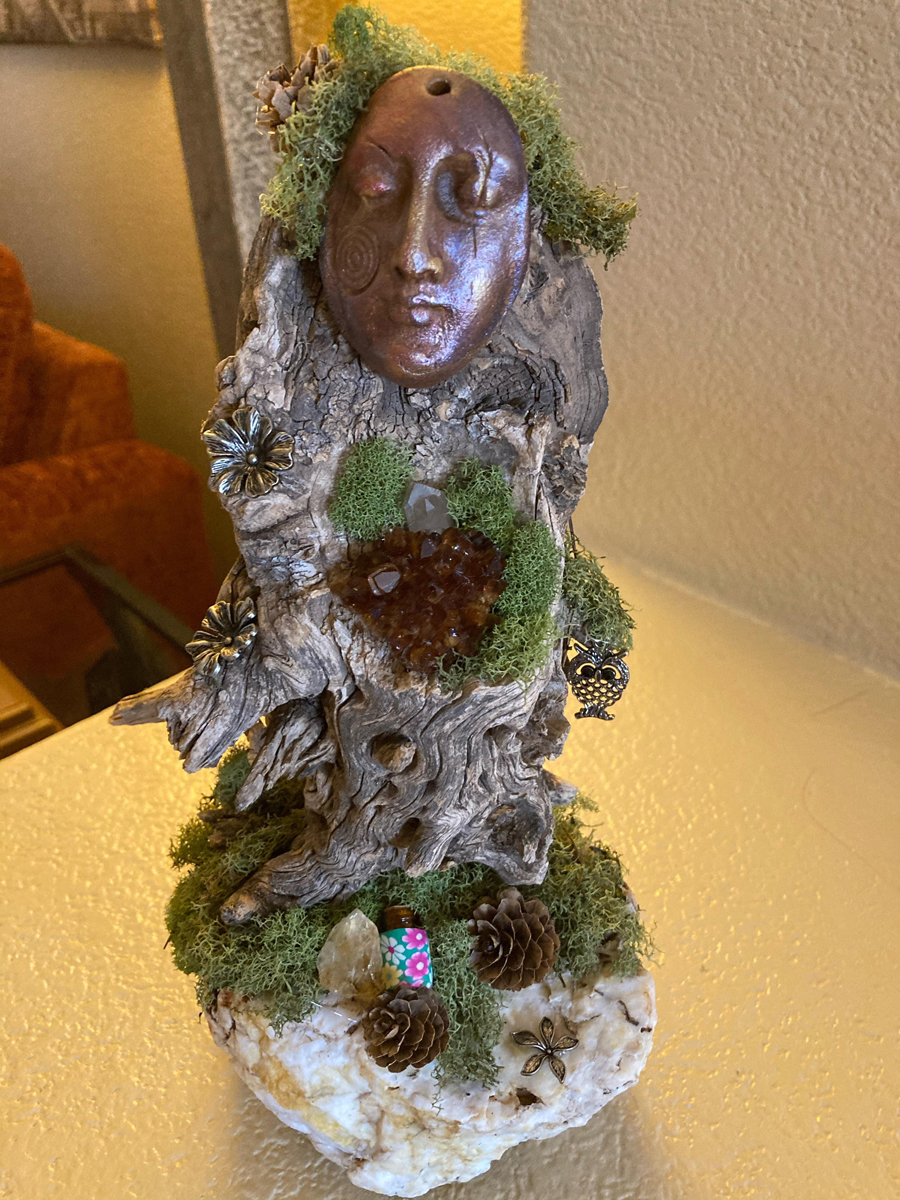
Normally, I’m shy about writing my buyers to ask how they are using the faces the purchase from my Etsy shop, Earthshards, but Wendy had ordered quite a few of the Celtic Forge faces and I was curious. I emailed her, and she graciously told me about her Nature Spirits.

Celtic Forge faces from my Etsy Shop, Earthshards

Wendy wrote:

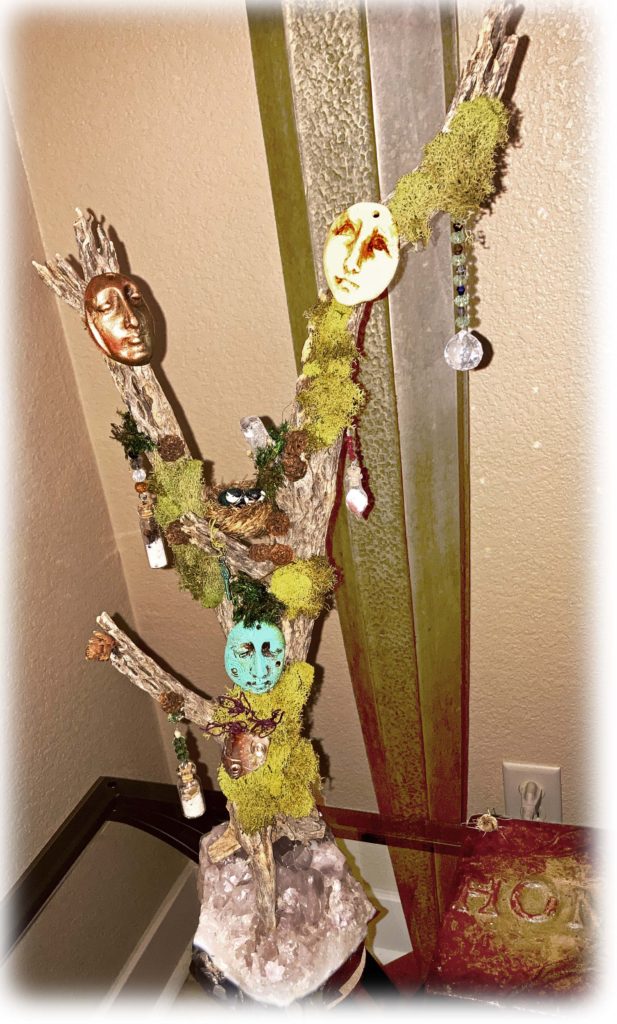
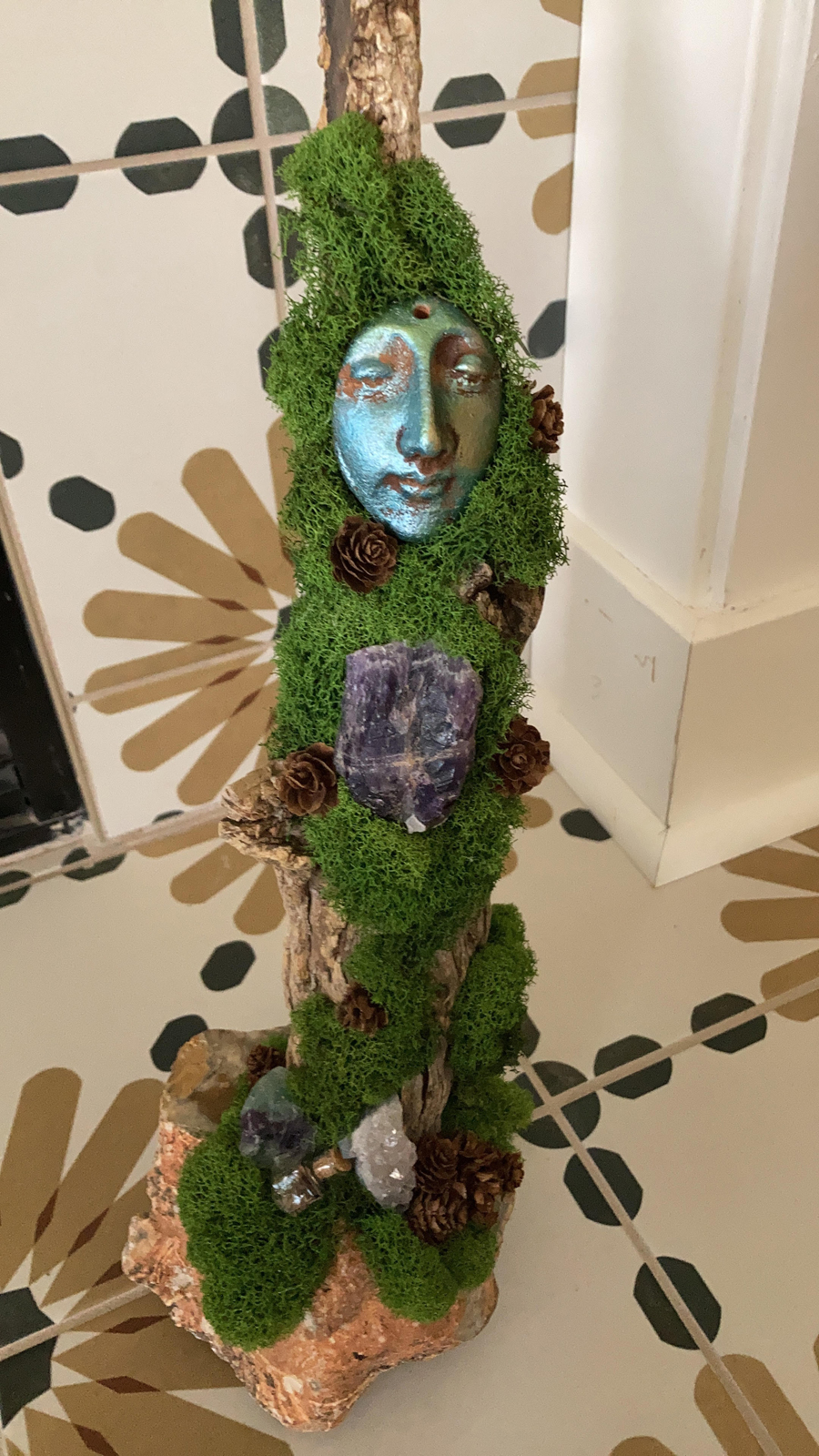
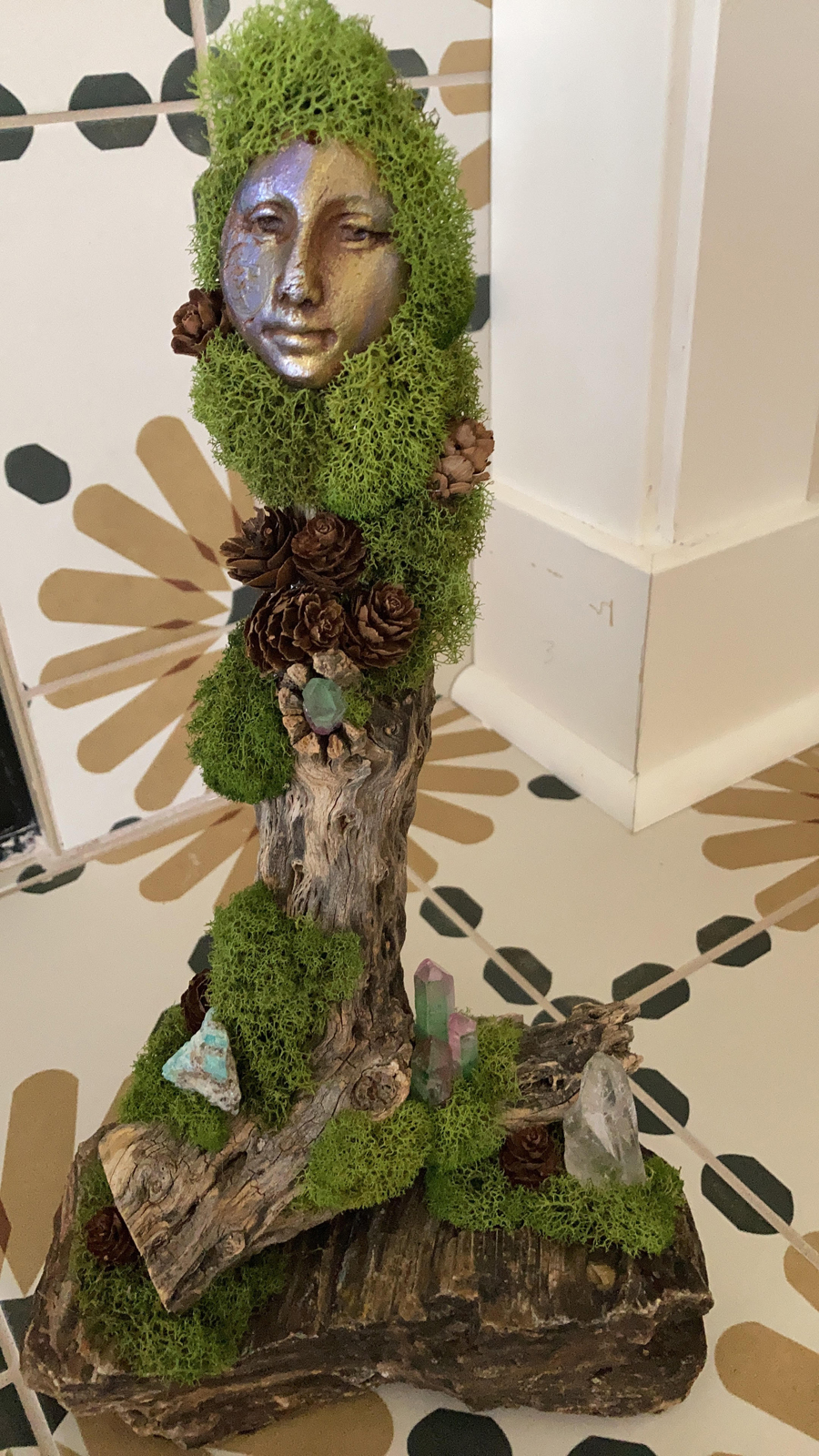
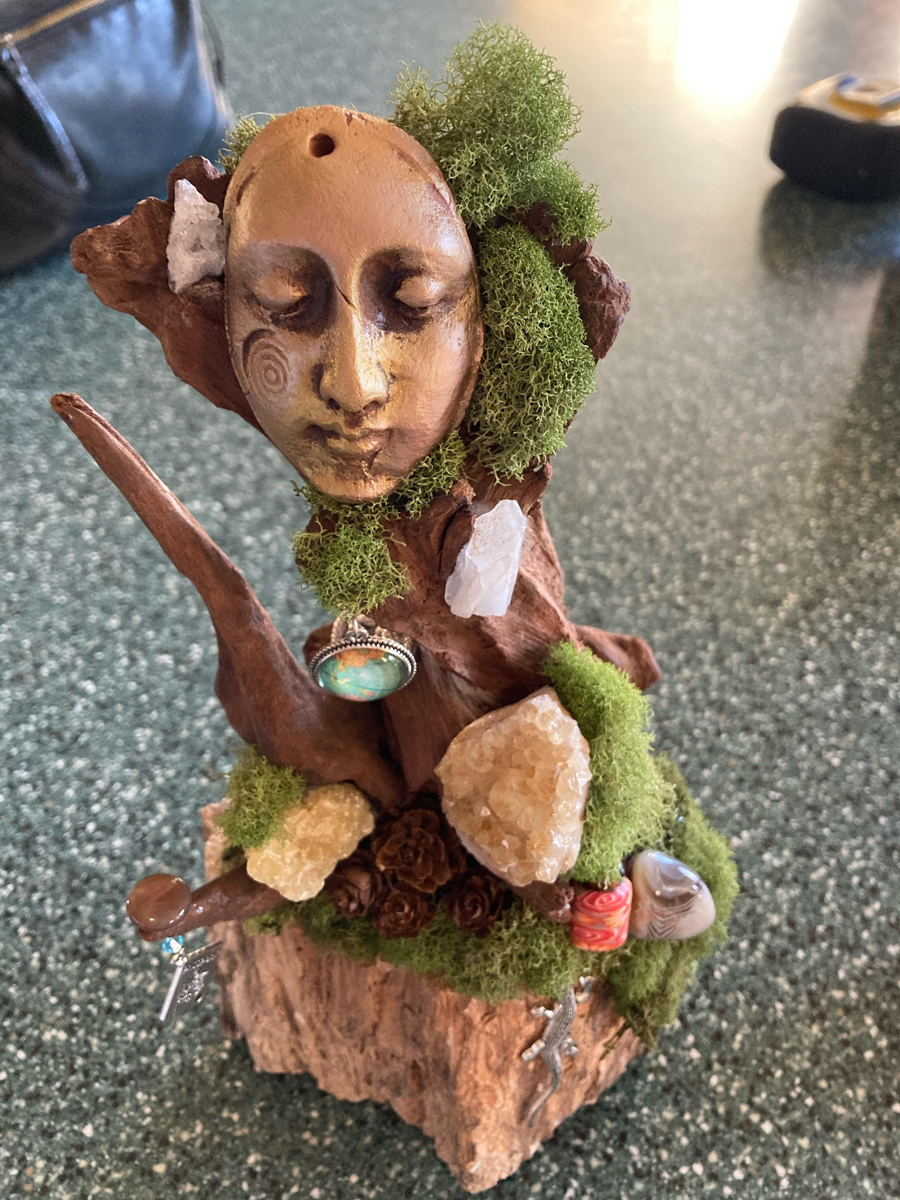
“I use all natural materials, and your faces are beautiful addition to my art. I was going to create my own Etsy shop one but the works weigh a lot as I use petrified wood and agate rose quartz . So that makes them quite heavy to ship, but I do have some in a crystal shop in Lehi Utah that carries my art, and I’ve done quite well there over the past few months. I’m currently doing a few commissioned pieces.

It started when I was at a cactus nursery and saw some Choya wood and decided to use it to create a beautiful piece of art. Little did I know they would be such a success! They are inspired by nature. Everything used on them is natural except for what I used to keep them in place. They they all have an energy that lives within each piece. I use a lot of raw crystals, pine cones, living moss, and natural stones as well as the Choya wood and your beautiful clay faces. I’m typically inspired to do a piece by what the face tells me.

Here is a picture of the first piece I ever did — and it’s history from there – LOL.”

Wendy’s Nature Spirits are packed with intricate detail and precious objects – tiny silver lizards, clusters of crystal. Here are some others. You can see the care and love that she adds to each one.

Thanks so much, Wendy, for sharing your wonderful Nature Spirits with us!

Before I close (and before the power goes off again!), I want to remind you that the Early Bird pricing for Painting with Fire is still open if you want to explore a year of Encaustic techniques and processes by 26 teachers (including me!) for less than $10 a workshop — pretty cool. Or hot.

Click here to visit Essence of Mulranny .

Please stay safe and warm – and take good care,

Lyn

Cats and Possibilities

When times are turbulent, I keep telling myself, “Trust the Process.” This doesn’t mean doing nothing and just watching it all happen, but rather doing what we do best – creating with compassion and imagination in the certainly that adding beauty to the world fuels thoughtfulness and optimism.

Seeing what others are doing in this turbulent time brings me that sense of optimism – particularly when their art stems from our Teachable workshop community. And particularly when the subject is cats!

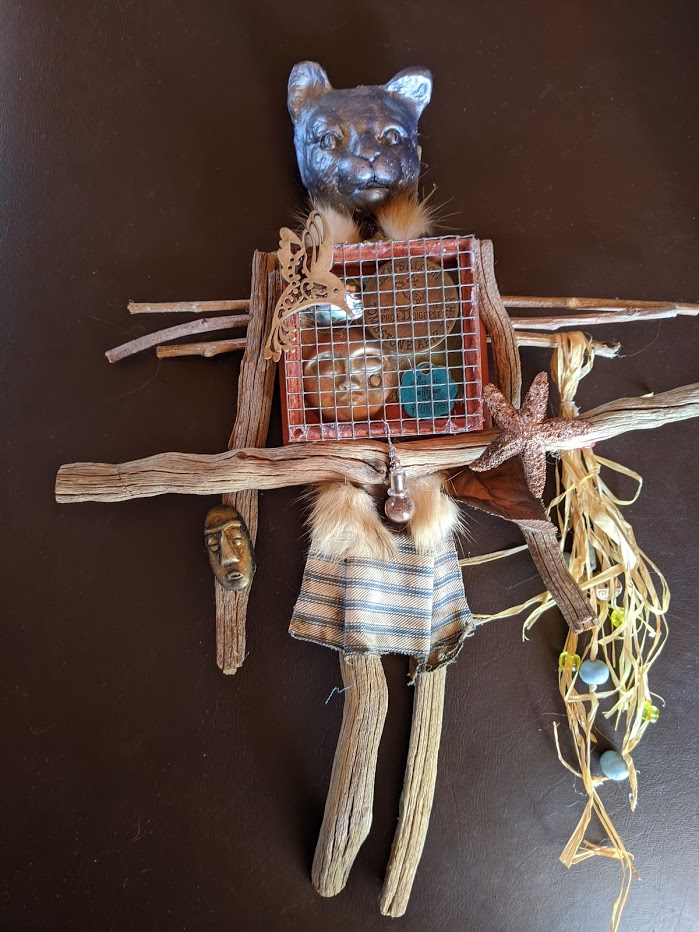
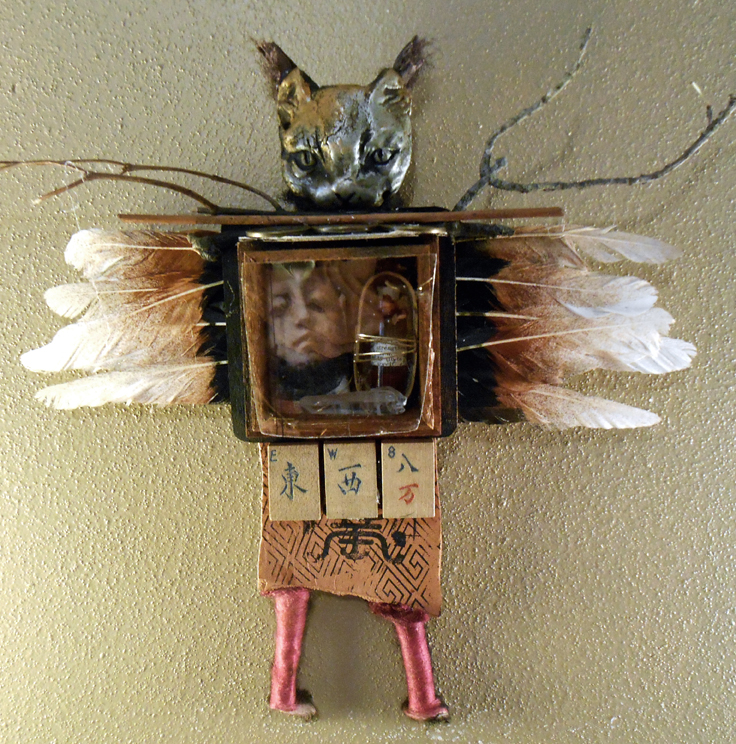
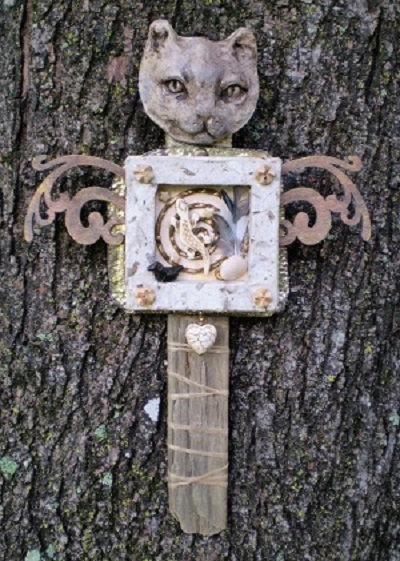
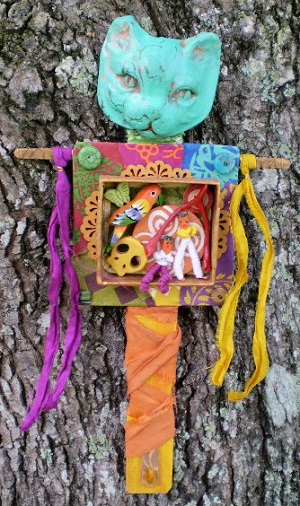
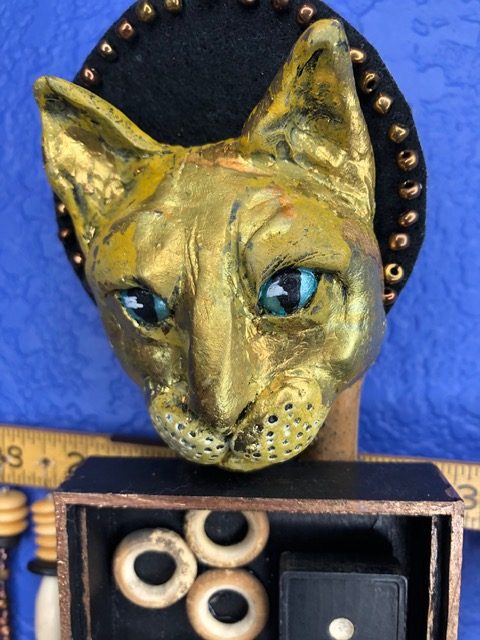
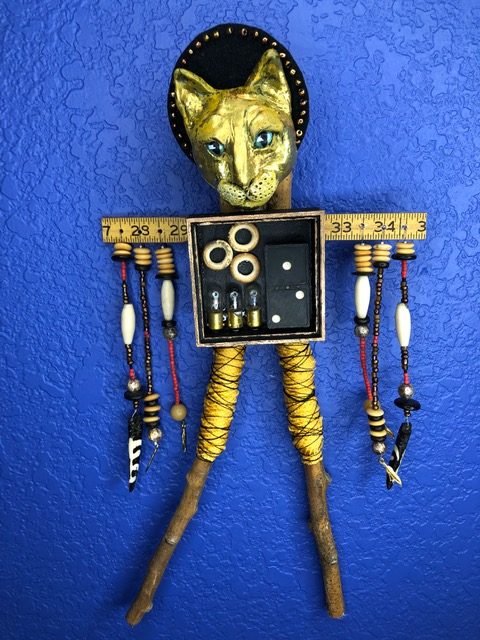
Willma Sliger’s Cat Shaman pieces are a perfect example of taking a basic idea (from my Cat Shaman online workshop) and just flying with it.

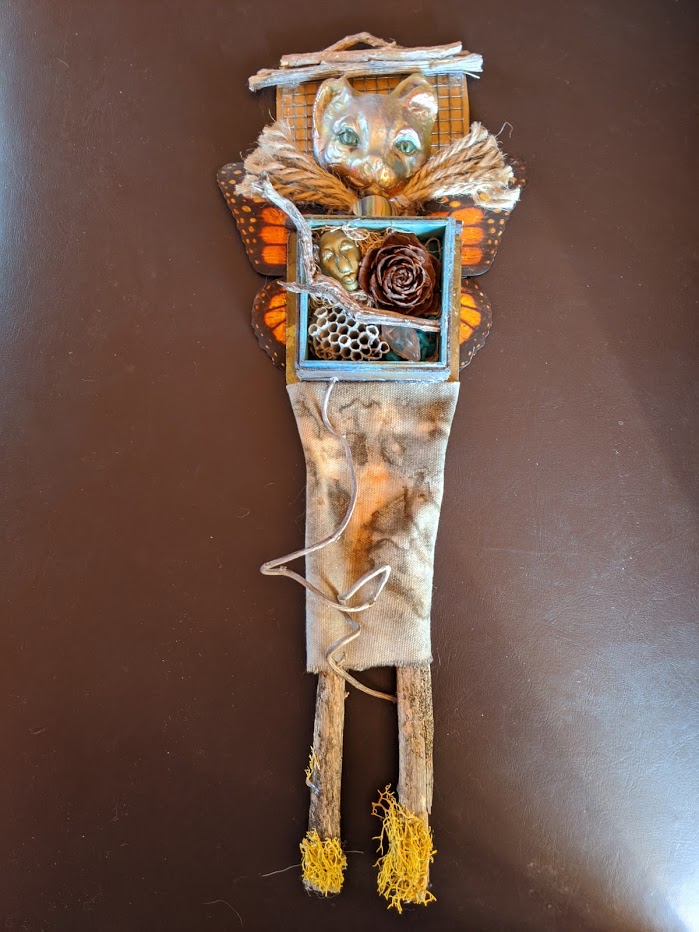
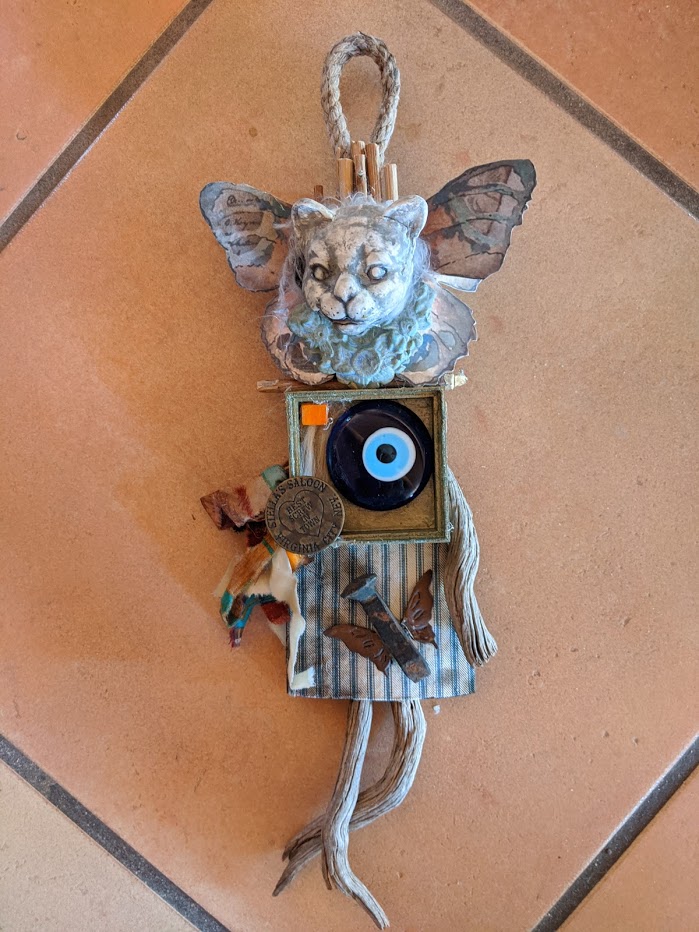
Wilma writes, As promised here are the Cat Shamans I have joyfully created. . . .Some have very old ticking . An evil eye brought back from Turkey by a friend. A replica of a coin given to men in old time saloons/bawdy houses. And lots more.
You are my antidote for covid. Seriously. Stay safe and well.
Love, Wilma the Desert Dweller

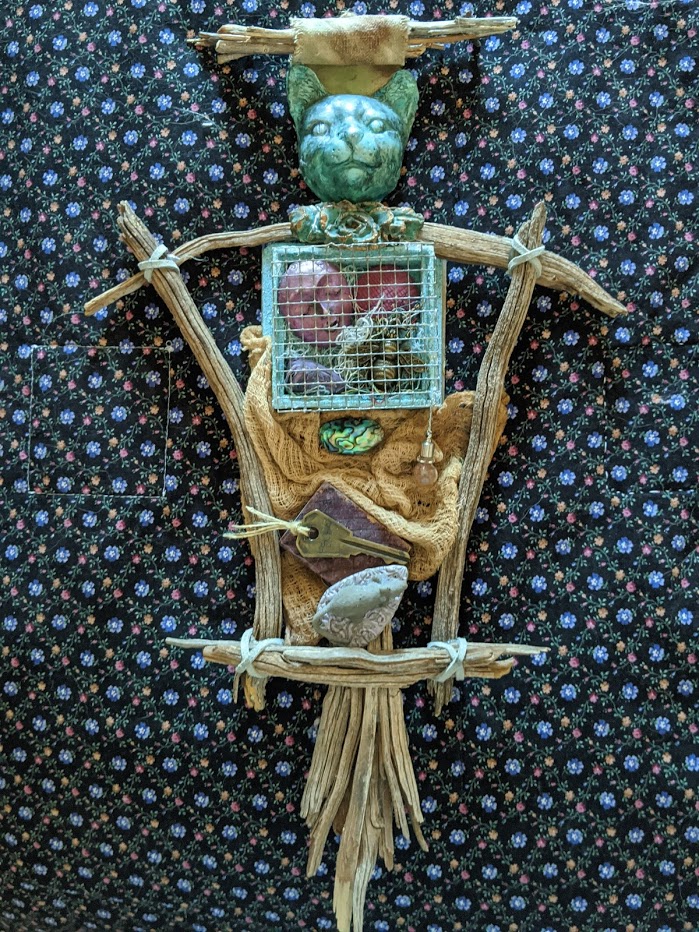
Wilma lives in Moab, Utah where she creates fabric & mixed media collages, incorporating photos and found objects with fabric to produce unique wall hangings. I told her I was stealing her idea of using a mesh screen on the Heart Box of her Shaman – it’s symbolic and mysterious.

Here is another one of those great Heart Boxes filled with charms and found objects. I like the tied desert wood pieces as well.

This Evil Eye fellow may be my favorite, all twisty and dance-y, with the lion-like head and butterfly wings.

I am so grateful to Wilma for sending these pictures – her work is artfully folk-like but complex, with a real sense of purpose in every assemblage.

So what do YOU do when you know you should be creating something for the good of you heart and soul, but you can’t get started because you don’t have an idea??

That’s an easy one – just get started, Grasshopper, and the Idea will come. Here’s an example.

Two days ago, I desperately needed to make some art so I could (at least briefly) focus on the creative rather than the political. Nothing inspiring struck. That’s rare. But I know if I did SOMETHING, I’d feel better, more optimistic.

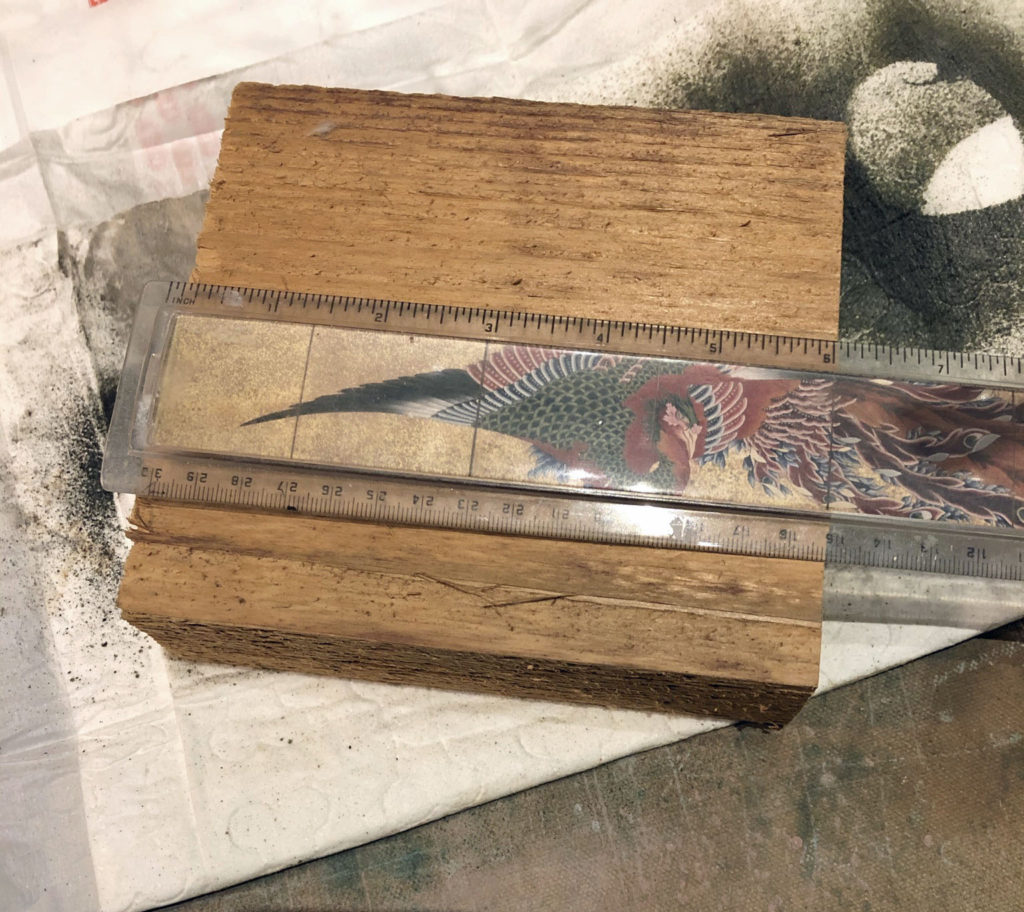
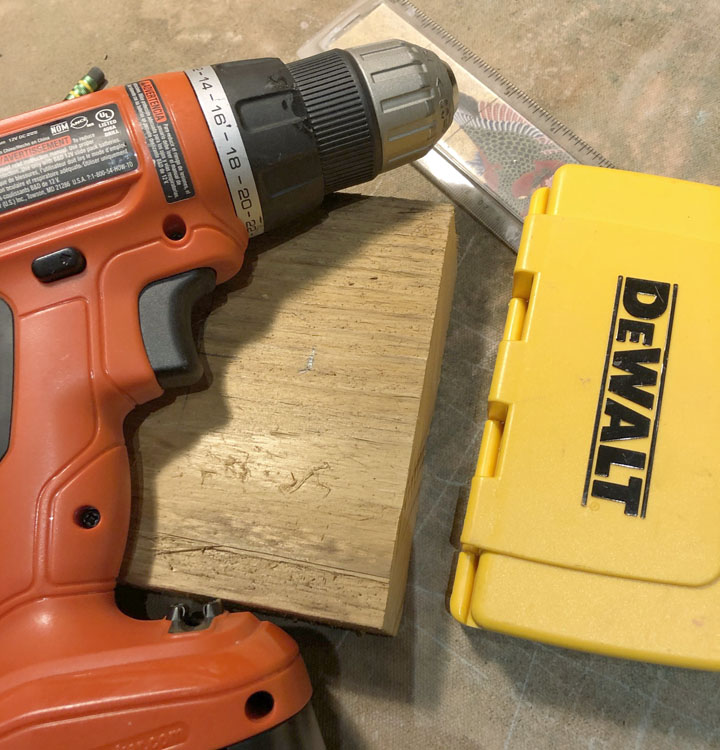
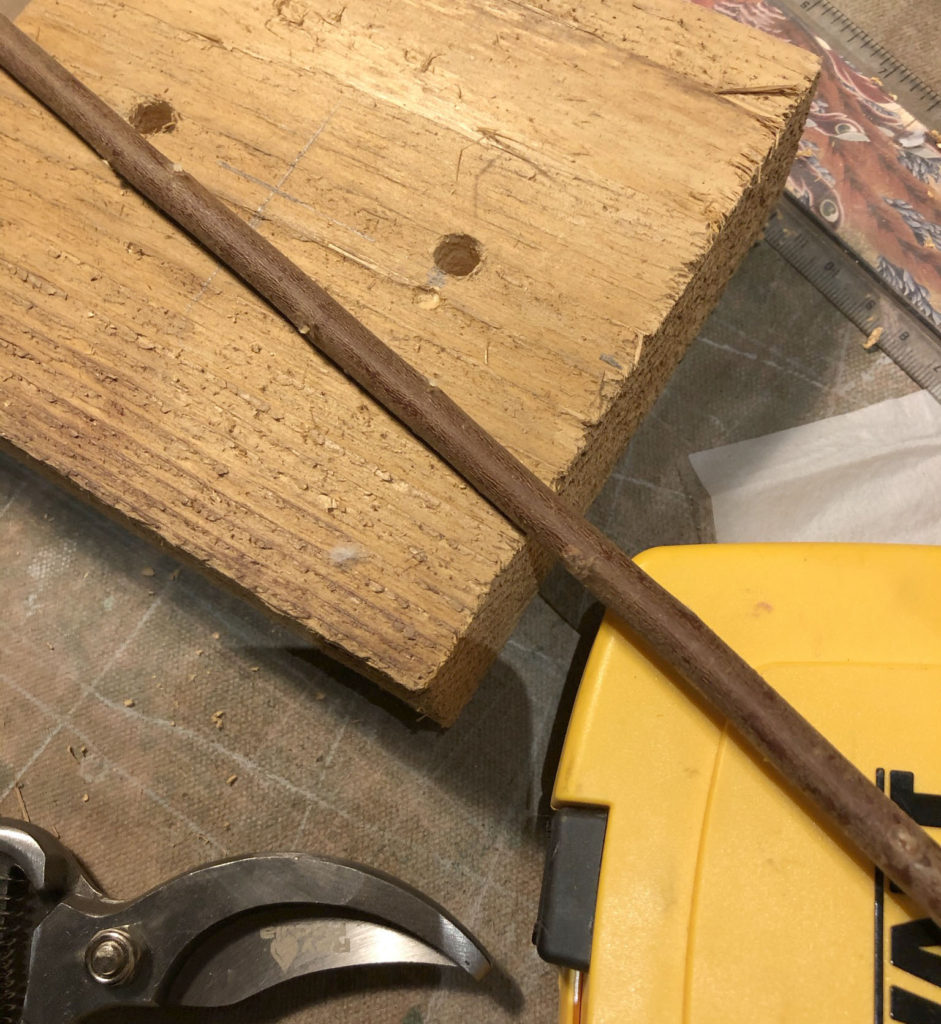
So . . . I found a block of wood, and marked some holes. Two holes seemed like a good number. Maybe.

I got out my trusty cordless drill (every artist should have one of these) and drilled two holes.

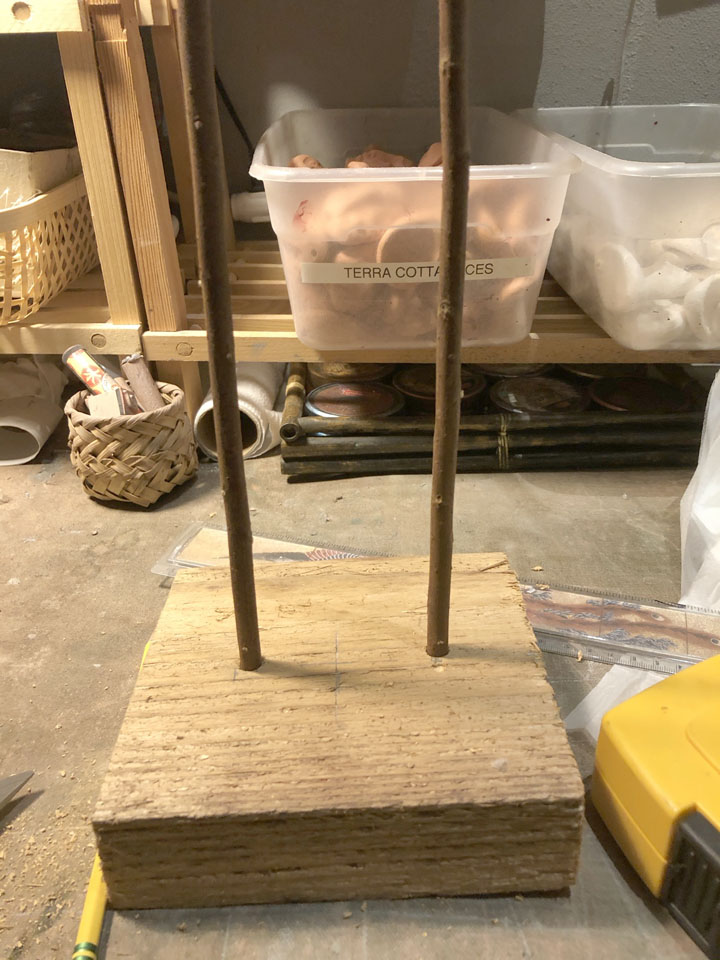
Then I cut some super-strong but slender bamboo sticks to about 18″ tall and stuck them in the holes.

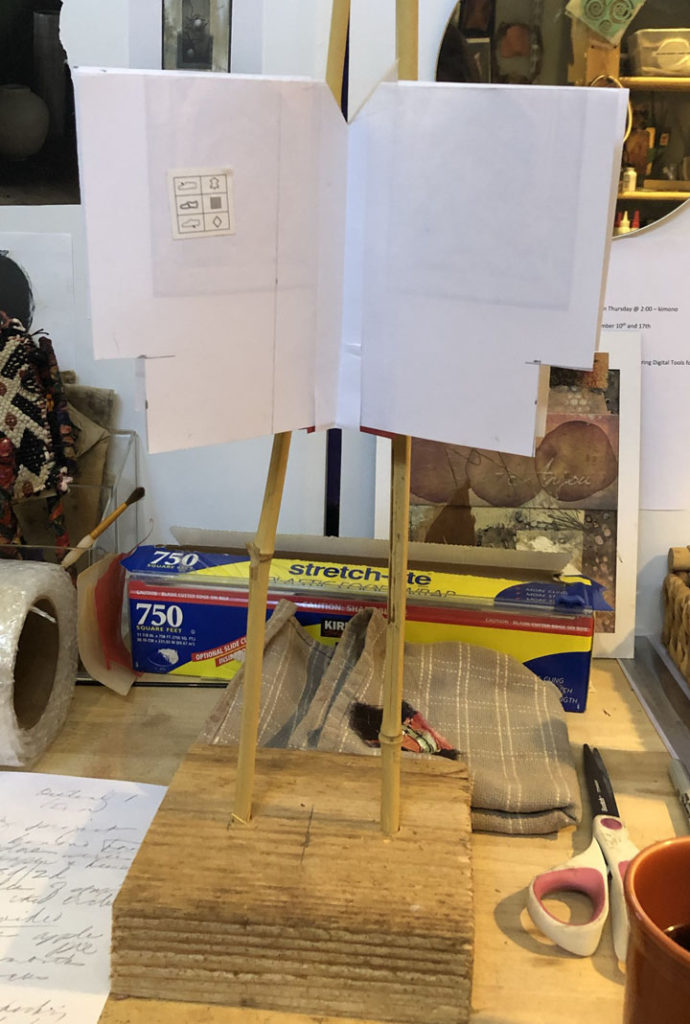
Voila! It ain’t much yet, but it will be SOMETHING! Who knows what?? When I posted it to Instagram, my friends suggested it could be a two-legged table or a REALLY tall spirit doll.

I’m thinking it might be a sculpture with a body that’s shaped like a kimono with beeswax-coated pages that open and close. Maybe so, maybe not . . .but the whole process got me thinking in a new creative direction –

So the point is, you can’t “Trust the Process” if there isn’t a process to trust yet. Start something. Wrap some string around a stick. Pour the last of your morning coffee on a piece of watercolor paper. Unravel a worn-out sweater.

In the background, I can hear Wilma’s Cat Shamans saying, “The journey of a thousand miles begins with the first step, Grasshopper.” Pounce. Munch.


A Walk-in-the-Woods Workshop?

2020 was surely The Plague Year (and we’re still being extra-cautious), but it did get a lot of us outside, walking and exploring nature. That’s a good thing. Decades ago I discovered that walking worked well for me as meditative thinking time – plus I find lots of cool stuff along the way. And sometimes it seemed that the cool stuff was left there especially for me to find.

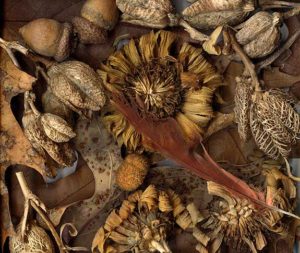
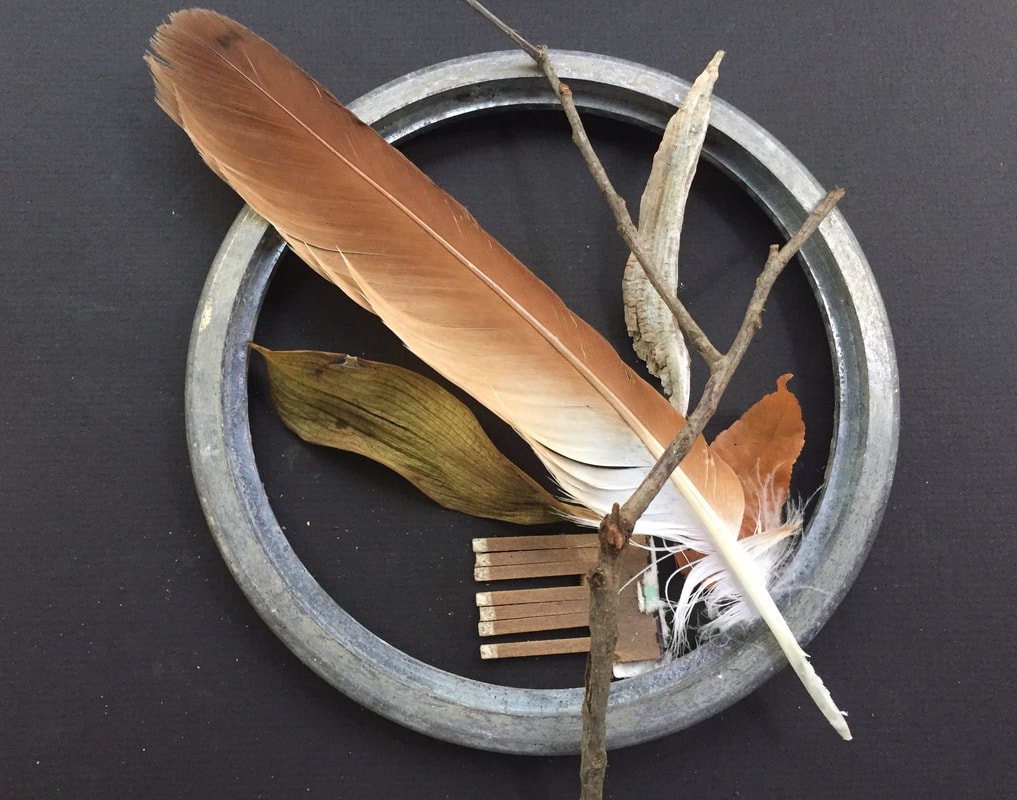
You may remember the wonderful photo collection of composed found objects that artist friends contributed to my website in 2019. Here’s that link, and here’s one of my favorite compositions (this one is by Marilyn Jones)

Marilyn Jones, Found Objects

This kind of collecting is nothing new for me. One of my signature techniques is embedding sticks and other natural objects into my assemblages – there’s just something mythical about material found outdoors “by accident”.

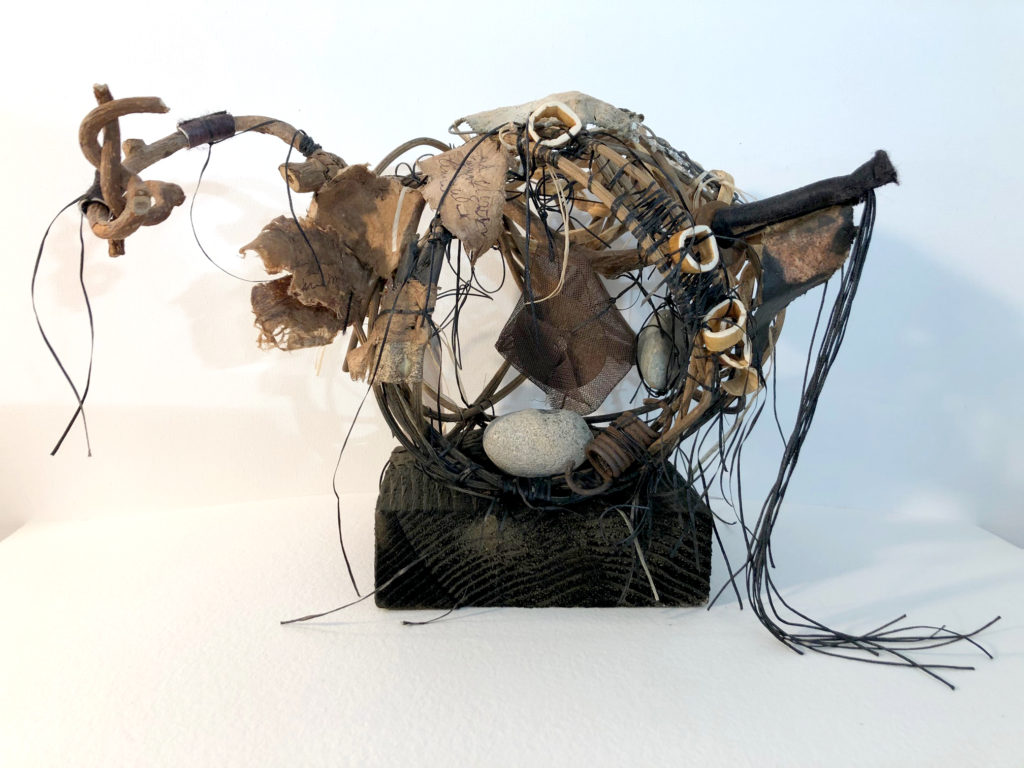
Sometimes, I even construct pieces almost totally from found objects and natural material, such as this piece called Bone Tea.

Lyn Belisle, “Bone Tea”

It was influenced by my friend Shannon Weber, whose work with natural materials makes me swoon.

Shannon Weber

So all of this leads up to a new workshop that I’ve just posted on my Teachable Studio site. It’s called Sacred Serendipity:Nature Shrines and Assemblages.

Collecting things from nature and assembling them as art is a long and honorable practice.

If you’ve ever read Ann Morrow Lindbergh’s Gift from the Sea, you know how she describes different seashells as stages in a woman’s life – the oyster shell, covered bumps and lumps but still smooth and beautiful on the inside.

This is a workshop for anyone who has ever found a pine cone, a smooth rock, or a red and gold leaf and brought it home in gratitude and wonder.

There are several free preview videos, including one of me being very goofy in the woods across the street from my house, pretending to “find” objects. But I think the real beauty of this workshop lies in the techniques about arranging and attaching natural objects to a small canvas. This gives you so much leeway to create your own small Shrine to Nature.

I also show you step-by-step how to make a mold from a natural object and then cast it with paper clay – you can do faces this way, as well. The class fee is a mere $29, and you can start and stop whenever you like. The lessons are yours forever – or at least as long as the Internet lasts. Think of this as the cost of a bag of groceries but with more lasting results!

Workshop Preview Link

So here’s to a walk on the wild side – and the natural treasures that we “accidentally” find there. 🙂


A cat gallery and a surprise workshop

(The Surprise Workshop is at the bottom of this post – but first, check out the cats)


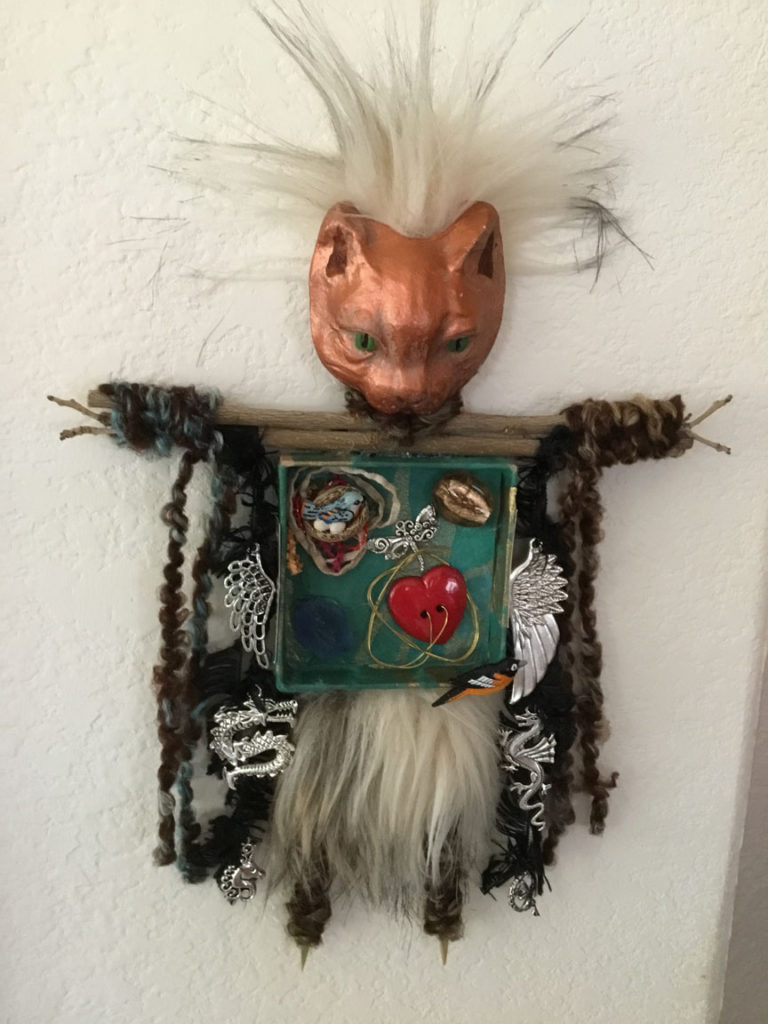
What is it about cats? One of my online workshops is calledThe Mystical Cat Shaman,” and the photos I’m getting from students of their magical critters are just brilliant. I thought you’d like to see a few of them.

This one is by JoliBlanch, who writes, “I wanted to do a 2020 healing shaman. So in that spirit, since cats and birds don’t usually socialize,  the birds are there symbolic of The wish for unity among all peoples. The heart is the love energy needed, the blue crystal is healing energy, and the gold bead represents the God energy. The milagros on either side represent the magic we all need now. So – angel wings, dragons, unicorn and faerie energy.”

Next, we have two Cat Shamans by Barbara Linderman. She says, “I took your online Cat Shaman class this summer.  Attached are pics of my two creations.  It had been a while since I had done any kind of mixed media work and your class has inspired me to do more.”

Meet “The Collector” and “The Fortune Teller.”

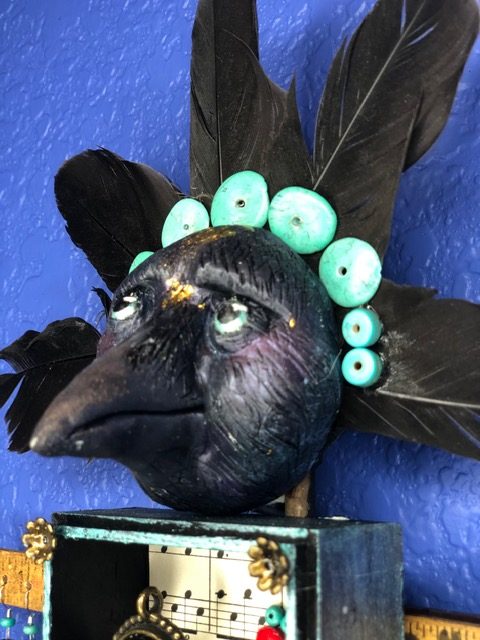
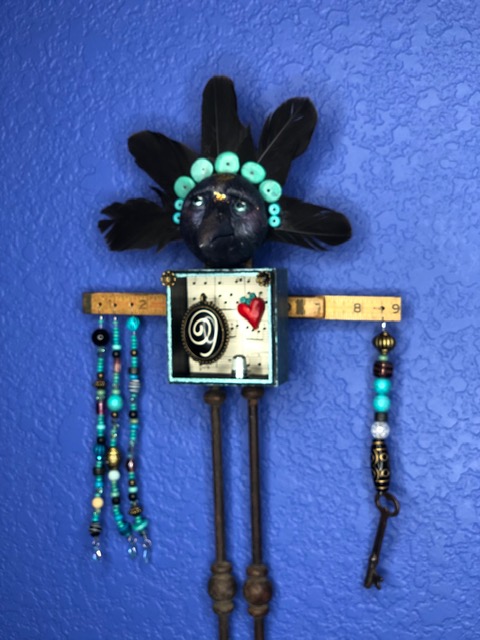
Finally, here are some figures that go in their own fabulous direction by doll-maker Kathryn Hall. She notes. “I really enjoyed your video class Lyn, so thought I’d show you my take on it.  I made two cats and two crows.  I make my own faces from polymer clay.” 

Look at these faces! And the bodies!

All of these pieces are so creative. When I teach a workshop, i hope for exactly this – original artwork inspired by my lessons but not copied from my work! Yay!

I’m so grateful to all the makers in the Cat Circle – I’ll share more soon. The workshop is still available if you are ready to make you own Cat (or crow – or dog?) Shaman. Just click here to checkout the free preview lessons.

_______________________________________________________________________

And now — the SURPRISE WORKSHOP!!!

In one of our first collaborations, Michelle Belto and I did a class called Mask, Robe, and Rune.

Michelle just made this workshop available on her Teachable site. It’s a wonderful project that combines faces, waxed collage papers, free-standing sculptures, and spooky runes and writings. Because it’s been previous published, you can sign up for just $29 for the entire course with both of us team teaching.

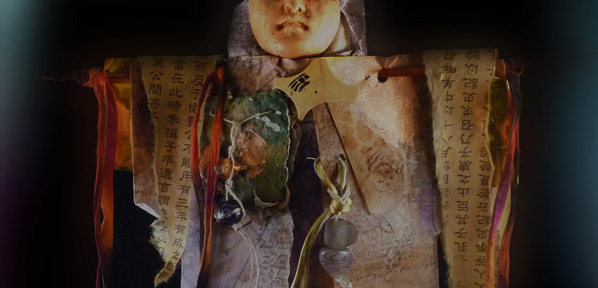
Here’s an example of the Mask, Robe and Rune mixed-media assemblage – you will learn to make those great papers to use as the “robes” on the figures – and much more. Thanks, Michelle!! Here’s that link.

Remember what our ancestors told us“Idle hands are the devil’s workshop.” You don’t want any devils in your workshop. Check out the Cat Shaman and Mask, Robe and Rune and keep your hands out of trouble!


Imaginary friends, bossy inspirations

Human faces and figures, ancient or contemporary, fascinate me as summaries of life stories in the moment. The longer I work as an artist, the more focused my work seems to be on interpretations of those themes.

Clay, paper, beeswax, and fiber are my instinctive, beloved media, all of which lend themselves to representations of faces and figures as small sculptures, spirit dolls, and earthenware faces.

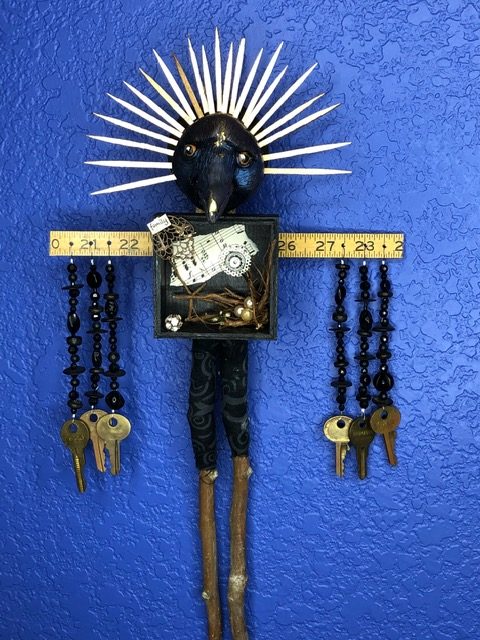
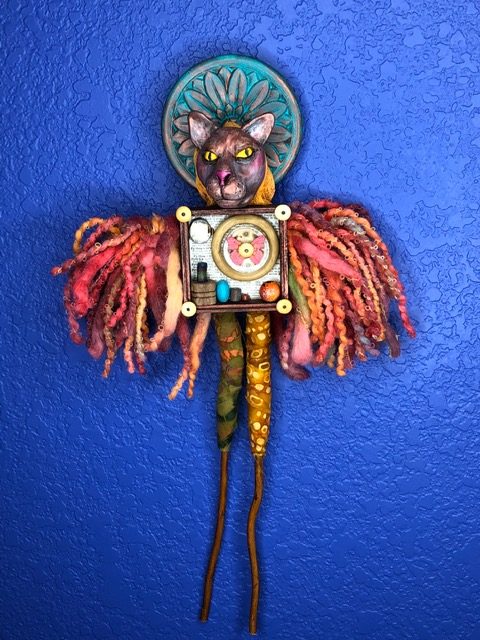
Below are two of the latest little figures (sticks, clay, found objects) which I just dropped off at Marta Stafford’s gallery in Marble Falls. They are called “StarSeason” (top) and “Pastime” (bottom)

Creating an assembled piece related to human form is different from creating an abstract painting – there’s still a lot of intuition, technique, and trust involved, but these small sculptures seem to function as creative “guides.”

It’s easier to tell what element a figurative assemblage “wants” than it is to tell what color a painting “wants,” at least to me. Yeah, I know, it sounds weird.

I discovered this when I started teaching Spirit Doll workshops a decade or so ago, and then re-learned it in the latest Spirit Doll workshop, now up on Teachable.

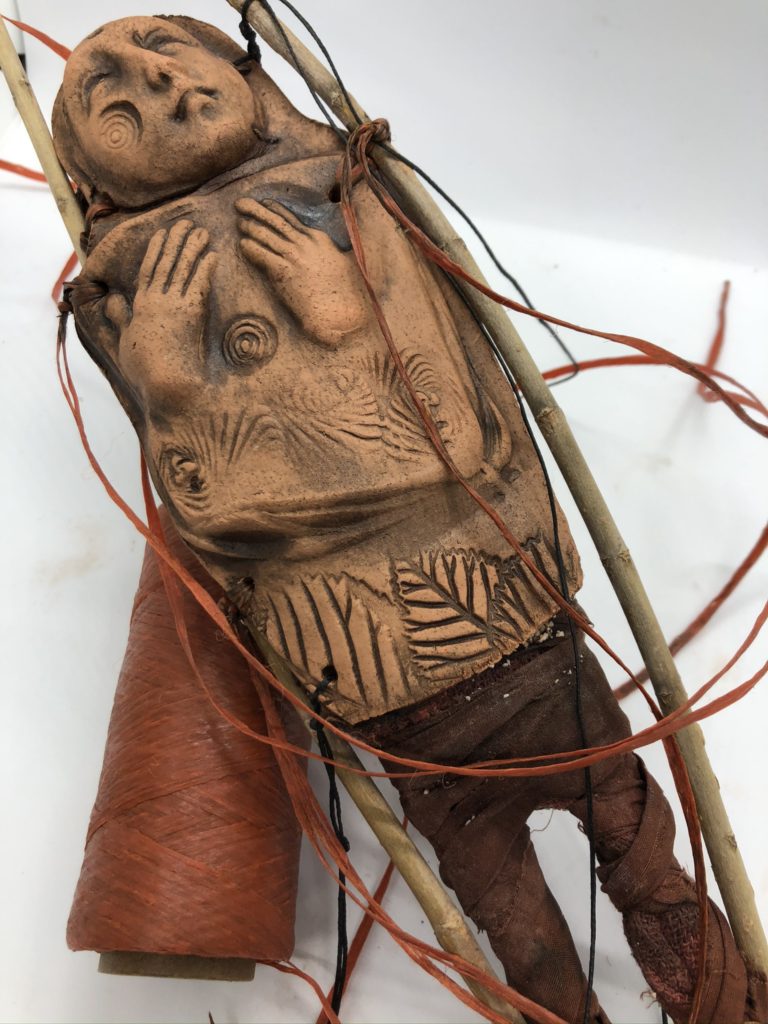
If you look at the second lesson in the Spirit Doll workshop (which is a free preview) you’ll see how a bunch of stick almost pull themselves together to become something with strong opinions and a personality! It’s really fun to be involved in that process.

I remember when I was putting this piece (below) together a couple of months ago (it’s kind of a cross between mixed-media sculpture and Spirit Doll), I felt strongly guided on what to do next. For example – when it came time to represent the hair, she wanted horsehair.

I didn’t even know I had any horsehair, but then I remembered that a friend had brought me some a long time ago at my old studio. I finally found a hank of pale, coarse horsehair in a buried Ziploc, and used it. The sculpture/spirit doll was right! Nothing else would have worked!

Then there’s Mojo Woman, who wanted everything but the kitchen sink – I listened to her, too – not sure about this one 🙂 See how smug she looks with all that stuff?

Anyway, join the new Spirit Doll workshop if you need a new imaginary best friend who can be a bit bossy. But if you don’t like having somebody telling you what to do, you may regret it!

Take good care,

Lyn