What do you have to say for youself??

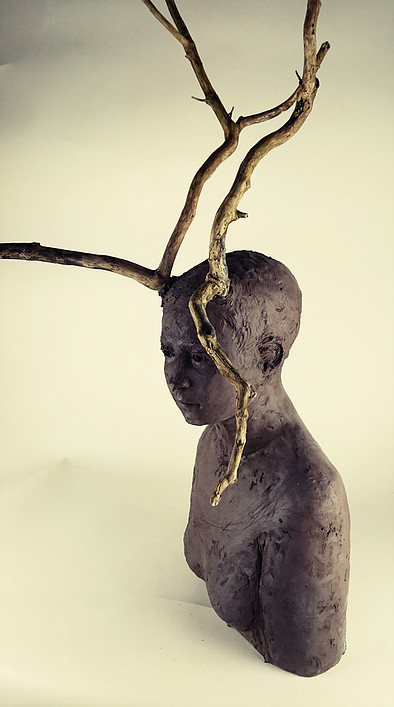
Jane Dunnewold is a consummate contemporary fiber artist and a beloved internationally-known teacher. Her Creative Strength Training program has helped thousands of artists (including me) to discover and define their authentic creative selves.
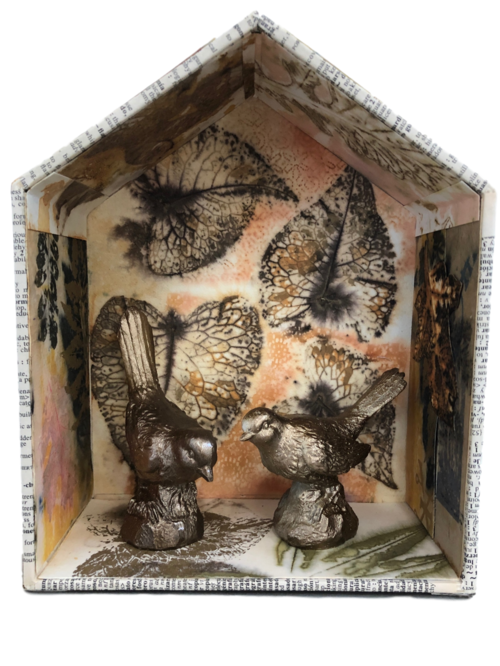
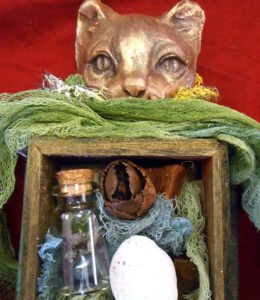
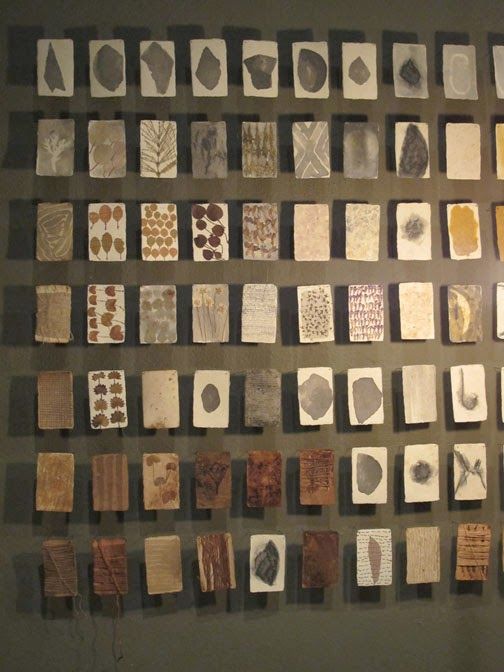
Jane Dunnewold: Altar #1 – Wooden altar form “upholstered” with botanical prints on 140 lb watercolor paper. Approximately 10″ tall x 8″ wide.

Jane is also a heck of an interviewer! Her sharp mind and strong background in the arts gives her genuine curiosity and insight, and she knows exactly what questions to ask people.

So that’s why I was both thrilled and intimidated when she asked if she could interview me for her CST Guest Creative Interview Series.  
It was great! I learned so much – read on . . .

Here’s a short clip from the interview (there’s a link to the complete 30-minute interview at the end of the post). Before you watch it, ask yourself what you would say if Jane asked YOU about how spirituality informs your art practice . . .

Jane was kind enough to provide me with a list of potential questions in advance,which was a big help. But it’s really HARD to figure out exactly what makes yourself tick, much less express it in words to somebody else.

One HUGE thing this interview taught me is that, as artists. we really do have to be able to define our aesthetic for our own sake. If we can do that, it keeps us on the right track. It keeps us true to our own vision.

OK, now here are Jane’s questions directed at YOU. I want you to get out your notebook and write down some short answers as you interview yourself. (The spirituality question isn’t on the list, but it’s also a good one).

1. What do you do to get into a creative mindset before you begin working on a
project?
2. Do you have a special “routine” that helps you prepare for a studio day?
3. What are a couple of ways you deal with getting out of feeling stuck, and if that
never happens to you, can you share the reasons why? We’re fascinated by how artists’ minds work when obstacles present themselves.
4. How do you describe yourself as an artist?
5. Can you tell us briefly what processes and materials you work with, or like best?
6. Anything else you have discovered about being “creative” that you’d like to share?

This is a great exercise. And since all of us have some unexpected thought-time during this strange summer, it’s a good way to organize your thoughts. For example, you might find that the project you were considering just out of boredom is not right an that you should go back to an unfinished work and complete it.

As an extra challenge, sit yourself down in front of your iPhone with a cup of tea and video your answers as you interview yourself. You’ll thank me for it later 🙂
I’m so grateful to Jane for inviting me to do this. It’s helped me understand myself better as an artist.

One of the things I admire about Jane the most is her generosity to other artists – her YouTube tutorials, her Creative Strength Training program, which is not all about HER, but about US — and especially her insightful body of work, which redefines “fiber art.”

Here’s the link to the complete interview

So, what do you have to say for YOURself??

♥Lyn


Lifting spirits with little gifts of art

Have you noticed that little gifts mean even more in tough times? I’m not sure I ever realized that before the “Age of COVID” smacked us all around and left everybody’s crystal balls all fogged up. But some things never change, like creative thoughtfulness.
When I published my new eBook, Postcards to Myself, I wrote it primarily for individual artists (beginners and seasoned) who needed an engaging method to discover, curate, and record their best techniques.

But those artists have taken the “postcard” idea and run with it.
I just got this note from one of them:
Just wanted to let you know that I really got caught up in your class “Postcards to Myself”.  I never really understood how to do collage until I took this class.  I was gathering quite the stack of them and finally decided to share them. 
I wrote words of inspiration on the Mat board before I started the collage.  I put them in envelopes and sent them out to friends and those who might be needing a little bit of encouragement during this pandemic. 
Creating the art helped me immensely!  I probably send out between 75 and 100 of them.  What fun I’ve had! Thanks for teaching the class!
Niki W.
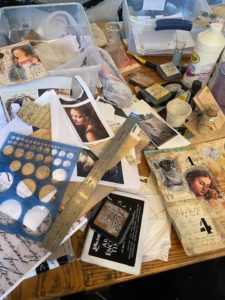
Here’s Niki’s work table with postcards in progress:
This email was totally unexpected – and frankly, pretty exciting! Who wouldn’t want an actual piece of art in the mail? Niki, you are the best!
Another “giving” idea (from me to you) is my free workshop called The Lotus Book. Currently, there are 111 artists enrolled in that class, watching the instructional videos, and creating these art books. In the Lotus Book workshop, I encourage you to make these little journals a gifts for others.
Here are some emails and examples that artists have sent to show me what they’re doing:
Hi, Lyn,
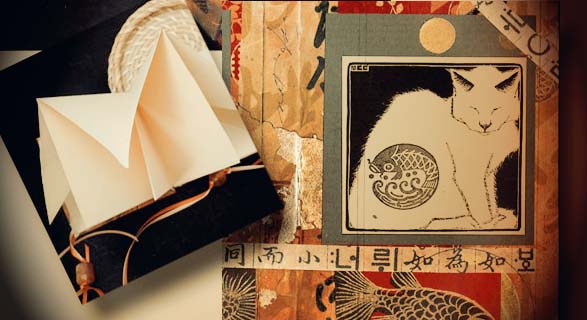
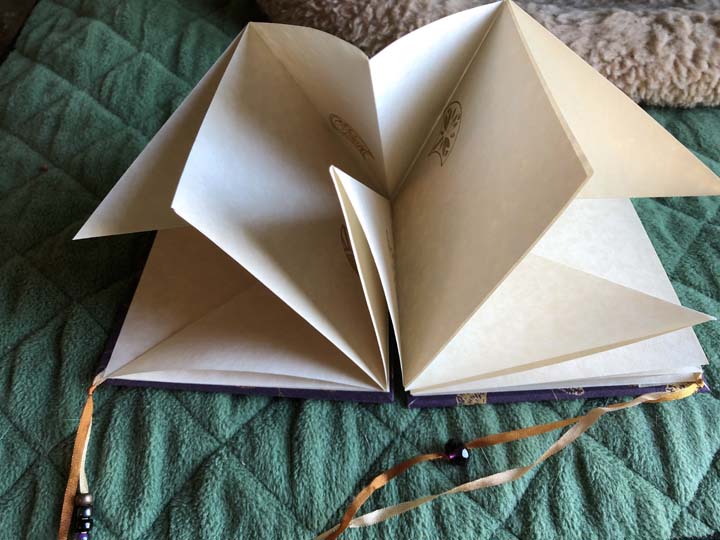
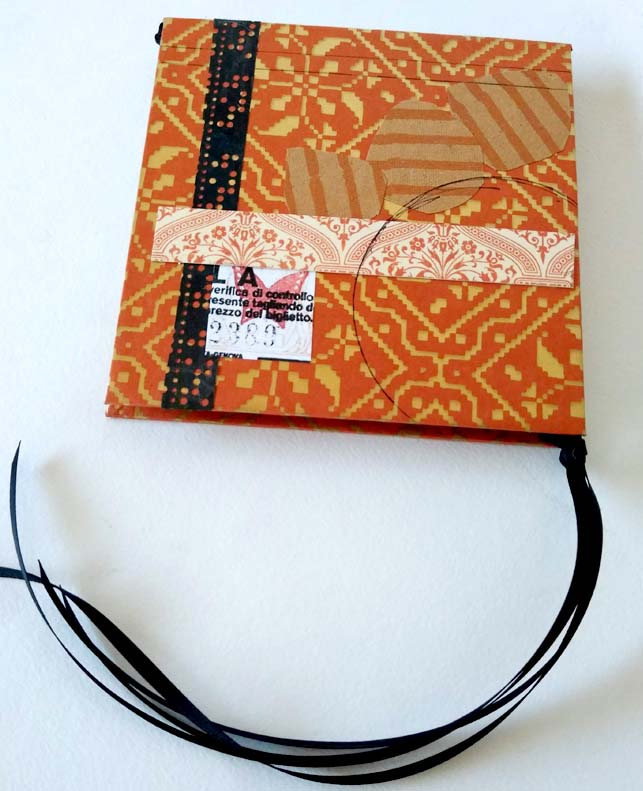
I just finished my first lotus book! Thank you so much for a wonderful time, for sharing your creativity with all of us. Here are the pics.  Not the greatest, had to use a cat snoozie for a background and the light wasn’t quite right, but you’ll get the idea.Seems like a win-win during this Pandemic time. Stay safe! ~ Kate 
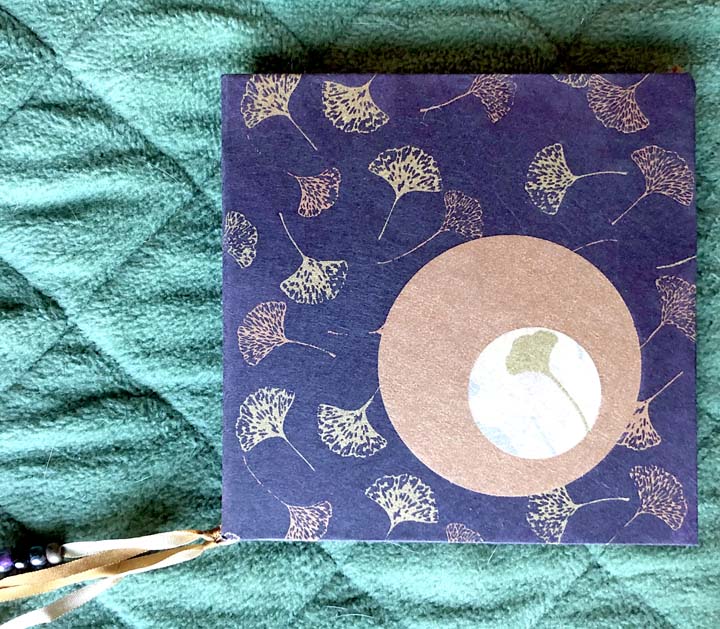
This book, from Anna, has such great pattern coordination – lucky someone, whoever gets this one!
And this note, from Carolyn, combines the Postcard book techniques with the Lotus Book! Brilliant!


Hi Lyn,
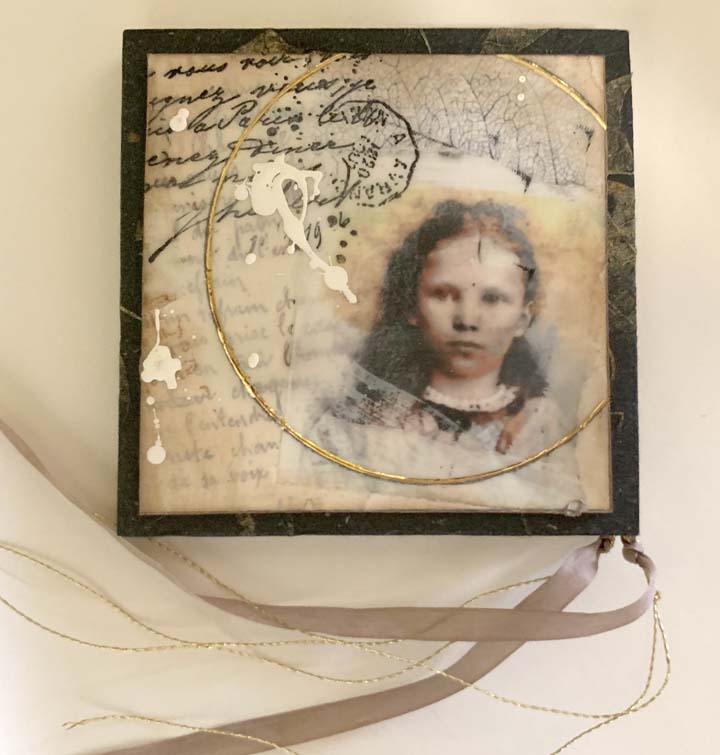
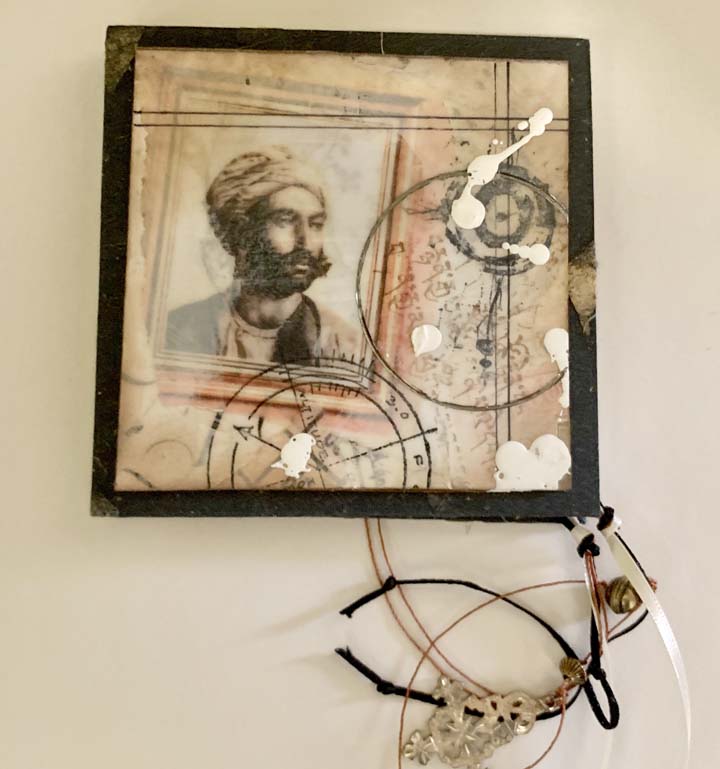
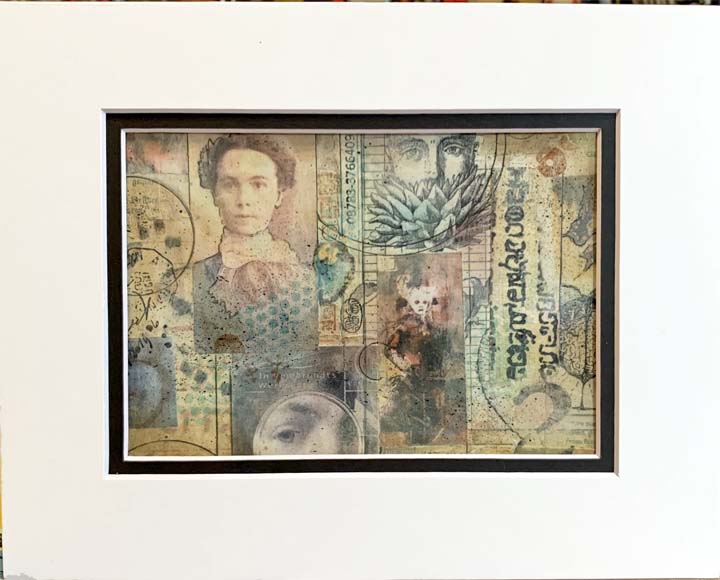
I’m having so much fun watching your classes and then working on the projects.  The first two photos are of the Lotus book.  I had cut out some 4×4 pieces from some scrap from the Postcards to Myself class and decided they would look great applied to a Lotus book.  The third photo is from the Postcards to Myself class but without the wax. They’re just the inspiration and distraction l needed. ~ Carolyn


My job in all of this is to encourage you to create with a purpose – creative thoughtfulness is a win-win.


Here’s the ink to the free Lotus Book workshop.

And here’s the link to the Postcard book – it’s not free but it’s  very affordable and will reward you will much gratitude fro your friends who are graced with your mail art!


Trust yourself, trust the process, and take good care this week –


Lyn


The results are in . . . thank you so much!

What a great response to my plea for help in my last post! We must trust and rely on each other in times like this, for sure, and your input on what online workshops should look like was invaluable.

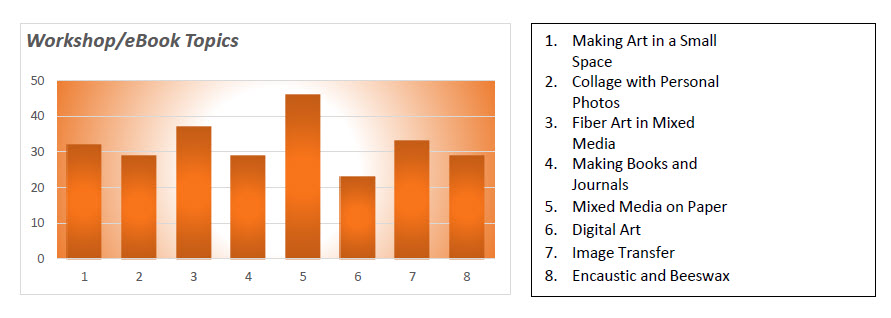
Here are two charts from your responses (my geek side took over while I was compiling these stats). The first one shows suggested workshop topics by most votes – #5, Mixed Media on Paper, had the most, but everyone liked pretty much everything.

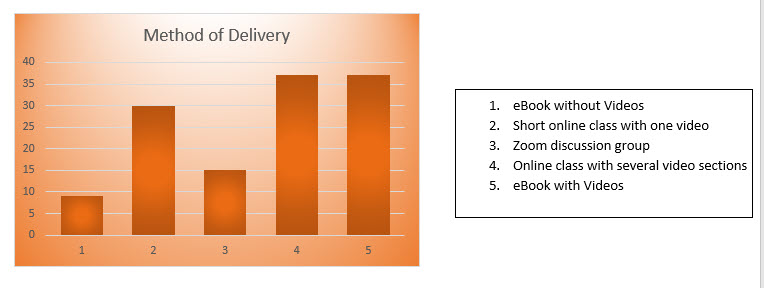
This shows preferred method of deliveryonline classes with several videos and eBooks with videos tied for favorites. Excellent. Those are my faves, too.

These results mirror the topics and methods I love in my own teaching and learning. The new Postcards to Myself eBook with Videos is coming out in just five days. –

And you can sign up for one of my online classes with several videos today if you want to help give more feedback.

Here’s the deal:

I have been researching a platform called Teachable, like it a lot, and have put up a new “school” there called Lyn Belisle Studio. And — as a first move, I’ve decided to add the mixed-media workshops I made from my Artful Gathering classes from the last four or five years to the new “school.”
Artful Gathering, as some of you may remember, was a wonderful organization (thanks, Zinnia!) that subscribers purchased every summer. The faculty, including me, taught various intensive mixed-media online workshops for a period of about six weeks for each class.
While Artful Gathering sponsored and managed the events, the content remains the property of the instructors. It seemed a shame to me that more people couldn’t see those classes now that the Artful Gathering instructors have scattered.
So, I am going to make the classes I designed for AG available again on the Teachable platform all year round and at a lower price. Makes sense? I’ll also be developing new courses but this will get us off to a fast start with fun video workshops.
The first workshop that I’ve made available is called Story in a Story, and it has been reworked to fit the Teachable platform. What a learning experience that was!
There are ten videos totaling a little over two hours which show all kinds of techniques for creating portfolio covers for your kindle or iPad – or for whatever you want! I’ll put a link for the promo at the bottom. So . . . .
  • I’m asking some of you to help me test-drive this new workshop platform
  • I’m currently using the trial version of Teachable, which allows me to have just 10 students – later on, I can have an unlimited number
  • Before I pay the monthly fee for Teachable, I want to make sure you like it – I need your feedback
  • The Story in a Story course is available for registration right now, but again, registration is limited to ten students
  • The workshop price will normally be $39, but right now it’s $10 just to see how the payment process works and all of that – again, limit 10
  • If you would like to register, I will pass on your $10 tuition  to the San Antonio Food Bank (later, the tuition will be $39 and will go toward paying the Teachable platform fee).
  • If you are one of the ten students, please help me with comments on how you think it works, how easy it is to access the videos – all of that stuff.
  • You will help me immensely with my decision to go with the paid version of Teachable going forward. Oh, and I can have classes by other instructors there too – like Lesta Frank and Michelle Belto! It’s exciting.

Here are the relevant links:

If you’d like to register for the Story in a Story Workshop on Teachable for $10 (which will then go to the Food Bank) follow this link and scroll to the bottom for Featured Courses (there’s just one so far):
If you’d like to see the original class promo before you consider signing up to test drive the workshop, go here to Vimeo:
I’ll get notifications from Teachable when you sign up and will make a class email list for your feedback. No pressure, just thanks for considering this. I need your help to know how best to bring you new workshops.
Oh, and the next two Artful Gathering workshops to go up on Teachable if all this works will be the Citra-solv collage class and the Mystical Cat Shaman class! Those should be up in the next week or two, tuition $39.

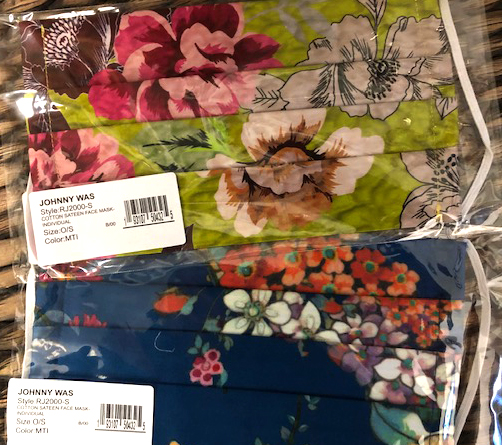
One more thing- from all the names that submitted suggestions and data, Rosemary Uchniat is the randomly chosen winner of the lovely Johnny Was mask! Rosemary, decide whether you like the blue one or the green one, and I will get it in the mail to you.

Thanks for listening to all of this. There are important things going on in our world.  We are all learning – together.


♥Lyn


Shards and Tesserae

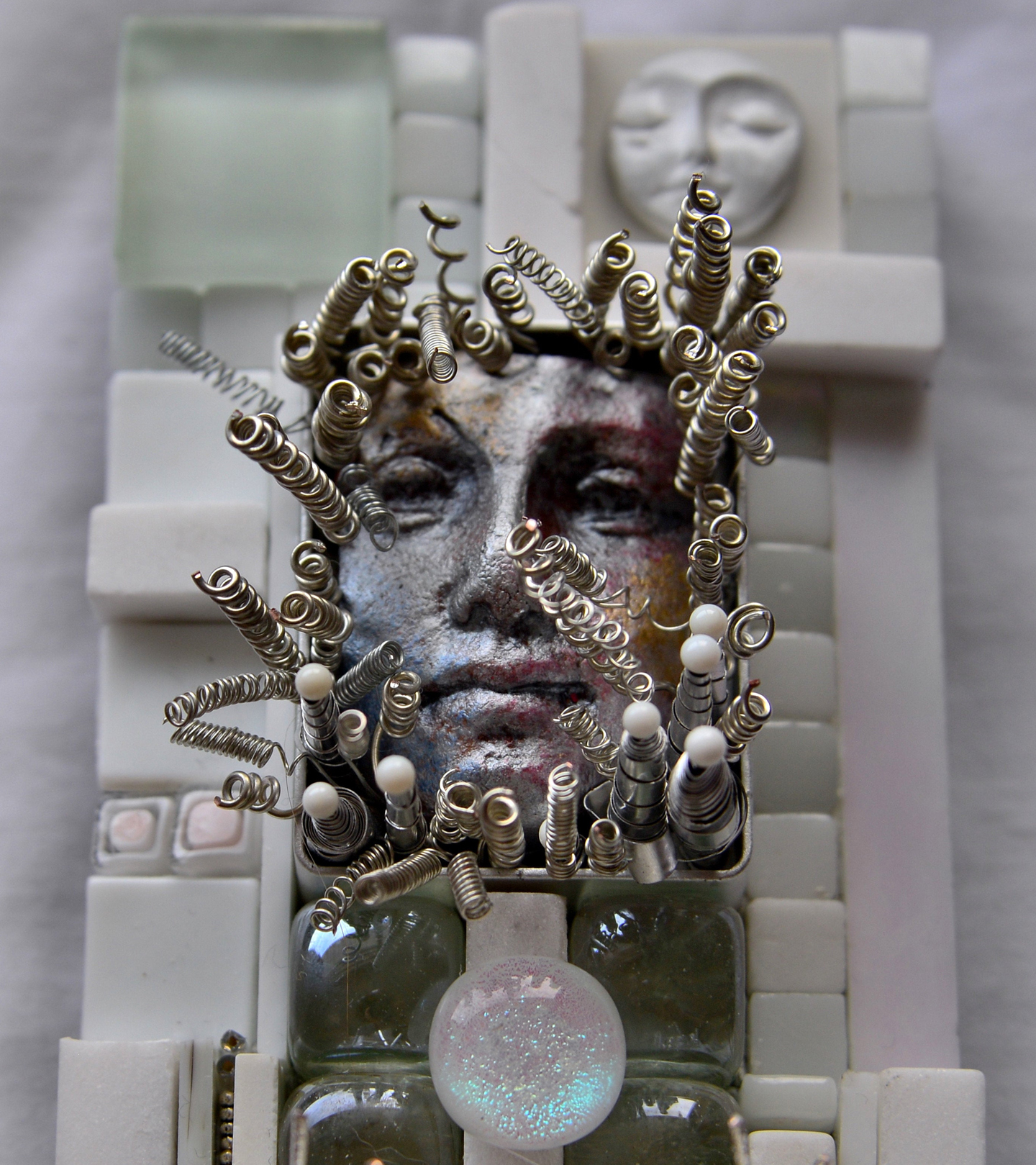
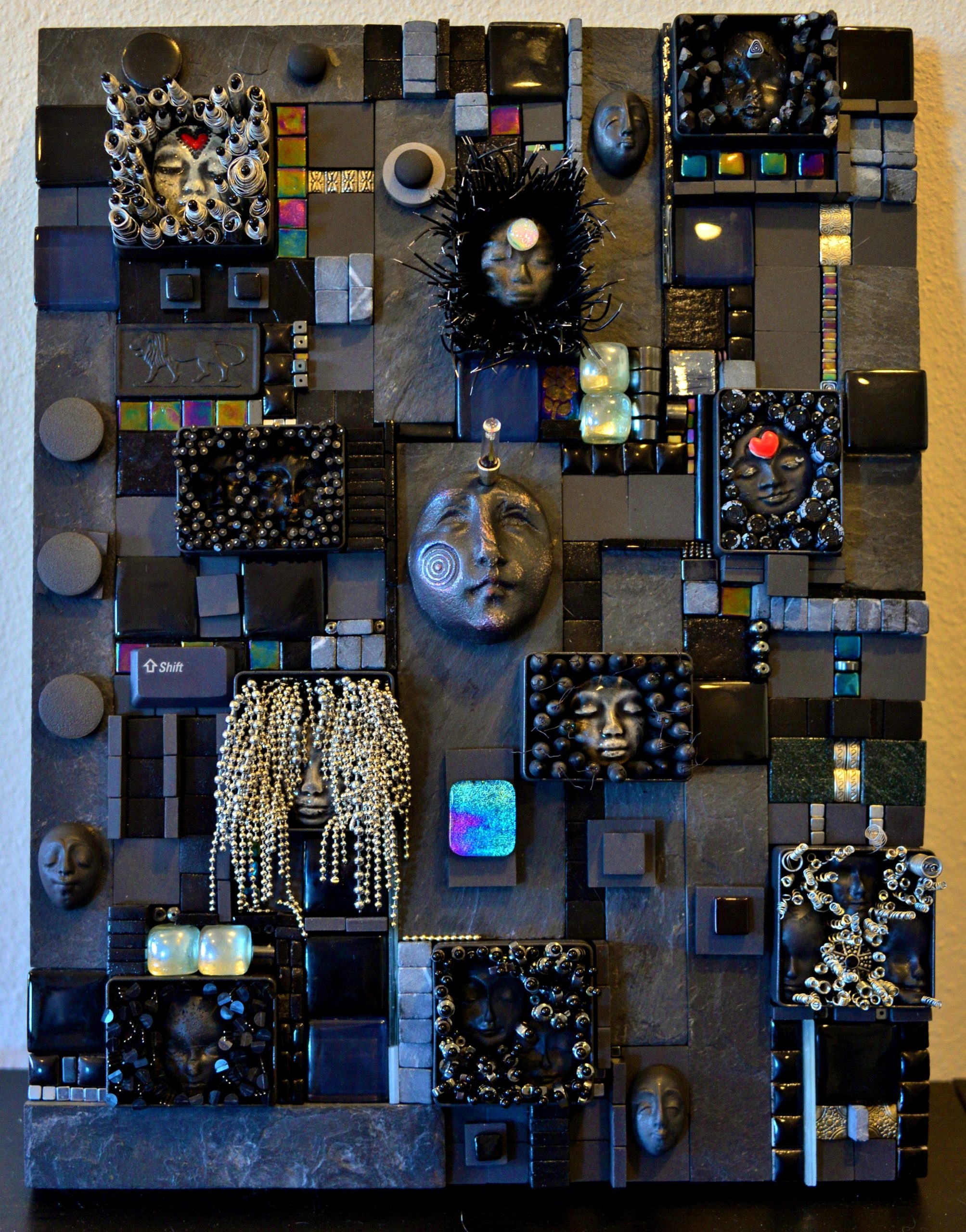
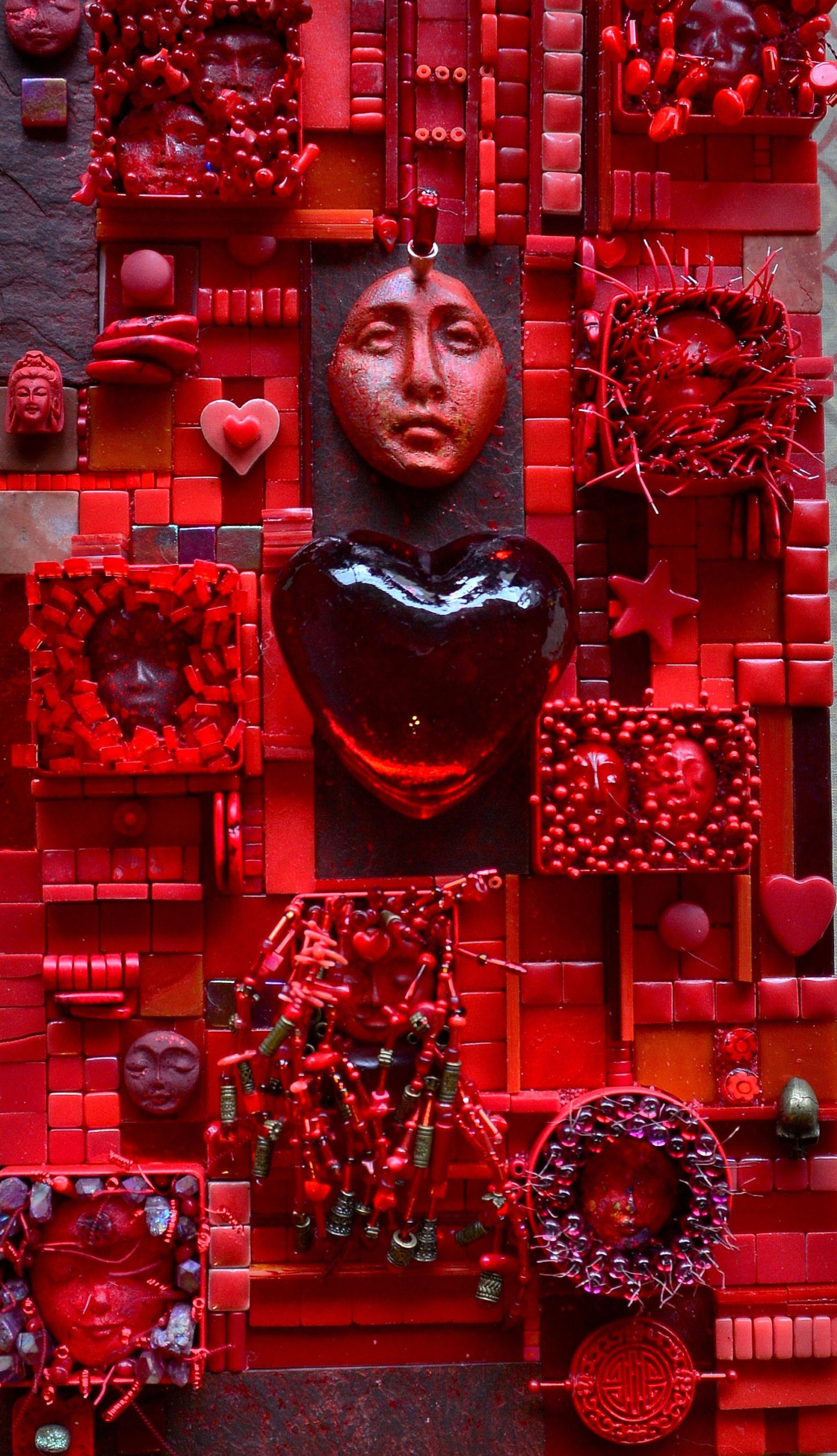
Christa Lamb is a mosaic artist from Cottonwood HeightsUtah, who has ordered small shard faces from my Etsy shop several times. She sent me a message last week saying, “I thought you might be interested in seeing how I use your beautiful faces in my work,” and she attached some photos.

 I was amazed at her work. I often wonder how artists use these faces, but never expected to see them incorporated into such fantastic mosaics!

I asked her if I could share them with SHARDS readers, and she agreed – thanks, Christa!

She sent several more examples, all of which use mixed media materials to create rich panoramas in tiles, glass and found objects. I love these fabulous “storyboards.”

Here are some more of Christa’s mosaics:

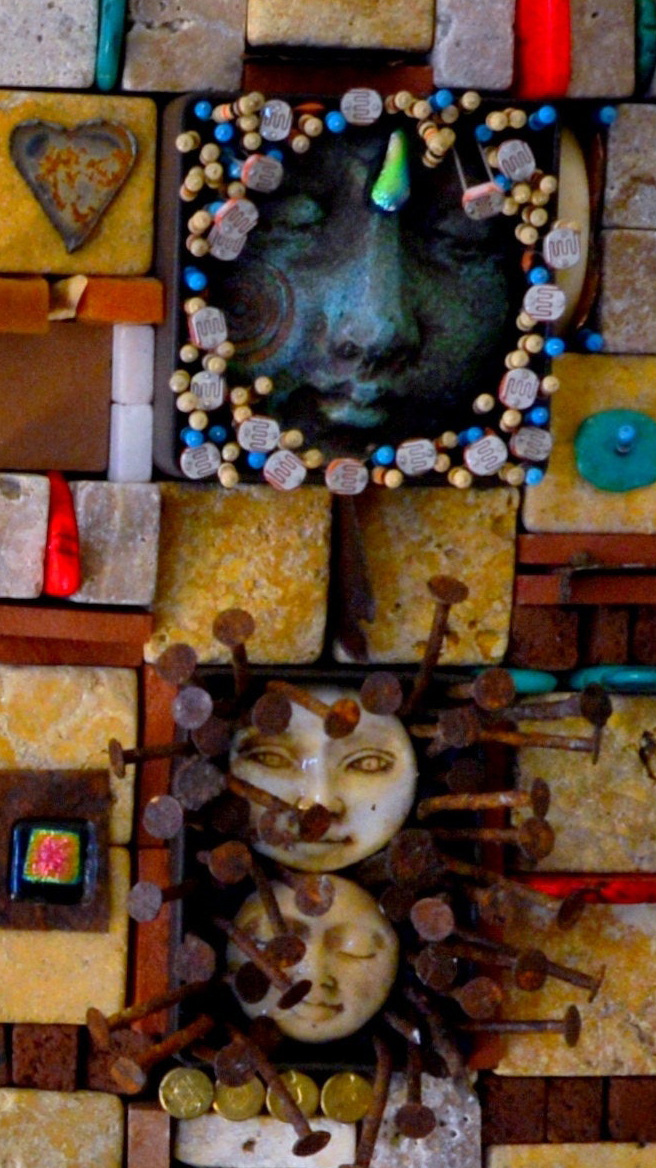
The details are endlessly intriguing.

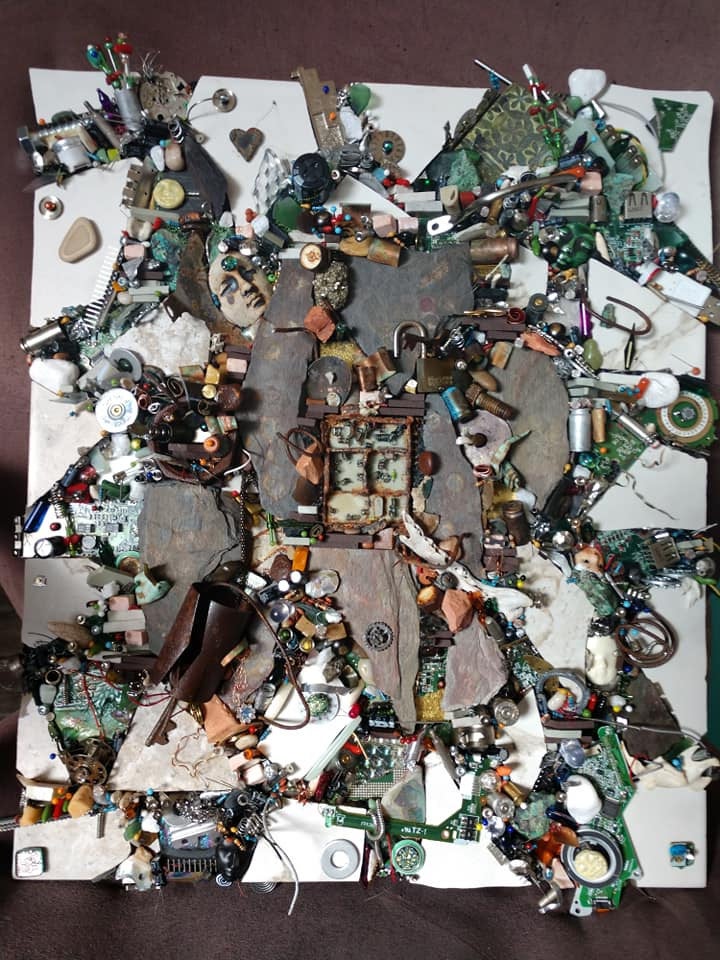
Look at this mysterious mixture, below!

I found more of her work on Flickr – along with some gorgeous photos of Utah.
Thanks, Christa – so grateful for your work and your email ! Do you show your work in a gallery? We’d love to see more!
Keep in touch,
Lyn


Abstraction/Non-Objective: the emancipation of the mind ?

I had the great pleasure of working with five friends, all whom create artwork that I admire, in an abstract painting workshop at my Studio last Friday.

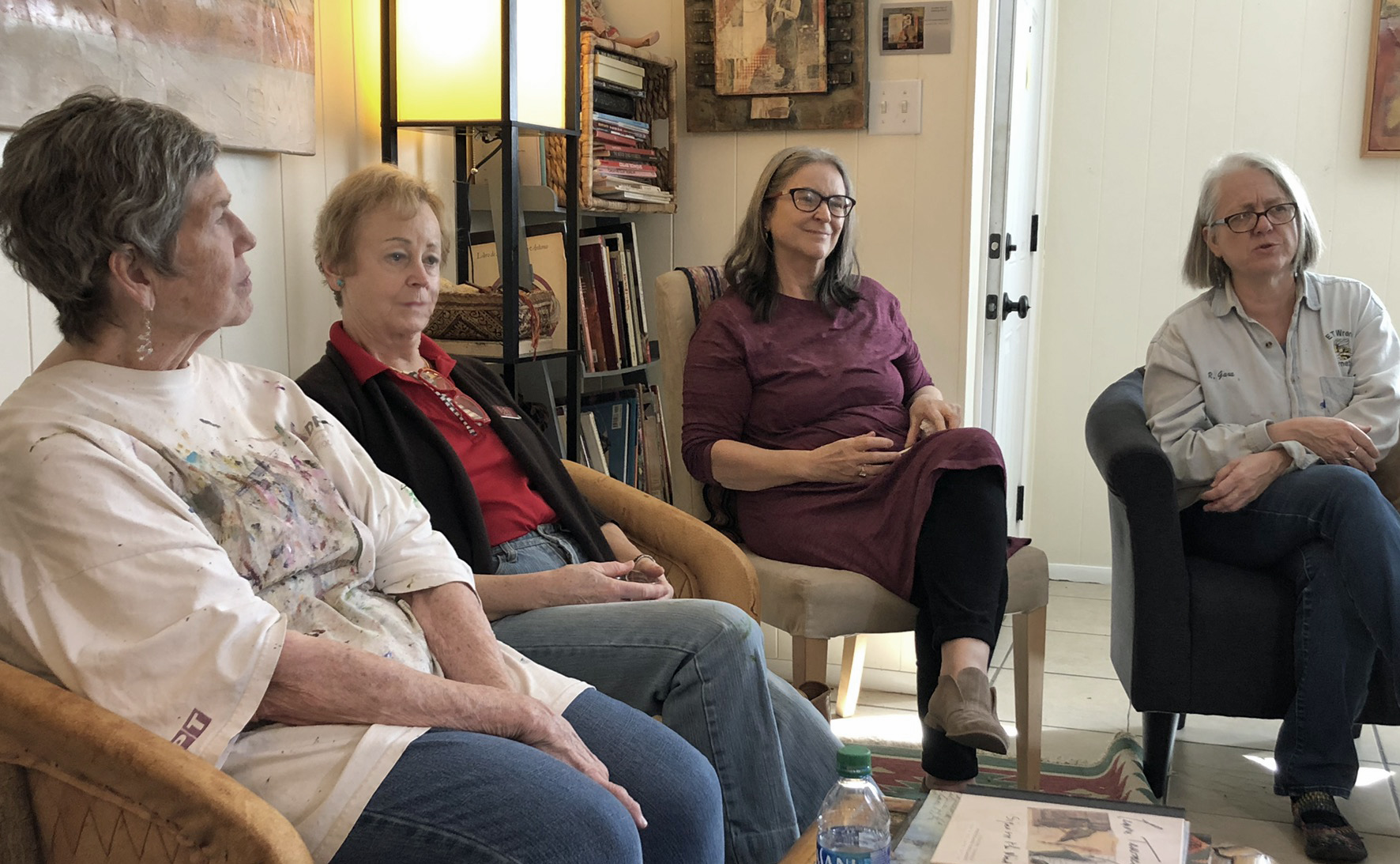
From left: Pamela Ferguson, Bibi Saidi, Carolyn Royall, Robin Gara – not pictured: Nancy Vandenburg
Part of the fun was sharing thoughts about abstraction and non-objective painting. Here’s one of my favorite quotes written by Arshile Gorky:

“Abstraction allows man to see with his mind
what he cannot physically see with his eyes…
Abstract art enables the artist to perceive beyond the tangible,
to extract the infinite out of the finite.
It is the emancipation of the mind.
It is an explosion into unknown areas.” 

Emancipating one’s mind is a tough assignment. It’s human nature to try to direct the outcome of our work, and it’s difficult to let go of that control. We followed a “map” of steps to an unknown outcome. You can download the workshop outline here to see how we painted our abstract studies.

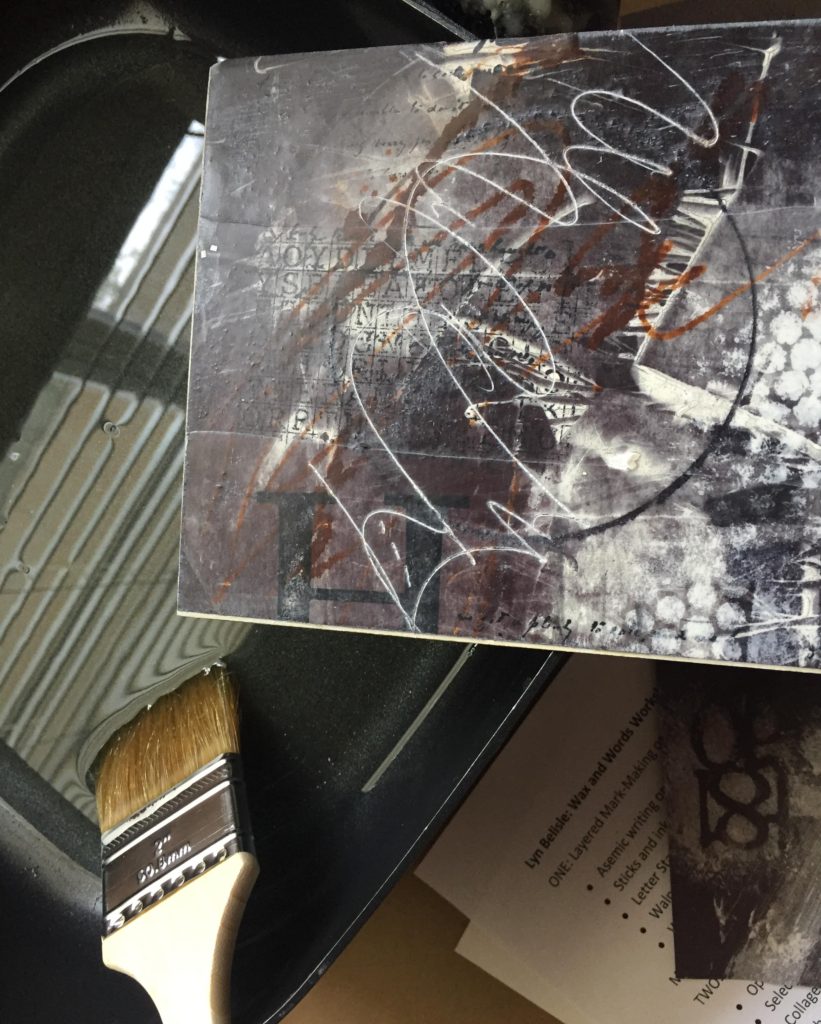
I try to develop a slightly different plan of attack for each painting workshop. Individual students react in different ways to techniques that get them to break the ice on a blank canvas. But we almost always start with mark-making, usually asemic writing.

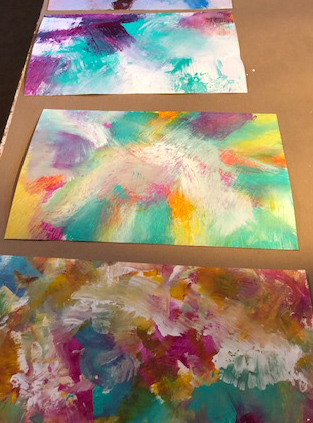
It’s super-important to agree at the beginning that we will not create a masterpiece in three hours, but we might learn some new approaches to making meaningful paintings. Here are some of the first stages or our warmup:

And here are some in the second stage:

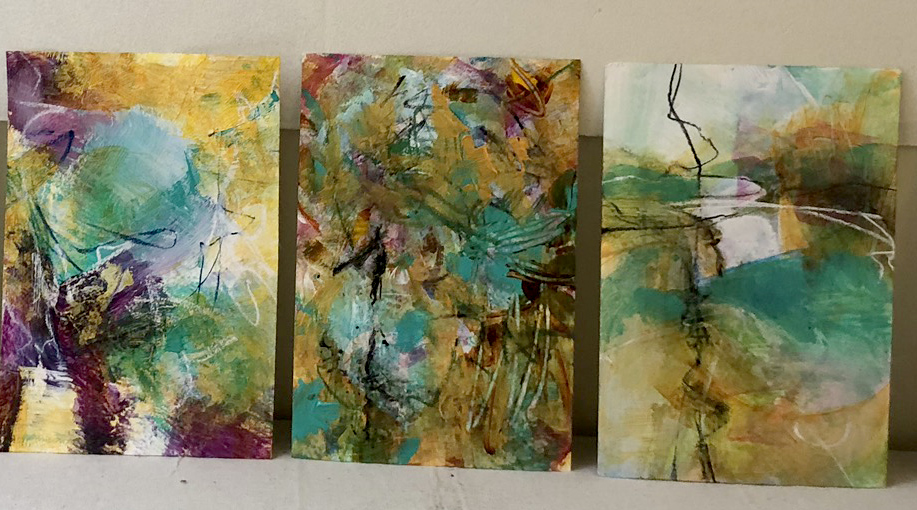
When you watch the video, you can see what some of our results were – all interesting! Several of the artists said that they were out of their comfort zone, but pleased with the final outcome, which may be the whole point!

Video Link

For further study, you can read a good explanation of Abstraction in Art from the Tate Museum.

Thanks for reading SHARDS – and remember, if you and a group of four or five friends  would like to organize a workshop at my studio, just send me an email!

“Where can I get . . . ? (my top five sources – non-Amazon!)

The New Year is a great time to identify the creative materials you use the most .  These are your signature media, your “desert island” necessities. This list can help you in your resolution to streamline and simplify your studio space once you know what you will really use.

I know what MY own signature media are. Here are the Top Five that I use extensively in my own work and in almost all of my workshops (Raise your hand if you’ve used walnut ink because you learned about it in one of our workshops!)

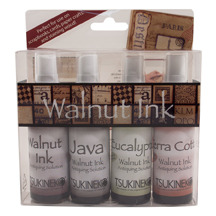
  1. Tsukineko Walnut Ink
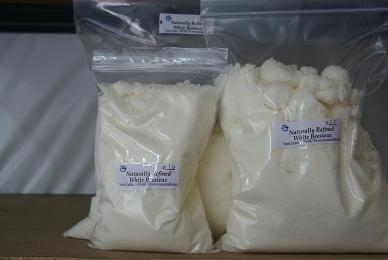
  2. Beeswax
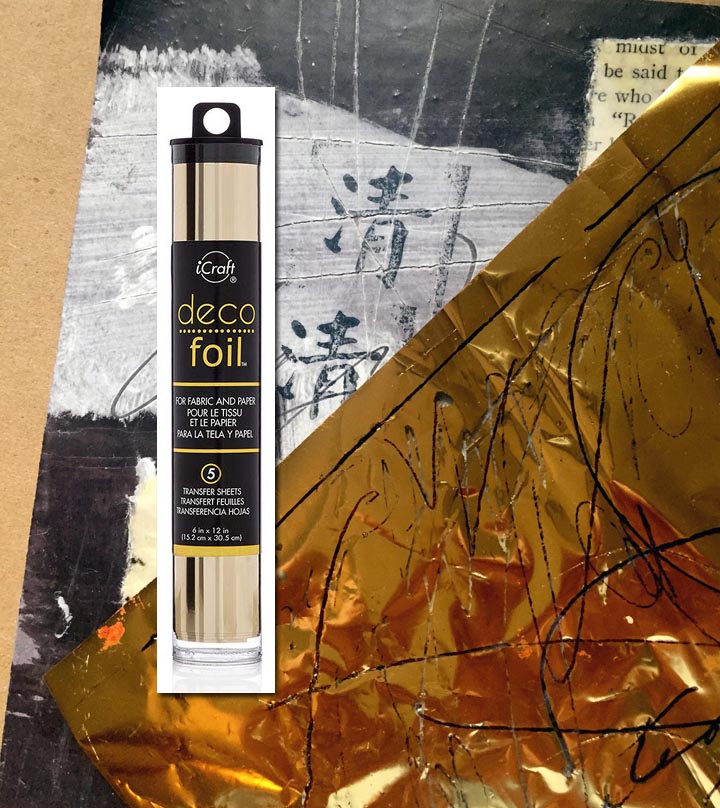
  3. Book Foil
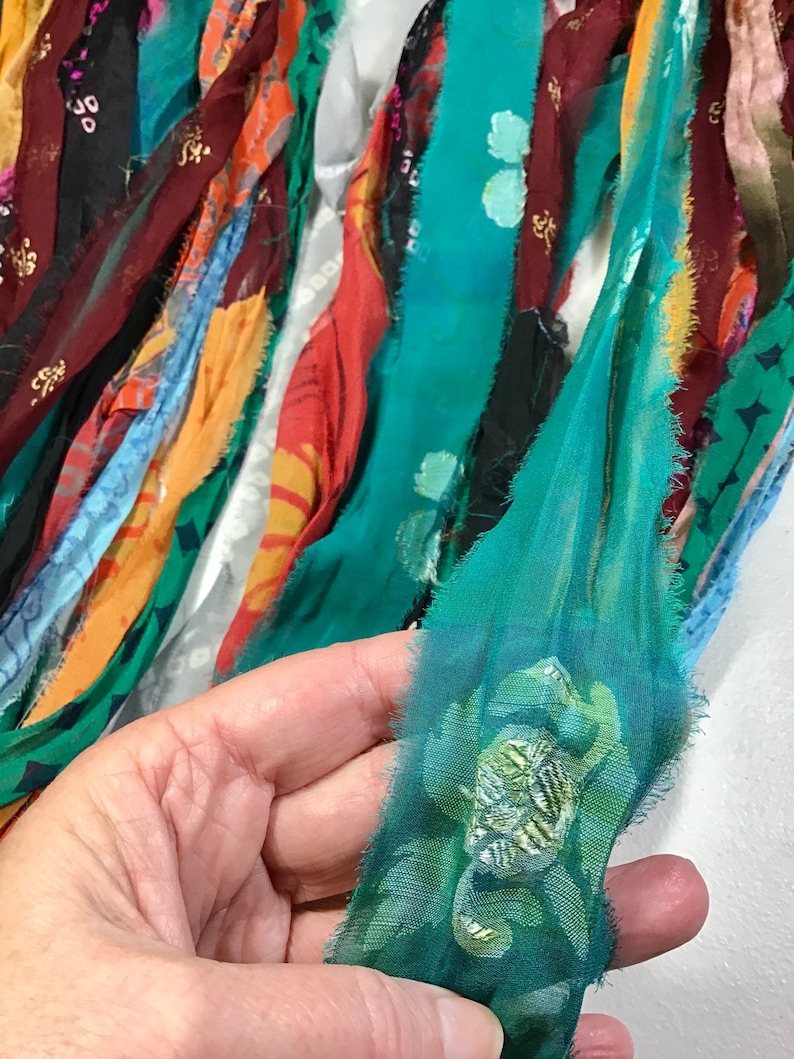
  4. Sari Silk
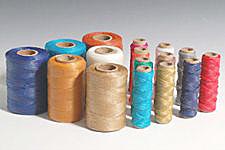
  5. Artificial Sinew

I get a lot of questions about where to find these materials since they are not really mainstream art/craft materials. I prefer to buy from places other than Amazon (although the Big A is certainly fast and convenient).

But when I can obtain my signature materials from other artists or independent retailers, I try to share those sources.

Here they are – enjoy looking! :

Tsukineko Walnut Ink:

https://www.imaginecrafts.com/walnut-ink/view-grid/1351

I have always ordered my walnut ink spray from Imagine Crafts. They have friendly customer service and ship quickly.  It’s often hard to find walnut ink at places like Michael’s or JoAnns (a lot of people have never heard of it) but it’s always in stock at Imagine.

If you browse around the Tsukineko inks, you’ll see that there is a pastel set (Cherry Blossom, Cornflower, Willow, Lilac) as well as an earth-tone set (Java, Eucalyptus, Walnut, Terra Cotta). Either set of four bottles retails for $23. Any color can also be purchase singly for $5.70.

Beeswax:

There are many different forms of beeswax and thousands of ways to use it.  I use beeswax for encaustic collage and for assemblage. I use it on clay and on fiber. My preferred beeswax is all natural White Beeswax pellets, refined in the USA without any chemical bleaching aids. My favorite source for this is Swans Candles in Tenino, WA.

Swans has a fine selection of beeswax and other encaustic supplies (including Damar Varnish if you want to make your own encaustic medium). Their prices are excellent. You can buy a pound of Natural White Beeswax pellets for $9.95.

Most retail art stores now sell beeswax and other encaustic supplies, but you can expect to pay almost twice as much per pound. Even on Amazon, a pound of R&F Encaustic White Beeswax lists at $18.86.

Book Foil:

This foil, also known as Deco Foil, is generally used for transferring metallic finishes to craft projects using an adhesive. Here’s a link to a video that shows demos about that. However, if you’ve taken an encaustic workshop with me, you know that we also use it to create fine gold marks onto a waxed surface.

One of the best places to order this foil is Dharma Trading Company. They are generally known for their fiber art supplies, but you will love their site for lots of other reasons! For Deco Foil, for example, they have the best selection and lowest price of anyone, including Amazon. Currently, they sell a cylinder of five sheets, 6×10″, for just $3.89.

Sari Silk:

I discovered my source, Felt Better, on Etsy several years ago, and I have ordered from them many times.

This is what the owner, Michelle, says about her sari silk: “The beautiful, exotic sari ribbon I carry is all the best things about recycling that I love. First and foremost, it helps our fragile planet by making use of material that would end up in landfills. Did you know that it helps women too? It’s a fair trade product that works close with women co-op groups, insures they get a fair wage, that helps them support their families….and most importantly, no child labor is involved.”

I use sari silk for so many things – for journals, assemblage, spirit dolls, and just to hang in my studio for pure enjoyment of its colors, history, and textures. A 100 gram skein (about 45 yards) costs $12.50 at Felt Better.

Artificial Sinew:

Do the words “cat gut” make you shudder? What about “sheep sinew?” Those were traditional material used for lacing and tying leather and gourds. Fortunately, artificial sinew is now available because I use a lot of it! It’s a material I use for clay assemblage, bead stringing, fiber art, and almost anything else that requires tying one thing to another thing.

I used to buy it at Tandy’s Leather Store, but have discover a new online treasure trove. The Thread Exchange specializes in the kinds of thread that are not sold in stores, including a huge selection of artificial sinew. The company is based in North Carolina and its website is user-friendly.

They have almost twenty colors of sinew, although I am partial to the Natural and the other earth colors like Terra Cotta. A 17-yard roll is about $5.00 and a 265-yard roll is only about $15.00.

For 2020, I would like to make a commitment to bring into my workspace only those materials that I really need, use and love. Hmmmm… it’s not always easy, because experimenting with new things is part of the game.

So here I go, tempting you with great sources for wonderful materials that may be new to  — I hope some of these will inspire your work for the new year. Thanks for reading SHARDS!


Me the Jury – not an easy task

It’s such an honor to be asked to juror an art show. I’ve done it several times and always learn a lot. The Canyon Lake Art Guild (CLAG) recently asked me to juror their annual show, and last week I drove up there to see the artwork and choose the award winners.

One of the challenges of organizing a juried show is coming up with categories – there are so many media options that can be included. Here’s how the CLAG did it:

  1. Oils and Acrylic – Treated as oil and any mixed media with oil or acrylic as the dominant media
  1. Water – Watercolor, Gouache, Tempera, inks applied with brushes or poured, acrylic treated as watercolor and any mixed media with water media as the dominant media
  1. Drawing – Pastel, ink, charcoal, pencil and colored pencil, Cont’e crayon, graphite, scratchboard, handmade prints (etching block, silk screen, or mono) and any mixed media with drawing media as the dominant media
     
  2. Photography and Digital – All images must be artist’s original work.   

 3-Dimensional:

  1. Jewelry, glassworks (including fused glass & stained glass)
  1. Pottery, ceramics, sculpting, stone, mosaics
  1. Collages, fiber art and any mixed media with 3-D elements as the dominant media

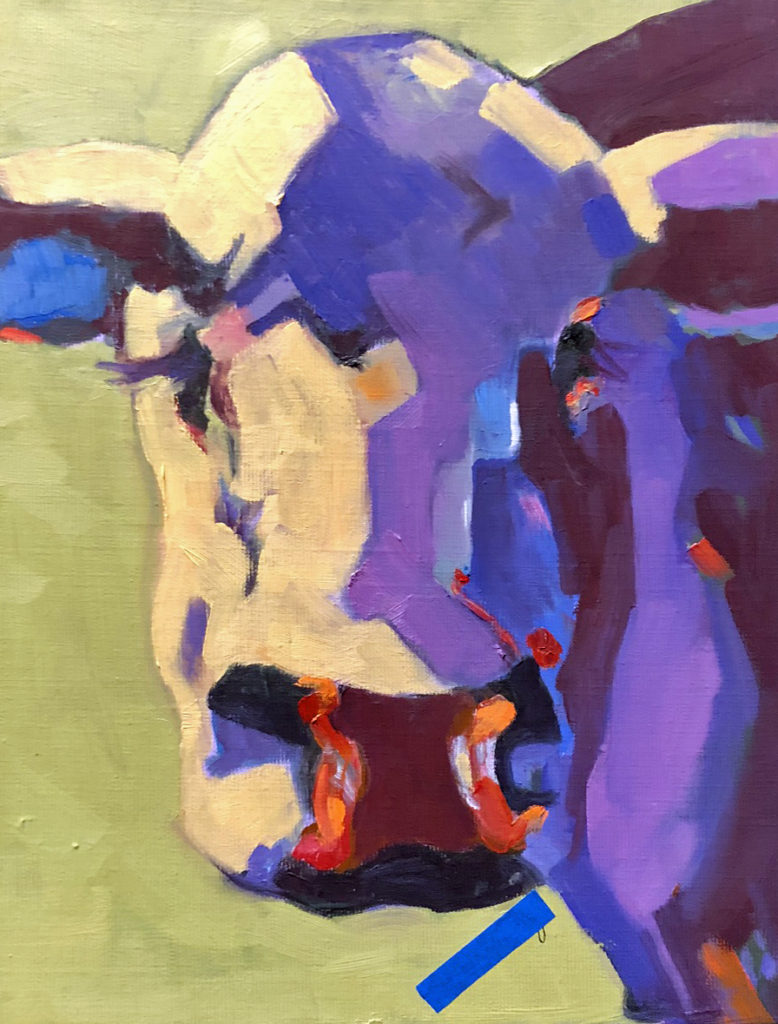
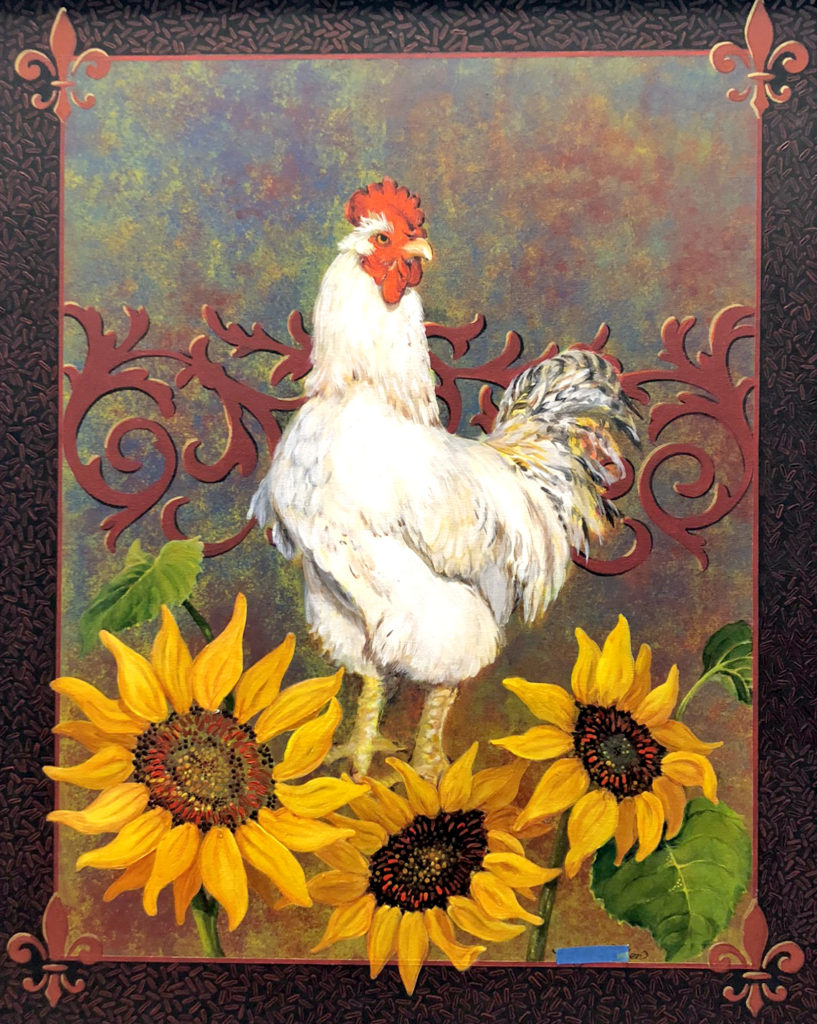
The largest categories are usually Oils/Acrylics, and Water Media. They are also the most diverse. Here were four of the entries in Oils/Acrylics – completely different! (Each of these got an award). Blue tape covers the artist’s name for complete objectivity.

First Place

Second Place

Third Place

Honorable Mention

How do you judge such different pieces? My rule is to ask myself two questions – what is the artist telling us, and how technically successful is the result – i.e., concept and skill.  Based on this, I awarded the top painting a First Place, the second one a Second Place, the third one a Third Place, and the fourth an Honorable Mention. OK, why??

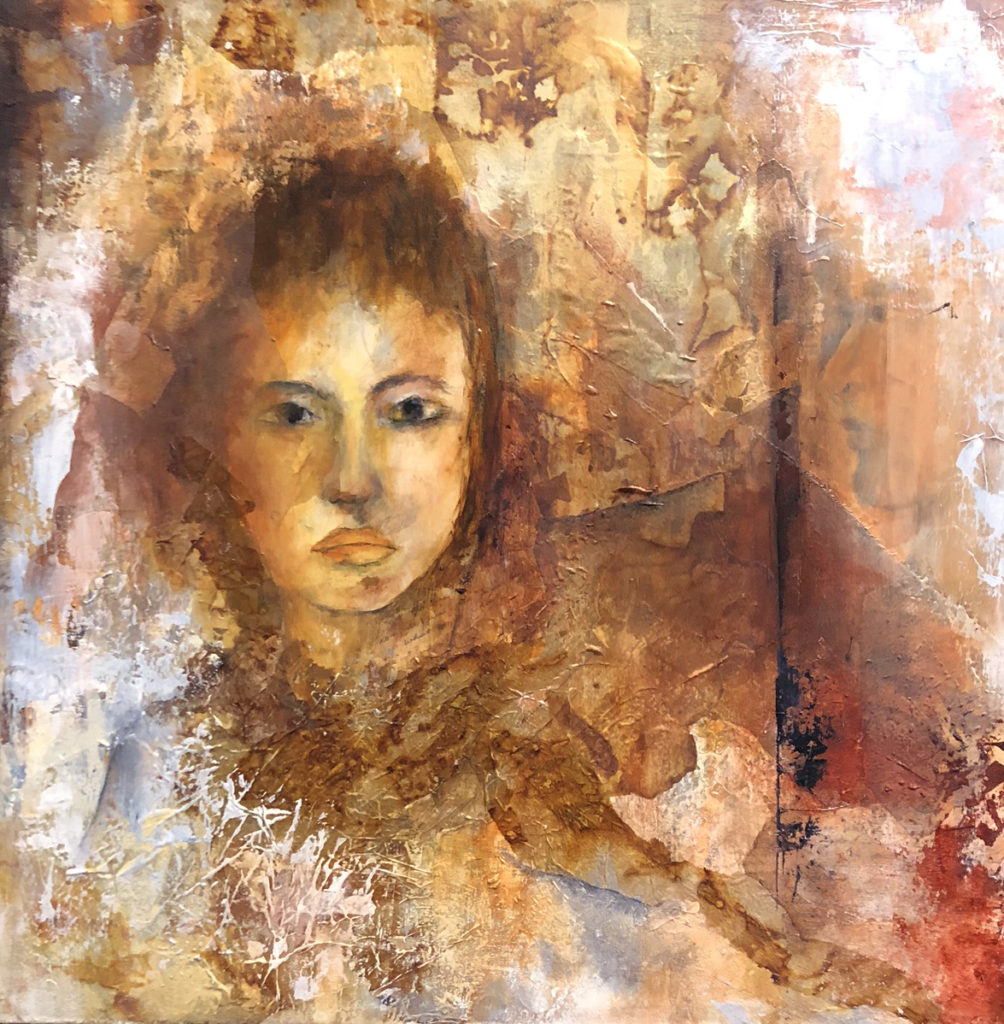
The First Place top piece is a portrait of sorts, and it’s mysterious and engaging. There is a smaller profile off to the right that directs our eye back to the main figure. The artist is obviously exploring diverse media to enhance the symbolism. Great concept, good skill.

The Second Place painting of the cow was a favorite of mine for sure – it’s so “in you’re face, I’m a cow.” Loved the colors. After I got home from jury duty, I found out that it was painted by one hundred and one-year-old local artist Carmen Willey!

The Third Place piece shows a fine grasp of color and composition – it’s small and simple and elegant.

The Honorable Mention painting was really large and resembled a poster, but it was hand-painted. I appreciated the way that the background picked up all the paint colors and integrated the work.

So, on to the Water Media, another large category – in the interest of space I’ll just show the top two choices, in my humble juror’s opinion.

First Place

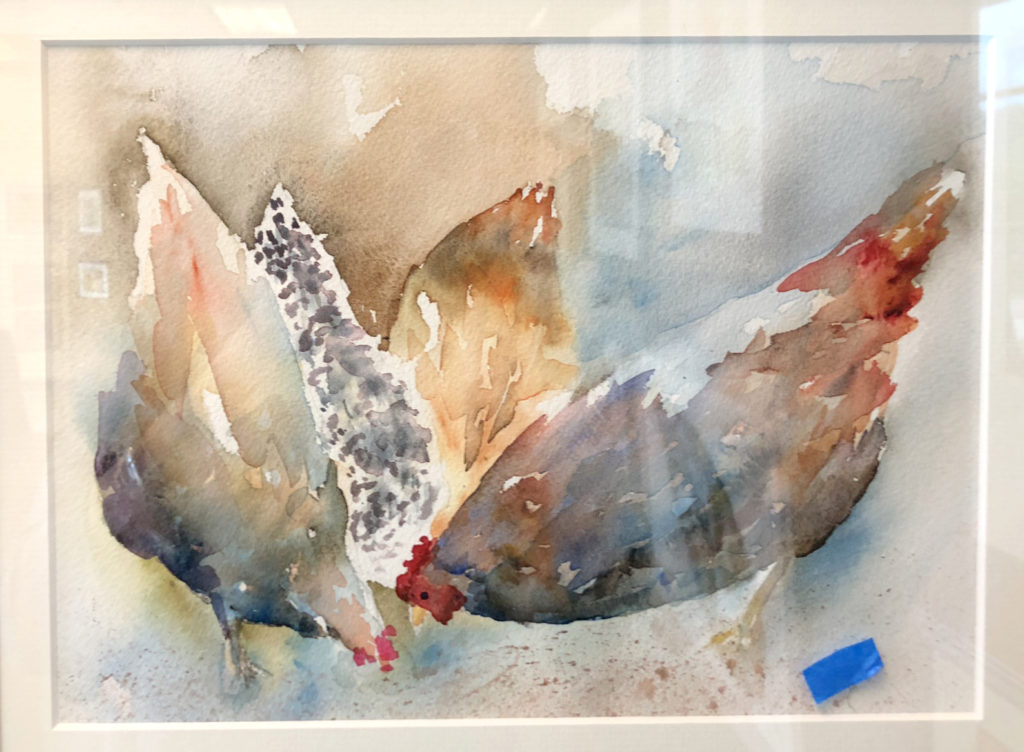
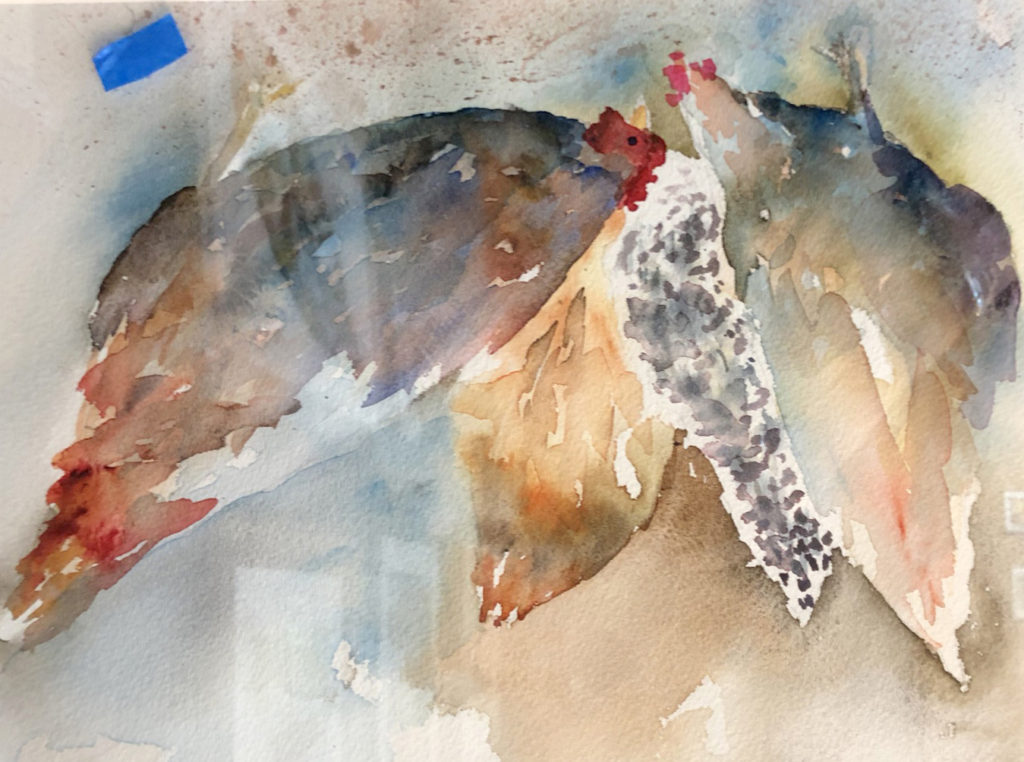
This First Place painting shows a mastery of transparent watercolor, plus the subject is unusual. Look how the chicken shapes play off each other, and how the spatters give the feeling of scratchy gravel and chicken fee without being overworked.

There is a strong focal point with that splash of red. And the painting seems to symbolize a feeling of community. I loved the composition – it looks good even upside down, which is always a good test!

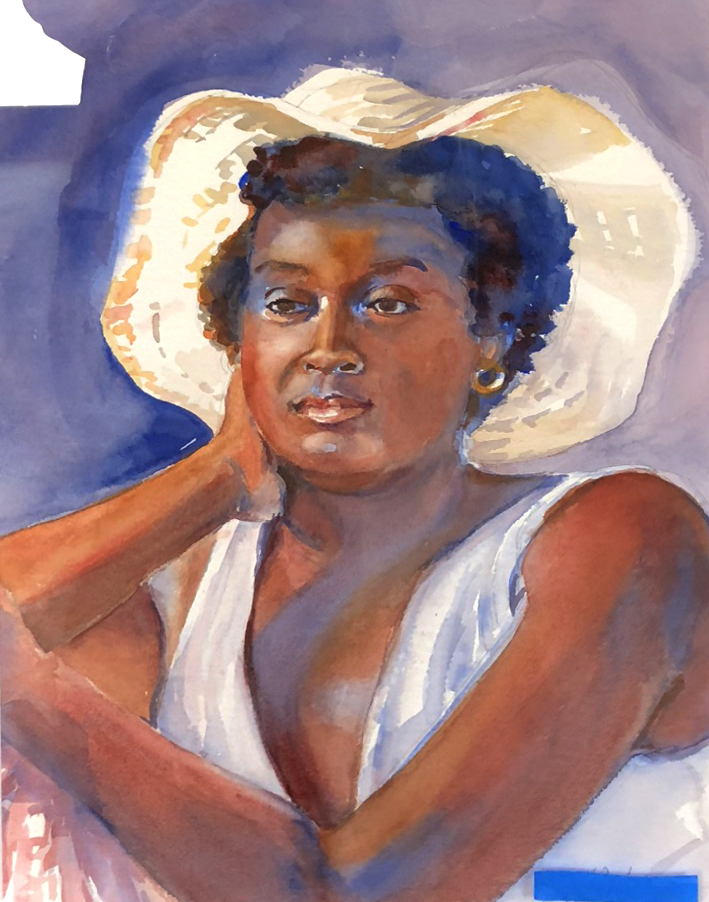
The Second Place winner was also beautiful – a sensitive watercolor portrait with a limited palette. Choosing between these two was tough! Which would you have chosen?

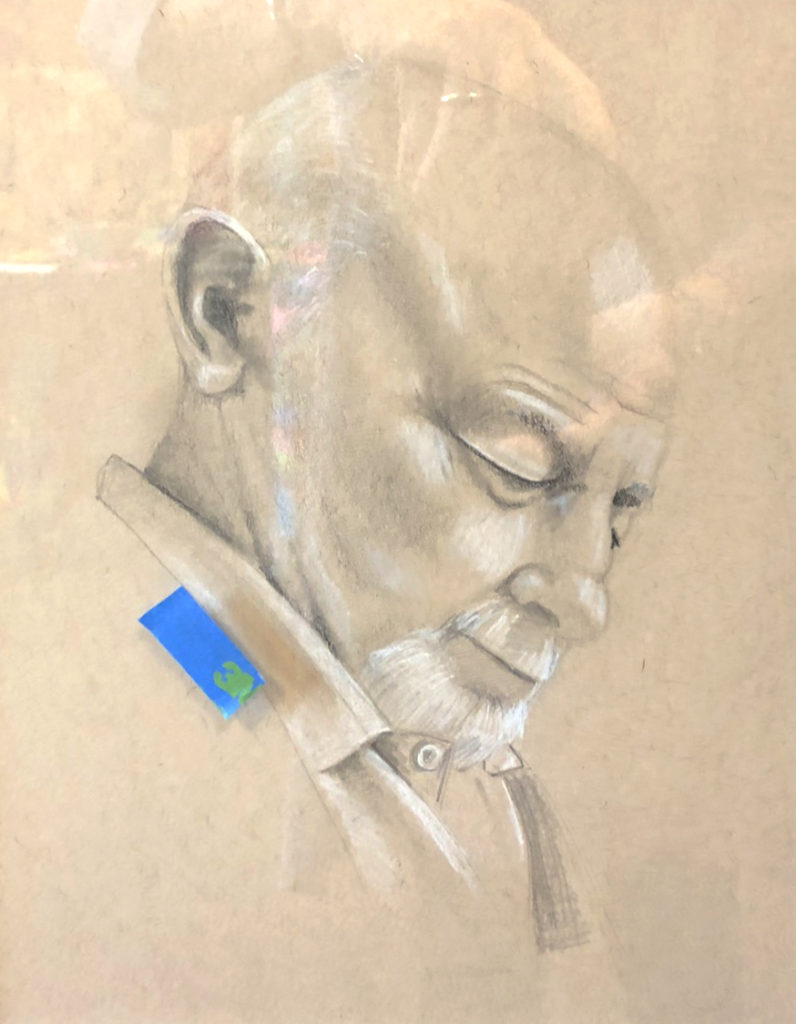
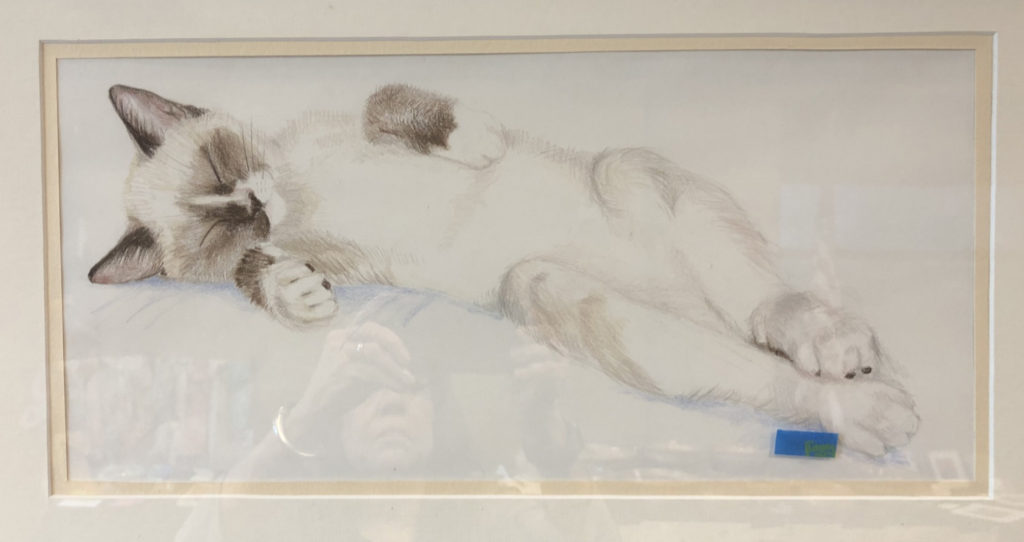
Here are the first and second place in the drawings category – do you agree?

First Place

Second Place

There was lots more work – Photography, Mixed Media, glass, jewelry – here are just a few of the other winners that I chose in various categories

Finally, this was the piece that I awarded Best of Show:

Best of Show

It is a very large clay sculpture that looks as if it could have come from a children’s book. It’s titled “Duet.”

It met my juror’s criteria of original concept, and expert execution. I found out after the show that it was done by sculptor Susan Calafrancesco, who has a large following and a published body of work. While it’s not a new piece, there were no time restrictions on submissions for this exhibition, and it was truly masterful and appealing.

One last story about the jurying experience – I had been invited to juror by Marlene Skaggs, an active and talented member of CLAG. She functioned as my note-taker. As I evaluated each piece, she wrote down notes to share with the artists whose works I was critiquing. When we came to those watercolor chickens, I went on and on about the freshness of the brushwork and the appeal of the subjects. I said, “This artist must have been working in watercolor quite a while to achieve this confident style.” Marlene just kept writing, not saying a word – and of course, after everything was over, I found out that it was her painting!

I’m so grateful to the Canyon Lake Art Guild for inviting me to be the Juror for their show. There are some astonishing artists in the group, and every piece I saw had its own heart and soul. In closing, I’m going to steal the words of Stephanie Fox Knappe, who juried our 89th Art League exhibition, who said it better than I can:

“When called upon as a juror, I am acutely aware of the incredible subjectivity inherent in the task at hand. Simultaneously, I make a conscious effort to try to step outside myself. I attempt to consider what I intellectually know contributes to a strong piece—mastery of art’s formal elements such as line, shape, form, space, texture, value, color. I observe these components to assess and understand how an artist manipulates them, tells stories with them, makes magic from them, and brings something into being that did not previously exist.”

Amen!


A studio visit with Jane Dunnewold – SAALM Artist of the Year 2019

If you haven’t heard of Jane Dunnewold, then Fiber Art hasn’t been on your radar in the last decade. And it should be – it’s hot and it’s trending!

A nationally-renowned fiber artist, Jane teaches and lectures internationally, and has mounted numerous solo exhibitions. Her pioneering book on the practice of art, Creative Strength Training, is hugely popular with artists in all media who want to develop their unique voice and make creating art a regular habit.

Jane just made history by being the first fiber artist to have been chosen as Artist of the Year by the San Antonio Art League & Museum. It’s a decisive moment for the 107-year-old Art League, which has traditionally selected painters for this honor. Jane’s portfolio of work wowed the three well-known out-of-state jurors with its depth of content and maturity of style. She was chosen from a field of ten nominees and three finalists.

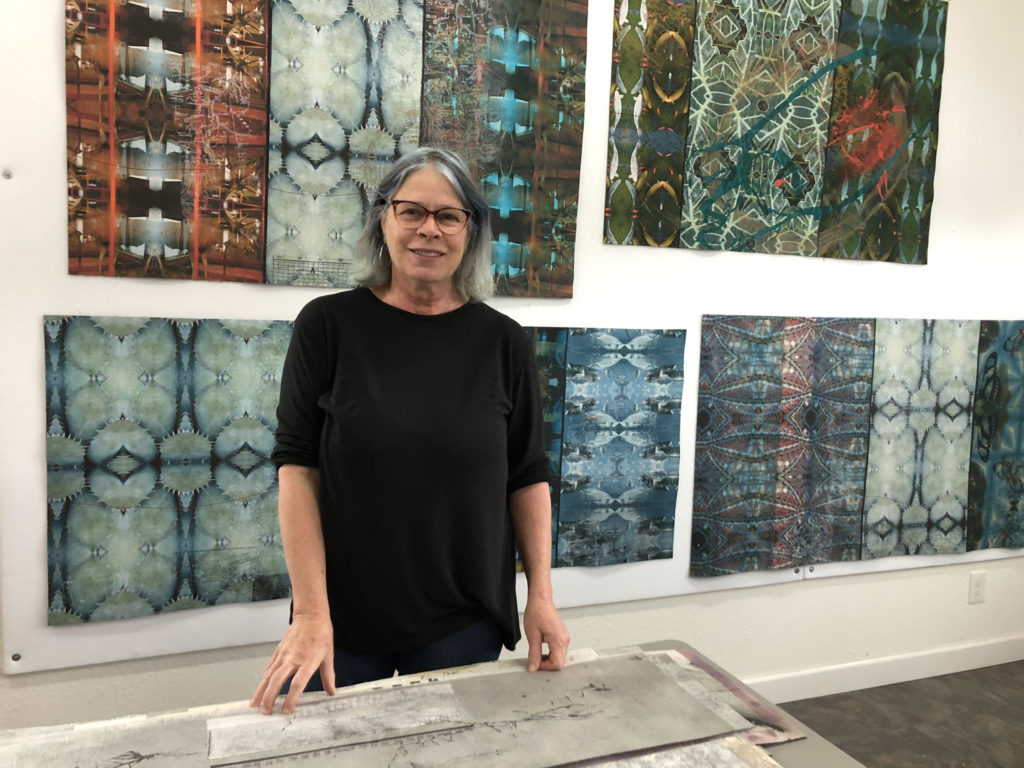
I visited Jane’s spacious studio last week with Steve Smith, last year’s SAALM Artist of the Year and this year’s committee chair, to talk about her upcoming 2019 Artist of the Year exhibition. Her work on the studio walls was dazzling!

Jane at her work table in front of large panels of innovative surface design on fabric and fiber

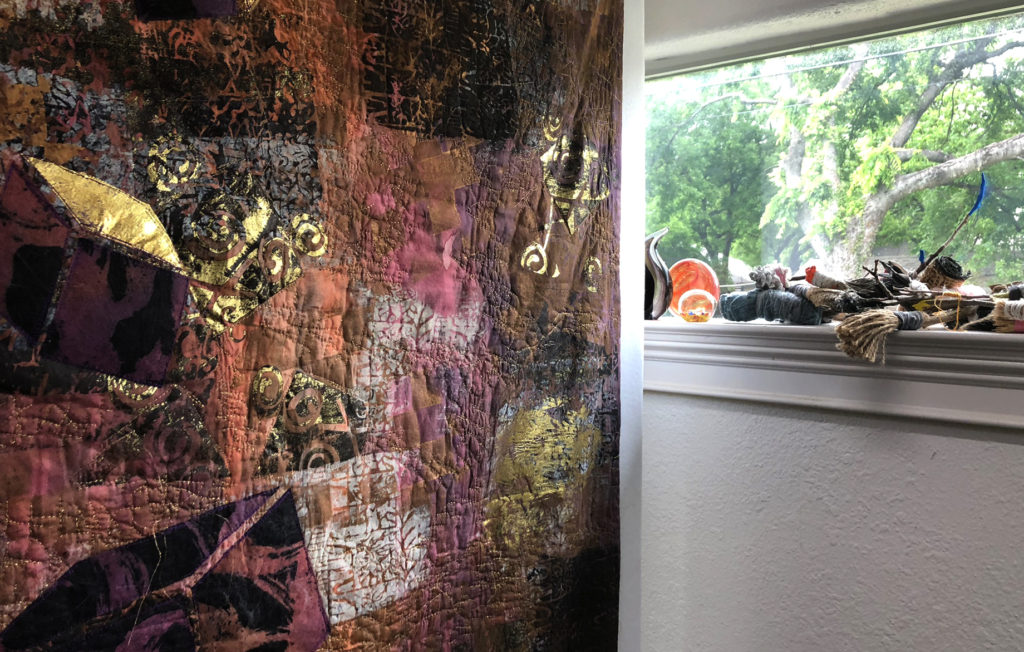
Natural light from a narrow window enhances surface textures

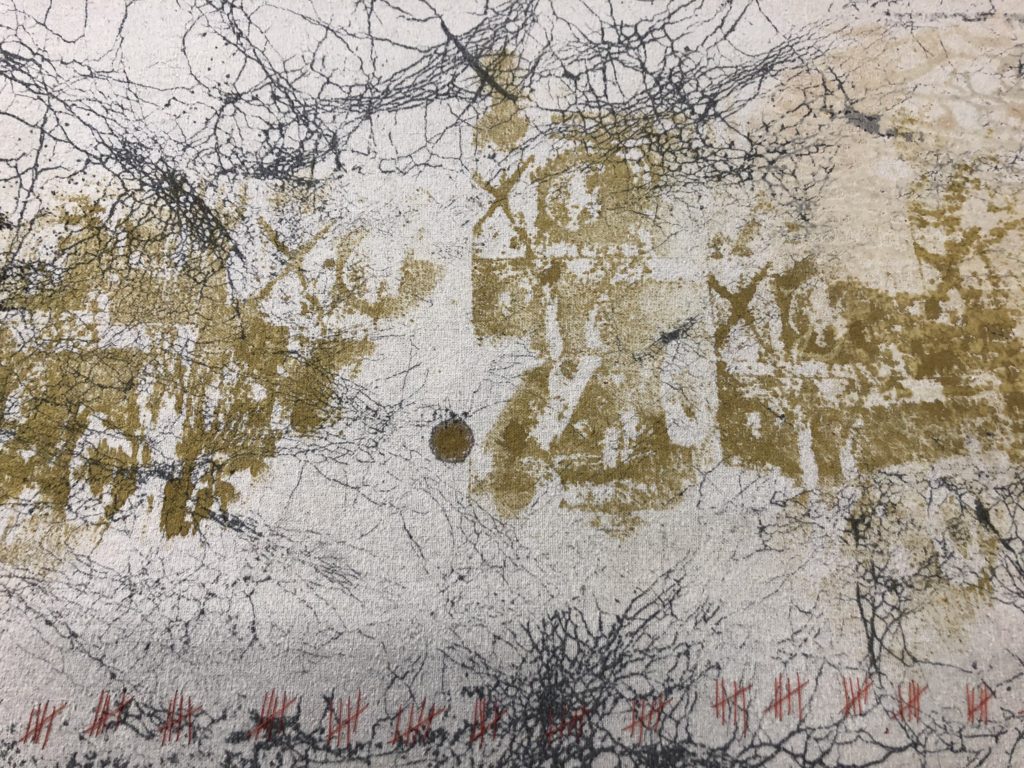
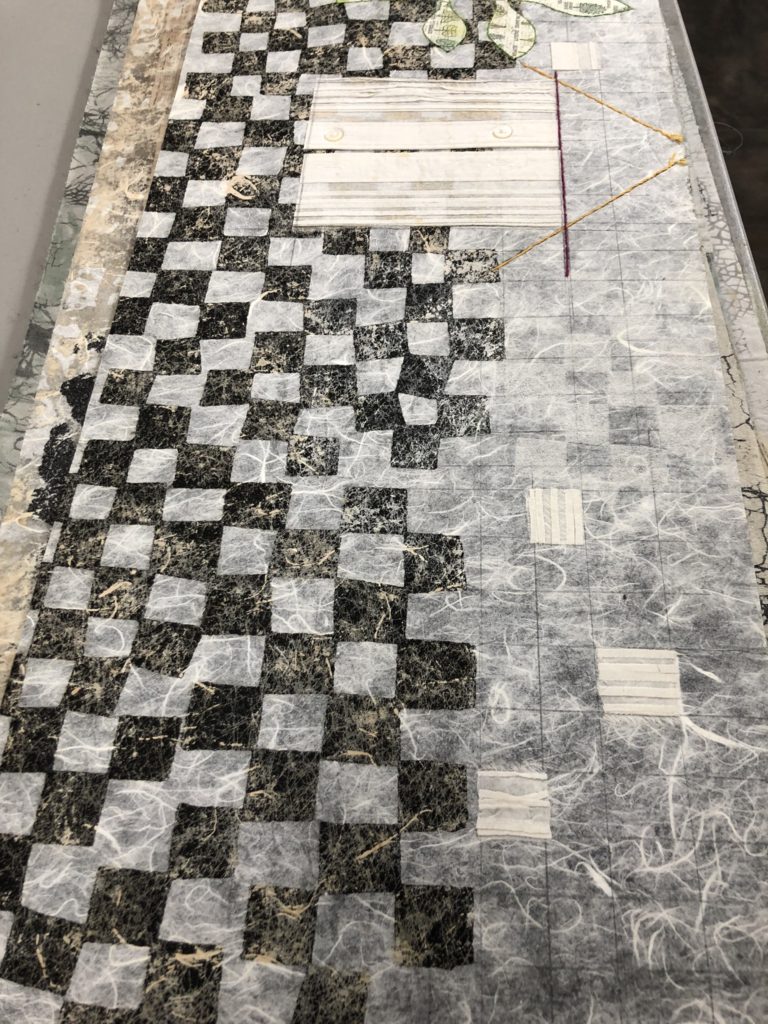
I fell in love with several of her long panels characterized by calligraphic marks and lines resembling music staffs. In the first photo, below, Jane used a flour paste resist to create the fine crackles, and in the second photo, you can see that she incorporated strands of rice paper.

Jane is a generous master teacher whose video lessons can be found on her You Tube channel. One of my favorites is Mastering Thermofax Printing: Gold Leaf. She does a step-by-step explanation of the process that is engaging and easy to follow.

Her books are just as straightforward. Jane is one of those artists who shares her processes and inspirations freely with the kind of openness that one finds in a confident master art professional with an impressive body of work.

In my own library, I have Jane’s 15 Beads: A Guide to Creating One-of-a-kind Beads, Art Cloth: A Guide to Surface Design for Fabric, and Creative Strength Training. Each one is a treasury of inspiration and innovative process.

Below are just a few of the images that Jane included in her portfolio for the Juror Panel’s consideration. When you see the range of color, theme, and confident composition, you’ll see why Jane was chosen. Outstanding art has no material limitation – it speaks to humanity in every medium.

This slideshow requires JavaScript.

As SAALM Artist of the Year, Jane will be honored with a retrospective exhibition and an accompanying catalogue. Dates for the exhibition are September 8th – October 27th, 2019 at the San Antonio Art League & Museum, 130 King William Street.

Mark your calendars now – everyone at the Art League is so excited about this show! I am a huge fan of Jane’s work, and you will be, too, after you see this gorgeous array of artwork.


Marfa – and wax on black exploration

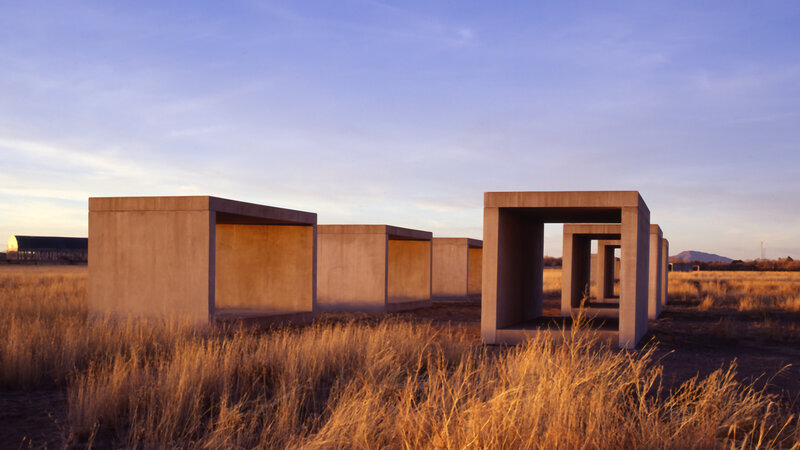
In the 1970s, minimalist artist Donald Judd moved to Marfa, Texas, where he created giant works of art beneath vast desert skies

I’m back from a week in West Texas and the beautiful Davis Mountains. One of the best parts of the trip was visiting Marfa and connecting with minimalist artist Donald Judd’s vision. There’s a great NPR article about this – click here. I love the quote by sculptor Campbell Bosworth“You just come out here and you feel like, I want to make something; I want to do something!”

Maybe it’s the minimalist influence, but it must be true. The Marfa getaway ignited my creative curiosity, and as soon as I got back, I went into the studio and started working in black and white on an experiment with black substrates and beeswax.

I wondered what would happen to the translucent layers of beeswax when they were applied over a dark background.

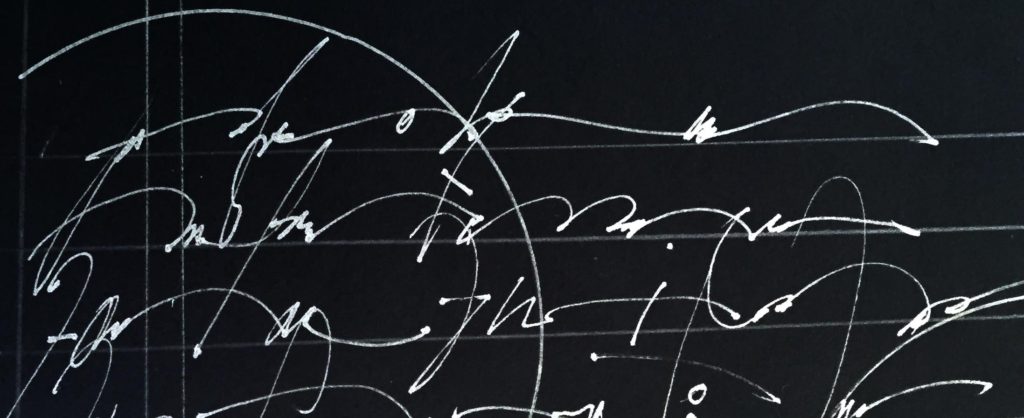
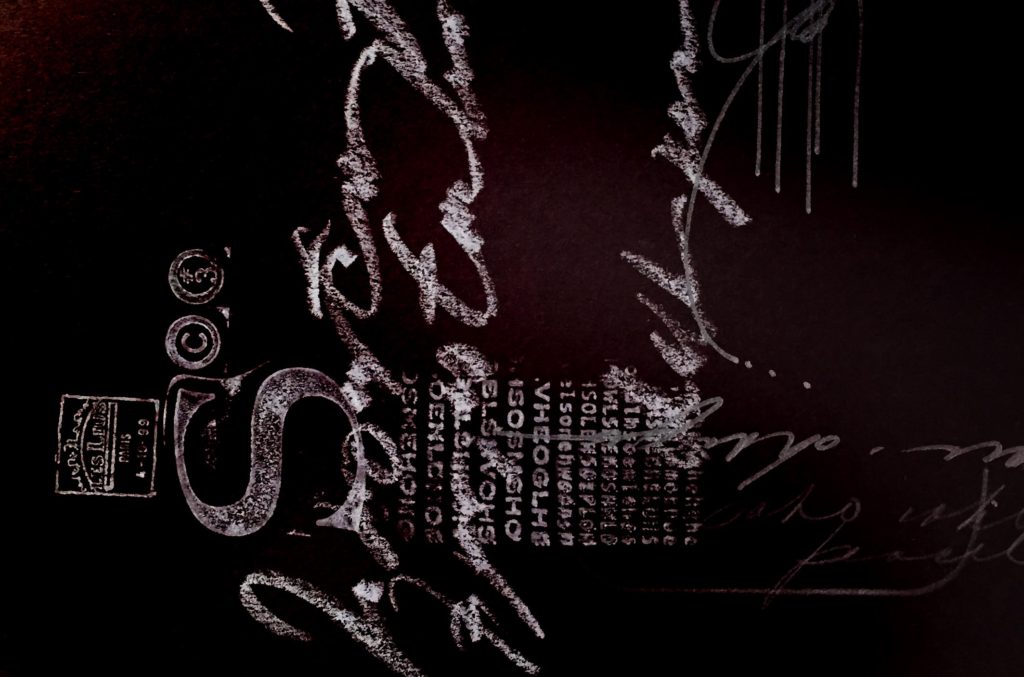
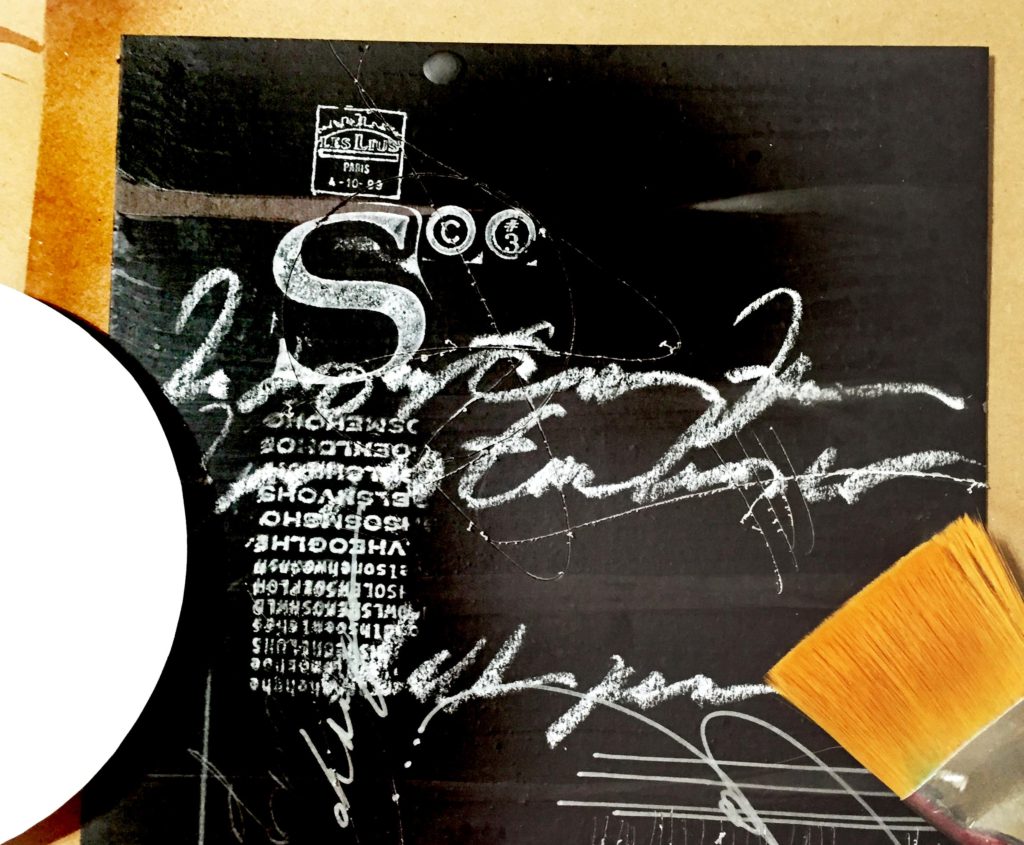
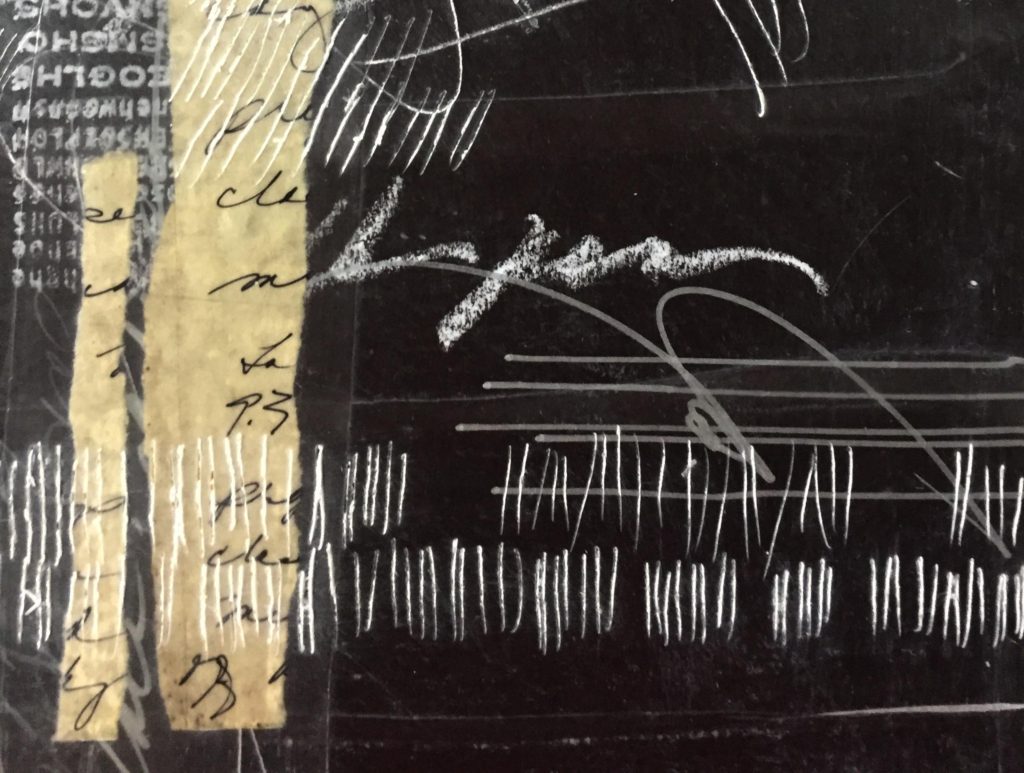
I used an absorbent black paper and added some white markings with different kinds of media – crayon, stamps, paint:

I added a layer of beeswax – it made it kind of glossy, and did penetrate into the paper, which had been a concern. You don’t want it to just sit on the surface of the substrate:

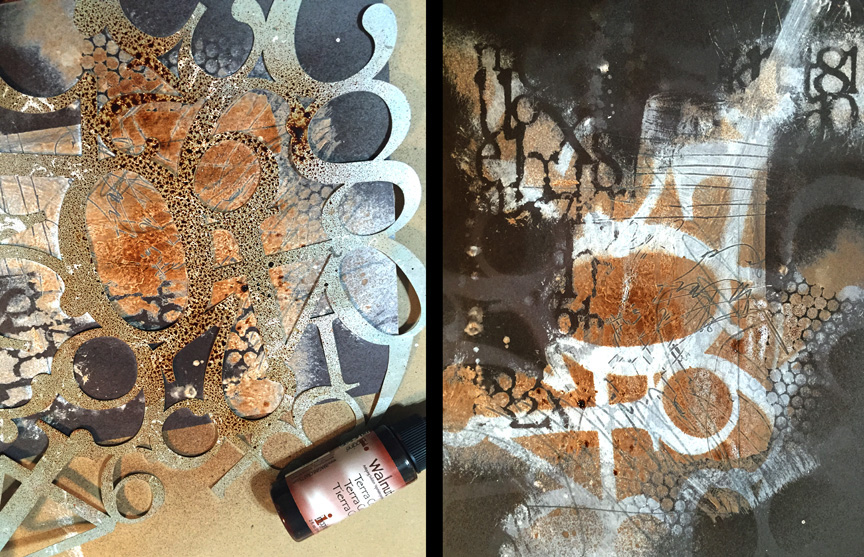
More experiments – black and white (and a bit of walnut ink):

Like all experiments, some of the techniques worked well, and some were definitely “learning opportunities.” But there is a certain potential for interesting effects that are both chalk-like and smokey. I am going to push these ideas a little further and see what develops (like old black and white film).

Now that I’ve been “Marfa-ized” and infected with some new ideas, it looks like I may be spending more time at the studio, perhaps even developing a wax on black workshop!