Rust dyeing – multiple pieces, multiple materials, magical results

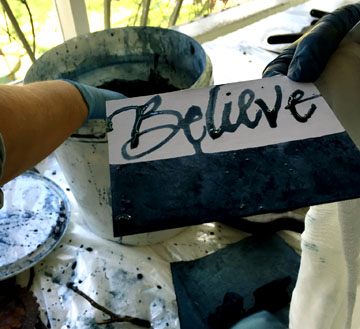
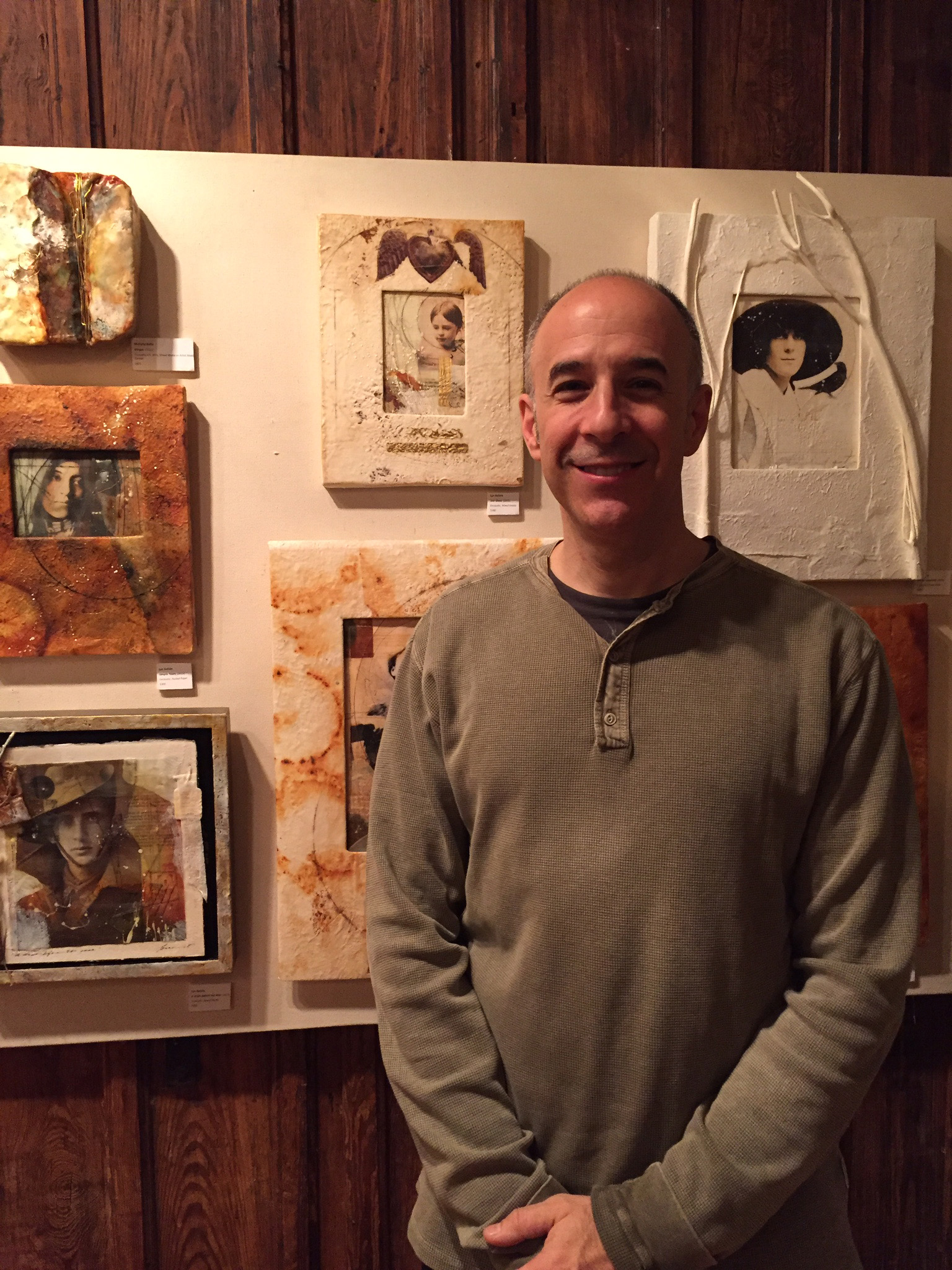
Book cover made with experimental rust-dyed paper - Lyn Belisle

Book cover made with experimental rust-dyed paper – Lyn Belisle

Ever since I learned that I’ll be teaching dyeing and surface design at Vivi Magoo art retreat, I’ve had little else on my mind. Did you see the newsletter about this event? If not, click here – it’s going to be SO much fun, and it’s coming up in just a month, November 3-5.

One of the techniques I’m teaching with Michelle Belto is dyeing with rust. I’ve done a bit of that, but wanted to tackle it on a Big Scale. And it worked! I dyed a yard of linen (thanks for that old white linen skirt, Gloria), some scrap cotton pieces, and two types of watercolor paper – a heavy 300# cold press and a lighter #140 hot press. I did it all at one time with the same process just to see how the different materials would take the rust. All were slightly different but all turned out beautifully.

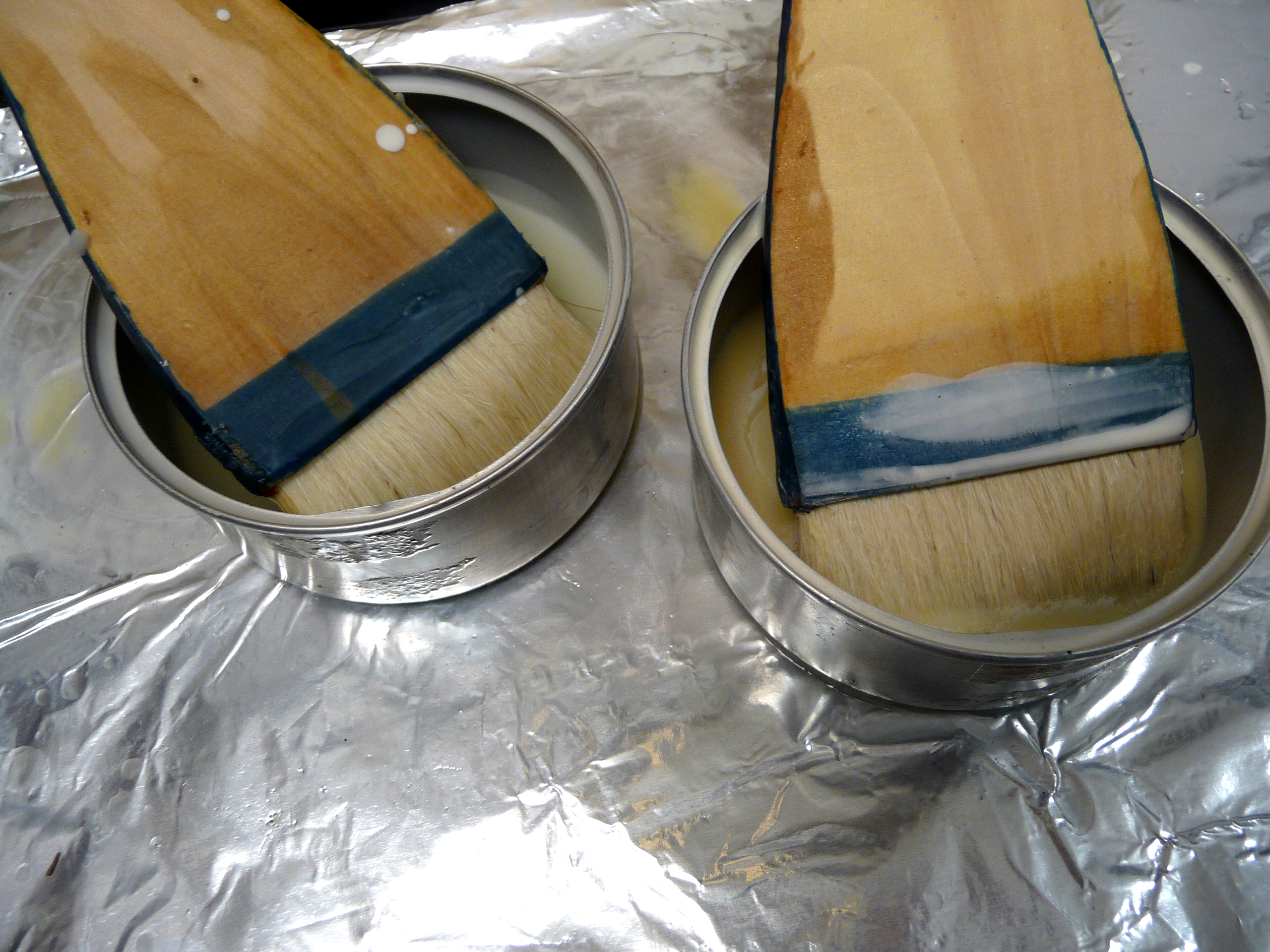
Here’s a short version of how I did it. I collected some rusty objects in a plastic bucket and poured a solution of bleach and vinegar over them to sit overnight. Do this outside! I got this recipe from the Internet (there are many rust-making solutions if you want to test other ones). There was about two inches of yucky rusty foamy gunk in the bottom of he bucket the next morning. Stinky yucky. But rusty.

I spread a plastic drop-cloth in the yard (away from plants) and put a layer of fabric and watercolor paper on the plastic – some of it overlapped a bit, but I wasn’t concerned, I just wanted to see what happened on the different materials. The whole area was about three by four feet. I dumped the contents of the bucket over the whole thing and spread it out, wearing gloves. . .very very random. Then I covered it with black plastic and weighted it down with some old outdoor cushions and some flower pots to keep good contact – also to keep Dudley the Tortoise out of the pile of stuff.

It sat covered in the sun for about six hours, then I took of the cushions and peeled back the black plastic – zowee! What great rust colors! It was exciting – take a look at the pictures below, and then I’ll tell you my observations. (If you can’t see the pictures, click this link)

Here are my observations and caveats – first, I haven’t washed the fabric thoroughly so I’m not sure how color fast the rust is, but since I won’t be wearing it, just using it for fiber art, that doesn’t concern me. You may want to try a small piece and see how it works for you if you’re going to make a garment.

Secondly, I wish I had dampened the 300# watercolor paper because it’s very thick and I think it would have taken the rust better if it had been wet. The thinner 140# watercolor paper was the most successful of the four materials. It had strong prints from the objects and lots of color variations.

After the process was done, it occurred to me that the formula that I got from the Internet included bleach, but that didn’t seem to affect the fabric – it still dyed a rich rust. Next time I’ll try it with salt and vinegar just to see. But whatever method you use, research it and try it on a small sample first. That’s what I did before I mixed up this huge batch. Work outside, wear gloves, keep your tortoises away from it!

In the Viva Magoo all-day class, we will be doing a version of this that uses lighter fabrics and papers and we’ll include some over-dyeing using the Shibori method (yep, you can do Shibori on paper as well as fabric) – I hope you’ll consider signing up for one of the workshops. If it’s half as interesting as this rusty experiment was today, it’ll be worth the price of admission!

It’s almost showtime . . .

coeur

danmeat

William Henke’s Uptown Henke Meat Market, now a contemporary art gallery

Michelle Belto and I went to Fredericksburg, Texas yesterday to check out the space for our upcoming duo exhibit at  Dan Pfeiffer’s gallery. The space is an architectural wonder, a 120-year-old meat market which Dan converted into a stunning art gallery.

Dan’s architectural background gave him a reverence for the original structure, and you can see lots of the original trappings of the market, such as the huge meat grinder, which looks kind of like a contemporary metal art object. Dan’s own work is fantastic – carved wood sculptures and furniture that are an amazing blend of artistic form and practical function.

_DSC3746_300ppiOur show is called “Coeur Samples,” and I thought of the name when Michelle first showed me her new sculptural pieces. They resemble blocks of iridescent material that could have come from the heart of a mysterious planet –  and they fit well with my PhotoEncaustic work which samples a moment in time through vintage photographs. “Coeur” is French for “heart” – so, voila – the show became Coeur Samples: Encaustic Explorations. Although Michelle and I have taught together many times, we have never exhibited together, so I hope you can get yourself to Fredericksburg to see our first-time duo show next month. Here are a few photos from yesterday’s visit with Dan at the gallery – we’re excited, and grateful to Dan for hosting our work in this amazing space.


You can do it, Kid . . .

Have you ever wanted to get your work out there in public – and help people at the same time? Yeah? So why not apply to become an Artist in Residence at Imagine Crafts? There’s an open call right now and they are looking for DIYers, Card Makers, Memory Keepers, Mixed Media and more.

You can go here to see all of the requirements and benefits, but basically, they send you their crafting supplies for free and you come up with three small projects a month to show creative ways to use them

These guys are near and dear to my heart because they represent Tsukineko, the Walnut Ink makers.And it’s a friendly group, too – I’m not affiliated with them other than that I buy my weight in Walnut Ink from them every month or so, but when I need advice about orders or products, they are right there.

Here are some of the kinds of projects that the Artists in Residence come up with:

Classy Halloween Art Journal Page by Jowilna Nolte

Must Have My Creative Medium! by Renee Zarate

You guys can do this, and it would be fun!! Think of the mixed media things you’ve done in Studio workshops or tried on your own, and then come up with a catchy project and name. OK, here are some goofy ideas to get you started – I’ll make up the names and you can make the projects for your application –

  • Catchy Cactus Coasters
  • Mini-billboard Pet Portraits
  • Rocks that Rock
  • Starry Night Sleep Tee
  • Jazz-Score Journal

See? That took me about five seconds to think of a few ideas – you can do better, Kid – get out there and be famous, and you can thank me when you have your own international design line. Here’s where to apply. (And tell ’em Lyn sent you 🙂


A two-day encounter of the art-full kind

wsWhat was I thinking? Two full-day workshops at the Studio back-to-back? A weekend of hanging out, creating, eating and talking with eight other like-minded souls?  How would all of that look? It looked FANTASTIC!

Saturday was Belisle’s Collage Extravaganza and Composition Challenge. We worked on two major pieces – a collage on canvas with extreme emphasis on composition (the AB3s) and a collage on cradle board with image transfers and encaustic wax. The intrepid participants gave it their all, and we were very tired but happy at the end of the day. Here’s the video – see if you can detect the AB3s of composition at work in the finished pieces.

But wait – there’s more! On Sunday, Lesta Frank and I team-taught a very non-traditional mixed media journaling class. Everyone designed their own pages and created a loose-leaf portfolio to collect and show their experimental surface finishes, including one really interesting Profile Page. This was Lesta’s idea and consisted of an actual dimensional profile cutout with descriptions of a personal profile as part of the composition. Very nice! Watch for it in the video, below.

In the critiques and discussions, all agreed that the two-day experience was great, both for those who came both days and those who came on one day of choice. We had eight participants each day, half of whom were there for both days. Nicely balanced! I will plan another weekend experience in the early part of 2016. I should be recovered by then!

Potters and gourders

I’m presenting a program to the San Antonio Potters Guild tonight. It’s called Earthenware, Ornament, and Assemblage. While collecting photos photos of my clay pieces, I realized that working in earthenware has been part of my art practice for almost 50 years! These days it’s mostly face shard production and some small sculptural pieces, and I love exploring finishes for fired unglazed clay. Here’s one of the finishes I’m showing the potters tonight – it’s a wax-based custom metallic patina that starts with neutral shoe polish! I used it as a finish on the piece at the left and thought you might like to see how it’s done.

Kathleen Peet: "Diamonds on the soles of her shoes"

Kathleen Peet: “Diamonds on the soles of her shoes”

Just as I was working on my Potters Guild presentation, I got a message from Kathleen Peet, a mixed-media artist from Prineville, Oregon who uses my shard faces in her work. She works with gourds in a unique way – look at this gorgeous piece, left.

Kathleen has an Etsy shop called  Full Circle Art and you can contact her there to see the full scope of her creativity with gourds.

This is what she says about her passion: “When I started in 1996, gourds were a relatively new medium, especially in rural eastern Oregon. The most frequently asked questions were: “What are those?” and “Do you grow them?” Now, gourds are much better known, and some are recognized as ‘fine art’ rather than just craft. I have enjoyed taking this medium in many different directions, and just when I think I’ve tried everything, some new idea hits me. While still enjoying painting, spinning/weaving, ceramics and abalone jewelery….I always come back to gourds!”

Here are some photos of more of Kathleen’s work, including a look at her Oregon studio – thanks, Kathleen! Clay and gourds are a natural pairing!


Bonnie, Akim & me, the (ahem) calligrapher

Lefties like me are challenged in many ways, but especially in the fine art of calligraphy. I’d always envied people who could take a simple work like “bread” and elevate it to super-star status with illuminated swashes. But thanks to my friend Bonnie Houser, I can now write like a calligrapher! And I’m getting better at it – AND it’s fun!

Some of you may know Bonnie as the owner of Dry Comal Creek Vineyards and Winery and some of you may know her through her art work, She’s a great friend and teacher to a lot of people. Lesta Frank and I asked Bonnie to give us a quick calligraphy lesson on an alphabet called AKIM. It was “invented” by German artist, sculptor and musician Hans-Joachim Burgert, who said,The 10spiritual material is the simple line. . .the line is a medium of free graphic discipline.”  Because this is a monolinear alphabet (no chiseled shading), anyone, even left-handed people, can do it well.

It was amazing how quickly we picked it up with Bonnie’s help. And the great thing is that there are as many personal variations of the Akim hand as their are writers. If you do a web search, you will see this for yourself. Take a look at some of the work we did with Bonnie, then give it a try!


First, the Studio — then the Alamodome!

stIf the Saturday Show and Tell gets any bigger, I’m gonna need to rent out the Alamodome! More than 40 people came to the Studio on Saturday to share creative ideas, show recent projects, and brainstorm solutions to works in progress. Many thanks!

One of the favorite “shows” was David Chidgey and his amazingly informative presentation regarding his work in mosaics. He brought examples of his work in glass and tile and described his course of mosaic study in Chicago.

David’s website, Art Glass Mosaics, is an excellent resource for information about his work and the art of mosaics in general.  I was quick to ask him if he would consider doing a mosaic workshop for us at the Studio – and he said yes! We are working on a possible November date, so stay tuned.

Another fascinating share was from Lynn Maverick Denzer – she brought an oil painting she is restoring that was done by her grandmother, artist and conservationist  Lucy Maverick.

lynn

Lynn teaches at Inspire Community Fine Arts Center, another great art education resource.

Other presruenters showed fiber art, including this mixed-media piece by Rosemary Uchniat (left). Questions and answers were flying around the table – lots of creative buzz going on. That’s why I love these Saturday Show and Tell get-togethers – there’s a wealth of talent in our community, and such generous people willing to share.

So I’m either going to buy more folding chairs or rent the Alamodome, because this informal Show and Tell event is a keeper! Hey, maybe next month we can expand out into the parking lot! Surely the first cool front will be here by then. Right?

Have a great week, everyone. And come to the next show and tell – date to be announced soon!

Small worlds, big talent

I had a blast at summer Art Camp – I taught an online class at Artful Gathering called Small Worlds: Creating Fantastic Landscapes with Altered Pages. The session just ended today and the student work (many are practicing artists) was phenomenal. Some of you have taken this workshop with me at the Studio, and you will especially appreciate these collages. Wowzers!

The majority of these altered papers were created with Citra-Solv cleaner, which I’ve mentioned often. If the idea intrigues you, you can get a good introduction to the process at this link on the Citra-Solv artists’ page. Heck, after seeing all of this good work, I need to schedule another workshop! I’m inspired – and I’m grateful to these fantastic workshop participants who allowed me to share their work.

I can’t show you photos from the art-filled week, but I did do my homework. . .

It’s a foggy morning here in Boston, and I am still processing all of the incredible art I’ve seen this past week, here, and in New York. You are temporarily off the hook for having to see my zillions of photos of art, though, because of some “saving errors” on my little Mac. But I will definitely post them when I get home later this week.

The most spectacular art museum I saw was the Whitney Museum of American Art – I hope you get to visit sometime. Their new location is breathtaking, and the exhibit, America is Hard to See, is like walking in person through the most exciting decades of American art. What an experience!!

The IMG_7381best new-to-me artist I discovered was Arlene Shechet. Here’s a photo from a video of her working on one of her large clay sculptures. If you visit her site, you can see the work I saw at Boston’s Institute of Contemporary Art. I was especially fond of the indigo and white mandalas that she did between 2002-2005. She is amazingly versatile, eclectic and visionary.

I did do my homework for Jane Davies‘ class while I’ve been here in Boston – Jane is an amazing teacher and painter – hope she doesn’t mind my sharing this approach to composing a painting study. It’s very worthwhile – it involves concentrating on two separate areas at a time within a randomly executed beginning. Take a look – I didn’t produce a “finished” painting, but I learned a lot and had fun doing it. And I did it on the dining room table with limited supplies – shows that you can do your art anywhere.

Home soon!! Can’t wait to be back to the Studio.

Monday morning roundup

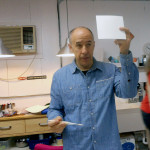
fabricGoddesses were out in force at the Goddess Banner workshop yesterday. It was a gorgeous afternoon for drying colorful, glittery fabric on the rack outside the Studio. Among the participants were Monika Astara (my favorite fashion designer) and Lisa Stamper Meyer from Roadhouse Arts, as well as several talented FASA members who specialize in surface design. So, even though we used the some of the same images, the results were totally diverse and eclectically spectacular. Take a look at the video, and then I’ll tell you about some of the techniques.

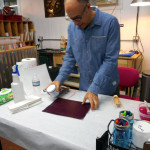
Aren’t those wonderful? We did a combination of Small Space Dyeing that Rosemary Uchniat teaches in her workshop and digital image transfer that’s done with hand sanitizer (yep!). I learned about this technique from an artist in Rehoboth, Delaware, and it works great on fabric. Basically, you print your image on an inkjet overhead transparency, spread a layer of hand sanitizer gel on your fabric, place the image face down, pat gently and leave for 15 minutes. You’ll get different results based on how much gel is on the fabric, but it works great. We protected the digital transfer by taping freezer paper on the back.

And speaking of Rosemary Uchniat, guess who won the Friday Freebie Mermaid Shard? Yep, Rosemary – congrats – it was totally random. Now she’ll have to make a mermaid!

Have a great Monday, y’all – I’m headed to NYC and Boston for a few days to see the family. Will send art reports along the way!