Mermaids, fiber arts and Friday freebie

1First things first – the Friday Freebie – I was amazed at the response to the Mermaid Shard Faces that I posted on Etsy this past week. They flew (or swam?) out of the shop and are now sold out, but I’ll be making more of them as a regular item in my EarthShards gallery.

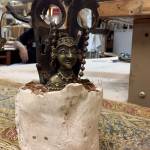
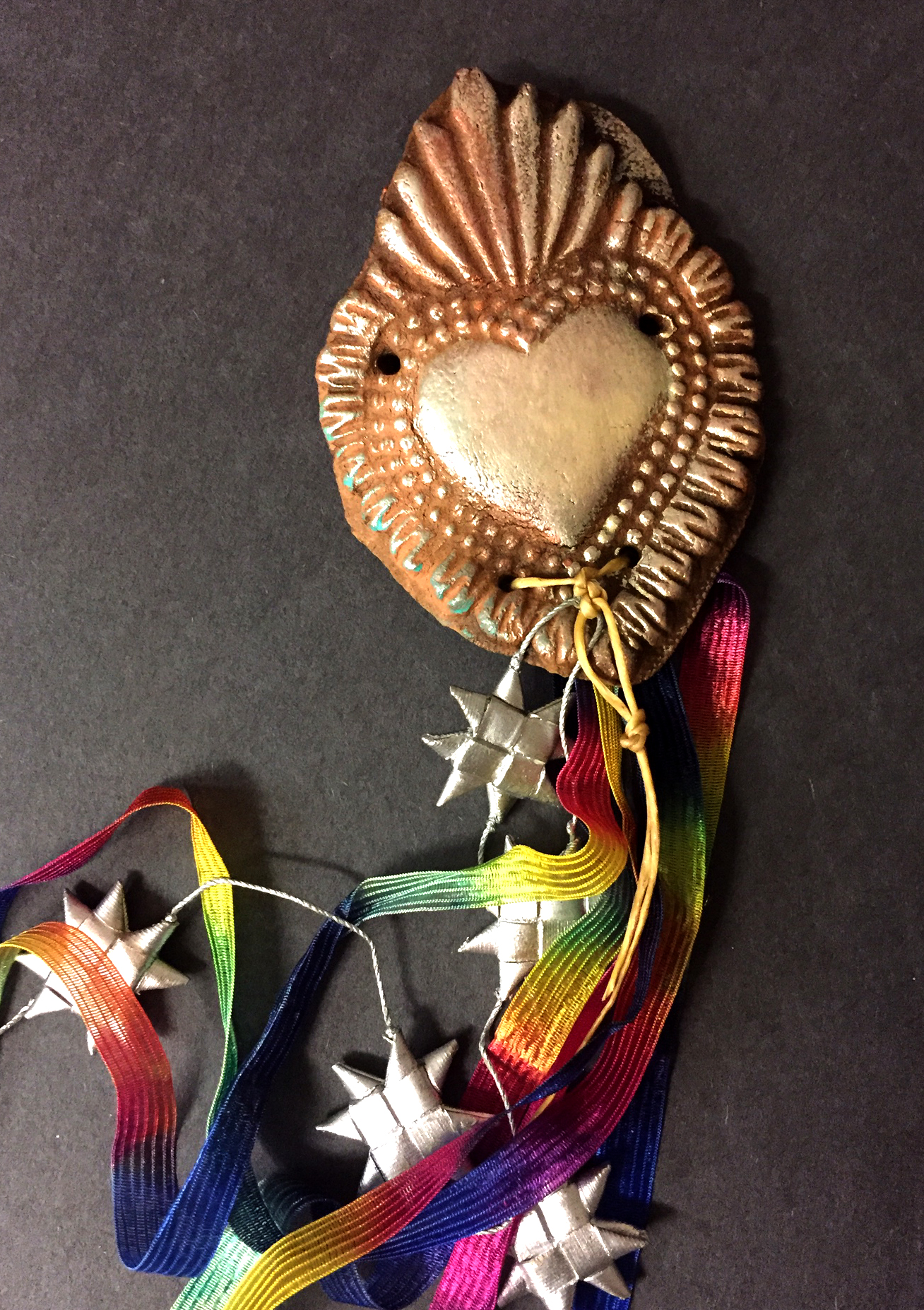
Did I forget to save you one for the Friday Freebie? No! Here’s your chance to get a Mermaid Shard Face of your own to tie to a branch and add mermaid-like elements (See mermaidkaren copymy friend Karen’s wonderful example, left). These faces come from press molds I make from old cemeteries and sculpture gardens, so they have good mojo. Be a SHARDS subscriber by Sunday at midnight and you’ll be in the drawing.

Now, onto the fascinating subject of fiber arts – if you work in paper or mixed media or fabric or felt or anything string-like or woven – listen up! The Call for Entries from the Fiber Artists of San Antonio for their Juried 41st Exhibition at the swanky Plaza Club in November opens next week. If you’re accepted, your work will be seen by zillions of Plaza Club members and guests who appreciate – and purchase – art. So here are your instructions:

  1. Read the info poster (below) to see three great reasons to enter this show with any of your fiber-related work
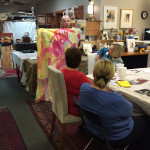
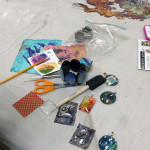
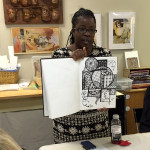
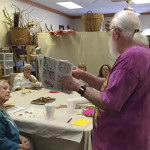
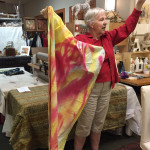
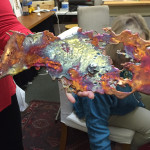
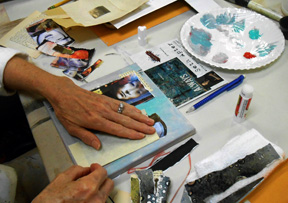
  2. Then, if you need inspiration, watch the video at the end of this SHARDS post. You’ll see six fiber artists demonstrating easy, eclectic techniques from the FASA Artists Buffet meeting last Monday.
  3. Enter the FASA juried show – the deadline’s not till October, but time flashes by like a mermaid’s tail!16exhibitflyer

And here’s your Inspiration Video! Good luck with the FASA entries AND the Friday Freebie!

Monika Astara – a visit to her studio

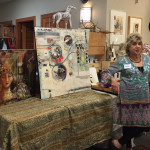
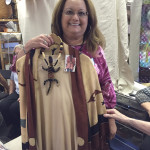
When I first met Monika Astara at a FASA Runway Show several years ago, I was almost tongue-tied by the beauty and originality of her designer clothing. She was swamped with customers, but I managed to ask her rather tentatively if she ever did trunk shows – she said that she did! Six months later, she brought her wearable art to my Studio, and it was a huge success. We became fast friends and she’s had several more fantastic shows with me – her clothes are comfortable, casually elegant, yet very distinctive. If you are a Monika fan, you know what I mean.

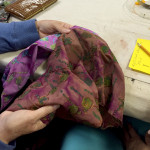
Hoverer, I had never been to HER studio until this weekend, and what a treat it was to see where all of the Monika Magic originates. I got to see her long cutting table where she paints and constructs her garments, the stacks of patterns, and most of all, the fabrics! Her signature fabrics are chosen for their unusual textures and colors and for their practicality – not an easy task.

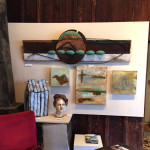
I took some photos during my visit to share with you, and I hope you will be at her next show and sale at Lyn Belisle Studio in October, date coming soon!

Circles of connection

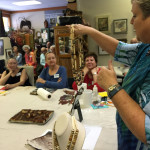
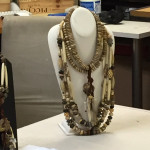
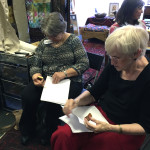
Saturday’s Show & Tell was the best kind of connected circle – it seemed as if everyone had a story or an idea that made the collective group smile and even applaud. When you begin with Vicki Siptak’s beautiful necklaces made from socks (1) and end with thoughts from a poet about imagery, words, and art, what’s not to love? Join us for the next one if you can on Saturday, August 29th (2-4 pm), and connect with this creative circle at my Studio. Here’s a video from Saturday.

kimAnother connected circle is getting really huge, as in International – that’s the Spirit Doll connection. It started for me with Joanna Powell Colbert in 2012 and her order for faces from my Etsy site. She and I both started teaching Spirit Doll classes, and the word spread. I’ve sent shard faces to many countries and  just got these photos from Jo Rockendorfer, who recently taught a Spirit Doll class in Sydney, Australia – here’s here description: “The red doll is Hummingbird Medicine, the green/blue was for a friend after she did a healing ritual and the last and most recent is Sophia Goddess of Wisdom”

I love the fact that Texas clay enhances Jo’s beautiful work from Australia – and if you’re reading this, you’re connected, too, in our circle – lucky me! Circles unify, art connects –  life is good. Have a great week.


It takes a few eggs to hatch an altar

altar14 copy

My altar from last year titled “Illumination”

Celebration Circle’s annual invitational event, One People, Many Paths: The Sacred Art of Altars, is a personal favorite. It’s a challenge to take one of 50 plain wooden boxes and transform it into a personal artistic statement with meaning, maybe some humor, and a visual appeal that will encourage people to bid on it to benefit this very cool group of spiritual creatives. Last year’s altars show the amazing variety of artful offerings.

My altar for this year started with some eggs from the next-door neighbor’s chickens. I loved their shape and texture, plus there’s always the notion of what will hatch. When my friend Zippy found a nest that seemed made for the altar box, it started to come together. Want to see? Here’s how I made my altar titled “Brood, Hatch, Fly.”

Lyn Belisle "Brood, Hatch, Fly - wood, earthenware, plexiglass, found objects

Lyn Belisle “Brood, Hatch, Fly – wood, earthenware, plexiglass, found objects

Here is the quote that inspired “Brood, Hatch, Fly”:

“It may be hard for an egg to turn into a bird: it would be a jolly sight harder for it to learn to fly while remaining an egg. We are like eggs at present. And you cannot go on indefinitely being just an ordinary, decent egg. We must be hatched or go bad.” C.S. Lewis

You can see all of the Celebration Circle altars (and bid on them) at the Santikos Bijou Theater in Wonderland Mall from September 1 – 30, 2015. Now go hatch and fly.


Spirit Box showcase and a fresh breath bonus

spboxWaaa-aaay back in October of 2013, I wrote an article for Cloth Paper Scissors Magazine about Spirit Boxes. This is from the intro:  “Spirit Boxes take their roots from art dolls, kachinas, and other meaningful handcrafted figures. They make beautiful gifts, especially if a personal note or small object is tucked inside the box. To make your own Spirit Box, you will need just a few simple materials, and most or all of those can be recyclables.”

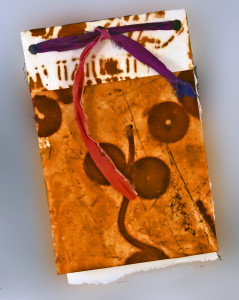
Six participants got together at the Studio yesterday to give it at try at our Spirit Box workshop. The results (below) are beautiful, personal, and heartfelt.

This slideshow requires JavaScript.

So what’s the “box” part of this construction? It’s a recycled Altoids tin (how ubiquitous – they are used from everything from mini-shrines to sewing kits). But by gluing this on to the back of a flat wall piece, you can both lift it out from the wall to “float” it, and also have a secret compartment for life’s little pleasures like Hershey’s kisses, silver dollars, and secret messages! See?

Punch holes and fashion a "handle" out of wire, then glue on with E6000

Punch holes and fashion a “handle” out of wire, then glue on with E6000

Voila! A secret compartment!

Voila! A secret compartment!

FUN LINKS for ALTOIDS TINS:

22 Manly Ways to use an Altoids tin

Top 50 Ways to Recycle Altoids tins

Ten Things You Can Build Inside of an Altoids Tin (including a lie detector)

Altered Altoids and Other Tins

My personal favorite – an Altoids tin grill that can cook two hotdogs and one marshmallow – seriously?

Discharge fabric design – a cheap flashy bleach job

Shirtsm

Mike went to a garage sale on Saturday and found some brass Asian calligraphy characters that were used as wall decorations. The more I looked at them, the more I knew I didn’t want them on the wall.

But the designs were cool. So I took an old black shirt and used some diluted bleach to create a reverse stencil design in what’s called Discharge Dyeing. Discharging is the process of removing dye (by destroying or altering the dye “chromophores”) with various chemicals or bleach, often in pleasing patterns or designs through Shibori or Tie Dye methods, or by stamping, stenciling or block printing (definition from Dharma Trading Company).

brass copy Here’s what you needa black shirt (cotton, already washed), some chlorine bleach (Clorox), diluted 50/50 with water and put in a small spray bottle (label it!! Work outside!!), a non porous board like foam core to put between the front and back of the shirt to keep the bleach from bleeding through, scrap paper to mask off your bleaching area, masking tape to stick the paper to the shirt, and some INTERESTING OBJECTS to use as reverse stencils. I used the brass calligraphy symbols, but you could use anything – doilies, leaves stick-on letters, shells, twine and sticks – be creative.

Step One: Assemble your stuff on your work surface. Make sure that any stray bleach mist won’t damage the surface.

7


Step Two: Put your non-porous board between the layers of the shirt and smooth out the fabric This protects the back of the shirt and also makes the process easier by giving the surface some support.

8


Step Three: Lay out your objects in a pleasing pattern – center them if you like. You can use anything – stencils, lace, metal washers – and you can test your designs by trying them on black construction paper first – it “discharges” like black fabric.

9


Step four: Mask off everything except the area you’re going to mist with the bleach solution. Here, you can see I’m taping scrap paper around the edges of the area using blue painter’s tape.

10


Step Five: Once the masking is complete, you’re ready to spraybe careful of the fumes. Even diluted, bleach can be strong, but you are using just a small amount and working quickly. I used a little spritzer bottle and mixed about half a cup of the 50.50 water-bleach solution.

12


Step Six: Spritz the bleach solution over the exposed area of the shirt. working quickly and just misting the surface. There’s no need to soak the fabric. Pay special attention to edges of the shapes.

13


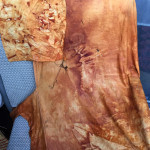
Step Seven: Watch in amazement as the color changes in seconds. Every black fabric has a distinct undercolor, some greenish, some rust. This shirt turns almost orange in the areas that are discharged with bleach.

14


Step 8 – Remove the objects(s) to test the progress. Looking good! This was a small wooden disk with a hole drilled in it – not sure where it came from, but I like the pattern it left.

16


Step Nine: Remove all of the objects carefully – no drips unless you want that effect – and make sure you like the resulting color, which usually takes less than a minute to develop), The bleach action stops automatically since you just misted the surface.

17


Step Ten blot-dry the front of the shirt with a paper towel – otherwise, you will get damp bleach on other parts of the shirt when you move it. You can use a hair dryer after you blot it, or you can just let it dry in place.

18


Step Eleven: Voila! Step back and congratulate yourself on your arty shirt – you should wash it before you wear it. This particular shirt is an “easy tee” by JJill that is much enhanced by its new design!

19


Step Twelve: Hire a cat to arrange itself artfully on your new garment – if you spread the shirt out after it comes out of the dryer, the cat may arrange itself for free whether you want it to or not.

20


There are tons of ways to do discharge dyeing on black fabric, but a diluted bleach mist will give you fine lines around a stencil. Be careful, though, don’t get bleach solution on unwanted surfaces! Or cats.

A pretty colorful weekend at Lyn Belisle Studio

32The Studio was awash in dye this weekend, first with Rosemary Uchniat’s fantastic half-day Small Space Dyeing workshop on Saturday, and then my Goddess Banner workshop on Sunday afternoon. Everyone was caught red-handed having fun – and blue-handed, and green-handed . . .take a look at the video!

Both classes will be repeated in case you want to join in. Rosemary’s second Small-Space Dyeing class is October 17th from 1-5. The first one sold out instantly. And my next Goddess Banner workshop is coming right up on Sunday, August 16th from 2-5.

banNow about those Goddess Banners, this was a special small class that was scheduled for a guest from Houston who wanted to take both Rosemary’s class and mine the same weekend. There were four of us, and it was great to be able to work alongside the participants. I had a blast! We transferred images, dyed cheesecloth, created symbols and words of inspiration, and put it all together in the most remarkable way! I just love this project – and it’s three hours, start to finish.

One of my favorite fiber artists, Linda Rael, was in our group – that made it even more fun. She has a great idea for a series of banners, but I’ll let her tell you about it if she actually does it. Hope so! Take a look at the video, and then consider signing up for the workshop on August 16th – you won’t regret it! It’s to dye for. Sorry.

I don’t do cowboys – however . . .

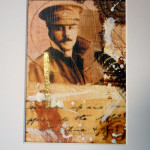
Perhaps it’s because I’ve lived in Texas most of my life, but I tend to regard “cowboy art” as somewhat clichéd. However, I found this great early 20th century photo of a horseman that seemed as if it might work for an encaustic photocollage, particularly after I blurred the background using Photoshop.

Just for fun, I took pictures at every stage of the process, and you can see how it all went together as I worked through it – the finished piece is 16×16″ and is collage and wax on Arches watercolor paper bonded to a birch cradle panel. I might have done a few things differently, but I’m pleased with the result – it’s a new take on cowboy art! Now I just have to figure out a title . . . . “Blazing Saddles”? Nah, that’s taken . . . .

This slideshow requires JavaScript.

Monday two-fer – beautiful bones and beeswax

You get two art reviews for the price of one (yeah, I know, they are all free) but still –  I wanted to post Part Two of my Colorado Trip while it was still fresh in my mind, and I couldn’t wait to show you the video of yesterday’s Beeswax Collage workshop at my Studio (see the amazing video, below)!

Colorado Trip Part Two –  Georgia O’Keeffe at the Colorado Springs Art Center

Horse’s Skull on Blue – Georgia O’Keeffe 1931; Oil on canvas

Georgia O’Keeffe and the Southwestern Still Life is not strictly a “Georgia O’Keeffe show”, (which I should have known had I done my homework before we visited the exhibit). And thank goodness it isn’t, because when her work is placed beside that of her contemporaries – including modernists like Stuart Davis and Marsden Hartley as well as more traditional painters who were also lured by the Taos light –  O’Keefe’s cutting-edge brilliance shines.

One of her quotes that ran across a bright orange wall at the CSAC gallery read, “I had to create an equivalent for what I felt about what I was looking at – not copy it.” That, to me, was huge – and her work showed this journey into interpretation and abstraction through the loose structure of “still life.”.

I was so impressed by the juxtapositions and inclusions that I searched to see who had curated the exhibit. It was Charles C. Eldredge, former director of the Smithsonian American Art Museum, who placed O’Keeffe’s work in the context of other artists who were influenced by the Southwest at the same time she was. The exhibit raised thought-provoking questions such as “What is a still life, really?” and “How does an artist chose represent an observation?”

I loved the show – my favorite painting was this one (below) – and my friend Carol Mylar and I talked for a very long time about why it was included as a still life, and why its powerful simplicity is so mesmerizing. For a much more educated and detailed review of Georgia O’Keeffe and the Southwestern Still Life, read Gayle Cement’s enlightening, enjoyable discussion of the works.

Georgia-O_Keeffe-Black-Patio-Door-1955-large-1339814400

Georgia O’Keeffe Black Patio Door 1955

22And now . . . . .Fabulous Sunday Workshop – Wax and Layers and in Beeswax Collage

The smell of the beeswax, the roar of the crowd – what a workshop! Every single participant took the notion of wax enhancement on monochromatic collage and ran with it, creating evocative personal statements. I’ve recently added another hour to my workshop format, and three hours instead of two makes a huge difference. We have more time to critique and discuss – it obviously worked yesterday. Take a look at some of the inspired pieces the students created. Nice work, Y’all!

Colorado notes, part one – Carol and I visit Pueblo artist Karen Wallace

Carol and me in an earlier visit in the pursuit of art!

Carol and me in an earlier visit on our everlasting art quest 🙂

It never fails – every time I visit my dear friend Carol Mylar, I come home over-the-top inspired. Carol lives in Colorado Springs now, but we still share the same close ties in art and life as we did when we shared a studio on Queen Anne Street back in the 90’s. For example, we discovered we’d bought the same iPhone and the same iPhone case without knowing it – I’m sure you have friends like that, too – it’s kinda spooky but fun.

One of the best times we had during my short trip was a drive to Pueblo just south of the Springs to visit artist and writer Karen Wallace. Karen and I go back a very long way, but hadn’t seen each other in a few years. She’s amazing – her house, her life, her artwork are woven seamlessly into a fulfilling creative existence. You can get a glimpse of this in Karen’s book, Visions and Verse: Along the Path.

Karen lives in a small adobe casita that’s filled with her own art and that of friends, some nationally known painters. There are little altars and stories everywhere. Karen treated Carol and me to a lot of these stories before we went of for a lovely lunch in downtown Pueblo. It’s always so inspiring to see how other artist live and work – take a look at the home and studio of Karen Wallace (and her dog, Chamaya):


I’ll give a report on other parts of my Colorado trip soon, including the Georgia O’Keeffe show – too much for one post!