Potters and gourders

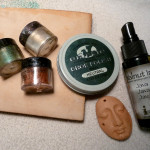
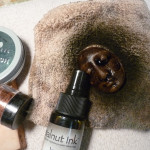
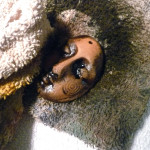
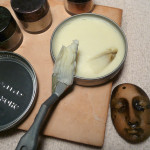
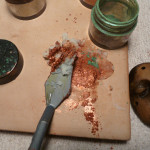
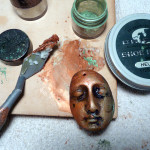
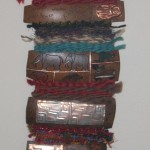
I’m presenting a program to the San Antonio Potters Guild tonight. It’s called Earthenware, Ornament, and Assemblage. While collecting photos photos of my clay pieces, I realized that working in earthenware has been part of my art practice for almost 50 years! These days it’s mostly face shard production and some small sculptural pieces, and I love exploring finishes for fired unglazed clay. Here’s one of the finishes I’m showing the potters tonight – it’s a wax-based custom metallic patina that starts with neutral shoe polish! I used it as a finish on the piece at the left and thought you might like to see how it’s done.

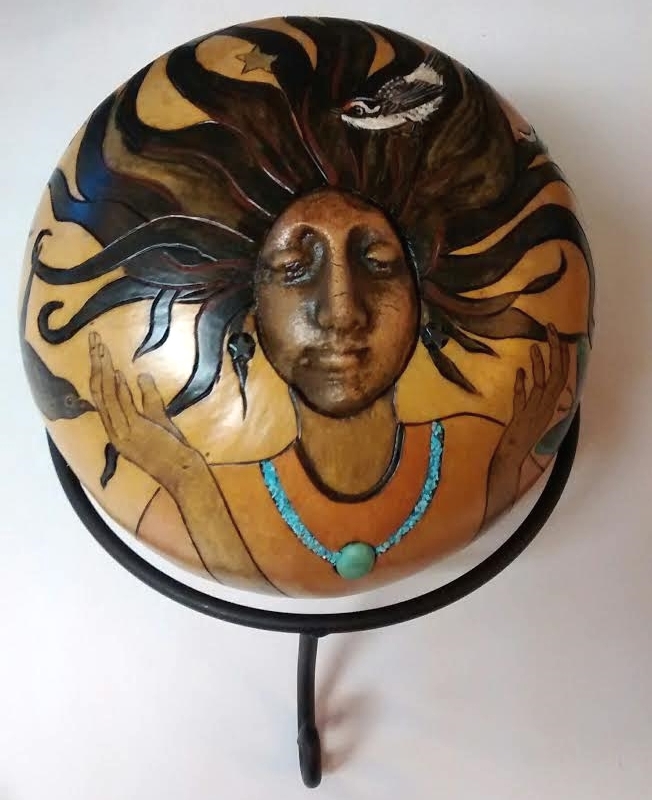
Kathleen Peet: "Diamonds on the soles of her shoes"

Kathleen Peet: “Diamonds on the soles of her shoes”

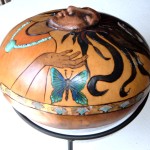
Just as I was working on my Potters Guild presentation, I got a message from Kathleen Peet, a mixed-media artist from Prineville, Oregon who uses my shard faces in her work. She works with gourds in a unique way – look at this gorgeous piece, left.

Kathleen has an Etsy shop called  Full Circle Art and you can contact her there to see the full scope of her creativity with gourds.

This is what she says about her passion: “When I started in 1996, gourds were a relatively new medium, especially in rural eastern Oregon. The most frequently asked questions were: “What are those?” and “Do you grow them?” Now, gourds are much better known, and some are recognized as ‘fine art’ rather than just craft. I have enjoyed taking this medium in many different directions, and just when I think I’ve tried everything, some new idea hits me. While still enjoying painting, spinning/weaving, ceramics and abalone jewelery….I always come back to gourds!”

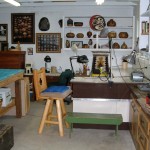
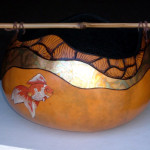
Here are some photos of more of Kathleen’s work, including a look at her Oregon studio – thanks, Kathleen! Clay and gourds are a natural pairing!


Bonnie, Akim & me, the (ahem) calligrapher

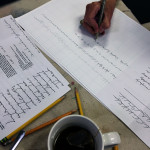
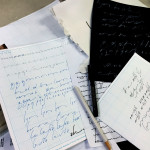
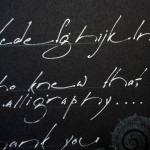
Lefties like me are challenged in many ways, but especially in the fine art of calligraphy. I’d always envied people who could take a simple work like “bread” and elevate it to super-star status with illuminated swashes. But thanks to my friend Bonnie Houser, I can now write like a calligrapher! And I’m getting better at it – AND it’s fun!
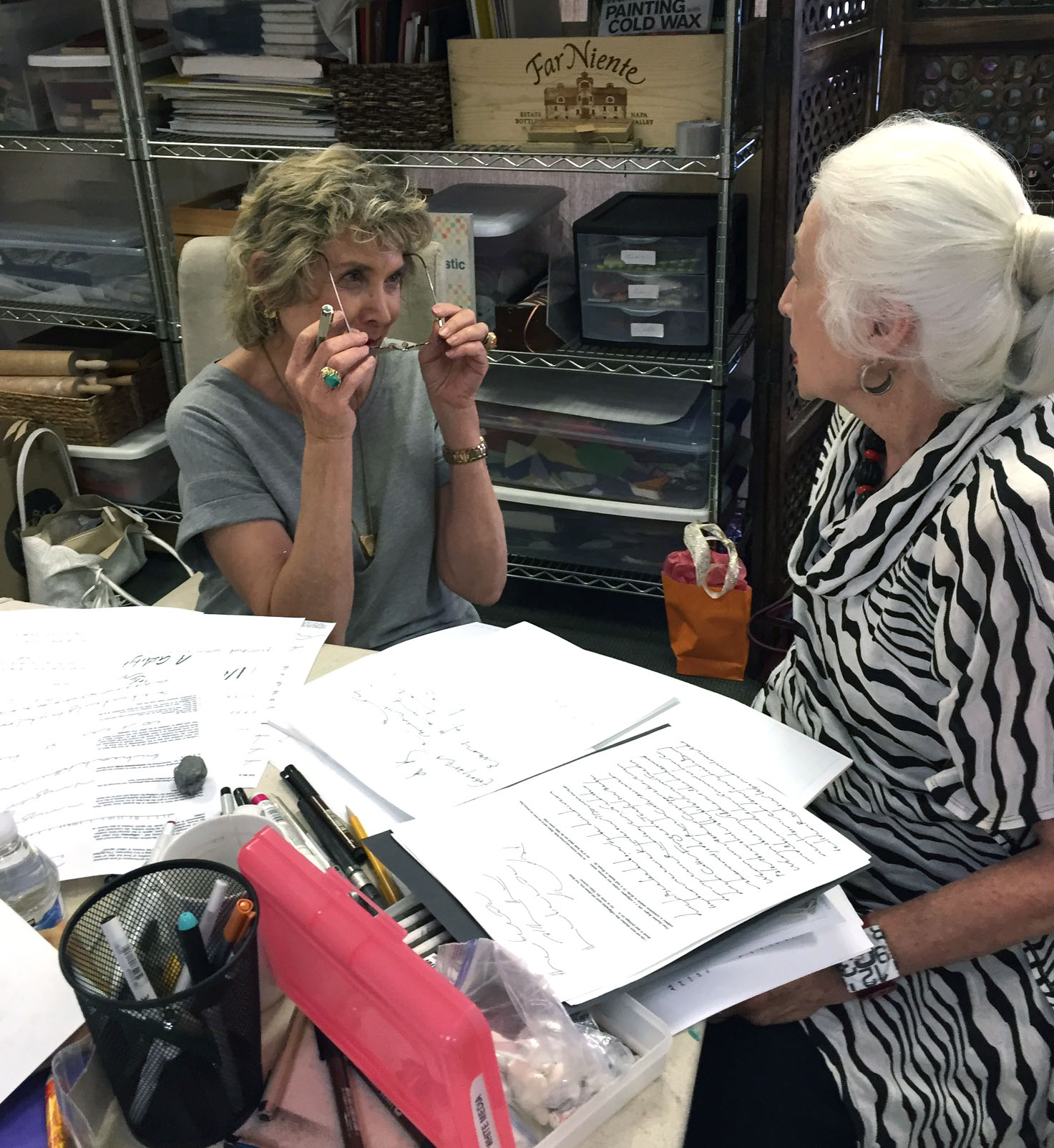
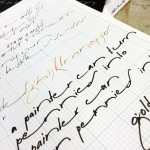
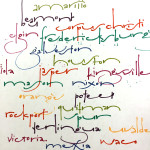
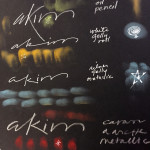
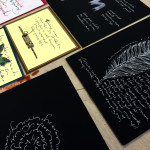
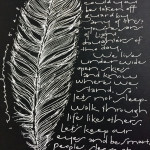
Some of you may know Bonnie as the owner of Dry Comal Creek Vineyards and Winery and some of you may know her through her art work, She’s a great friend and teacher to a lot of people. Lesta Frank and I asked Bonnie to give us a quick calligraphy lesson on an alphabet called AKIM. It was “invented” by German artist, sculptor and musician Hans-Joachim Burgert, who said,The 10spiritual material is the simple line. . .the line is a medium of free graphic discipline.”  Because this is a monolinear alphabet (no chiseled shading), anyone, even left-handed people, can do it well.

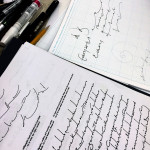
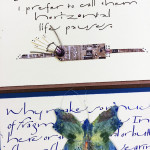
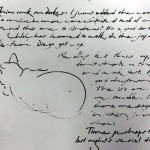
It was amazing how quickly we picked it up with Bonnie’s help. And the great thing is that there are as many personal variations of the Akim hand as their are writers. If you do a web search, you will see this for yourself. Take a look at some of the work we did with Bonnie, then give it a try!


Monday morning roundup

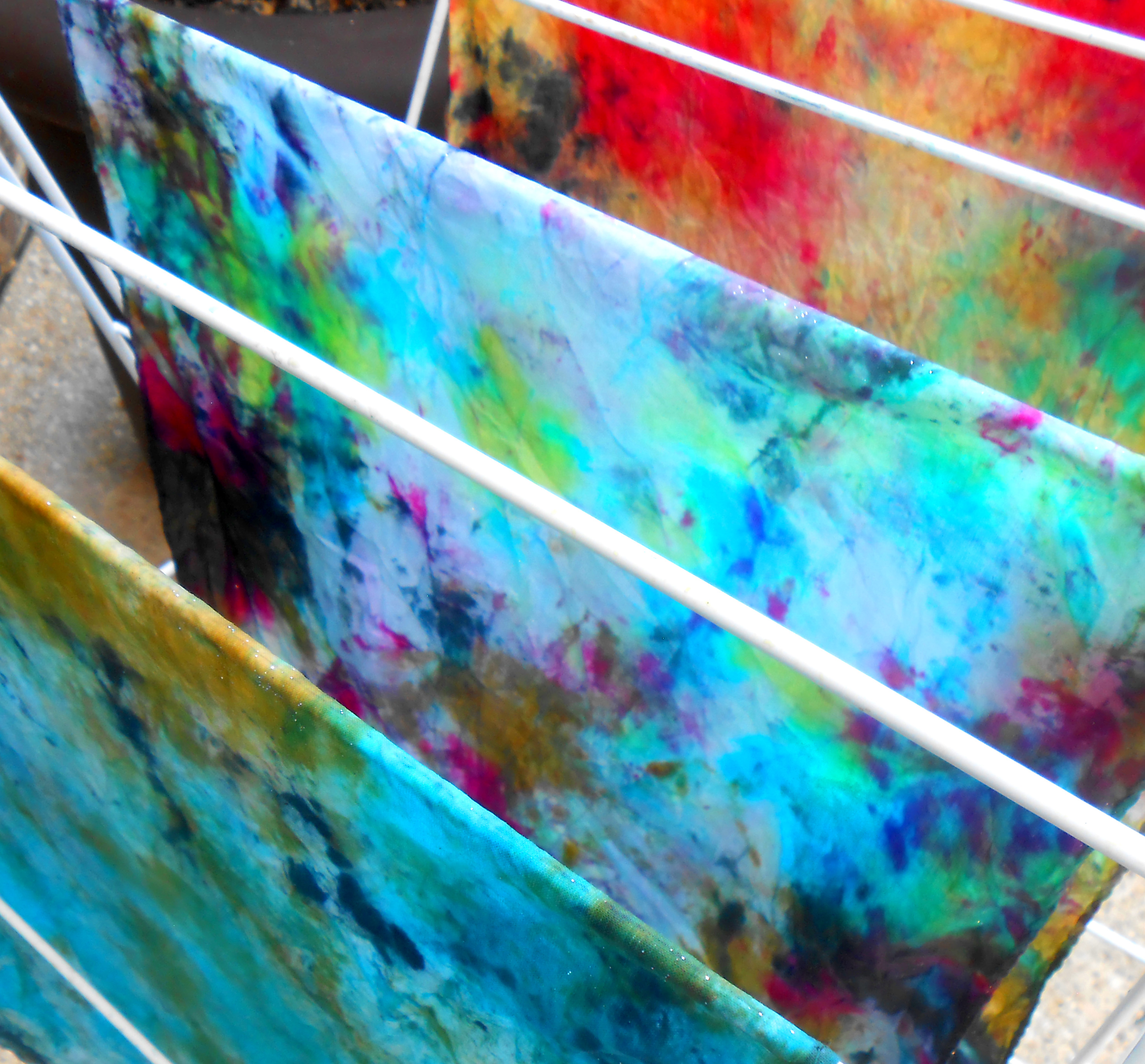
fabricGoddesses were out in force at the Goddess Banner workshop yesterday. It was a gorgeous afternoon for drying colorful, glittery fabric on the rack outside the Studio. Among the participants were Monika Astara (my favorite fashion designer) and Lisa Stamper Meyer from Roadhouse Arts, as well as several talented FASA members who specialize in surface design. So, even though we used the some of the same images, the results were totally diverse and eclectically spectacular. Take a look at the video, and then I’ll tell you about some of the techniques.

Aren’t those wonderful? We did a combination of Small Space Dyeing that Rosemary Uchniat teaches in her workshop and digital image transfer that’s done with hand sanitizer (yep!). I learned about this technique from an artist in Rehoboth, Delaware, and it works great on fabric. Basically, you print your image on an inkjet overhead transparency, spread a layer of hand sanitizer gel on your fabric, place the image face down, pat gently and leave for 15 minutes. You’ll get different results based on how much gel is on the fabric, but it works great. We protected the digital transfer by taping freezer paper on the back.

And speaking of Rosemary Uchniat, guess who won the Friday Freebie Mermaid Shard? Yep, Rosemary – congrats – it was totally random. Now she’ll have to make a mermaid!

Have a great Monday, y’all – I’m headed to NYC and Boston for a few days to see the family. Will send art reports along the way!


Discharge fabric design – a cheap flashy bleach job

Shirtsm

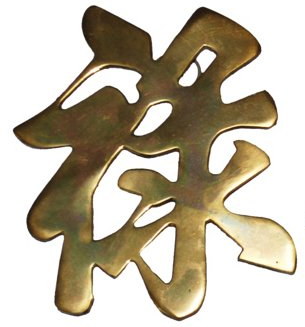
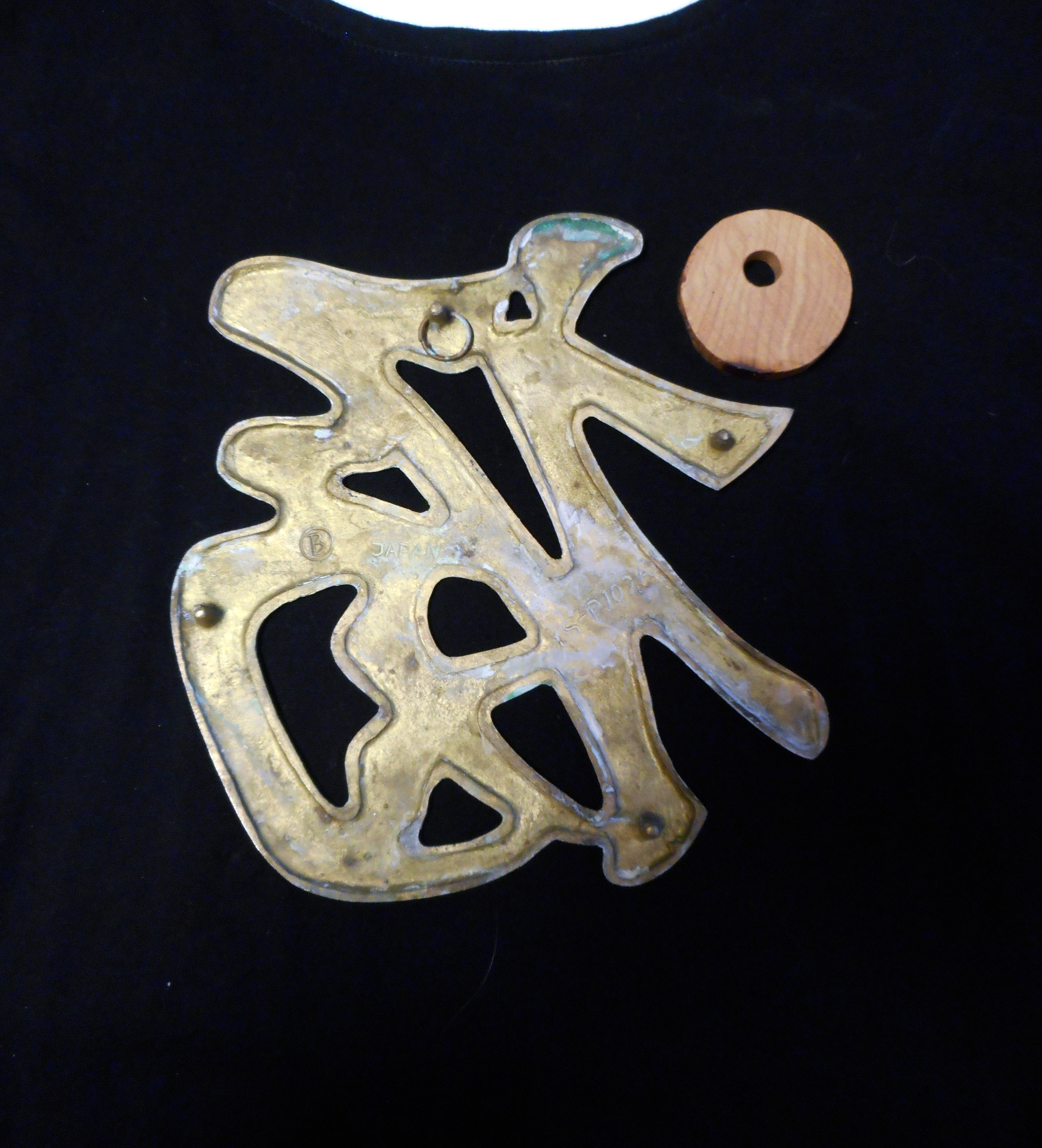
Mike went to a garage sale on Saturday and found some brass Asian calligraphy characters that were used as wall decorations. The more I looked at them, the more I knew I didn’t want them on the wall.

But the designs were cool. So I took an old black shirt and used some diluted bleach to create a reverse stencil design in what’s called Discharge Dyeing. Discharging is the process of removing dye (by destroying or altering the dye “chromophores”) with various chemicals or bleach, often in pleasing patterns or designs through Shibori or Tie Dye methods, or by stamping, stenciling or block printing (definition from Dharma Trading Company).

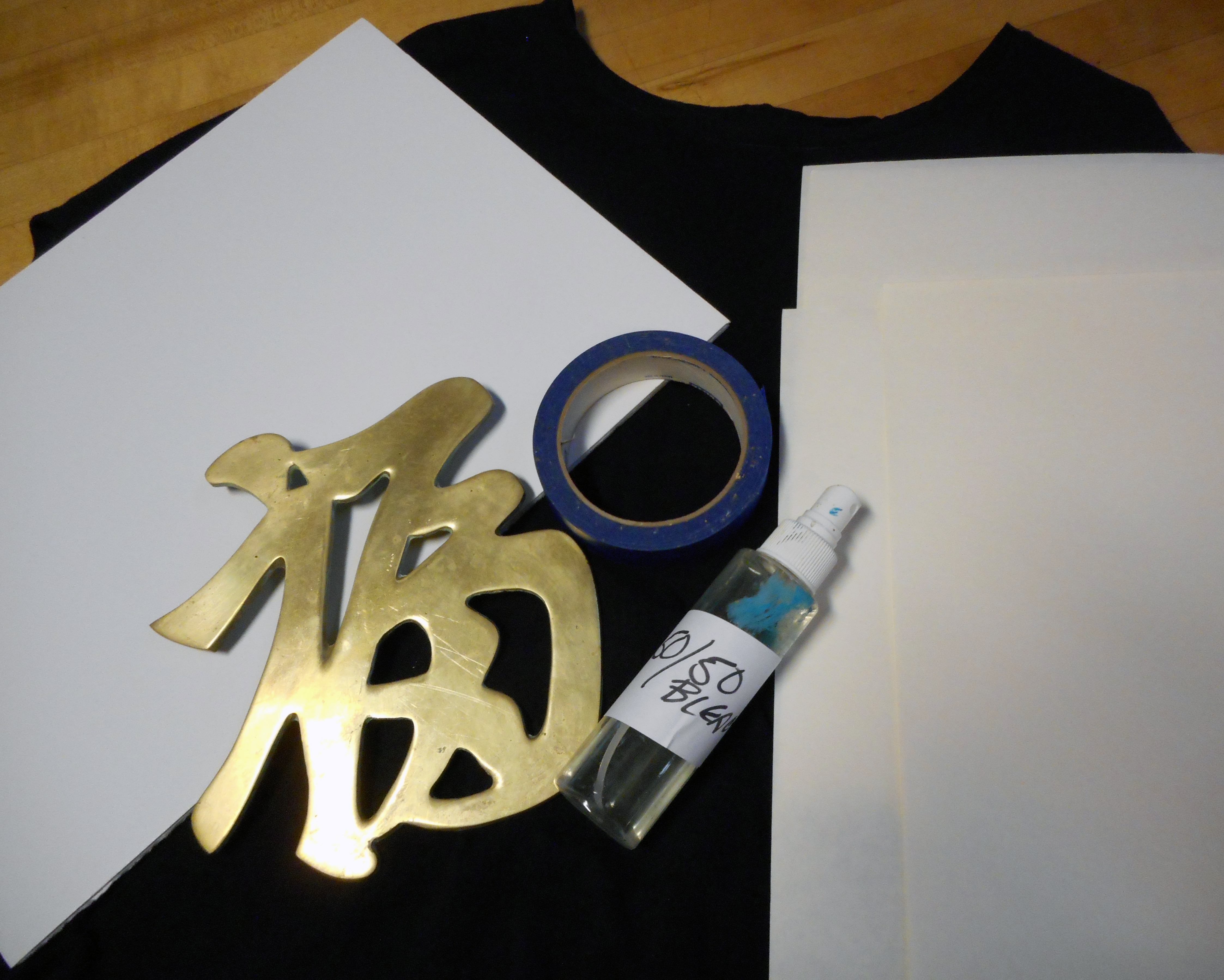
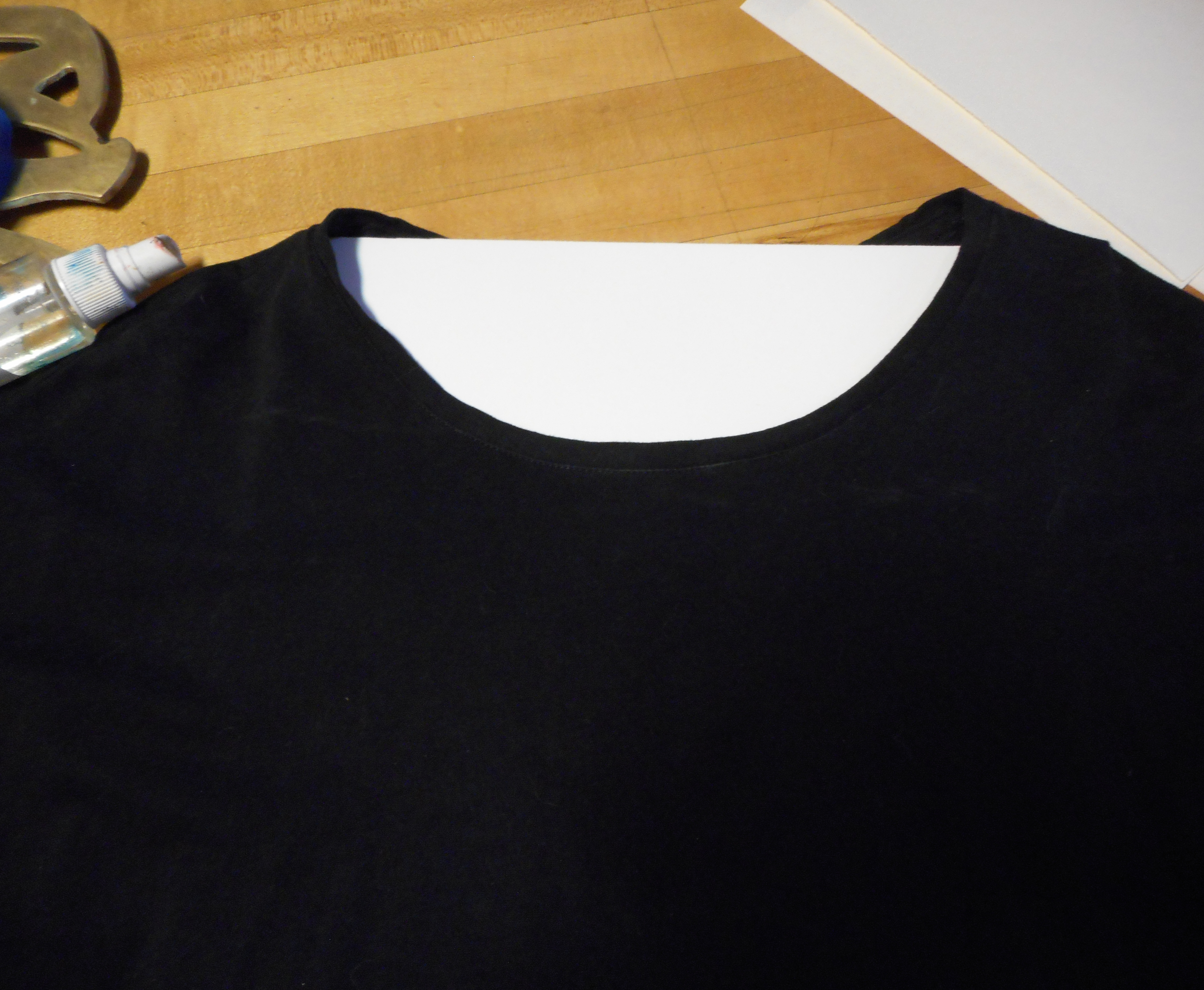
brass copy Here’s what you needa black shirt (cotton, already washed), some chlorine bleach (Clorox), diluted 50/50 with water and put in a small spray bottle (label it!! Work outside!!), a non porous board like foam core to put between the front and back of the shirt to keep the bleach from bleeding through, scrap paper to mask off your bleaching area, masking tape to stick the paper to the shirt, and some INTERESTING OBJECTS to use as reverse stencils. I used the brass calligraphy symbols, but you could use anything – doilies, leaves stick-on letters, shells, twine and sticks – be creative.

Step One: Assemble your stuff on your work surface. Make sure that any stray bleach mist won’t damage the surface.

7


Step Two: Put your non-porous board between the layers of the shirt and smooth out the fabric This protects the back of the shirt and also makes the process easier by giving the surface some support.

8


Step Three: Lay out your objects in a pleasing pattern – center them if you like. You can use anything – stencils, lace, metal washers – and you can test your designs by trying them on black construction paper first – it “discharges” like black fabric.

9


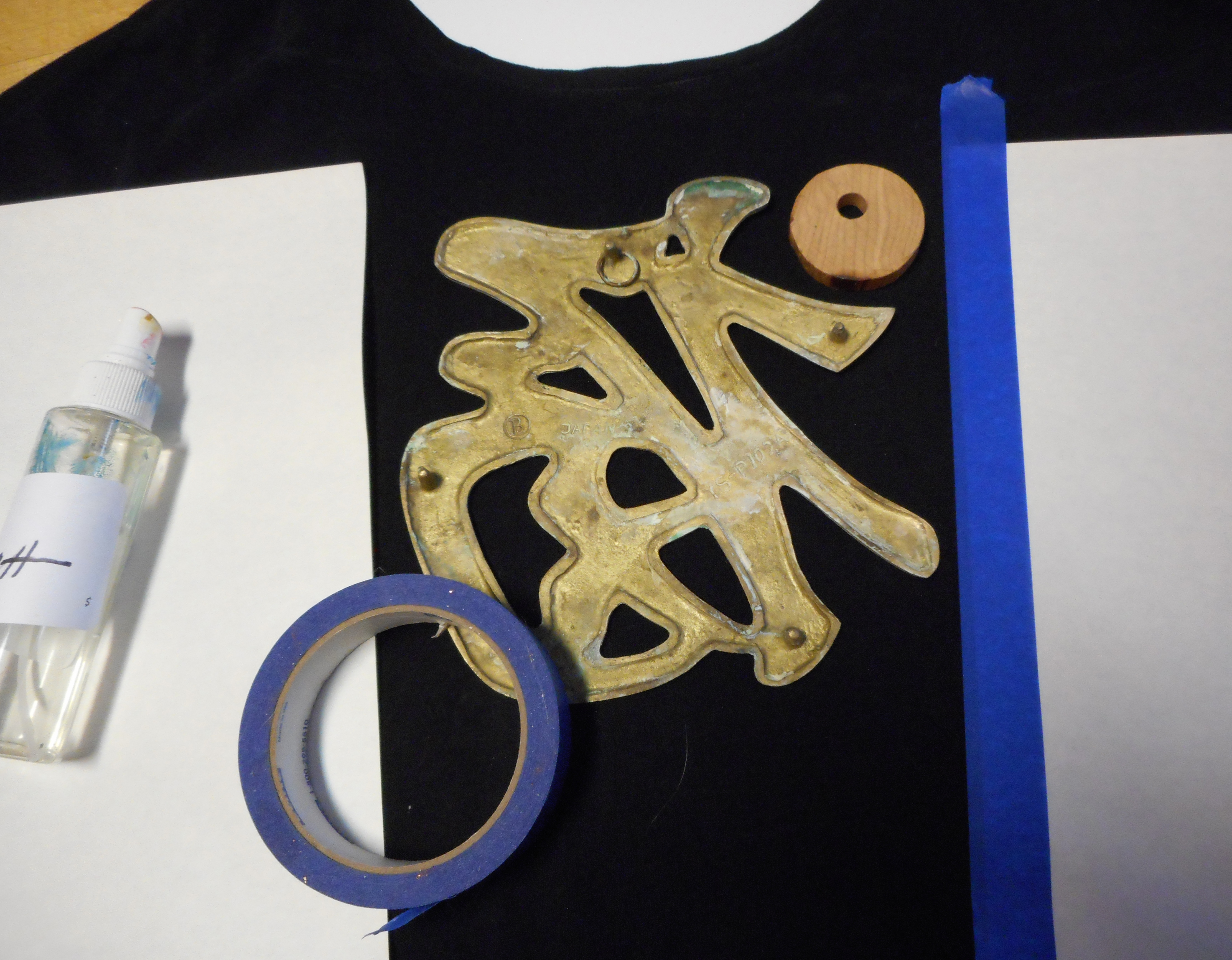
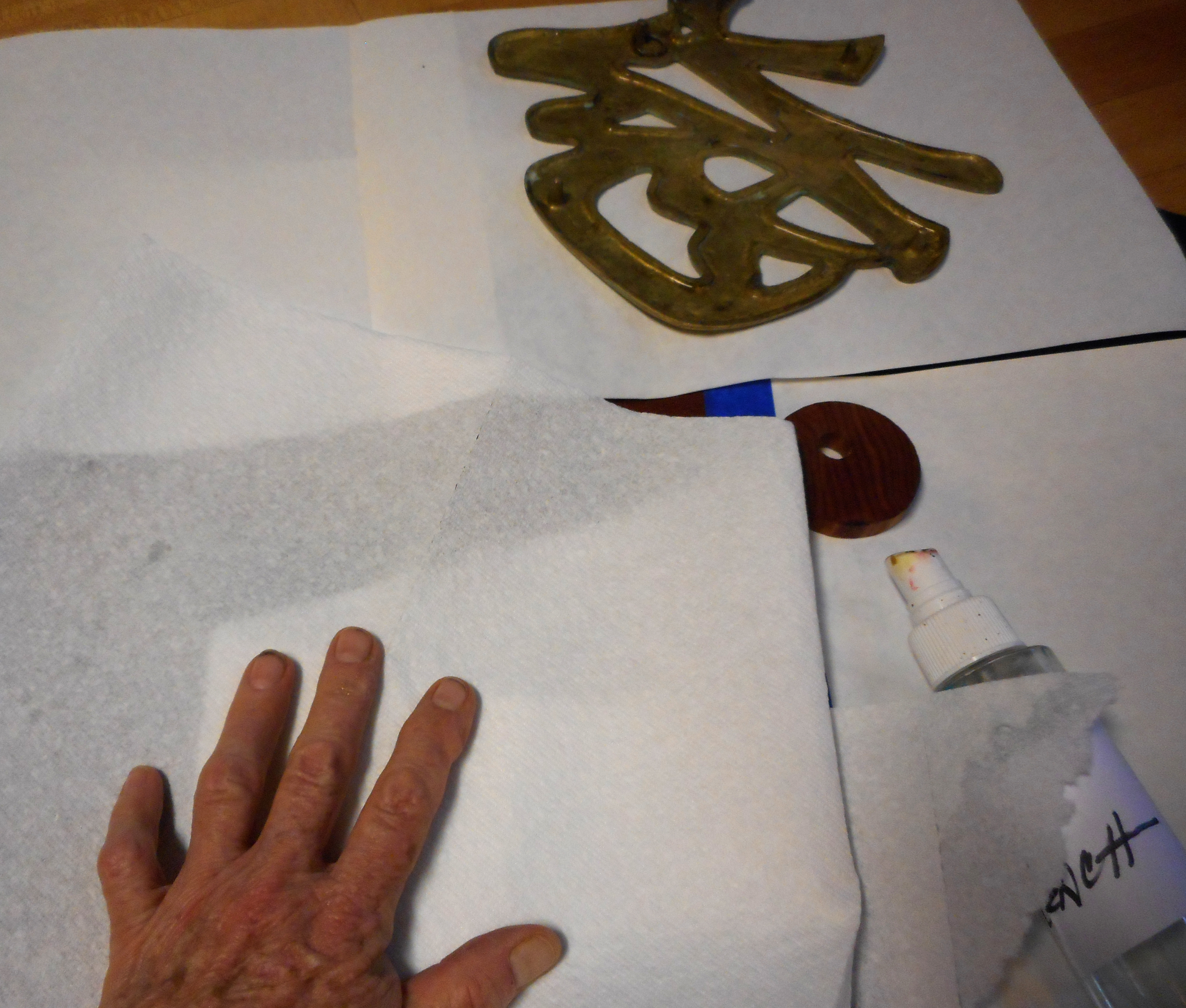
Step four: Mask off everything except the area you’re going to mist with the bleach solution. Here, you can see I’m taping scrap paper around the edges of the area using blue painter’s tape.

10


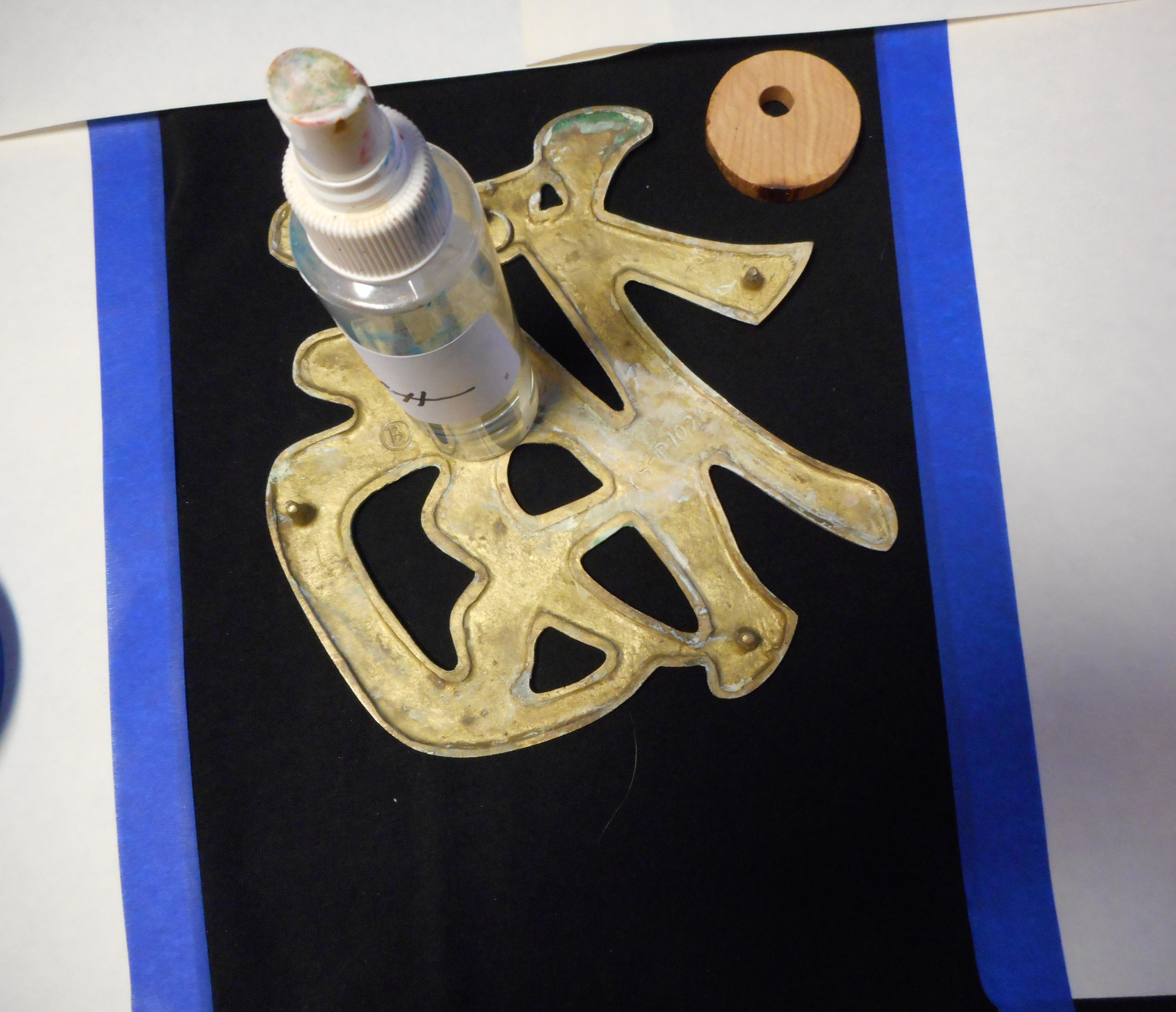
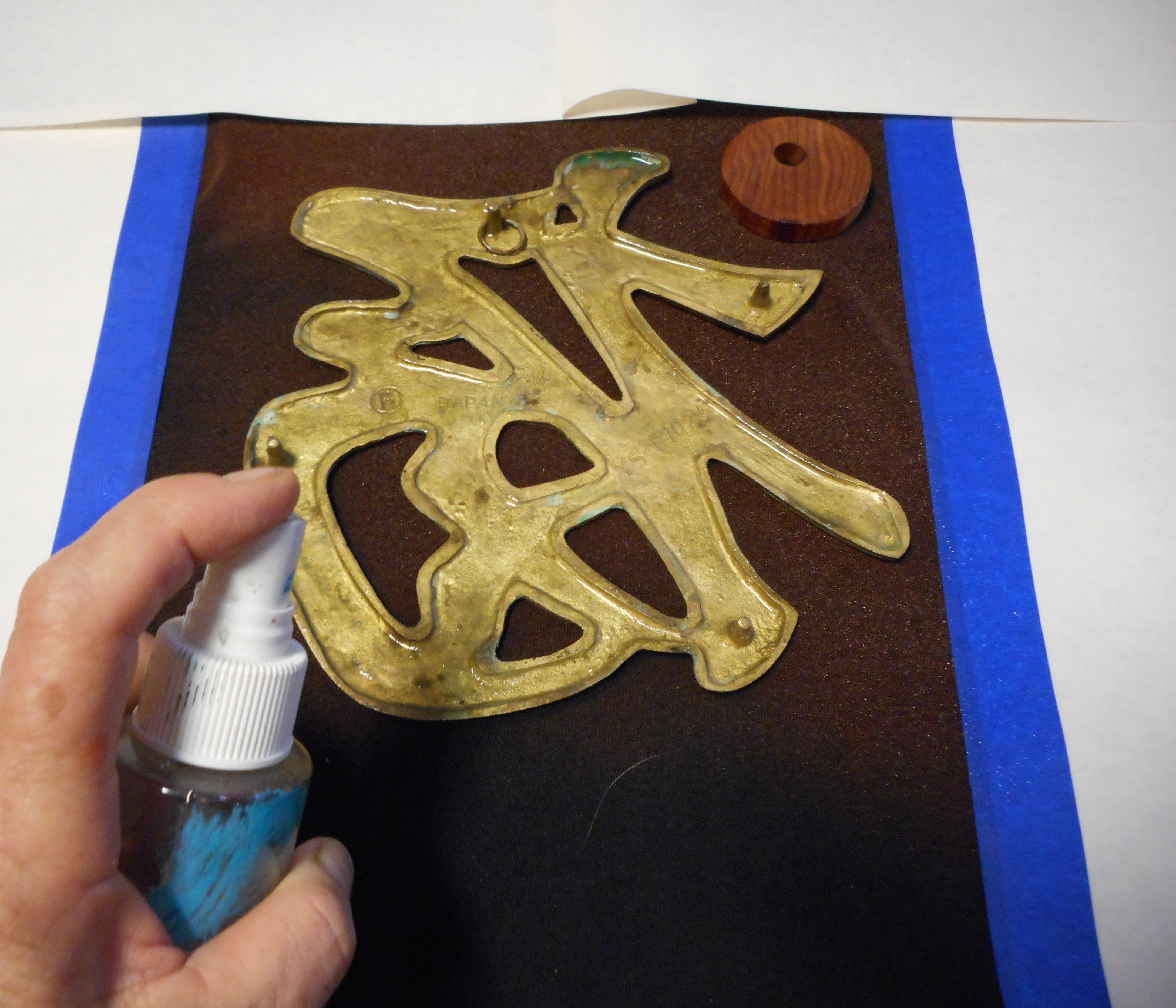
Step Five: Once the masking is complete, you’re ready to spraybe careful of the fumes. Even diluted, bleach can be strong, but you are using just a small amount and working quickly. I used a little spritzer bottle and mixed about half a cup of the 50.50 water-bleach solution.

12


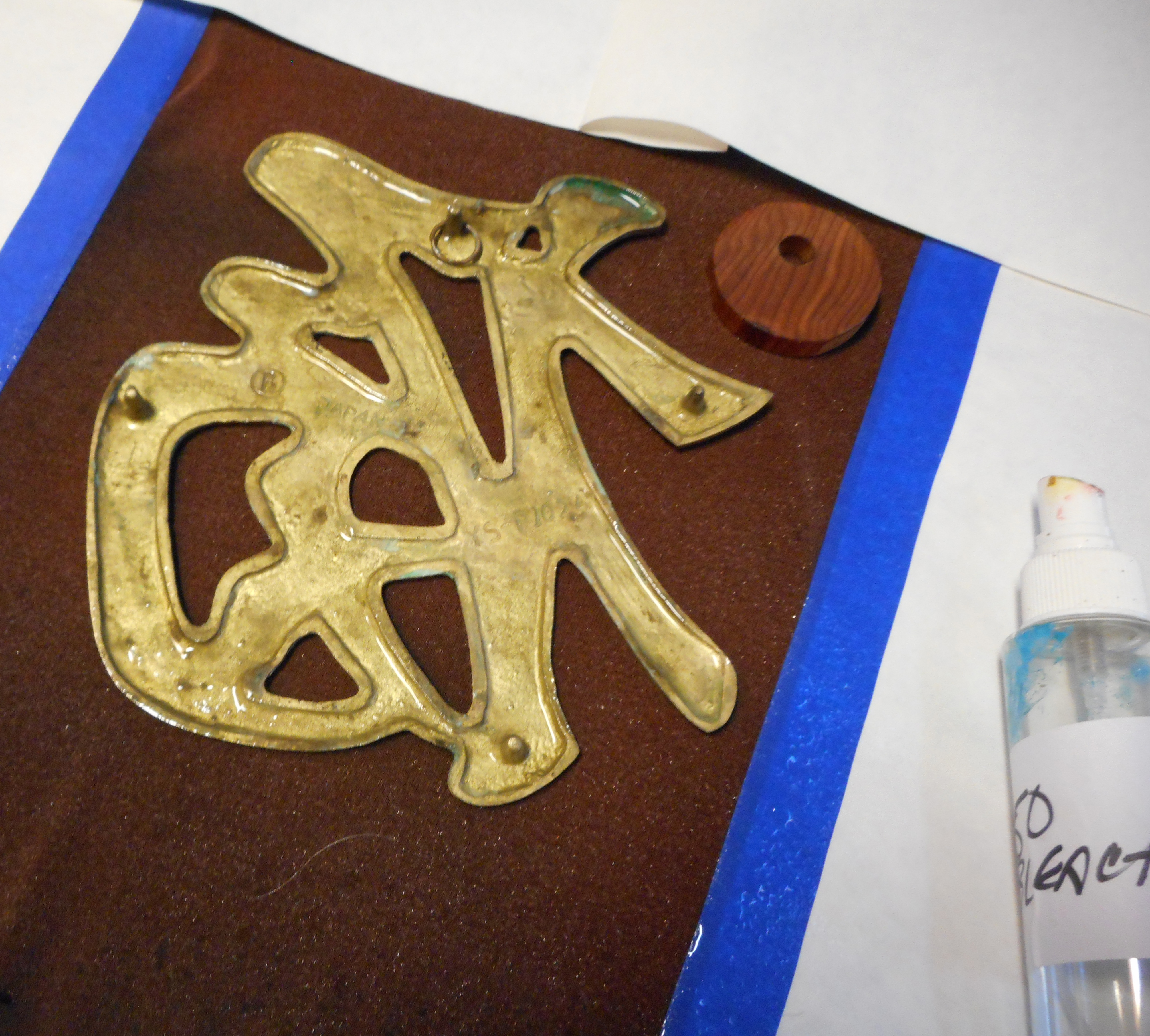
Step Six: Spritz the bleach solution over the exposed area of the shirt. working quickly and just misting the surface. There’s no need to soak the fabric. Pay special attention to edges of the shapes.

13


Step Seven: Watch in amazement as the color changes in seconds. Every black fabric has a distinct undercolor, some greenish, some rust. This shirt turns almost orange in the areas that are discharged with bleach.

14


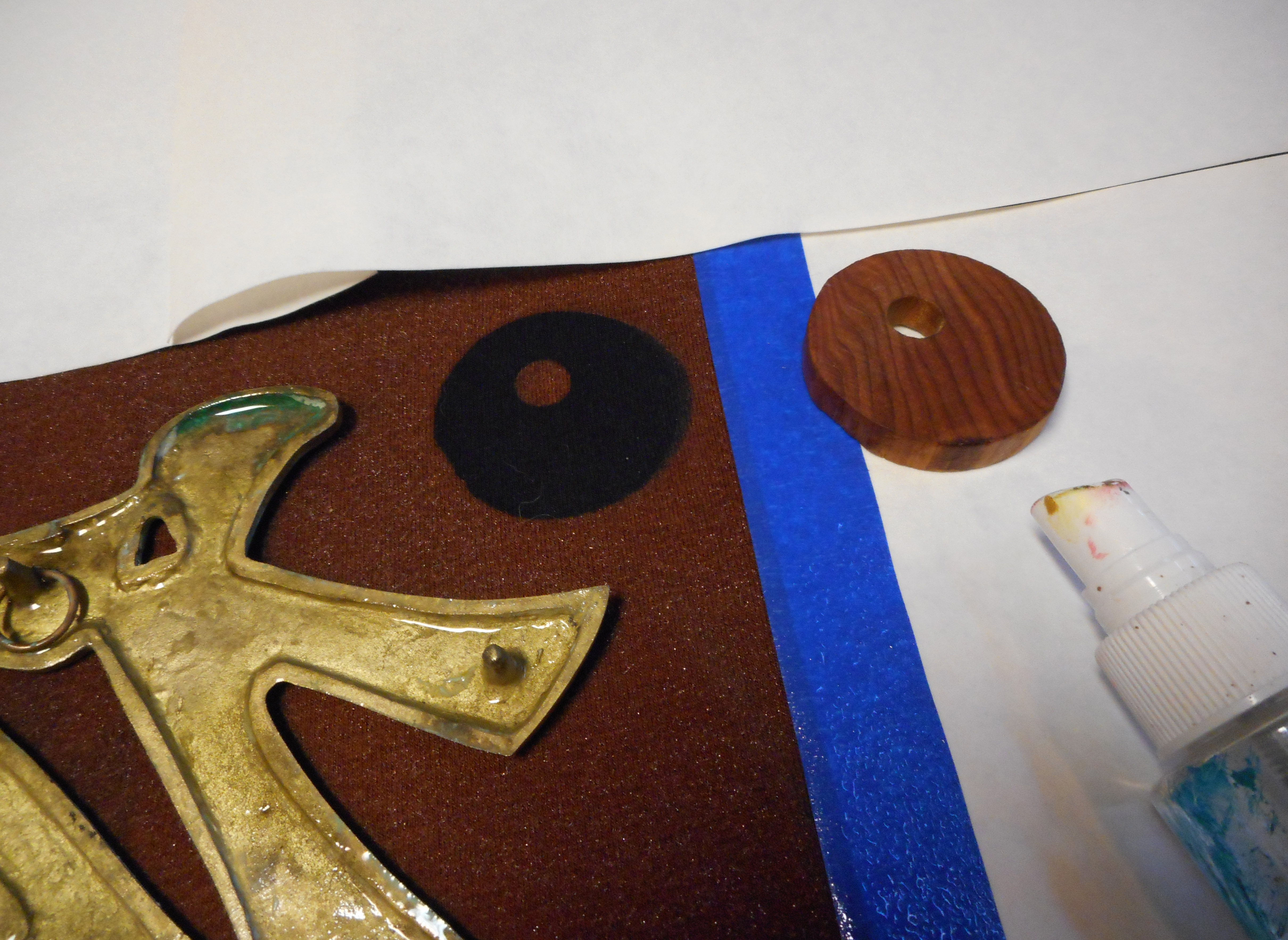
Step 8 – Remove the objects(s) to test the progress. Looking good! This was a small wooden disk with a hole drilled in it – not sure where it came from, but I like the pattern it left.

16


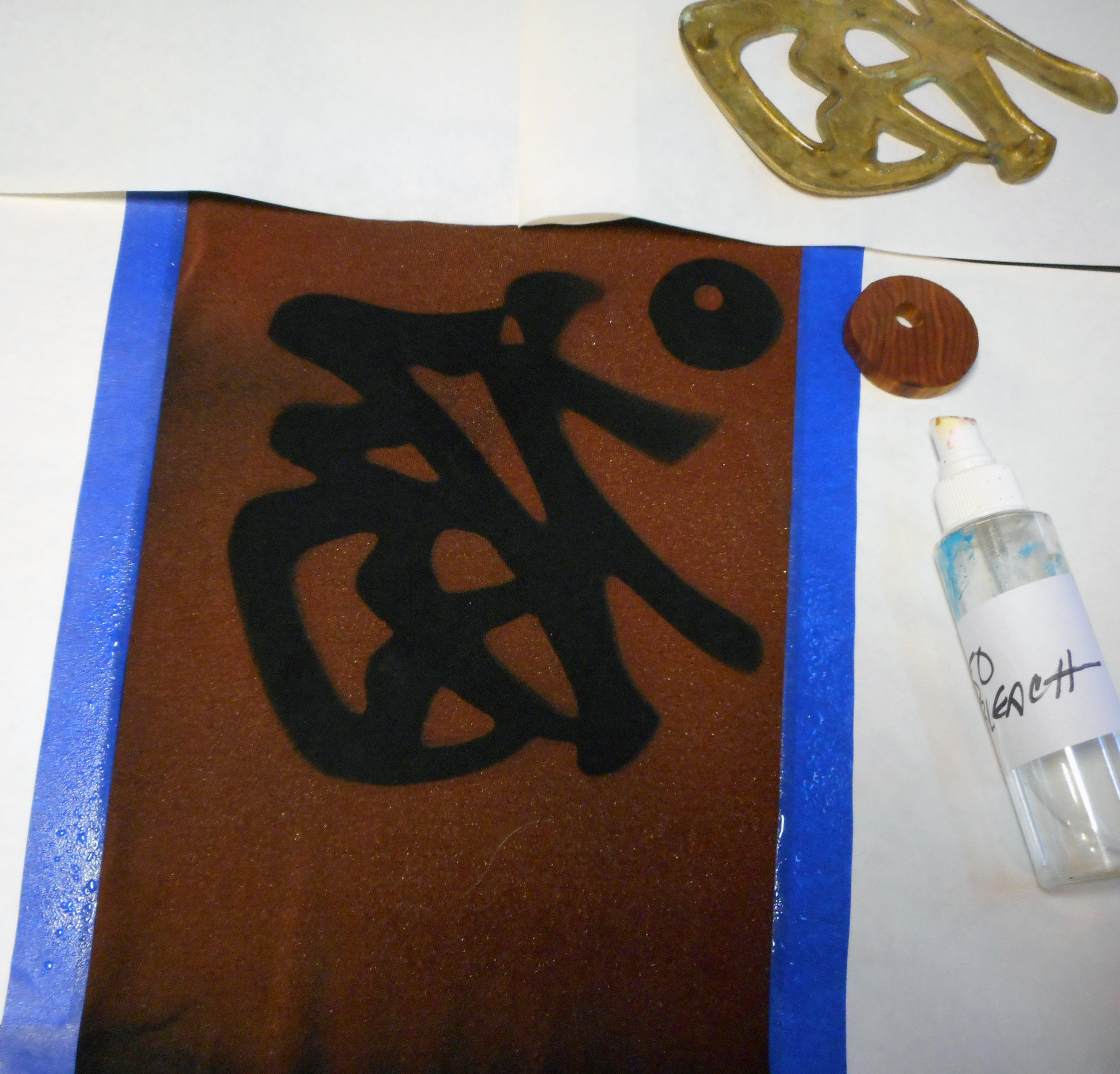
Step Nine: Remove all of the objects carefully – no drips unless you want that effect – and make sure you like the resulting color, which usually takes less than a minute to develop), The bleach action stops automatically since you just misted the surface.

17


Step Ten blot-dry the front of the shirt with a paper towel – otherwise, you will get damp bleach on other parts of the shirt when you move it. You can use a hair dryer after you blot it, or you can just let it dry in place.

18


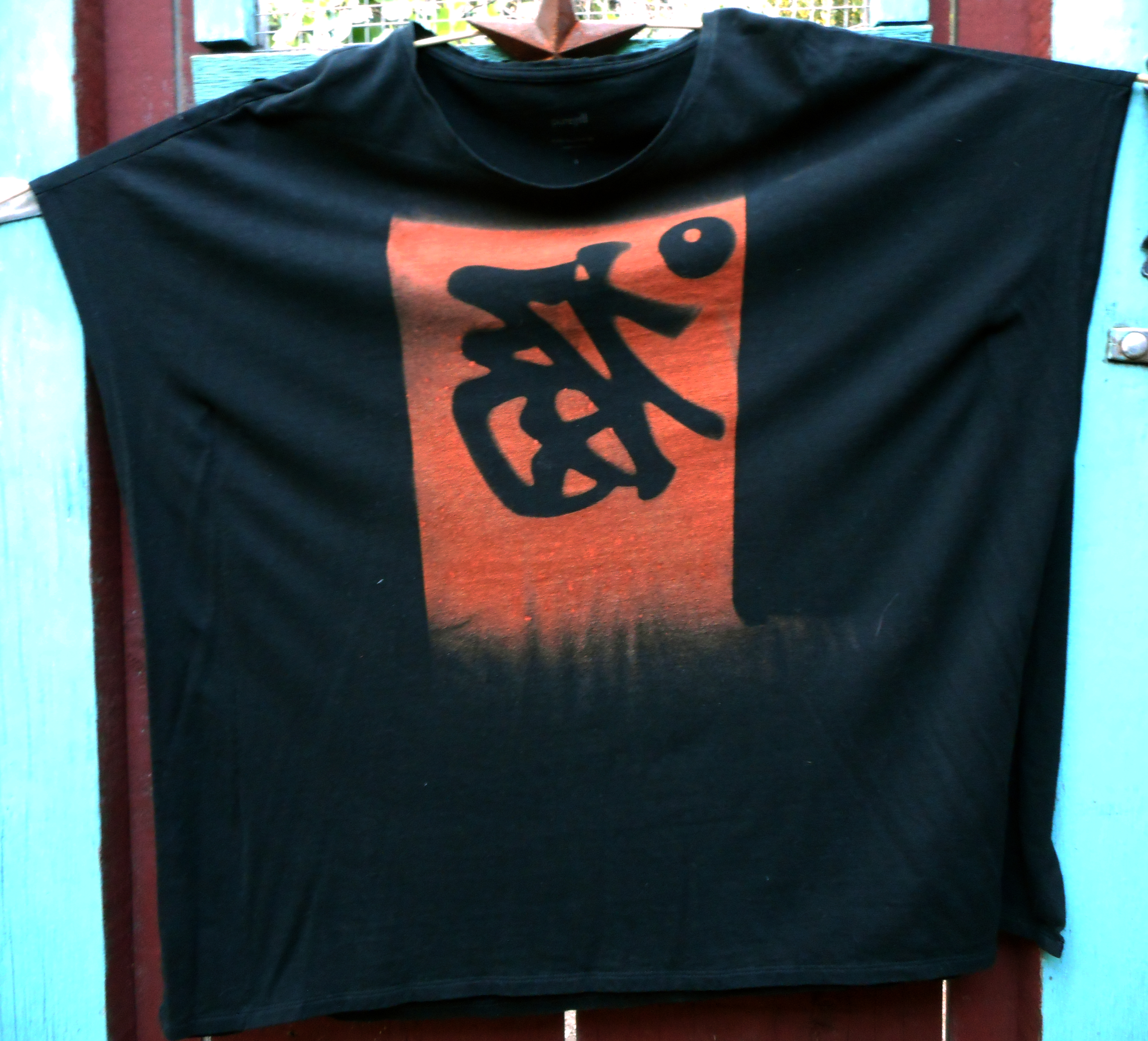
Step Eleven: Voila! Step back and congratulate yourself on your arty shirt – you should wash it before you wear it. This particular shirt is an “easy tee” by JJill that is much enhanced by its new design!

19


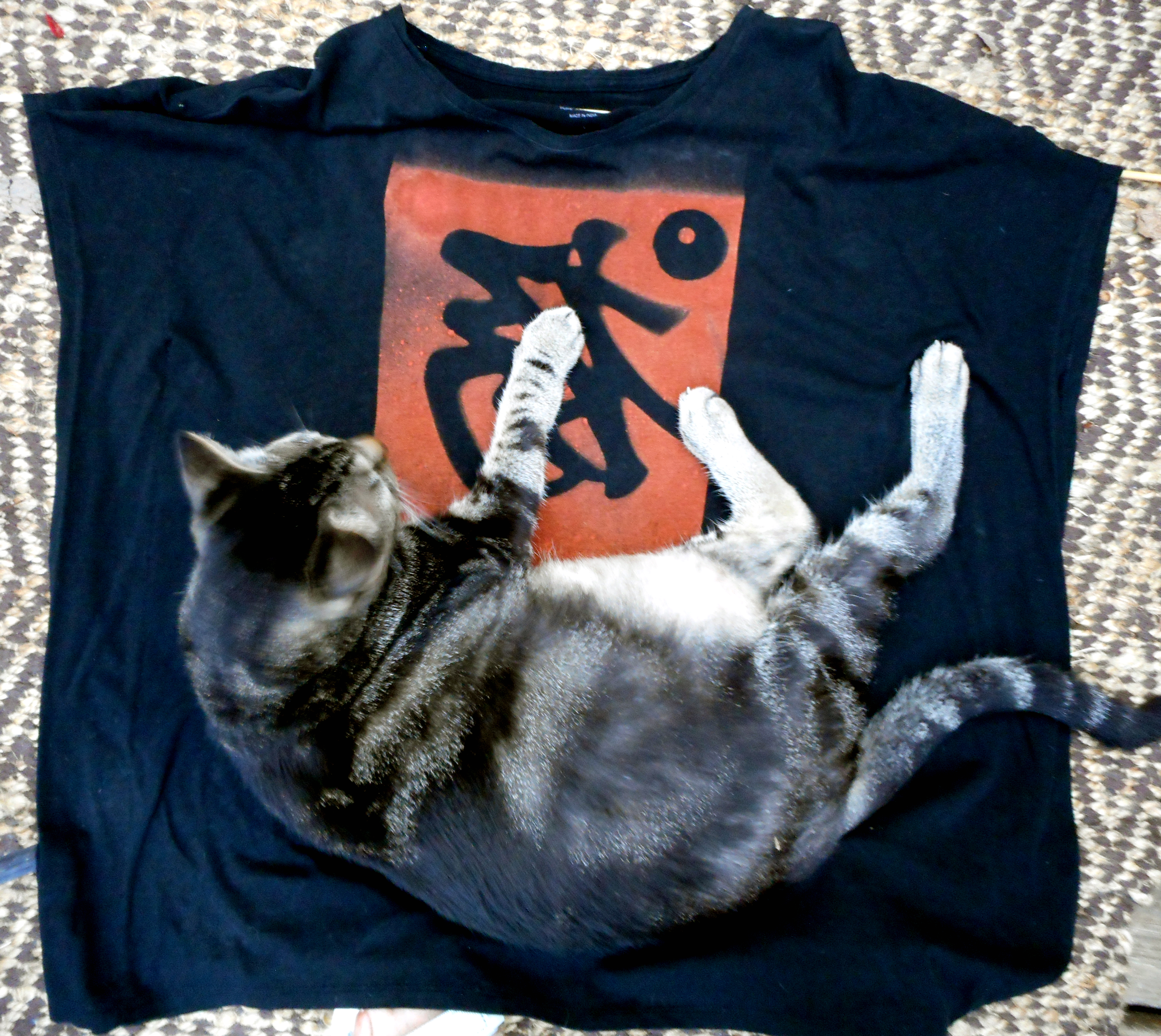
Step Twelve: Hire a cat to arrange itself artfully on your new garment – if you spread the shirt out after it comes out of the dryer, the cat may arrange itself for free whether you want it to or not.

20


There are tons of ways to do discharge dyeing on black fabric, but a diluted bleach mist will give you fine lines around a stencil. Be careful, though, don’t get bleach solution on unwanted surfaces! Or cats.

A guru for digital photocollage . . . and a glitzy Friday Freebie!

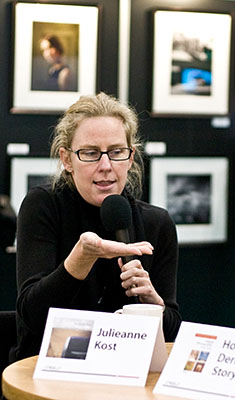
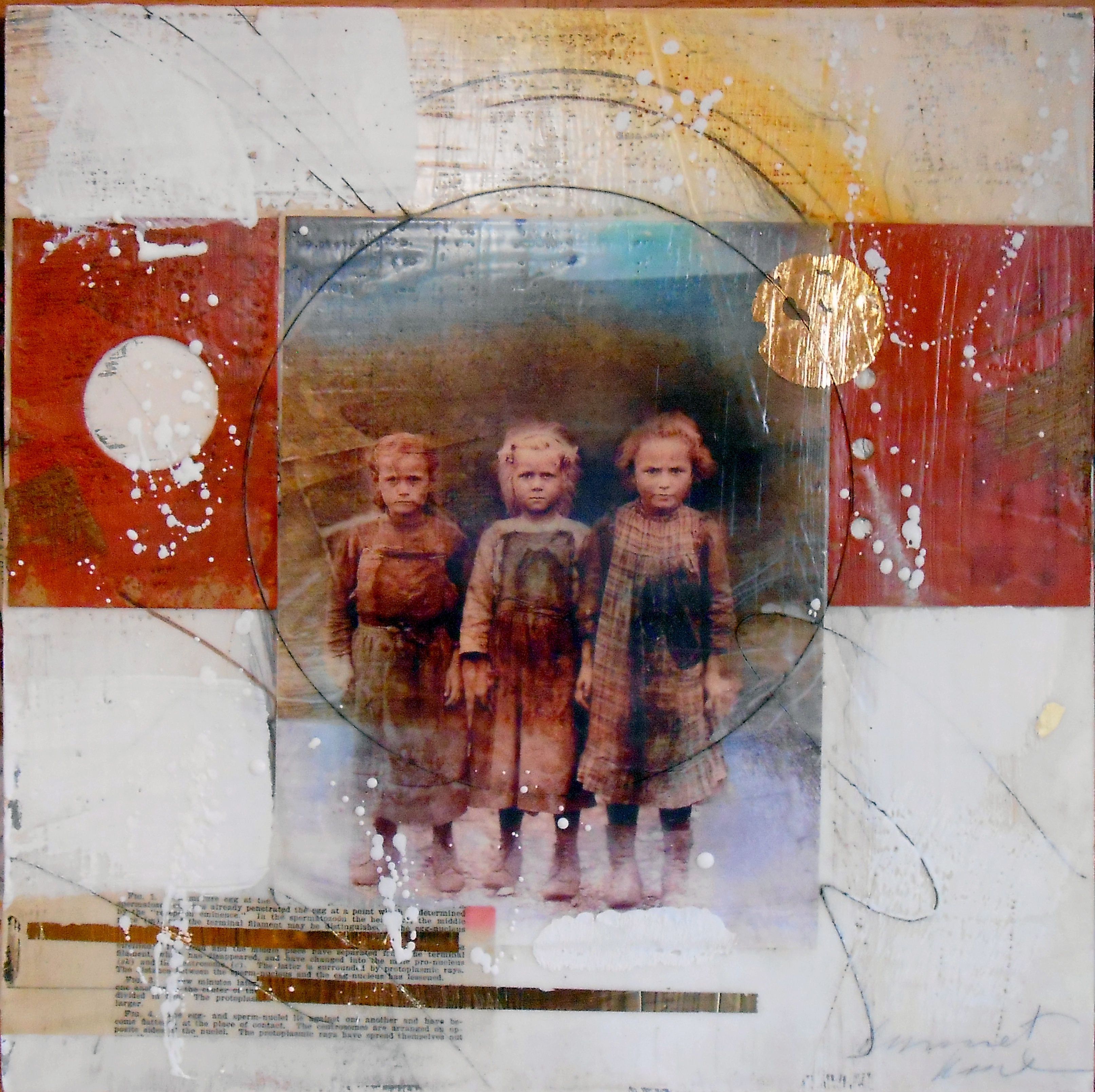
Hallelujah – I’ve discovered the Digital Imaging Evangelist! She’s for real – Julieanne Kost is the “Principal Digital Imaging Evangelist” for Adobe Systems, and she is a wealth of creative inspiration for artists who work with digital images. Like me! – You might know that I’ve been using vintage digital images and encaustic wax in my latest work, like this piece, below.

3girls

“Drifters” Lyn Belisle – Encaustic Photo Collage on Birch Panel, 14×14″

The encaustic part I’ve learned from Michelle Belto and Clare O’Neill – and now I have a new Photoshop guru in Julieanne! She can be your guru, too – she has a ton of great FREE tutorials on her website. Combining, enhancing and altering digital images is an addictive art form – just ask my friend Jennifer Martin, who’s working with me, learning Photoshop and using her own beautiful digital images. So take a look at Julieanne’s tutorials if you’d like to explore the endless possibilities of the art of the digital image.

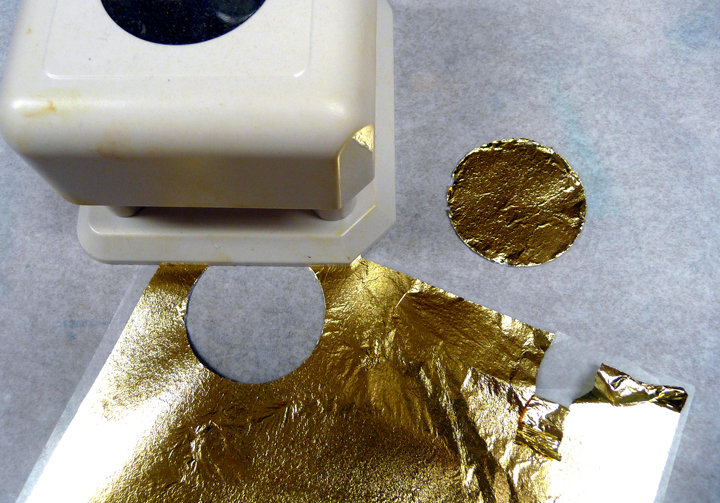
gold leaf smallDid you notice the small gold leaf accents in the piece above? That’s another technique that you can utilize when you combine wax and photocollage. Here’s a photo from my new eBook, Behind the Veil: Beeswax and Collage, that shows how to use a circle punch to cut the leaf. If you don’t have gold leaf that’s already studio to a backing, watch the free tutorial I made to show you how to manage and use loose sheets of metal leaf.

Finally, the Friday Freebie is a whole packet of paper-backed gold leaf to use in any creative and/or goofy way! If you are the lucky SHARDS subscriber whose name is drawn Sunday night, I’ll send you a package of Simple Leaf by Speedball your choice, silver or gold. So many creative ideas, so little time – and don’t forget there’s a Show and Tell at the Studio tomorrow from 2-4! TGIF, Y’all…..


Cheesecloth – to dye for

cheesecloth1I love this stuff! I hand-dyed a bunch of it for Sunday’s Spirit Doll workshop and made some cool discoveries. One – it’s cheap – and available in a ton of places, like hardware stores in the paint department and supermarkets in the kitchen gadgets department for about $1.00 a yard or less.

Two – you can dye it super-fast with Rit dye, procion dyes, or just plain old diluted acrylic paint – and it stretches and tears and look very artistic either as a collage addition or as Spirit Doll swooshy capes and wraps.

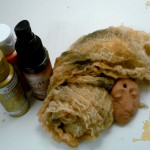
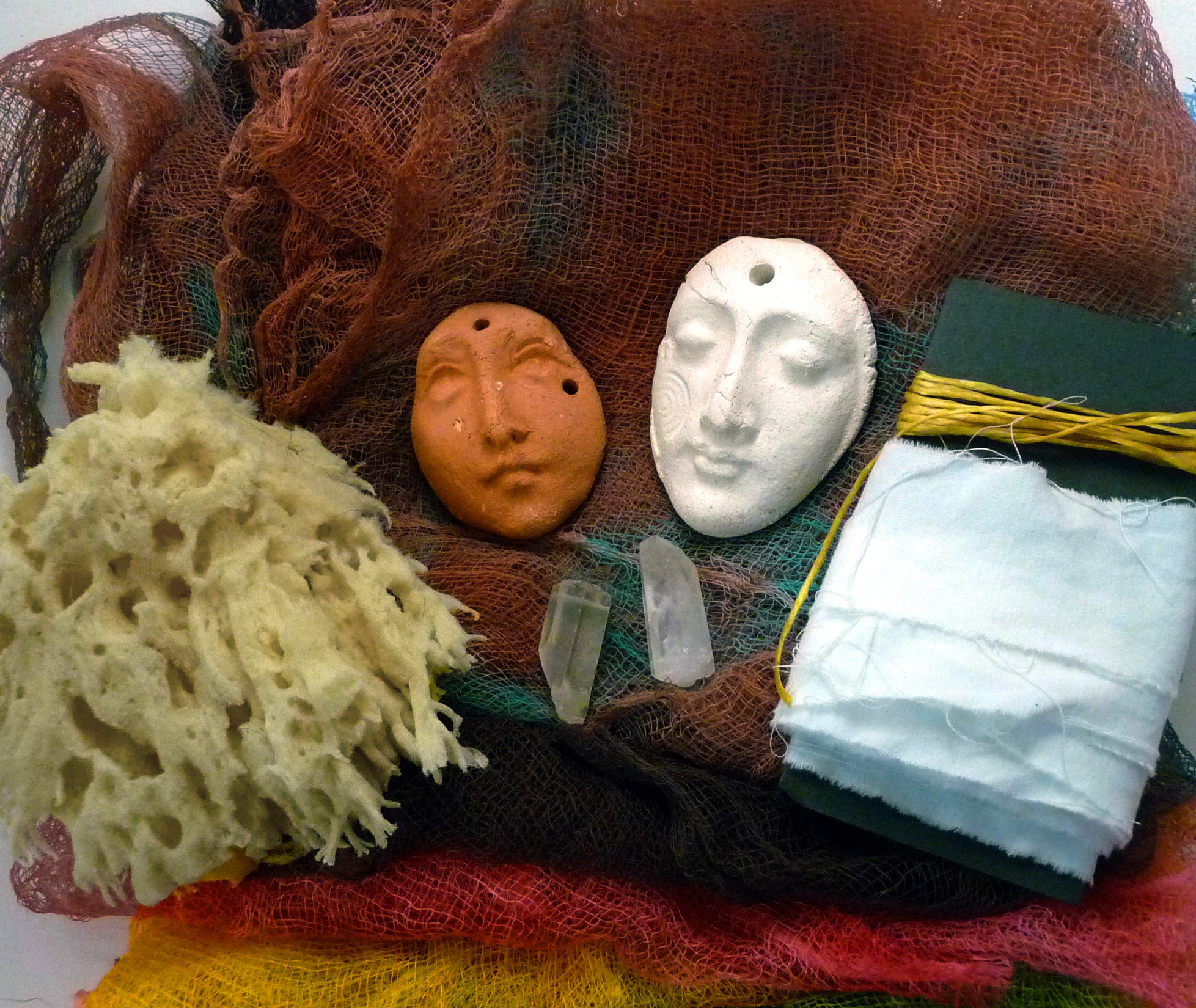
Here’s some of the dyed cheesecloth that I put together with other supplies for the Spirit Doll workshop – earthy and rich:

cheesecloth

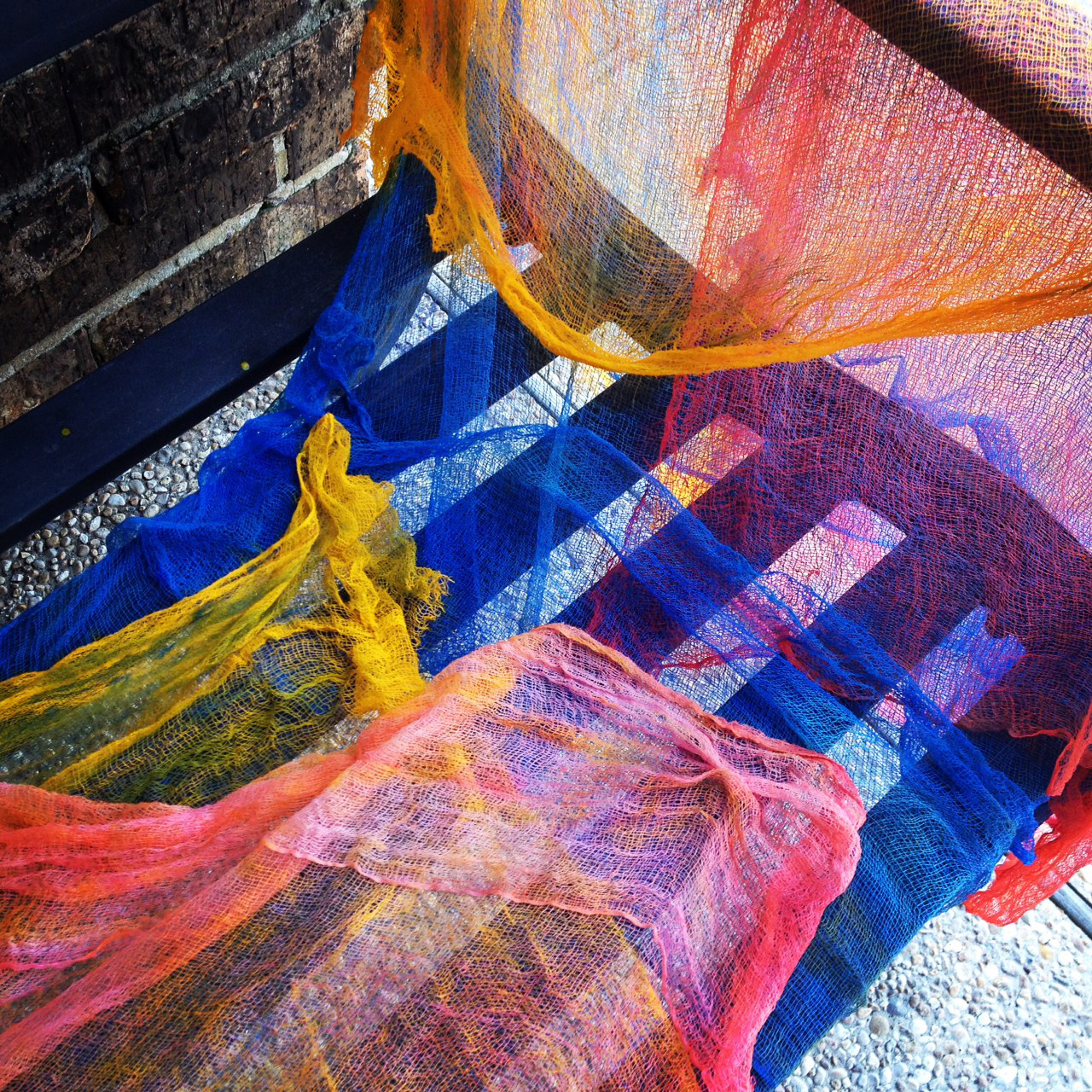
And here’s a bunch of it drying on the bench outside the Studio – kinda like exotic rags;

cheeseclothbench

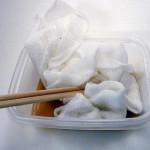
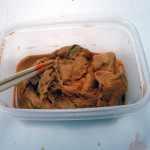
If you want to dye it yourself, this is a fast and easy way – put a squirt of fluid acrylic paint and about 1/2 cup of water in a little plastic container, add the cheesecloth and squish it down and saturate it, let it sit for about ten minutes, then squeeze it out, and dry it by spreading it out or putting it in the dryer for a few minutes (if you put it in the dryer, it will crinkle up, which you might like)

Note: I tried a gold metallic acrylic, but it didn’t retain the metallic look – I added a little orange and a little walnut ink (of course) and got a nice mottled peach color. It’s impossible to mess up – any color seems to work.

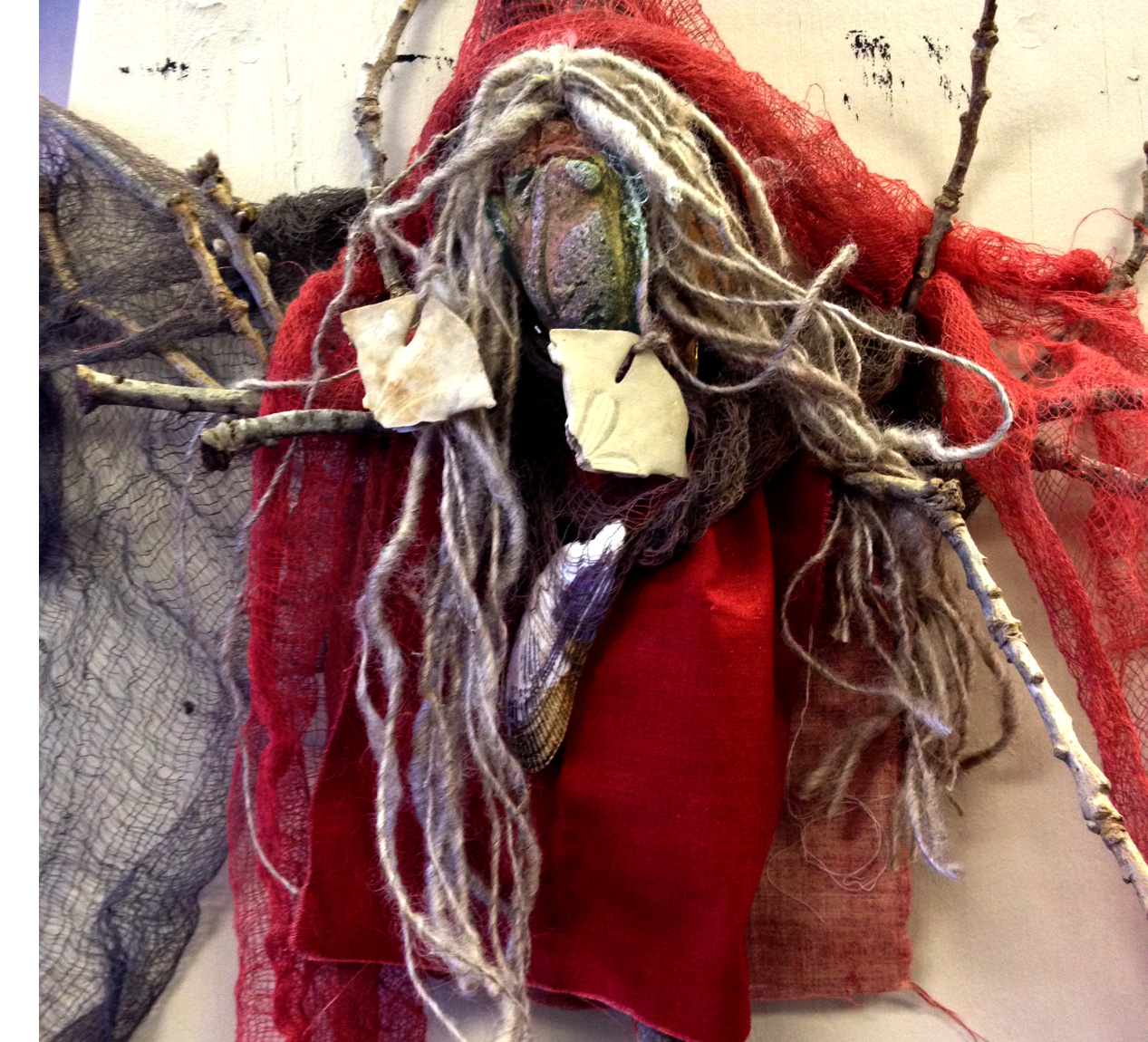
This was one of my favorite Spirit Dolls from the workshop – Pat Konstam used a rock that she had found in Israel for the face (it looks as if it’s smiling) – and she used red and brown cheesecloth for her Red Sea Spirit Doll:

cheeseclothpat

Spirit of the Red Sea – Pat Konstam

And finally, check out the video from the workshop – I hope you enjoy seeing it, and I hope you’ll go play with cheesecloth!

PS –  As I was doing a little research on dyed cheesecloth, I discovered that it’s the newest thing to wrap a newborn baby in – who knew?? Ain’t been no newborn babies in my neck of the woods for a loooong time!

cheesecloth


Living and learning

learning copySchool starts for me this week – as a teacher and a student! I go back to Trinity to teach my course in Essential Information Technology, and I’m taking an online photo-encaustic class from Clare O’Neill. The tuition for that one is rather steep, but I expect to learn a lot of new skills in both photography and encaustic that I can pass along to my own workshop participants. (Did somebody say “Old dog, new tricks?” – arf.)

If you’d like to experience an online class, do I have a deal for you! Michelle Belto, encaustic artist extraordinaine, and I have teamed up in an online offering called “Wax and Tissue.” You can see details here at Roses On My Table. It’s a good way to gently discover the encaustic process, and if you take a look at the materials list, you can see it’s not all that complicated. It’s a lot of fun, too – we had a great time making this video.

Online classes are easy to access and view (you get specific easy-to-follow directions) and you can look at them as often as you need to or want to. I like to watch the ones I take in sections so I can have “think breaks” in between.

“Wax and Tissue” has a lot of information (and a certain amount of goofiness – you know Michelle and me) and you can email us questions through the forum with the other students. The course costs $55, which is a *lot* less than the encaustic class I’m taking with Clare O’Neill – and definitely less than my Trinity students are paying for *their* tuition! Lifelong learning in the arts is truly priceless, especially when you can do it in your jammies. Think about joining us – OK, I”m off – gotta head to class!

Leonardo da Vinci’s ‘to do’ list

8I shoulda posted yesterday’s Friday Freebie (the Shish-ka-barbie dolls, which you can win if you’re a subscriber by midnight Sunday) but I forgot – darn. OK, yet *another* New Year’s Resolution: start keeping a daily a “To-Do” list and follow it!!

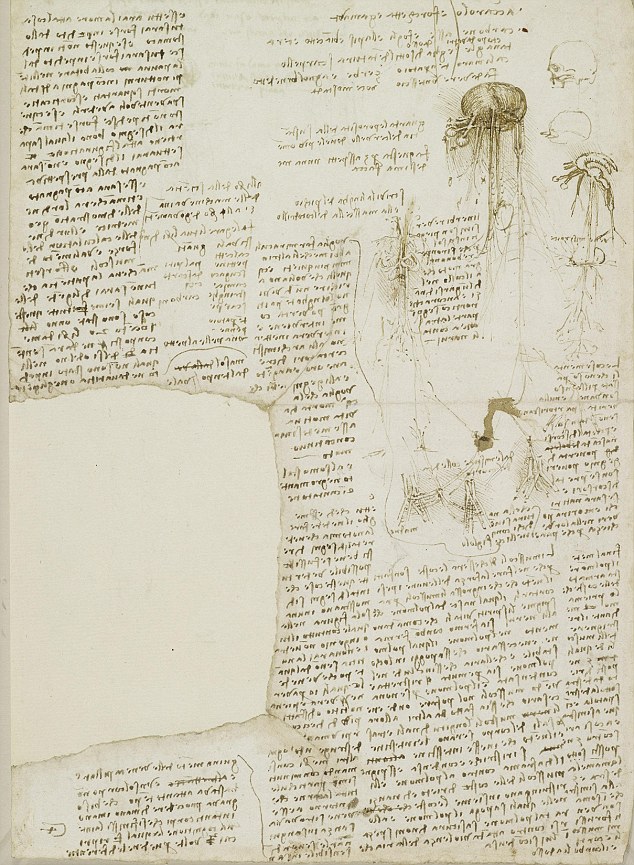
While looking for ways to remember stuff better, I found out that Leonardo da Vinci wrote To-Do lists! And they are very cool – nothing like “post to blog” or “stop by HEB.”

Nope, his were more like, “obtain a skull, to get books on anatomy bound, observe the holes in the substance of the brain, describe the tongue of the woodpecker and the jaw of a crocodile, and give the measurement of a dead man using his finger as a unit.” And he illustrated his To-Do lists, meticulously and beautifully:

You can read more about his To-Do lists on Open Culture. I love this site – it’s so worth exploring, lots of free courses and images and ideas,  but make sure you don’t go down the Rabbit Hole of fascinating links and end up like I did, watching a free 1934 B Western John Wayne movie from their archives called The Lawless Frontier. (Don’t click that link – you’ve been warned).

I’ll announce the Friday Freebie winner on MondayI’m putting it on my To-Do list.  Happy 2105, everyone!

(Note to self – rewrite resume . . . . . . . . . . .)


Lyn and Lesta and paper surface design (and a fine afternoon was had by all)

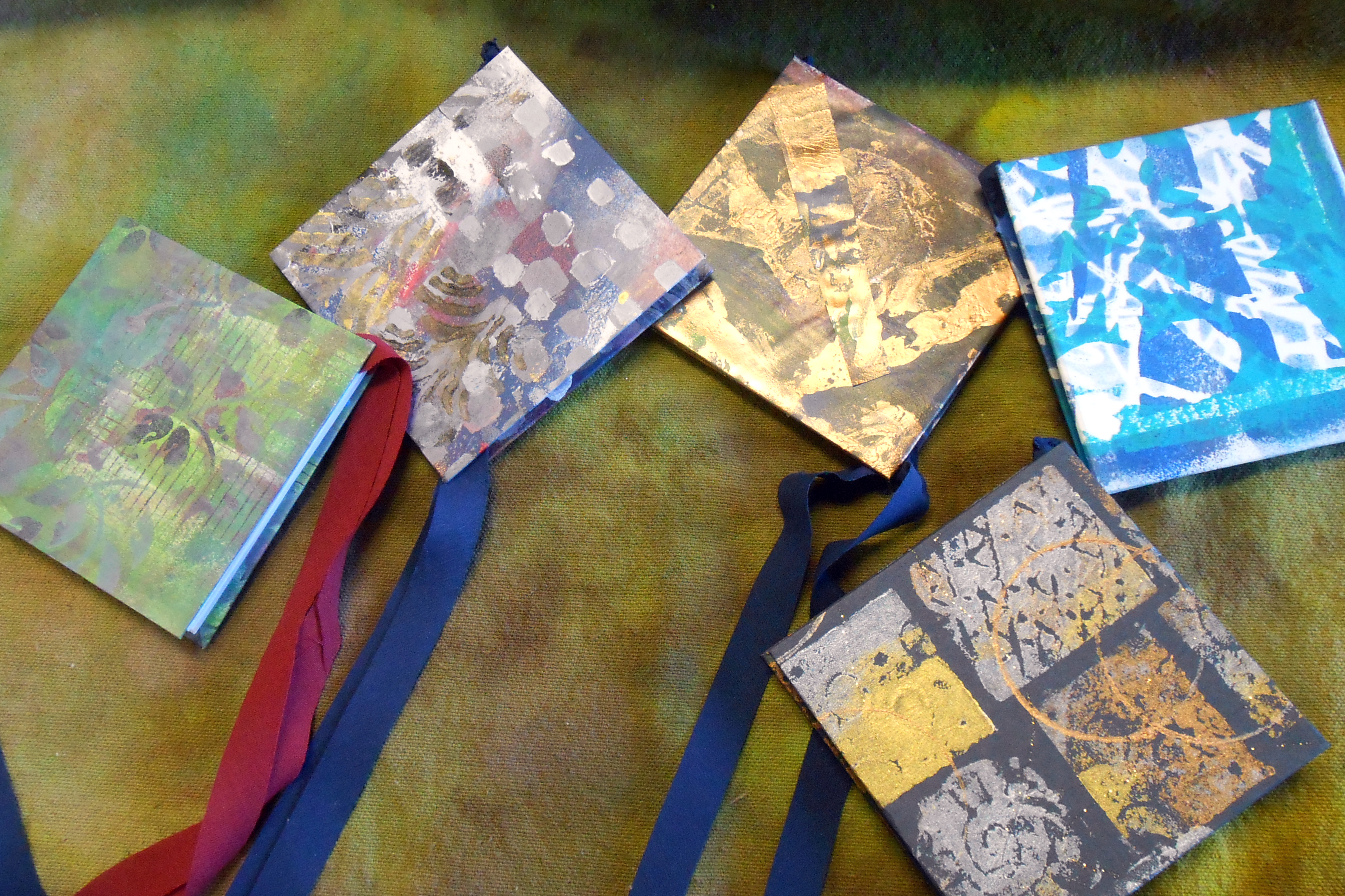
29Lesta Frank and I have known each other since high school, and we finally got together to collaborate as teachers for a half-day workshop at the Studio on Sunday. I learned a lot from Lesta about paper surface designs – she’s pretty fearless with stencils and rollers! And I taught everyone how to do stamping on-the-cheap with a foam plate and black construction paper, and then how to showcase our designs on the cover of an origami Lotus book.

We know that once you see this video, you’ll wish you were there 🙂, so we’re gonna do a second session early in the new year. Check it out! And thanks, Lesta, for the inspiration!

Know when to fold ’em –

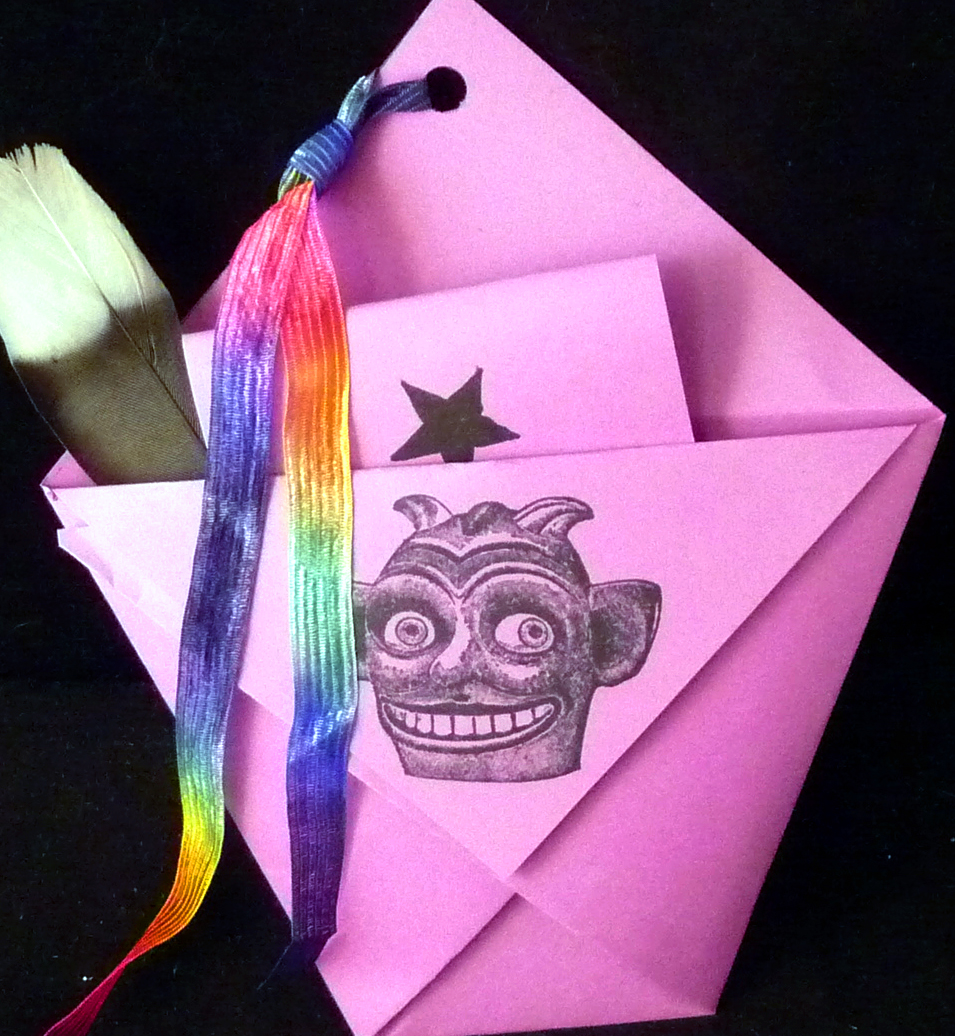
tagPresenting, for your Labor Day holiday folding pleasure, a simple but impressive little origami project. You can make a stack of these pocket-note-tags to use on gifts or even as place cards. You can even drink out of them, as you will see. This Emmy winning (not) short video was produced in my dining room. Awards go to Max the Cat for Best Immovable Object and Chico the Cat for Best Wardrobe Malfunction.