Beeswax collage workshop – personal and inspired

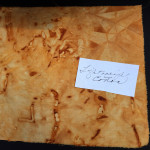
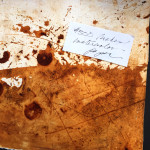
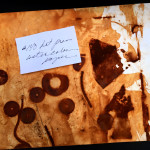
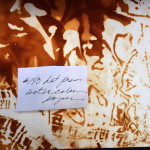
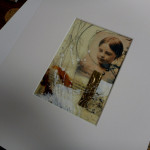
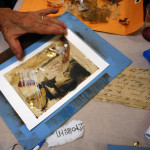
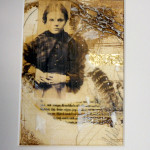
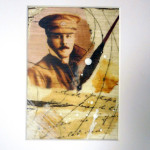
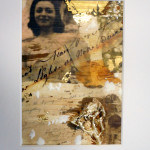
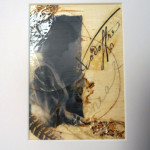
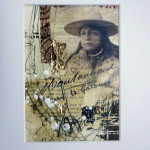
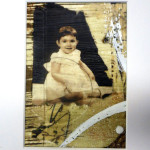
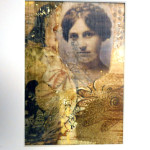
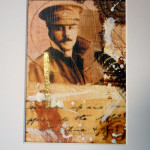
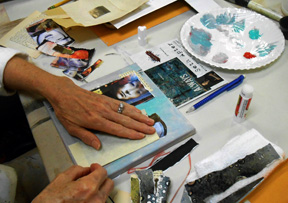
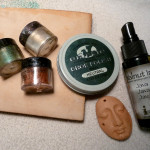
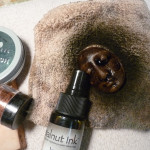
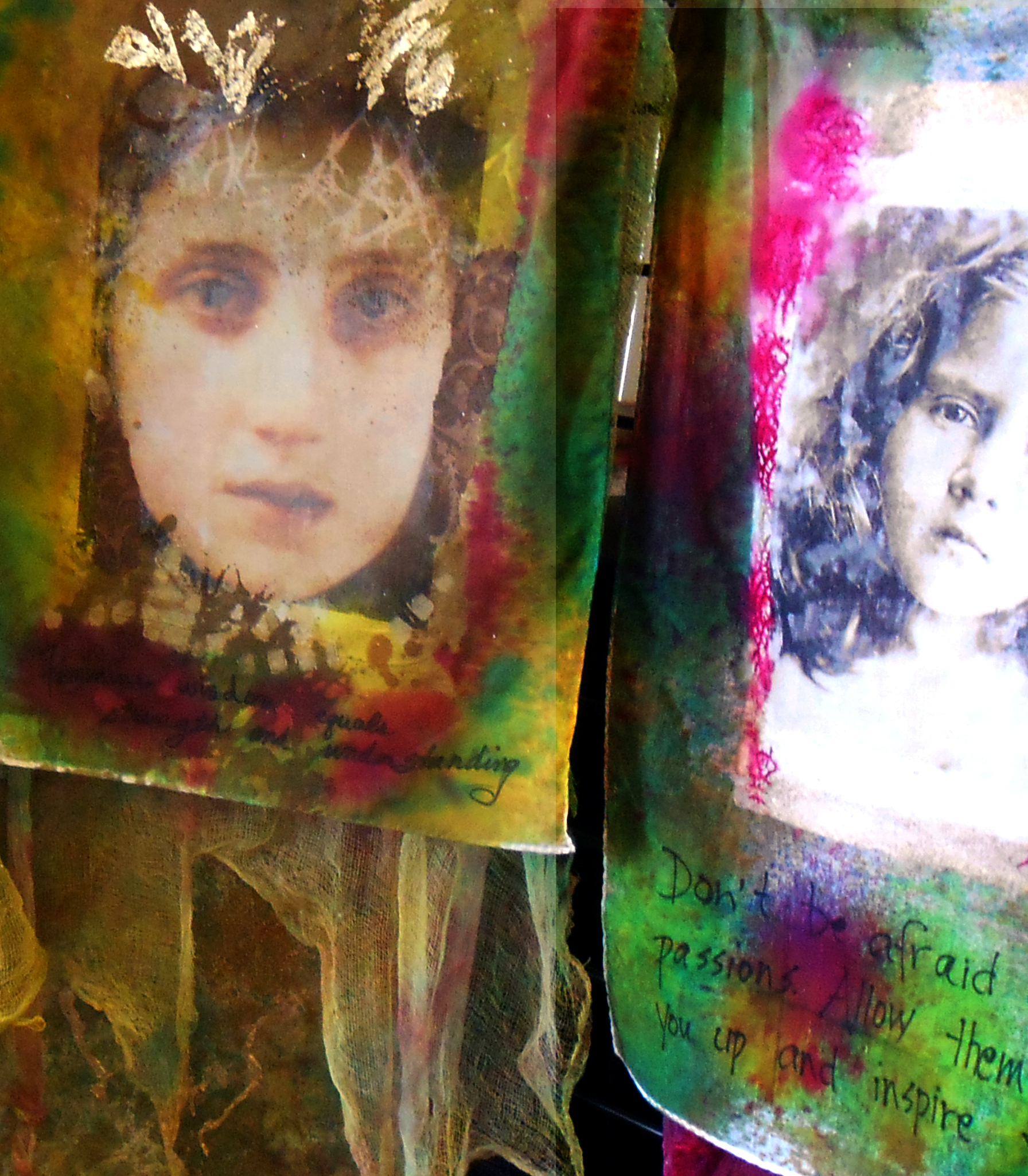
The beautiful visual stories seemed almost to create themselves in Sunday’s Beeswax Collage workshop at the Studio. Participants were given a limited choice of vintage images, some basic collage and texture materials, and some beeswax, walnut ink, and gold leaf. Then, as one person said, “The magic is happening!”

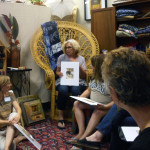
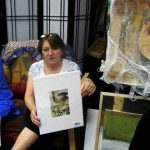
Sunday’s workshop was a delightful combination of the perfect medium paired with the perfect group – everyone had a chance to take risks, make decisions, and turn “mistakes” into assets in their work. And they did it! Take a look at some photos from the workshop.

Congratulations to all of the artist and bravo for the great work – and now, for a commercial break. If you want to see how this beeswax collage process works, I have written an e-book called Behind the Veil that explains this process step-by-step, including where to find free vintage images. It can be yours to download for a mere $5.99 heck, a fancy latte costs more than that!

But wait, there’s more – no, actually, that’s all for now. It was a great workshop and I thank everyone who participated! Have a lovely  Monday, everyone.

Mood indigo

Part of the fun of teaching a new workshop is the research (aka play) that goes into developing a curriculum and a process. Michelle Belto and I have a chance to teach a class in indigo, shibori and rust dyeing for Vivi Magoo at The Prairie in early November, and we jumped at the chance. I had done shibori and rust dying, but had not worked much with indigo (OK, I so had never worked with indigo, but don’t tell anybody).

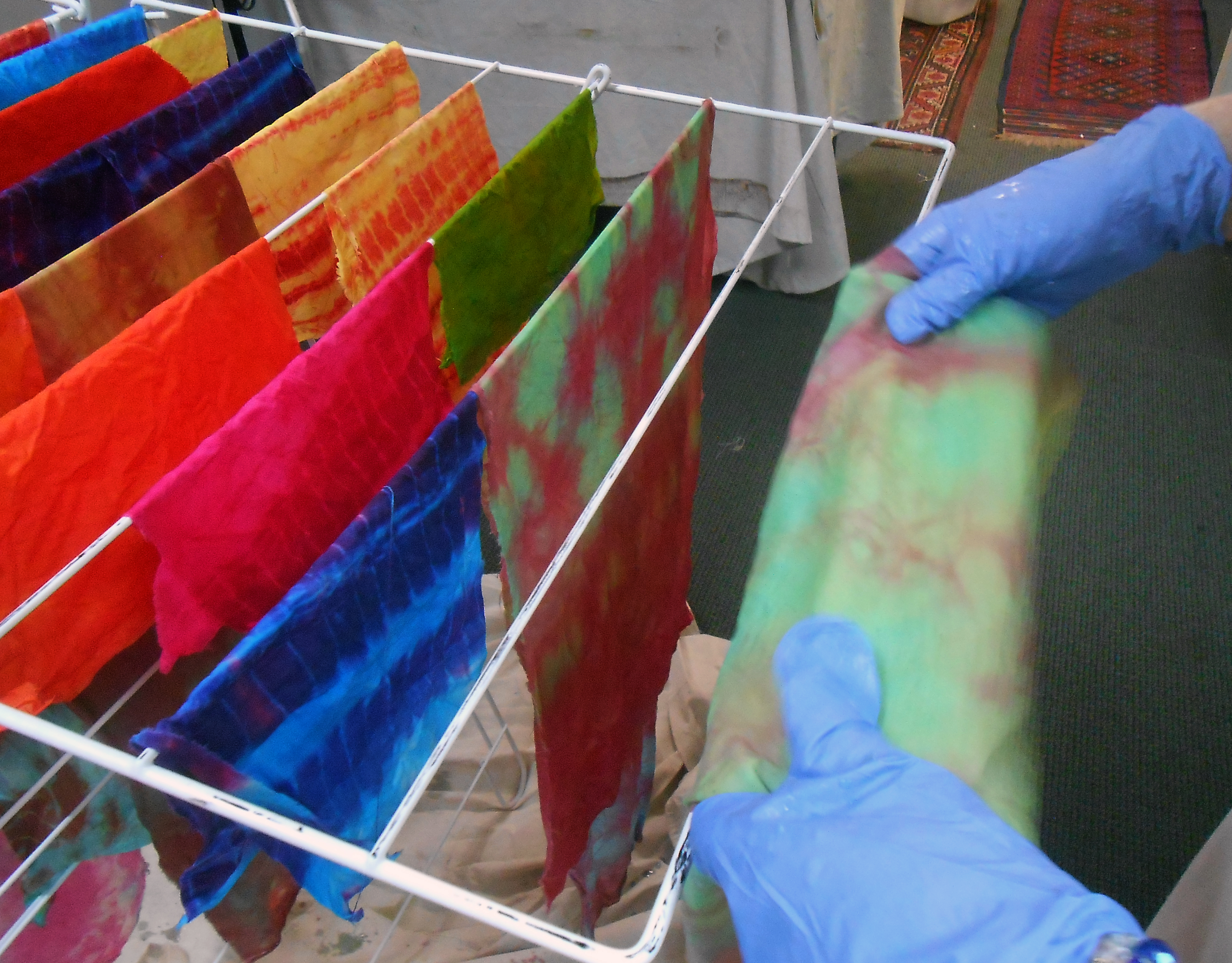
Like learning most new things, learning indigo dye techniques was a combination of asking people how to do it and practicing on my own. It’s an amazing substance – this plant has been used for dyeing since 2400 BC, and maybe earlier. Cakes of indigo were used as currency in the Revolutionary War. Once dyed, indigo is so colorfast that it can last for centuries or even millennia. Here’s a video of my first indigo adventure.

I have a lot more to learn about creating color with indigo, but yesterday I worked on learning some basic techniques, mixing the indigo properly, and experimenting using paper and fabric. The deep blue-greenish color is a natural partner for the terra-cotta shades of rust dyeing. I really can’t wait to teach these classes at the retreat and share this wonderful process! Hope you’ll think about joining us at Vivi Magoo at The Prairie on November 3rd. I promise that it won’t make you bluewell, maybe it will.

Rust dyeing – multiple pieces, multiple materials, magical results

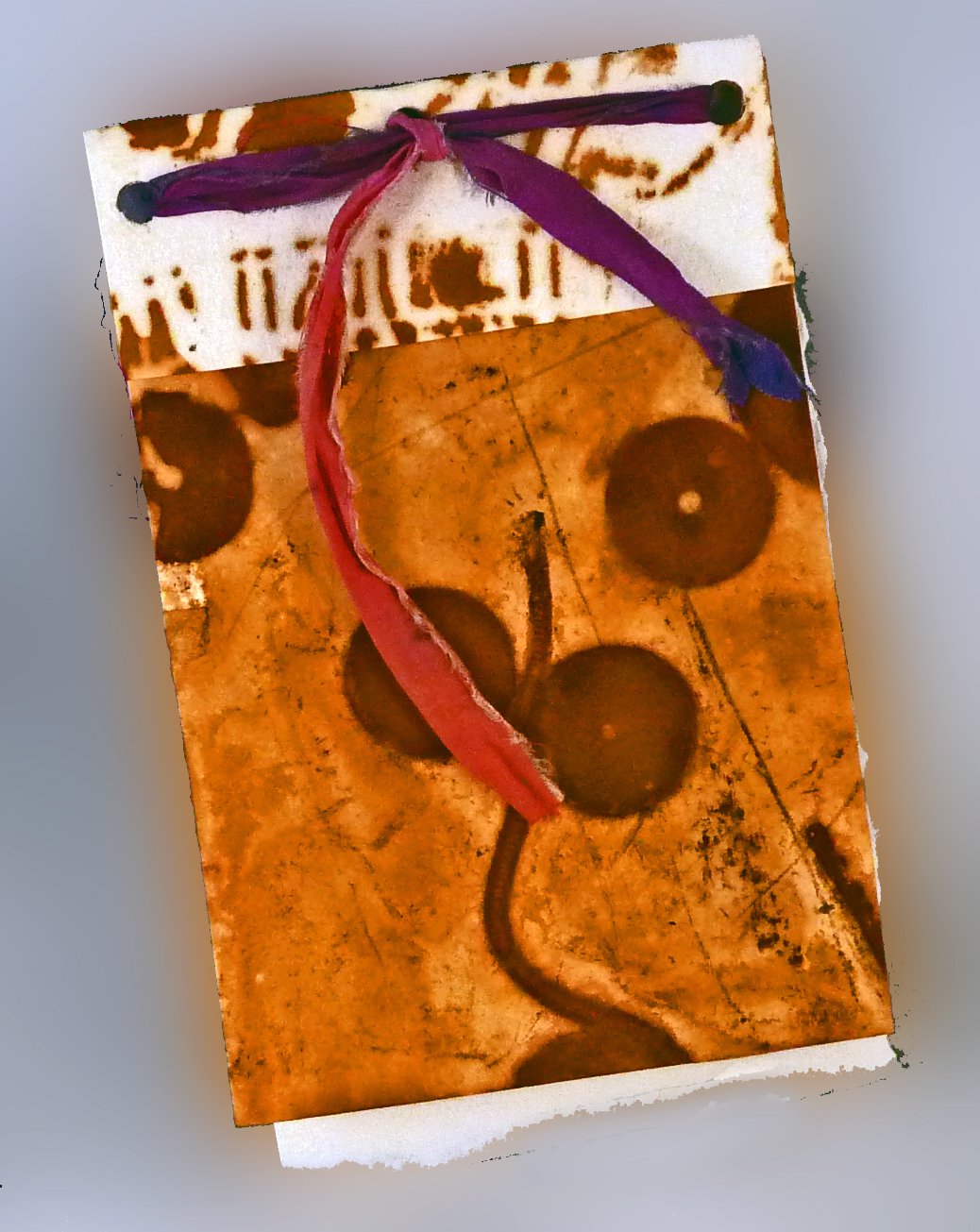
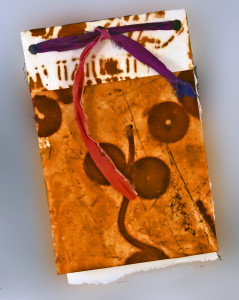
Book cover made with experimental rust-dyed paper - Lyn Belisle

Book cover made with experimental rust-dyed paper – Lyn Belisle

Ever since I learned that I’ll be teaching dyeing and surface design at Vivi Magoo art retreat, I’ve had little else on my mind. Did you see the newsletter about this event? If not, click here – it’s going to be SO much fun, and it’s coming up in just a month, November 3-5.

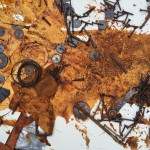
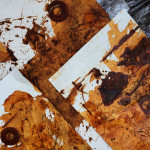
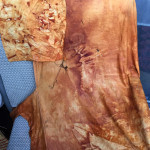
One of the techniques I’m teaching with Michelle Belto is dyeing with rust. I’ve done a bit of that, but wanted to tackle it on a Big Scale. And it worked! I dyed a yard of linen (thanks for that old white linen skirt, Gloria), some scrap cotton pieces, and two types of watercolor paper – a heavy 300# cold press and a lighter #140 hot press. I did it all at one time with the same process just to see how the different materials would take the rust. All were slightly different but all turned out beautifully.

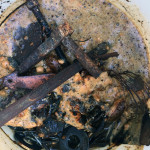
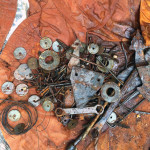
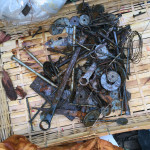
Here’s a short version of how I did it. I collected some rusty objects in a plastic bucket and poured a solution of bleach and vinegar over them to sit overnight. Do this outside! I got this recipe from the Internet (there are many rust-making solutions if you want to test other ones). There was about two inches of yucky rusty foamy gunk in the bottom of he bucket the next morning. Stinky yucky. But rusty.

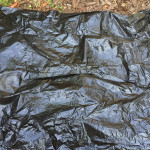
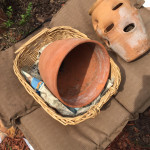
I spread a plastic drop-cloth in the yard (away from plants) and put a layer of fabric and watercolor paper on the plastic – some of it overlapped a bit, but I wasn’t concerned, I just wanted to see what happened on the different materials. The whole area was about three by four feet. I dumped the contents of the bucket over the whole thing and spread it out, wearing gloves. . .very very random. Then I covered it with black plastic and weighted it down with some old outdoor cushions and some flower pots to keep good contact – also to keep Dudley the Tortoise out of the pile of stuff.

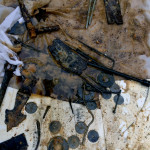
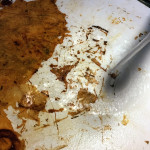
It sat covered in the sun for about six hours, then I took of the cushions and peeled back the black plastic – zowee! What great rust colors! It was exciting – take a look at the pictures below, and then I’ll tell you my observations. (If you can’t see the pictures, click this link)

Here are my observations and caveats – first, I haven’t washed the fabric thoroughly so I’m not sure how color fast the rust is, but since I won’t be wearing it, just using it for fiber art, that doesn’t concern me. You may want to try a small piece and see how it works for you if you’re going to make a garment.

Secondly, I wish I had dampened the 300# watercolor paper because it’s very thick and I think it would have taken the rust better if it had been wet. The thinner 140# watercolor paper was the most successful of the four materials. It had strong prints from the objects and lots of color variations.

After the process was done, it occurred to me that the formula that I got from the Internet included bleach, but that didn’t seem to affect the fabric – it still dyed a rich rust. Next time I’ll try it with salt and vinegar just to see. But whatever method you use, research it and try it on a small sample first. That’s what I did before I mixed up this huge batch. Work outside, wear gloves, keep your tortoises away from it!

In the Viva Magoo all-day class, we will be doing a version of this that uses lighter fabrics and papers and we’ll include some over-dyeing using the Shibori method (yep, you can do Shibori on paper as well as fabric) – I hope you’ll consider signing up for one of the workshops. If it’s half as interesting as this rusty experiment was today, it’ll be worth the price of admission!

A two-day encounter of the art-full kind

wsWhat was I thinking? Two full-day workshops at the Studio back-to-back? A weekend of hanging out, creating, eating and talking with eight other like-minded souls?  How would all of that look? It looked FANTASTIC!

Saturday was Belisle’s Collage Extravaganza and Composition Challenge. We worked on two major pieces – a collage on canvas with extreme emphasis on composition (the AB3s) and a collage on cradle board with image transfers and encaustic wax. The intrepid participants gave it their all, and we were very tired but happy at the end of the day. Here’s the video – see if you can detect the AB3s of composition at work in the finished pieces.

But wait – there’s more! On Sunday, Lesta Frank and I team-taught a very non-traditional mixed media journaling class. Everyone designed their own pages and created a loose-leaf portfolio to collect and show their experimental surface finishes, including one really interesting Profile Page. This was Lesta’s idea and consisted of an actual dimensional profile cutout with descriptions of a personal profile as part of the composition. Very nice! Watch for it in the video, below.

In the critiques and discussions, all agreed that the two-day experience was great, both for those who came both days and those who came on one day of choice. We had eight participants each day, half of whom were there for both days. Nicely balanced! I will plan another weekend experience in the early part of 2016. I should be recovered by then!

Potters and gourders

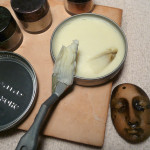
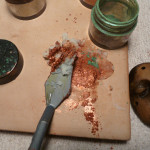
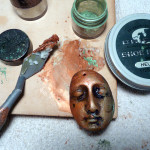
I’m presenting a program to the San Antonio Potters Guild tonight. It’s called Earthenware, Ornament, and Assemblage. While collecting photos photos of my clay pieces, I realized that working in earthenware has been part of my art practice for almost 50 years! These days it’s mostly face shard production and some small sculptural pieces, and I love exploring finishes for fired unglazed clay. Here’s one of the finishes I’m showing the potters tonight – it’s a wax-based custom metallic patina that starts with neutral shoe polish! I used it as a finish on the piece at the left and thought you might like to see how it’s done.
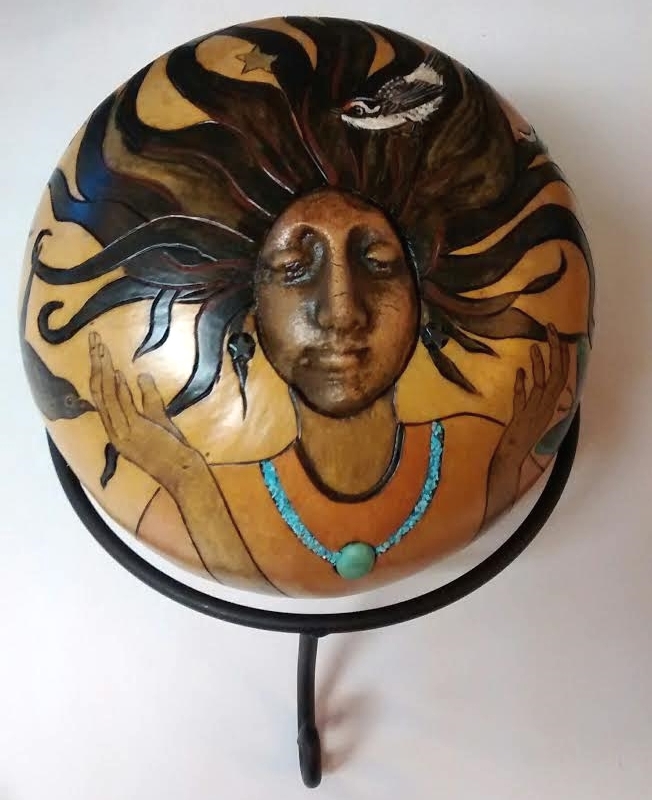
Kathleen Peet: "Diamonds on the soles of her shoes"

Kathleen Peet: “Diamonds on the soles of her shoes”

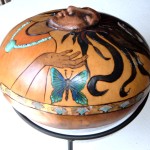
Just as I was working on my Potters Guild presentation, I got a message from Kathleen Peet, a mixed-media artist from Prineville, Oregon who uses my shard faces in her work. She works with gourds in a unique way – look at this gorgeous piece, left.

Kathleen has an Etsy shop called  Full Circle Art and you can contact her there to see the full scope of her creativity with gourds.

This is what she says about her passion: “When I started in 1996, gourds were a relatively new medium, especially in rural eastern Oregon. The most frequently asked questions were: “What are those?” and “Do you grow them?” Now, gourds are much better known, and some are recognized as ‘fine art’ rather than just craft. I have enjoyed taking this medium in many different directions, and just when I think I’ve tried everything, some new idea hits me. While still enjoying painting, spinning/weaving, ceramics and abalone jewelery….I always come back to gourds!”

Here are some photos of more of Kathleen’s work, including a look at her Oregon studio – thanks, Kathleen! Clay and gourds are a natural pairing!


Spirit Box showcase and a fresh breath bonus

spboxWaaa-aaay back in October of 2013, I wrote an article for Cloth Paper Scissors Magazine about Spirit Boxes. This is from the intro:  “Spirit Boxes take their roots from art dolls, kachinas, and other meaningful handcrafted figures. They make beautiful gifts, especially if a personal note or small object is tucked inside the box. To make your own Spirit Box, you will need just a few simple materials, and most or all of those can be recyclables.”

Six participants got together at the Studio yesterday to give it at try at our Spirit Box workshop. The results (below) are beautiful, personal, and heartfelt.

This slideshow requires JavaScript.

So what’s the “box” part of this construction? It’s a recycled Altoids tin (how ubiquitous – they are used from everything from mini-shrines to sewing kits). But by gluing this on to the back of a flat wall piece, you can both lift it out from the wall to “float” it, and also have a secret compartment for life’s little pleasures like Hershey’s kisses, silver dollars, and secret messages! See?

Punch holes and fashion a "handle" out of wire, then glue on with E6000

Punch holes and fashion a “handle” out of wire, then glue on with E6000

Voila! A secret compartment!

Voila! A secret compartment!

FUN LINKS for ALTOIDS TINS:

22 Manly Ways to use an Altoids tin

Top 50 Ways to Recycle Altoids tins

Ten Things You Can Build Inside of an Altoids Tin (including a lie detector)

Altered Altoids and Other Tins

My personal favorite – an Altoids tin grill that can cook two hotdogs and one marshmallow – seriously?

A pretty colorful weekend at Lyn Belisle Studio

32The Studio was awash in dye this weekend, first with Rosemary Uchniat’s fantastic half-day Small Space Dyeing workshop on Saturday, and then my Goddess Banner workshop on Sunday afternoon. Everyone was caught red-handed having fun – and blue-handed, and green-handed . . .take a look at the video!

Both classes will be repeated in case you want to join in. Rosemary’s second Small-Space Dyeing class is October 17th from 1-5. The first one sold out instantly. And my next Goddess Banner workshop is coming right up on Sunday, August 16th from 2-5.

banNow about those Goddess Banners, this was a special small class that was scheduled for a guest from Houston who wanted to take both Rosemary’s class and mine the same weekend. There were four of us, and it was great to be able to work alongside the participants. I had a blast! We transferred images, dyed cheesecloth, created symbols and words of inspiration, and put it all together in the most remarkable way! I just love this project – and it’s three hours, start to finish.

One of my favorite fiber artists, Linda Rael, was in our group – that made it even more fun. She has a great idea for a series of banners, but I’ll let her tell you about it if she actually does it. Hope so! Take a look at the video, and then consider signing up for the workshop on August 16th – you won’t regret it! It’s to dye for. Sorry.

Monday two-fer – beautiful bones and beeswax

You get two art reviews for the price of one (yeah, I know, they are all free) but still –  I wanted to post Part Two of my Colorado Trip while it was still fresh in my mind, and I couldn’t wait to show you the video of yesterday’s Beeswax Collage workshop at my Studio (see the amazing video, below)!
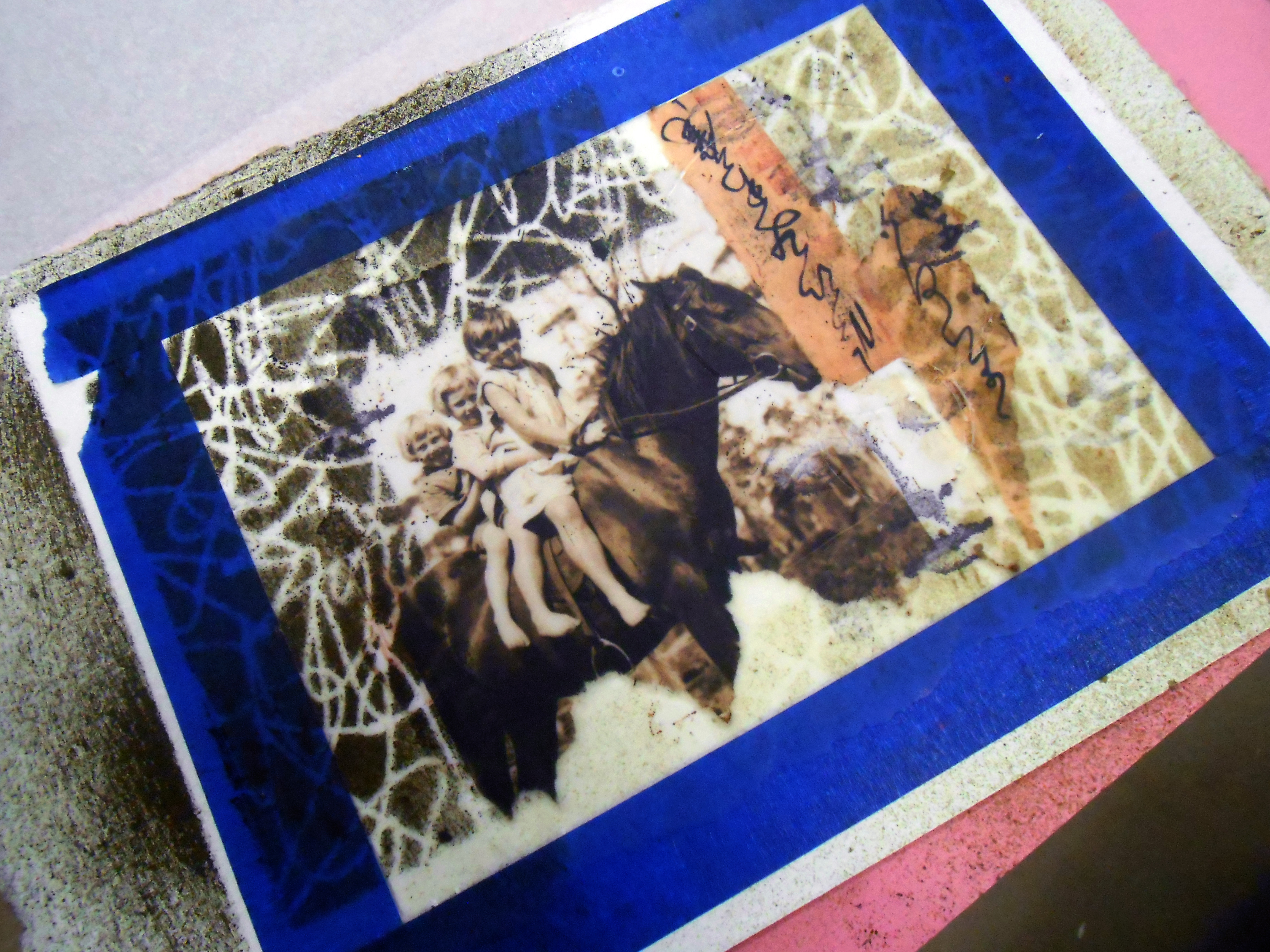
Colorado Trip Part Two –  Georgia O’Keeffe at the Colorado Springs Art Center

Horse’s Skull on Blue – Georgia O’Keeffe 1931; Oil on canvas

Georgia O’Keeffe and the Southwestern Still Life is not strictly a “Georgia O’Keeffe show”, (which I should have known had I done my homework before we visited the exhibit). And thank goodness it isn’t, because when her work is placed beside that of her contemporaries – including modernists like Stuart Davis and Marsden Hartley as well as more traditional painters who were also lured by the Taos light –  O’Keefe’s cutting-edge brilliance shines.

One of her quotes that ran across a bright orange wall at the CSAC gallery read, “I had to create an equivalent for what I felt about what I was looking at – not copy it.” That, to me, was huge – and her work showed this journey into interpretation and abstraction through the loose structure of “still life.”.

I was so impressed by the juxtapositions and inclusions that I searched to see who had curated the exhibit. It was Charles C. Eldredge, former director of the Smithsonian American Art Museum, who placed O’Keeffe’s work in the context of other artists who were influenced by the Southwest at the same time she was. The exhibit raised thought-provoking questions such as “What is a still life, really?” and “How does an artist chose represent an observation?”

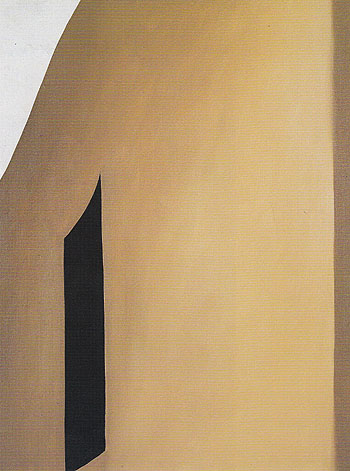
I loved the show – my favorite painting was this one (below) – and my friend Carol Mylar and I talked for a very long time about why it was included as a still life, and why its powerful simplicity is so mesmerizing. For a much more educated and detailed review of Georgia O’Keeffe and the Southwestern Still Life, read Gayle Cement’s enlightening, enjoyable discussion of the works.

Georgia-O_Keeffe-Black-Patio-Door-1955-large-1339814400

Georgia O’Keeffe Black Patio Door 1955

22And now . . . . .Fabulous Sunday Workshop – Wax and Layers and in Beeswax Collage

The smell of the beeswax, the roar of the crowd – what a workshop! Every single participant took the notion of wax enhancement on monochromatic collage and ran with it, creating evocative personal statements. I’ve recently added another hour to my workshop format, and three hours instead of two makes a huge difference. We have more time to critique and discuss – it obviously worked yesterday. Take a look at some of the inspired pieces the students created. Nice work, Y’all!

Out of a job, better get organized . . .

First of all, congrats to this week’s Friday Freebie winner, Karen Cutrer, who subscribed to SHARDS five months ago. Karen, I’m not sure we’ve met, but so glad you won the Gold (or Silver)  Simple Leaf for gilding anything your heart desires. Send me an email with your address and color choice – lyn@lynbelisle.com – and I’ll get it to you right away. You have to promise to let me know how you use it! Golden eggs? Silver flower pots?
OK, so as summer progresses, I’m starting to realize that I don’t have an outside teaching job to go back to since 1969! – yikes. So I’m attempting to organize the Studio schedule to function as a full-time workspace (not an easy task for a left-handed Gemini). Here’s a first attempt at a reorganized Workshop webpage. It’s not too different yet, but I’ve added videos from past workshops and tried to make it easier to read. Suggestions?

wkSince I started teaching workshops even before I had the Studio, my goals have been:

  • Make it enjoyable for you – no stress or pressure, no scary stuff
  • Create a finished piece to take home with you to spur ideas and confidence
  • Provide all materials so you can just show up and create – no expensive lists of materials to bring – you don’t need expensive products to make art that you love.
  • Celebrate your style and your vision – no “copy me” or it’s wrong

Here are some early workshop pics from my kitchen and little ex-garage studio – we were squished, but it was still fun. I want to keep that sense of fun!

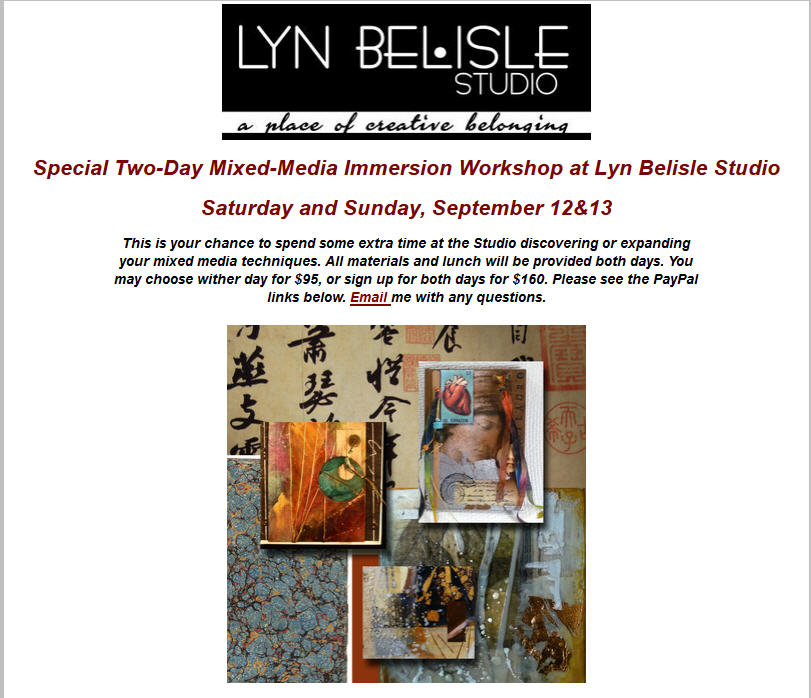
One of the new things I;m trying this fall is a longer two-day workshop, not with an out-of-town artist, but with just me, other local aritsts, or in this case, Lesta and me on one of the days. You can sign up for one day, two days, or both. There’s still a limit of eight, and lunch is included. Here are the details on that one – you can read more here:

immersion


 I also want to continue the monthly Show and Tell get-togethers. They really feed my soul! I’ll post those on my webiste as they are scheduled, but they will generally be the last Saturday of the month. Please take a look at the latest one from day before yesterday – wonderful!! And thanks for letting me think out loud about where my road goes from here. You are the best 🙂

Sunday’s creative Citra-solv collage circle

That Citra-solv stuff is amazing – it cleans the studio, takes old paint out of brushes, de-greases your tires, and makes amazing art paper from recycled magazines. If you haven’t tried it, perhaps you should – a bit messy, but worth it. Yesterday’s workshop participants got five gold stars for their creative collages. They made some fantastic solvent-altered papers and put together intriguing fantasy worlds. Take a look, and then I’ll give you some sources for the Citra-solve altered paper techniques below the video, You can figure out a million ways to use these cool designs.


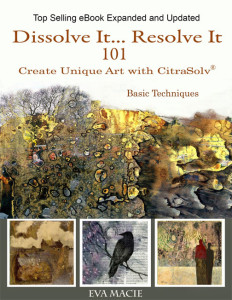
I did a post last year on Citra-solv featuring a video by Cathy Taylor, who specializes in workshops using the altered magazine pages. If you want to go a bit further, there’s a new eBook out that I ordered just before this workshop titled “Dissolve It . . Resolve It.” You can download it for $9.95 and I think it’s quite worth it if you’re going to be working with this technique. There are even some directions about using Citra-solv to transfer images. I don’t know the author, but she does a great job laying out the basics and then inspiring experimentation! Fun stuff.

citrabook