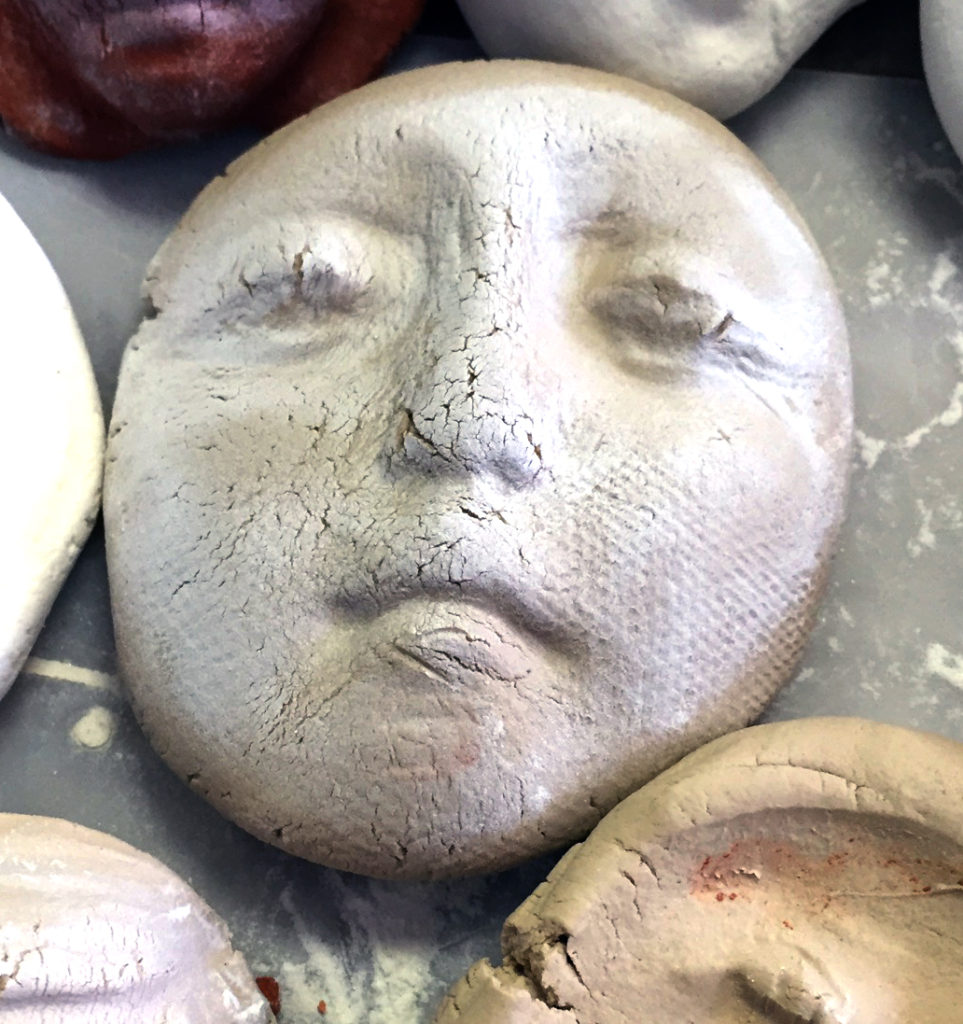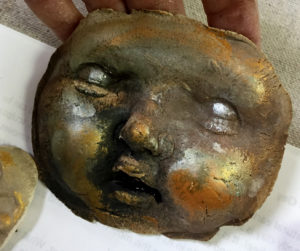
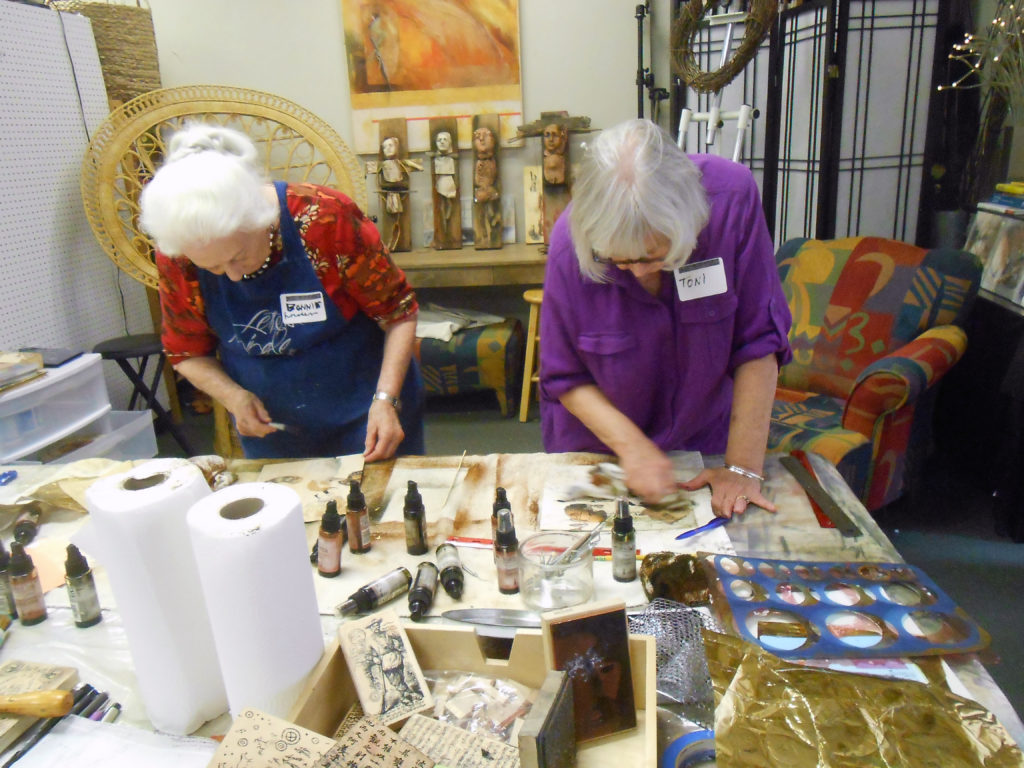
One thing is for sure – the number of faces that came into the workshops on Sunday and Monday were a lot fewer than the number of faces that went out. The energetic and enthusiastic workshoppers must have created hundreds of little air-dry clay people – and not just human faces – there were 3-D molds, insects, cats, and one persona that looked like creepy Chucky (that one became our mascot).
The object was to explore ways to use no-fire clay – to make original and iconic clay face shards and other dimensional components without the need of firing in a kiln.
We concentrated on four areas:
How to make reverse press molds with both two-part silicone and with air dry clay
How to use the molds with various kinds of air-dry clay to make a dimensional object
How to finish the surface of the dried clay faces with walnut ink and metallics
How to use those finished components in mixed media projects
The key to success is to embrace the imperfections inherent in the air-dry clay – those cracks and irregularities give the pieces the illusion of heritage and a wabi-sabi touch of imperfect beauty. You can see what I mean from our video – every picture tells a story, every little face has a secret history – hopefully not Chucky’s:
Now THIS is one of my all-time favorite workshops – perfect for any level, full of serendipity, with absolutely gorgeous results. Here’s how I described the workshop online:
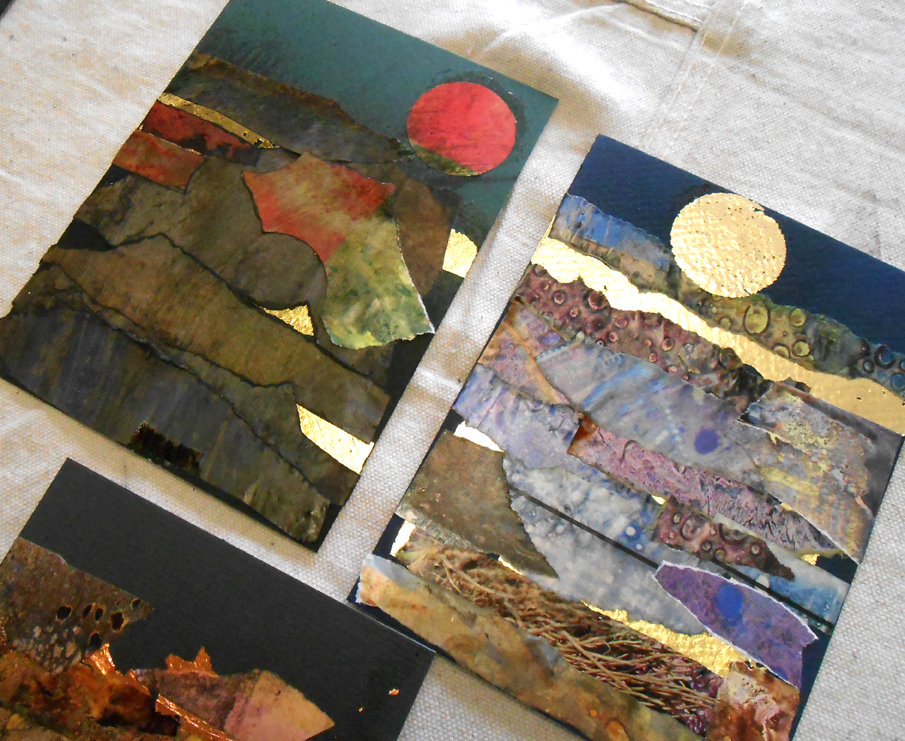
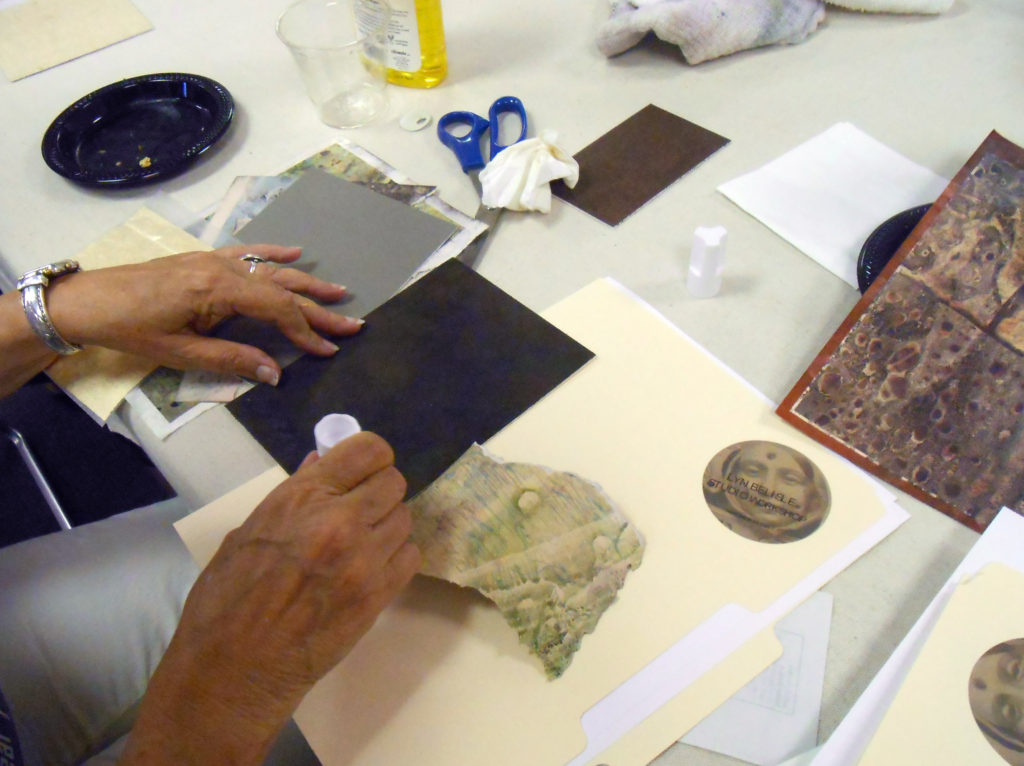
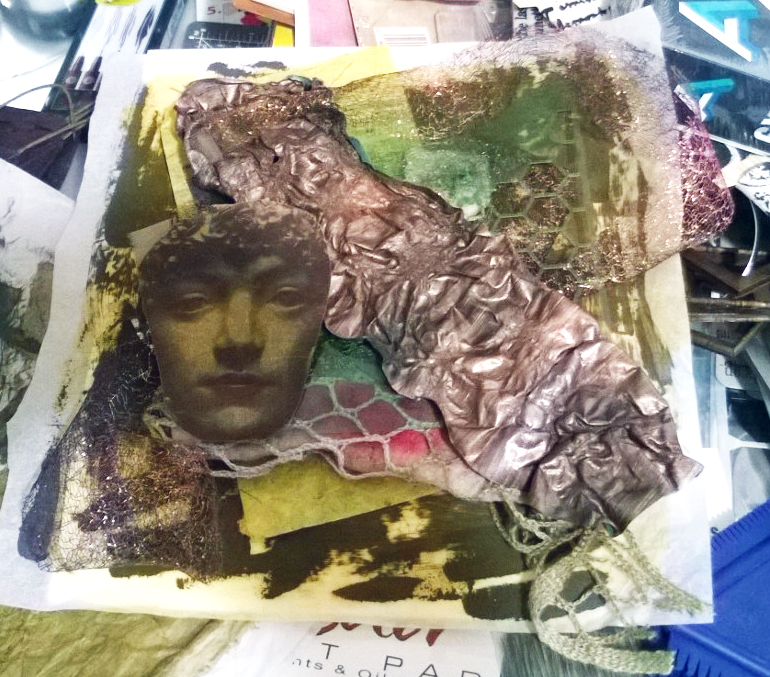
Using the technique of DÉCHIRAGE (day-shur-ah j’) – distressed paper collage – students will gain a solid grasp on composing little landscapes using a variety of altered papers, natural elements, and mixed media special effects. Lyn will also share art-enhancing framing suggestions that compliment your finished work so that your final display is both appealing and professional looking. Even a total beginner can create a stunning artwork with these fun distressed paper techniques.
Yesterday’s participants in the Altered Paper Landscape Abstractions class rose to the occasion with some stunning work. Some people created several collages, some just one, but all were beautiful and individual. The hardest part was choosing which piece to mat for display.
I loved this comment from Ellen, “I got frustrated because couldn’t make it do what Iwanted it to do, but when I let it do what itwanted, I loved it!!” Talk about trusting the creative process – when you let go and accept the beautiful, unpredictable results, magic happens.
Take a look at the video, below, and then I’ll give you the list of materials for this project.
Lyn Belisle’s Altered Paper Landscape Collages: Materials List and Source Notes
For the basic collage:
A 5×7” piece of matboard, illustration board, or very heavy card stock
Glue sticks
Scissors
Walnut Ink from
Tsukineko
Altered paper (see below)
Metal leaf
Stamps and inkpad, your choice
Lightweight paper to rub down elements as they are glued
Metallic felt tip pens and ultrafine Sharpie (optional)
For the altered paper:
Citrasolv orange oil-based cleaning solvent
National Geographic magazines or other clay-base ink photos – I encourage you to experiment
Sources of materials:
Mat board scraps can be purchased or requested for free at most frame and craft shops. Look for ones that are dark colored with white on the back for the most versatile design options
Citrasolv is becoming widely available in art stores because of this popular altered paper method. You can usually find it at organic grocery stores such as Whole Foods, as well. Online: Citra Solv is now being sold through Cheap Joes, Jerry’s Artarama, Stampington, and DickBlick
Tsukineko Walnut Ink is very versatile for many projects and can be ordered from Imagine Crafts, the Tsukineko distributor:
I use Scotch permanent glue sticks, but most good brands will do nicely
Metal leaf is available in craft stores or can be ordered here on Amazon.com
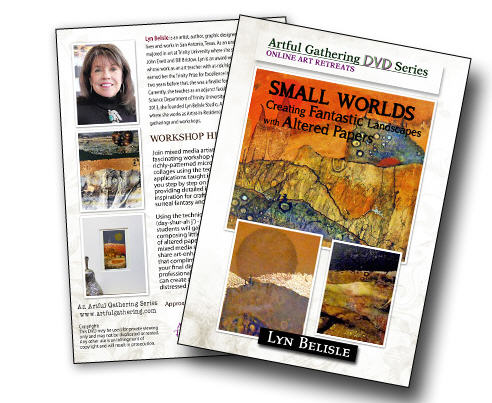
If you want a very in-depth look at this process, including other altered papers such as “ghost paper” with bleach on black construction paper, I have a DVD called Small Worlds, published by Artful Gathering, that offers an intense discussion of how-to-do-it instructions, videos and demos. Happy new week, All!
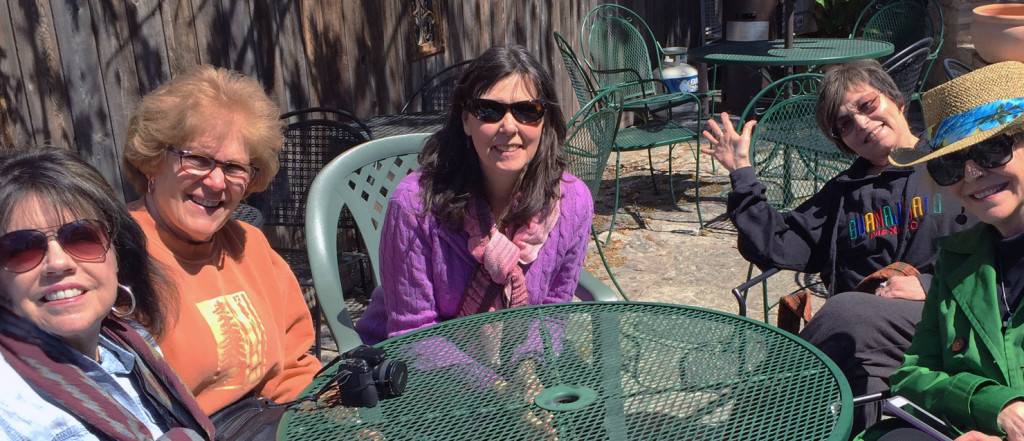
Last year at this very time I was on Whidbey Island at Joanna Powell Colbert’s Gaian Soul Retreat. Four friends from San Antonio went with me, and this weekend the five of us celebrated our one-year anniversary with a reunion trip to Fredericksburg. We stayed at Sidney Burnette’s charming B&B called Butterfly Cottage.
Butterfly Cottage owned by the very lucky Sidney Burnette
We shopped and ate and reminisced. And shopped. And ate! I collected photos of the wonderful colors and textures in this great Hill Country town. Special thanks to Sidney for sharing her country home with us!
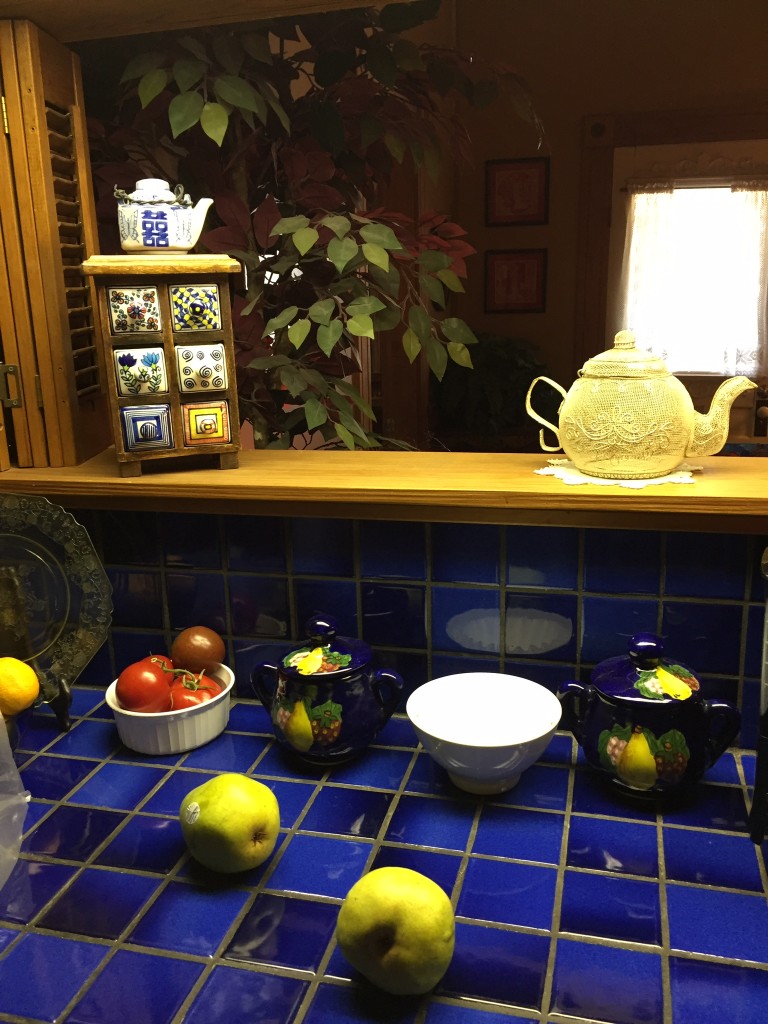
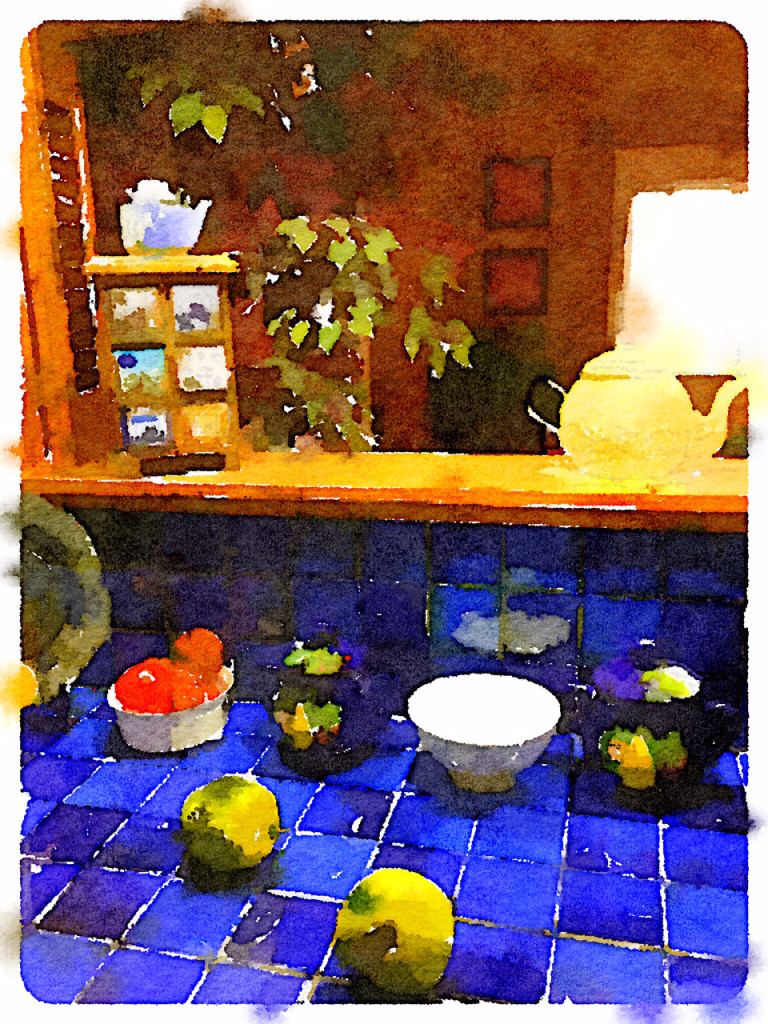
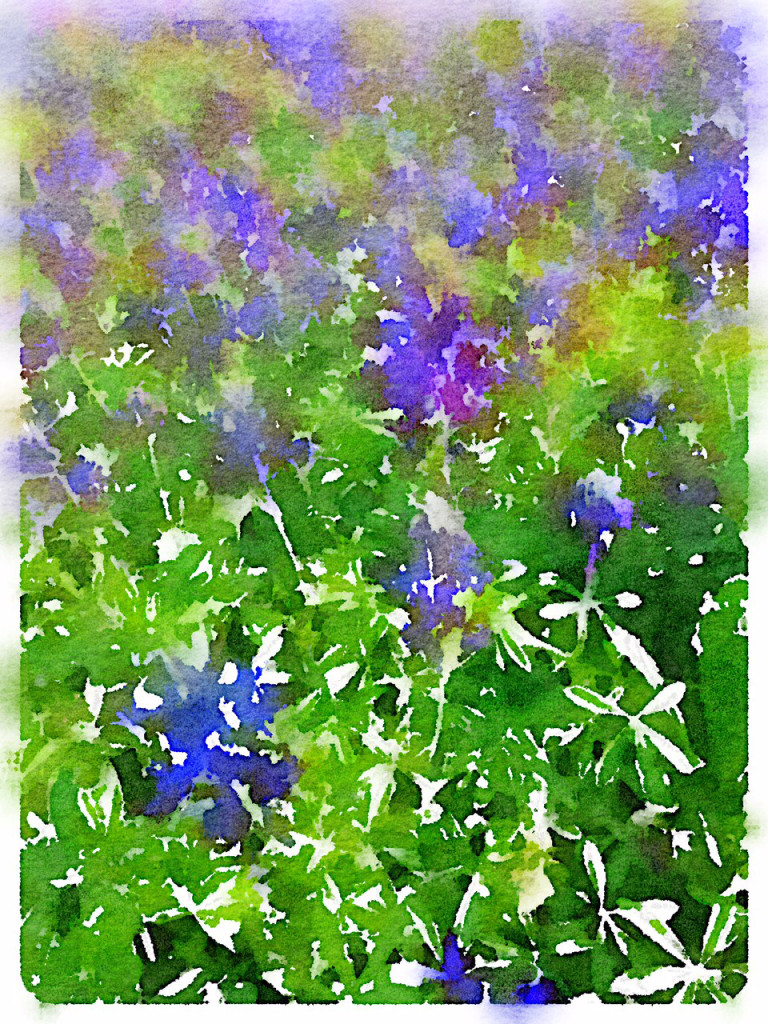
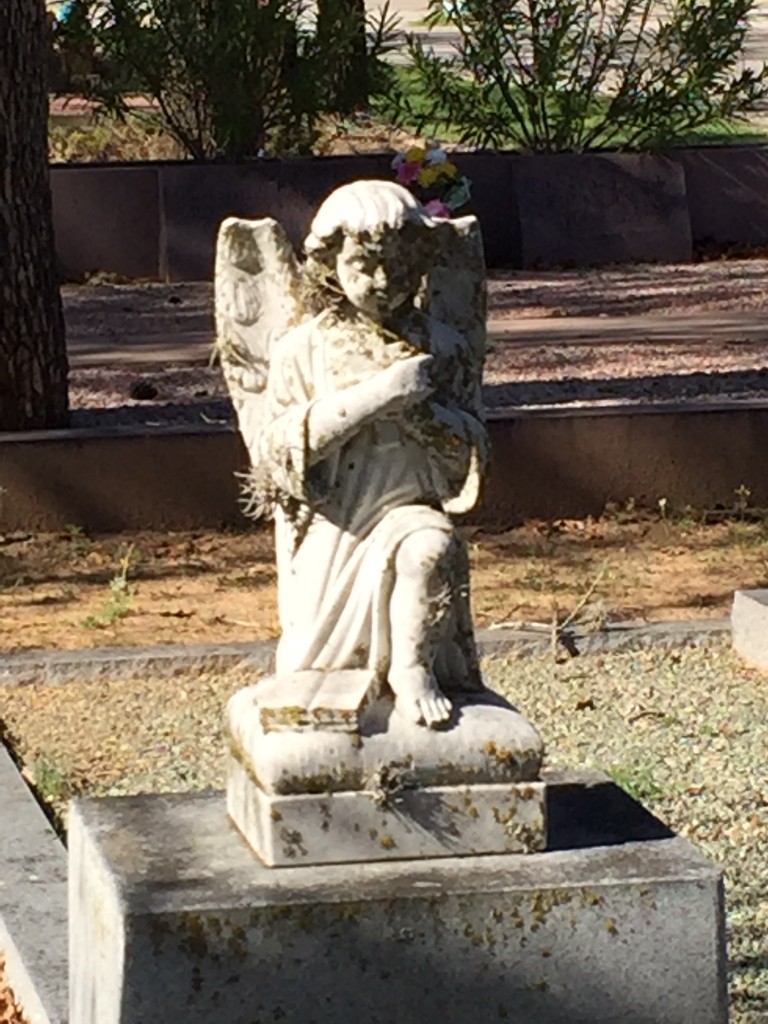
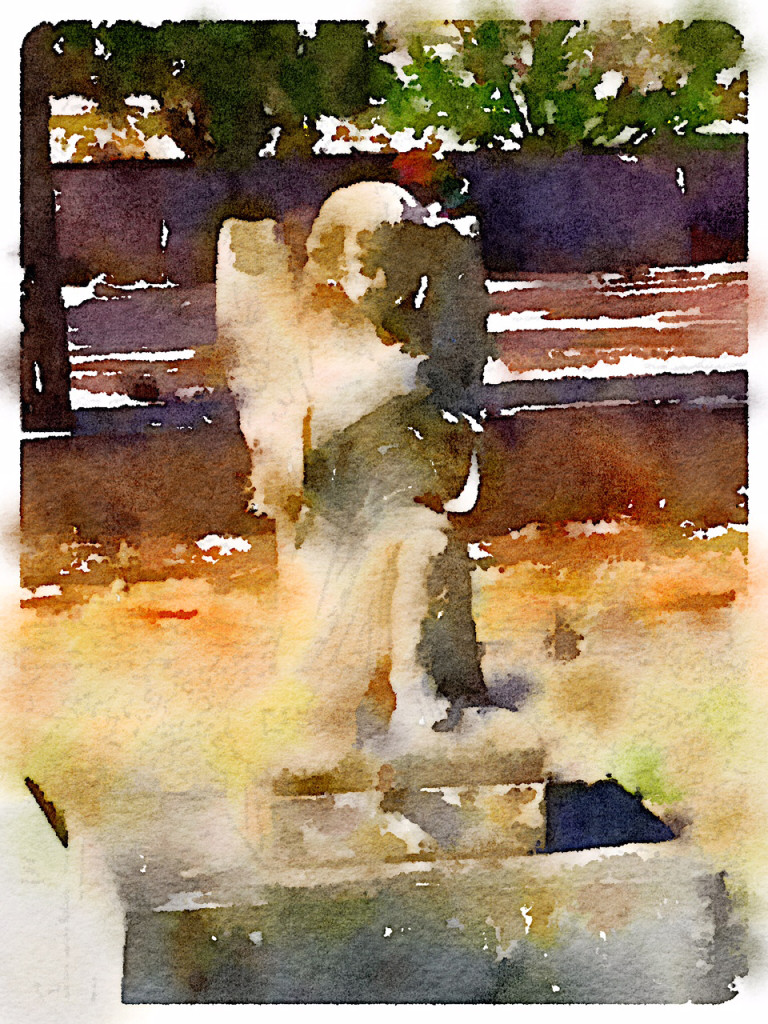
One of the things we played with at the cottage was the artful iPad app called Waterlogue. I’ve had it for quite a while but the others hadn’t seen it – it transforms every photo into a watercolor masterpiece. We went crazy taking photos and transforming everything into watercolor paintings – cats, rocks, each other – nothing was safe. It was an unexpected and fun diversion.
Below are some before and after “Waterlogued” examples from photos I took on Saturday. Truly, the watercolor version take exactly one second and one click to create. I thought you might want to know about this fun app to try it for yourself. It works on iPhones and iPads and costs a mere $2.99 (cheaper than four years of art school). It’s an easy introduction to altered digital images. Here’s more info.
The magic of indigo never gets old, even to novice fiber artists like me. Sunday’s workshop was flat-out fun – many thanks go to Mary Ann Johnson, whose expertise in shibori and dyeing greatly enhanced our experience. The weather was perfect – our fabric dried quickly in the breeze and the sunshine on our makeshift clothesline.
Here are the basics of how we did it: The fabric is tied, clamped, rusted stitched, crumpled – any or all. Then it is submerged slowly into the indigo vat for about a minute. The bound fabric is gently removed from the dye bath, avoiding splashing or dripping into the vat, as this introduces oxygen back into the dye. The fabric looks green when you first take it out of the bucket. This is when the magic happens (or to be more precise, chemistry). Indigo develops its color when it is exposed to oxygen. Once the fabric is in contact with the air, it starts changing color and turns from green to blue.You can see some of this happening in the video, below.
If you are new to this process, I highly recommend that you start with the Jacquard Indigo Kit. It has everything you need to make true indigo plant-based dye. The video below, from Jacquard, shows how to do it.
Things to watch out for – holes in rubber gloves! The biggest danger, though, is addiction to indigo dyeing, particularly when you realize it can also dye paper and yarn.
I can’t wait to cover some journals with my indigo fabric, and perhaps combine indigo-dyed paper with encaustic. It’s true blue indigo love!
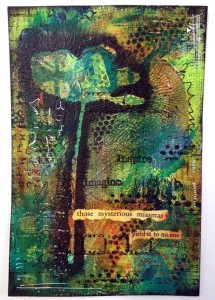
Lisa Stamper Meyer, “Mysterious Miasmas” Acrylic on Paper
What a treat to have the multi-talented Lisa Stamper Meyer at my Studio yesterday teaching a workshop on Silk Screening for Mixed Media Artists! Lisa is amazing – You can see her work at The Gallery at Gruene Lake Village. She’s a patient teacher, generous in her expertise.
I have to admitthat I wasn’t ready to add one more thing to my repertoire, but – wrong! This process has so many possibilities. Everyone who participated said the same thing. The inspirations for using this idea on fiber, on handmade paper, with encaustic are unllimited – I’m sold!
Take a look at the video, and then do some exploring on the EZscreen process with the links I’ve listed at the end of this post – many thanks to Lisa for an amazing afternoon.
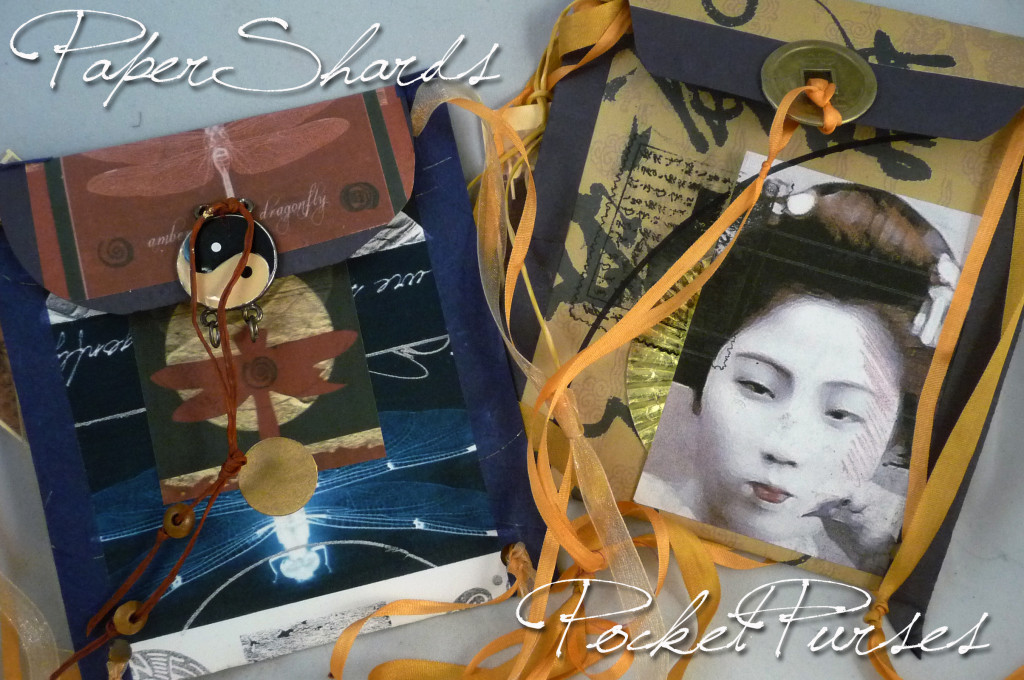
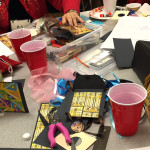
Last night, I visited the San Antonio Calligraphy Guildto show them how to make a pretty paper pocket purse/pendant project(say that three times fast) and a folding votive screen card. Calligraphers are nice people! I can’t wait to see how they take these projects and adapt them to their own many talents.
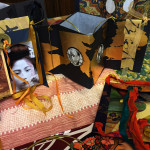
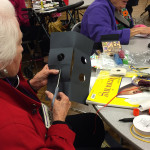
Here are some photos – there were 30+ participants, all cutting and gluing and having fun and following the directions (mostly!)
Some of my examples
Cutting holes for the votive screen
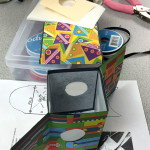
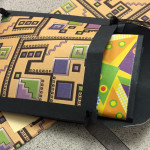
We used Art Deco design paper
Creative chaos
The votive screen fits inside the pocket purse!
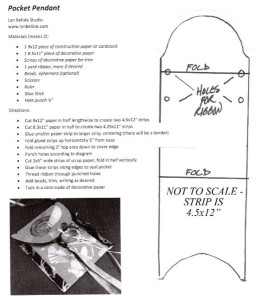
I thought that YOU might like to have the directions for the pretty paper pocket purse, so as the first Friday Freebie, I’m giving you a link to the downloadable Pocket Pattern handout that I gave the calligraphers last night. All you need is 9×12″ construction paper and 8.5×11″ decorative paper, plus some ribbon and such. Easy!
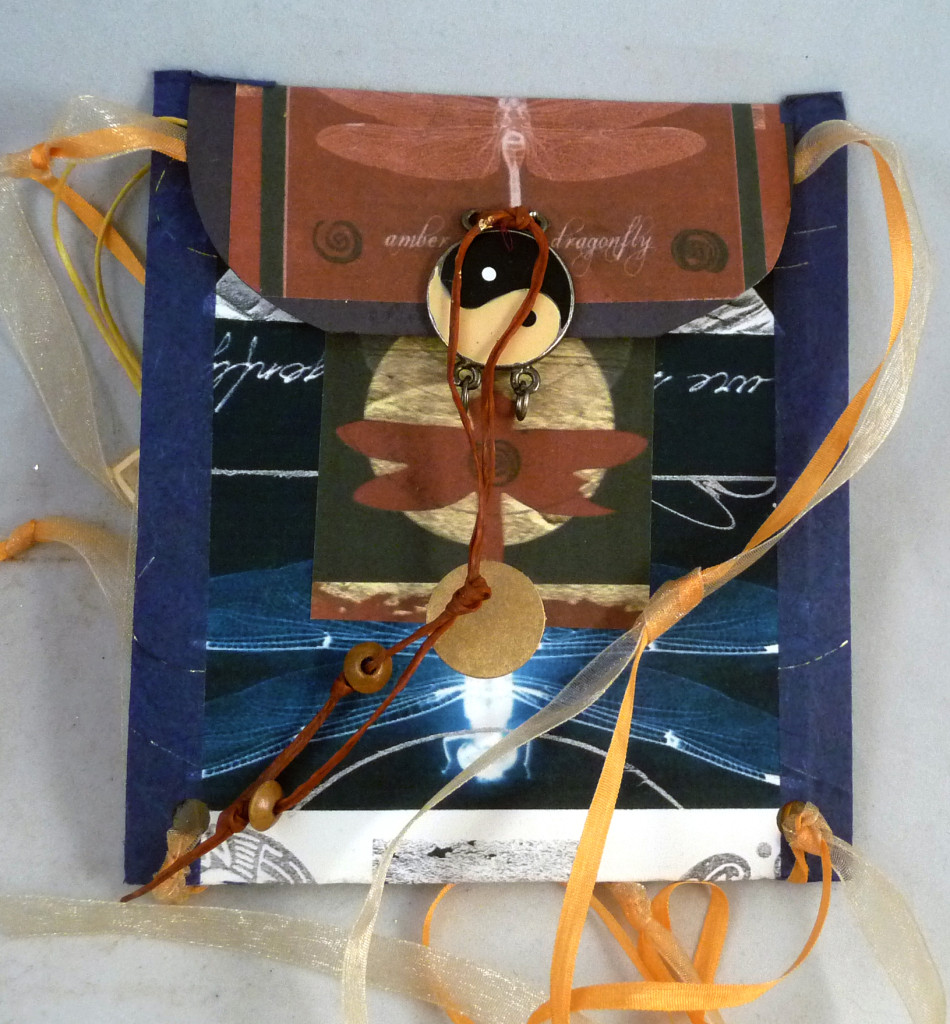
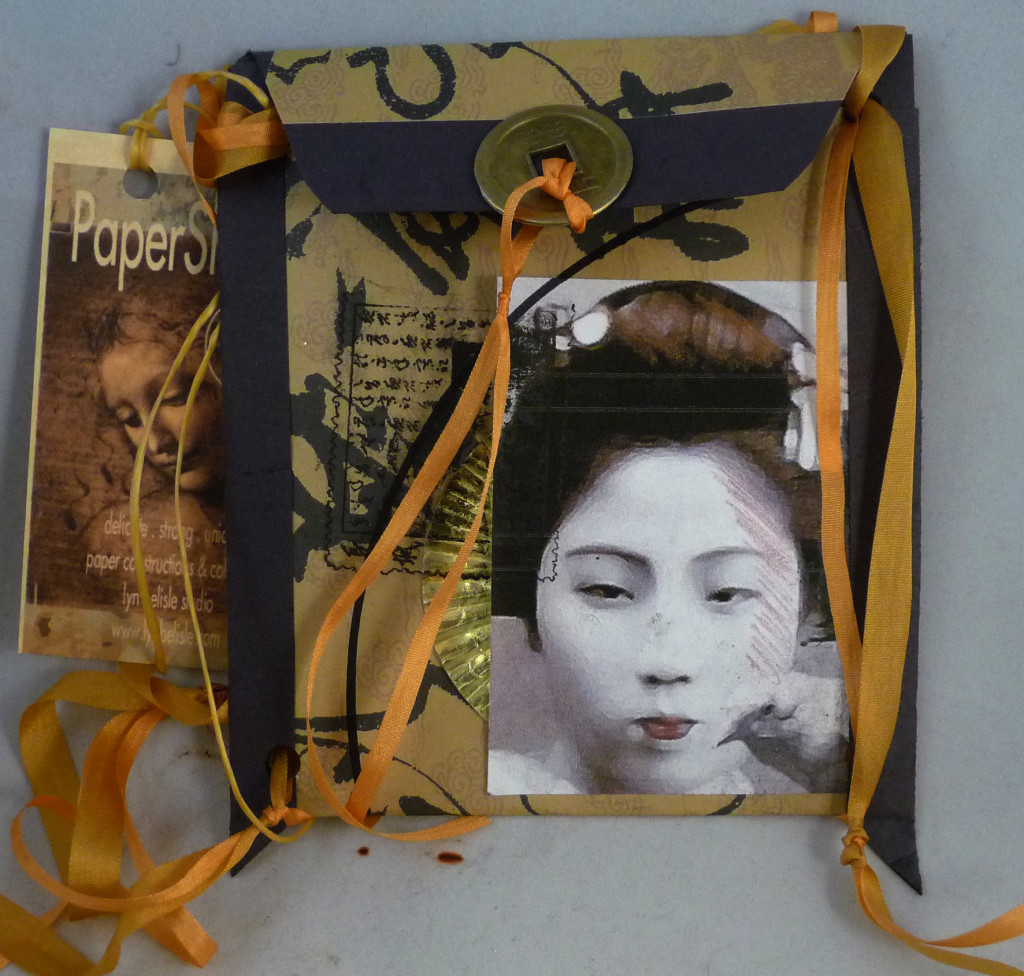
And to sweeten the deal (after all, it’s getting close to Valentine’s Day), I’ll give away TWO Friday Freebies, the little purses pictured below, one to each of two lucky SHARDS subscribers. Just be a subscriber by Sunday at midnight – winners announced Monday morning. Good luck, and happy weekend!!
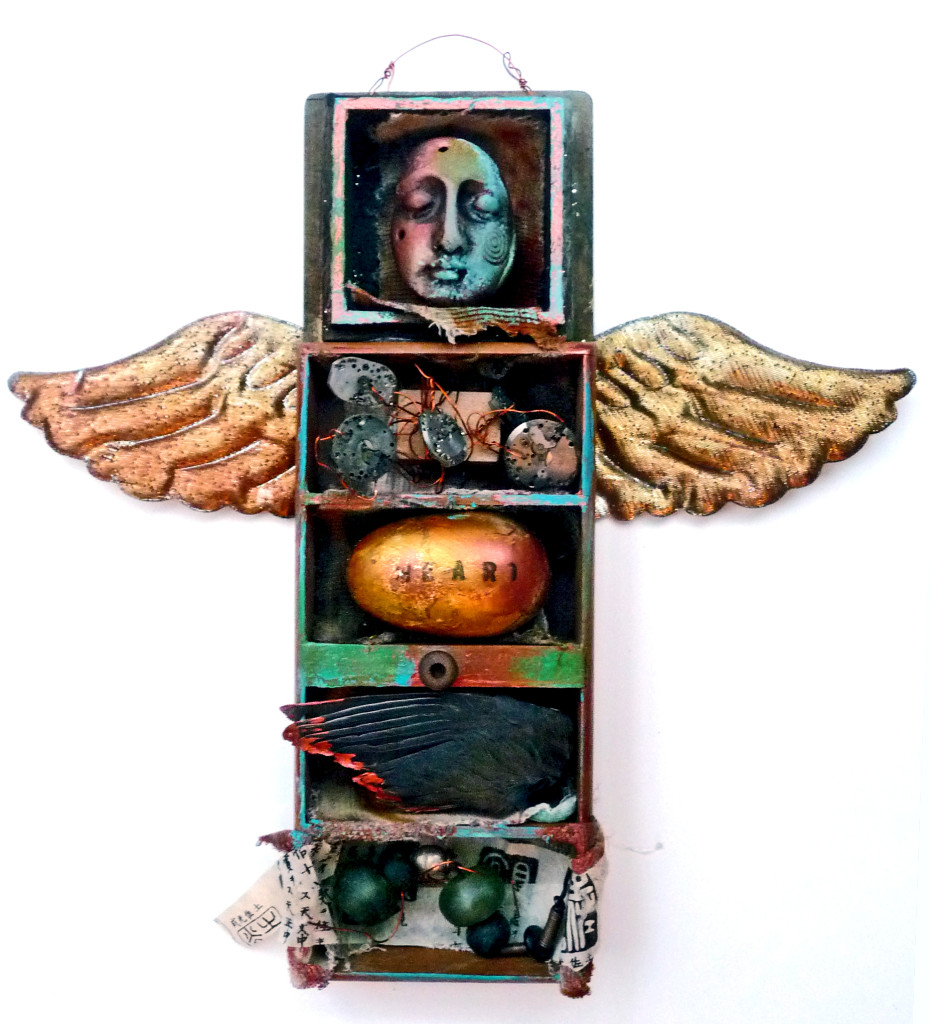
This is what I ended up doing with the objects I collected for the spontaneous “Studio Stuff” challenge. I like it! It’ s called HeART of Time, and it’s about how time flies – wings? eggs? clock pieces? Makes sense to me!
HeART of Time: mixed media assemblage by Lyn Belisle
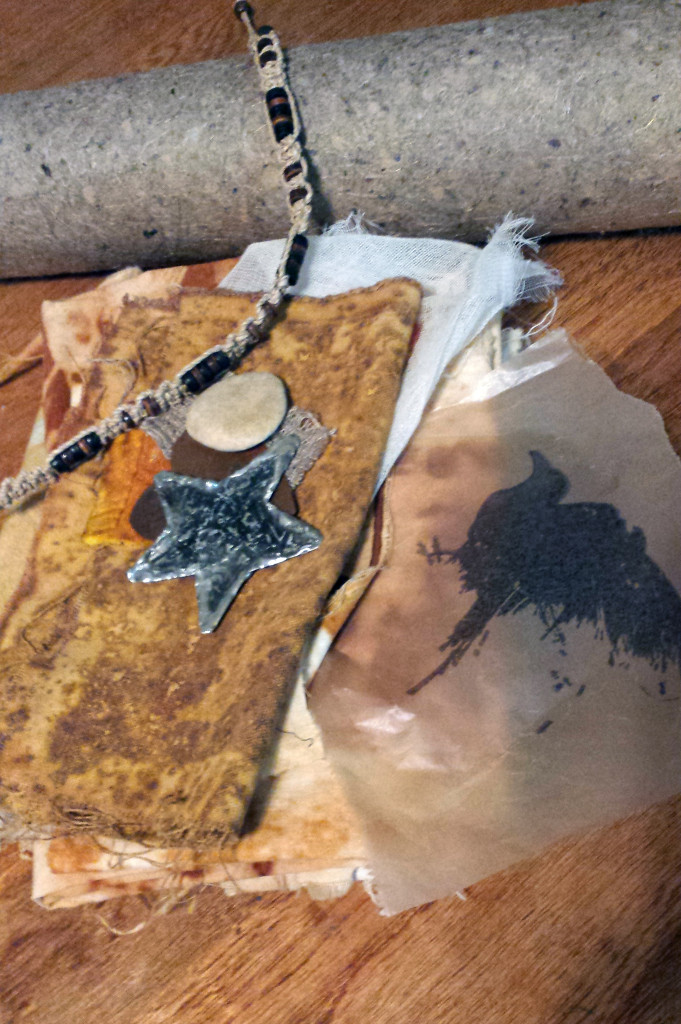
And here’s the studio stuff I started with:
Now I’m wondering if it’s cheating to add a couple of extra things to pull the project together. I added some cloth wings that I’d had for years and also a small box with compartments to put everything in. Nah, that’s not cheating – you can add a few things, too, if you like. I’m kind of making up our rules as I go!
Below are two submissions of studio stuff from brave artist friends – let’s see what they do with it! Names have been concealed to protect the innocent. Stay tuned.
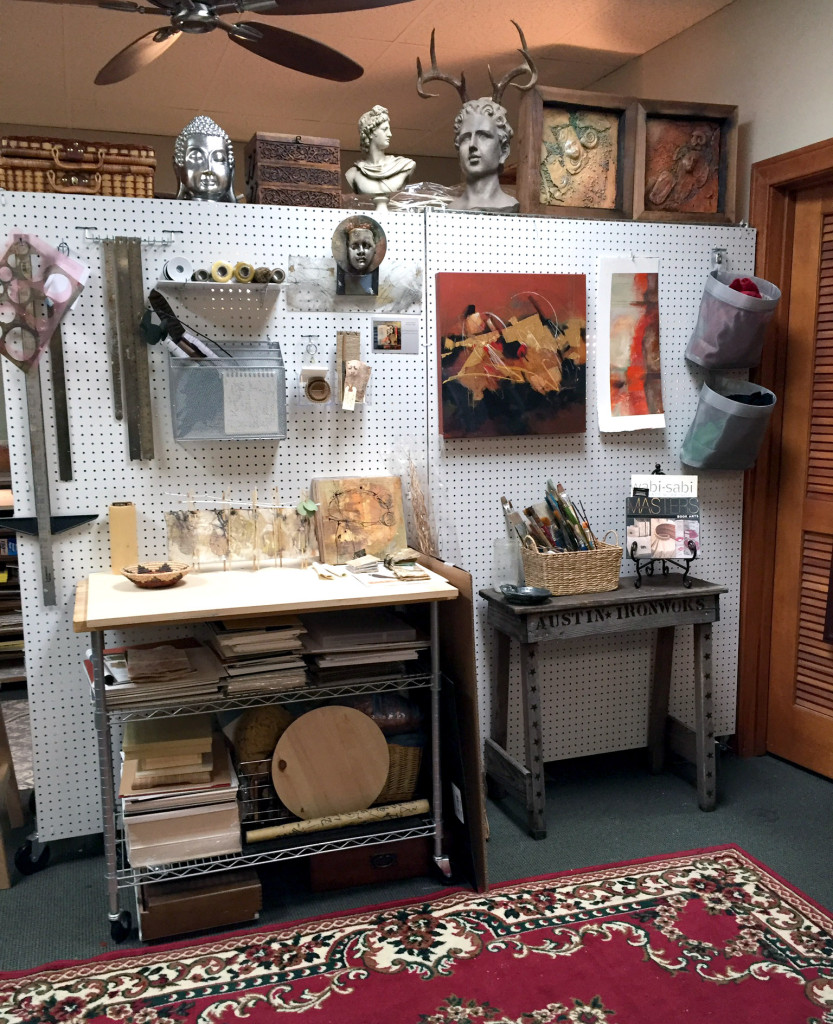
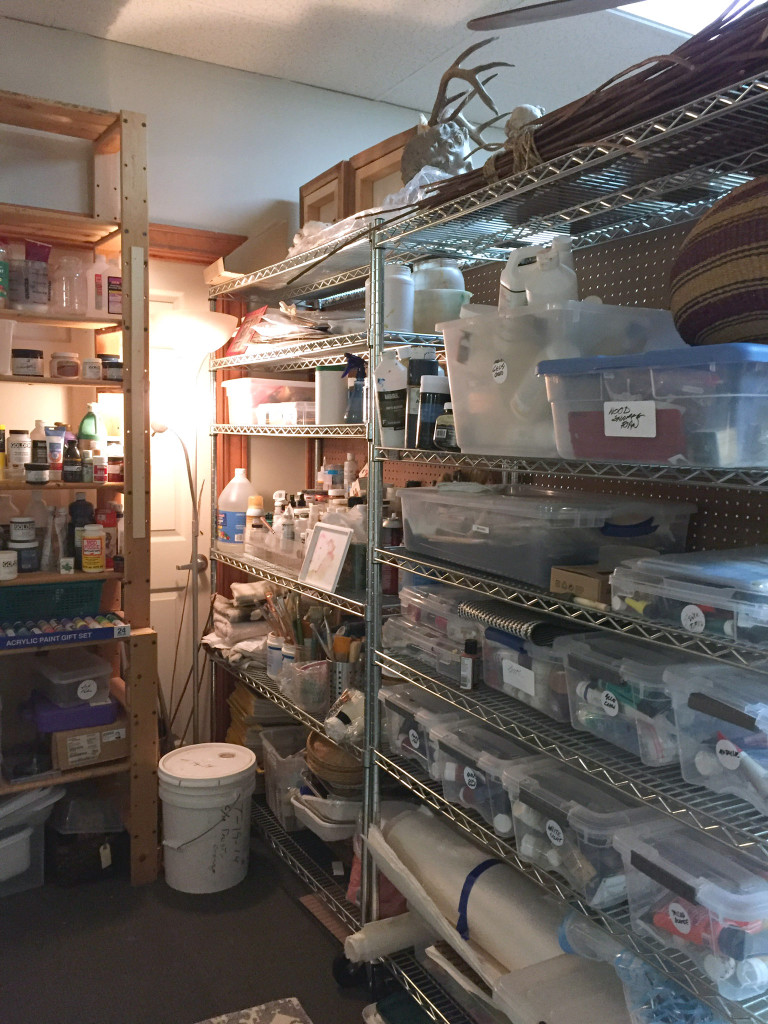
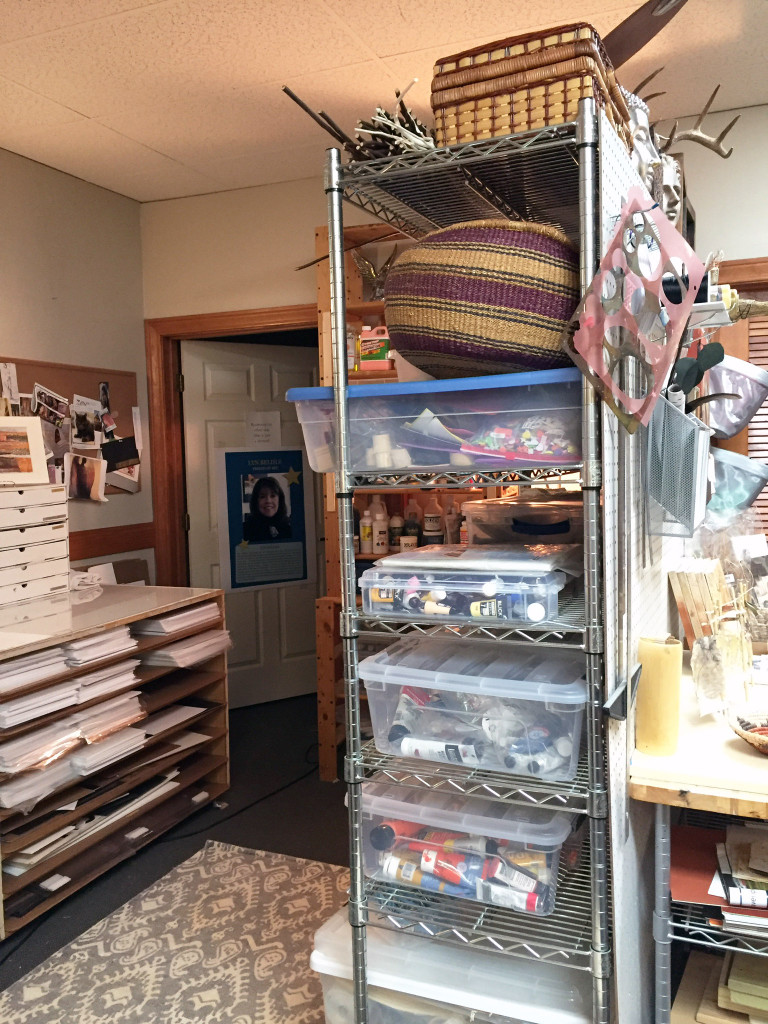
I love these new pegboard walls that I copied from Lisa Stamper Meyer‘s studio! They have made a huge difference in the storage space by providing hanging places and supply screening. Here is a side view and back view – you can see how well the pegboard walls hide a multitude of stuff!
And here’s what you need if you, too, want to make a storage wall shelf like these.
A metal shelf, 4’x8’x18″ – I bought mine from Costco – here’s a link. These shelves are on casters so you can roll them around easily if you need to. When I bought them, they were $98 each, very sturdy – I think they hold 1200 pounds.
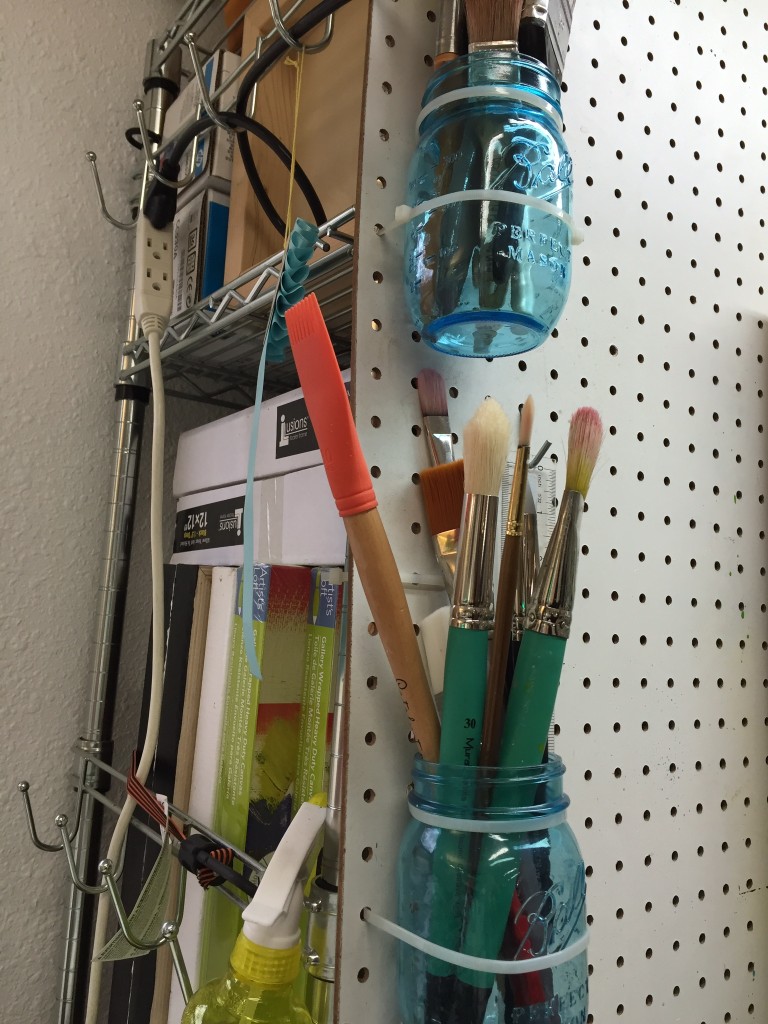
A sheet of 4×8′ pegboard, primed white. I bought mine from Home Depot. Here’s a link for those. They are a little bit unwieldy to manage but if you have access to a truck, you can just lay them in the back. You will probably need a helper – Mike helped a lot with this project.
A bag of 8″ cable ties – here’s a link. This is the neatest trick. You just thread the cable ties through the pegboard holes and pull them tight to the shelf posts. We used eight ties per shelf, three on the sides (top, middle, bottom) and two in the center to hold them steady.
Lisa even attached brush holder to her pegboards using cable ties – she’s an organizing genius! If you have any questions about this easy project, send me an email.
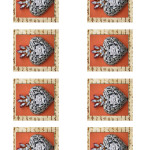
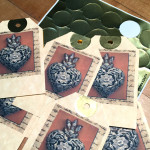
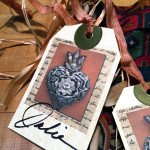
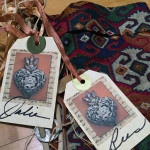
Like a lot of families, mine is quite – er,eclectic when it comes to ritual and celebration. We are a motley crew of every spiritual persuasion (or none), so I try to design gift tags and cards for us that reflect that diversity through symbolic neutrality. These little milagro heart tags fit the bill – folk arty but not specifically religious. If you want to use them, too, here’s a link to a sheet of eight tags that you can print out on card stock, fold, cut apart, trim the corners, and punch.
Fold the sheet longways in half, cut along the fold, and cut cards apart – this makes eight tags
You will need a sheet of round gold stickers. This is optional, but looks cool.
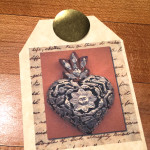
Trim off the corners at the top (eyeball it) and stick on a gold circle, folding it over slightly
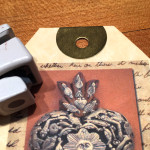
Punch a hole in the center through thr gold circle and tag
Tie some cord or ribbon through the hole to attach the tag
Finished tags
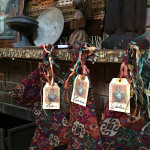
Tags hanging on stockings hung by the chimney with care . . .
I used some parchment-colored card stock, but you could use any tag-weight paper that will go through your inkjet printer. The punched out gold circle adds a glitzy, industrial touch. Email me if you have any questions, but these tags are sooooo easy to put together. Quick, too!
A package of Face Shards from my Etsy shop ready to ship to California
I was getting an Etsy order out this morning for five Rune and Relic Face Shards, and thought about how much fun these little faces are to make. You can use them for so many things – Spirit Dolls, ornaments, pins and pendants – anyway, I thought I’d re-post a SHARDS link to a very simple tutorial on mold-making and faces that I did for a workshop a couple of years ago. This tutorial recommends a two-part product called MegaMold that you can order online from Cool Tools (this site also has a bunch of very nifty pre-made molds). Michael’s has something similar called Amazing Mold Putty for about $20 – use your 40% coupon!
This mold-making project would be great fun to do over the holidays with kids – and you can get air-dry clay at Michael’s or Jo-Ann’s – it’s very inexpensive, doesn’t need a kiln, and isn’t discouragingly messy. I like the one called Model Magic. It comes in tubs and also in small packages, in different colors. So plan some time to make some faces!
Also, I’m re-posting this link to the Angel Face Gift Tags I designed several years ago just in case you need some last-minute gift-wrapping help. You can print these out and stick them on a packing wrapped in brown paper and tied with raffia, and it will look all Martha-Stewarty – honest!
I’m headed to Boston for just a few days for a quick visit – back soon! Keep out of trouble and go make something creative!