Rust dyeing – multiple pieces, multiple materials, magical results

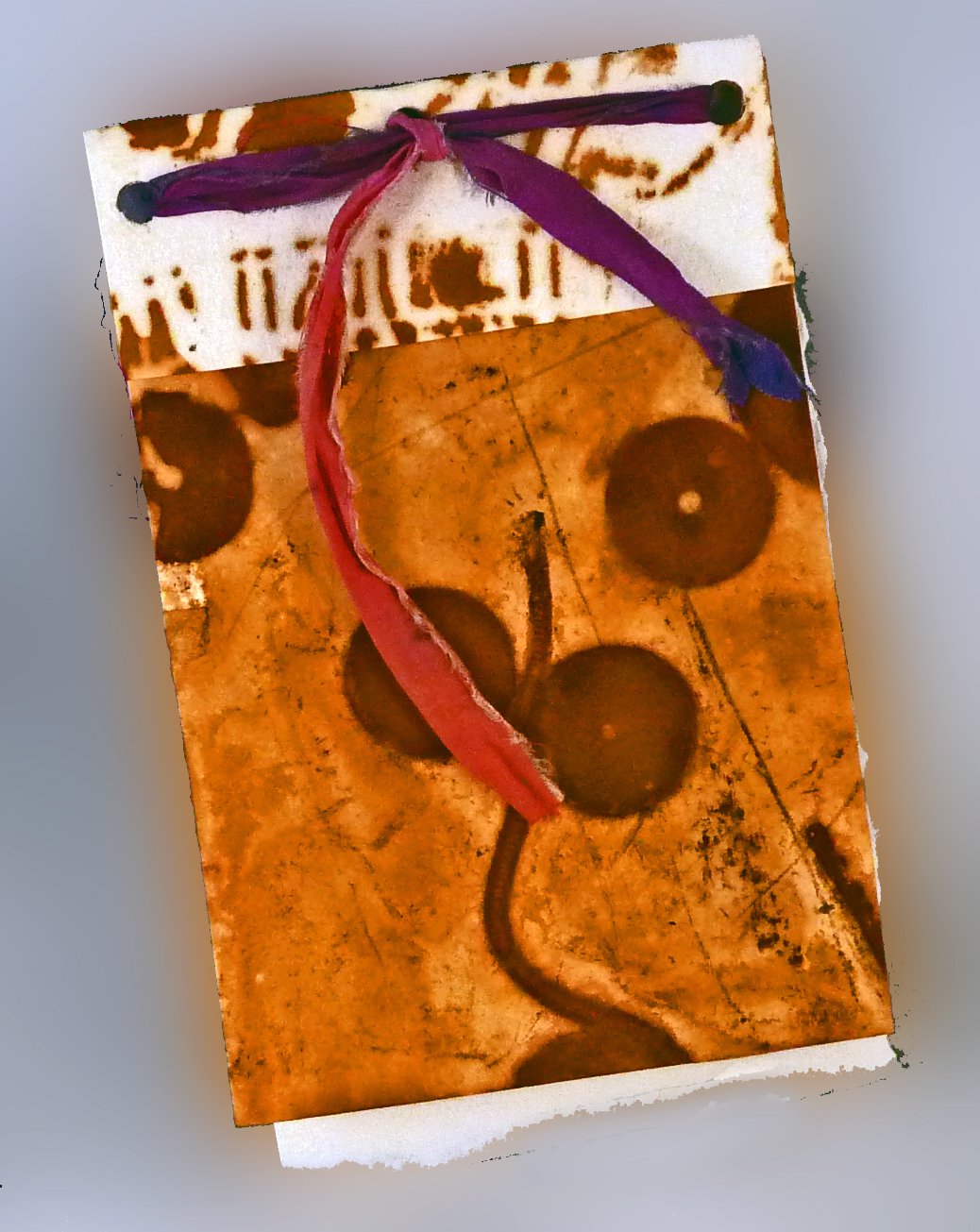
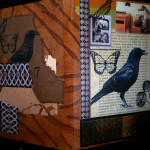
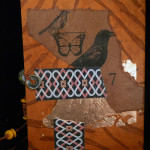
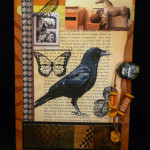
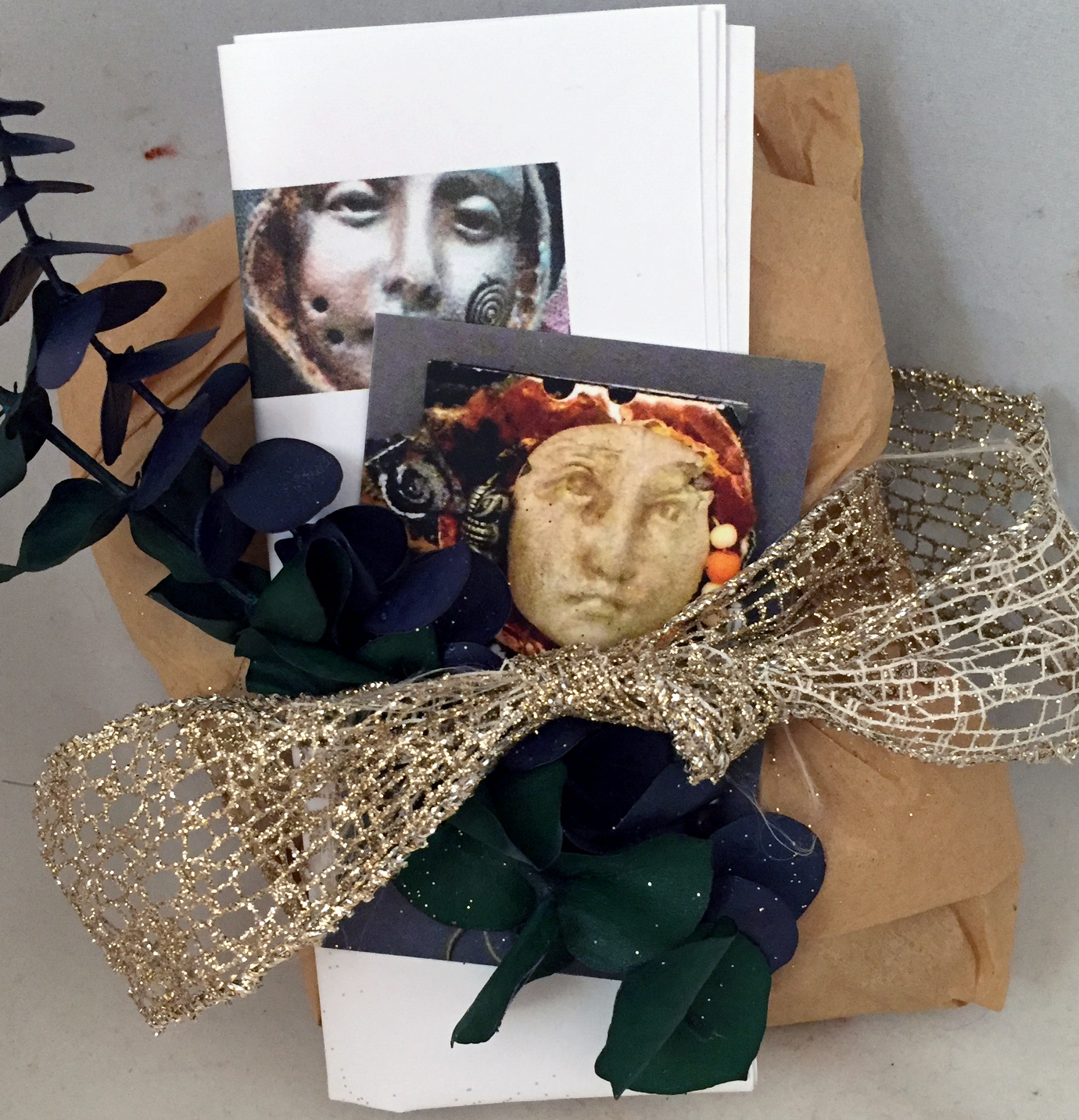
Book cover made with experimental rust-dyed paper - Lyn Belisle

Book cover made with experimental rust-dyed paper – Lyn Belisle

Ever since I learned that I’ll be teaching dyeing and surface design at Vivi Magoo art retreat, I’ve had little else on my mind. Did you see the newsletter about this event? If not, click here – it’s going to be SO much fun, and it’s coming up in just a month, November 3-5.

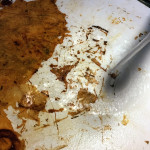
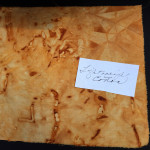
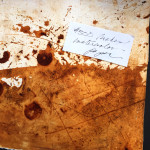
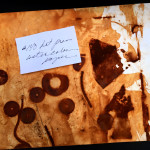
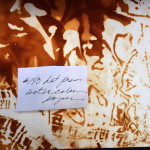
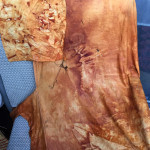
One of the techniques I’m teaching with Michelle Belto is dyeing with rust. I’ve done a bit of that, but wanted to tackle it on a Big Scale. And it worked! I dyed a yard of linen (thanks for that old white linen skirt, Gloria), some scrap cotton pieces, and two types of watercolor paper – a heavy 300# cold press and a lighter #140 hot press. I did it all at one time with the same process just to see how the different materials would take the rust. All were slightly different but all turned out beautifully.

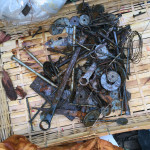
Here’s a short version of how I did it. I collected some rusty objects in a plastic bucket and poured a solution of bleach and vinegar over them to sit overnight. Do this outside! I got this recipe from the Internet (there are many rust-making solutions if you want to test other ones). There was about two inches of yucky rusty foamy gunk in the bottom of he bucket the next morning. Stinky yucky. But rusty.

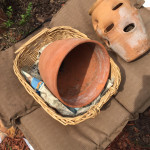
I spread a plastic drop-cloth in the yard (away from plants) and put a layer of fabric and watercolor paper on the plastic – some of it overlapped a bit, but I wasn’t concerned, I just wanted to see what happened on the different materials. The whole area was about three by four feet. I dumped the contents of the bucket over the whole thing and spread it out, wearing gloves. . .very very random. Then I covered it with black plastic and weighted it down with some old outdoor cushions and some flower pots to keep good contact – also to keep Dudley the Tortoise out of the pile of stuff.

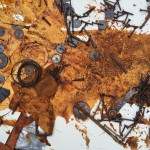
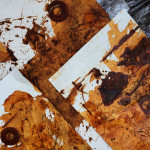
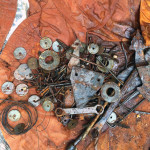
It sat covered in the sun for about six hours, then I took of the cushions and peeled back the black plastic – zowee! What great rust colors! It was exciting – take a look at the pictures below, and then I’ll tell you my observations. (If you can’t see the pictures, click this link)

Here are my observations and caveats – first, I haven’t washed the fabric thoroughly so I’m not sure how color fast the rust is, but since I won’t be wearing it, just using it for fiber art, that doesn’t concern me. You may want to try a small piece and see how it works for you if you’re going to make a garment.

Secondly, I wish I had dampened the 300# watercolor paper because it’s very thick and I think it would have taken the rust better if it had been wet. The thinner 140# watercolor paper was the most successful of the four materials. It had strong prints from the objects and lots of color variations.

After the process was done, it occurred to me that the formula that I got from the Internet included bleach, but that didn’t seem to affect the fabric – it still dyed a rich rust. Next time I’ll try it with salt and vinegar just to see. But whatever method you use, research it and try it on a small sample first. That’s what I did before I mixed up this huge batch. Work outside, wear gloves, keep your tortoises away from it!

In the Viva Magoo all-day class, we will be doing a version of this that uses lighter fabrics and papers and we’ll include some over-dyeing using the Shibori method (yep, you can do Shibori on paper as well as fabric) – I hope you’ll consider signing up for one of the workshops. If it’s half as interesting as this rusty experiment was today, it’ll be worth the price of admission!

You can do it, Kid . . .

Have you ever wanted to get your work out there in public – and help people at the same time? Yeah? So why not apply to become an Artist in Residence at Imagine Crafts? There’s an open call right now and they are looking for DIYers, Card Makers, Memory Keepers, Mixed Media and more.

You can go here to see all of the requirements and benefits, but basically, they send you their crafting supplies for free and you come up with three small projects a month to show creative ways to use them

These guys are near and dear to my heart because they represent Tsukineko, the Walnut Ink makers.And it’s a friendly group, too – I’m not affiliated with them other than that I buy my weight in Walnut Ink from them every month or so, but when I need advice about orders or products, they are right there.

Here are some of the kinds of projects that the Artists in Residence come up with:

Classy Halloween Art Journal Page by Jowilna Nolte

Must Have My Creative Medium! by Renee Zarate

You guys can do this, and it would be fun!! Think of the mixed media things you’ve done in Studio workshops or tried on your own, and then come up with a catchy project and name. OK, here are some goofy ideas to get you started – I’ll make up the names and you can make the projects for your application –

  • Catchy Cactus Coasters
  • Mini-billboard Pet Portraits
  • Rocks that Rock
  • Starry Night Sleep Tee
  • Jazz-Score Journal

See? That took me about five seconds to think of a few ideas – you can do better, Kid – get out there and be famous, and you can thank me when you have your own international design line. Here’s where to apply. (And tell ’em Lyn sent you 🙂


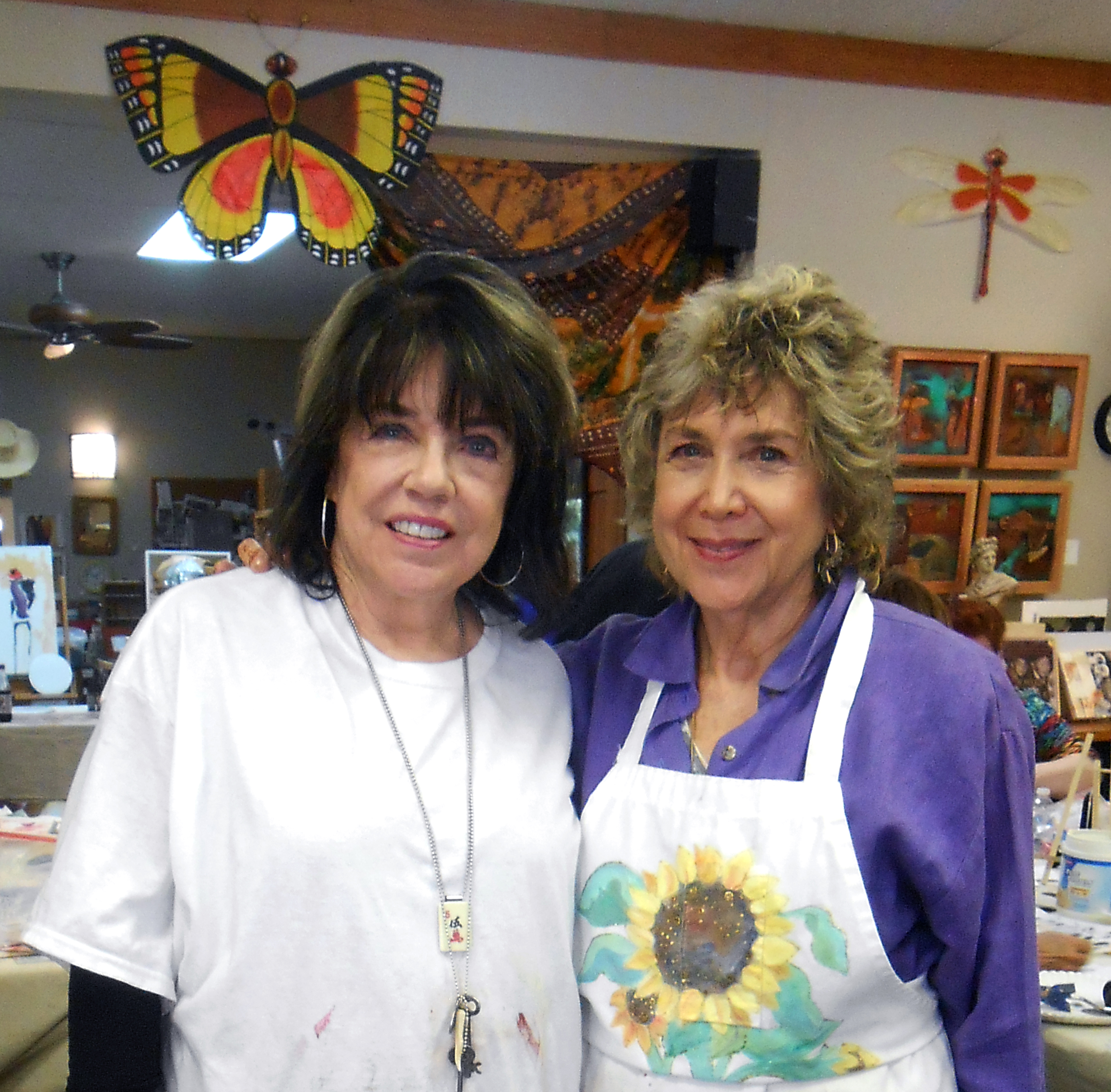
Bonnie, Akim & me, the (ahem) calligrapher

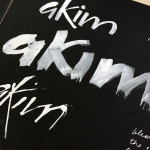
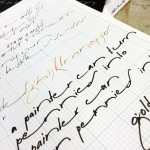
Lefties like me are challenged in many ways, but especially in the fine art of calligraphy. I’d always envied people who could take a simple work like “bread” and elevate it to super-star status with illuminated swashes. But thanks to my friend Bonnie Houser, I can now write like a calligrapher! And I’m getting better at it – AND it’s fun!

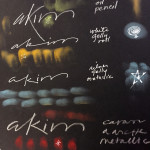
Some of you may know Bonnie as the owner of Dry Comal Creek Vineyards and Winery and some of you may know her through her art work, She’s a great friend and teacher to a lot of people. Lesta Frank and I asked Bonnie to give us a quick calligraphy lesson on an alphabet called AKIM. It was “invented” by German artist, sculptor and musician Hans-Joachim Burgert, who said,The 10spiritual material is the simple line. . .the line is a medium of free graphic discipline.”  Because this is a monolinear alphabet (no chiseled shading), anyone, even left-handed people, can do it well.

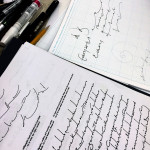
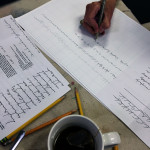
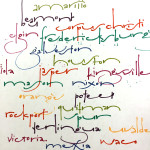
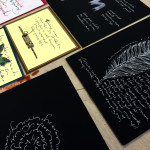
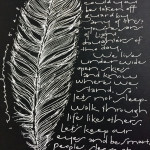
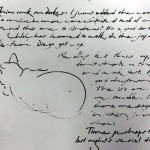
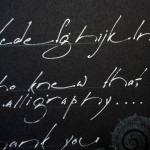
It was amazing how quickly we picked it up with Bonnie’s help. And the great thing is that there are as many personal variations of the Akim hand as their are writers. If you do a web search, you will see this for yourself. Take a look at some of the work we did with Bonnie, then give it a try!


Spirit Box showcase and a fresh breath bonus

spboxWaaa-aaay back in October of 2013, I wrote an article for Cloth Paper Scissors Magazine about Spirit Boxes. This is from the intro:  “Spirit Boxes take their roots from art dolls, kachinas, and other meaningful handcrafted figures. They make beautiful gifts, especially if a personal note or small object is tucked inside the box. To make your own Spirit Box, you will need just a few simple materials, and most or all of those can be recyclables.”

Six participants got together at the Studio yesterday to give it at try at our Spirit Box workshop. The results (below) are beautiful, personal, and heartfelt.

This slideshow requires JavaScript.

So what’s the “box” part of this construction? It’s a recycled Altoids tin (how ubiquitous – they are used from everything from mini-shrines to sewing kits). But by gluing this on to the back of a flat wall piece, you can both lift it out from the wall to “float” it, and also have a secret compartment for life’s little pleasures like Hershey’s kisses, silver dollars, and secret messages! See?

Punch holes and fashion a "handle" out of wire, then glue on with E6000

Punch holes and fashion a “handle” out of wire, then glue on with E6000

Voila! A secret compartment!

Voila! A secret compartment!

FUN LINKS for ALTOIDS TINS:

22 Manly Ways to use an Altoids tin

Top 50 Ways to Recycle Altoids tins

Ten Things You Can Build Inside of an Altoids Tin (including a lie detector)

Altered Altoids and Other Tins

My personal favorite – an Altoids tin grill that can cook two hotdogs and one marshmallow – seriously?

Discharge fabric design – a cheap flashy bleach job

Shirtsm

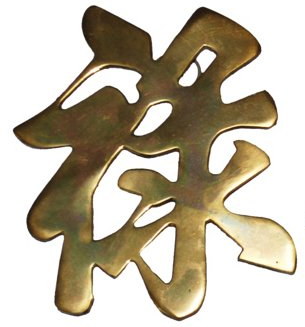
Mike went to a garage sale on Saturday and found some brass Asian calligraphy characters that were used as wall decorations. The more I looked at them, the more I knew I didn’t want them on the wall.

But the designs were cool. So I took an old black shirt and used some diluted bleach to create a reverse stencil design in what’s called Discharge Dyeing. Discharging is the process of removing dye (by destroying or altering the dye “chromophores”) with various chemicals or bleach, often in pleasing patterns or designs through Shibori or Tie Dye methods, or by stamping, stenciling or block printing (definition from Dharma Trading Company).
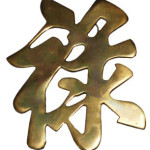
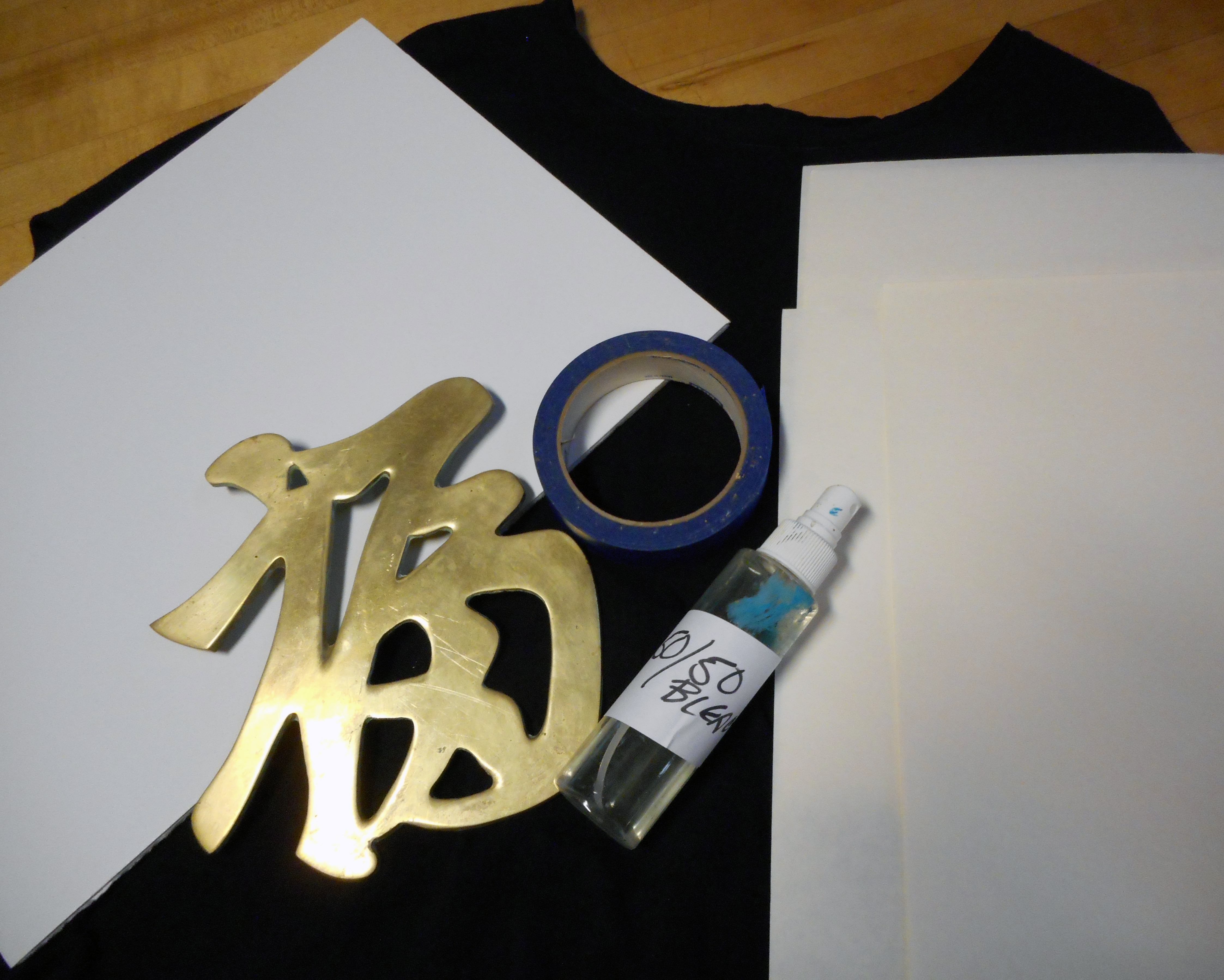
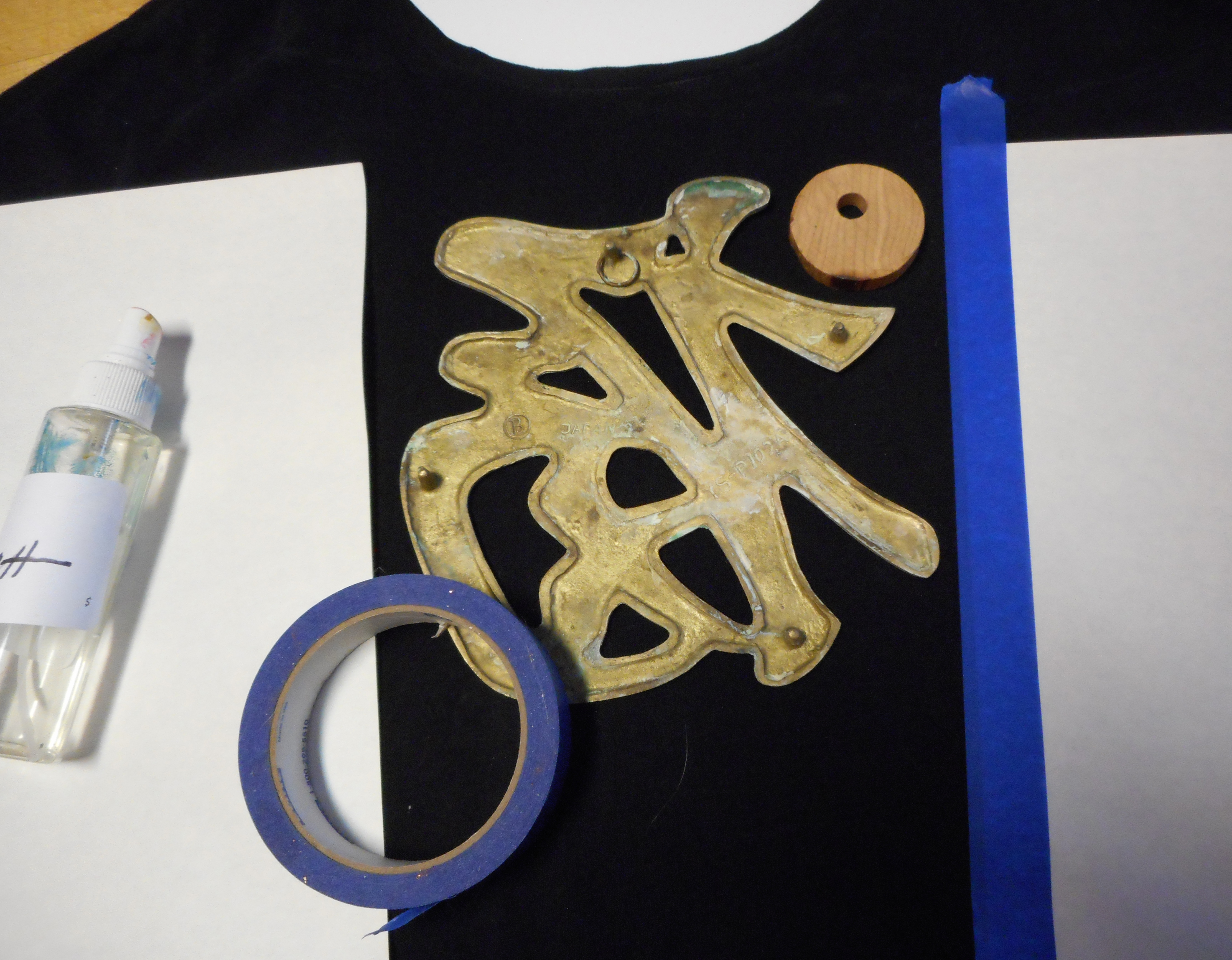
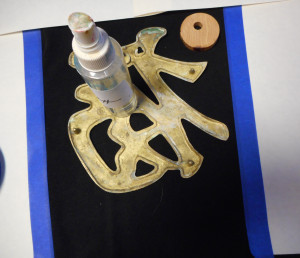
brass copy Here’s what you needa black shirt (cotton, already washed), some chlorine bleach (Clorox), diluted 50/50 with water and put in a small spray bottle (label it!! Work outside!!), a non porous board like foam core to put between the front and back of the shirt to keep the bleach from bleeding through, scrap paper to mask off your bleaching area, masking tape to stick the paper to the shirt, and some INTERESTING OBJECTS to use as reverse stencils. I used the brass calligraphy symbols, but you could use anything – doilies, leaves stick-on letters, shells, twine and sticks – be creative.

Step One: Assemble your stuff on your work surface. Make sure that any stray bleach mist won’t damage the surface.
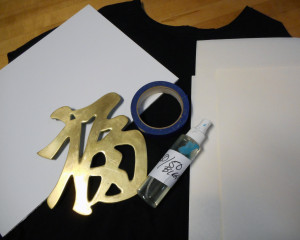
7


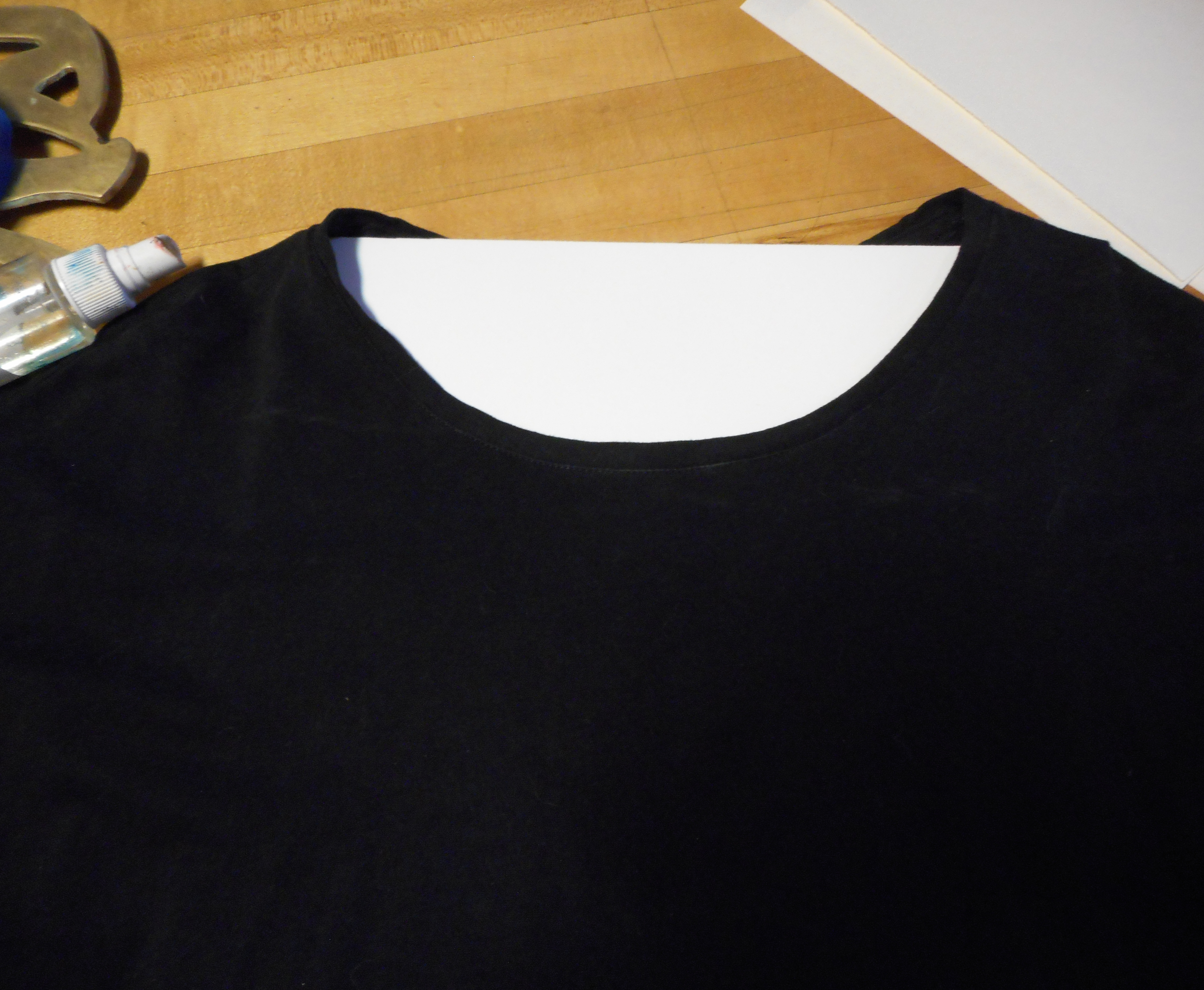
Step Two: Put your non-porous board between the layers of the shirt and smooth out the fabric This protects the back of the shirt and also makes the process easier by giving the surface some support.
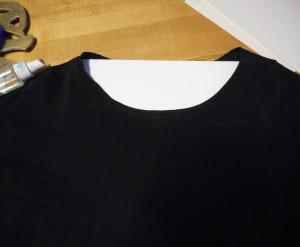
8


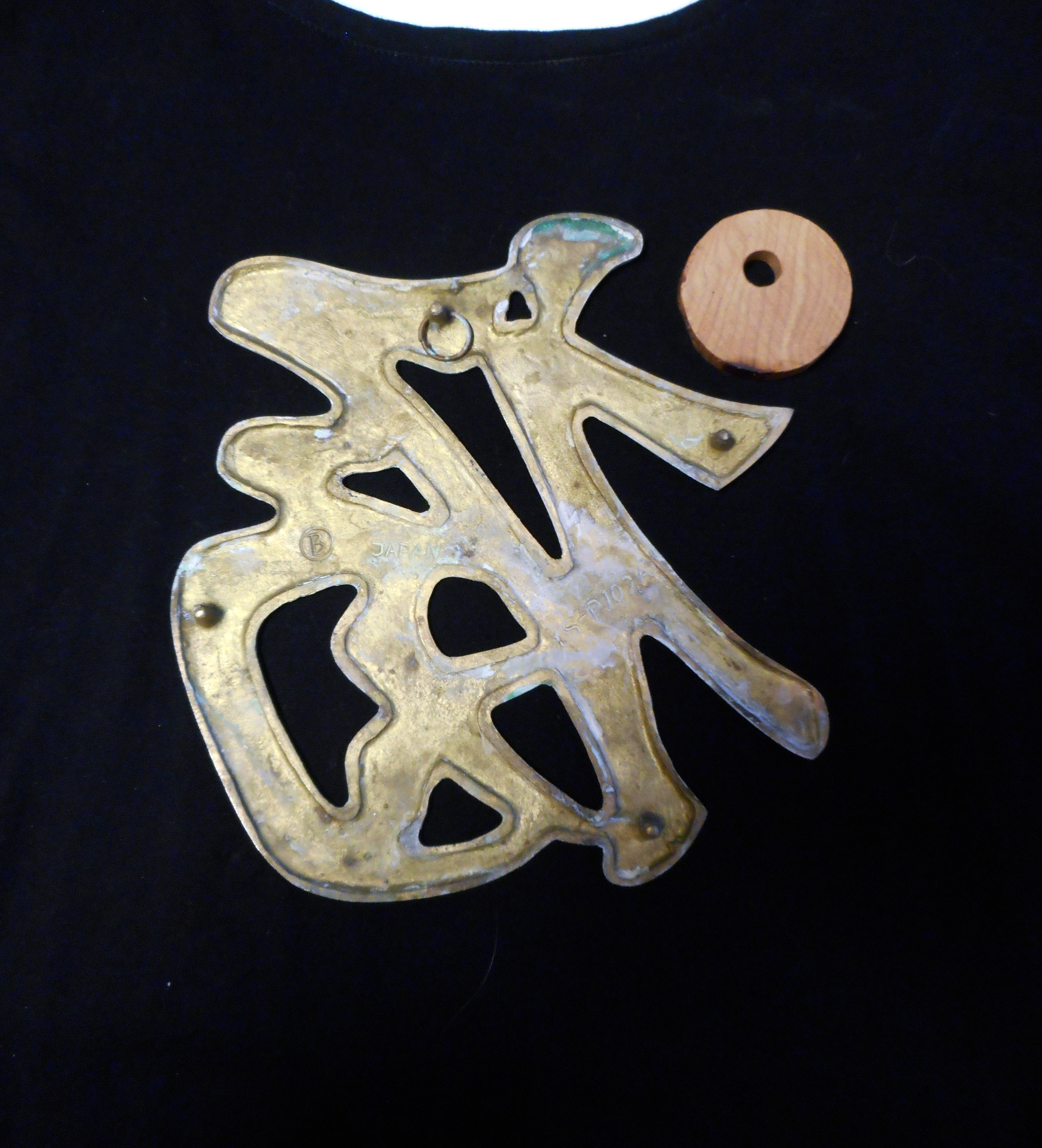
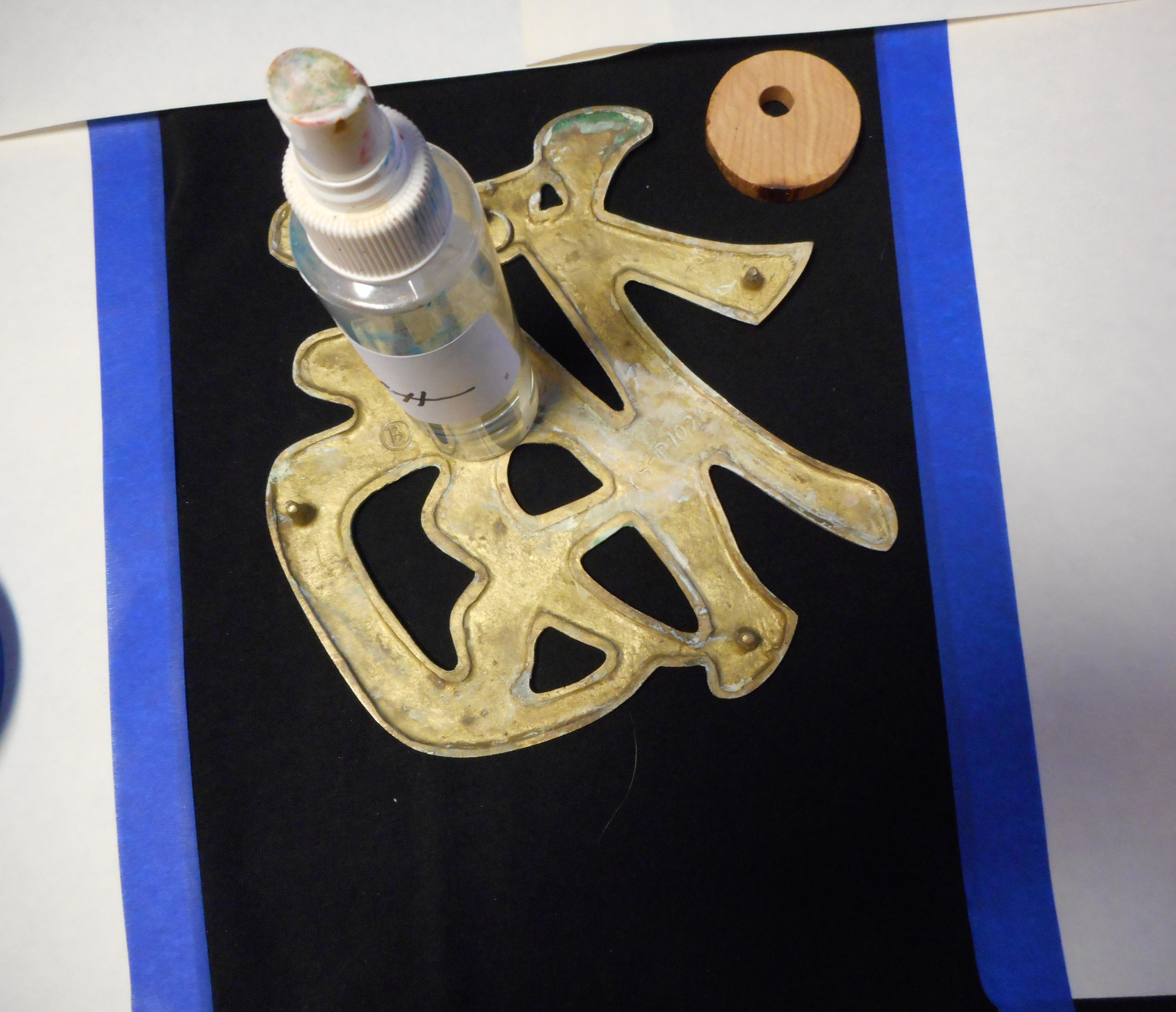
Step Three: Lay out your objects in a pleasing pattern – center them if you like. You can use anything – stencils, lace, metal washers – and you can test your designs by trying them on black construction paper first – it “discharges” like black fabric.
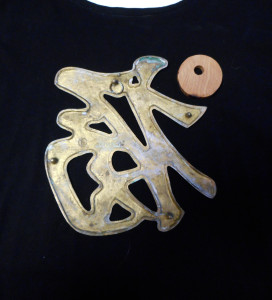
9


Step four: Mask off everything except the area you’re going to mist with the bleach solution. Here, you can see I’m taping scrap paper around the edges of the area using blue painter’s tape.
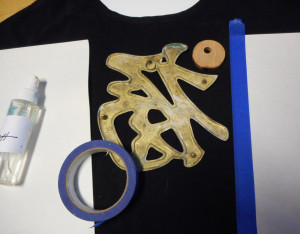
10


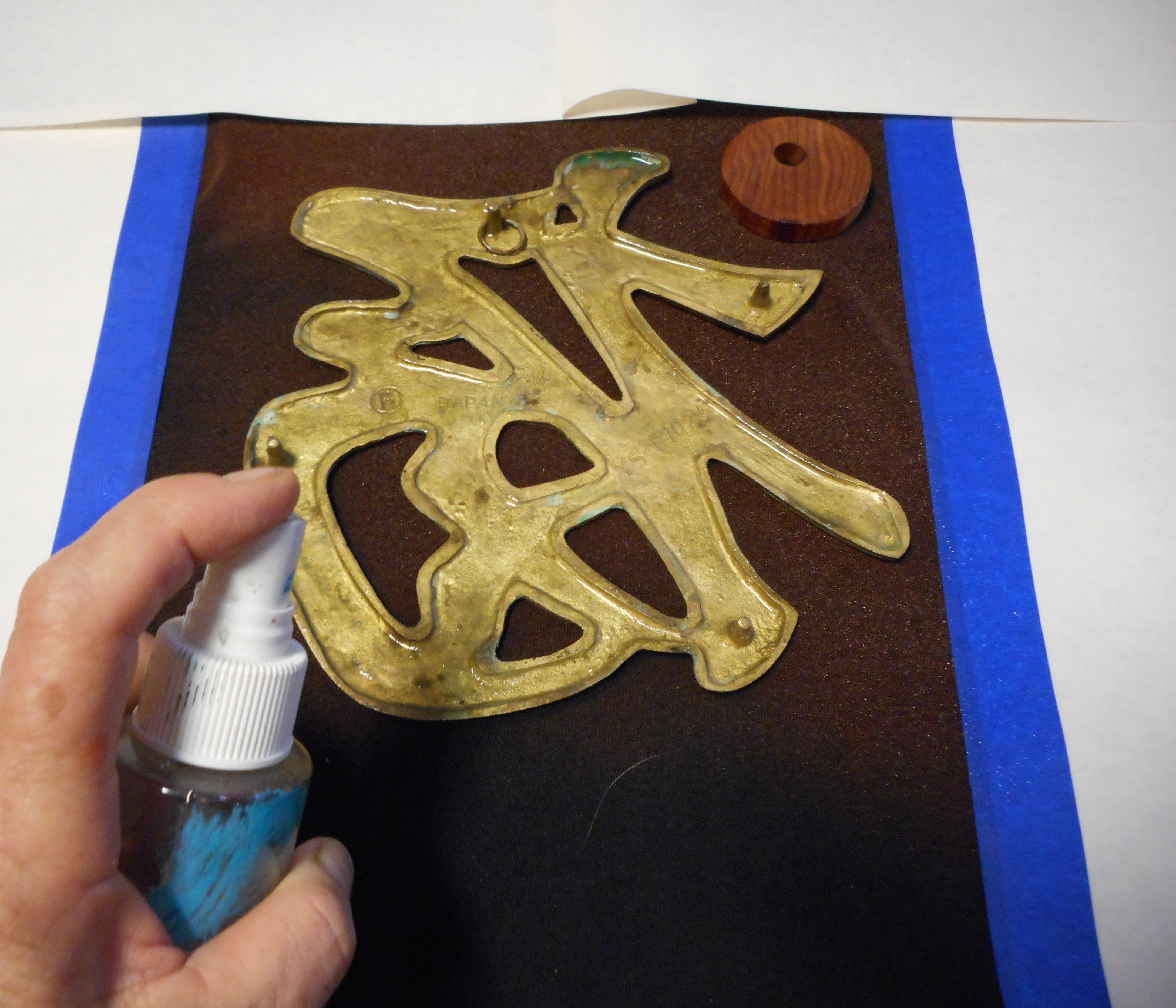
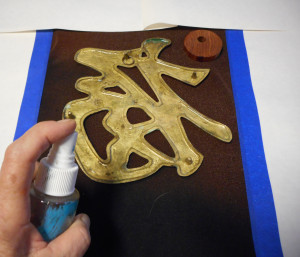
Step Five: Once the masking is complete, you’re ready to spraybe careful of the fumes. Even diluted, bleach can be strong, but you are using just a small amount and working quickly. I used a little spritzer bottle and mixed about half a cup of the 50.50 water-bleach solution.
12


Step Six: Spritz the bleach solution over the exposed area of the shirt. working quickly and just misting the surface. There’s no need to soak the fabric. Pay special attention to edges of the shapes.
13


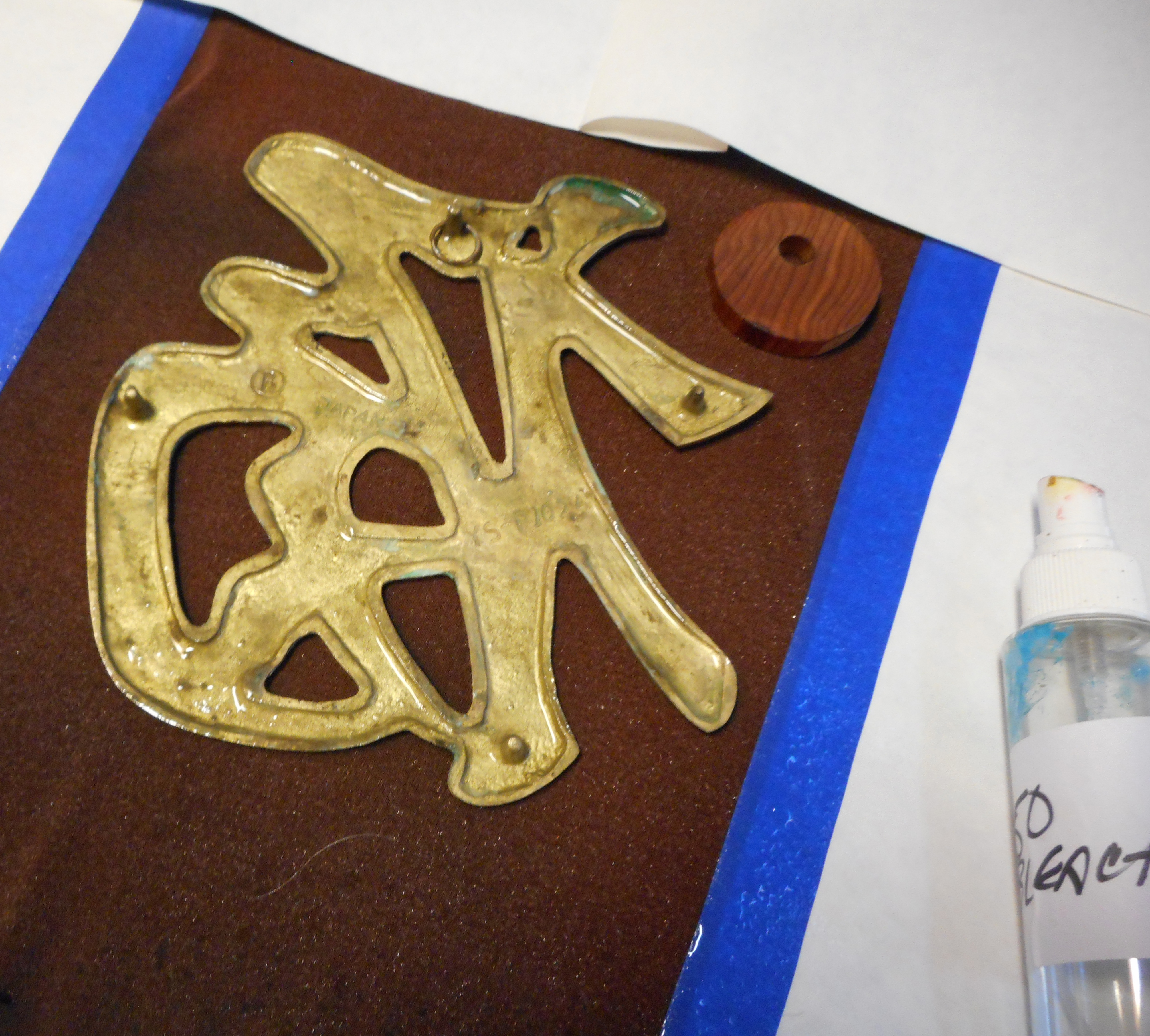
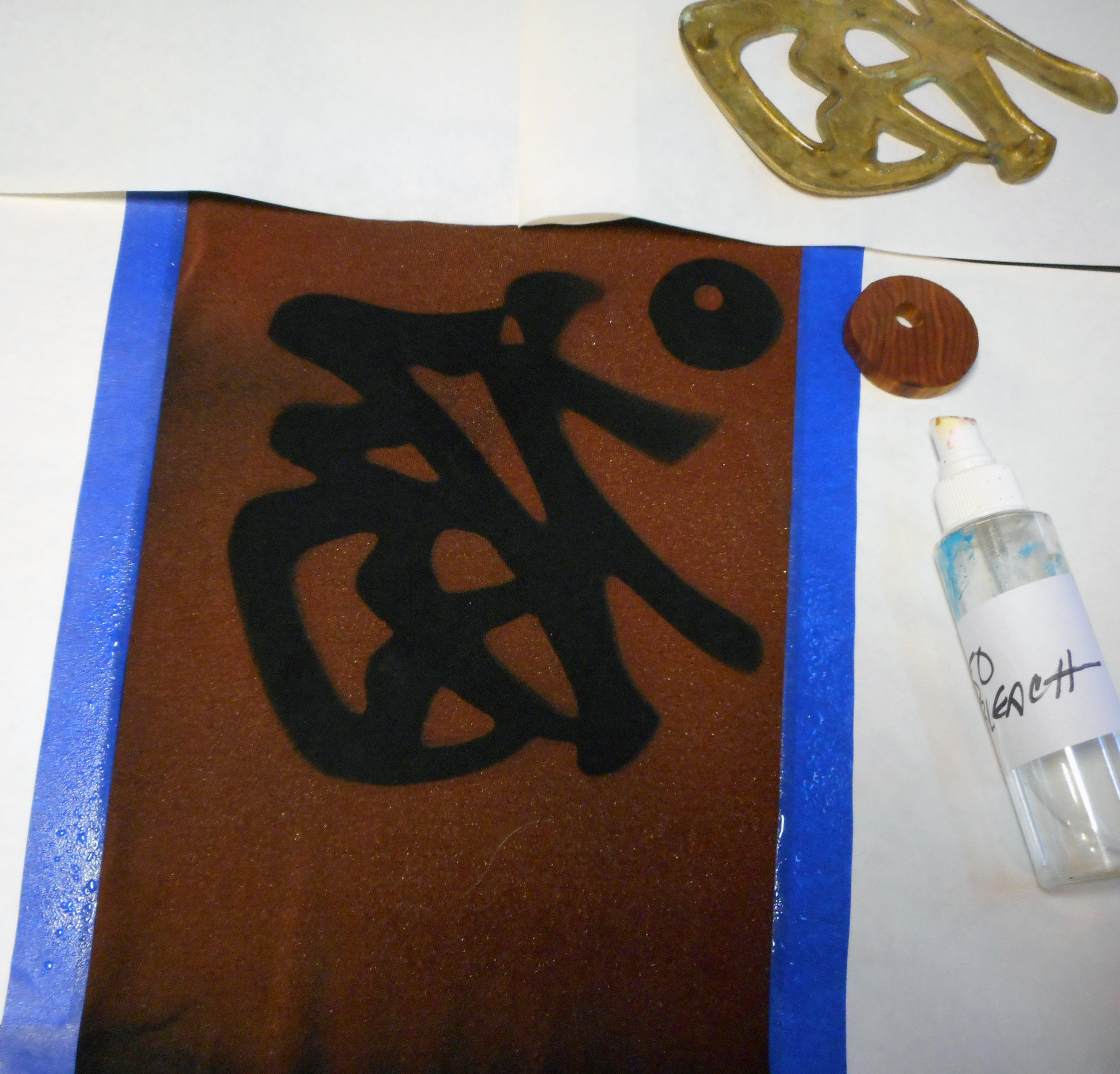
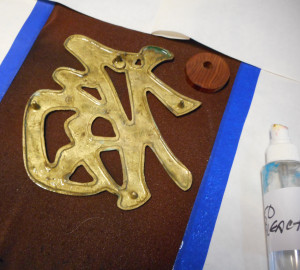
Step Seven: Watch in amazement as the color changes in seconds. Every black fabric has a distinct undercolor, some greenish, some rust. This shirt turns almost orange in the areas that are discharged with bleach.
14


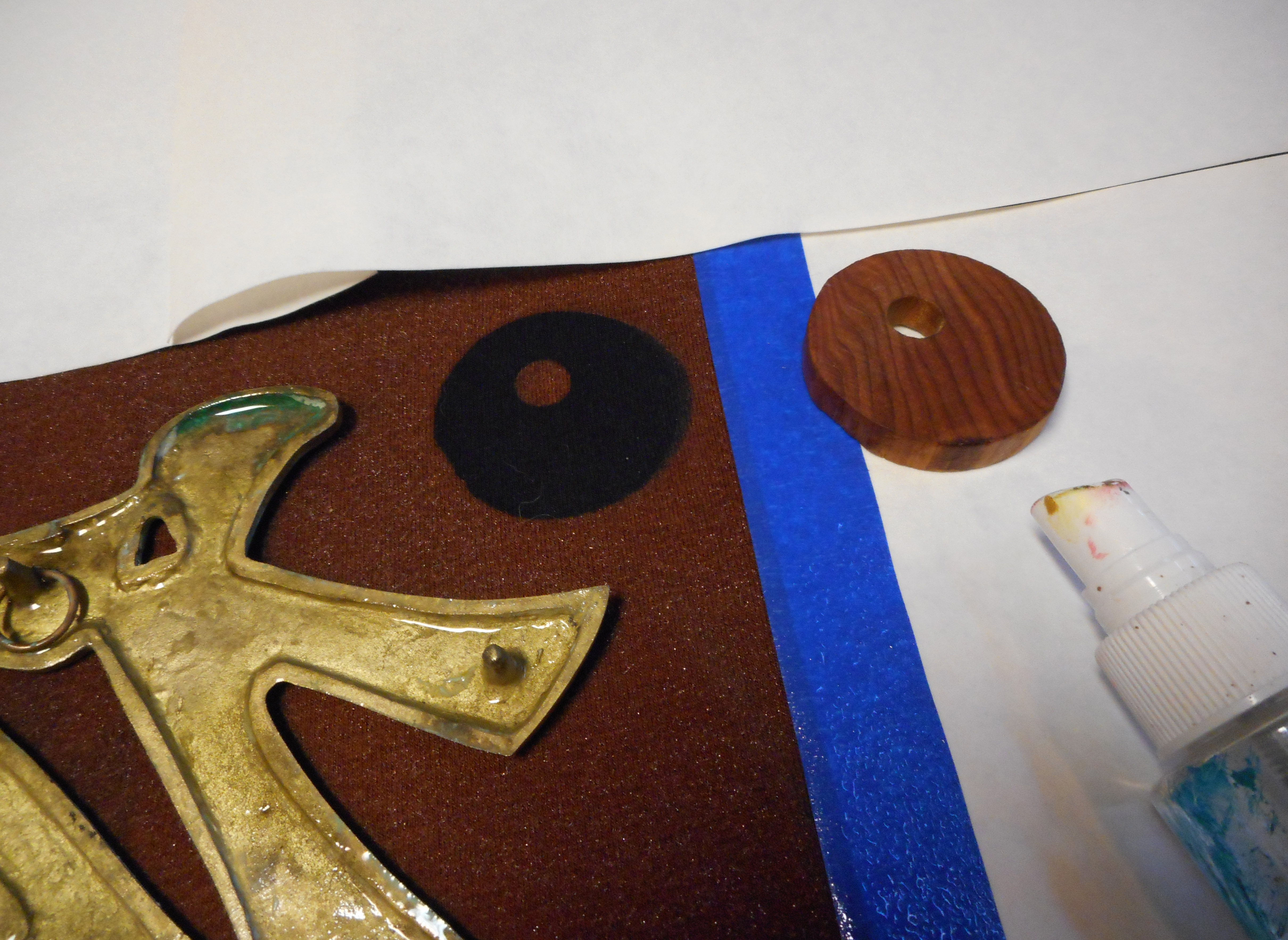
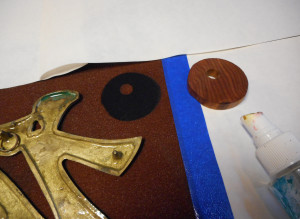
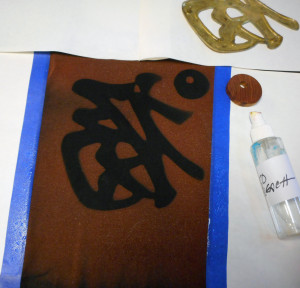
Step 8 – Remove the objects(s) to test the progress. Looking good! This was a small wooden disk with a hole drilled in it – not sure where it came from, but I like the pattern it left.
16


Step Nine: Remove all of the objects carefully – no drips unless you want that effect – and make sure you like the resulting color, which usually takes less than a minute to develop), The bleach action stops automatically since you just misted the surface.
17


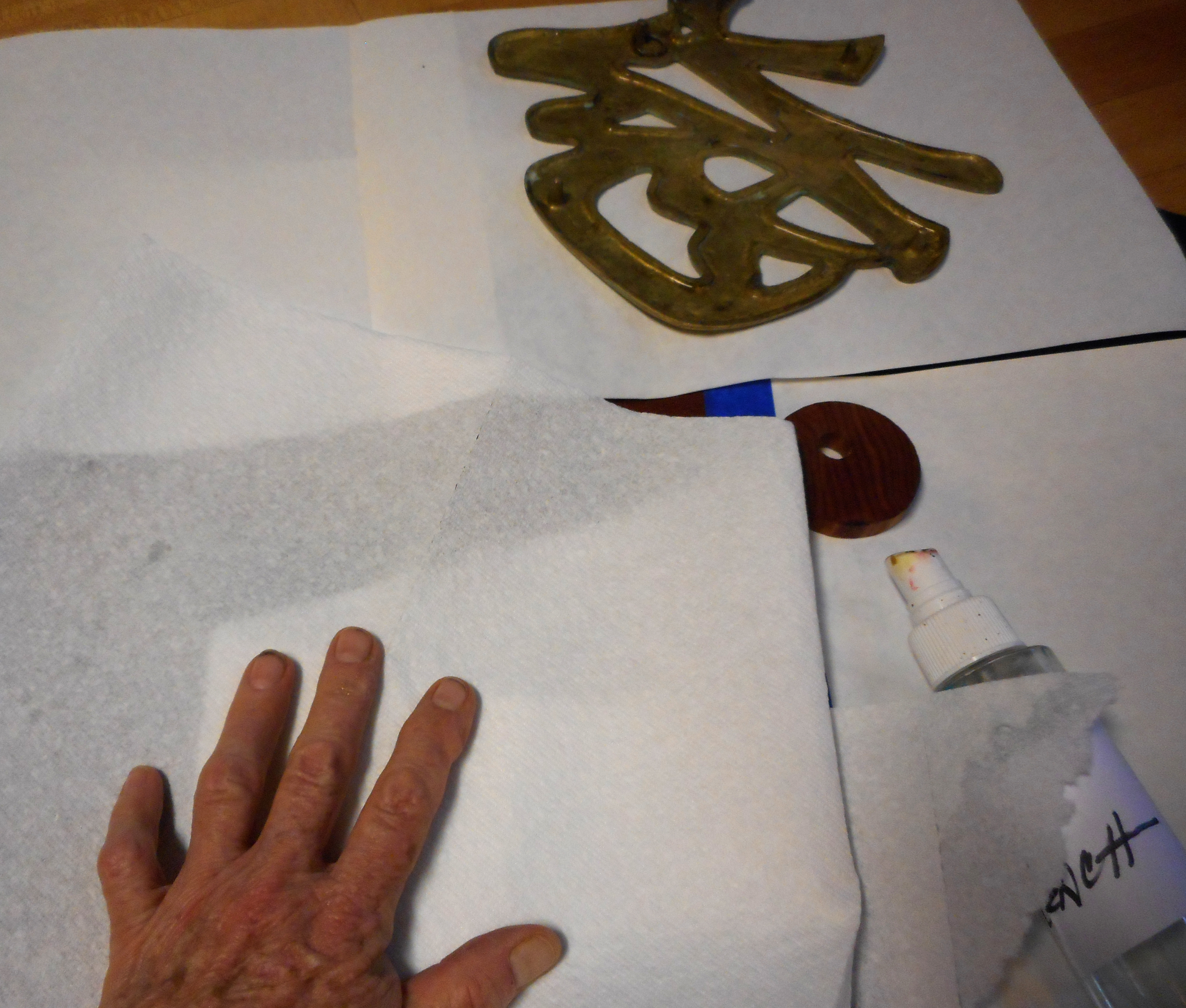
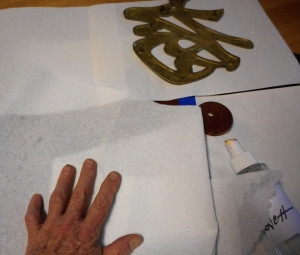
Step Ten blot-dry the front of the shirt with a paper towel – otherwise, you will get damp bleach on other parts of the shirt when you move it. You can use a hair dryer after you blot it, or you can just let it dry in place.
18


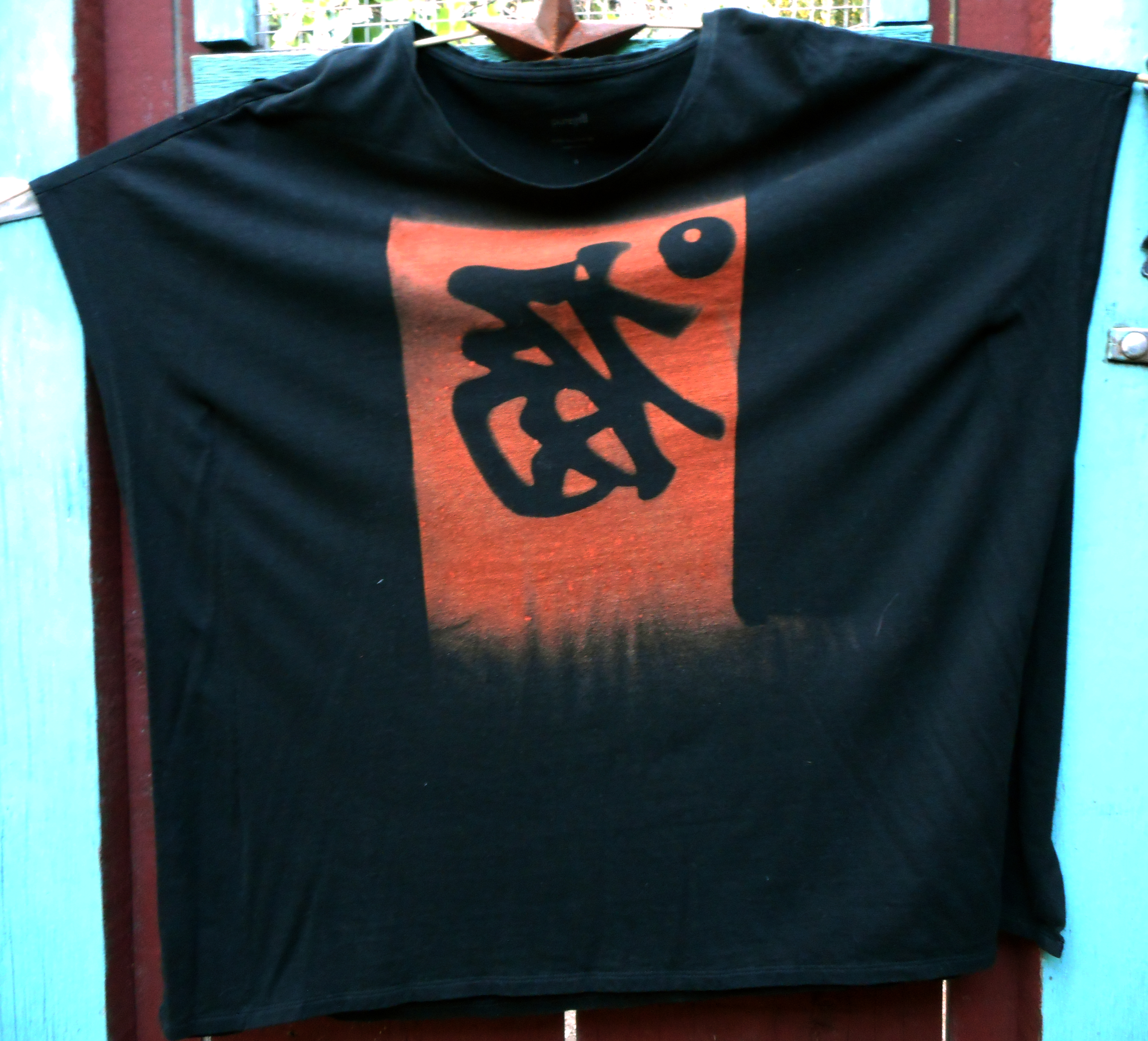
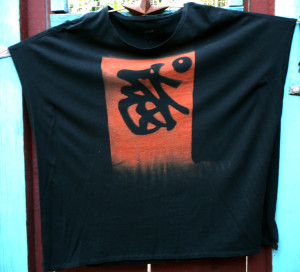
Step Eleven: Voila! Step back and congratulate yourself on your arty shirt – you should wash it before you wear it. This particular shirt is an “easy tee” by JJill that is much enhanced by its new design!
19


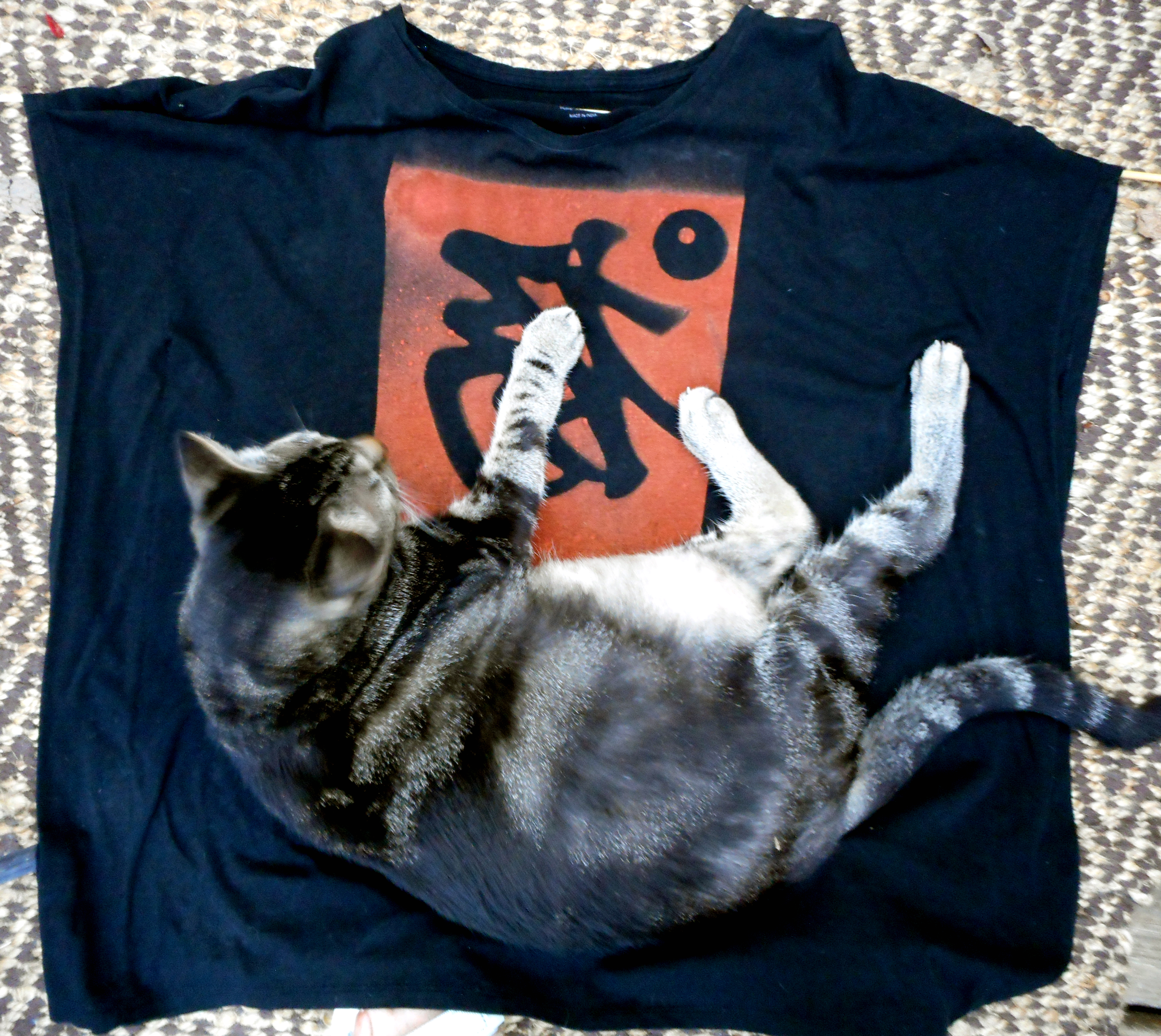
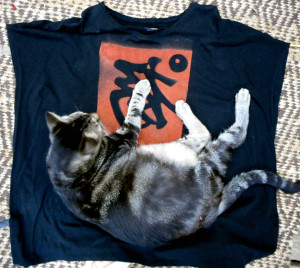
Step Twelve: Hire a cat to arrange itself artfully on your new garment – if you spread the shirt out after it comes out of the dryer, the cat may arrange itself for free whether you want it to or not.
20


There are tons of ways to do discharge dyeing on black fabric, but a diluted bleach mist will give you fine lines around a stencil. Be careful, though, don’t get bleach solution on unwanted surfaces! Or cats.
Mixing it up with Lesta

accbook1

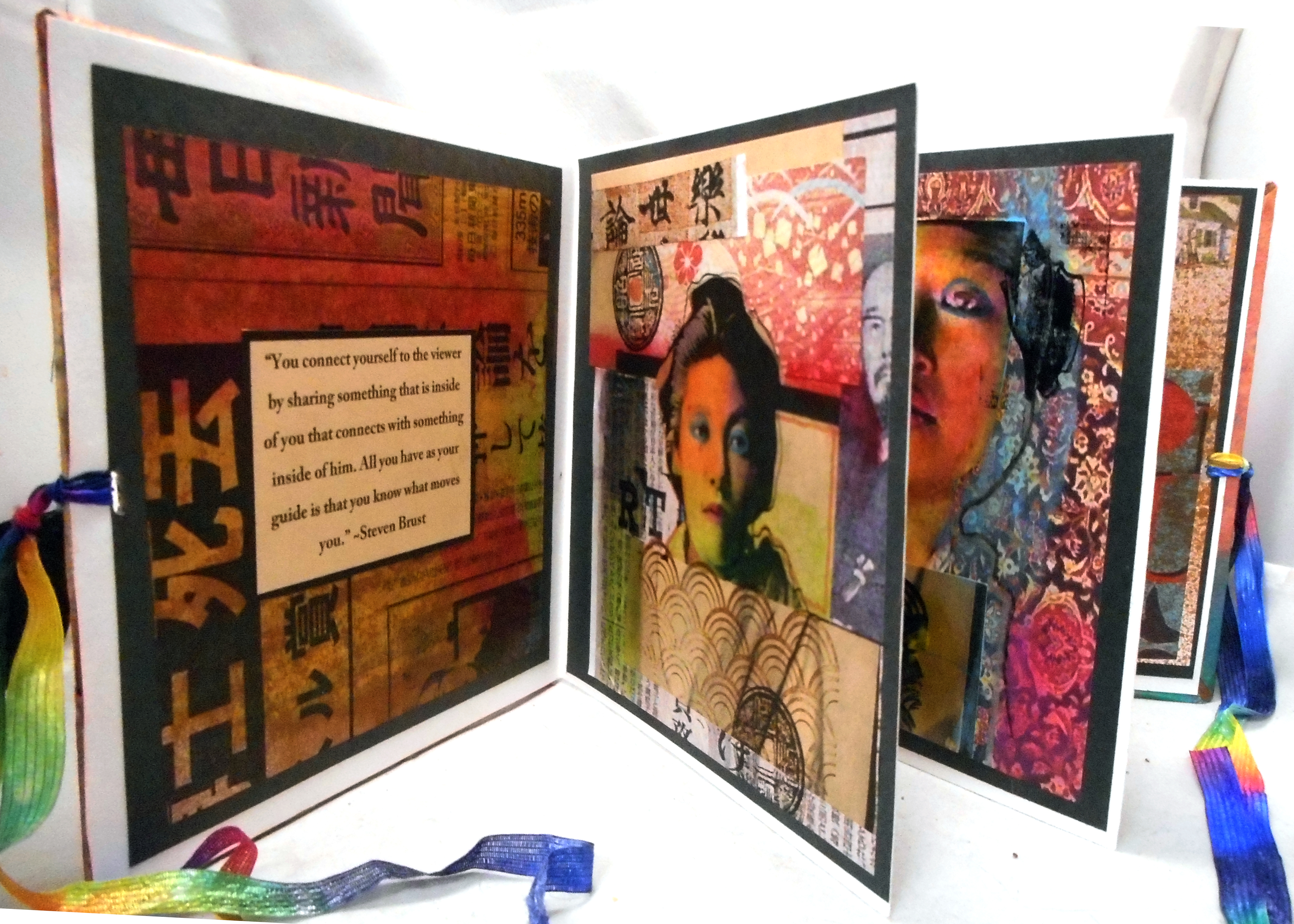
Art Book: Lyn Belisle

I love teaching with Lesta Frank. She’s imaginative, patient, talented and funny, and she has a huge following of devoted students, some of whom met us at the Studio yesterday for a special workshop. Our idea was to create mixed media accordion books that would function as a little showcase for 6×6″ collages. The collages feature hand-decorated paper and digitally copied faces enhanced with oil pastel. You can see the prototype I made, above.

1The workshop was scheduled for half a day, but as soon as Lesta got into demonstrating surface design on paper, I could tell that we should have scheduled a full day because everyone was having so much fun.

We did manage to make a bunch of gorgeous paper, construct several small collages, put our gallery books together, and have time for a critique. We’ve invited the participants back for an extra two hour bonus session following Show and Tell this coming Saturday (more about that soon).

I think you can tell from the video below what an enjoyable mixed media afternoon this was – and you can be sure that we will schedule another one soon. Thanks, Lesta!

PS – congrats to artgirl3313@gmail.com who won the Friday Freebie Beeswax and Collage download – I’ll send you the download link right away, and thanks for subscribing.

Friday Freebie from the land of magic – Dimensional Collage eBook

Teaching last week at the Gaian Soul retreat on Whidbey Island  was such a joy! Dear friend Joanna Powell Colbert has a gift for bringing together a group of diverse women and weaving them gently into an inclusive circle that is beautifully unforgettable. Heck, Joanna could probably herd cats and make them like it – she’s that magical!
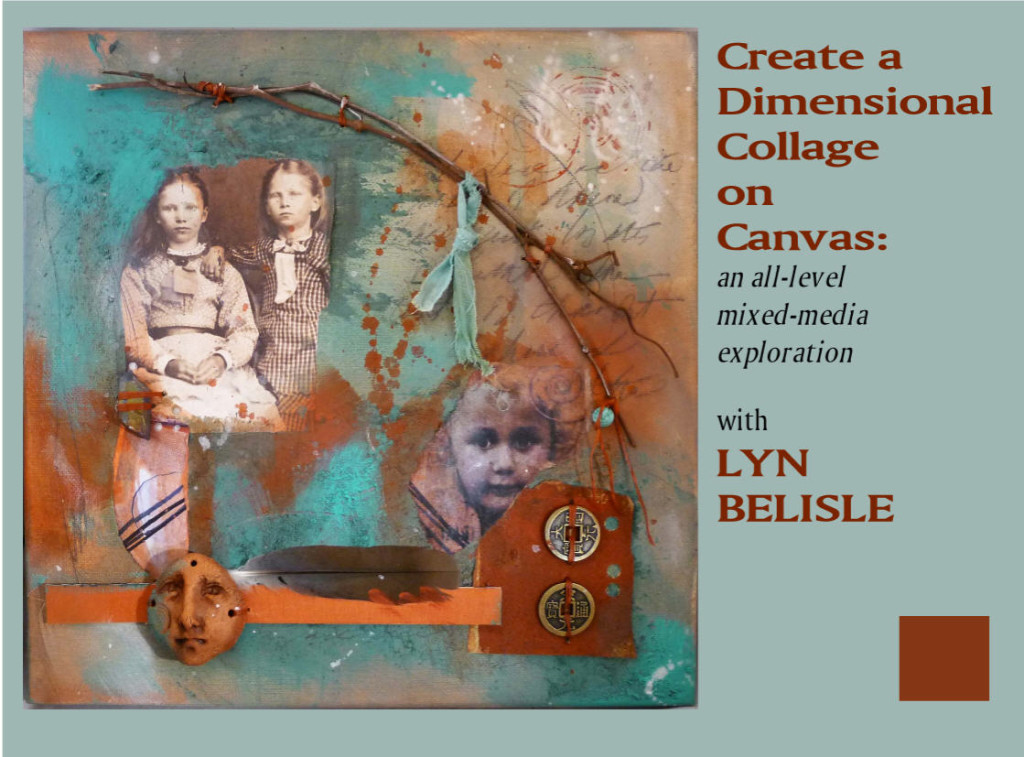
Want to see what the retreat was like? Click this link to go to Joanna’s very cool webpage about our time together. Then come right back, because I have a free eBook for you that will show you step-by-step how to participate in the project that we did – even though this example was specifically designed for the Aldermarsh retreat, it’s personal and fun for everyone and every level.

collageoncanvasbook

Click here to access your free 32 page eBook called Create Dimensional Collage on Canvas it’s a short and easy version of one of my most popular workshops. You can download it if you like. Let me know how you like it, especially if you make your own Dimensional Collage. Have a wonderfully creative weekend, Y’all!!

eBooks and iCovers

Back in the olden days, when I first started this blog, I was still making a lot of Kindle reader and iPad covers to sell on my first Etsy shop (Steve Bennett of the Express-News did a story on them in 2010 – “Judge eReader by Its Cover”). One of my buyers from that time wrote last month to ask if I would make a custom cover for her iPad – she likes retro elements but with a bit of whimsy. Here’s the cover I did for her, the first in a long time – she just sent me a note saying how much she liked it. Yay! 

The iPad fits in between elastic cords on the inside front cover. It was fun revisiting this project – these covers are pretty labor intensive depending on how many collage elements you add, but you really can do one for yourself. In fact, I also wrote a post on how to make you own! You will enjoy this mixed-media project – it has both attractive form and useful function. Try it!


Cheesecloth – to dye for

cheesecloth1I love this stuff! I hand-dyed a bunch of it for Sunday’s Spirit Doll workshop and made some cool discoveries. One – it’s cheap – and available in a ton of places, like hardware stores in the paint department and supermarkets in the kitchen gadgets department for about $1.00 a yard or less.

Two – you can dye it super-fast with Rit dye, procion dyes, or just plain old diluted acrylic paint – and it stretches and tears and look very artistic either as a collage addition or as Spirit Doll swooshy capes and wraps.

Here’s some of the dyed cheesecloth that I put together with other supplies for the Spirit Doll workshop – earthy and rich:

cheesecloth

And here’s a bunch of it drying on the bench outside the Studio – kinda like exotic rags;

cheeseclothbench

If you want to dye it yourself, this is a fast and easy way – put a squirt of fluid acrylic paint and about 1/2 cup of water in a little plastic container, add the cheesecloth and squish it down and saturate it, let it sit for about ten minutes, then squeeze it out, and dry it by spreading it out or putting it in the dryer for a few minutes (if you put it in the dryer, it will crinkle up, which you might like)

Note: I tried a gold metallic acrylic, but it didn’t retain the metallic look – I added a little orange and a little walnut ink (of course) and got a nice mottled peach color. It’s impossible to mess up – any color seems to work.

This was one of my favorite Spirit Dolls from the workshop – Pat Konstam used a rock that she had found in Israel for the face (it looks as if it’s smiling) – and she used red and brown cheesecloth for her Red Sea Spirit Doll:

cheeseclothpat

Spirit of the Red Sea – Pat Konstam

And finally, check out the video from the workshop – I hope you enjoy seeing it, and I hope you’ll go play with cheesecloth!

PS –  As I was doing a little research on dyed cheesecloth, I discovered that it’s the newest thing to wrap a newborn baby in – who knew?? Ain’t been no newborn babies in my neck of the woods for a loooong time!

cheesecloth


Lesta and Lyn, spooky spots, and Friday Freebie winner

Lesta Frank and I did a repeat of our Surface Design on Paper half-day workshop this past Sunday at the Studio. It’s totally amazing to watch eight creative people take the same concept and make an astonishing assortment of gorgeous one-of-a-kind artisan papers. We used the enhanced paper to cover small Lotus Books, each one a work of art in themselves. Wanna see?

 On Saturday, the day before our workshop, I did some video footage in the Olmos Dam Basin for an upcoming Artful Gathering online class – I can’t tell you much about the class yet, but it involves Spirits! That’s big hint.

DSC00267You can read an interesting article about Olmos Basin, and about author Whitley Streiber, here in the archives of Texas Monthly – kinda spooky. The author said he made contact with strange beings here. But my online class will not be scary, honest (although it may deal with strange beings). Stay tuned for details, and visit Artful Gathering for info about Early Bird Registration for all of their cool classes.

Kantha Cloth Bag with Florentine Shard Face

Kantha Cloth Bag with Florentine Shard Face

Last, but definitely not least, congrats to lucky subscriber #86, Joanne Desmond, who won the Friday Freebie in the random number drawing – Joanne, contact me and I’ll get your freebie to you ASAP.

Have a good day, everyone – and watch out for strange beings.