Building a Portrait

An Encaustic Collage of Sam Takeuchi

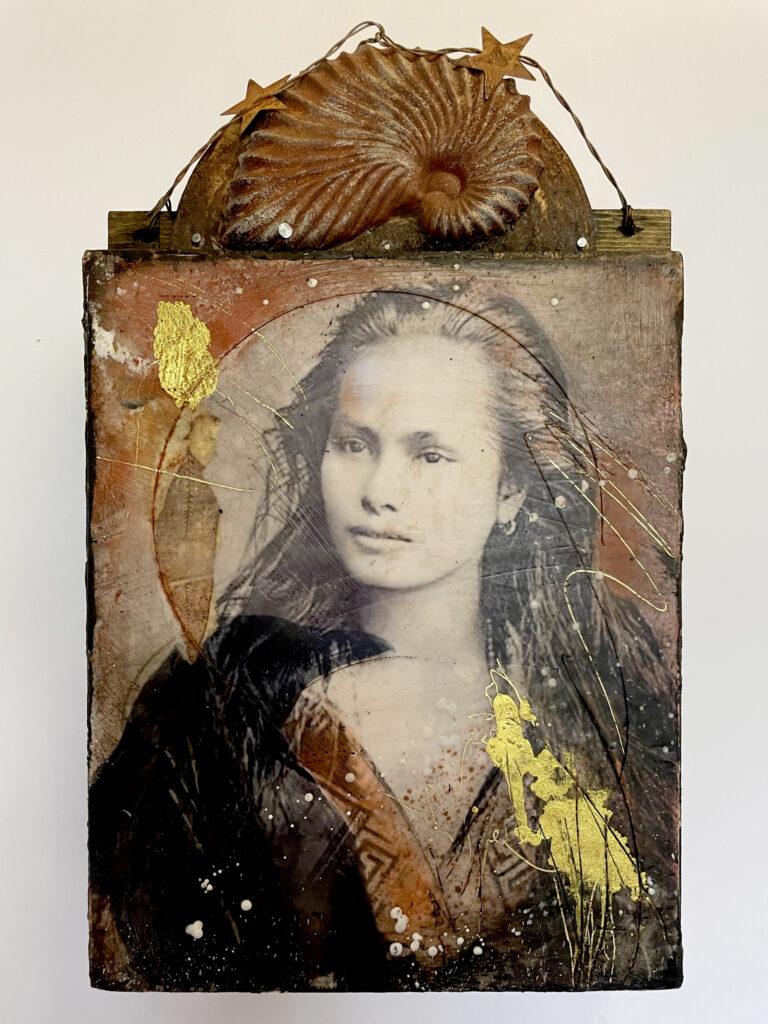
One of the most delightful things that came out of our recent “Encantos” exhibit at the  Taos Ceramic Center was a commission request. Sam Takeuchi, architect and artist from Santa Fe, requested that I create a portrait of him in the same style as the Santo Niño collages in the exhibition (below).
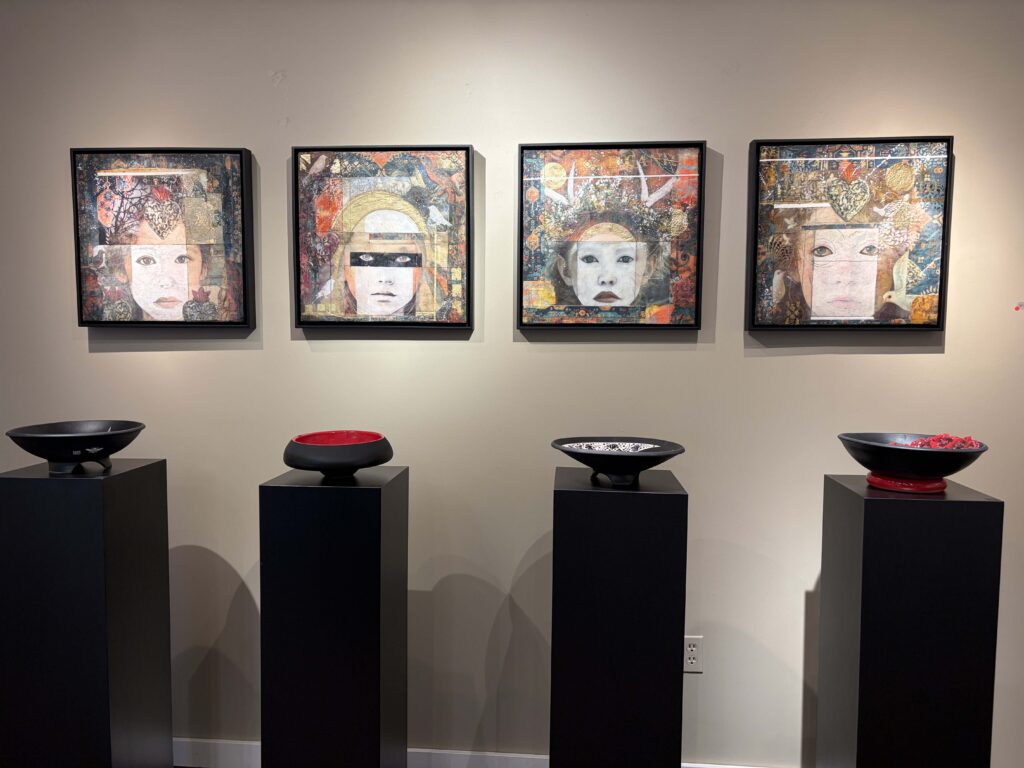
Talk about an intimidating request! Sam is a master of so much – pottery, woodworking, antique Japanese crafts, architecture. I featured a short video of his Santa Fe studio in an earlier post. How would it be possible to capture the essence of a multifaceted person like Sam in an encasutic collage?

The answer, I realized, was not to try to show everything about him. Instead, the portrait had to grow step by step from a few meaningful clues. That’s actually a wonderful way to approach any portrait collage.

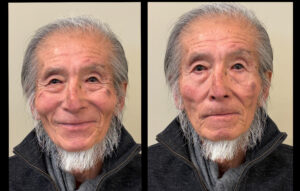
But first, I needed a photo of Sam, so he obligingly stood against the gallery wall while a took some pictures with my phone. Sam has a wonderful face – wise and humorous and lived-in.

It’s a good idea to take several versions. Expressions can change the whole feel of the work – see how different smiling Sam and serious Sam appear.
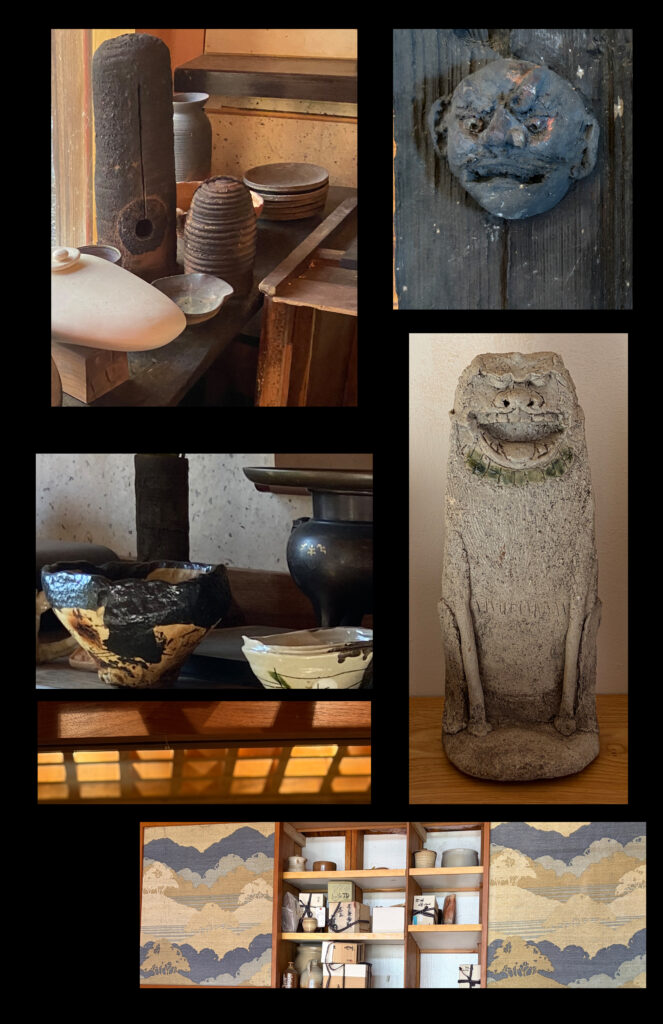
When I got home from Taos and started working on the collage, I realized that I could incorporate bits of the images I had taken at his studio to deepen the meaning. His workspace is filled with beautifully worn wooden tools, carpets, pottery forms, and objects that reflect his deep connection to Japanese craftsmanship and architectural design. Those images gave me a visual vocabulary to work with.
So, if the first step was to choose a photograph of Sam that felt natural and contemplative, the second step was to look closely at the studio photos and ask myself:

What elements here represent Sam’s world?

Wood grain.
Asian Carpets.
Handmade vessels.
Architectural structure.
Quiet, thoughtful spaces.

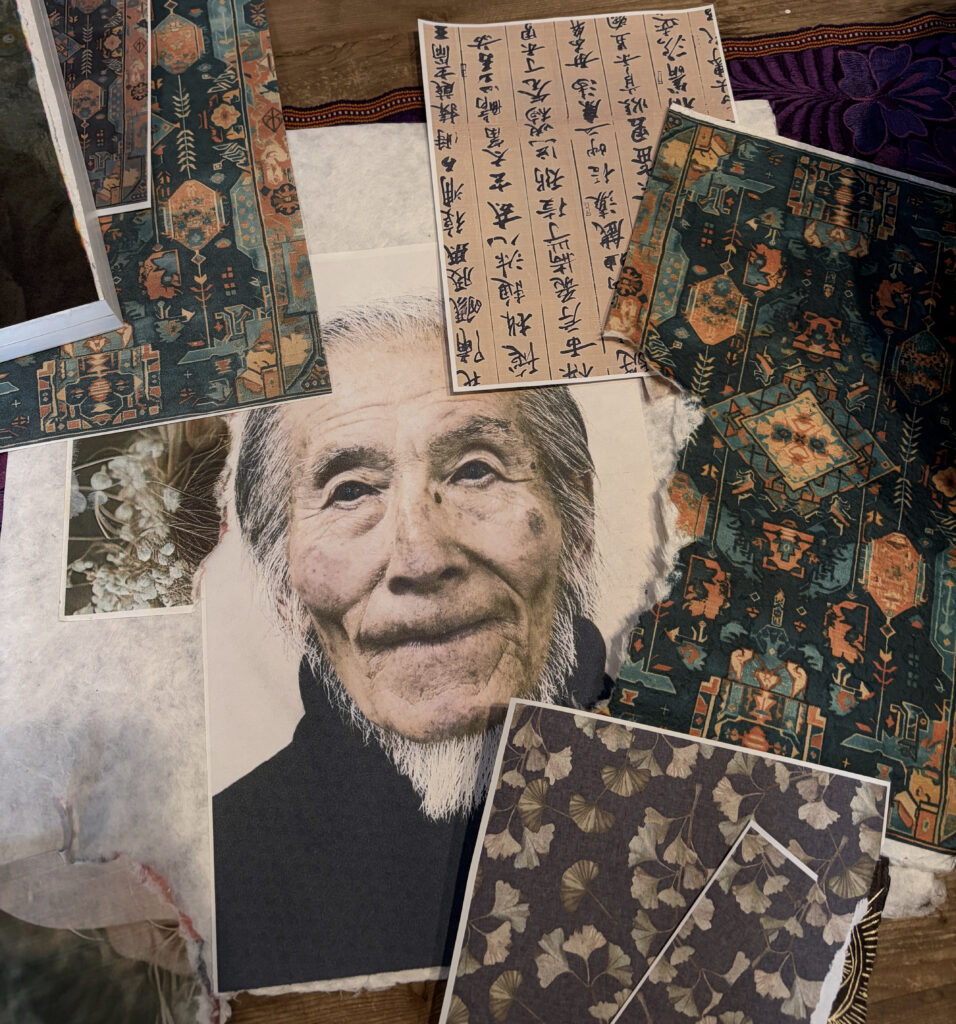
Those became the first building blocks of the collage. I even made a tear-up collage sheet of some of the assorted details from his studio elements:
Once I had those elements, the process became almost like assembling a small stage set. The background design echoed the textures of his studio. Shapes and lines hinted at architecture.But I also included other “encanto” elements from the Santo Niño collages to connect them back to Sam, like fantasy patterns and icons.

This is that in-between stage before the wax that always makes me stop and pause:
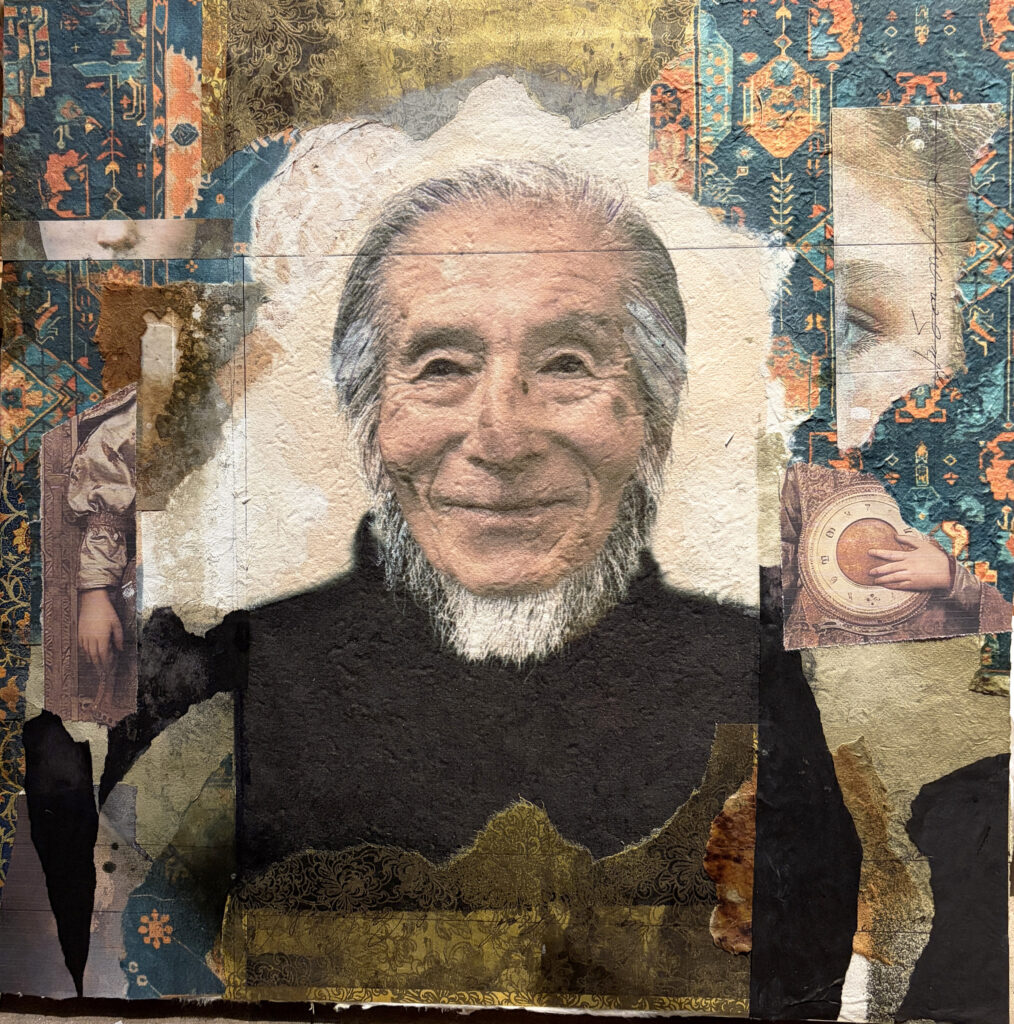
When I started applying the clear wax, the encaustic layers softened the edges so the images felt woven together rather than pasted together.
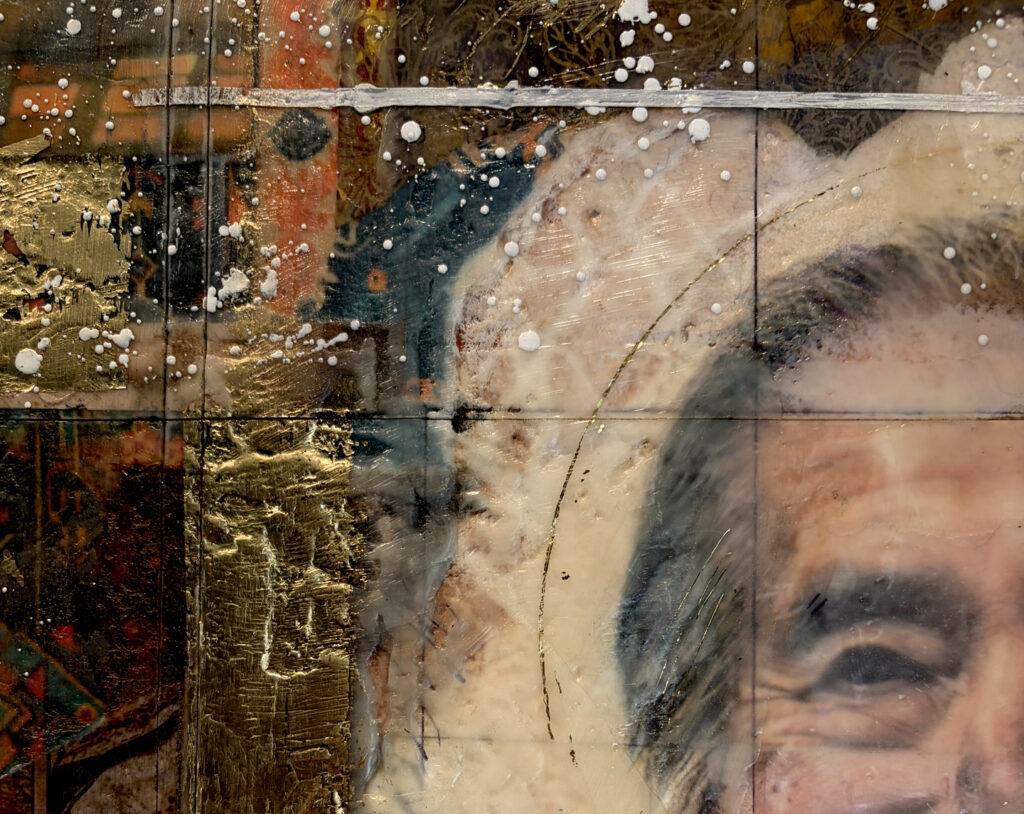
Sam and I emailed back and forth after this stage – here was the photo that I sent him when I thought the portrait was probably finished:
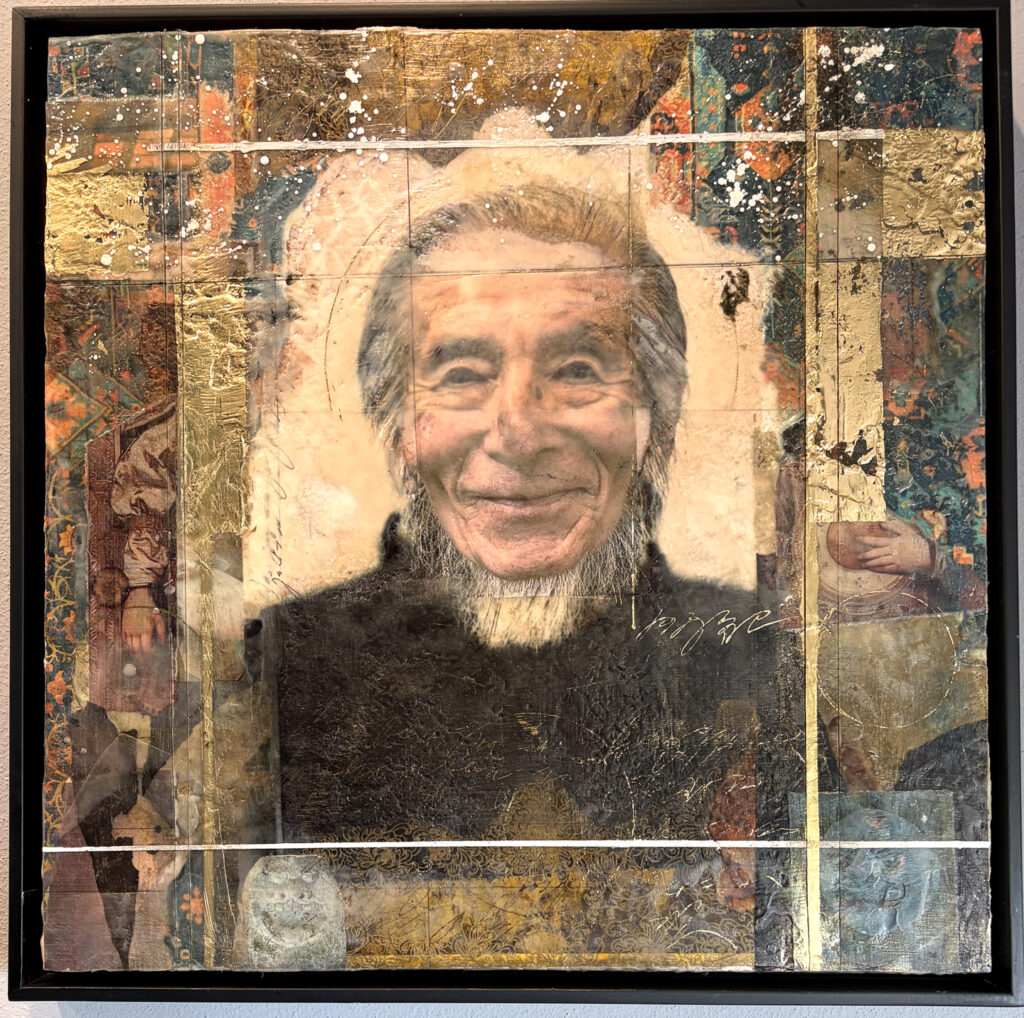
Encaustic work is notoriously difficult to photograph, but you can see hints of the complexity of the layers of wax and mulberry paper. Sam make some very small final suggestions befroe it was completely finished.

It’s good to share the process with the subject. This is the final piece that was shipped to Santa Fe (and arrived safely – hooray!).
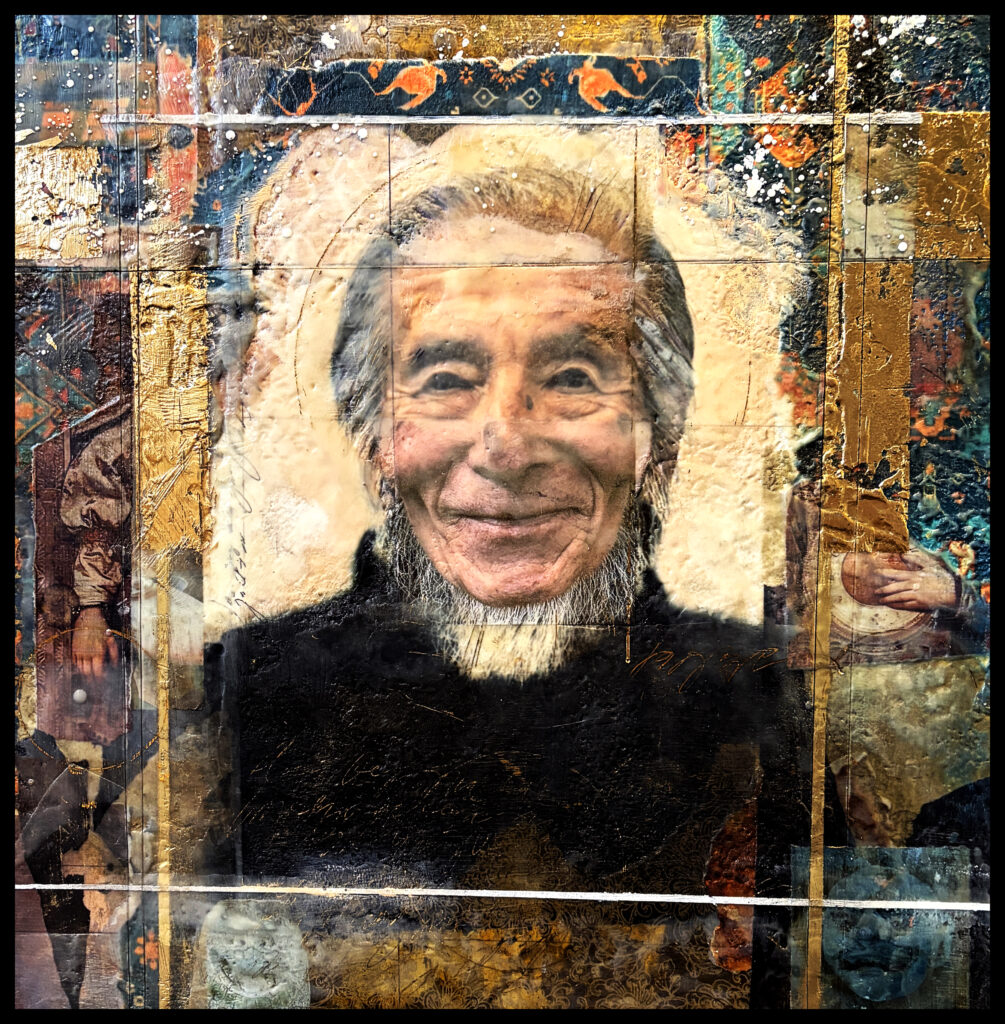
Sam told me he has the perfect place for his new portrait. We’re trading work for payment, which is my favorite kind of arrangement. I loved this project—but this is still how I picture Sam when I think of him: sitting serenely in his studio.
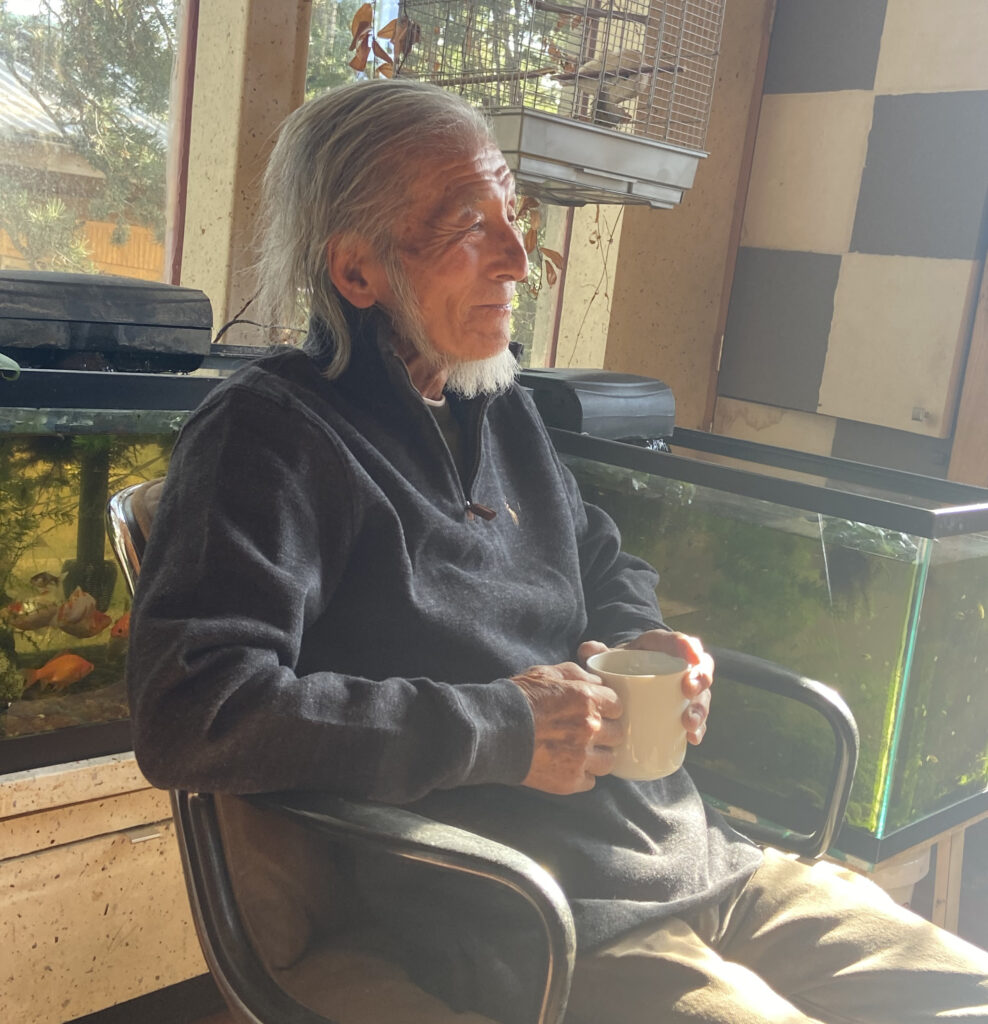
As you can see, the portrait wasn’t just Sam’s face—it was Sam’s environment, his mythology, and the atmosphere of the place he built..

If you’d like to try something similar, here’s a simple approach:

  1. Choose a photograph of the person.
    Something natural and expressive works best.

  2. Collect visual clues about their world.
    Photos of their studio, favorite objects, tools, landscapes, or materials.

  3. Select a few elements that feel essential.
    Not everything—just the things that carry the strongest sense of the person.

  4. Build the collage around those clues.
    Think of it as creating a small visual story rather than a literal portrait.

  5. Don’t be afraid to add touches of myth or magic.

What began as an intimidating commission turned into something much more interesting: a reminder that a portrait doesn’t have to explain a whole life.

Sometimes it only needs a few well-chosen fragments. And when those fragments are right, the person appears almost by magic. I’d love to see what you do with the concept a personal collage portrait.

Two posts, two portraits — From the courageous gaze of Susie King Taylor in the previous post to the thoughtful presence of Sam Takeuchi in his studio, these portraits remind me that a face is never just a face—it is a doorway into a life, a story, and the fragments that help us see it.

Thanks, as always, for reading SHARDS!  ~~Lyn
Collage as Conversation

Can these images be part of a conversation with each other?

I am so excited to be part of the upcoming Piecework collage exhibition at Gallery Prudencia. The generous response to my collage work in the Taos exhibition reminded me how deeply people connect to layered imagery — how instinctively they lean in when fragments suggest a story without fully explaining it. That experience nudged me back toward collage as a kind of universal language.

For years, I’ve been drawn to “shards” — not as broken pieces, but as clues to something larger that once existed. Collage (particularly encaustic collage) allows those fragments to speak again. A child’s gaze, a bird poised between shadow and light, a torn scrap of handwriting — these become visual syllables in a language built from juxtaposition and pause.

Collage does not declare; it suggests. Returning to collage feels like returning to that essential impulse: to gather fragments, to listen for the conversation between them. Below are three collages that will be in the group show at Prudencia. This small series is called “Conversations.I love to work in series!

The Secret, Encaustic Collage, 2026

This first collage in the Conversations series is called “The Secret.

Who is telling the secret to whom?

At first glance, the most literal reading is that the child is whispering to the bird. The dove rests in the hand, close to the mouth — a confidant. Birds have always been messengers, carriers of news between realms. So perhaps the child entrusts the bird with something fragile — a memory, a fear, a wish.

But then the dynamic shifts.

The bird may be whispering to the child. Its beak is near the lips, not the ear. The exchange is intimate but ambiguous. Is the bird delivering news? A prophecy? A truth the child is not yet ready to fully understand?

And then there is us. Perhaps we are holding the bird!

The child’s gaze is direct. Unblinking. The eyes are not turned toward the bird — they look outward. Toward the viewer. Which raises another possibility: the secret is being shared with us. The bird is intermediary, but the child knows we are watching. We become part of the exchange. Isn’t it fun to interpret collage as conversation?

The First Right Answer, encaustic collage, 2026

If The Secret is a whisper shared outward, The First Right Answer, second in the series,  feels inward — almost instructional.

Who is speaking here?

The girl’s gaze is lowered. Unlike the first piece, she is not looking at us. She is listening. Her face tilts toward the bird, but there is no theatrical gesture. The conversation is quiet, concentrated. The moment feels suspended just before comprehension.

The bird, darker and more angular than the dove in The Secret, feels less like a carrier of innocence and more like a voice of discernment. Its beak is pointed, alert. The metallic copper shape cutting across its body suggests signal or transmission — like a tuning fork, a frequency.

So perhaps:

  • The bird is giving the answer.
  • The girl is receiving it.
  • Or the answer is emerging between them.

But the title complicates everything.

“The First Right Answer” implies that there will be others. It acknowledges process. Trial. Error. Learning.

In collage, the direction of the gaze alters the conversation. In The Secret, the child looks outward, implicating the viewer in the exchange. In The First Right Answer, the child looks inward, receiving something only she can recognize. Collage allows these subtle shifts to suggest entirely different kinds of dialogue — confession versus recognition, projection versus intuition.

The Dilemma, encaustic collage, 2026

If The Secret is a whisper and The First Right Answer is a recognition, then The Dilemma is the moment of choice.

And here the child looks directly at us again. But this gaze is different from The Secret. It isn’t confiding. It’s searching. Measuring. Almost asking.

Who is speaking in this piece?

Now there are two birds — a black one and a white one — facing each other. They are positioned below the child, like embodiments of opposing voices. Instinct and restraint. Shadow and light. Risk and safety. Memory and possibility.

Unlike the earlier works, the conversation is no longer between human and bird. It is between birds — while the child observes. Or perhaps the birds are projections of her internal dialogue. The title shifts everything.

“The Dilemma” implies tension without resolution. There is no “right answer” yet. No secret successfully delivered. Only the presence of two equally compelling voices.

________________________________________________

Honestly, I had no notion of these conversations when I started on these pieces, but as I worked, they started talking! I tend to work one piece at a time – this keeps the conversation contained in its own “room.”

So if collage can be a conversation, then it is never finished when I step away from the studio table. It continues in the gallery, in the pause between viewer and image, in the stories people quietly bring with them. What I learned in Taos — and what I hope to experience again at Gallery Prudencia — is that these fragments are not mine alone once they are assembled. They become meeting places.

A bird may carry a secret, or offer the first right answer, or argue both sides of a dilemma — but the meaning settles differently for each person who stands before it. That is the gift of collage. In a world that often feels fractured, perhaps there is something deeply human about gathering the pieces and letting them talk to one another — and to us.

2518 N Main Ave. San Antonio, Texas 7821

The Opening Reception for the Piecework exhibition at Gallery Prudencia will be held on Saturday, March 7, from 2 to 4 pm. You will be able to meet the artists on Saturday, March 28, from 2 to 4 pm., with the Artist Talk beginning at 3 pm.

Come have a conversation about collage with the artists — Kim Collins, Nancy Hall, Mary James, Billy L. Keen, Lyn Belisle (me), Sara McKethan, Tim McMeans, Marcia Roberts, Steven G. Smith, Stefani Job Spears, Sheila Swanson, Cris Thompson, and Bethany Ramey Trombley.

♥Lyn
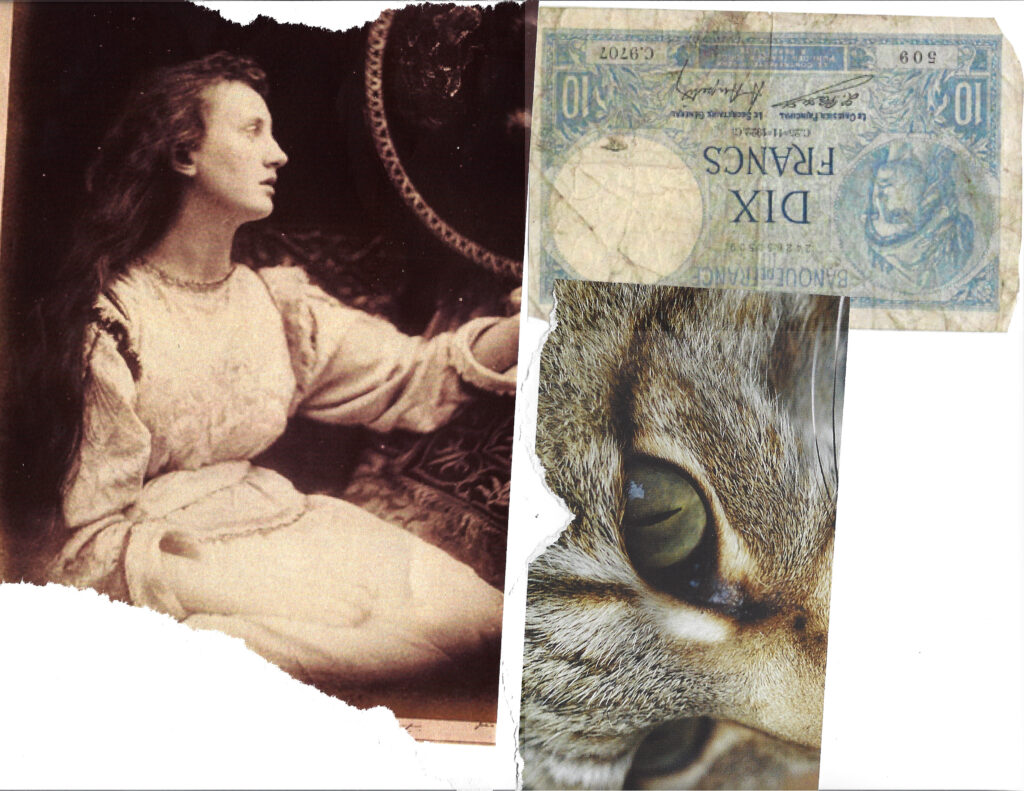
PS And if you want to play with collage, below are two sheets that you can copy, paste, print out, tear up, combine with other pictures, magazine photos,old book pages, and whatever it takes to create your own collage conversation.(If you can’t see them,click on p.2)
Patched up . . .

I started this blog in its current form back in 2010 and it has become my invaluable journal of where the creative path has taken me. Recently, however, my SHARDS blog site completely crashed and I thought 15 years of entries and over 1000 posts were lost forever. Thanks to George Howard, a smart techie and highly-recommended good guy, we are patched up and running again. Sending you a shout-out, George!

I’m back just in time to share something lovely that Jude Hill wrote this morning

“So what if I concentrate on story building with loose patches for a while? Language Patches is what I have come to call them.  They are simple and small and maybe you can play along?”

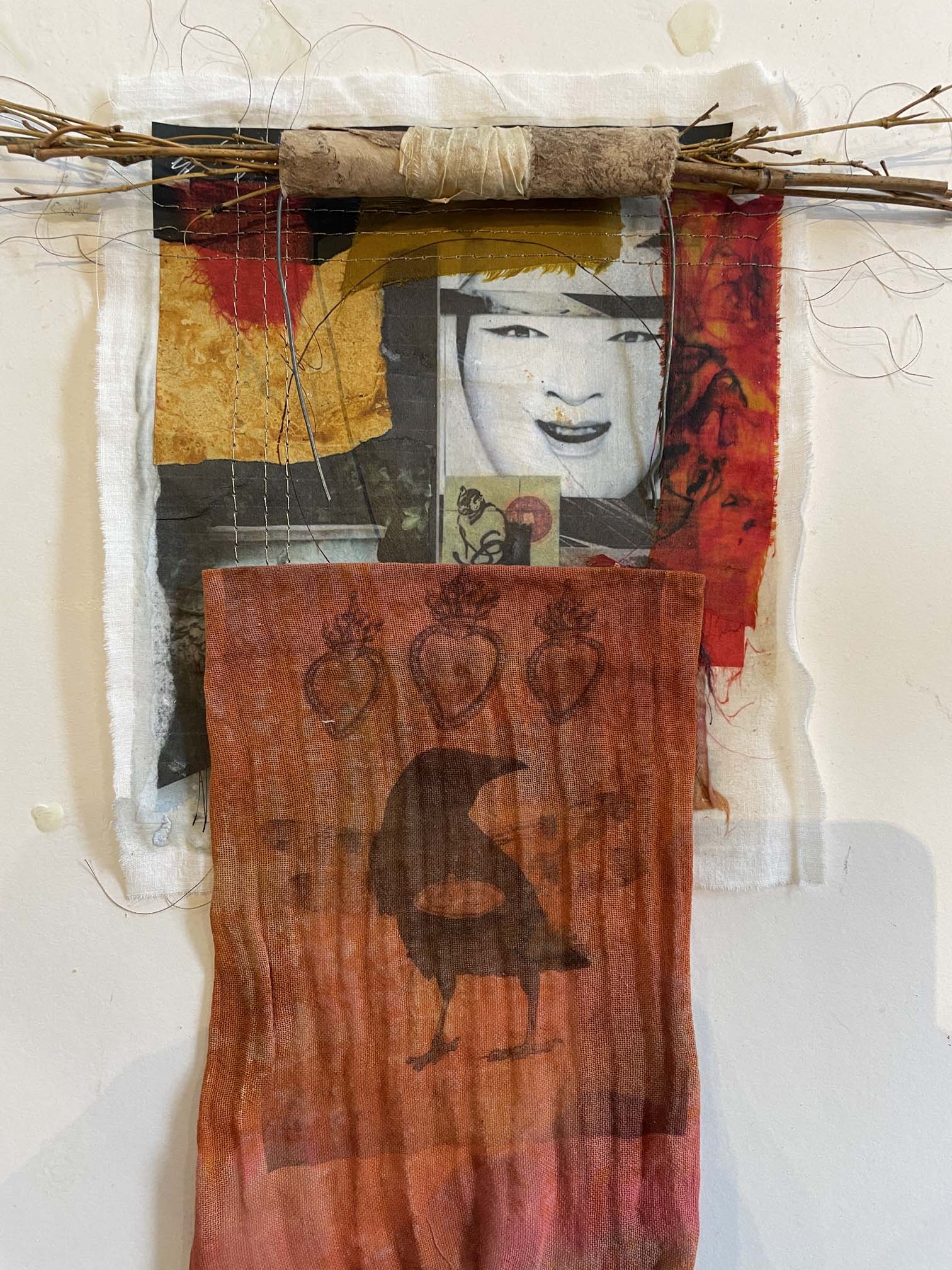
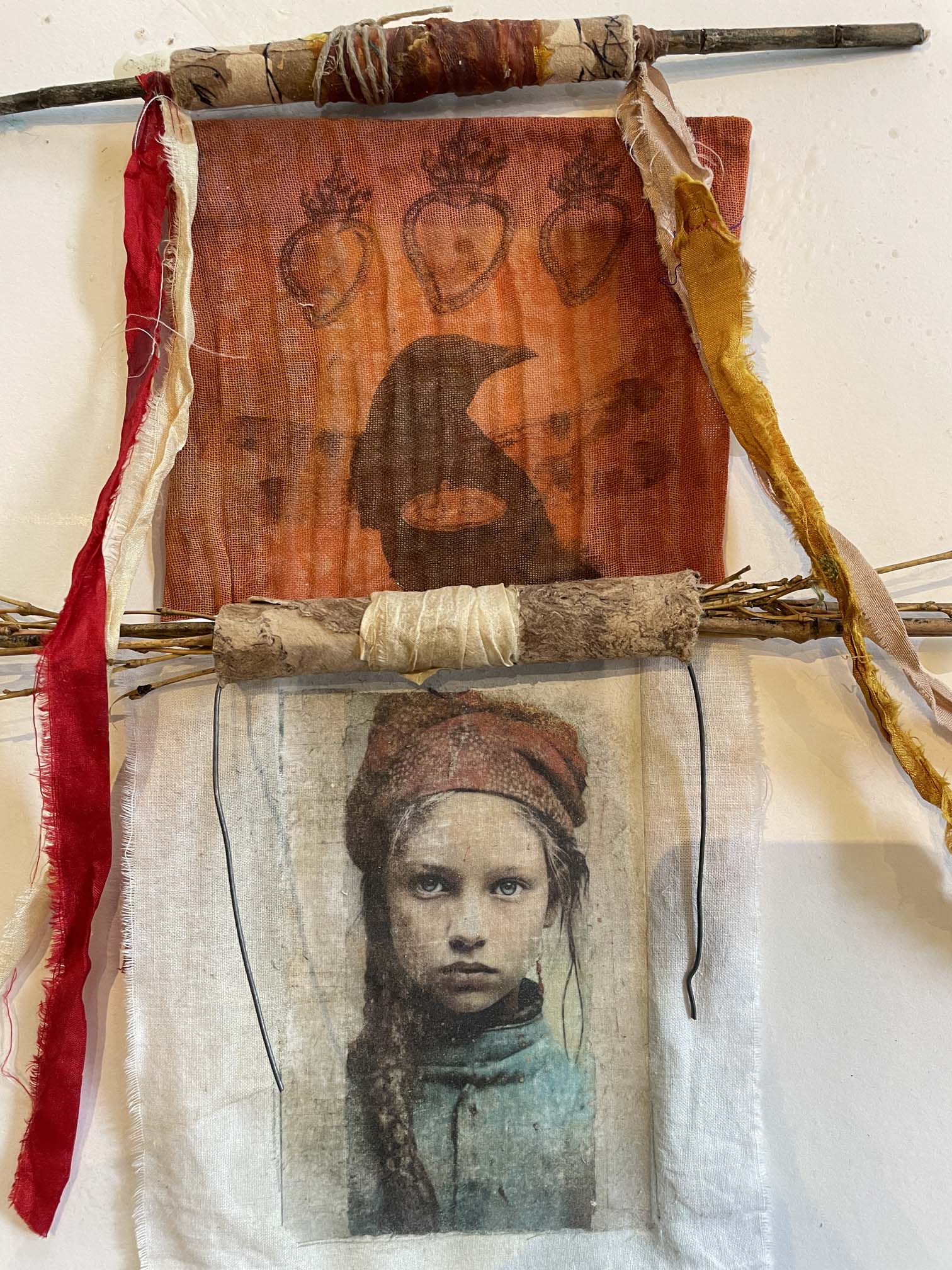
This is so much like what I’m doing with my new workshop, Scrolls and Surface, that I wanted to expand on the idea. The scrolls that I’m assembling as prototypes for the class are nothing more than a collection small “patches” of narrative. They go together in various ways, much like chapters in a book, and because they are small, they can be rearranged.

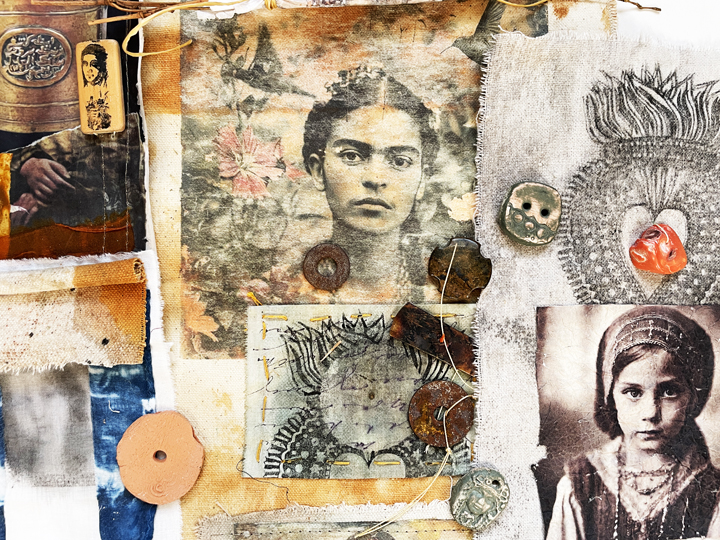
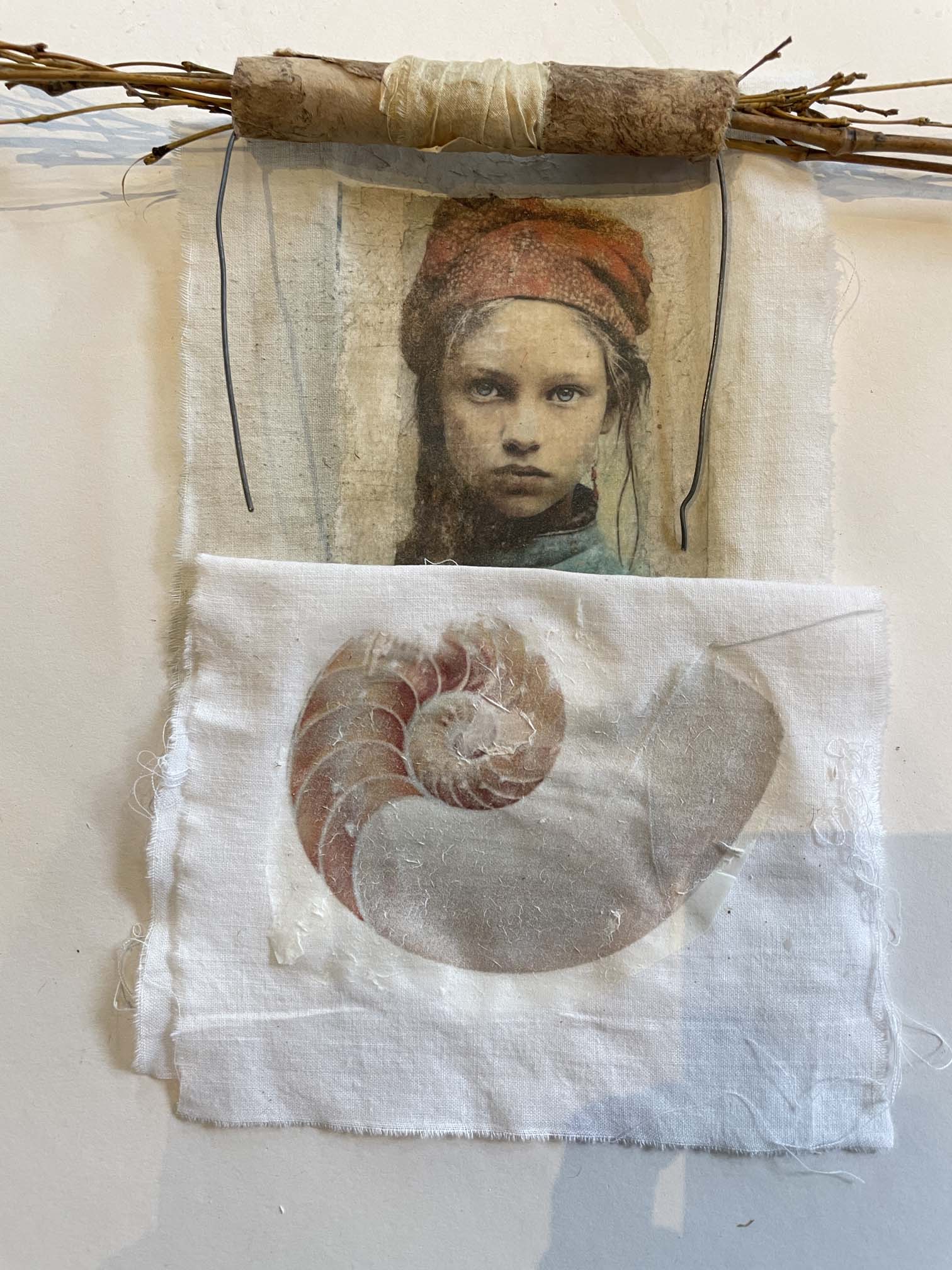
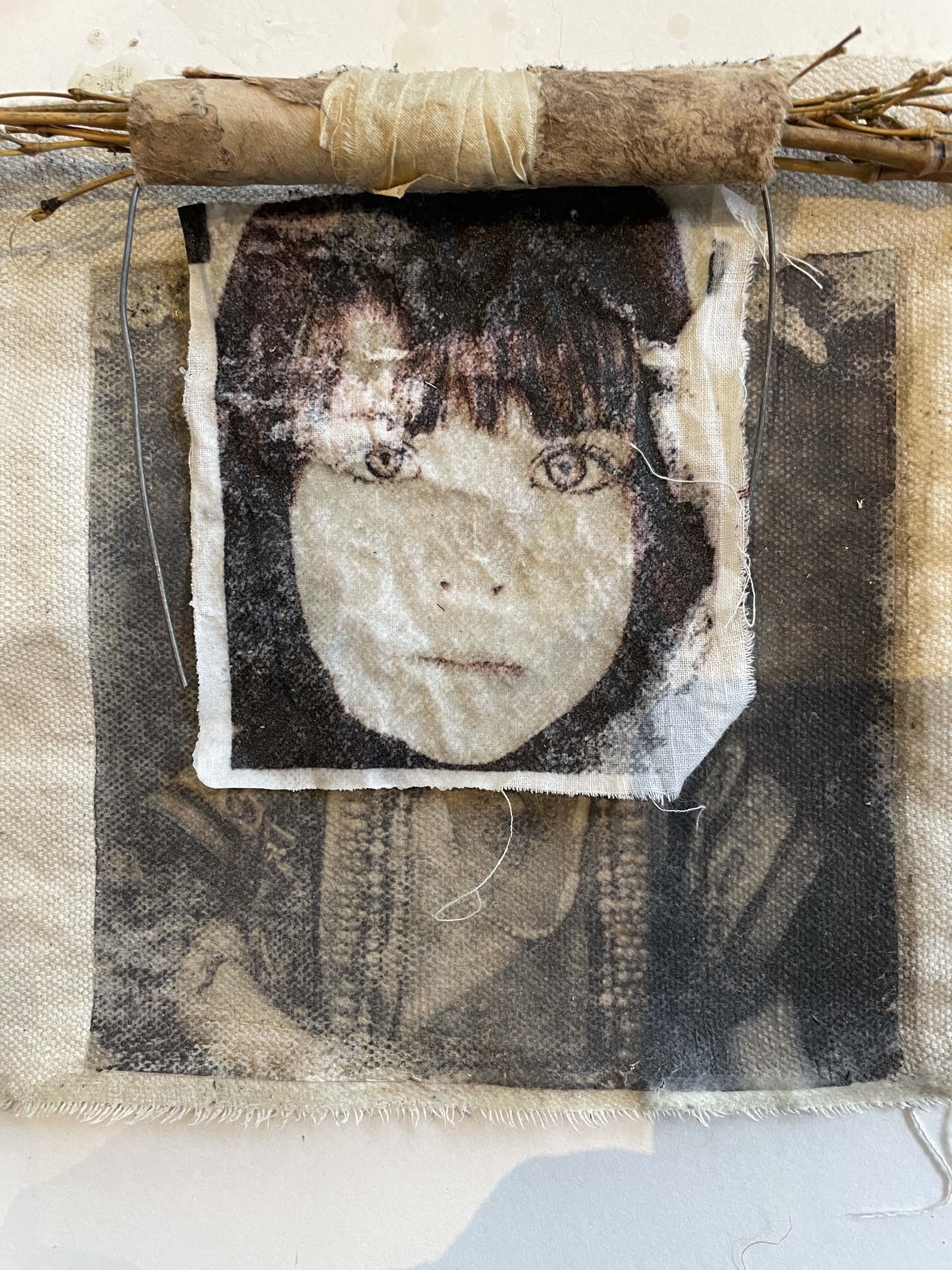
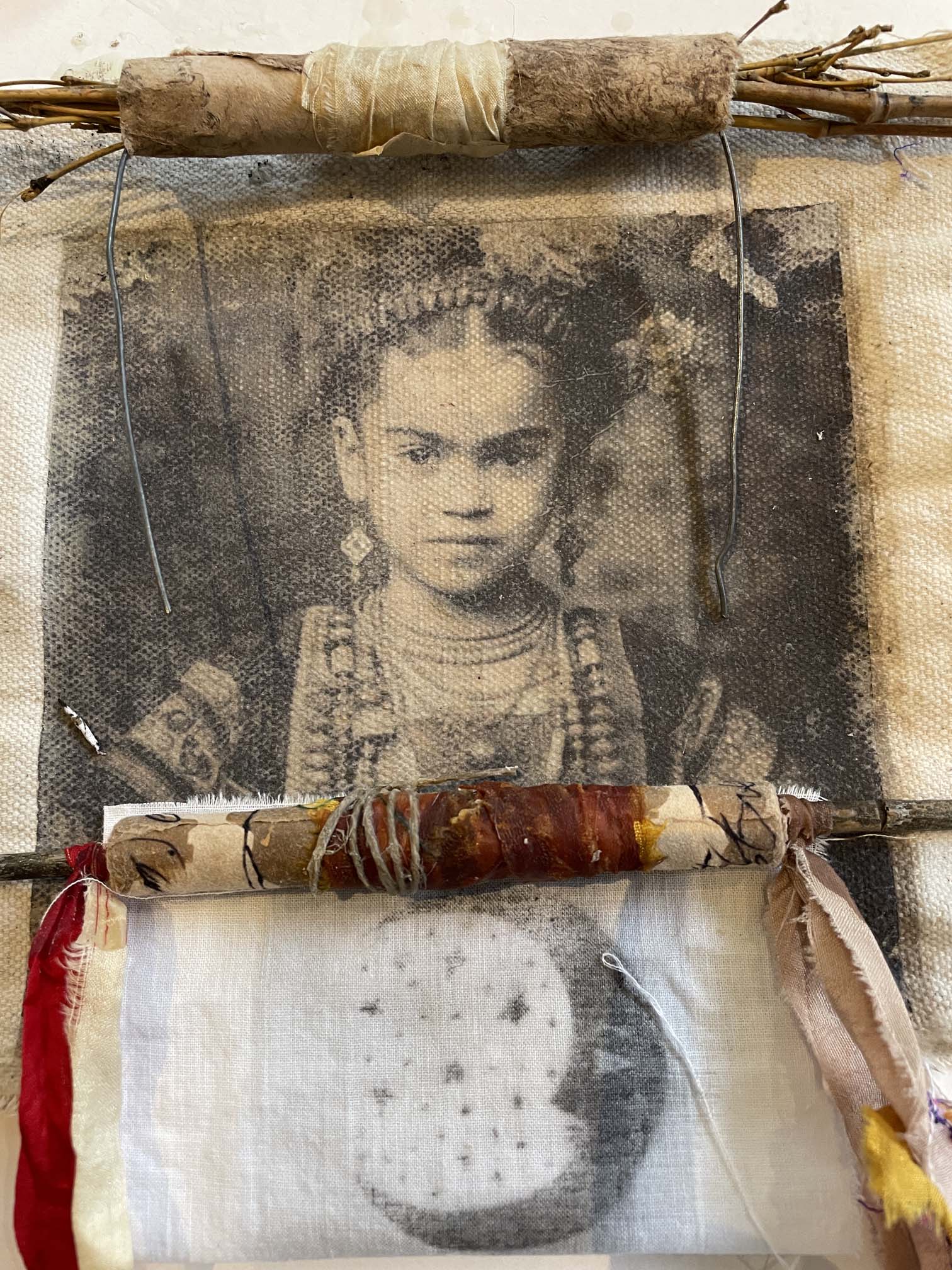
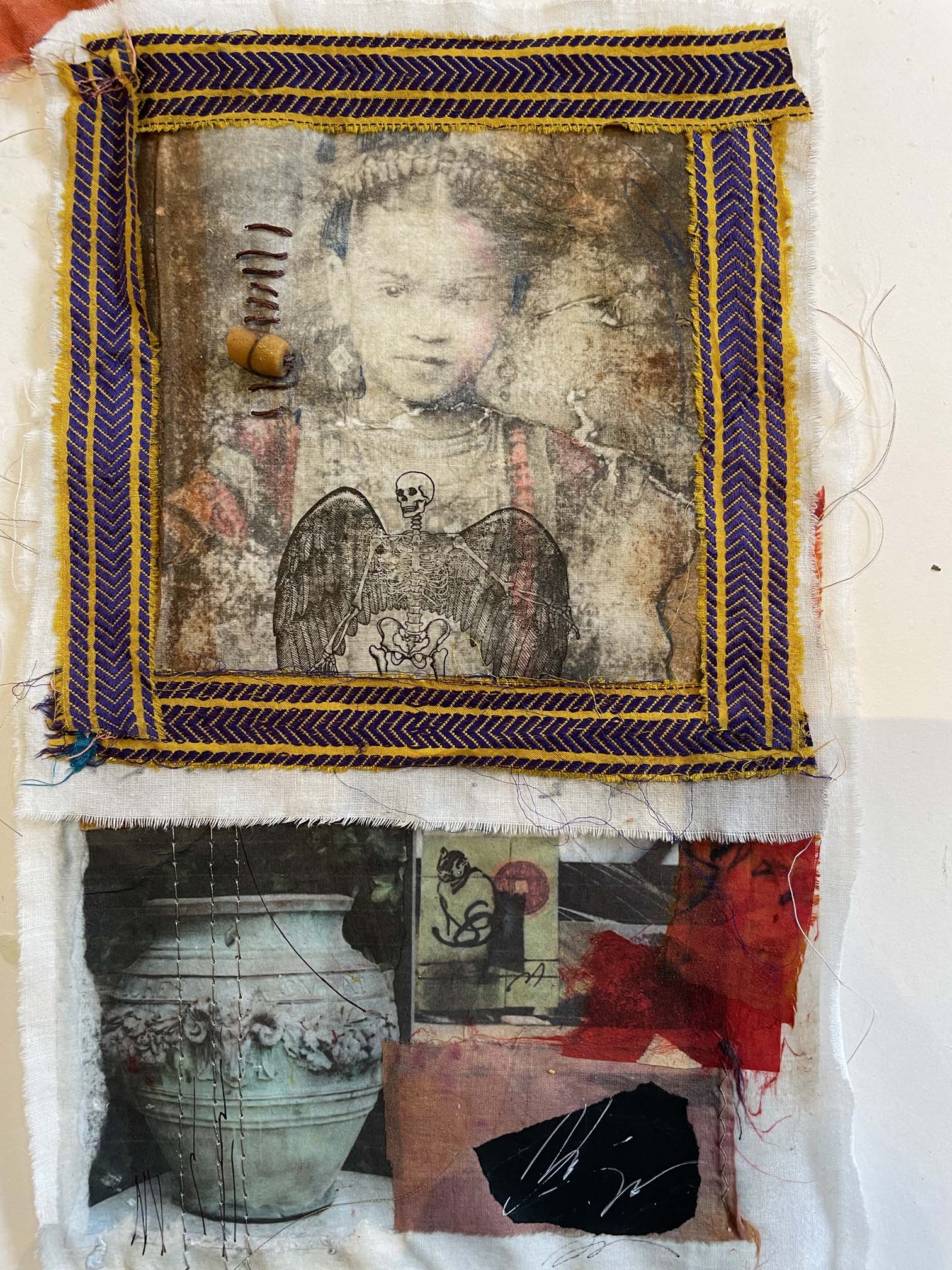
Here are a few examples – some of these are image transfers on fabric, some are what I call “fusion patches,” and some are handmade or found objects.

The images that I choose incorporate on these “patches” reflect my personal themes: neo-santos, shards, paradoxical connections, lost children, myth and mystery. Your images will be different just as your story is different.

Once you start working this way, creating small components that will ultimately go together as a larger picture, you’ll discover all kids of possibilities and combinations. It’s great composition practice, but more than that, it’s a lesson in how one element affects another.

Assorted combinations of fusion patches and transfers to fabric – are there stories here? Can they be rearranged to tell a different narrative?

It really is so much fun to lose yourself in this task. And it’s equally as much fun to actually create the patches using all kinds of experimental methods. Even when something doesn’t work, it’s a good lesson. Jane Dunnewold makes Citrasolv transfer look so easy – when I first tried it, I got blobs. But at least they were mysterious blobs.

A Mysterious Blob

I’m filming a lot of these experiences for a new online workshop called The Pilgrim’s Scroll: Stories in Paper and Cloth which should be ready in a couple of weeks.  In the meantime, it sure is great to have my blob – er, I mean, BLOG, back!

Thanks, Jude and George and all the people that help us stay connected and inspired!


New Work, Old Concept

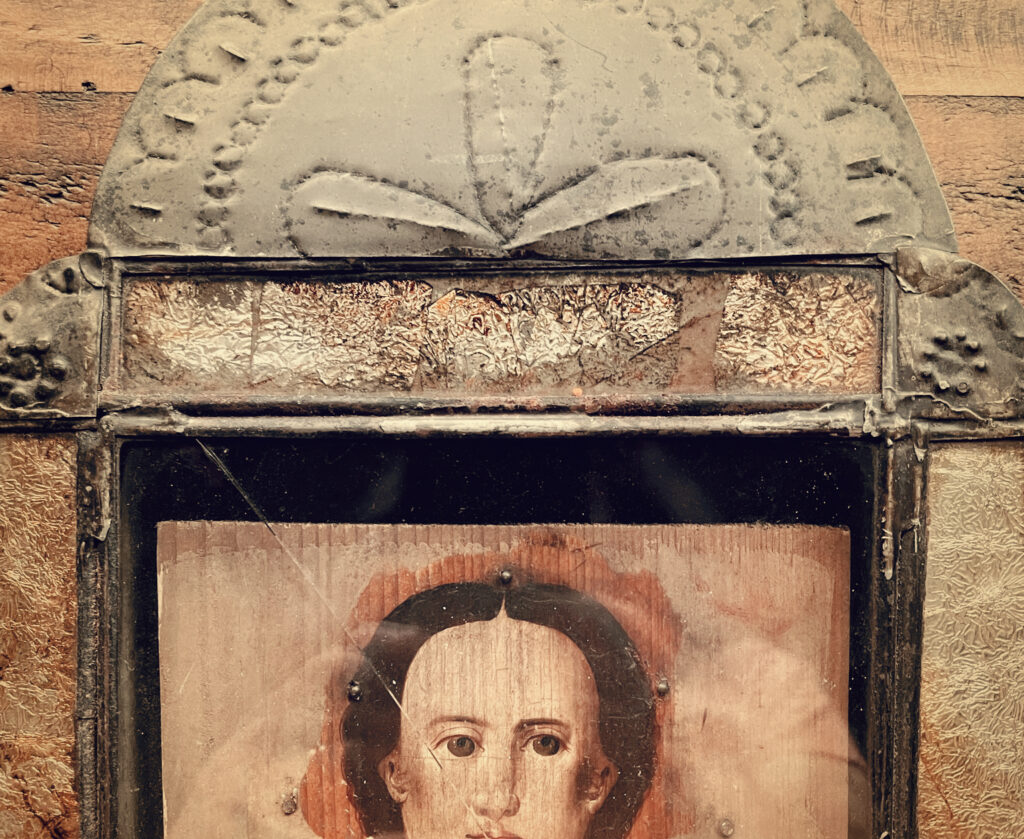
Old retablo frame, late 1800’s

THE ENCANTO SERIES

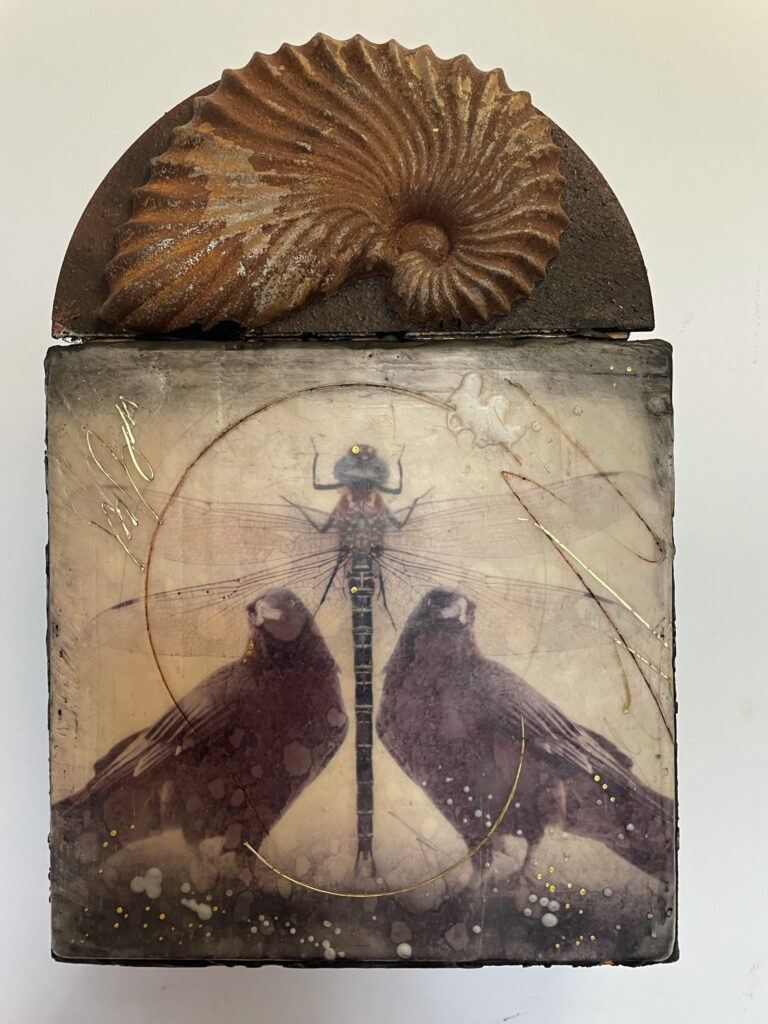
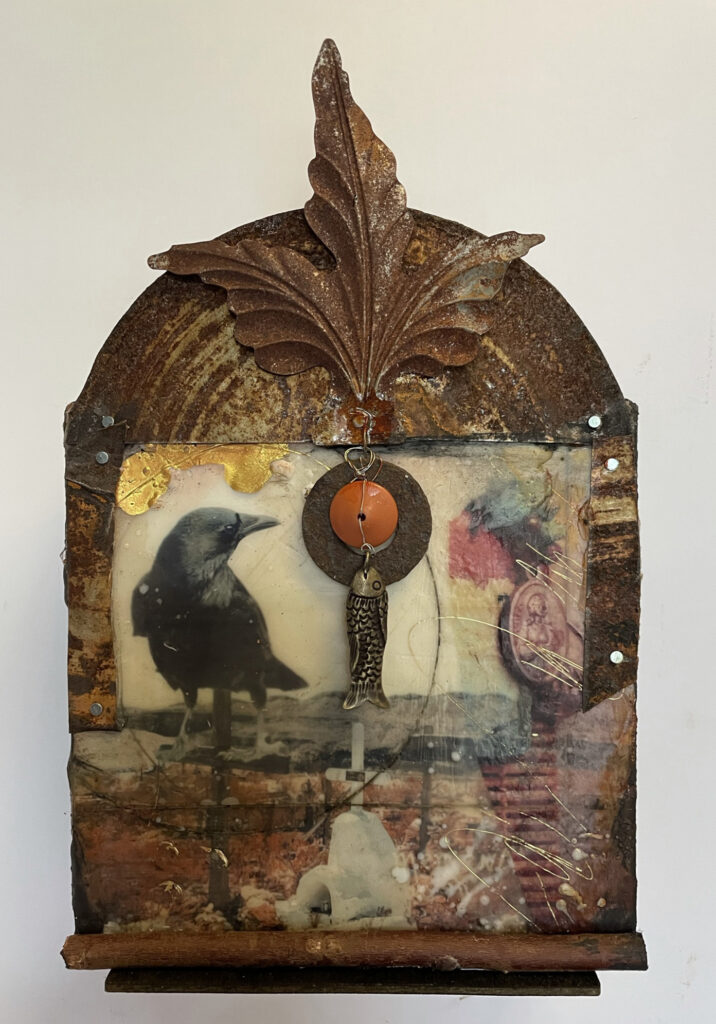
Lyn Belisle, Crow’s Companion, 2021

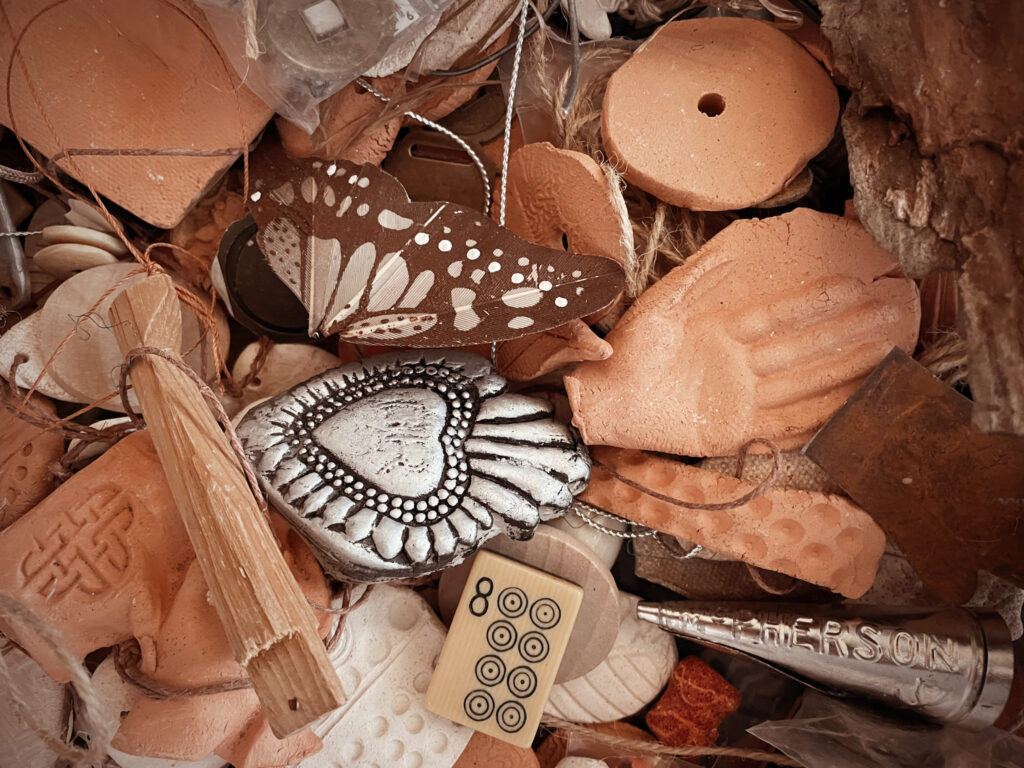
My work has always been strongly influenced by the idea of “shards” as a metaphor for human communication across time. A shard can be a found fragment of clay, a rusty nail, a scrap of handwriting – any little clue that becomes a “secret handshake” between the maker and the discoverer.

Shards, clues, and other stuff

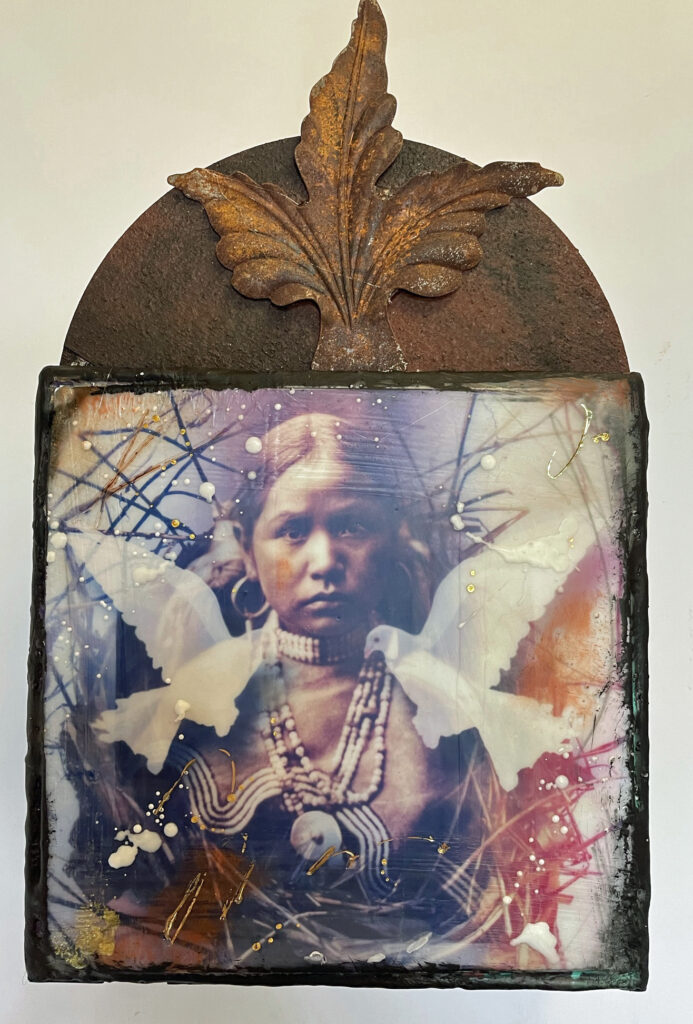
As an assemblage artist, I collect bits of meaning from various cultures and times. This series, called Encantos (charms), respectfully combine contemporary historic images, then veil them with beeswax, a material which has been used in art-making for over 2000 years. This encaustic process seals and enhances the images. The metal adornments on these pieces honor the traditional centuries-old Retablos, painted tin icons that show the significant rust and fading consistent with their age.

Lyn Belisle, Spiral Crows, 2021

For decades I’ve worked with clay, fiber, and paper in assemblage and collage to express this non-verbal time-circle connection. When my friend Michelle Belto introduced me to the encaustic process in 2009, This new-to-me medium seemed a perfect companion for my most-loved materials.

Lyn Belisle, Crow’s Talisman, 2021

I’d briefly tried encaustic medium on collage, but I began to understand that beeswax is a metaphoric material in itself, ancient as clay, versatile as paper, compelling as ivory and bone. Now beeswax and encaustic are integral parts of my process.

Lyn Belisle, Nest, 2021

This series feels just right, a synthesis of digital, ancient, and contemporary process and content. Work for this series is available at the Members Gallery (San Antonio Art League) and soon at Marta Stafford Fine Art in Marble Falls, Texas.

Take good care, hope to see you soon – Lyn

Painting with Fire

The title sounds like something my mother would have warned me against, but it’s actually one of the best things that could happened to an artist/teacher!

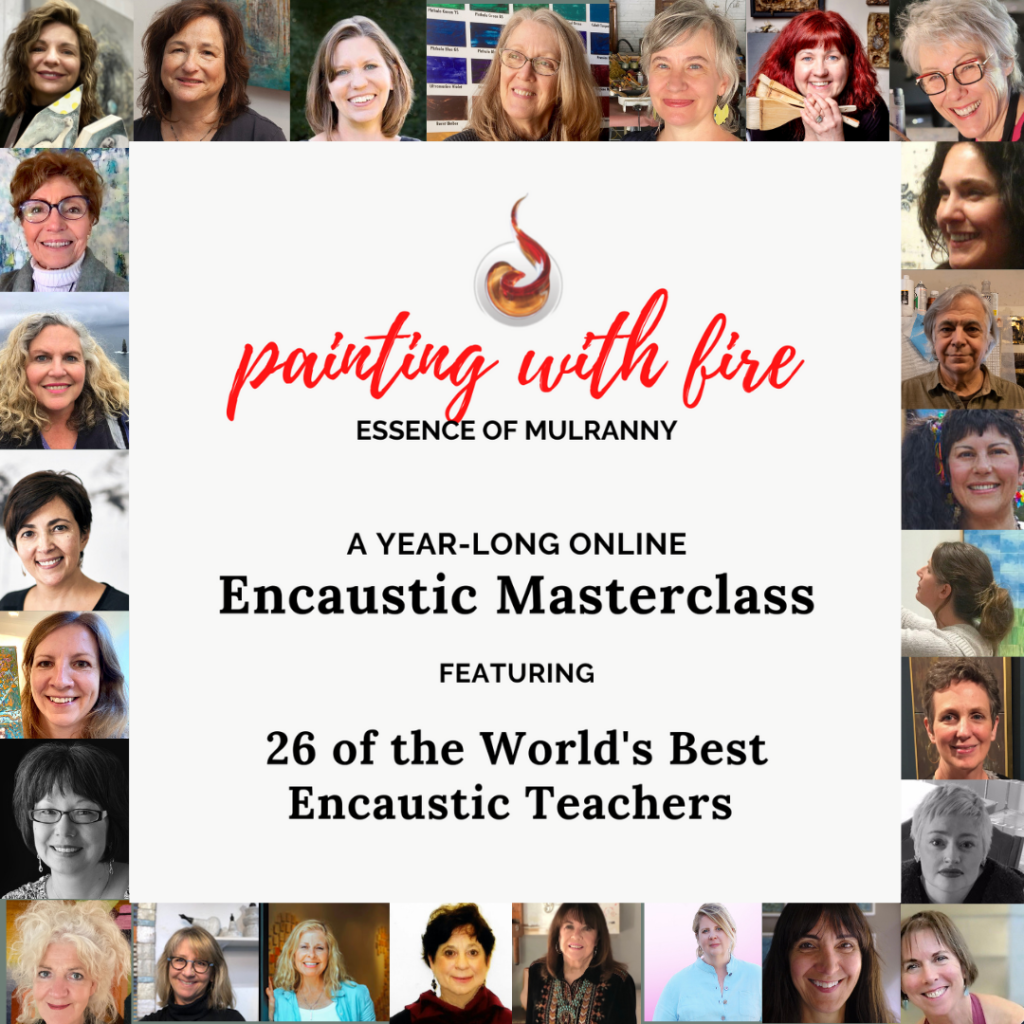
I’ve been invited to join a group of the Best Encaustic Teachers in the World (yes, they let me in!!) to participate in a year-long learning experience called Painting with Fire.

Click here to visit Painting with Fire Essence of Mulranny .

Would you like to meet these artists and see what their work looks like? It’s pretty awesome – check out the video.

Painting with Fire Online Workshop A Year of Encaustic from Lyn Belisle on Vimeo.

The program was founded by Lora Murphy, an encaustic artist who was born in Ireland and has a school there in County Mayo called Essence of Mulranny. Lora sent out an invitation to us, scattered all over the world, and brought us together to teach this Masterclass. And it’s for beginners, too!

My pals Michelle Belto and Clare O’Neill are teaching in Painting with Fire, as well. I’ve learned so much from both of them. And when you sign up, you can take every single class offered by every single teacher over the course of a year, including mine and Michelle’s and Clare’s. Oooh, and Crystal Neubauer and Trish Seggebruch and Shary Bartlett and so many more of my favorite encaustic aritsts are in this, too!

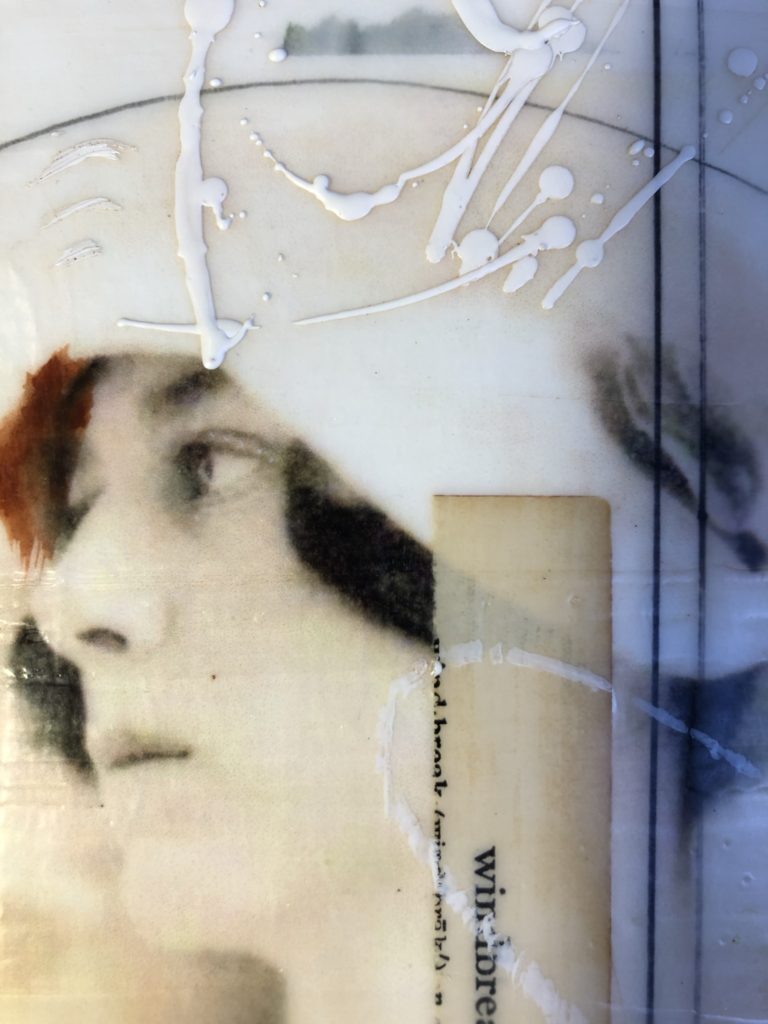
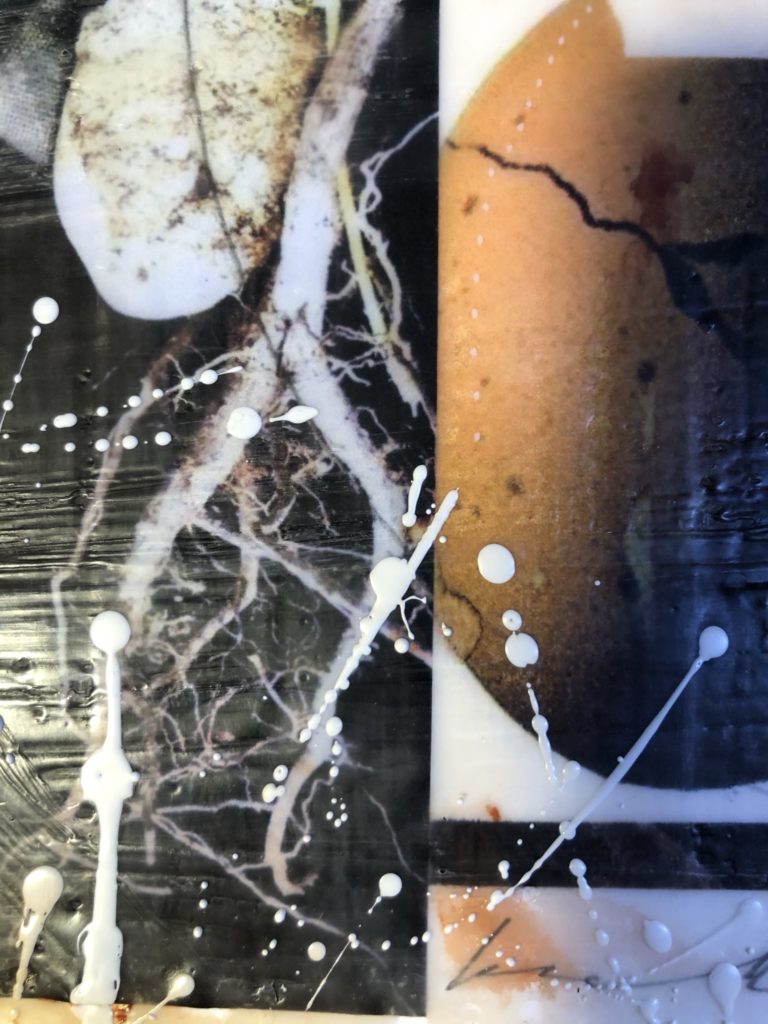
The class that I am teaching is called MYTH AND MIST: Fusing Image and Imagination in Wax. It’s a combination of all the things I love about encaustic – pale translucent layers, mysterious photos and objects, fragrant beeswax – well, take a look for yourself. Here are some details from one of the first pieces I’ve been working on::

I honestly can’t wait to participate in Painting with Fire. Maybe Lora will invite me to Ireland to teach in person next year!!

I almost hesitate to say this, because I feel like I might jinx it, but there’s this new stirring amongst us creative creatures – a cautious optimism that’s reminding us that spring is coming and we can start reaching out again rather than just hanging on in survival mode.

By the way, The Enso Circle is certainly stirring! Michelle Belto and I have had a number of incredible applicants who want to join us in virtual residency. If you didn’t get a chance to read about it, here’s my last post that will explain it. It’s a program for the long-term, and when you are ready to consider it, we will be around! Applications are still open until February 21st, which is a week from this Sunday. Applicants will be notified of acceptance on February 23rd.

I hope to see you at Painting with Fire — it opens today!! Warm your hands with us at the encaustic griddle!

Click here to visit Painting with Fire Essence of Mulranny .

Take good care, trust the process – ♥

Lyn


The Story of The Enso Circle

Creative work is rarely done by a lone genius. Artists, writers, scientists and other professionals often do their most creative work when collaborating within a circle of like-minded friends. Experimenting together and challenging one another, they develop the courage to rebel against the established traditions in their field. Working alone or in pairs, then meeting as a group to discuss their emerging ideas, they forge a new, shared vision that guides their work. When circles work well, the unusual interactions that occur in them draw out creativity in each of the members.

Michael Farrell, Collaborative Circles: Friendship Dynamics and Creative Work (2001)

After six years of hatching, percolating, and polishing this concept, Michelle Belto and I are (at last) introducing you to The Enso Circle, our Invitational Online Artists’ Residency program. When we previewed the new website to several artist friends, here were their reactions:

  • “I just read your note on the class/residency that you and Michelle will be teaching and just wanted to let you know that this sounds truly amazing. Love both of your artwork and this sounds perfect! I have been creating art for over 50 years so I think it’s time I joined your tribe.” Bosha S.
  • “Brilliant idea. Brava!” Jean D.
  • “What a fabulous idea!!! Love this! This is a BRILLIANT venture!” Christine S.

When we began talking about what has ultimately become The Enso Circle, we wanted to create a structured, collaborative community that we ourselves would want to belong to.

This community would offer a supportive space in which to both expand and focus our present art practice, and to offer us a safe place for sharing ideas with like-minded creatives. It would have a starting time and an ending time, and be long enough to be meaningful but short enough to keep the energy going.

We knew from experience that we both need certain guidelines to make this work for us. Among those are:

  • A time-defined goal to motivate us (an art show submission, an article deadline, a workshop design, a group exhibit)
  • Private time to generate or refine a creative concept
  • A concrete plan to reach our goal with focus but flexibility
  • Group time to get feedback on where we are, where we were, and where we are going with our project
  • A collection of resources, always available, that can give us both technical and aesthetic advice and answers
  • Input from mentors outside the community who have expertise and objectivity
  • Small-group opportunities to brainstorm and problem solve the small steps in the process that sometimes get us stuck

Why did we name our community The Enso Circle? Because the Enso is a manifestation of the artist at the moment of creation and the acceptance of our innermost self. It symbolizes strength, elegance, and one-mindedness.

The very imperfections and hand-created contours are exactly what makes the Enso beautiful.

If you want to cut to the chase and learn more right this moment, just click here.

(And here’s what I know that you’re wondering up front . . .the program costs $325, it’s 12-weeks long, only 12 people can be accepted, and yes, it’s absolutely worth it)

But there’s more, and it’s important – and unusual – read on:

The Enso Circle is based on the idea of an Artist’s Residency – a twelve-week commitment that results in a personal body of work, large or small, conceived and completed through goals that you set with the support of the community throughout the process. You do need to apply and have a goal in mind, although that can change over the course of the term.

The Enso Circle is a unique experience for several reasons.

  • It has all the advantages of an in-depth workshop: resources, technique videos, handouts and printables.
  • Like an academic residency, it allows you to select your individual goal and work toward it with peer and mentor support.
  • It has the power of a critique group through frequent informal Zoom meetings and discussions in our private Slack space.
  • It is led by nationally known teacher/artists Michelle Belto and Lyn Belisle, who will model the process by working toward their own goals right along with you during the three-month program.
  • And it culminates in an online exhibition.
  • Lyn and Michelle plan to offer three twelve-week Residency terms throughout the year. The first one will start on March 2nd, 2021.

Here’s an up-close and personal invitation from both of us, via our Zoom recording. Just click on the video image.

VIMEO LINK

We hope you choose to apply to be one of the first twelve residents of The Enso Circle!

HERE’S THE LINK TO THE ENSO CIRCLE CLASSROOM./RESIDENCY WEBSITE WITH ALL THE INFORMATION AND THE APPLICATION FORM FOR YOUR CONSIDERATION

Thanks for reading – you’ll know if it’s right for you, and if it’s not, thanks for learning about our Enso Circle story!

Take good care,

Lyn

Want to explore encaustic portraits? Use your phone to email photos to yourself!

Another enthusiastic workshop group met at my studio on Wednesday afternoon to explore collage, composition, and beeswax. Thanks to Marcia Roberts for organizing this great gathering. They were fantastic.

It’s my custom at the beginning of the workshop to give everyone a large packet of images that have been printed on regular letter paper with an inkjet printer. This insures that the paper is absorbent and will be “beeswax friendly.” I ask everyone to choose only from these images for their first collage.

This gives everyone choices within the same range of images, and it’s amazing to see how different each resulting artwork is. Here are a few of the images being arranged and veiled with white paint and asemic writing.

Then I showed them a tip that I want to share with you as well – how to use your own photos in an encaustic collage. I took a photo of Veronica while she was working at the table, then emailed it to myself from my phone. Here she is – great smile, right?

I went right to my studio computer, opened the email and the attachment, and showed everyone how to print out the photo in sepia tone. Then I adhered it to my demo collage and added some graphic elements such as veiling, asemic writing and stamps.

I continued the demo and showed how to apply a layer of beeswax, to incise, and to add pan pastels and book foil to the composition. It was fun playing with a photo of someone who was actually in the workshop, and Veronica got a collage portrait to take home!

I encourage you to take photos with your phone and email them to yourselves to print out and use in your work. It doesn’t even have to be a person – think orchids, cats, and spider webs!

Everyone in Wednesday’s workshop was really inspired – here are some of their encaustic collages. They paid attention to the composition lesson, and even though some of the packet images were similar, the results are beautifully original.

Veronica Miller

Maggie Fitch

Maggi Peachy

Catherine Danner

Marcia Roberts

I think these encaustic collage workshop are so useful and popular because the lessons on composition and layering can be used in any medium, from acrylic painting to fiber to journaling. And using your own phone photos gives a personal touch that makes this kind of art practice a unique statement of who you are.

Thanks for reading SHARDS!


Wax and trees and happy meetings

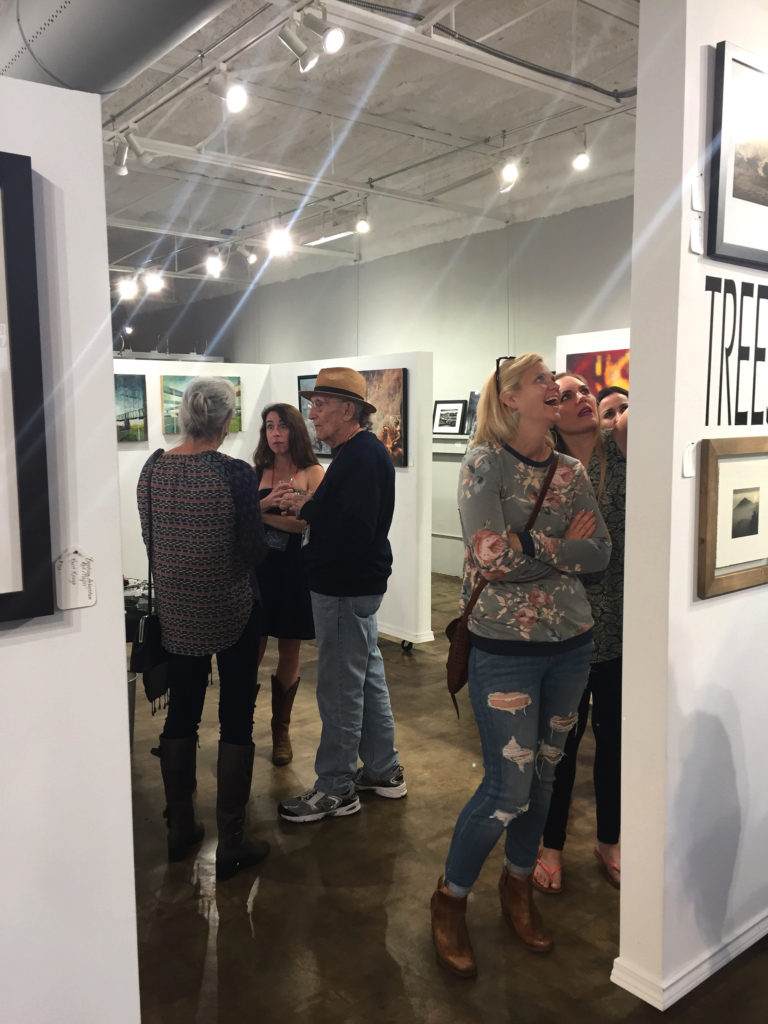
Opening night at ASmith Gallery in Johnson City, Texas

Opening night at ASmith Gallery in Johnson City, Texas

In an earlier post, I mentioned I was taking work to ASmith Gallery in Johnson City for an encaustic show. The show(s) opened this past Saturday, and the exhibited works are a wonderful combination of diverse photoencaustic and lyrical photographs of trees in every artful interpretation. And the gallery is gorgeous. Here’s a description:

Established in May, 2010, A Smith Gallery is located in Johnson City, Texas in the Nugent Avenue Arts District. The gallery exhibits the work of both amateur and professional photographers through juried and invitational exhibitions. Amanda Smith and Kevin Tully are the Gallery Directors.   Izzie, Be and WeeGee are the official gallery cats.

Amanda Smith is the director. She and co-director Kevin Tully also teach workshops in encaustic and photograpy. In addition, they provide printing, matting and framing services for photographers whose work is selected for juried show.

I love the layout of the exhibit space – there is a small “salon” area inside a larger gallery perimeter. Meeting Amanda was such a pleasure – I am adding her to my “steal-ideas-from” list!

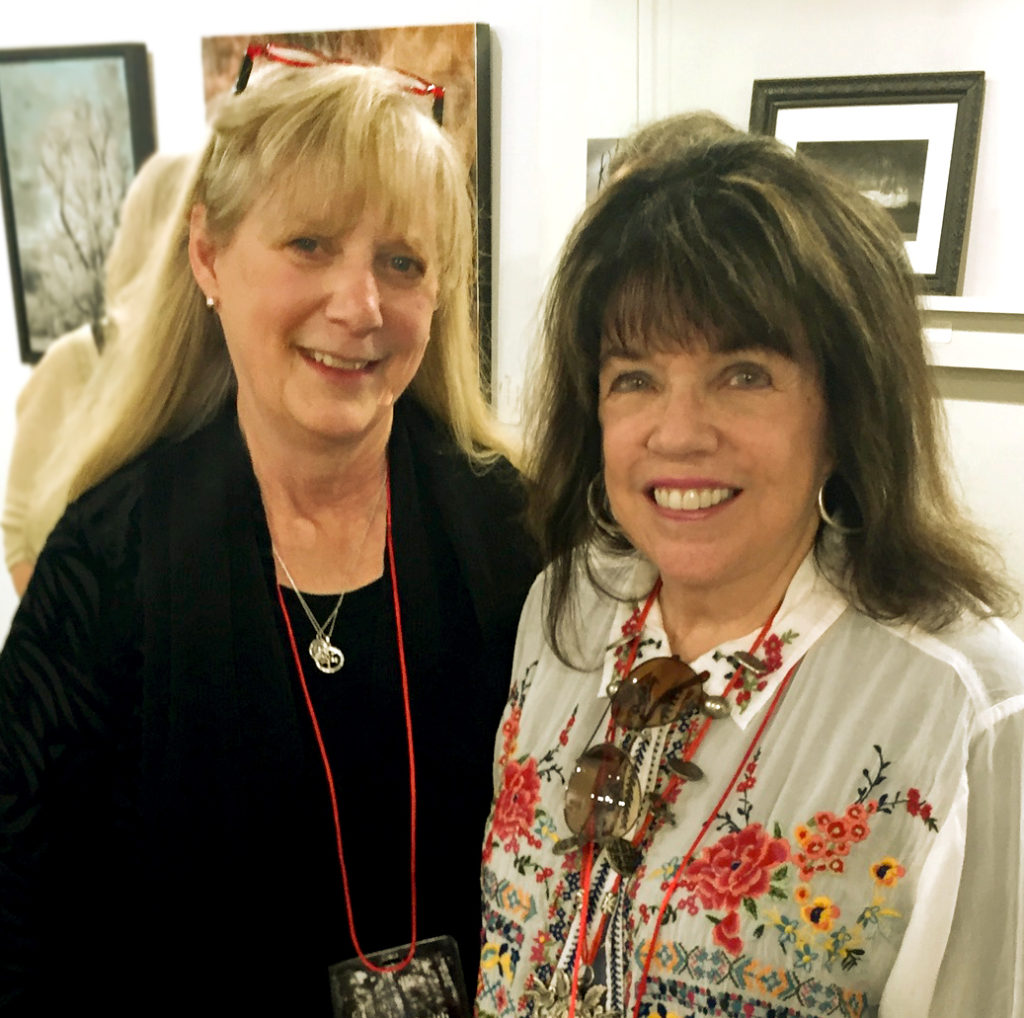
Amanda Smith and me at the ASmith Gallery last Saturday

Amanda Smith and me at the ASmith Gallery last Saturday

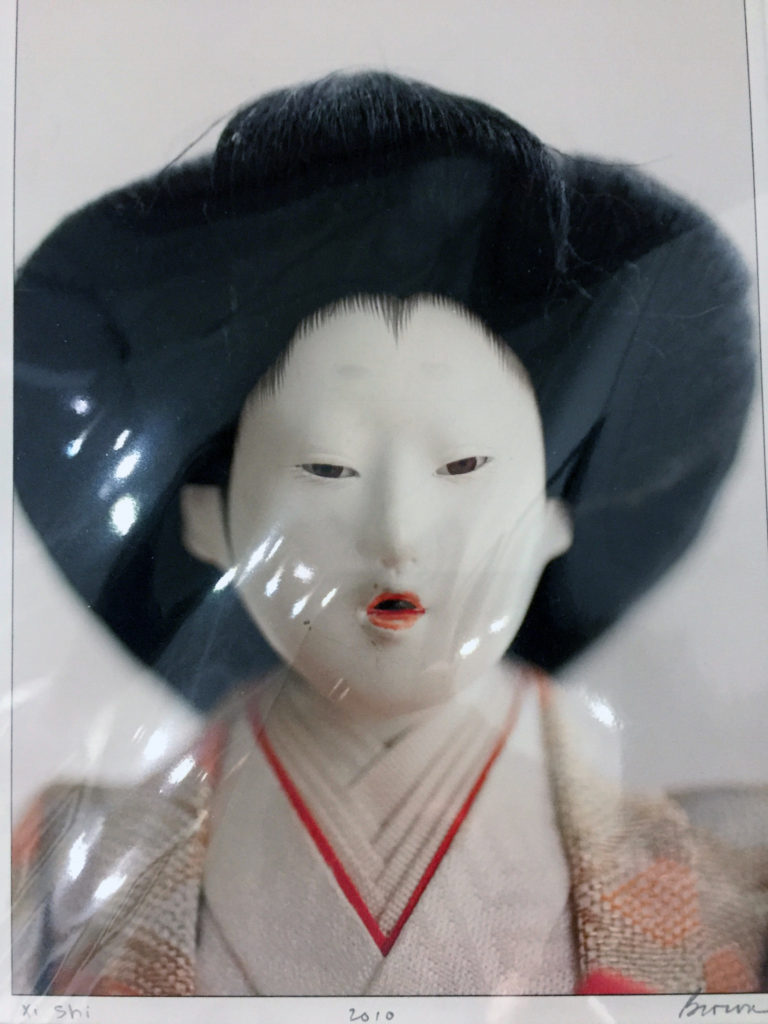
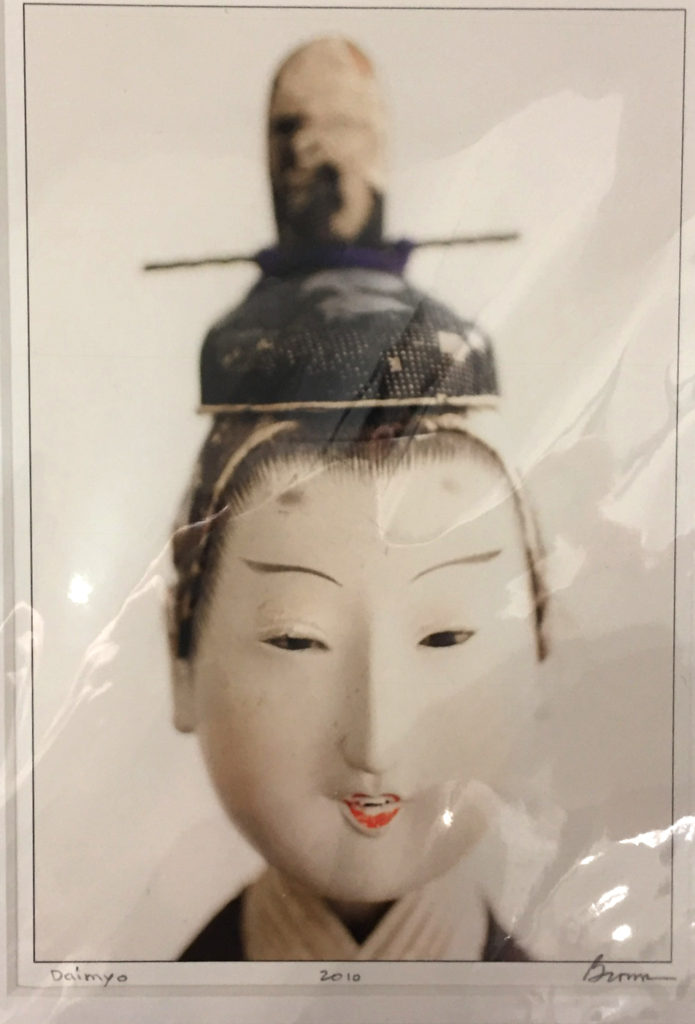
I also met two artists whose work resonated strongly with me. Pat Brown is the first. I was looking at matted work in the bins and every piece I picked up seemed to be hers! Here are two and, oops, all of the photos I took at the show that were framed have reflective light spots on them, but you can get the picture :).

6

pat2

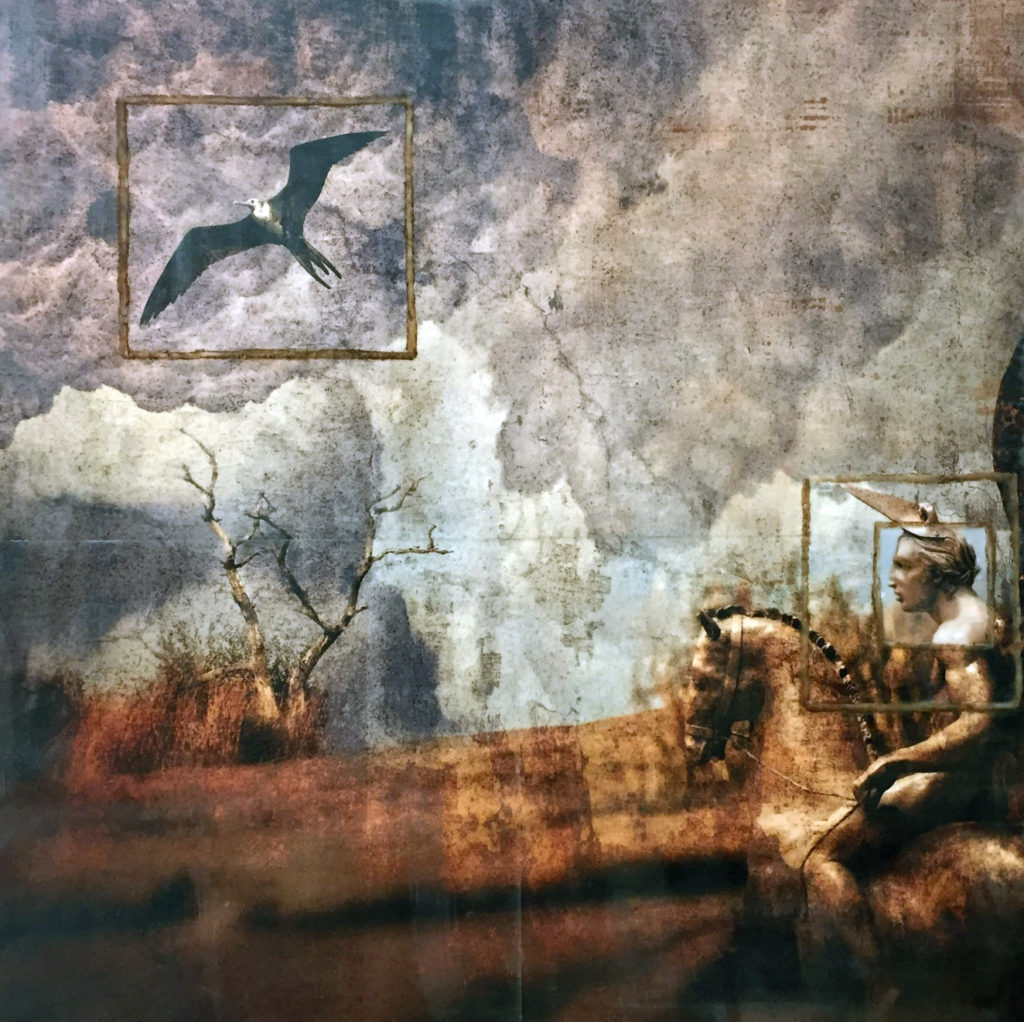
The other artist whom I met (and whose work I loved) is Keith Kesler. Here is one of his photoencaustic pieces.

Keith Kesler

Keith Kesler

When he’s not wearing his artist/photographer hat, Dr. Keith Kesler is a Board-Certified Psychiatrist with an active psychotherapy and coaching practice in Austin, Texas. He and I talked about encaustic process. I got some great ideas about layers with tissue and wax from Keith. His work is very dreamlike and symbolic. Nice!

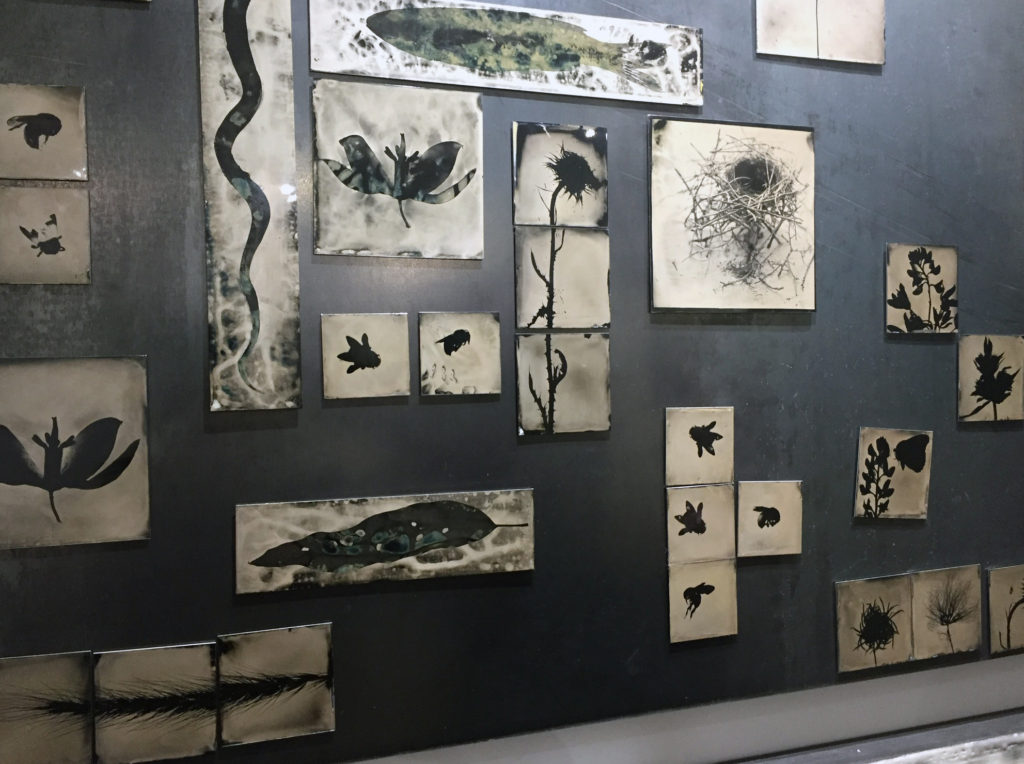
The theme of the photography portion of the exhibit was “trees.” When you visit the exhibit, take your time walking around the gallery walls – you will be delighted with the fascinating interpretations of trees through the eyes of master photographers. Here are just a few (please ignore the light reflections in the photos – these are taken with my iPhone)

Amanda has had a number of excellent photography exhibits at the ASmith Gallery – I had fun looking through her catalogs and at the archives on her website. Great inspiration! She also has a wonderful assortment of curiosities and small works that grace the walls and table tops.

12 14

Here’s the best news of all – if you’d like to make a quick trip to Johnson City (which is just a little over an hour north of San Antonio) and visit ASmith Gallery and the Nugent Avenue Art District, there is a second reception for this show on January 28, 2017 from 4 to 8pm. I’ll be there – hope to see you!

Save

Après-turkey Saturday, out and about

ASmith Gallery 103 N Nugent Ave, Johnson City, TX

I’m headed to Johnson City on this beautiful fall morning to take some work to Amanda Smith’s Gallery. It’s a new gallery for me, and I can’t wait to meet Amanda.

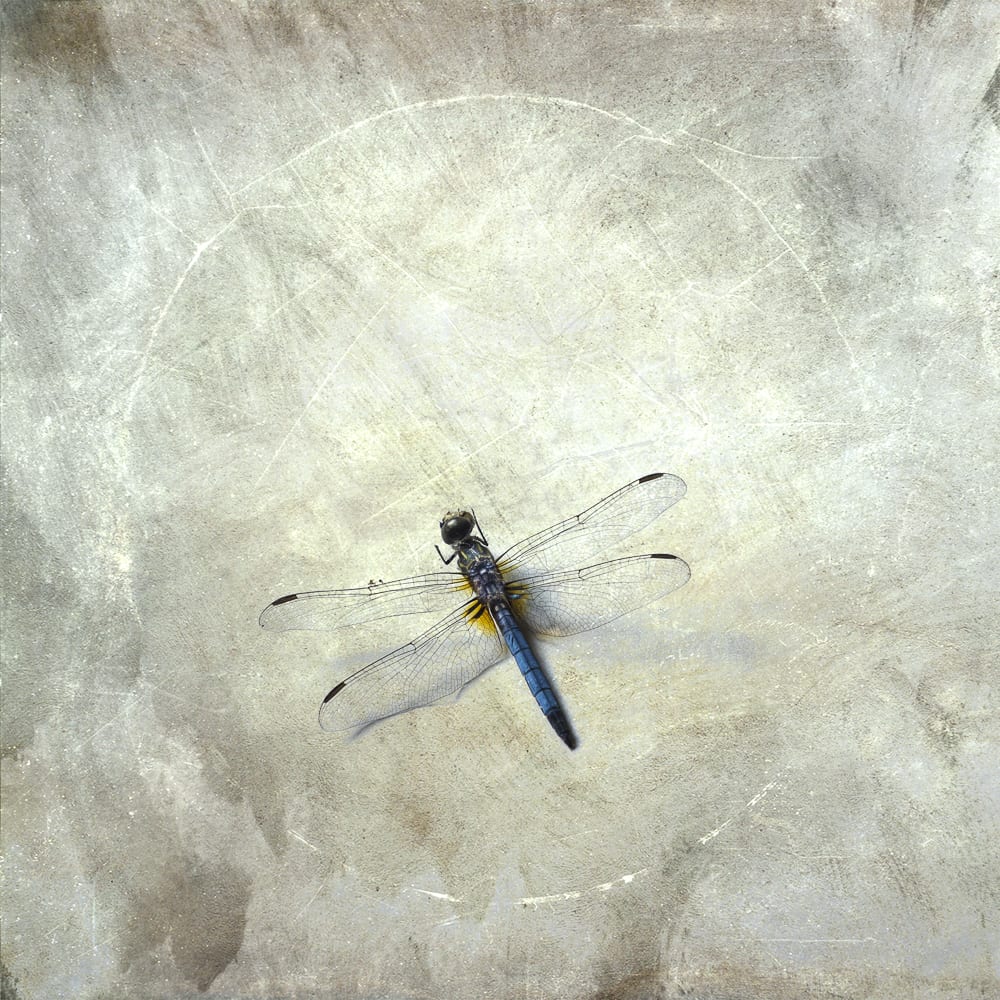
They specialize in photography, but do some amazing workshops with photoencaustic. The show I’m participating in is called, simply, “encaustic” – it opens December 17, 4-8 pm. Click this link to see all the accepted work. I especially like Sandra Carrion’s “Dragonfly.”

Sandra Carrion

Then it’s off to the Pearl for the San Antonio Clay Arts Festival.  I’m hoping that some of my favorite potters will be there, like Marcia Dahlman – love her work.

Marcia Dahlman

Marcia Dahlman

And then — TAH DAH – I’m going over to the new studio to do a little planning and a little art.  It’s so nice to have a comfortable space close to home to hold workshops and explore new directions for my own art. If you missed the newsletter yesterday, here’s a short video preview of the space – not quite settled, but almost.

A new place of creative belonging . . . from Lyn Belisle on Vimeo.

Oh, if you did miss the newsletter, another exciting happening is an invitation-only trunk show and sale with Monika Astara on December 10th from 11am-1pm at my home. If you’d like to be on the list and get details and an invite, just email me.

Monika’s designs are perfect for the holidays – elegant and easy.

The icing on the weekend cake will be a Sunday get-together with uber-talented Michelle Belto – we are planning an exciting collaborative website for 2017 that will be totally unique.

Michelle and I have worked together for several years – here’s a video from one of our first collaborations – always fun to revisit.

I hope YOUR weekend is a happy one – thanks, as always, for keeping up with SHARDS and me!

Save

Five friends learn composition, collage and beeswax

My friend Mary James organized a great private workshop for five friends at the Studio yesterday afternoon. We worked with vintage photos and beeswax. I really hadn’t worked with anyone but Mary before, but I loved every one of the participants! They were enthusiastic risk-takers – some first-time artists, some  with art backgrounds – all great students!

We followed my usual teaching sequence – explaining the AB3’s of composition, arranging the visual elements accordingly, layering and fusing wax and stamps and foil and – of course– spraying walnut ink to accent the incised lines. Some people brought photos of their grandmothers and mothers to work with – beautiful.

They got it all! You can see the incredibly individualistic results in this short video. Fun! Thanks, everyone, stellar work!